It has long been the mission of the Venice International Film Festival to heighten awareness of and the conversation around international cinema—in all its iterations—as both art and entertainment. The prestigious festival, which will embark upon its 82nd edition this August 27, is set to premiere eagerly anticipated new works from Luca Guadagnino, Yorgos Lanthimos, Mona Fastvold, Guillermo Del Toro, Benny Safdie, Kathryn Bigelow, and—in a section on its own island in the Venetian lagoon—the 69 extended reality (XR) projects of Venice Immersive.
Venice Immersive Extends Reality at the 82nd Venice International Film Festival
69 projects from 27 countries populate the pioneering virtual and augmented reality programming of La Biennale di Venezia’s annual cinematic affair
BY DAVID GRAVER August 22, 2025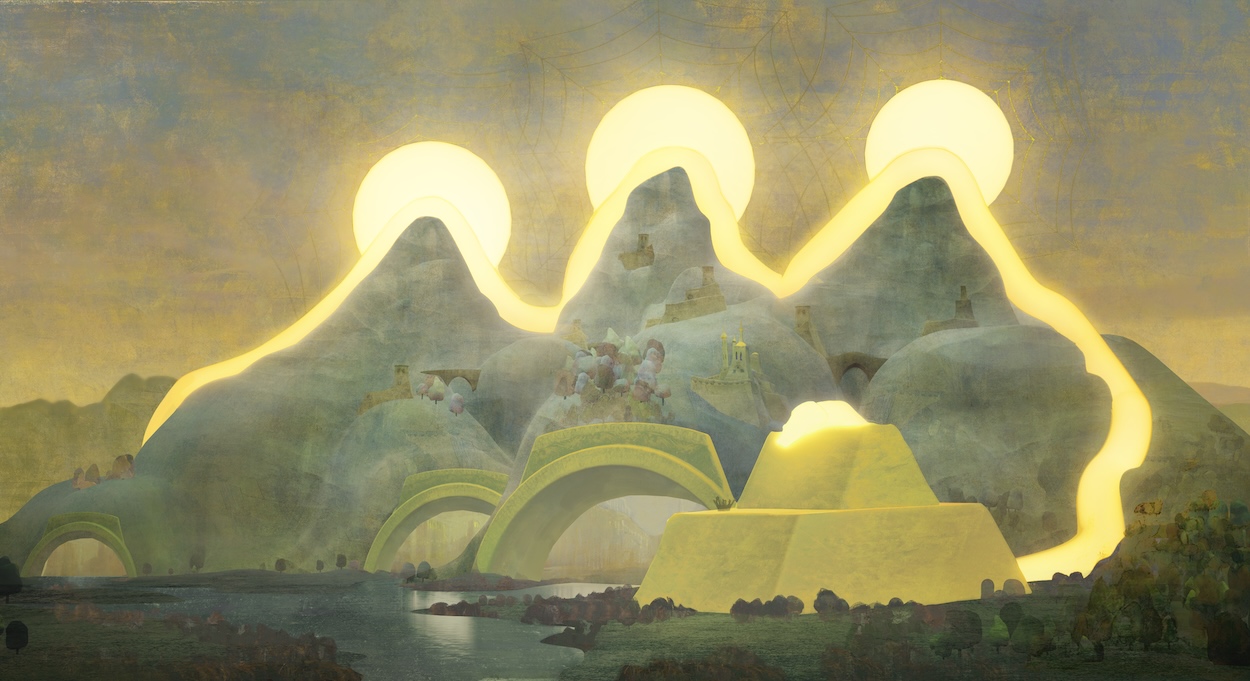
Courtesy of Creation of the Worlds
…

Courtesy of Black Cats & Chequered Flags
…
In 2017, La Biennale di Venezia introduced an immersive in-competition division to the film festival on Isola del Lazzaretto Vecchio. Here, filmic projects developed for virtual and mixed reality found a platform. In recent years, other festivals’ commitment to XR storytelling has waned, but Venice has reinforced its commitment. And as the stories—which range from short documentaries to fictional narratives within imaginative worlds—have remained strong, the technology around them has advanced at a rapid pace.
Courtesy of VIVE Arts and BackLight
…
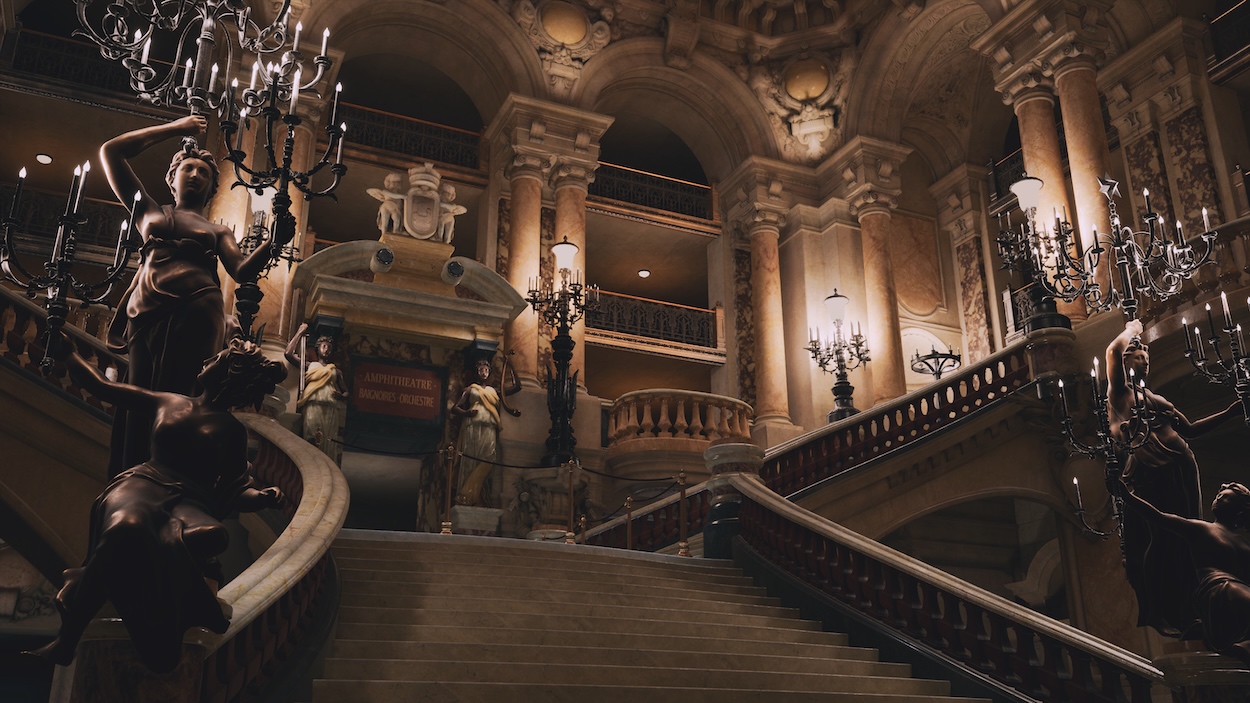
This year, Venice Immersive features 30 projects in the competition segment, 34 projects in the best of immersive section (itself divided into 11 best of experiences and 23 best of worlds), and five projects in the Biennale College Cinema immersive section. Highlights across all divisions are plentiful—from VIVE Arts’ 25-minute celebration of Palais Garnier’s 150th anniversary, “La Magie Opéra,” to an animated, hallucinatory exploration of mental health from Japanese filmmaker Atsushi Wada, “If You See A Cat,” and “Reflections of Little Red Dot,” which director Chloé Lee tells Surface is “an interactive archive which explores the impact of rapid change through the recollections of everyday Singaporeans.”
Courtesy of 1968
…
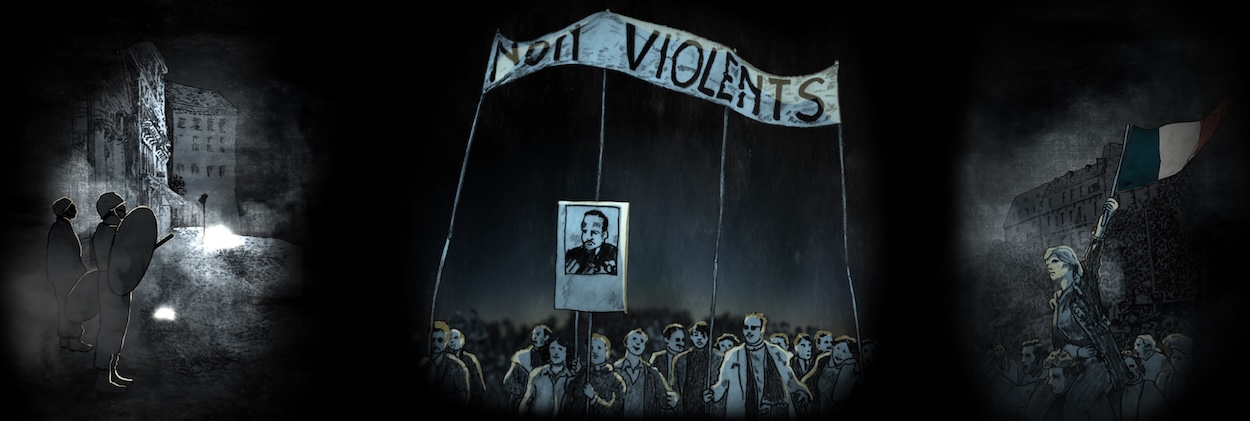
Within the communal VR experience “1968,” director Rose Bond explores the power of protest through 360-degree, hand-drawn animation—inspired by still photographs—coupled with spatialized sound. It’s this multi-sensory immersion that sets the project apart. “As a filmmaker who left the moviehouse for multi-screen projections that illuminate buildings, I have long appreciated breaking out of the traditional frame,” Bond tells Surface. “But in my heart of hearts, I have always envied sound and its omni-directional presence. With mentoring support from the Venice Biennale College Cinema Immersive, my work has entered that missing dimension to engage a new axis for artistic expression.”
Courtesy of Alien Perspective
…
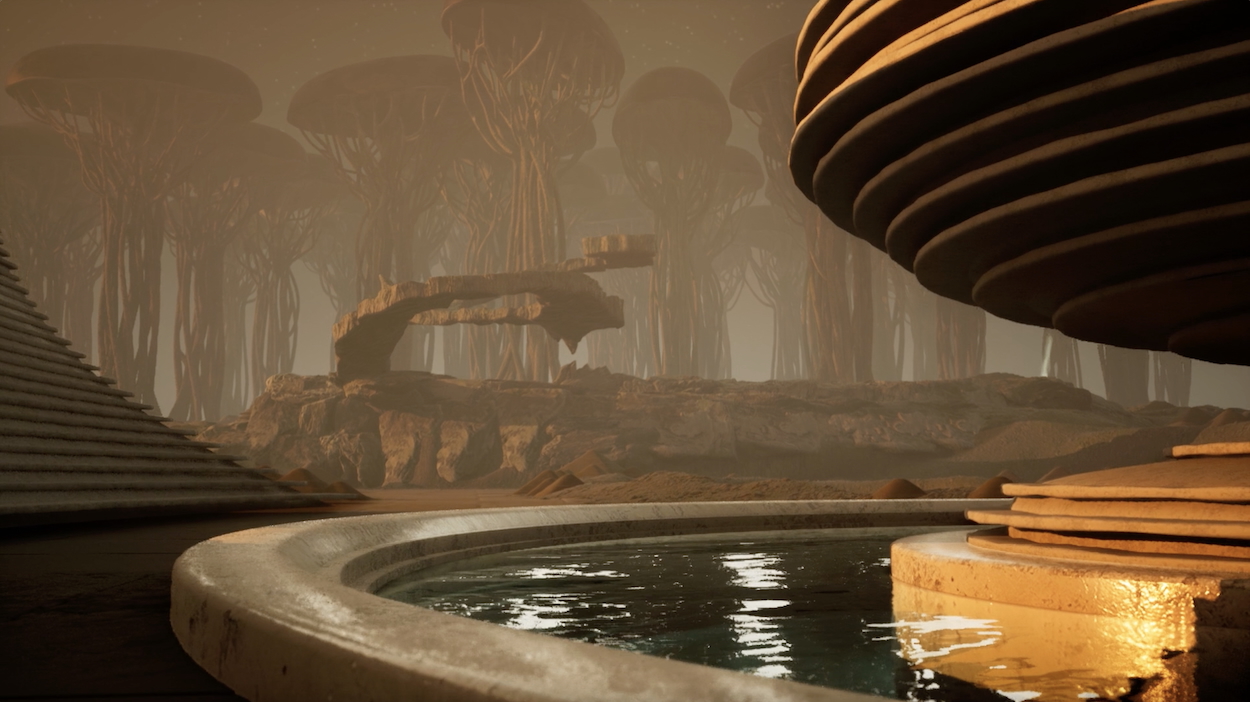
Jung Ah Suh, the director of “Alien Perspective“—an ode to the special effects artist Carlo Rambaldi, the visionary creator of creatures for E.T., Alien, Dune, and more—sees Venice Immersive as the blueprint for film’s future. “To bring Rambaldi’s vision into this space, alongside today’s pioneers, is both humbling and galvanizing—a reminder that the future of storytelling will be forged through collaboration, imagination, and courage,” the filmmaker says. For the 15-minute piece, Ah Suh brought to life the cosmic architecture of one of Rambaldi’s lesser-known paintings.
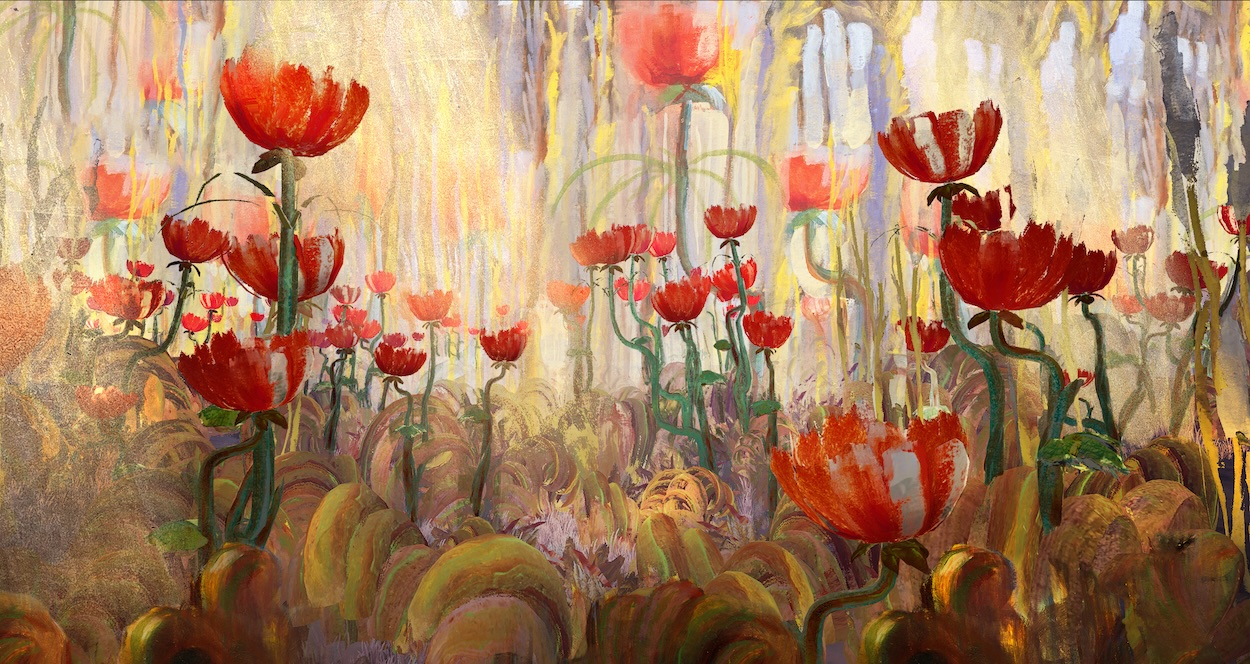
Courtesy of Creation of the Worlds
…
With “Creation of the Worlds,” co-directors Kristina Buožytė and Vitalijus Žukas return to Venice Immersive for a second time. “For us, it’s not just a chance to show our work—it’s an opportunity to introduce a global audience to one of Lithuania’s most iconic artists, M.K. Čiurlionis,” they say. “Sharing his vision through immersive experience in such a context makes it feel truly alive and relevant. Venice Immersive is a place where artistic risk is valued, and where new forms like XR can stand alongside the most powerful storytelling in film.”
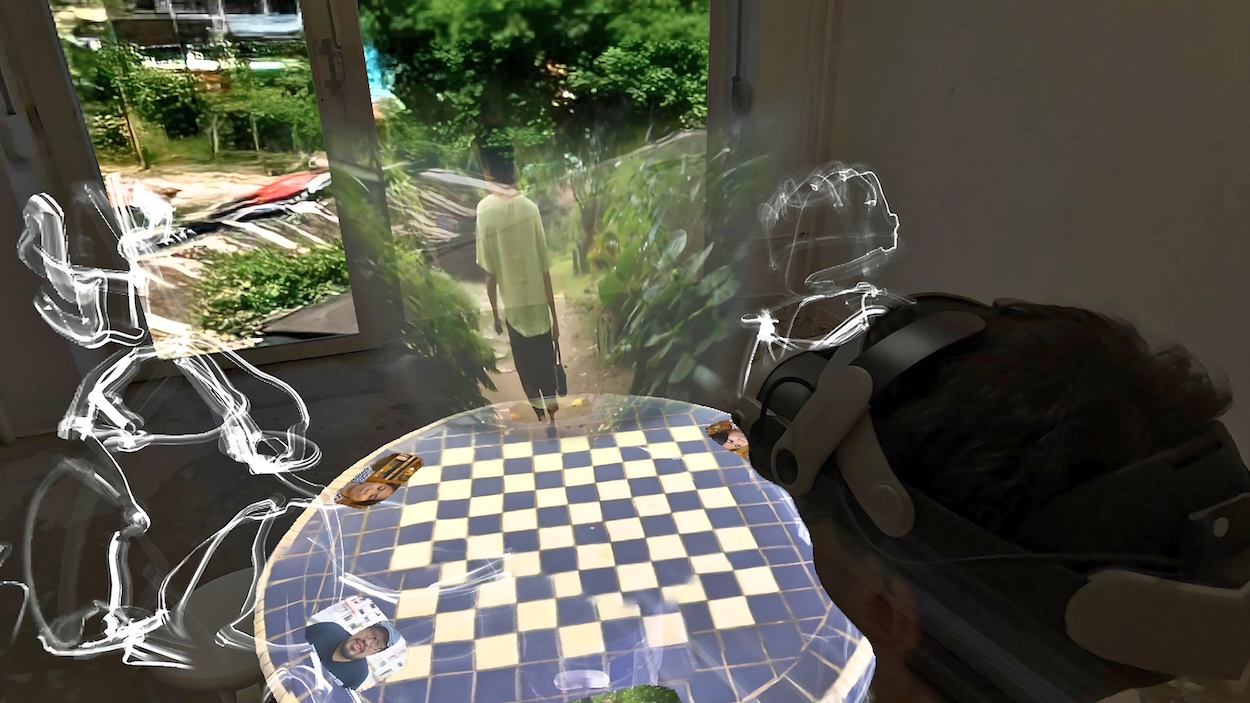
Courtesy of Reflections of Little Red Dot and Chloé Lee
…
“I first dove into the depths of VR in 2012, when it finally became affordable for artists to explore at home,” Daniel Ernst, the director of “The Great Orator,” shares with Surface. “Those early years felt full of possibility, like blue skies and green pastures everywhere. Over the years my work has lived in the space between genres and mediums, and ‘The Great Orator’ continues that path, existing somewhere in between a movie and a game, a world you visit rather than watch or play.” For “The Great Orator,” Ernst connects the archetypes of present-day artificial-intelligence technology with that of 1980s television psychics.
Elisabetta Rotolo, the director of “Black Cats & Chequered Flags,” attributes the division’s success to curators Liz Rosenthal and Michel Reilhac, “who have built a space where imagination is boundless and stories transcend form.” It’s this vision, coupled with the prestige of the festival and the stunning location, that have established an experience unlike any other.