With the September 5 opening of “A Boy That Don’t Bleed,” artist Caleb Hahne Quintana returns to Anat Ebgi—though, this time, to the gallery’s Tribeca location. This emotionally engulfing second solo exhibition spotlights figurative compositions of young boys engaged in play or contemplation. Through each painting’s subtle radiance, the artist imparts a sense that these pieces were not only composed to be seen but to be felt. Mysterious, introspective scenes possess a compositional conversation between character and atmosphere.
Caleb Hahne Quintana's Scenes of Youthful Contemplation in "A Boy That Don’t Bleed"
The New York-based artist returns to Anat Ebgi Gallery for his emotionally engulfing second solo exhibition
BY DAVID GRAVER September 02, 2025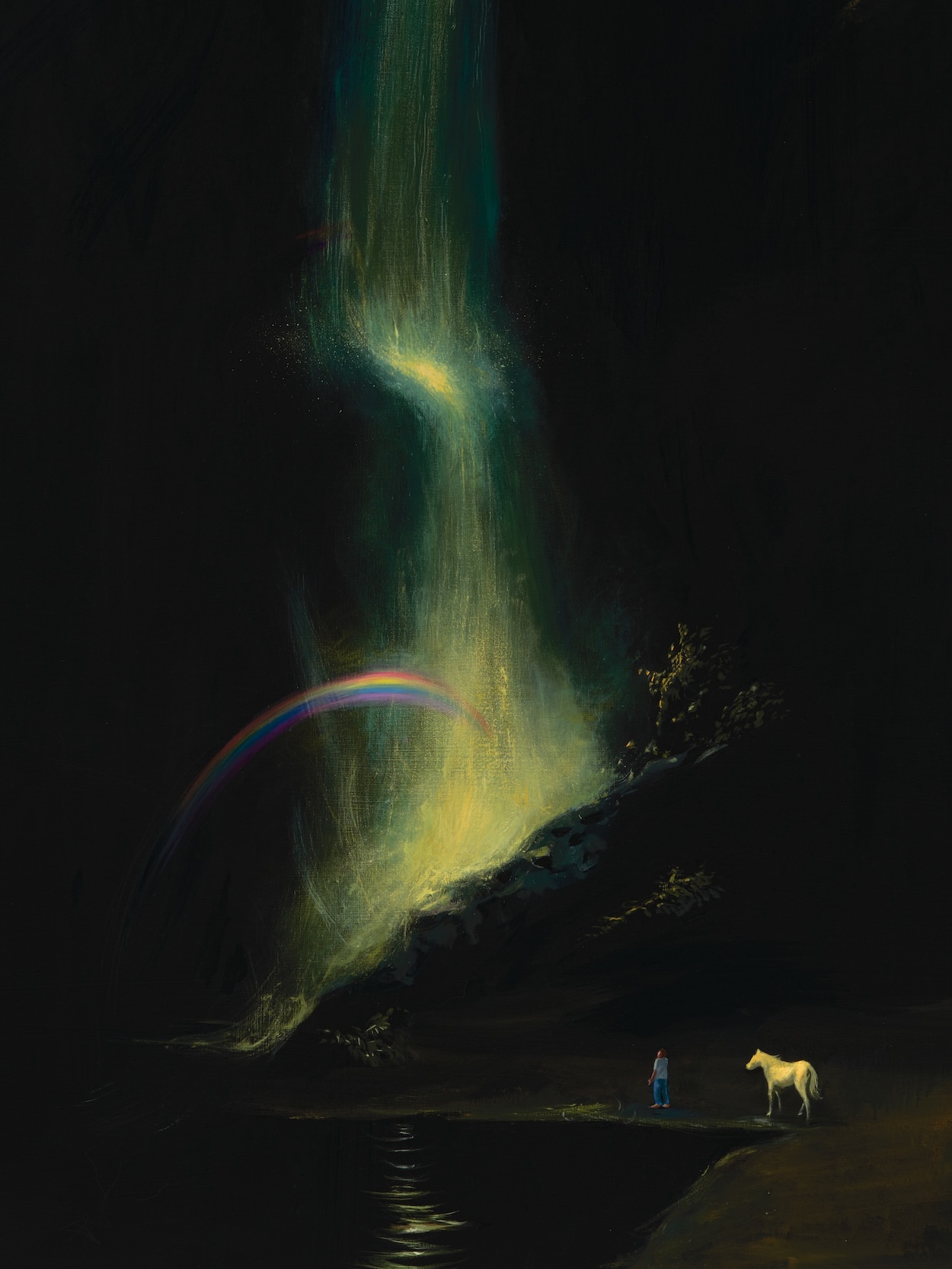
Caleb Hahne Quintana "A Flicker in the Ancient Rhythm" (2025), detail. Courtesy the artist and Anat Ebgi, Los Angeles / New York.
…
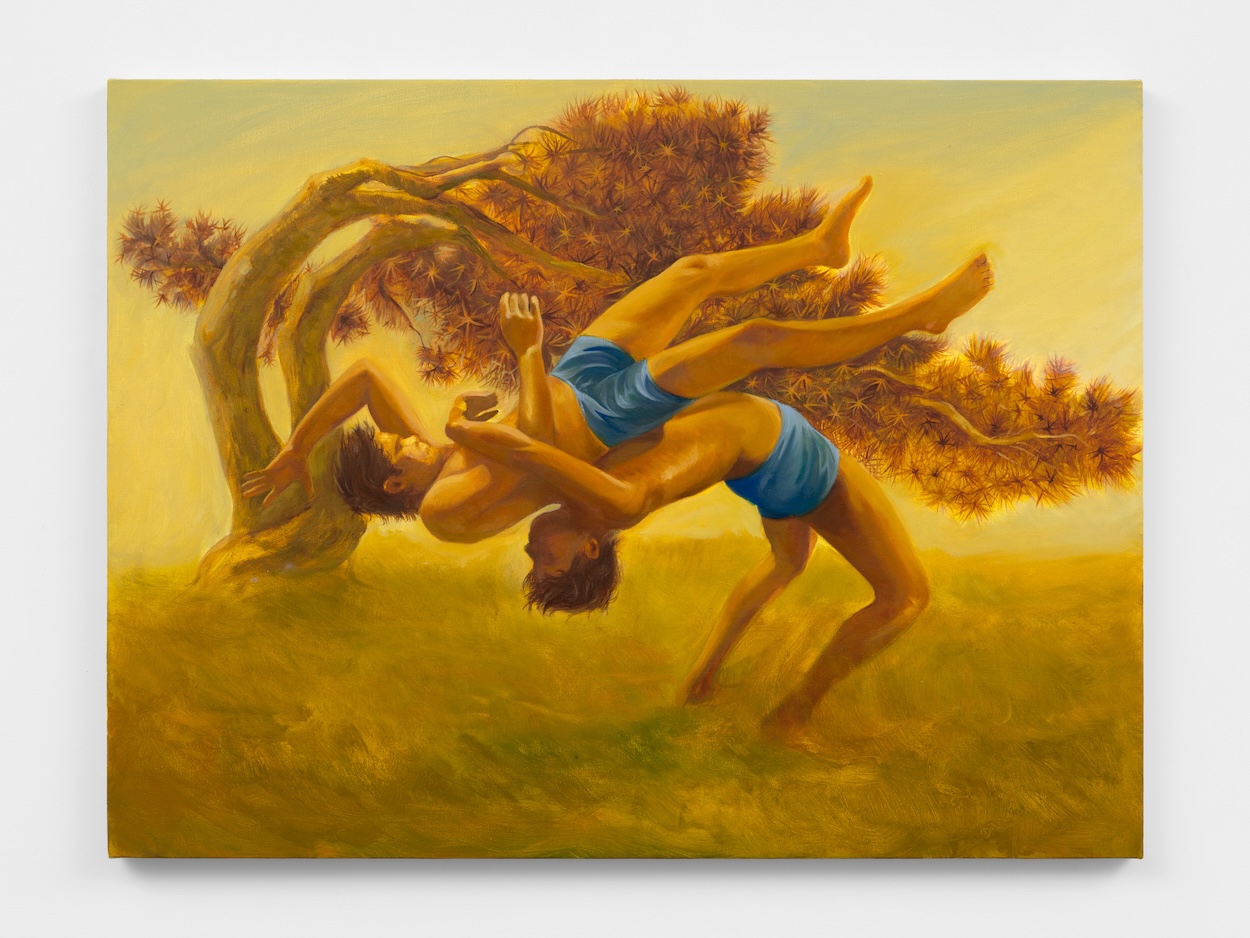
Caleb Hahne Quintana "The Boy Fights Himself" (2025). Courtesy the artist and Anat Ebgi, Los Angeles / New York.
…
“I try not to overthink what my gut tells me,” Hahne Quintana tells Surface with regard to the meditative, sometimes somber tone of this body of work, which he began to compose in May of last year. “Intuition leads the way and, for this series, something kept drawing me to this darker palette. The figures feel like they’re emerging from black, almost like a poem—revealing some things, concealing others—inviting the viewer to participate in a new way.”
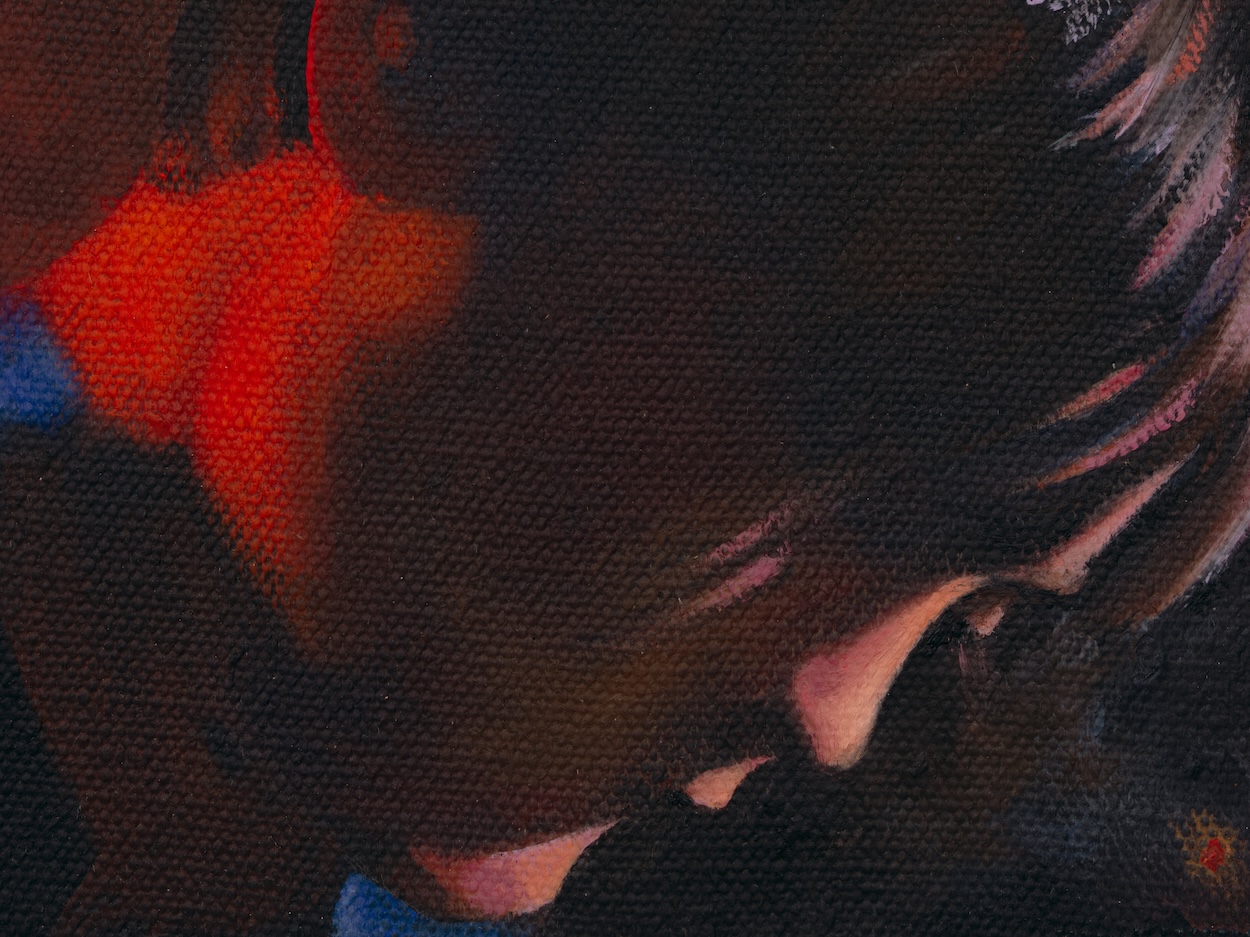
Caleb Hahne Quintana "Red Boy" (202), detail. Courtesy the artist and Anat Ebgi, Los Angeles / New York.
…
It is the moment and mood depicted in each painted work that begets such magnetism. For the artist, these scenes are both witnessed and imagined. “I don’t believe in a truly ‘original’ image. What I try to do is show the absurdity—or profundity—of pause, of the mundane,” he says. “My role is to observe and record, and through that, I find a spiritual quality in the work. I love moments in between—that half-step where the past, present, and future all seem to live at once.”

Caleb Hahne Quintana "Volcano Painting" (2025). Courtesy the artist and Anat Ebgi, Los Angeles / New York.
…
The figures within Hahne Quintana’s works aren’t abstract representations; though faceless, they act as mirrors. “They let us see into the moment itself,” he says, acknowledging painters Piero della Francesca and Andrew Wyeth “for their precision and devotion, and Caravaggio and Bonnard for their use of color and light to build memory and tension. I want each painting to feel like you understand that there are bones in the body, blood pumping in the heart, someone mortal.”
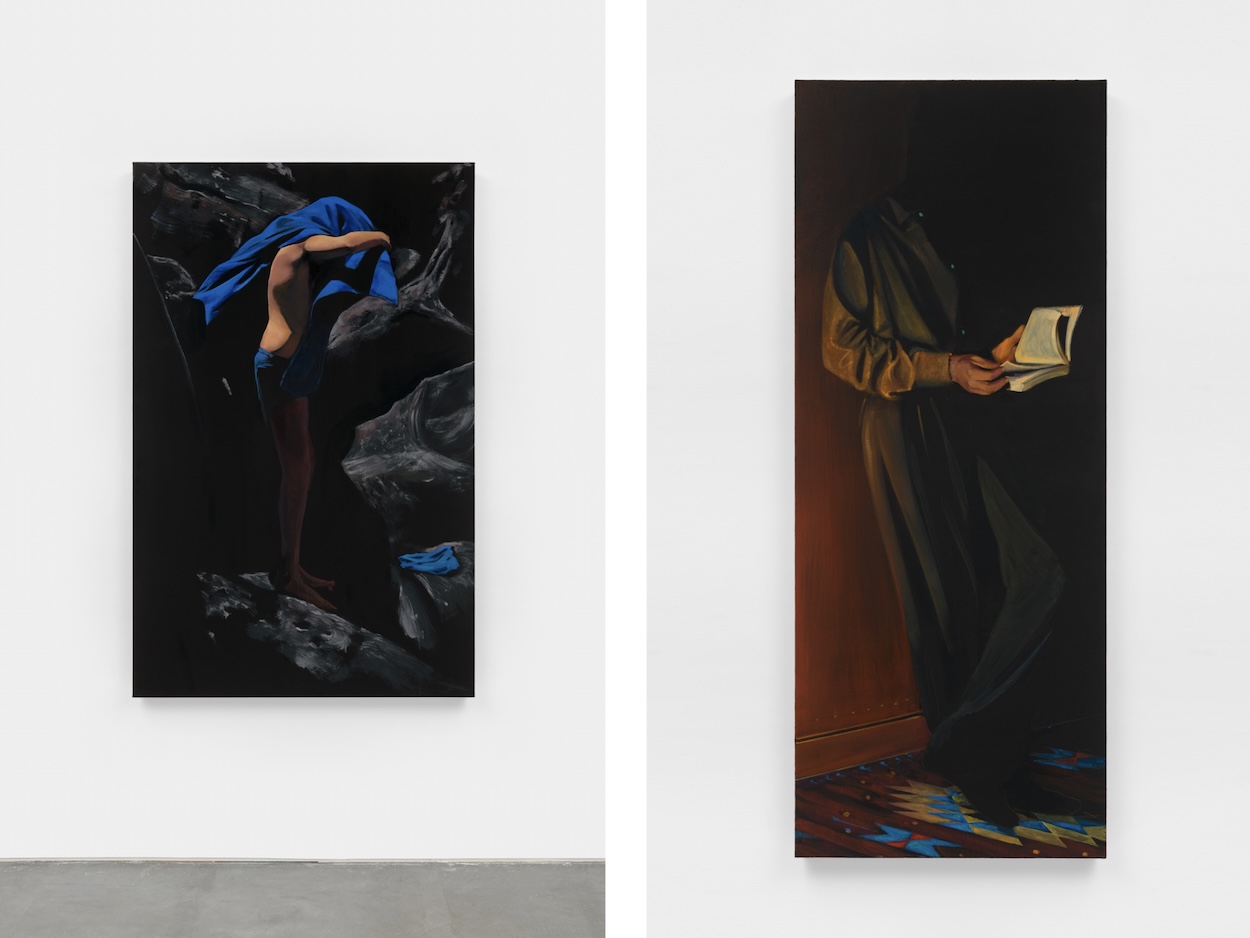
Caleb Hahne Quintana "Between Flesh and Stone" (2025) and Caleb Hahne Quintana "The Poet (For Bolaño)" (2025). Courtesy the artist and Anat Ebgi, Los Angeles / New York.
…
Hahne Quintana couples his mesmeric palette with an intimate understanding of light. “Early on, I avoided color because I approached it too academically. Eventually, I let go, and that’s when it became fluid—like water in the body,” he shares. “Color and light let me express time, place, mood, and memory. Now every painting starts with at least one color study—sometimes five.”
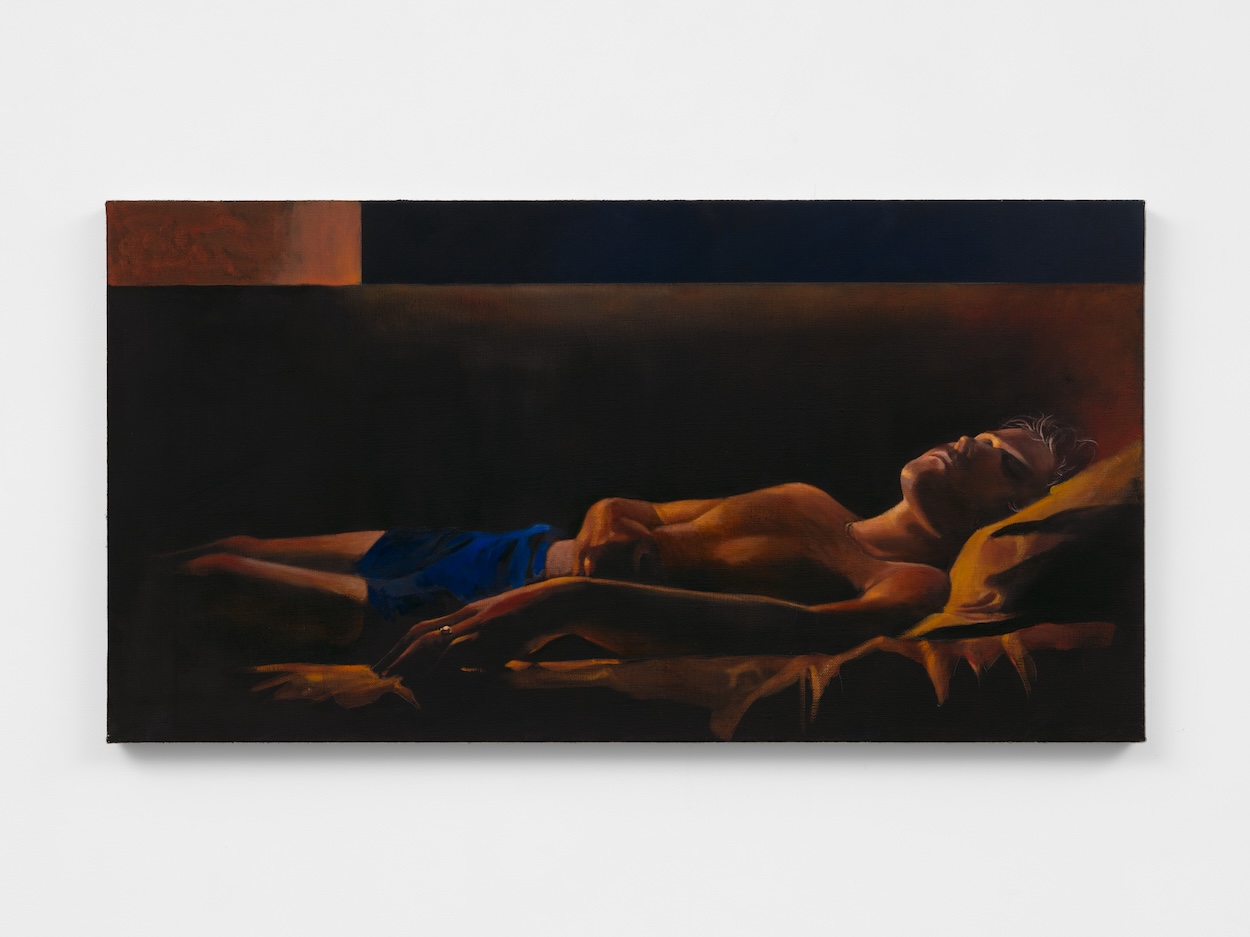
Caleb Hahne Quintana "Sleeper" (2025). Courtesy the artist and Anat Ebgi, Los Angeles / New York.
…
The title of the exhibition, “A Boy That Don’t Bleed,” is also the name of a poem that originated from a performance by Hahne Quintana. It references his decade training in combat sports—boxing, jiu-jitsu, and MMA—and the way these practices influenced his creative practice. “It’s odd to choose to participate in a sport that involves so much violence and I think my closeness to it for so long has formed the way I engage with my masculinity,” he explains. “The poem reflects on the myth that men and boys are immune to suffering. It offers an unsettling glimpse of a boy who appears to have endured something so profound that nothing else could harm him—and not bleeding suggests a kind of disconnection from physical or emotional reality.”