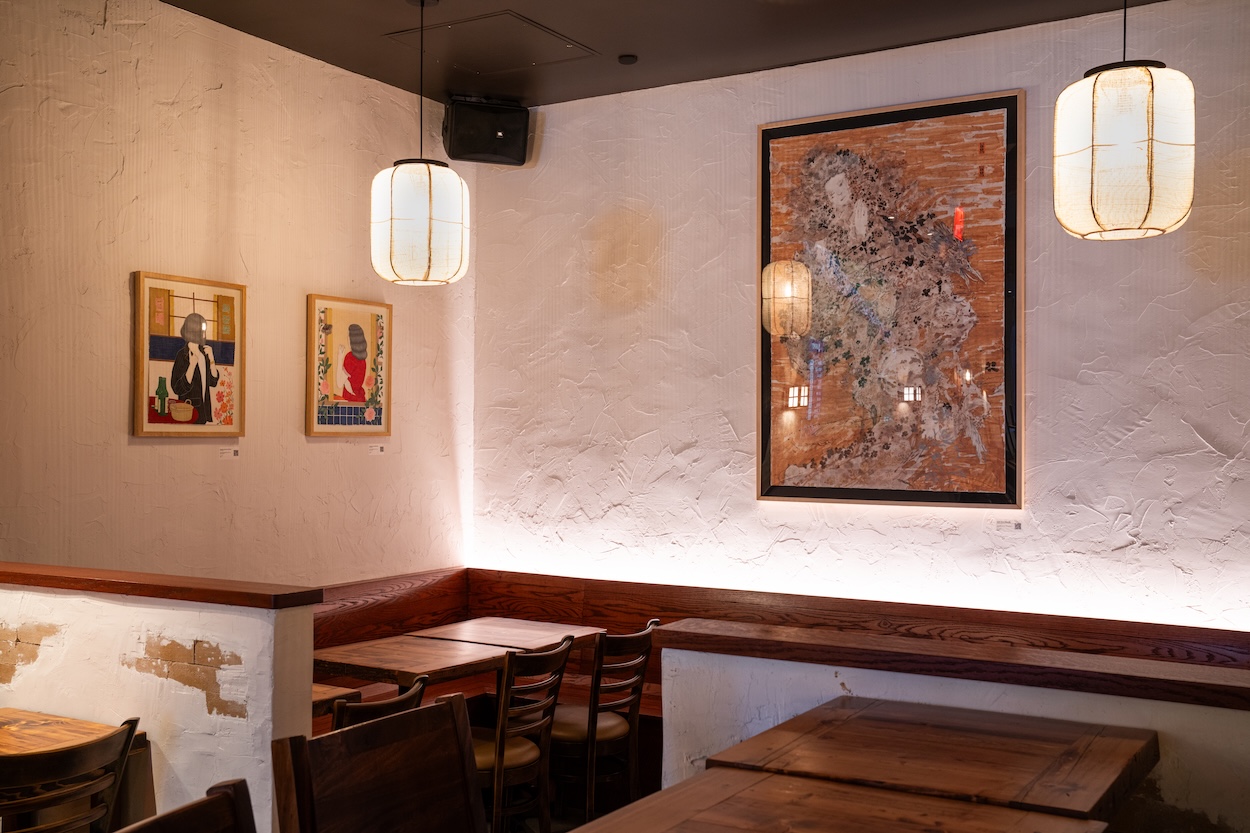
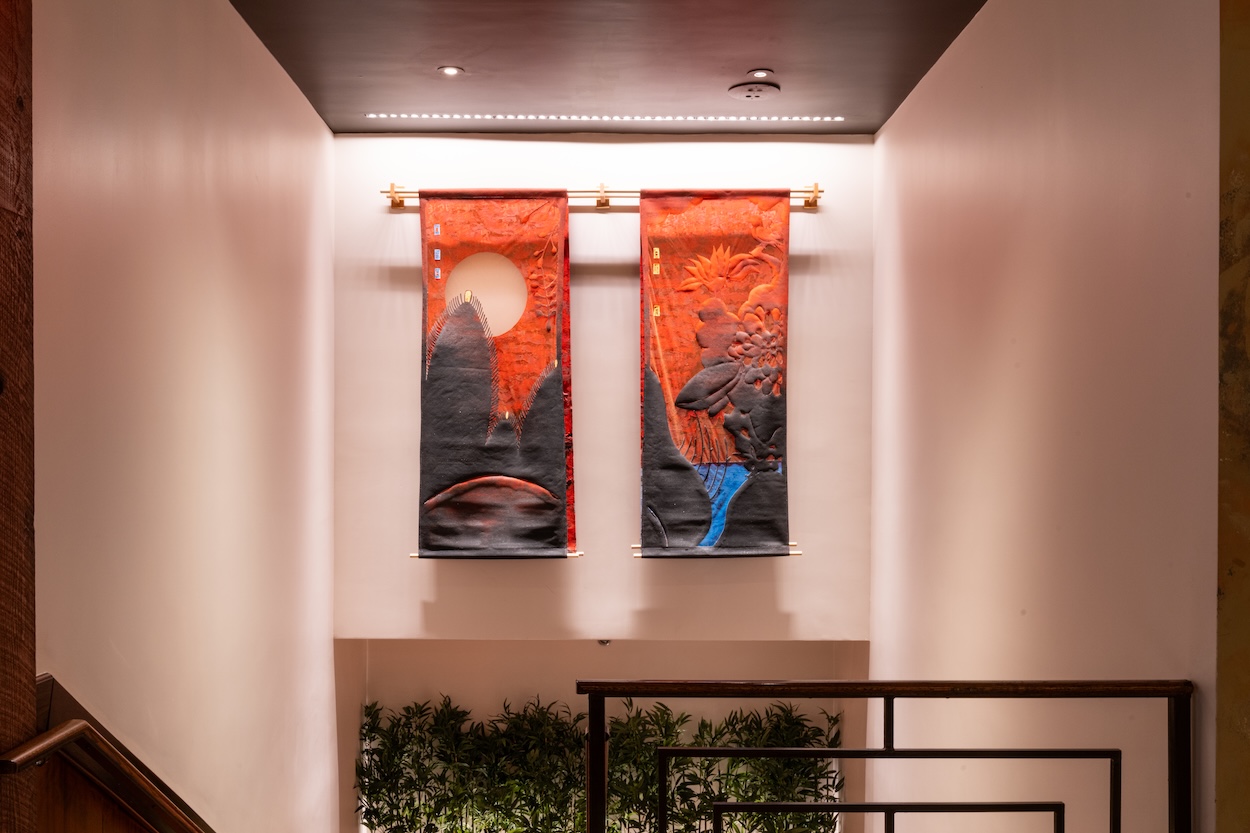
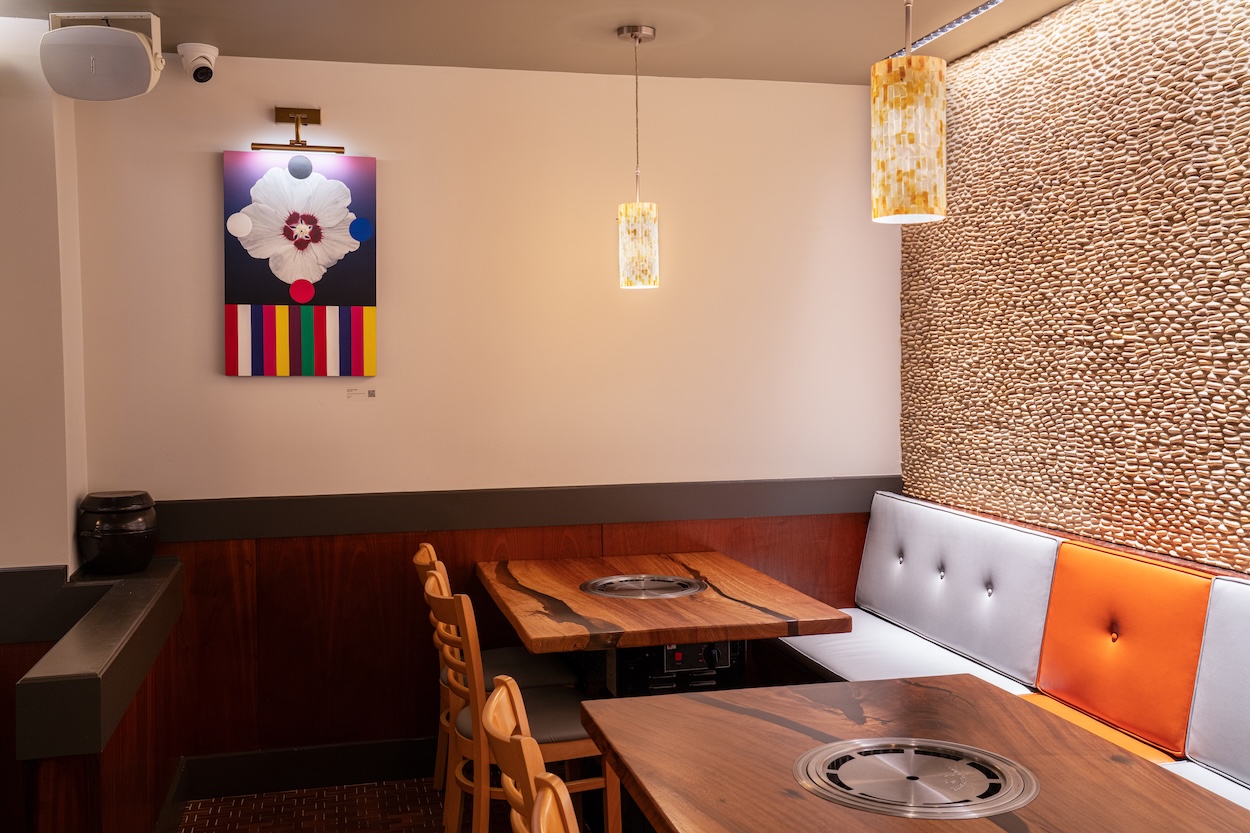
Golden Hof, the two-level concept from chef Sam Yoo near Rockefeller Center, blends playful Korean tavern culture upstairs with inventive spins on classics downstairs. The space also hosts Hanbeon Deo (“one more time”), the first art program curated by Queens-based artist Aaron Chung of the Korean American Artist Collective (KAAC).
Chung, who received a Fulbright Fellowship in 2013 to study minhwa (traditional Korean literati painting) on hanji (mulberry paper), brings a painter’s eye and a curator’s sensibility to the project. He sees parallels between Yoo’s approach to food—paying homage to tradition while telling a personal story—and the way KAAC artists explore heritage and identity through their own mediums.
Below, Chung tells us about the Golden Hof exhibition, favorite dishes, and his journey as an artist.
How did this collaboration unfold?
I first met Sam after curating an exhibition for Hannamakali, a Brooklyn-based brewery of Korean spirits. The show explored how food becomes a vehicle for culture and identity—a theme Sam connected with deeply. When he opened Golden Hof, he wanted it to be not only a restaurant but also a cultural space. That vision and mine aligned, and Hanbeon Deo was born.
What does Hanbeon Deo mean, and how does it shape the exhibition?
It loosely translates to “one more time.” It’s a phrase of encouragement, but also a call to revisit memory. I posed it as a prompt to our Collective: What does Hanbeon Deo mean to you? The answers ranged from personal to poetic, each layering past and present.
Who are the artists—and what’s on view?
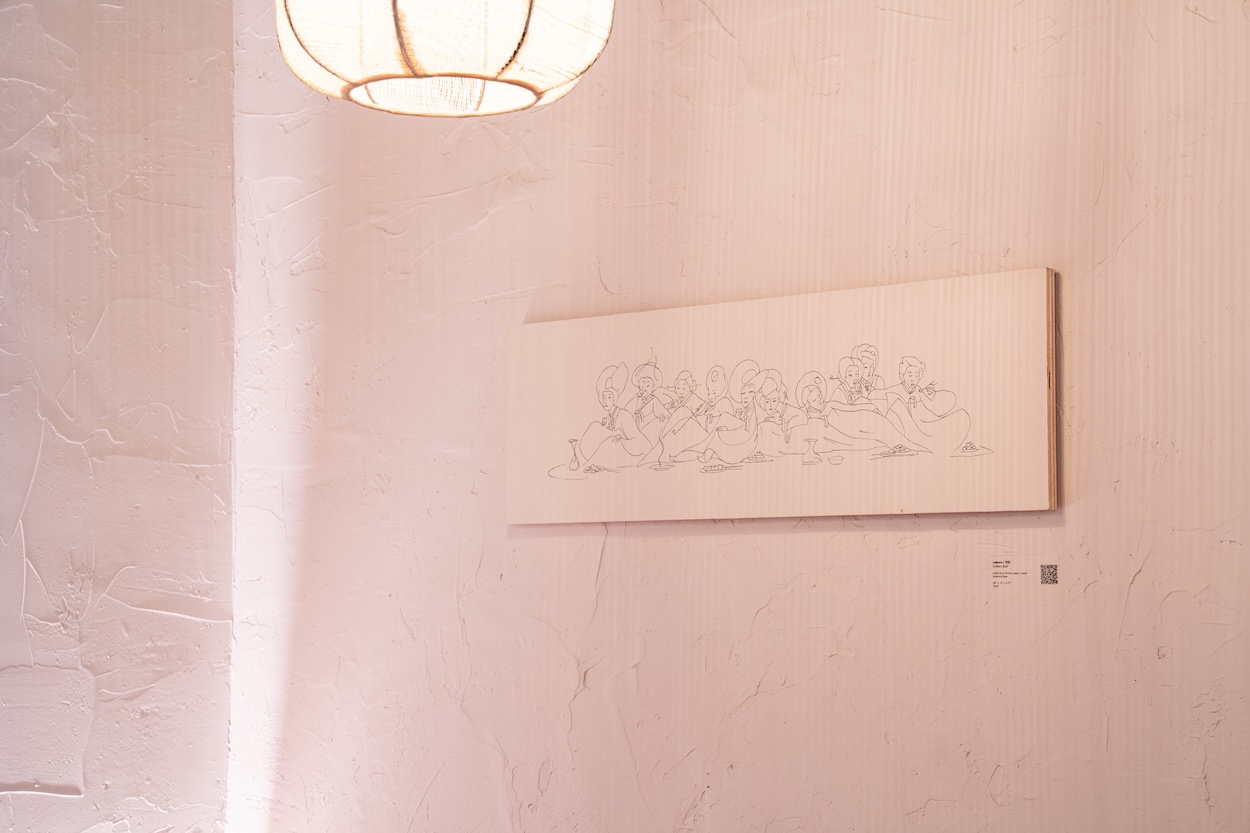
Jeffrey Yoo Warren created a wooden chiga backpack using traditional Korean joinery techniques, reconnecting with a craft nearly lost due to modern technology. Coleen Baik reimagined Korean genre painting by inserting herself, her sisters, and her mother into scenes where women were historically absent.
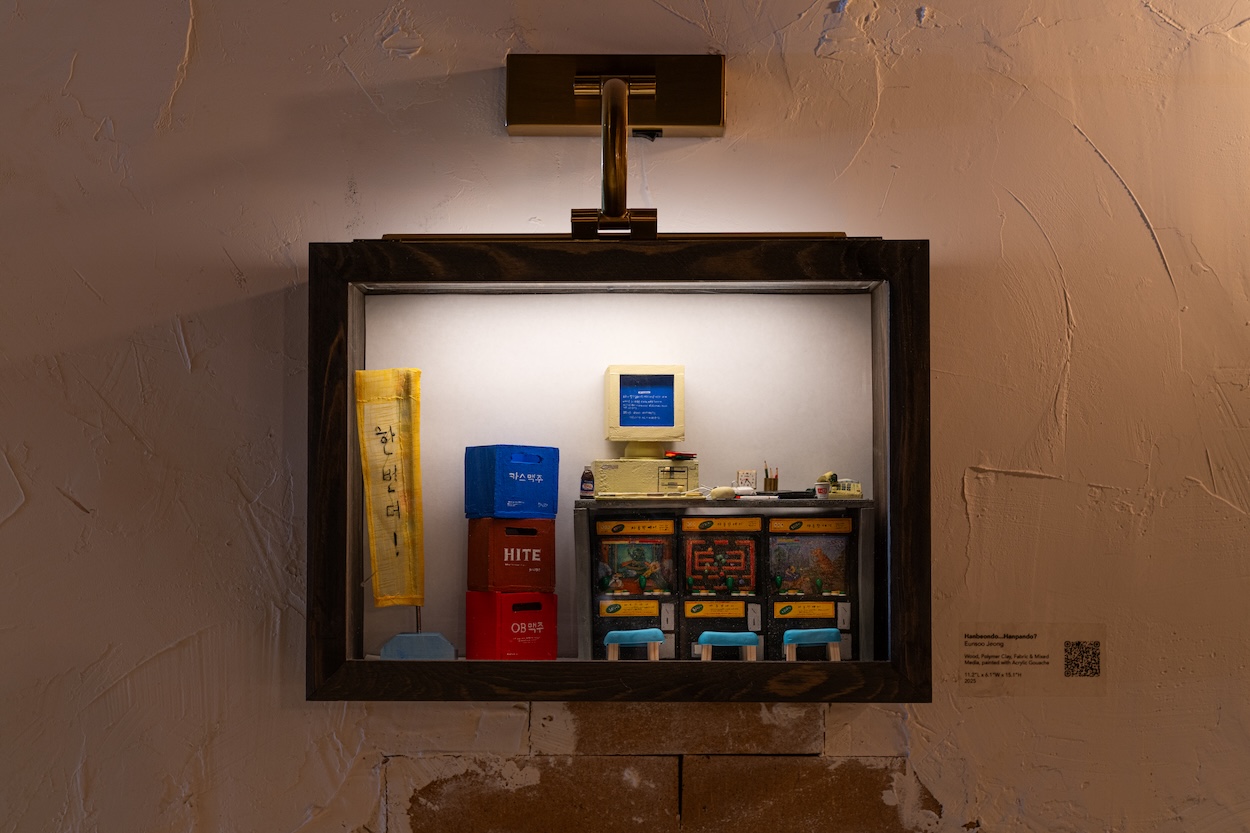
Eunsoo Jeong—better known by her satirical persona, Koreangry—contributed Hanbeondo… Hanpando? (2025), a miniature mixed-media diorama of 1990s Korean arcade machines tucked inside corner shops, evoking the clink of coins and sensorial details that pull childhood memories into the present. Each piece interprets Hanbeon Deo through a deeply personal lens, layering history with lived memory.
How does showing art in a restaurant change its meaning?
A gallery can feel sterile. At Golden Hof, art is part of a lived experience—you see it while eating, drinking, and socializing. That multisensory immersion feels closer to how our ancestors engaged with art: not as objects on white walls, but as presences woven into daily life.
Tell us about your own practice. How did you come to join the Collective?
I discovered the Collective through co-founder Steph’s work and was invited to join in 2022. At the time, my wife and I were expecting our first child, and I wasn’t sure how I’d balance fatherhood with maintaining my craft. The Collective became a lifeline—an incredible community of painters, performers, muralists, and sculptors sharing resources and supporting each other. It’s shown me that art isn’t a solitary pursuit; it really does take a village.
What’s on the menu when you visit?
The crudo is phenomenal. The fried chicken stayed super- crunchy and juicy, even after an hour in a takeout bag—it held its structural integrity like a magic trick. And the Nangi cocktail, which captures the toasted flavor of scorched rice at the bottom of a pot, is familiar yet curious.
What’s next for you and the Collective?
For now, Hanbeon Deo stands as curated. That said, Sam and I are close—there is room for evolution if re-curation seems right. Meanwhile, the KAAC is preparing a show in Los Angeles. Though each of us pursues solo practices, collectively we support and amplify the diversity of Korean American voices.