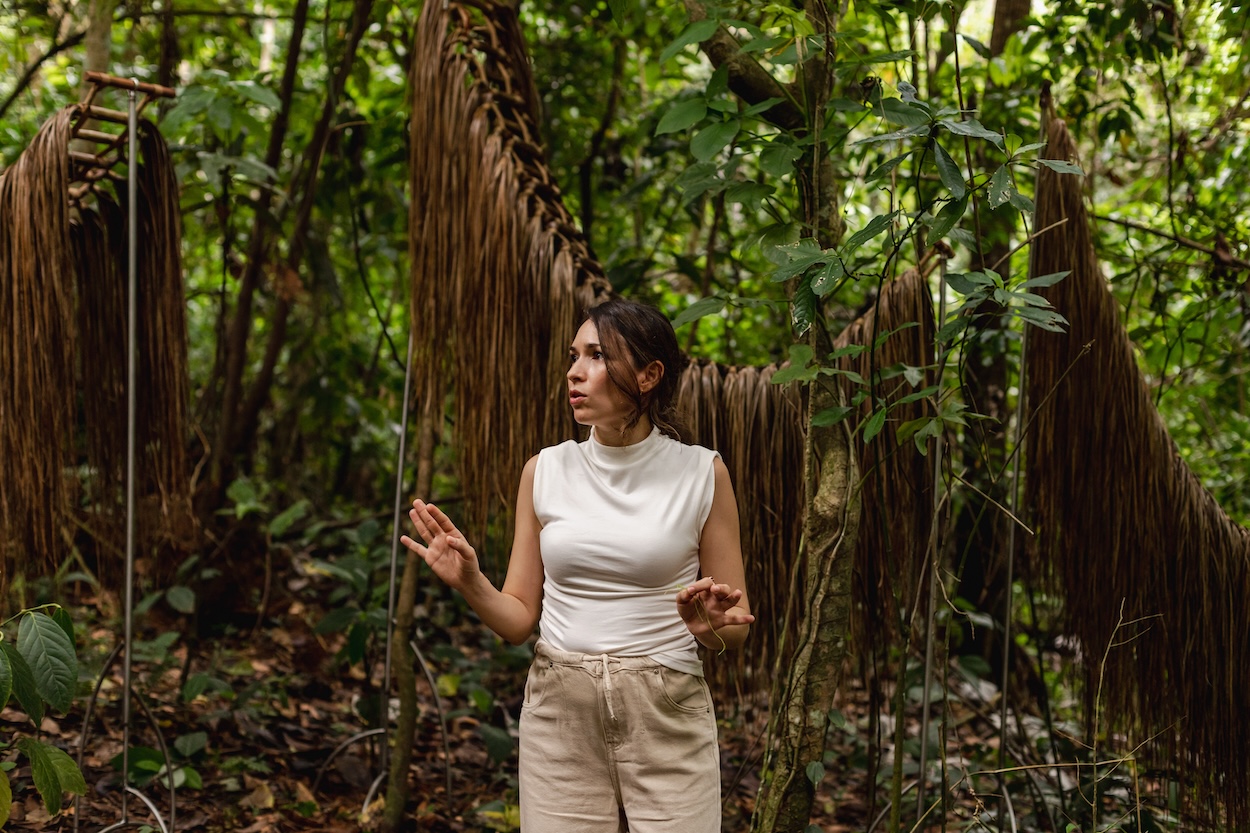
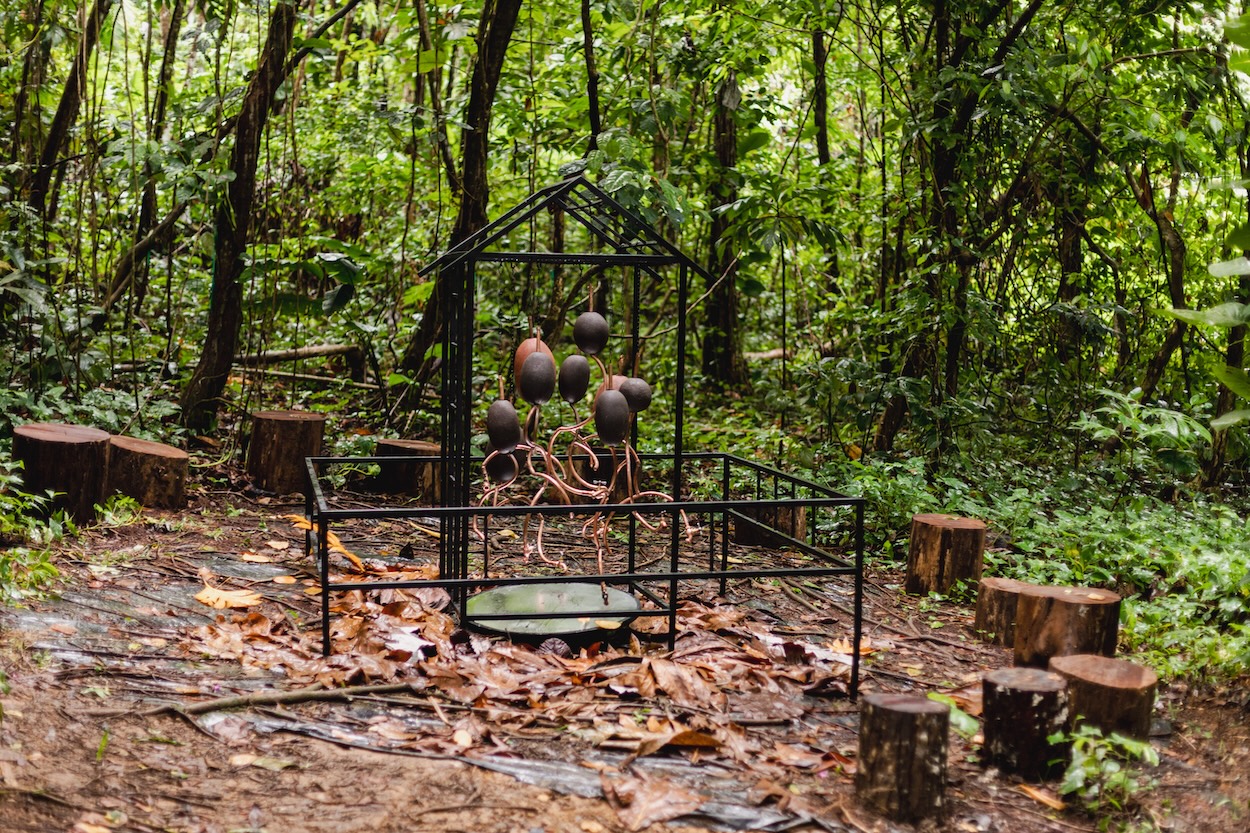
Frances Rivera Gonzalez with 'El Río se Hace Cuerpo'…
In El Yunque National Forest, Puerto Rico’s only tropical rainforest, RÍO, the third edition of ArteYunque annual exhibition, considers water as a living archive that carries ecological, cultural, and spiritual memory. Curated by Georgie Vega, the show gathers eight Puerto Rican artists—Gisela Colón, Jaime Suárez Toro, Jaime Rodríguez Crespo, Lena Galíndez, Edra Soto, Dhara Rivera, Daniel Lind-Ramos, and Frances Rivera González—to create site-specific works that translate the forest’s rivers into reflections on life, history, and community. Positioned along the Science and Conservation Trail at El Portal de El Yunque, the exhibition portrays water as a connective force that shapes ecosystems, cultural practices, and collective identity.
Through these installations, the artists navigate themes of ancestral knowledge, contemporary ecological concerns, as well as spiritual and cultural memory, while collaborating with ecologists and biologists to ensure minimal impact on the forest. Works range from sculptural interpretations of Taíno mythology to explorations of biodiversity and environmental cycles, each using water as both subject and lens. Complemented by performances, sound, and educational programs, RÍO frames artistic creation as an immersive dialogue between humans, nature, and history. In the following interview, Vega distills how the artists of ArteYunque engaged with the social, political, and curatorial framework of the river.
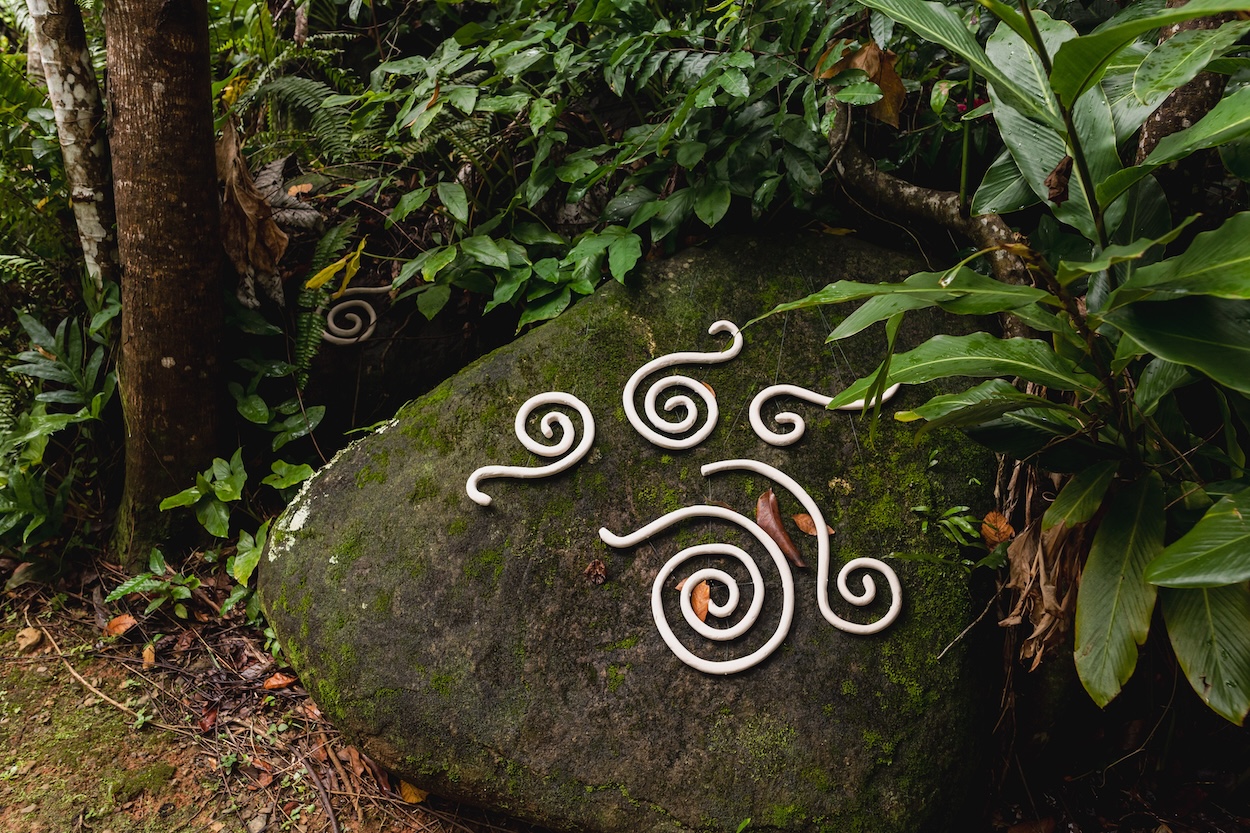
Jaime Suárez Toro's 'Barrolglifos de El Yunque'…
How does each artist engage with this framework, materially and conceptually?
Dhara Rivera, whose interdisciplinary practice has centered on water for over a decade, explores its aesthetic, symbolic, geographic, and political dimensions. Lena Galíndez draws inspiration from Puerto Rico’s natural ecosystems, particularly reefs, combining artisanal techniques with technological experimentation. Edra Soto’s work combines architectural interventions and collaborative projects to explore identity, history, and the Puerto Rican diaspora.
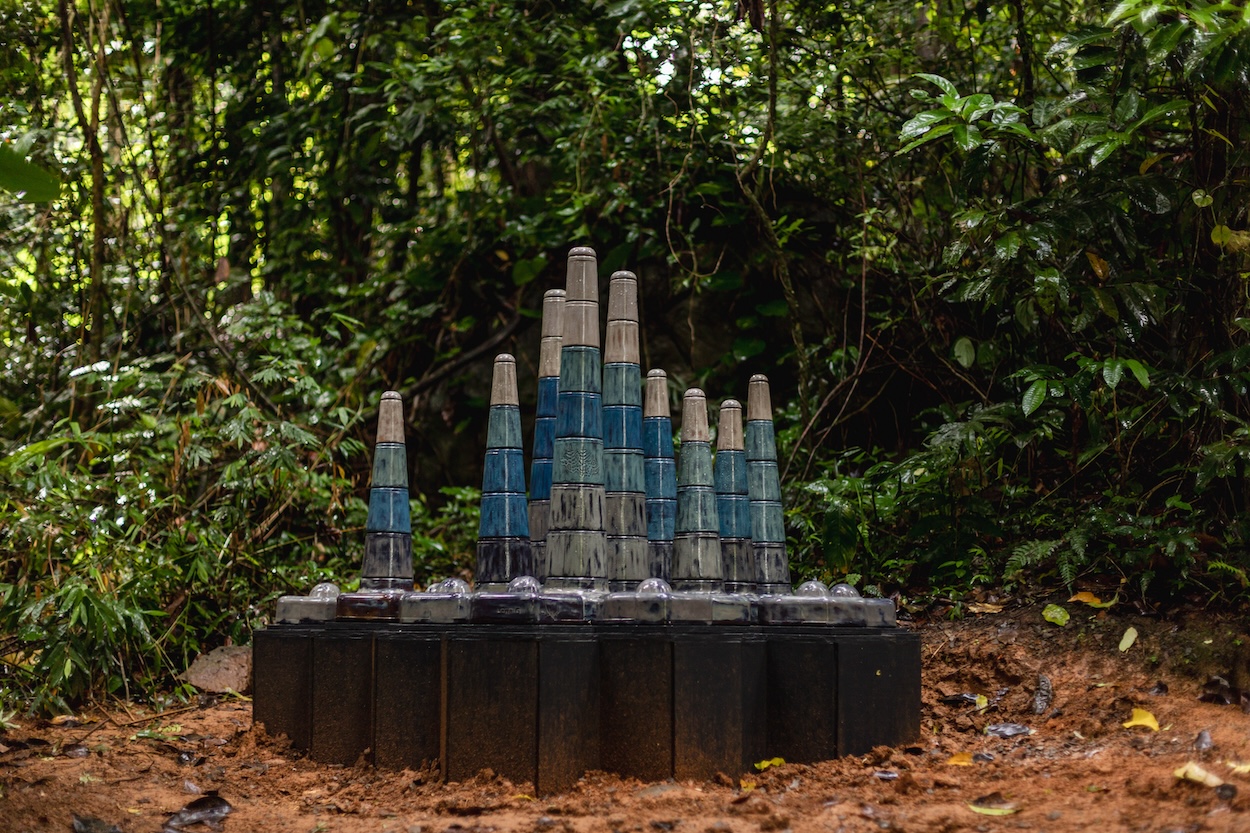
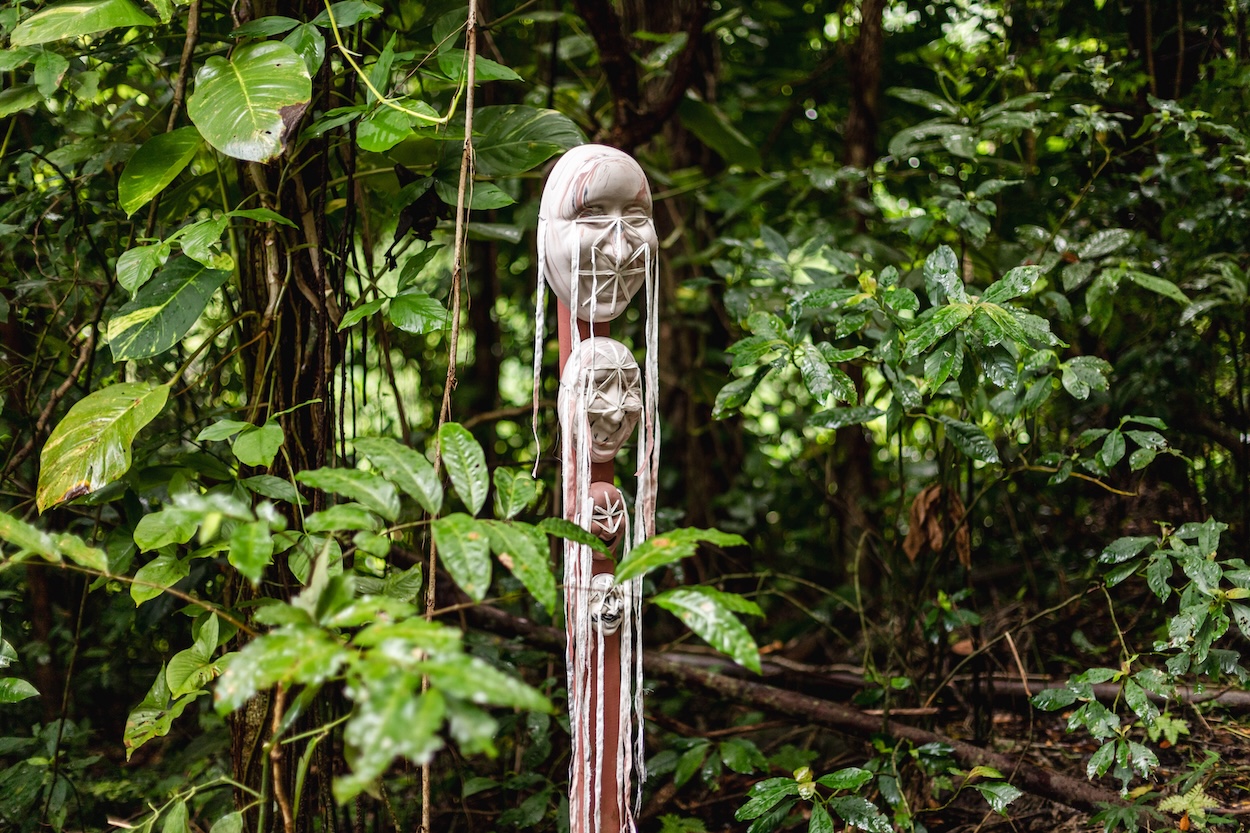
The exhibition takes El Yunque’s rivers as a point of departure, highlighting the intersections of nature, history, and culture. From Gisela Colón’s monolithic Ríos de Oro y Polvo, to Lena Galíndez’s organic reliefs in Brota el Agua, Dhara Rivera’s modular La Lluvia, la Casa y el Río Invisible, and Frances Rivera González’s sculptural homage in El Río se Hace Cuerpo, water is presented as both an ecological and cultural force. Other works honor ancestral and Afro-Caribbean traditions, including Edra Soto’s suspended ceramic masks in De Río a Río, Daniel Lind-Ramos’ mythologically inspired La Madre de Yúcahu, Jaime Suárez Toro’s reinterpretation of Taíno petroglyphs in Barroglifos de El Yunque, and Jaime Rodríguez Crespo’s sculpture Cortejo del Oro Verde, reflecting endangered species and seasonal rituals.
Together, these installations invite reflection on the interdependence of ecosystems and communities and on the urgent need to protect Puerto Rico’s water resources. The exhibition is complemented by an interdisciplinary program of performances, sound, and educational activities, creating immersive experiences that deepen engagement with water’s cultural, spiritual, and ecological significance.
Lena Galíndez's 'Brota El Aqua'…
How did you think about balancing scientific, historical, and spiritual narratives without one overtaking the others?
Scientific, historical, and spiritual narratives are treated as equally important layers. The exhibition is shaped by the artists’ work, allowing each perspective—ecological, historical, and spiritual—to emerge organically, so that no single narrative dominates.
As part of the process, artists visited the sites and engaged in dialogue with forest service scientists. These experts—including ecologists and biologists—provided recommendations to ensure that ecological considerations were fully integrated into the installations, achieving zero to minimal impact on the natural reserve.
Many of the works seem to reach across time—invoking Taíno cosmologies, Afro-Caribbean ritual, and contemporary ecological urgency in the same gesture. How do you see RÍO situating itself within the longer lineage of art-making in and about Puerto Rico’s natural world?
RÍO situates itself within Puerto Rico’s long lineage of art that engages deeply with the island’s natural world, connecting ancestral knowledge, cultural ritual, and contemporary ecological concerns. The exhibition foregrounds the ways artists have historically and continue to respond to rivers, forests, and watersheds—not merely as landscapes, but as sites of memory, spirituality, and environmental stewardship.
For example, Daniel Lind-Ramos’ La Madre de Yocahú invokes Taíno cosmology, representing Atabey, Yocahú’s mother, as a hybrid frog-woman figure. The sculpture channels maternal and regenerative power while highlighting water as a life-giving force that sustains El Yunque’s ecological balance. Similarly, Jaime Suárez Toro’s Barroglifos de El Yunque interprets Taíno petroglyphs in clay reliefs on natural rocks, activating ancestral memory and connecting past and present through water as a symbolic and material throughline.
Edra Soto's 'De Río a Río'…
Contemporary perspectives also emerge through works such as Edra Soto’s From River to Laughter, which links the river to experiences of migration, transformation, and resilience, and Frances Rivera González’ The River Becomes Body, which uses handwoven coconut fibers to map El Yunque’s eight rivers, blending ecological representation with cultural and spiritual memory.
Through these works, RÍO demonstrates that Puerto Rican art has consistently recognized the intimate relationships between people, culture, and the environment. By weaving together Taíno and Afro-Caribbean knowledge with present-day ecological urgency, the exhibition situates itself within a continuum in which the island’s natural world is both a living archive and an active source of artistic inspiration.
Dhara Rivera's 'La Lluvia, la Casa y el Río'…
ArteYUNQUE’s mission bridges. After RÍO, what possibilities do you see for deepening the dialogue between art, science, and community—especially at a time when environmental preservation and cultural memory feel increasingly intertwined and urgent?
Through ArteYUNQUE, we aim to contribute to ongoing conversations initiated by past projects, expanding and enriching the dialogue at the intersection of art, science, and community. Our goal is to actively participate—building on what has come before while opening new pathways for reflection and engagement.
In the Puerto Rican archipelago, this dialogue is lived daily—shaped by our colonial history, resource scarcity, recurrent environmental challenges, and political pressures that threaten both natural and cultural heritage. Artists’ works respond to these realities, offering insights into resilience, memory, and the enduring connections between humans and the environment.
ArteYUNQUE recognizes the unique privilege of commissioning and supporting artistic creation within El Yunque, a space of immense ecological and cultural significance. By providing artists the opportunity to engage directly with the forest, its communities, and its watersheds, we foster work that is site-specific, reflective, and deeply connected to place.
Through annual thematic exhibitions, commissioned projects, and interdisciplinary programming, we continue to foster dialogue, strengthen connections between the forest, local communities, and visitors, and highlight the intertwined urgency of environmental preservation and cultural memory. By positioning artists as collaborators with scientists, cultural institutions, and communities, ArteYUNQUE creates a platform for reflection, education, and creative engagement that evolves with each iteration.