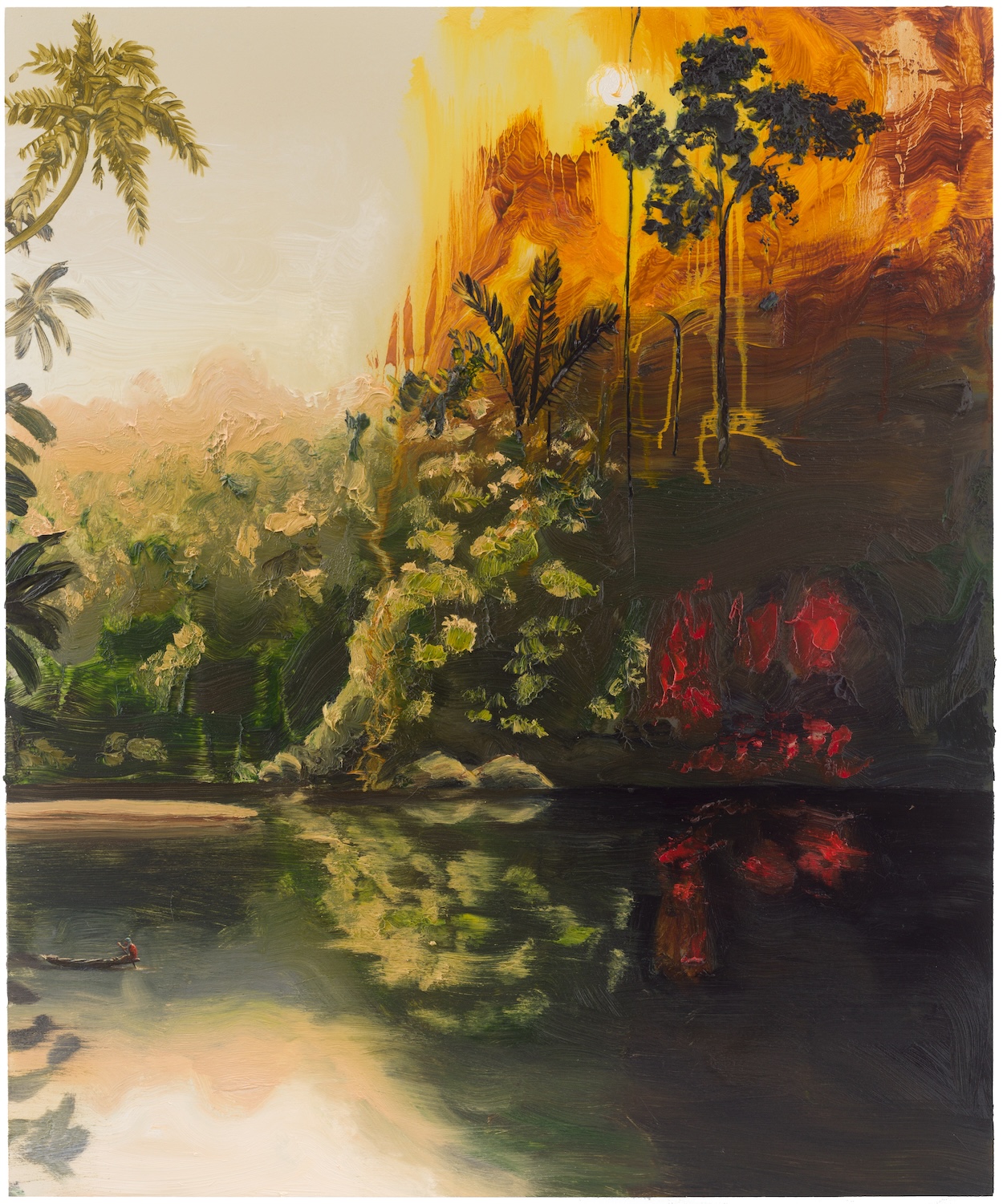
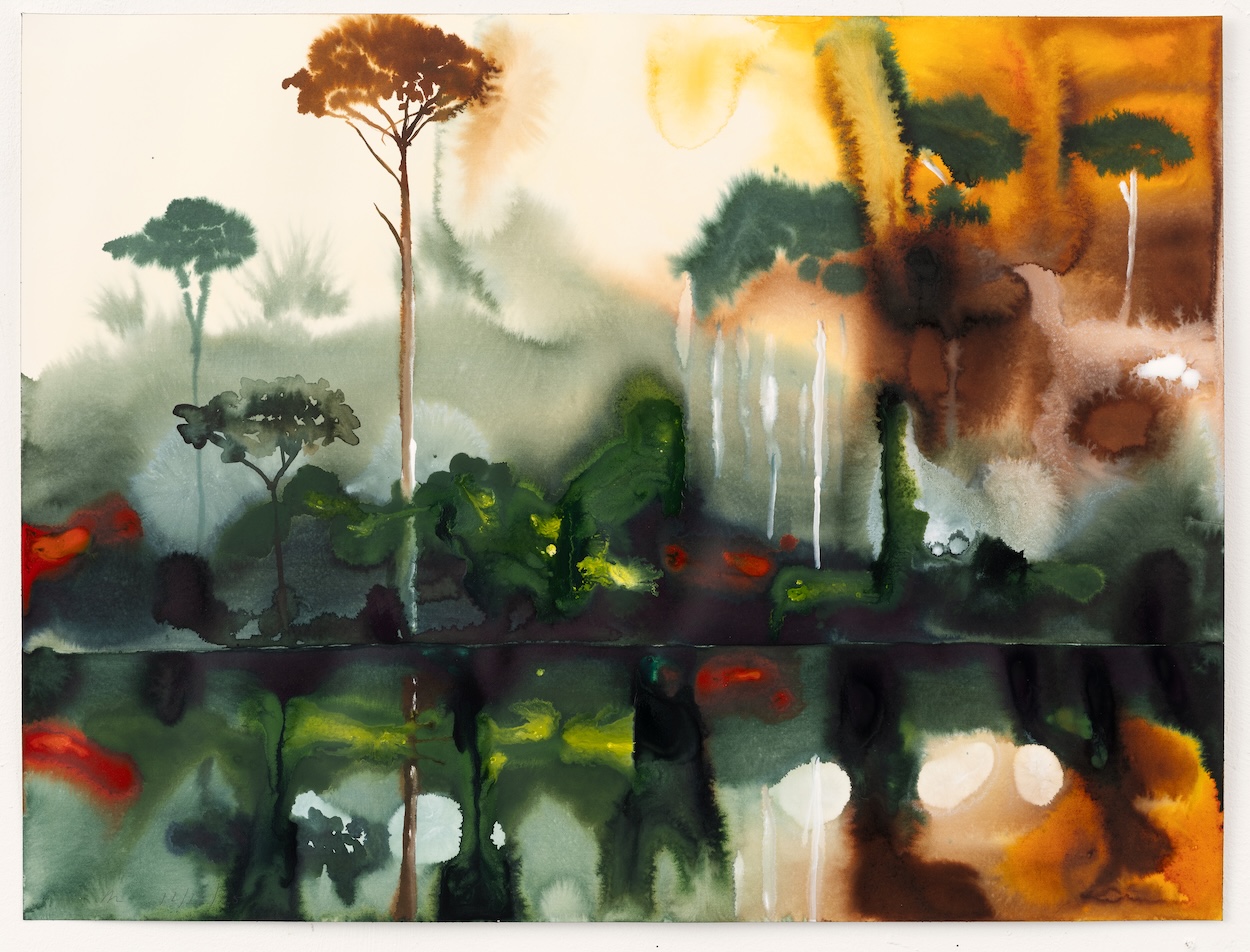
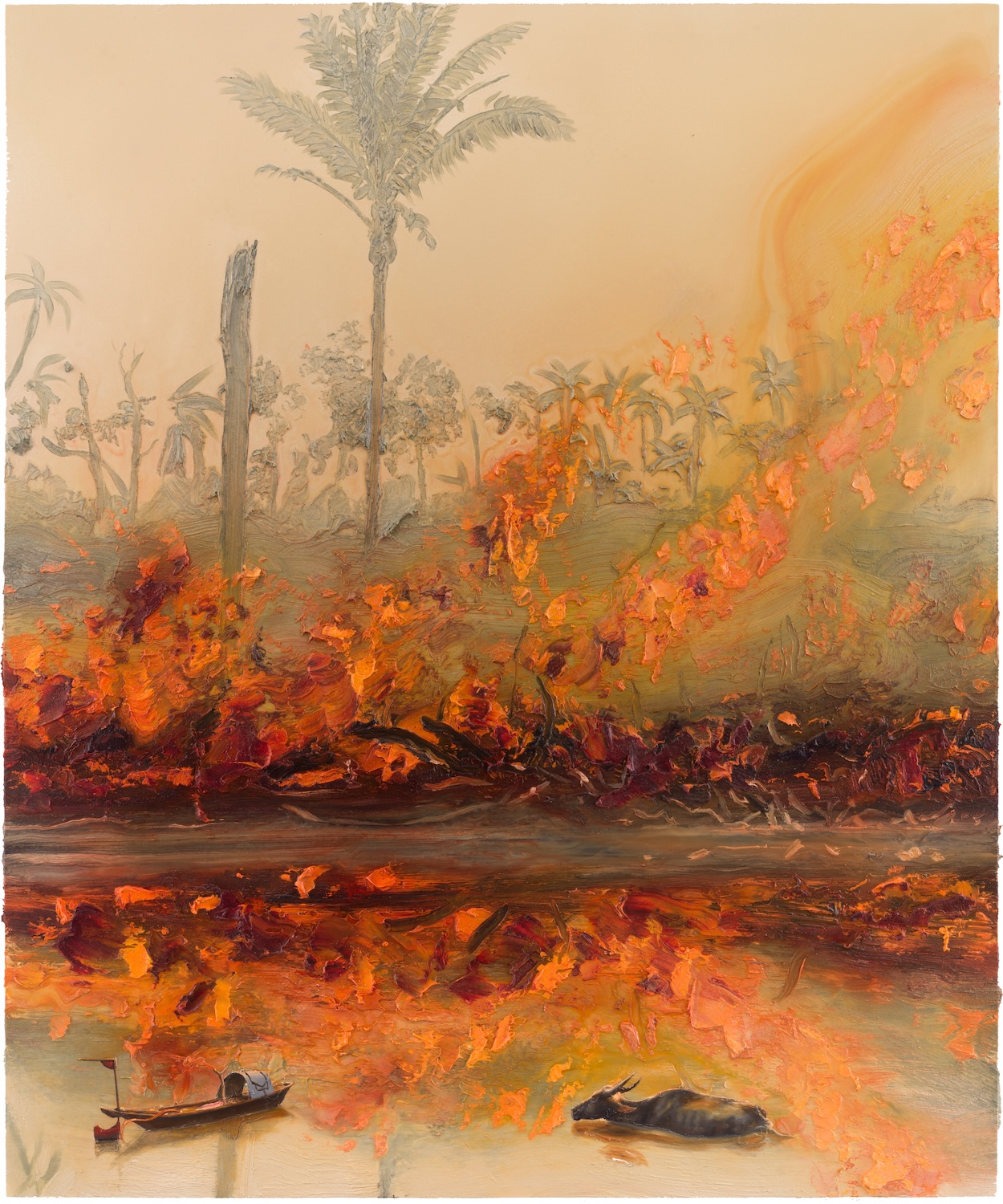
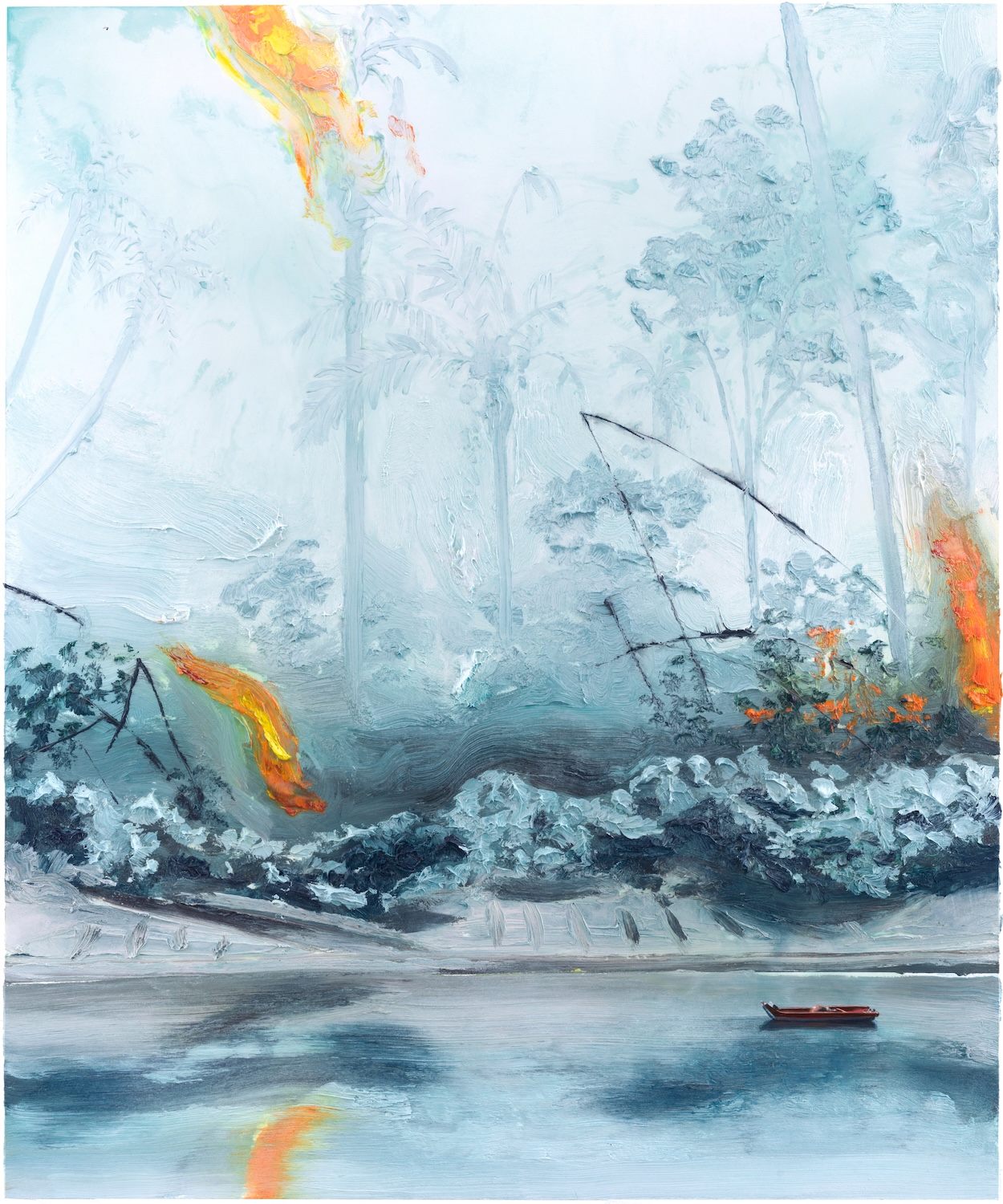
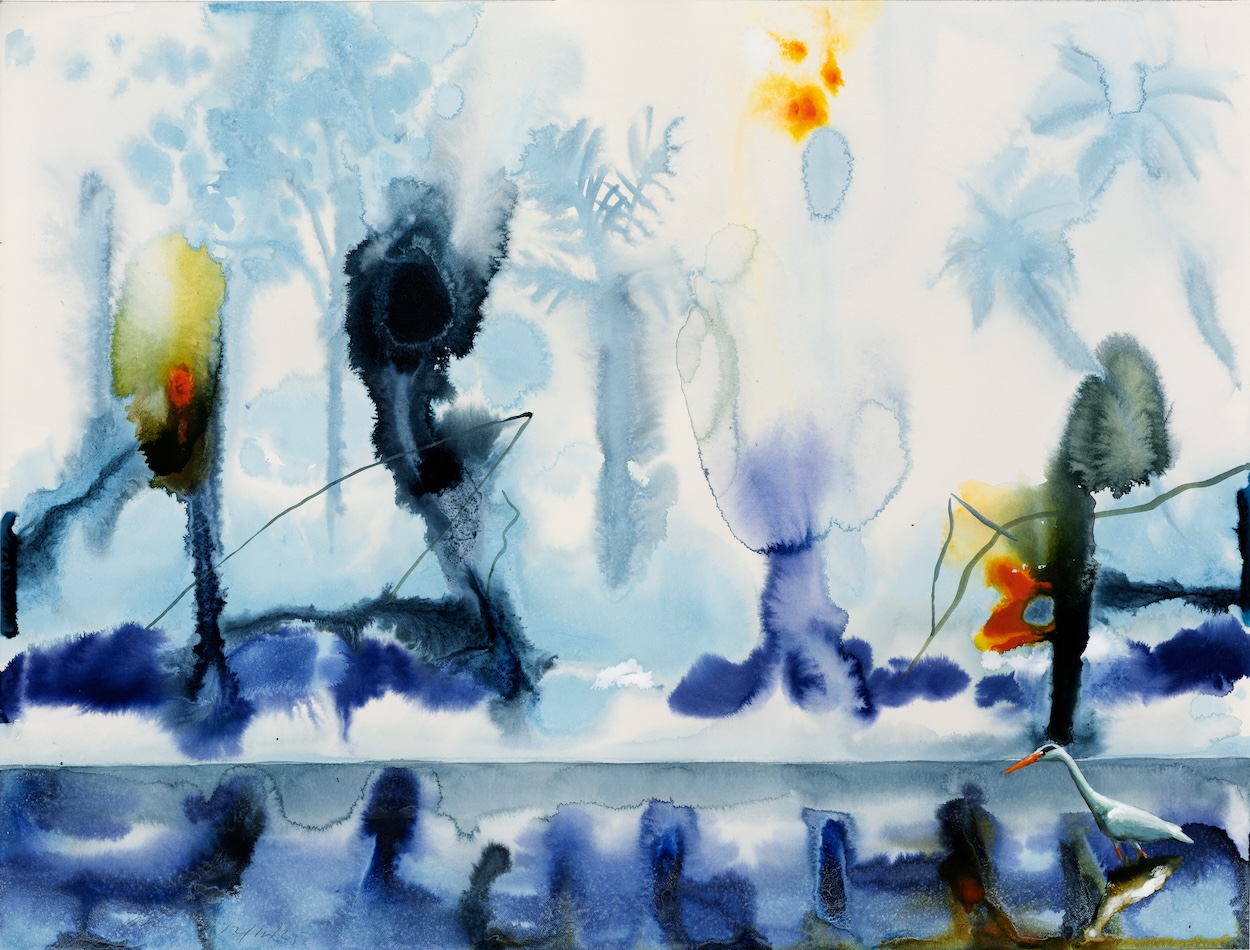
Alexis Rockman’s first solo exhibition with Jack Shainman Gallery, “Feedback Loop,” conveys quiet urgency through watercolor works of ecological distress, as well as indelible environmental scenes composed of oil and cold wax on wood. Within these new and recent pieces, the fine artist encourages more than climate change reflection; he beckons viewers to protect the future of the planet by nesting vulnerability within beauty.
It may seem contradictory to portray the gravity of destruction through an artistic format so often associated with lightness—and yet Rockman uses the medium to converse with the message. “I’ve always loved the tradition of watercolor,” he tells Surface. “When I began my career in the mid-1980s, almost no one—aside from [Francesco] Clement—took it seriously. Watercolor was, and often still is, relegated to the margins: Sunday painting, illustration, something dismissed as slight and lacking the supposed gravity of oil.”
The more Rockman explored it, the sharper its inventive capabilities came into focus. “That history made watercolor especially appealing to me—a disgraced medium, ripe for resurrection,” he adds. “The expectations watercolor carries about content create a tension that I find endlessly fascinating.”
Rockman transports viewers into lush scenes at precise moments. “Forest Floor is an indexical landscape—an examination of invertebrate life within a single square meter of leaf litter in a forest on the Eastern Seaboard of the U.S.,” he explains. “Pioneers traces how freshwater life arrived and transformed the Great Lakes, while the Great Lakes Field Drawings extend that inquiry through direct, material engagement with specific sites.” For the forest fire paintings and watercolors, Rockman spotlights locations where fires have emerged in the last decade—or are likely to emerge soon.
Color drives the depth of Rockman’s paintings. “I love playing with expectations about what a palette should be—especially in projects like the forest-fire paintings,” he says. “In three works in particular—Canoes in the Fog, Lake Superior, and Karaikal Beach, Padme River—I made a deliberate effort to challenge those expectations by keeping the palette almost monochrome, or counterintuitively blue-gray, rather than what viewers might pictorially anticipate.”
Though environmental subject matter has defined his work for decades, his motivation behind realizing it has changed. “Throughout the late 1980s and 1990s, I believed our ecological crisis stemmed from an information deficit—and that my job as an artist was to help fix that,” he says of the drive behind each piece. “Around twenty years ago, after finishing Manifest Destiny (2004), I realized that neither I nor my work was going to save the world. It was a sobering shift.”
He adds, “I understood that whatever time I had left—both to make work and simply to be alive—I needed to find a way to enjoy it. Since then, I’ve tried to balance the environmental concerns I still feel with great intensity against an abiding sense of grief, while also honoring the extraordinary privilege of making work I love and continuing a lifelong conversation with my heroes in art history.”
Rockman feels aligned with the values of Jack Shainman Gallery, “not only for the strength of the art it champions, but for its commitment to being on the right side of history,” he concludes. “We share a belief that culture has a responsibility to engage questions of many types of justice, and to hold the systems accountable in shaping our collective future.”