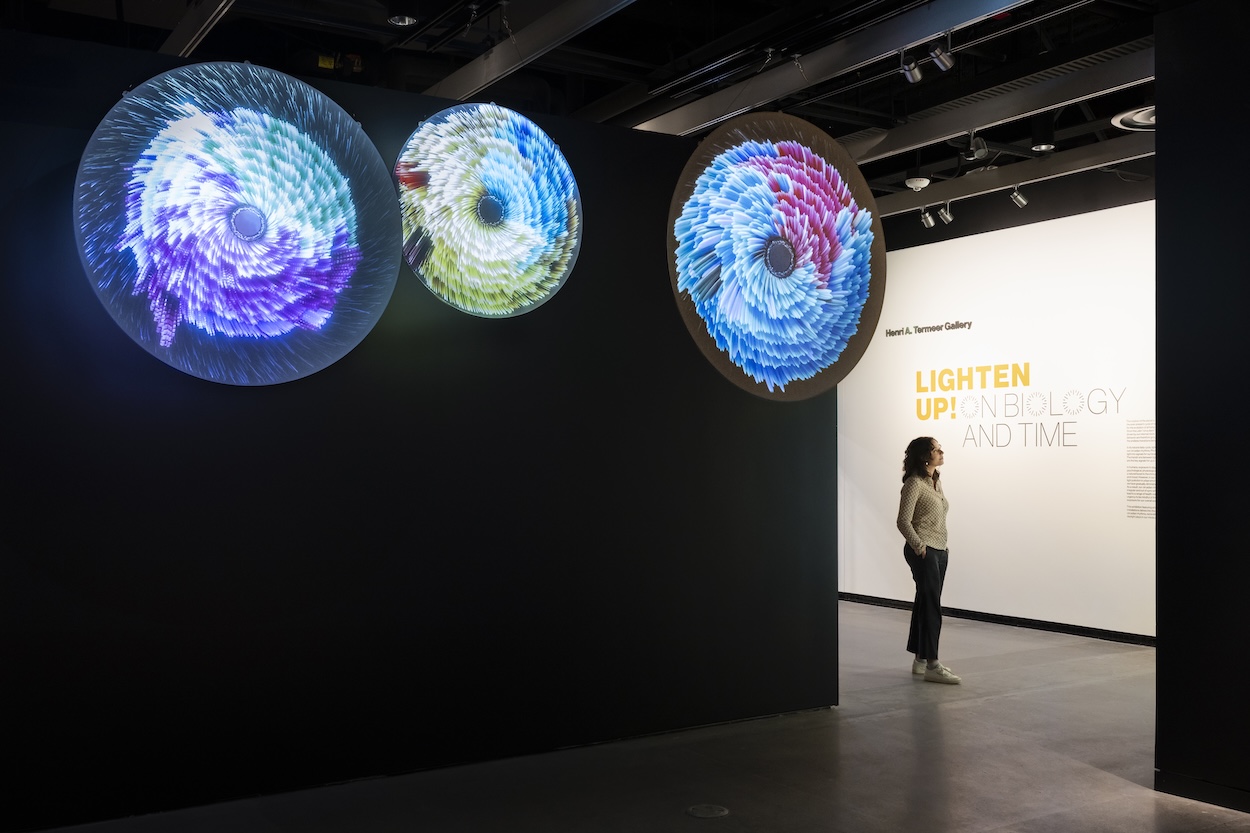
The second exhibition within the MIT Museum’s inaugural thematic season, “Lighten Up! On Biology and Time” surveys the connection between living creatures and circadian rhythm through 18 contemporary artworks and experiential environments. Though we may be acutely aware of the function of our biological clocks, and the cycle of day and night, the exhibition not only poses fundamental questions but gleans insight from the artistic experiences it presents. Central to this is the immersive installation Hotel Room #2: Communal Dreams by Carsten Höller, dream scientist Adam Haar, and Seth Riskin (of the MIT Museum Studio and Compton Gallery).
Carsten Höller Encourages Communal Dreaming at the MIT Museum
BY DAVID GRAVER January 28, 2026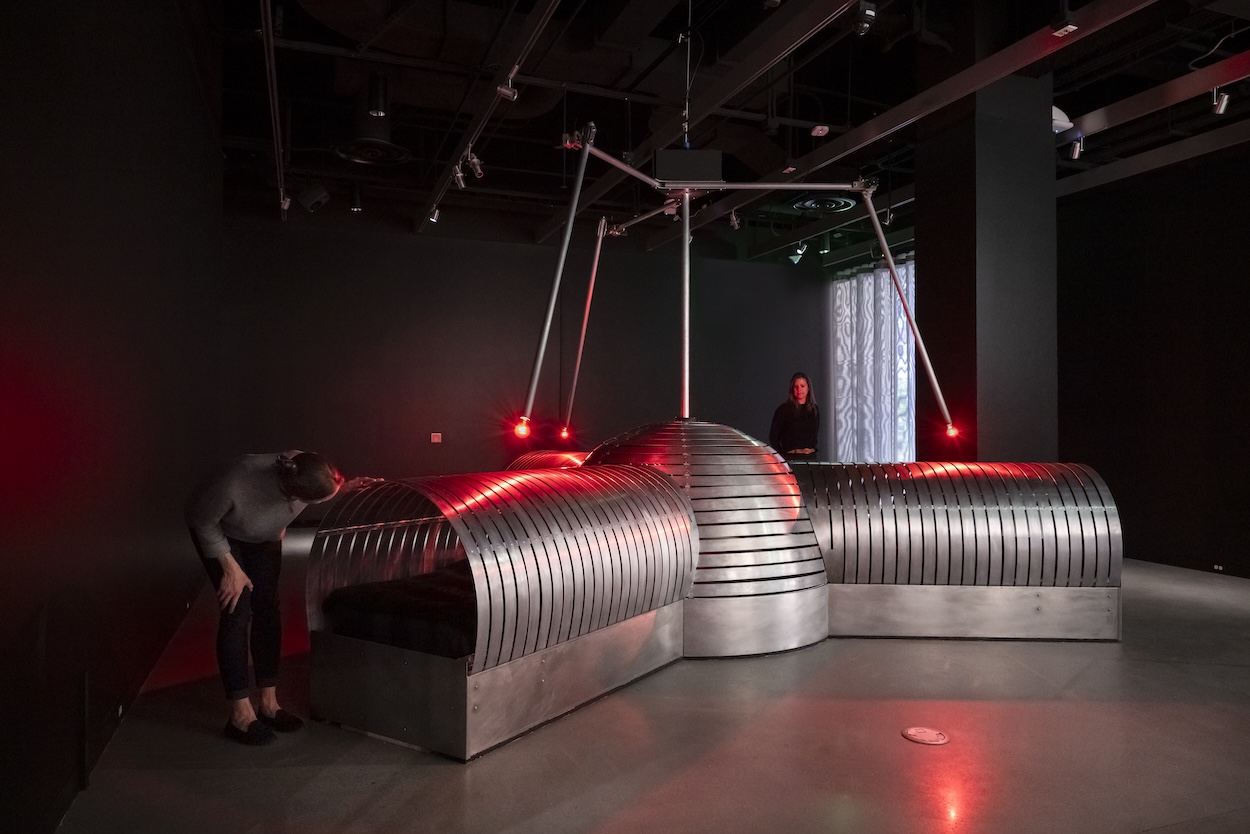
Carsten Höller's Hotel Room #2/ Communal Dreams © Anna Olivella
…
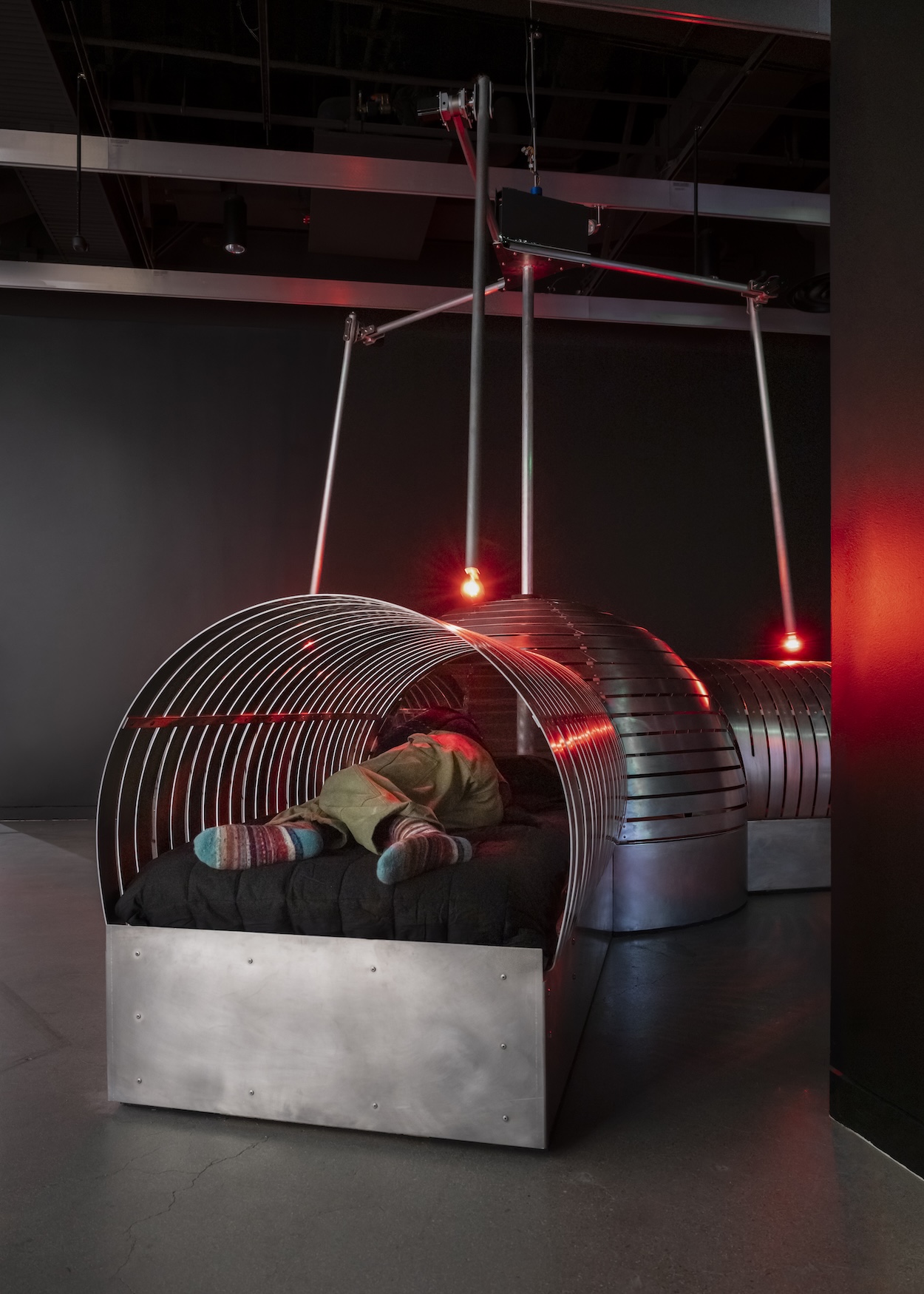
Carsten Höller's Hotel Room #2/ Communal Dreams © Anna Olivella
…
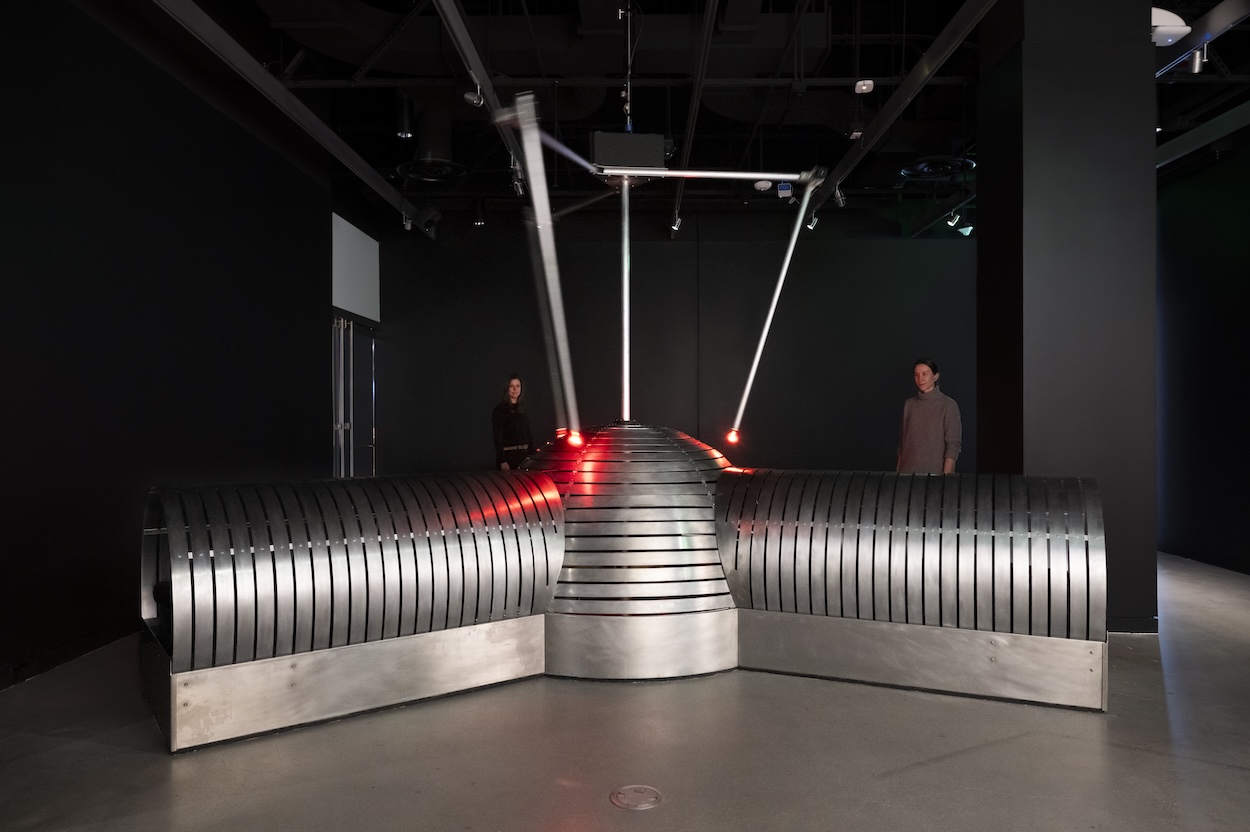
The sculptural piece welcomes three guests to sleep inside—sharing an environment of diffuse light pulses, spatialized sound, and gentle motion—to prove that dreams can be influenced in real time. Born within Höller’s 2020-2021 Visiting Artist Residency at MIT Center for Art, Science & Technology (CAST), Hotel Room #2: Communal Dreams was incubated within the MIT Museum Studio and Compton Gallery and informed by dream research and engineering from the Fluid Interfaces research group at the MIT Media Lab. “The initial idea came from a tension we kept returning to: dreaming is treated as radically private, yet so much of human cognition—even at rest—is socially structured and relational,” Höller tells Surface.
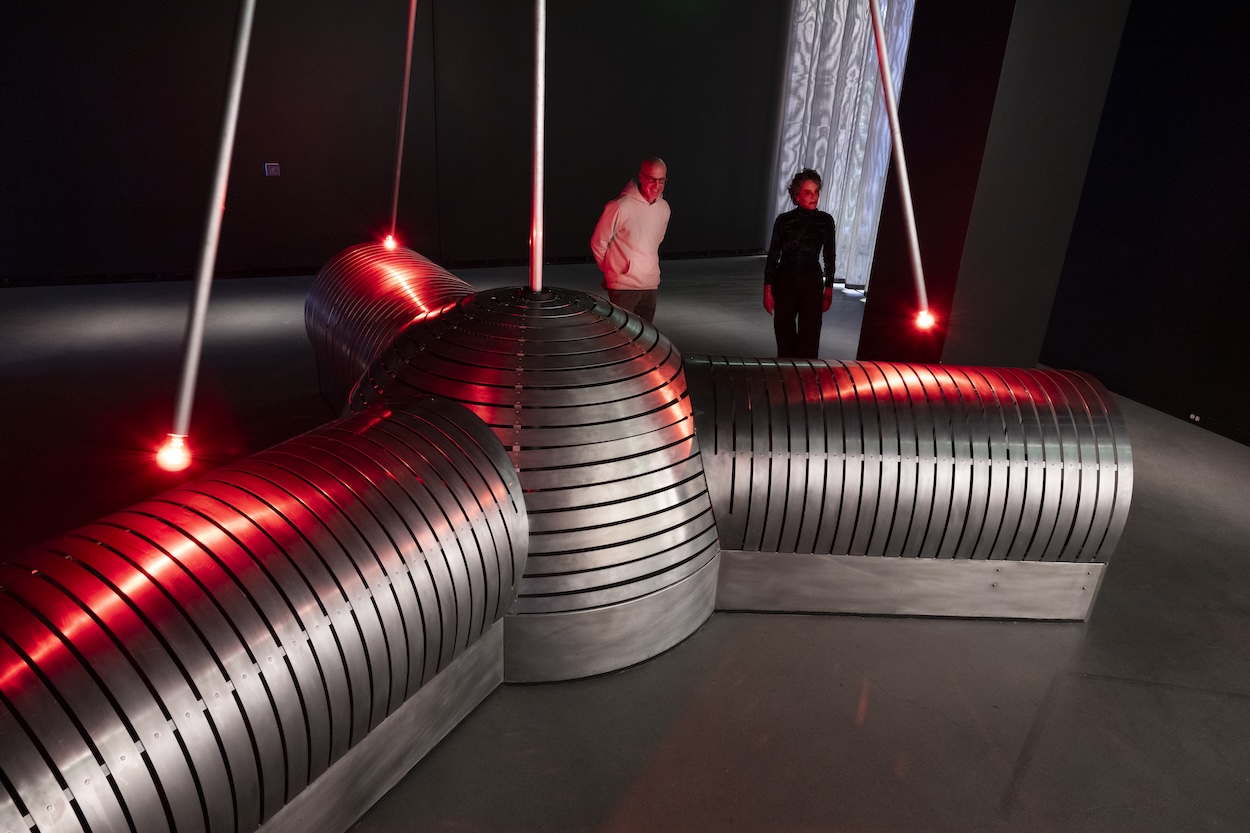
Carsten Höller's Hotel Room #2/ Communal Dreams © Anna Olivella
…
“Neuroscience shows that during early sleep, particularly NREM1, the brain remains highly responsive to external cues, while phenomenologically, this is the state where boundaries between self and environment soften,” he continues. “We are not in a sealed-off dream world; we are still tied to the body, the breath of a partner nearby, the birdsong outside, the sunrise on the cheek that changes dreams.”
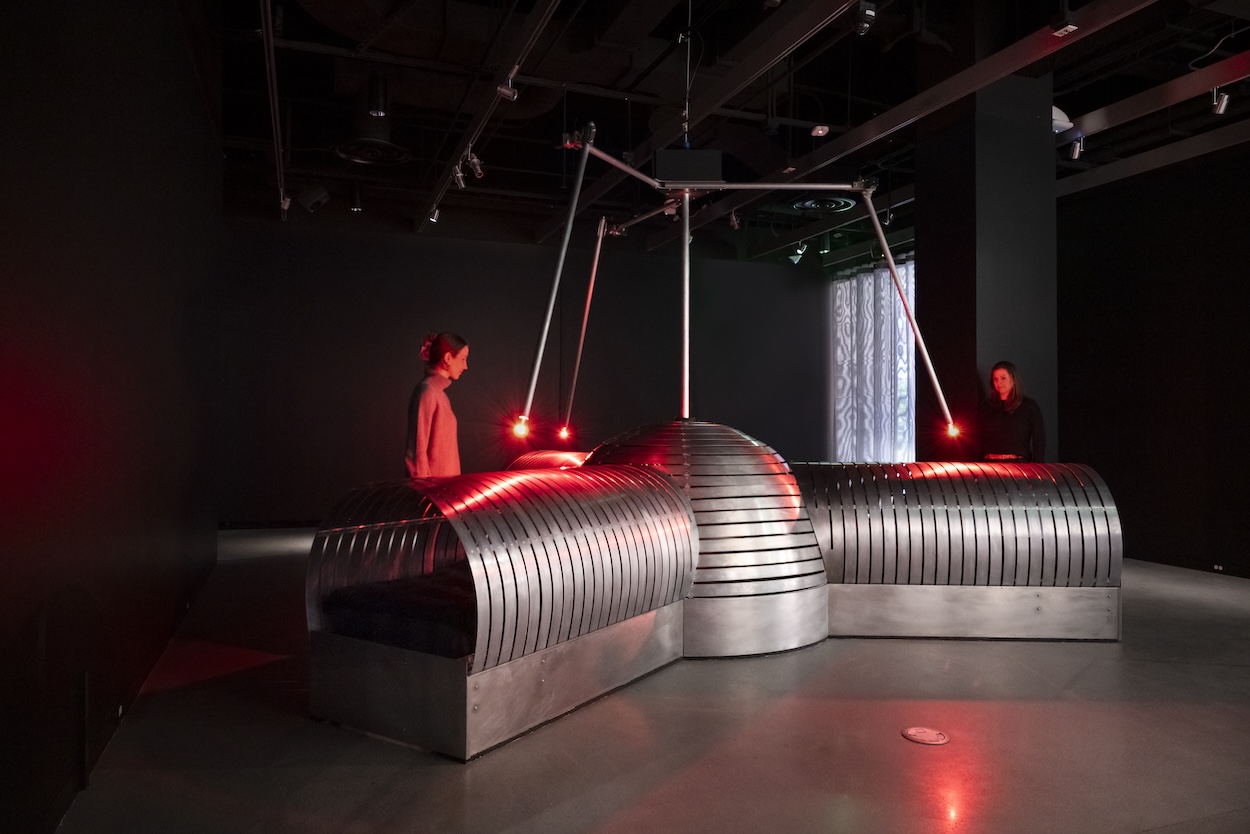
Carsten Höller's Hotel Room #2/ Communal Dreams © Anna Olivella
…
While pondering collective perception and how experiences and feelings might overlap in the unconscious, Höller developed a mission—not to engineer a single shared dream, “but to ask whether shared conditions could produce shared emotional and thematic resonances. That question has precedents both in brain science and in art. You see it in Surrealist collective games, in André Breton’s fascination with group unconscious processes, and later in participatory installations where perception becomes something co-authored.”
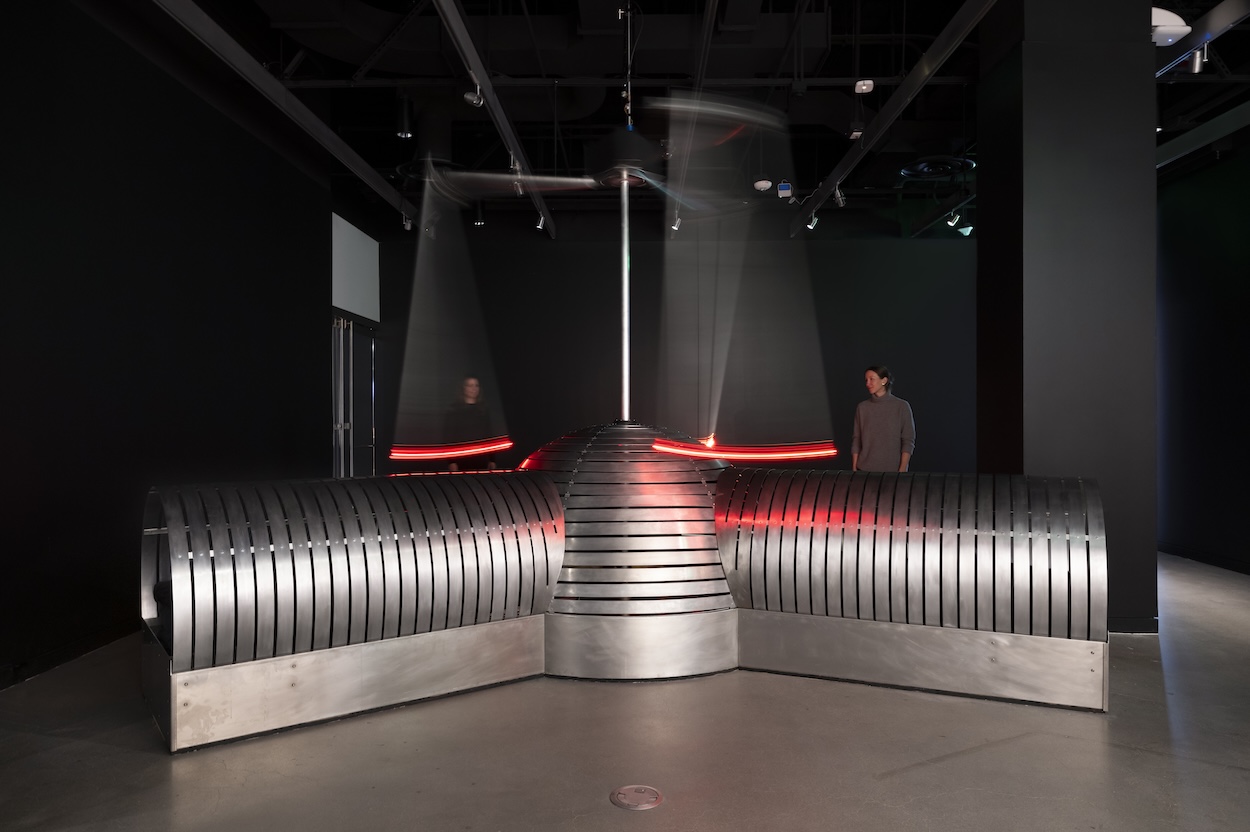
MIT Museum exhibition installation images © Anna Olivella
…
The experience invites participants to drift into a controlled state. The boundary between art work and museum is permeable. “In research aimed at influencing dreams, complete sensory deprivation isn’t desirable—the brain needs just enough signal to remain engaged without becoming alert,” he says. “Architecturally and perceptually, the installation creates what you might call a threshold condition. Light levels fade and return, sound becomes directional and enveloping, and the posture of lying down together immediately shifts participants out of the museum’s upright, attentive mode.”
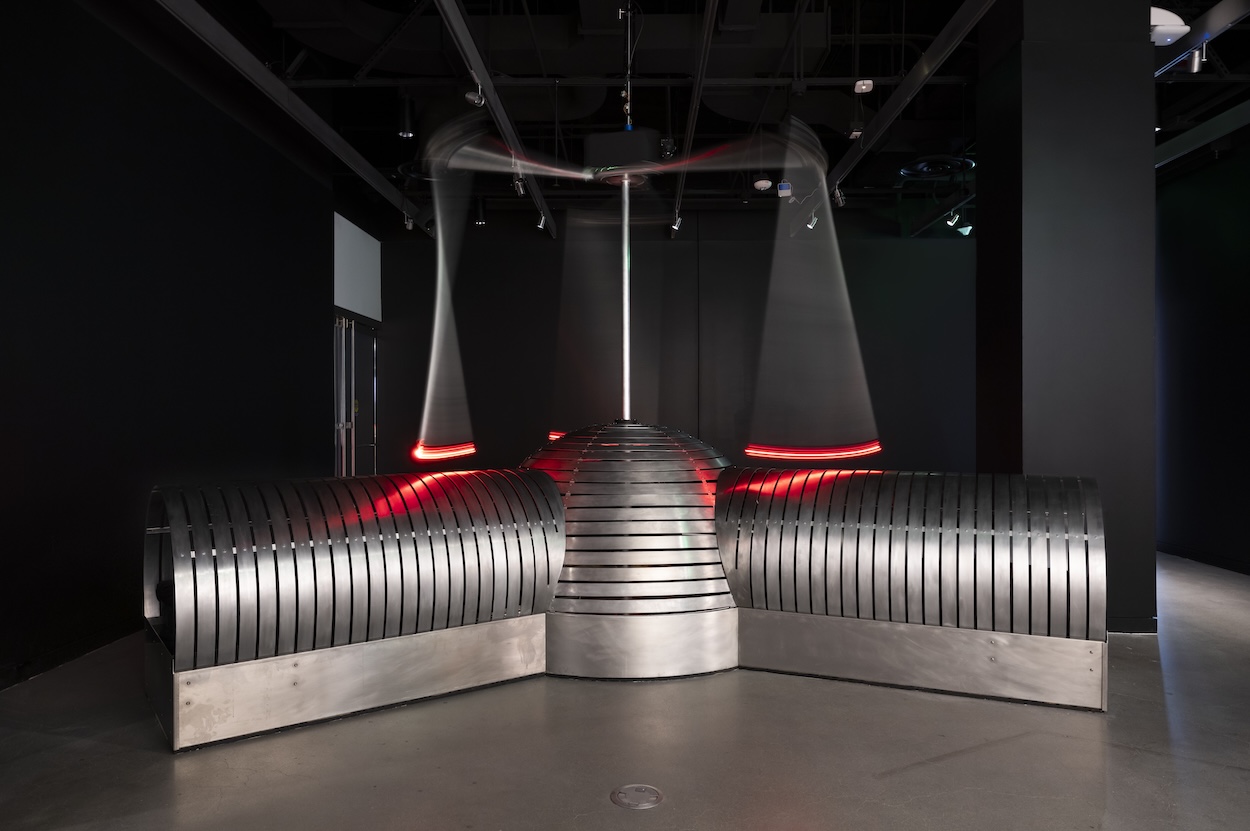
MIT Museum exhibition installation images © Anna Olivella
…
Haar grounded the project in dream-science protocols, “particularly around targeted dream incubation and structured dream reporting,” Höller says. “His research ensured that we weren’t relying on metaphor alone; the stimuli, timing, and data collection all evolved through iterative testing together. Seth brought a curatorial sensibility rooted in both his personal work with light art and his teaching at MIT that enables understanding of science. He helped shape the piece, led testing with sleeping participants, and guided us on the many ways light, sound and movement could come together.”
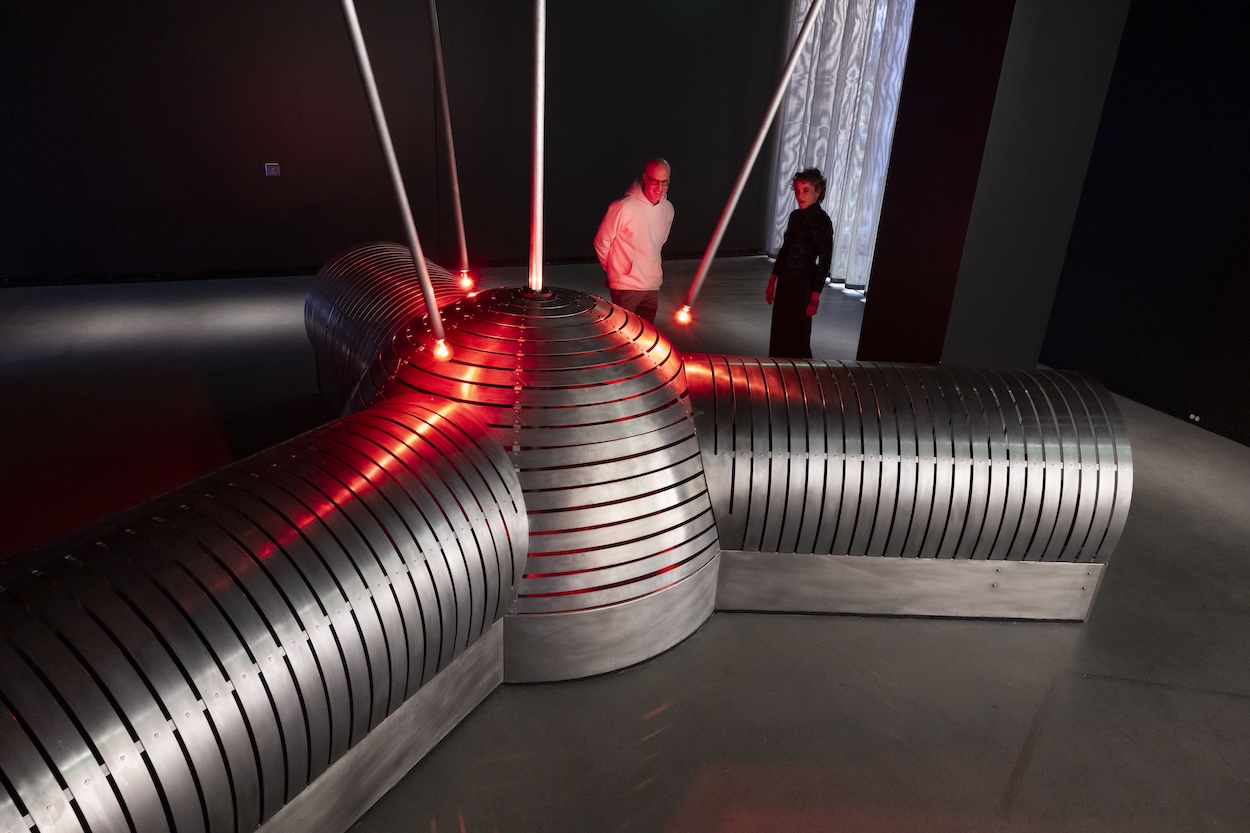
MIT Museum exhibition installation images © Anna Olivella
…
For the team, it was integral that the experience be shared with strangers. “Neuroscience increasingly shows that even at rest, the brain is deeply social—default mode activity reflects relational thinking, memory of others, imagined dialogue,” Höller adds. “Sleeping beside strangers introduces a subtle tension: vulnerability without intimacy, proximity without narrative. That condition echoes philosophical questions posed by thinkers like Jean-Luc Nancy about being-with—forms of togetherness that don’t require union or agreement. It injects a bit of doubt in the assumption that in our inner worlds, we are alone. Sharing the experience with strangers allows something emergent to happen.”
MIT Museum exhibition installation images © Anna Olivella
…
“The ‘Lighten Up!’ exhibition begins with awakening and ends with sleep. It is a whole-body experience and rewards those who take the time to linger,” Michael John Gorman, The Mark R. Epstein Director, MIT Museum, tells Surface. Gorman notes that this exhibition is only the second of many. “In February we will open two additional exhibitions: ‘Freezing Time,’ exploring the origins of the techniques of stroboscopic photography used by legendary MIT professor Harold “Doc” Edgerton, and ‘Split | Second’ exploring precision time measurement and alternative temporal systems, from sundials to atomic clocks.” More to ponder, and experience with a stranger.
MIT Museum exhibition installation images © Anna Olivella
…