How did one build a cult of personality in the 17th century? Louis XIV gave the task to his principal painter, Charles Le Brun. Across spectacular works in the decorative arts, including tapestries, furniture, and sculpture, Le Brun crafted the French king’s “brand” says Wolf Burchard, curator of the department of European sculpture and decorative arts at the Metropolitan Museum of Art in New York, who wrote a 2016 book, The Sovereign Artist, about the historic image-maker. “It’s a total glorification of Louis the 14th as the king of France at the center of an infinite universe.”
At Paris’ Grand Palais, 32 Louis XIV Carpets Finally Make Their Debut
BY ELIZABETH FAZZARE February 05, 2026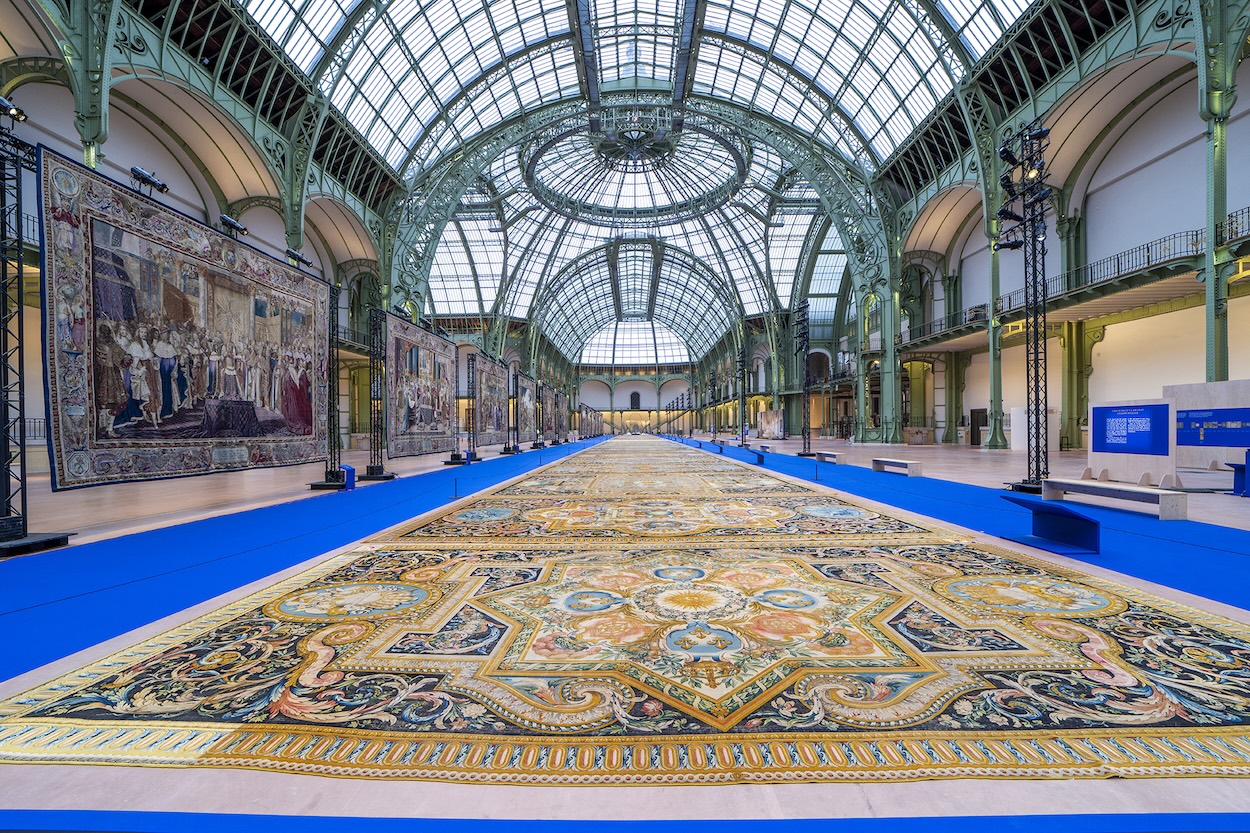
Didier Plowy for GrandPalaisRmn, 2026
…
Didier Plowy for GrandPalaisRmn, 2026
…
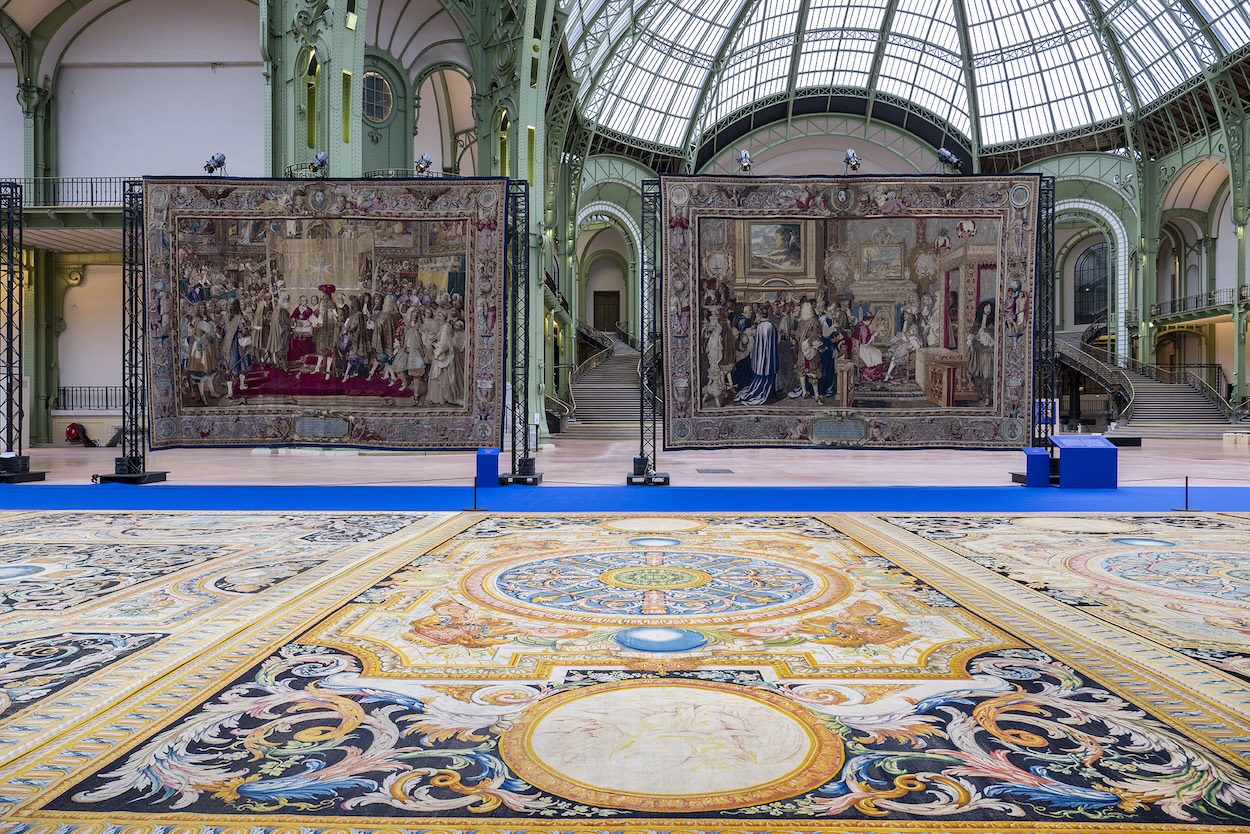
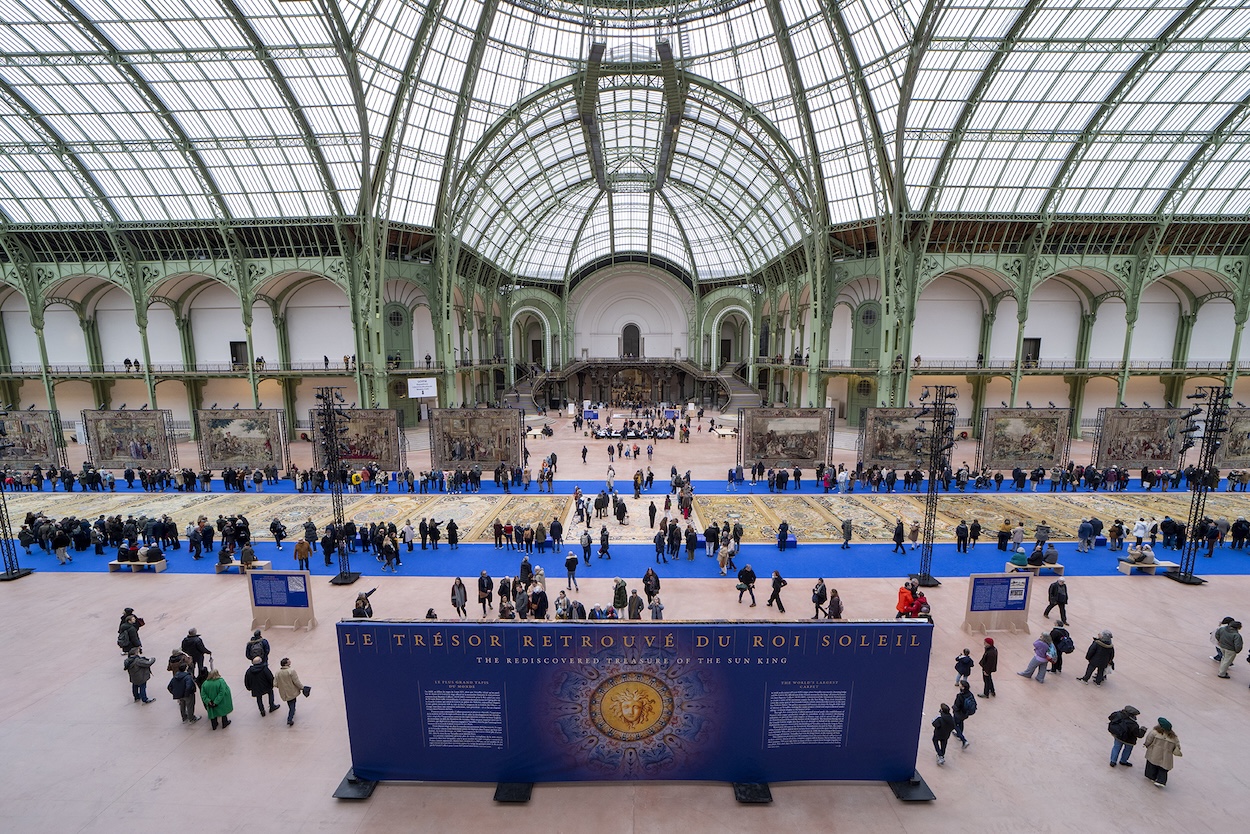
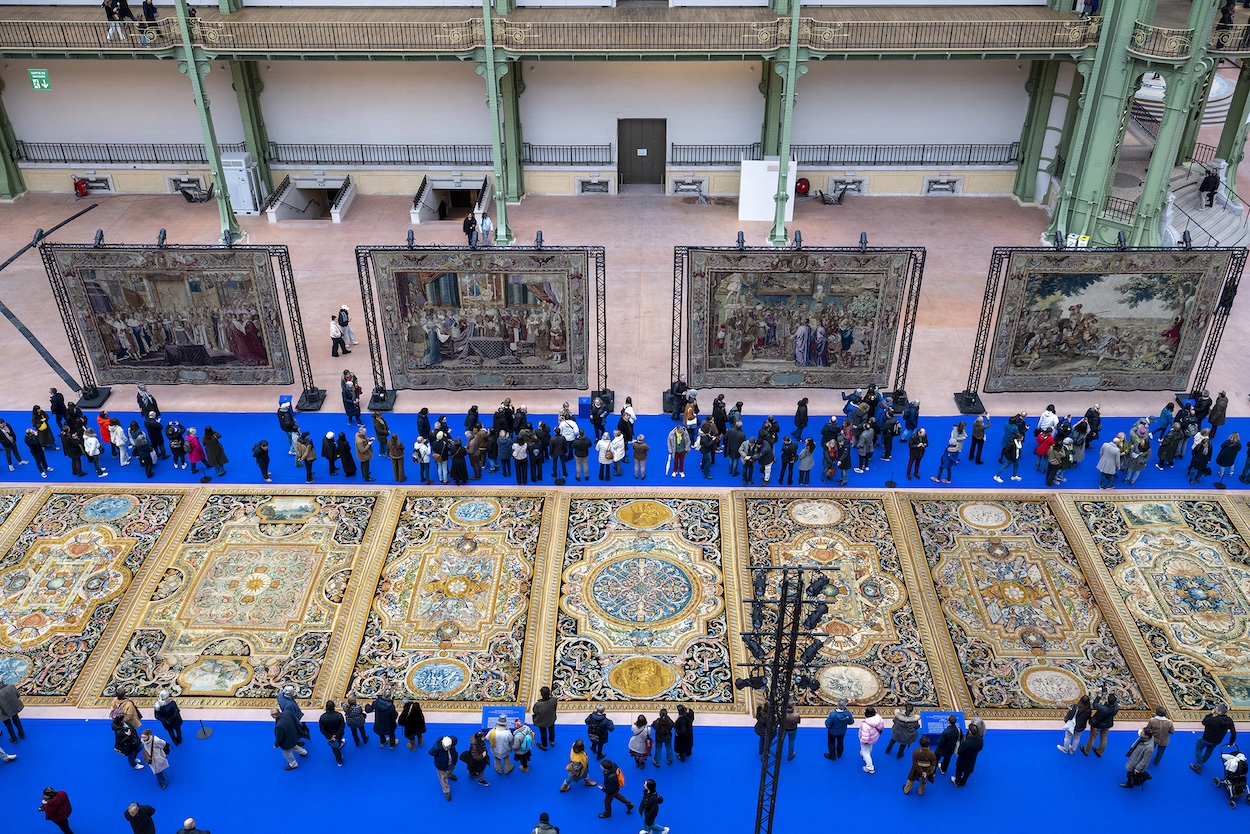
What could appear more infinite than a seemingly endless gallery? One decorated with 92 English wool carpets, each depicting the royal and his virtues as akin to the Greek sun god Apollo himself. Made between 1668 and 1688, these rugs were specified to decorate the Grande Galerie du Louvre, a 1,509-foot-long (440-meter-long) building that once connected the Louvre palace and now-destroyed Tuileries palace. However, “by the time the carpets were complete, they were never rolled out in their entirety,” says Burchard, because Louis XIV had moved to Versailles and Le Brun began his final work of royal propaganda, the painted ceiling in its Hall of Mirrors. Now through February 8, however, 32 of these monumental carpets are on display together for the first time in history.
Didier Plowy for GrandPalaisRmn, 2026
…
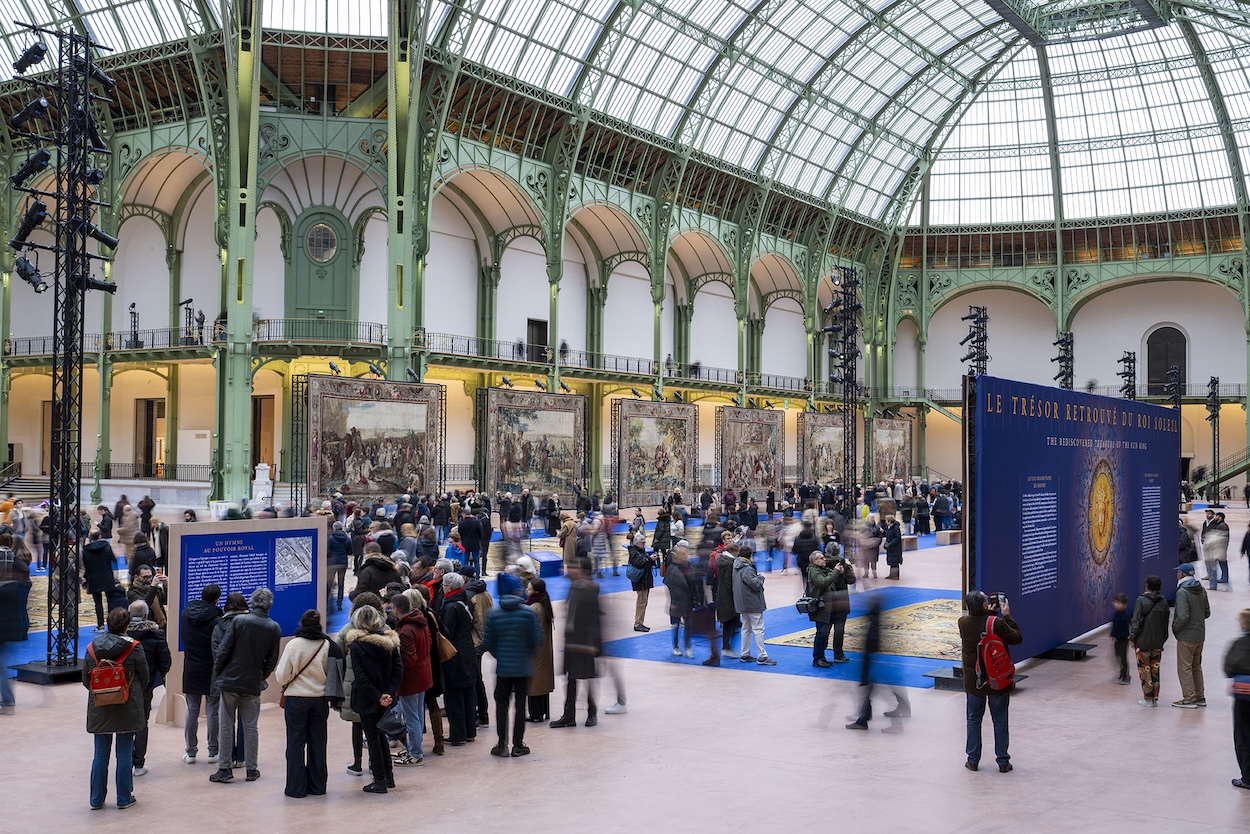
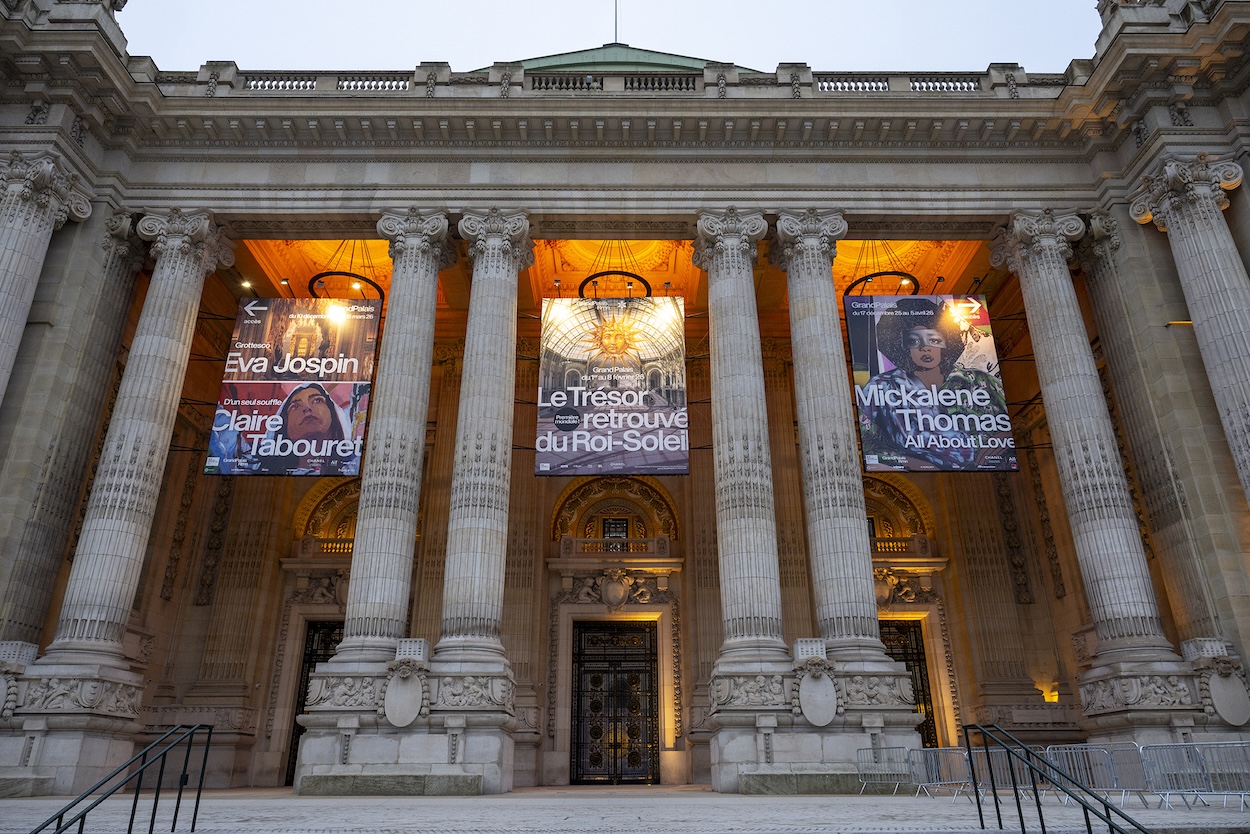
Alongside curators Emmanuelle Federspiel and Antonin Macé de Lépinay of the French decorative arts organization Manufactures Nationales — Sèvres & Mobilier National, Burchard has curated “Le Trésor retrouvé du Roi-Soleil (The Rediscovered Treasure of the Sun King)” at the Grand Palais des Champs-Élysées. Under the historic palace and exhibition hall’s domed glass-and-steel ceiling, fully restored by Paris-based studio Chatillon Architectes last year, this feat of the decorative arts can be experienced as originally intended for the Galerie. The longest rug made, and in the show, measures 29.5 feet (nine meters).
Didier Plowy for GrandPalaisRmn, 2026
…
Displayed in chronological order, the symmetrical carpets’ designs become increasingly Baroque in style. “The first carpet is very organized with every ornament neatly remaining in its framework,” describes Burchard, “whereas the last ones have a certain freedom of design where designs overlap, go over borders, and are interconnected.” Pulling references from a Renaissance book of allegories, their iconography ranges from idealized representations of the Kingdom of France to Greco-Latin divinities. At the time, all European carpets emulated their Islamic peers, so such figurative rugs, able to be “read” by walking down their centers, were a Le Brun invention. “The idea was that by the time you reach the throne room at the end of the gallery, you were in no doubt that you were in the presence of the greatest monarch of the universe,” quips Burchard.
Didier Plowy for GrandPalaisRmn, 2026
…
For conservation reasons, the show has only a seven-day-long run at the Grand Palais. The delicate carpets cannot be exposed to sunlight for more than a week. For those not in Paris during this limited showing, the trio of curators will release a publication documenting all the carpets known to be still in existence next year. Before that, the Met Museum will open “A King’s Carpet: Louis XIV and the Savonnerie,” a display of the three examples currently in the museum’s collection on September 8.
Didier Plowy for GrandPalaisRmn, 2026
…
While all traces of 18 of the rugs are currently lost to history, Burchard hopes the exhibits will help rediscover them. Some were given as political gifts to foreign ambassadors; others made their way into private collections; still others only exist as fragments now. “The last time that several carpets were rolled out in a space was for the signing of the Treaty of Versailles in 1919, when they rolled out 13 in the Hall of Mirrors,” says Burchard. At the Grand Palais, “we’re showing 32, only a third of the complete set, and it’s already pretty magical.”