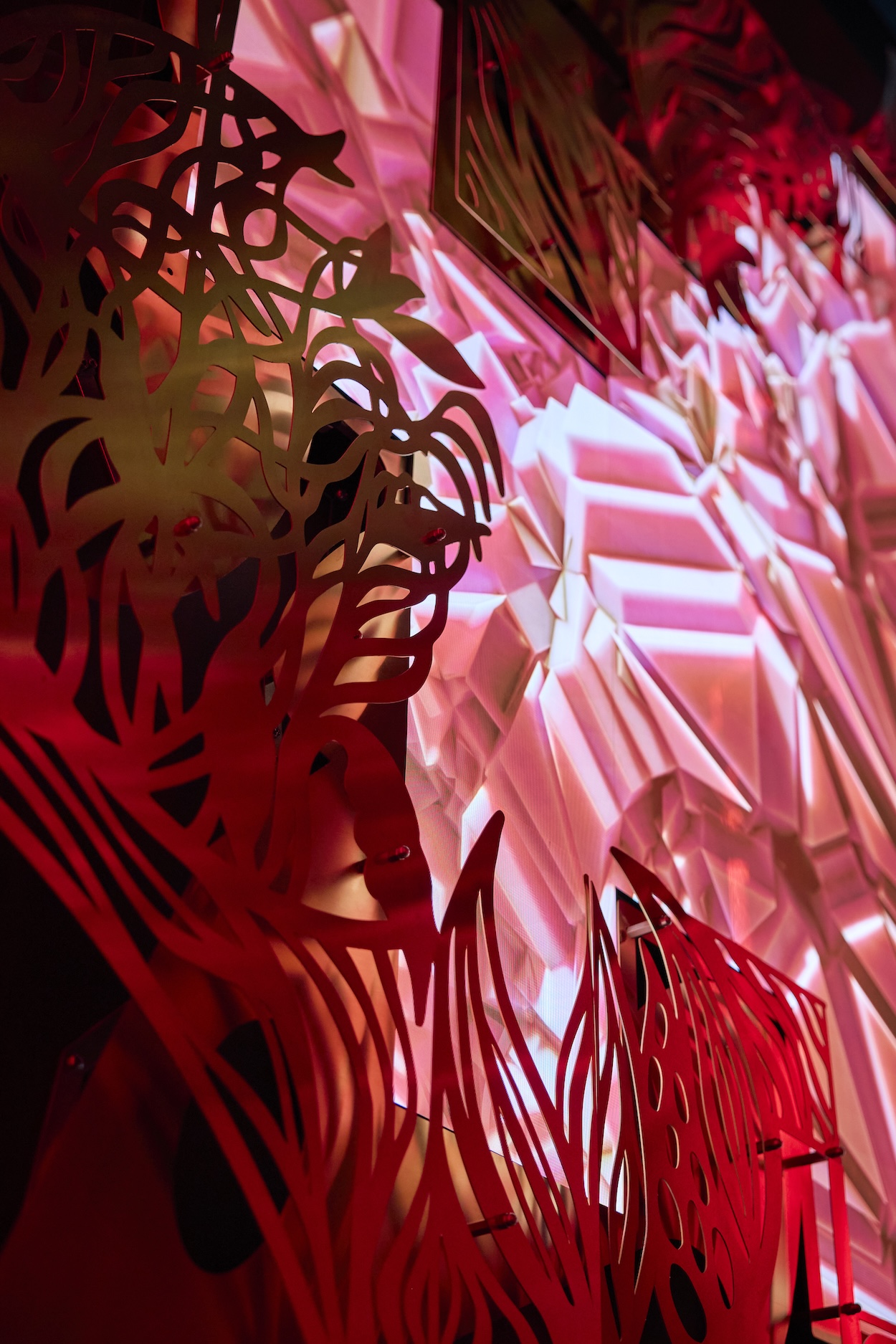
With Metamorphosis, Marco Gallotta embraced dichotomy. The Battipaglia, Italy-raised, New York-based artist—perhaps best known for his paper-cutting techniques, painting, and printmaking—bound a series of modular display tiles, enveloped them in a sculptural metallic frame, and composed a digital work to cycle through it all. The nuanced, mesmerizing piece, which now adorns the walls of Wolfgang Puck’s CUT New York, is both tactile and generative, traditional and transformative.
The Shifting Sculptural World of Marco Gallotta
For 'Metamorphosis,' the Italian-born, New York-based artist transformed modular digital tiles into an ever-changing, wall-hung artwork
BY DAVID GRAVER February 26, 2026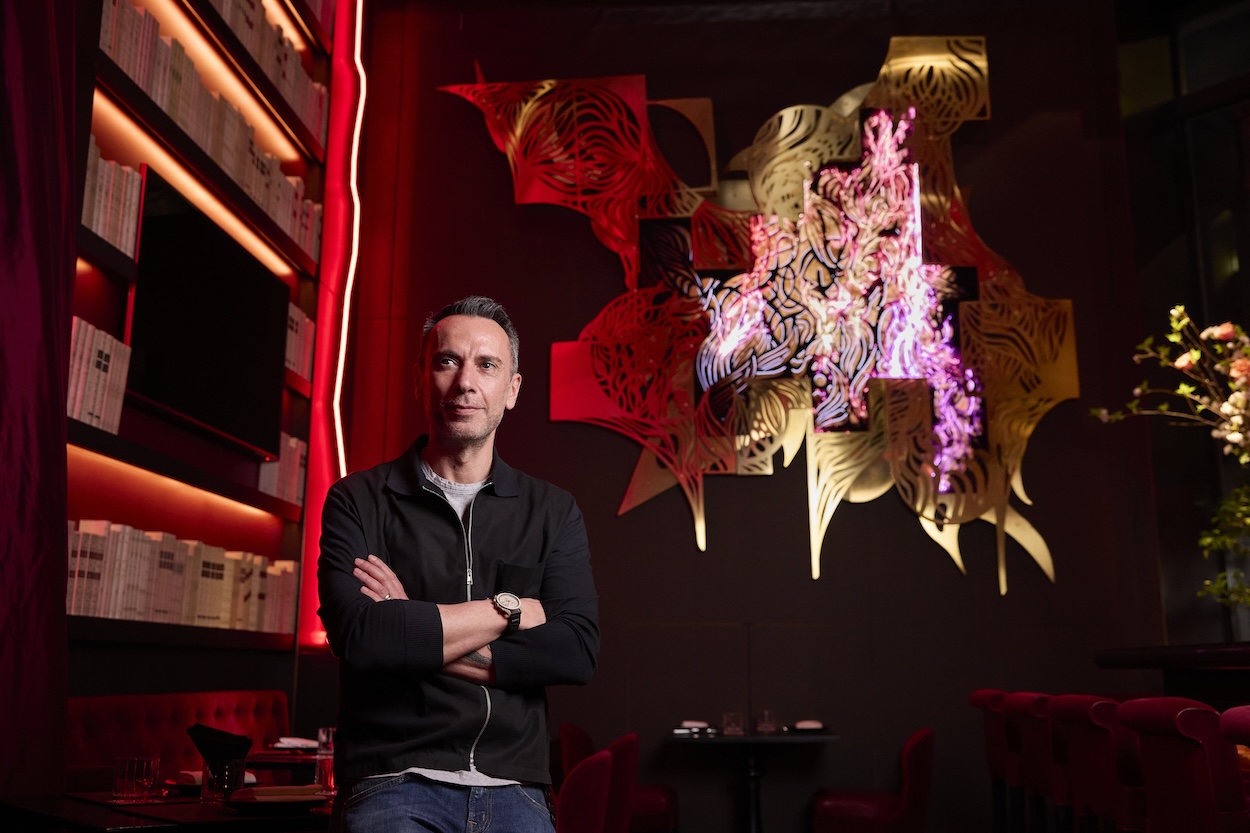
Courtesy of the artist and CUT New York
…
Courtesy of the artist and CUT New York
…
Gallotta is no stranger to exhibiting in—and enhancing the environs of—potentially unexpected places. In 2021, he created a stamp for the Italian Postal Service to celebrate the centenary of a factory in his hometown. Last year, Gallotta installed Urban Nature, an MTA commission, in the 111th Street subway stop on the 7 train in New York City. That piece, composed of six painted aluminum panels, is a precursor to the artifice that frames Metamorphosis. In March, Gallotta will participate in “Cerchi di Pace,” an installation that reimagines Albini, Helg, and Steiner’s 1956 Olympic Totem.
Courtesy of the artist and CUT New York
…
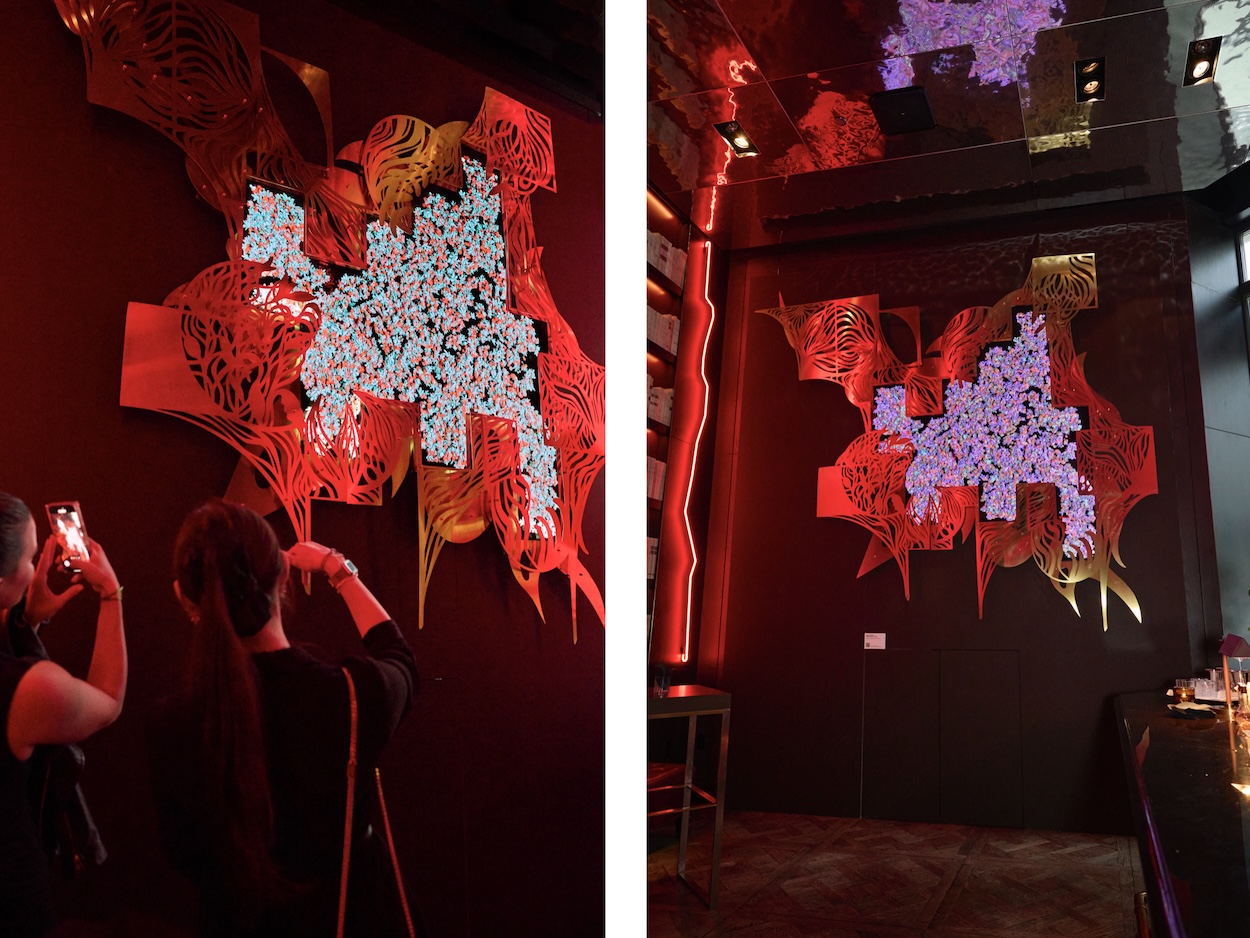
“I created this for Milan Design Week in 2024,” Gallotta shared with Surface while viewing the work at CUT. “I was introduced to Ventana and I was impressed by the technology behind it—the resolution is so high that it can replicate colors in a natural way. What I imagine, I see on the screen.”
Gallotta was drawn to the fact that he could assemble an organic form with the tiles, rather than a standard grid. “Not all screens work in unconventional shapes,” he said. He then developed an animation to stay within the physical parameters of the bronze exterior. This was achieved with the assistance of artificial intelligence.
Courtesy of the artist and CUT New York
…
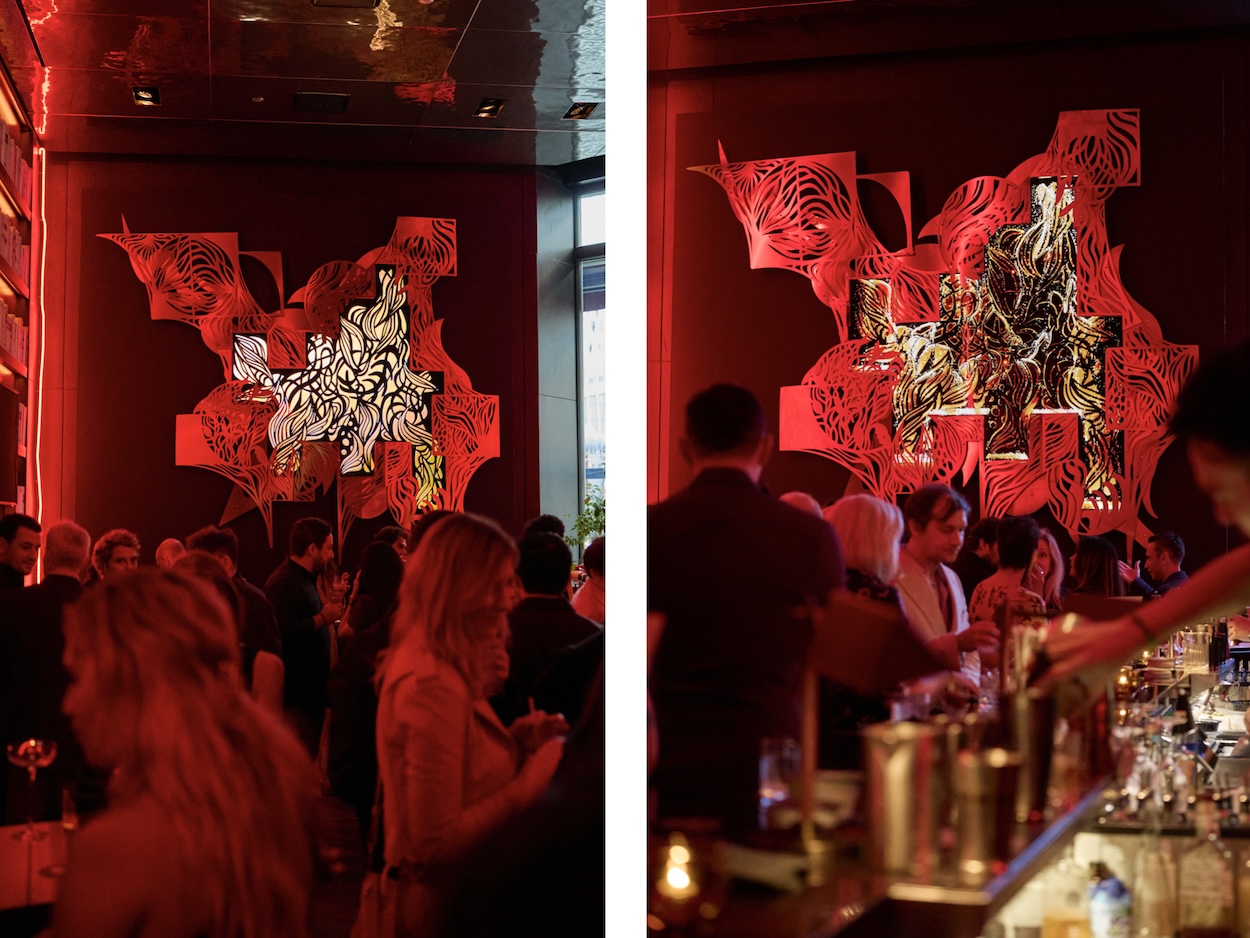
Metamorphosis began as a drawing. For anyone familiar with Gallotta’s paper sculptures, the style is easily recognized. “The idea was to combine all of my tools. I work with technology and traditional art materials. I wanted to put them all together. That is also where the name comes from—the way that art always evolves,” he said.
The large-scale work contains so much movement as its cycling digital component shifts from a vibrant intermingling of color into a wash of white. These visuals invite viewers to step closer and explore all the details: a cascade of light, mercurial gold, blossoms. At times, it feels as if the digital work is trapped within the bronze, trying to escape.
“The animation is based on my drawings,” Gallotta added. “I worked with a team of animators, as well as a professor at Columbia who created the algorithm that generates the boundaries for the animation to flow within.” Metamorphosis is a one-of-one—and though it was acquired by CUT, it feels as if it was always meant to be there. Fortunately, the artist intends to continue exploring the integration of technology and traditional materials in his practice.