ScanLAB Projects Depicts the Sonoran's Cinematic Movement in "FRAMERATE: Desert Pulse"
In Phoenix, Arizona’s Desert Botanical Garden, the London–based creative studio artfully ruminates upon the relationship between a unique natural environment and the passing of time
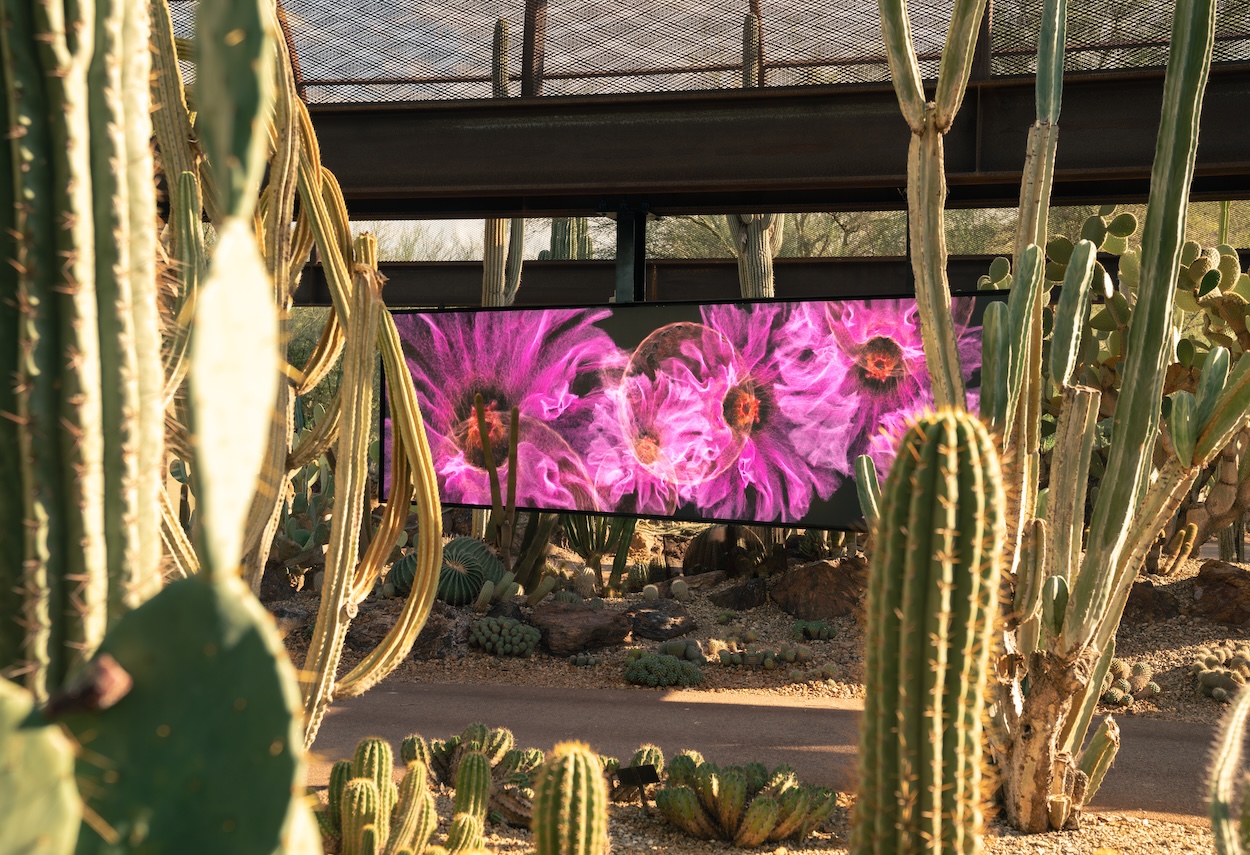
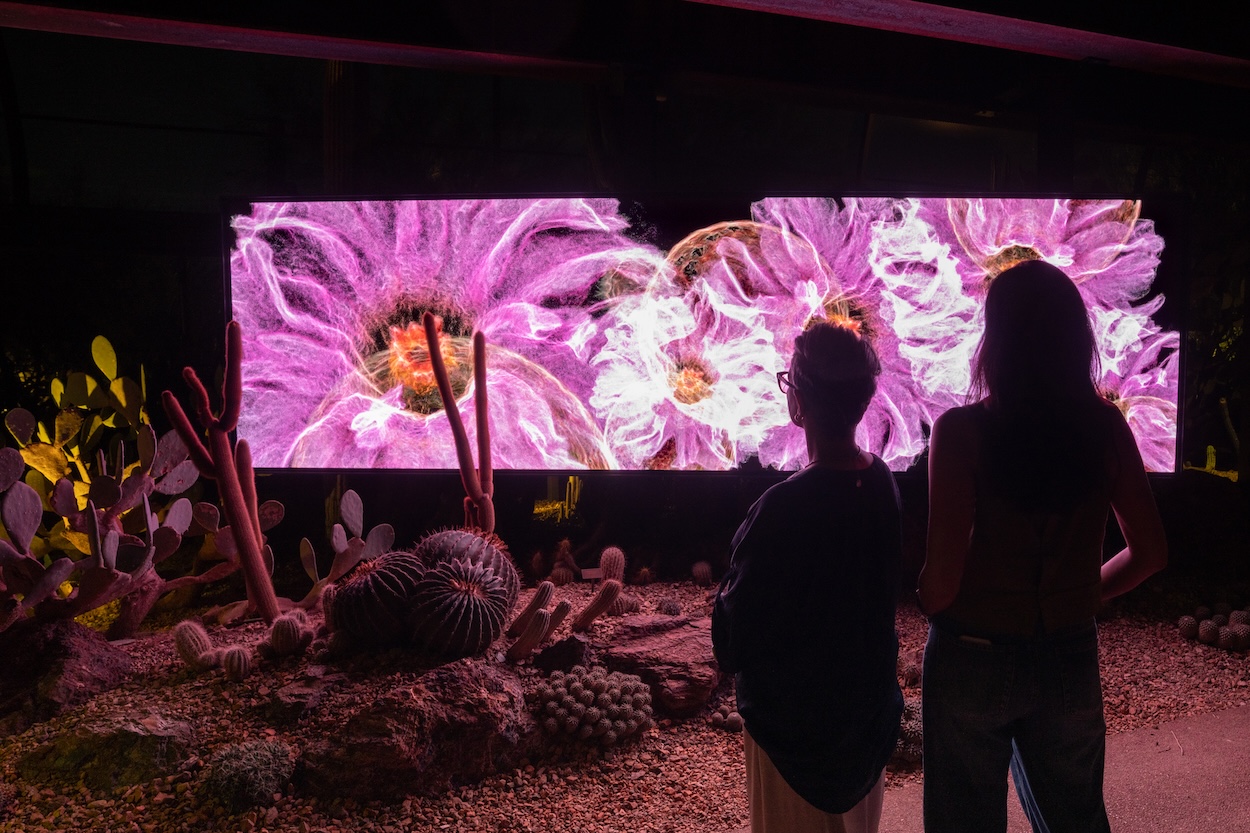
FRAMERATE: Desert Pulse Calyx, 2025. Courtesy of the artist & the Desert Botanical Garden…
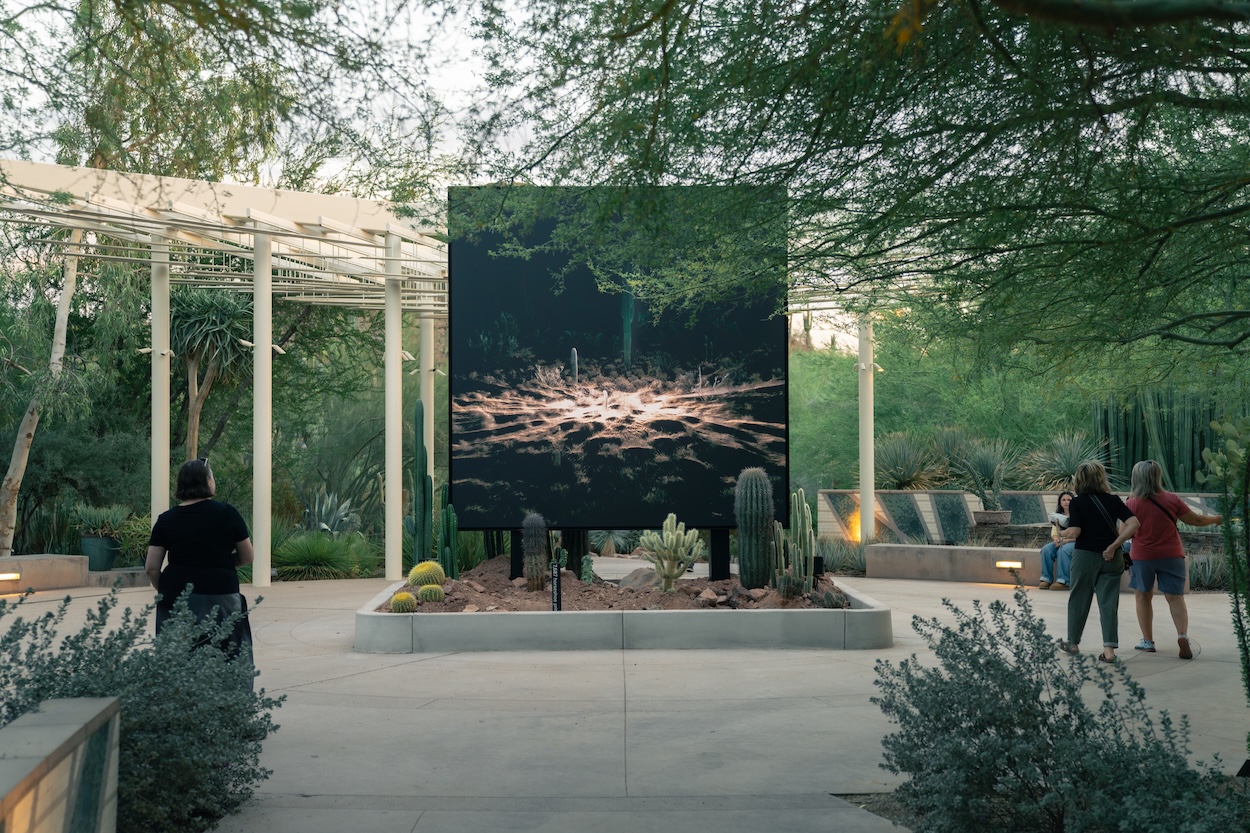
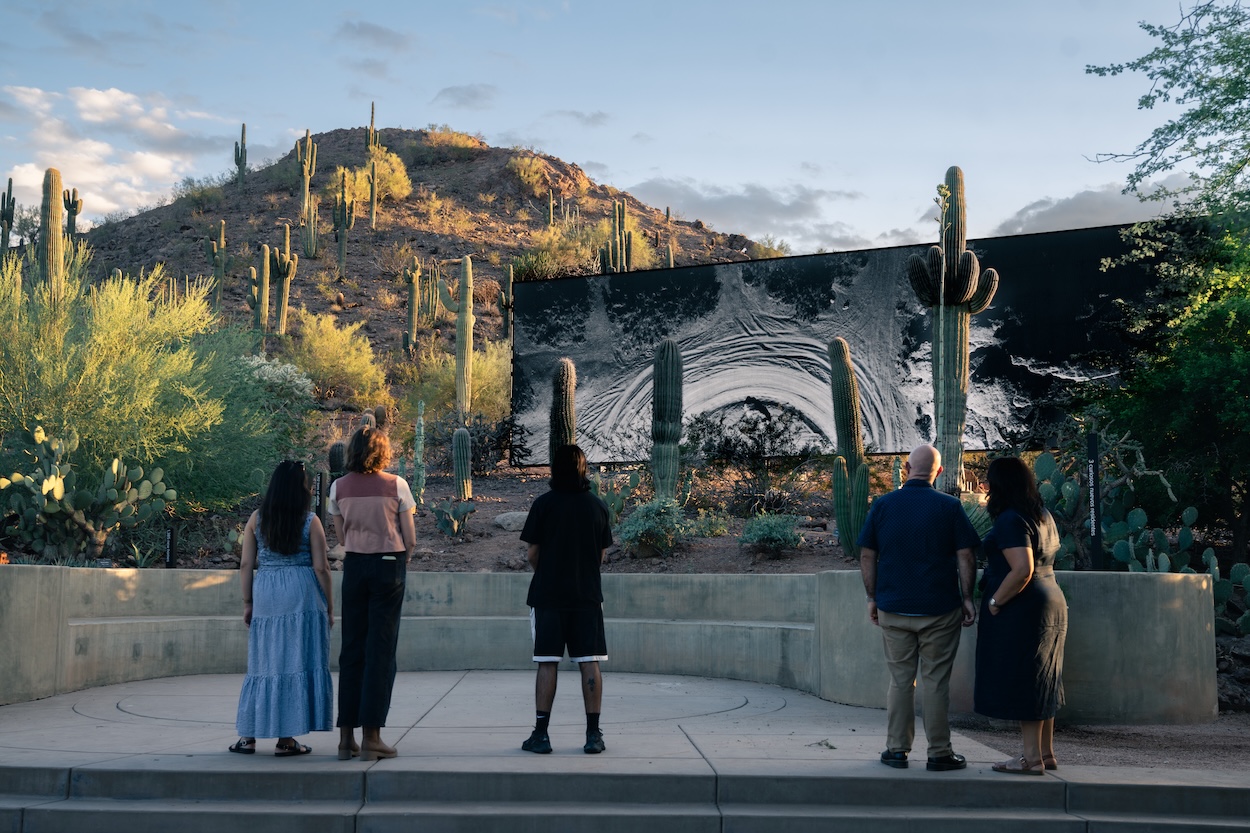
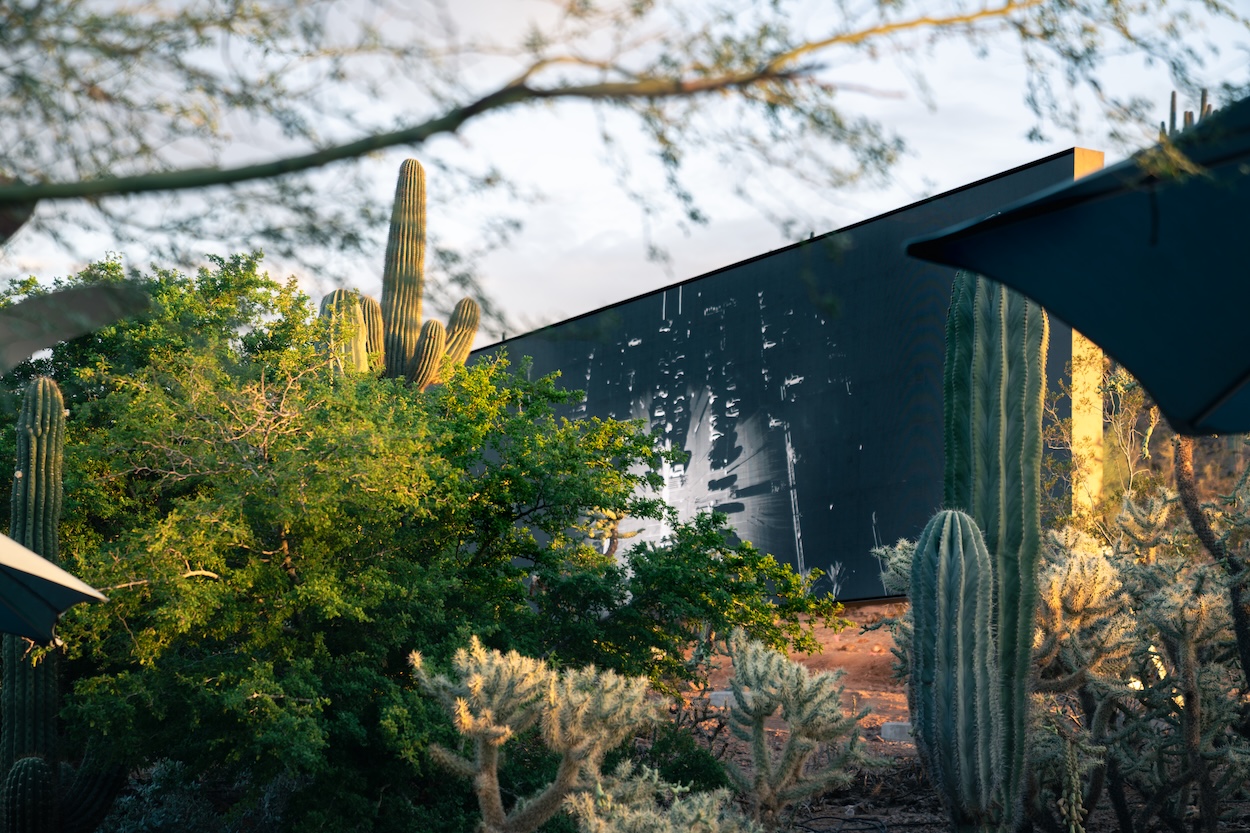
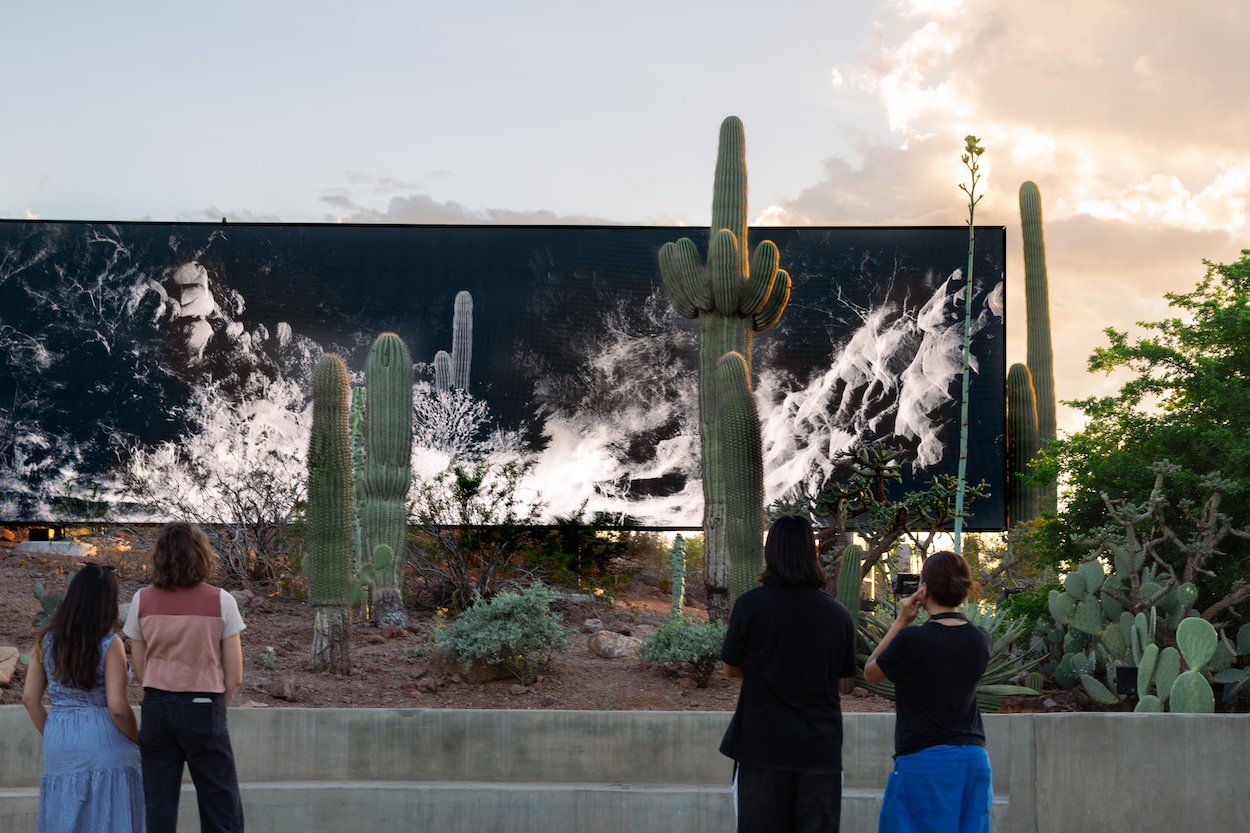
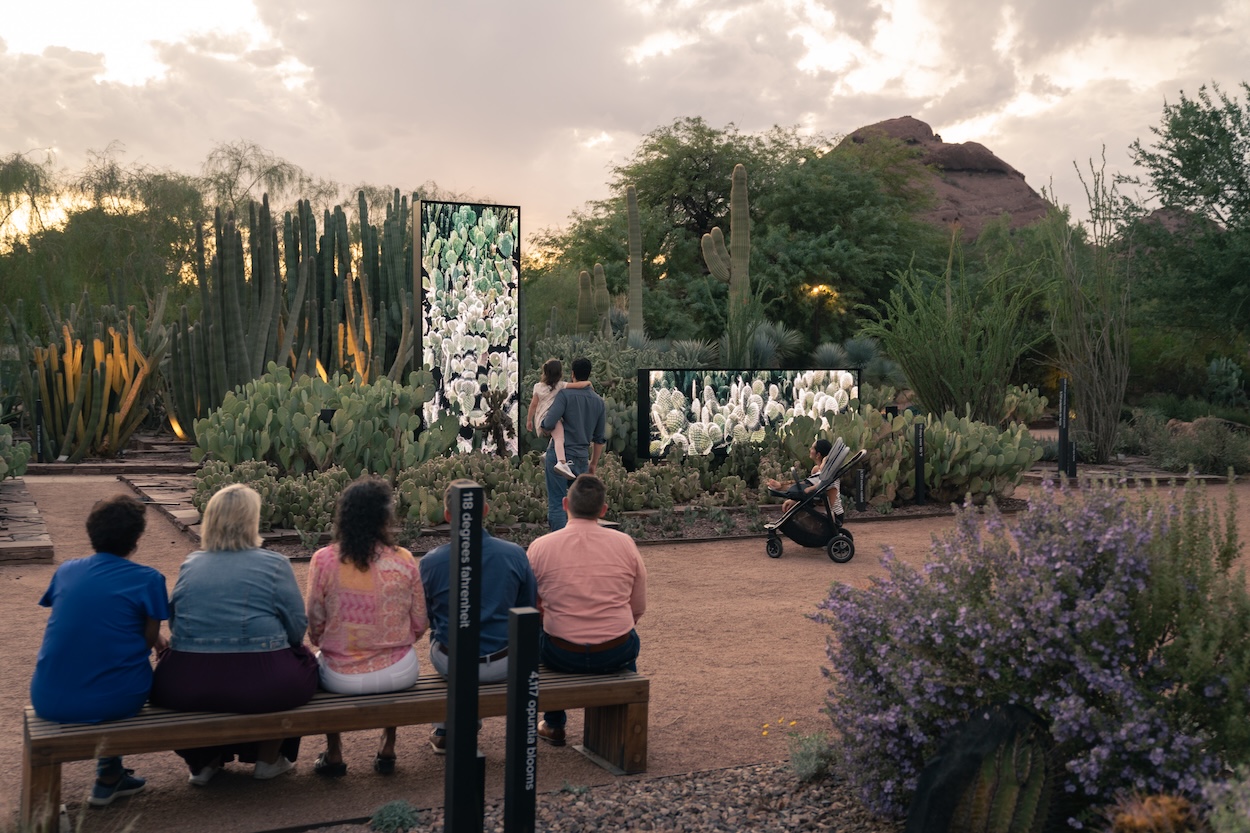
Carefully situated among the saguaros of Phoenix, Arizona’s Desert Botanical Garden, five large-scale, digital installations by London–based creative studio ScanLAB Projects depict the slowly developing life of the columnar cacti and other quietly lyrical local scenes. Commissioned by the botanical garden, the five pieces—both documentary, in their use of precise data captured through daily 3D-scanning sessions, and narrative, in the emotional arc that’s extrapolated—offer a rare glimpse into the natural environment. This perspective—passing between 17 and 25 days per second—would otherwise not be visible to the human eye.
Central to this body of work, titled “FRAMERATE: Desert Pulse,” are millions of data points recorded between October 2023 and October 2024. In situ, with a mesmeric score by composer Pascal Wyse, the installation asks people to reflect on duration and the fragility of destination. It’s ScanLAB Projects’ most audacious work to date in scope, scale, process, and emotional resonance. “There are 21 sites that were visited every single day across the Salt River Valley,” ScanLAB Projects cofounder Matt Shaw shares with Surface. “Then there are another 13 included in the piece which we shot over a much shorter period of time. It gets more epic the more you learn.”
FRAMERATE: Desert Pulse Calyx, 2025. Courtesy of the artist & the Desert Botanical Garden…
Shaw and cofounder William Trossell scouted all of the Sonoran Desert locations themselves. “Will and I are pretty adept at walking around places, standing still, pretending to be 3D laser scanners and seeing the world through the eyes of this machine,” Shaw continues. “In particular, with this project, we needed a lot of research beforehand. The garden is a scientific institution, as well. They were our guide as were a bunch of other local experts, including Dr. Kim McCue and Raul Puente-Martinez.”
There is an immense risk to investing in a scanning site, which requires a daily visit. “You don’t know what exactly will happen,” Shaw says. “Someone will build a wall right in front of your scanning position, or you’ll have a landslide. We had a landslide—a huge one that engulfed our scanning positions—in Norfolk, in the U.K. In the desert, you don’t know whether things are going to bloom on cue that year. There is this element that it might happen or it might not.” To prepare for this, Shaw and Trossell build redundancy into the capture process.
FRAMERATE: Desert Pulse Elsewhen, 2025. Courtesy of the artist & the Desert Botanical Garden…
ScanLAB Projects work with local photographers committed to scanning diligently using LiDAR—carrying 70 pounds of equipment on each excursion. “There’s a special type of person that will do that job, who replies to an ad that says ‘you will go to the same place every single day at exactly the same time and do exactly the same thing—for a piece of art,’” Shaw continues. “We always find these amazing people who want to do this. That idea, that somebody is going to go there, is quite crucial to what we get out of it in the end—which is this piece that gives you the ability to see in a way that none of us ever could, even if we were going every single day.”
Shaw and Trossell’s artistic process for each of the five pieces is archaeological in nature as they sift through hundreds of gigabytes of data looking for a message, then render the data to affirm their intuition. “For the Sonoran, we did all of this research about water use in the desert. That manifested into all of these themes—the agriculture themes, the rights to access water. Then we picked a site that’s guided by this narrative, where we thought it might unfold,” Shaw says.
FRAMERATE: Desert Pulse Horizon | Imprint, 2025. Courtesy of the artist & the Desert Botanical Garden…
Then, feelings are interjected. “The intricacies of how it unfolds will always be a surprise. This is where the emotion comes from—we get this ‘whoa, we can see it’ moment. Then the artistry takes over,” he continues. “Now that we’ve seen it, it becomes ‘how do we show it? How do we give that to people and get them to react the same way when we were first seeing it and feeling it?’”
Trossell says the project disrupted all of their preconceptions about seasonality and what occurs in a desert. “I thought the desert would be quite stoic, quite still,” he says. “But it’s not. It’s moving. It’s both delicate and explosive. It’s renewed. There is resilience. There’s also a beautiful patience. It takes 30 to 40 years for a saguaro to flower. It’s on a different timeline—it provides a different feeling.”
FRAMERATE: Desert Pulse Horizon | Imprint, 2025. Courtesy of the artist & the Desert Botanical Garden…
Their authorship of each piece finds a balance between bearing witness to these occurrences and crafting a narrative with a purpose. “We are teasing out that balance at all times with much of our work, especially when we are dealing with a medium that is, from our point of view, an evolution of the camera,” Shaw says. Though the technology is, as they note, a truth teller, they present the information it provides—with purpose.
“Ultimately, we are always authors of the work—from how we place the scanners to how we interpret the data to how we process and visualize it to all of the subtle nudges down to the way we transition from one scene to the next scene,” Shaw says. “I still think the most revelatory thing about the work isn’t something that we’ve put in there; it’s something we’ve found in there through the process.” All of that said, under no circumstances do they manipulate the data. They don’t need to do so.
FRAMERATE: Desert Pulse Horizon | Imprint, 2025. Courtesy of the artist & the Desert Botanical Garden…
The Desert Botanical Garden installation process was meticulously plotted for months. The site was scanned in advance and the team toyed with positions within a digital version. “We spent a lot of time with it, perfecting the proportions of a piece and the angle it will sit in there,” Shaw says. “Then we had this very stressful moment of bringing in a 40-foot-wide, ten-ton sculpture and dangling it from an enormous crane, cruising the piece past these 175-year-old saguaros, which are what everyone there is trying to protect.”
Shaw and Trossell put their architectural training to use during installation. “People are not walking into an art gallery to see these five projects,” Shaw says. “We spent a lot of time considering how people will come across these projects, what their first glimpse would be, where it will lead them to stand, and what they will see in the natural world. People have been taking their time. This was our biggest aim—to stop people in their tracks and have them take time to think about time.”
FRAMERATE: Desert Pulse Present Echoes, 2025. Courtesy of the artist & the Desert Botanical Garden…
On view through May 10, “FRAMERATE: Desert Pulse” encourages various types of engagement. “A lot of people understand the different layers; a lot of people just like the beautiful flowers and how joyous it makes them feel,” Trossell says. “I am very happy for people to take what they want from it as long as it inspires them to think about their environment—to take away an appreciation of the fragility and resilience of the world around us.”
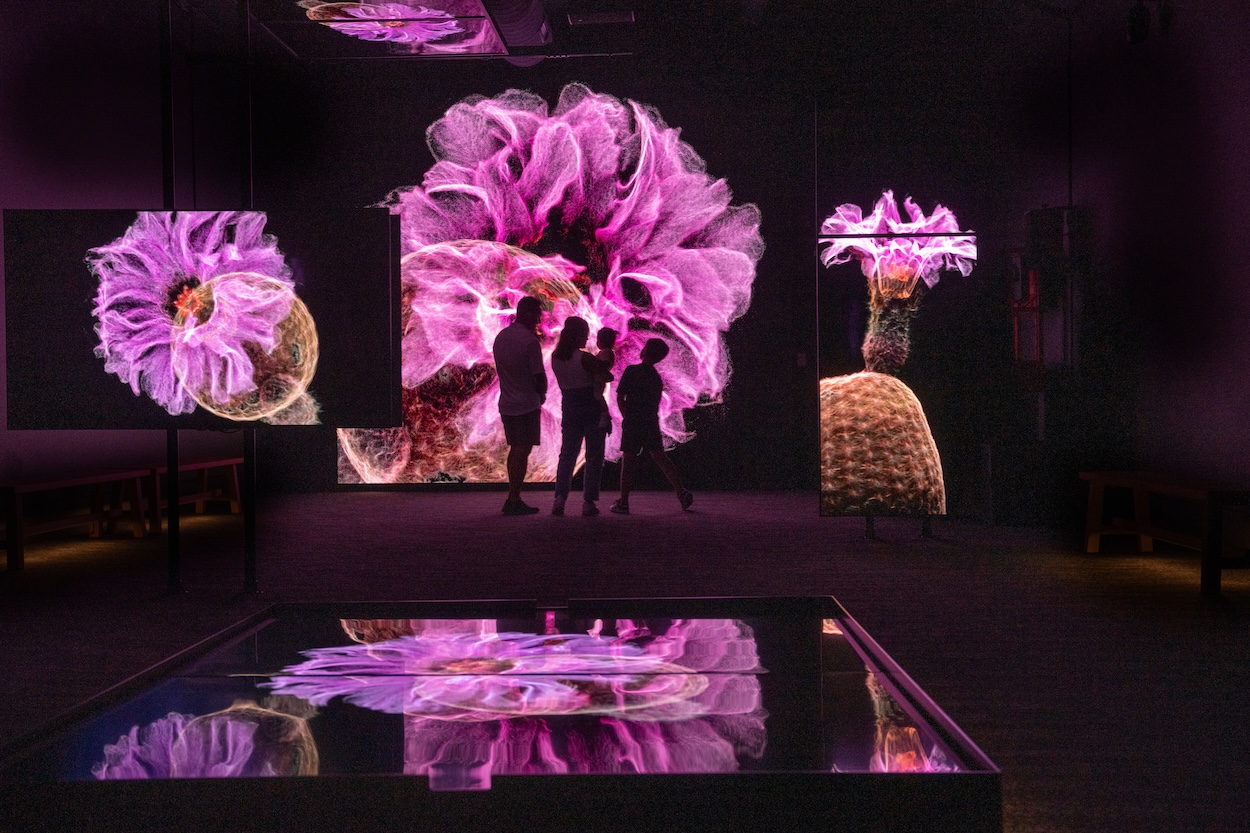
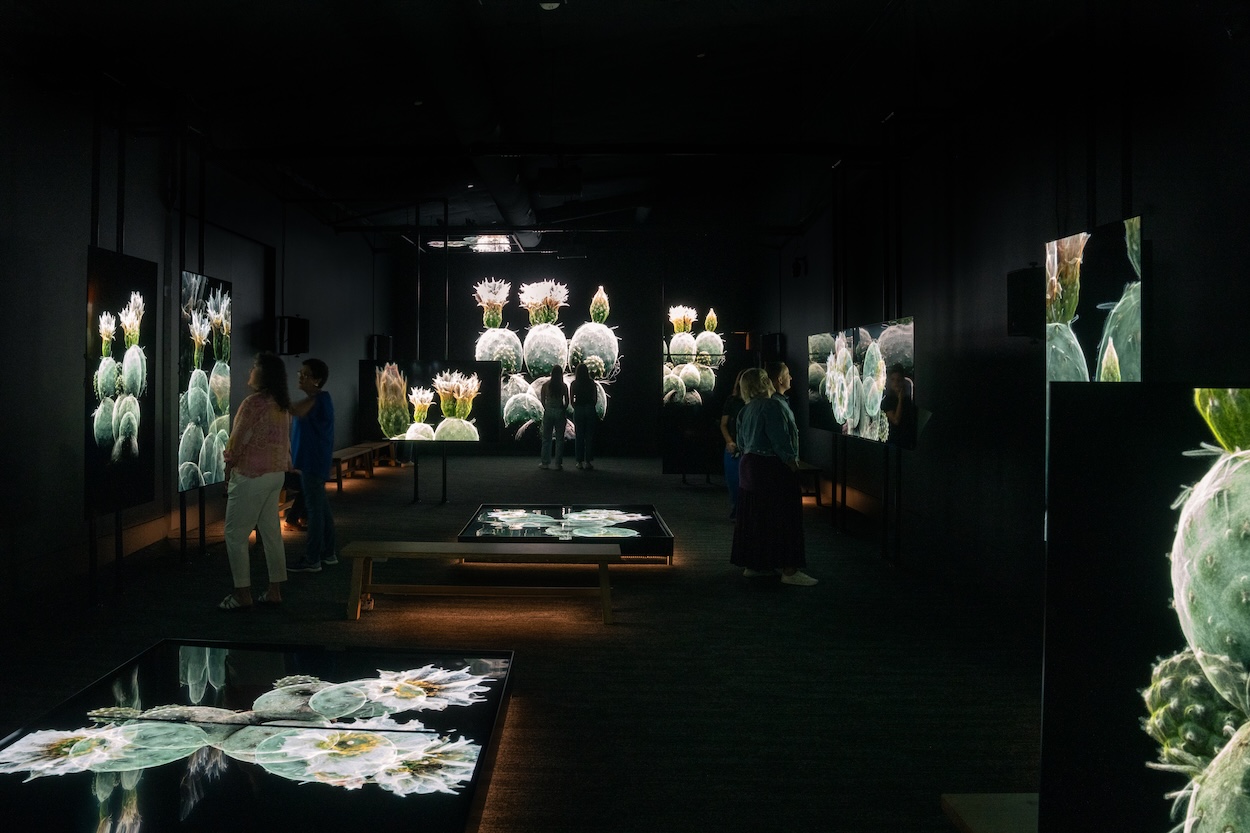
In addition to the four outdoor installations, visitors come across the fifth artwork mounted inside a modern gallery. “A multi-channel, multiscreen, multi-chapter internal environment,” Shaw explains. “One whole end wall of the gallery is an LED screen. There are another 21 screens either hovering about the audience or around them, or on the floor. That is a real journey. It has a full emotional arc. It covers a lot of ground in terms of celebrating these individual blooms, and really looking at some of these landscapes through our interactions as a species. It is the moment where you watch this giant saguaros fall—just come crashing to the ground.” In this room, there is only art—and darkness.
FRAMERATE: Desert Pulse. Courtesy of the artist & the Desert Botanical Garden…
A second gallery houses a making-of exhibition, as well as a celebration of the process. Here, ScanLAB Projects acknowledges its collaborators—the team of photographers who were so instrumental in making the work, as well as the scientists who guided them. “This is their landscape, not ours and the piece could not be made without them,” Shaw adds.
Both Shaw and Trossell wonder what these works would one day look like elsewhere rather than in the context of the desert. They note that this is very much the mission of a botanical garden, to place distinct environments in accessible locations—to transport visitors. “What is it like when one of these pieces exists in isolation or on a gallery wall elsewhere? Trossell asks. “Each of these pieces is an artwork in its own right.”
FRAMERATE: Desert Pulse. Courtesy of the artist & the Desert Botanical Garden…