Limbo Museum and Art Omi Partner on a Two-Part, Site-Specific Architecture Commission
The transposable Limbo Engawa installation reframes its surroundings, whether that be Accra’s unfinished concrete buildings or the unspoiled nature of New York’s Hudson Valley
The Japanese term engawa refers to transitional spaces in which the boundaries between indoor and outdoor, the private and communal, blur. The concept applies as much when describing the incomplete concrete structures of Ghana’s capital Accra as it does the largely untouched fields and forests of New York’s Hudson Valley; the vastly different contexts of experimental institution Limbo Museum and sculpture park Art Omi.
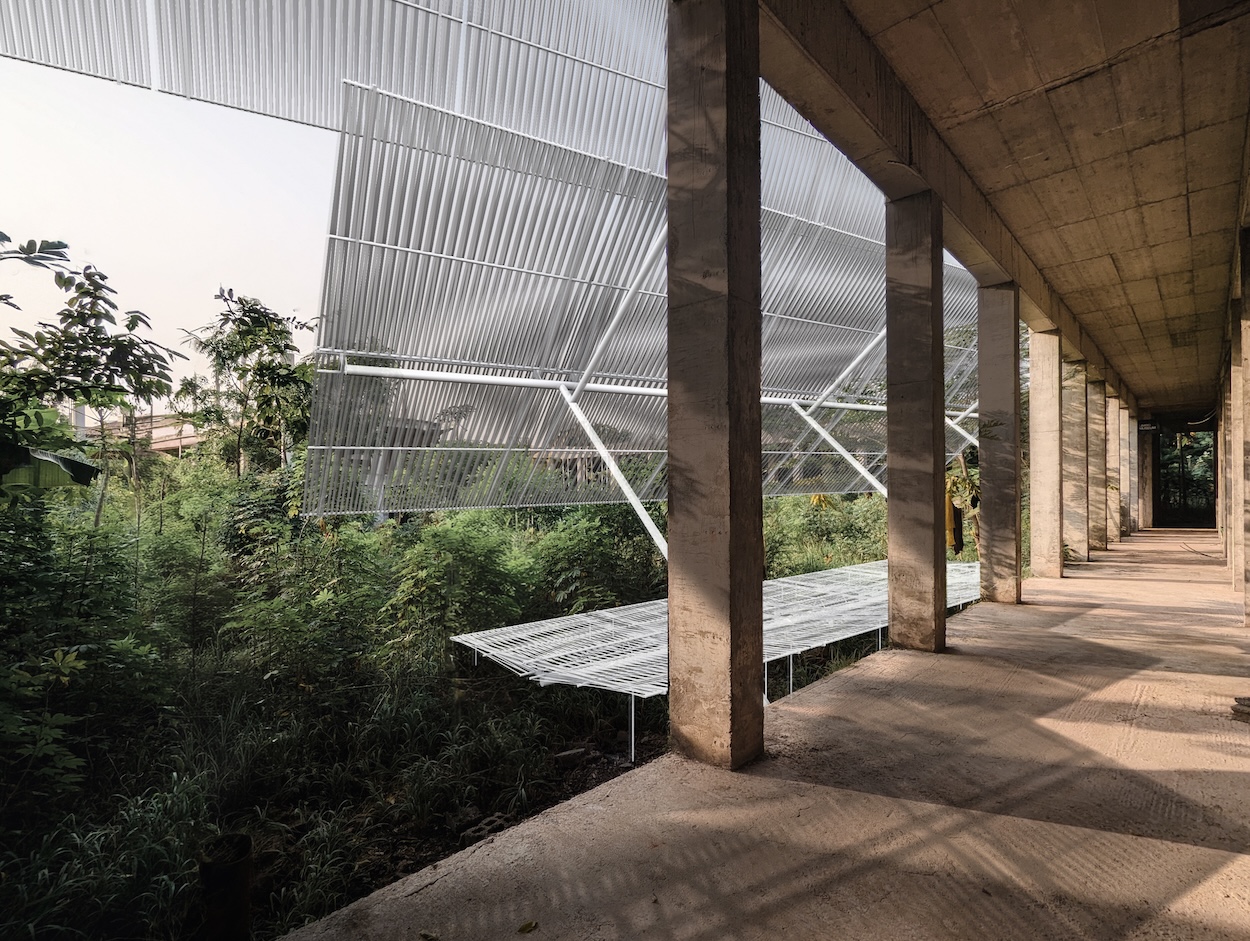
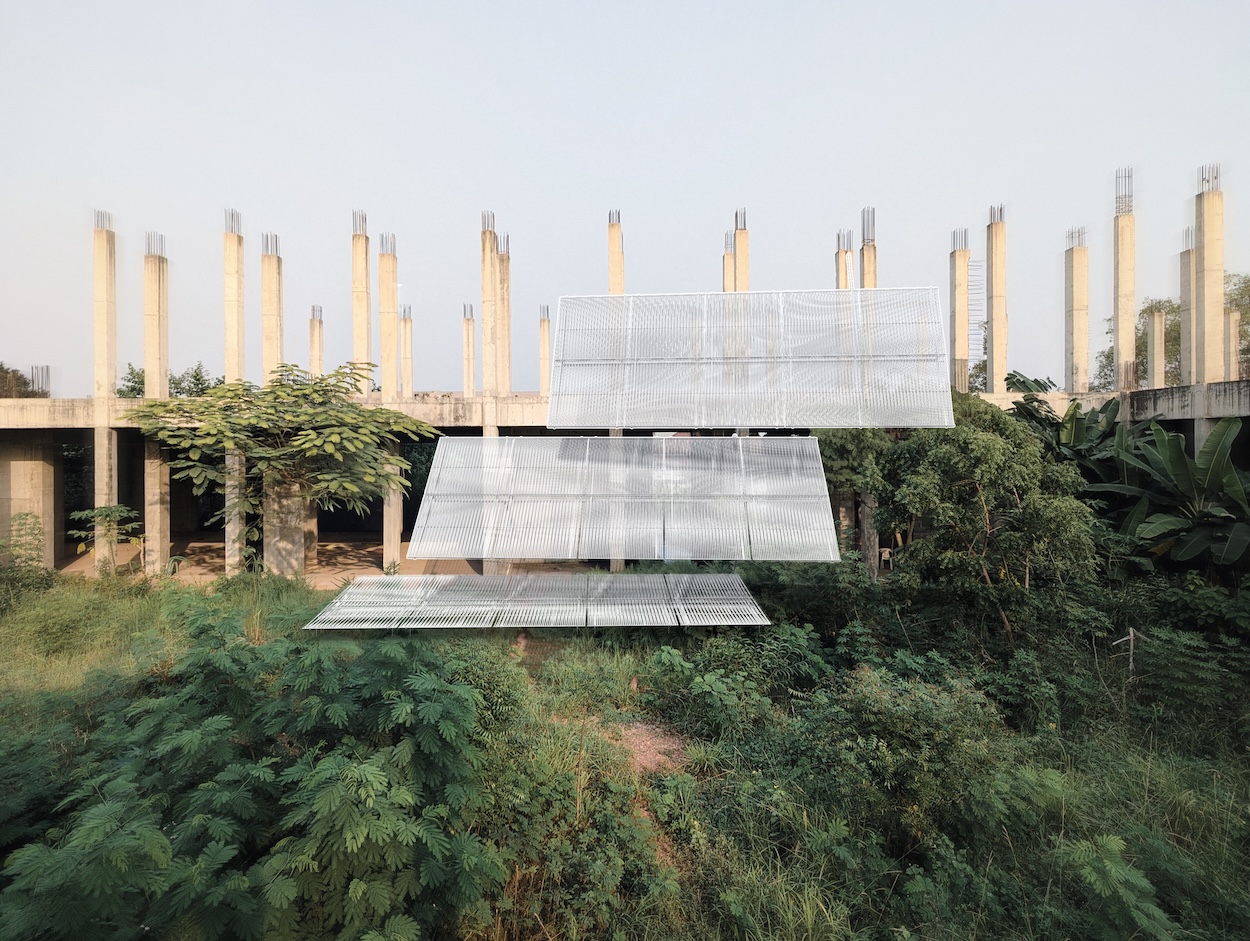
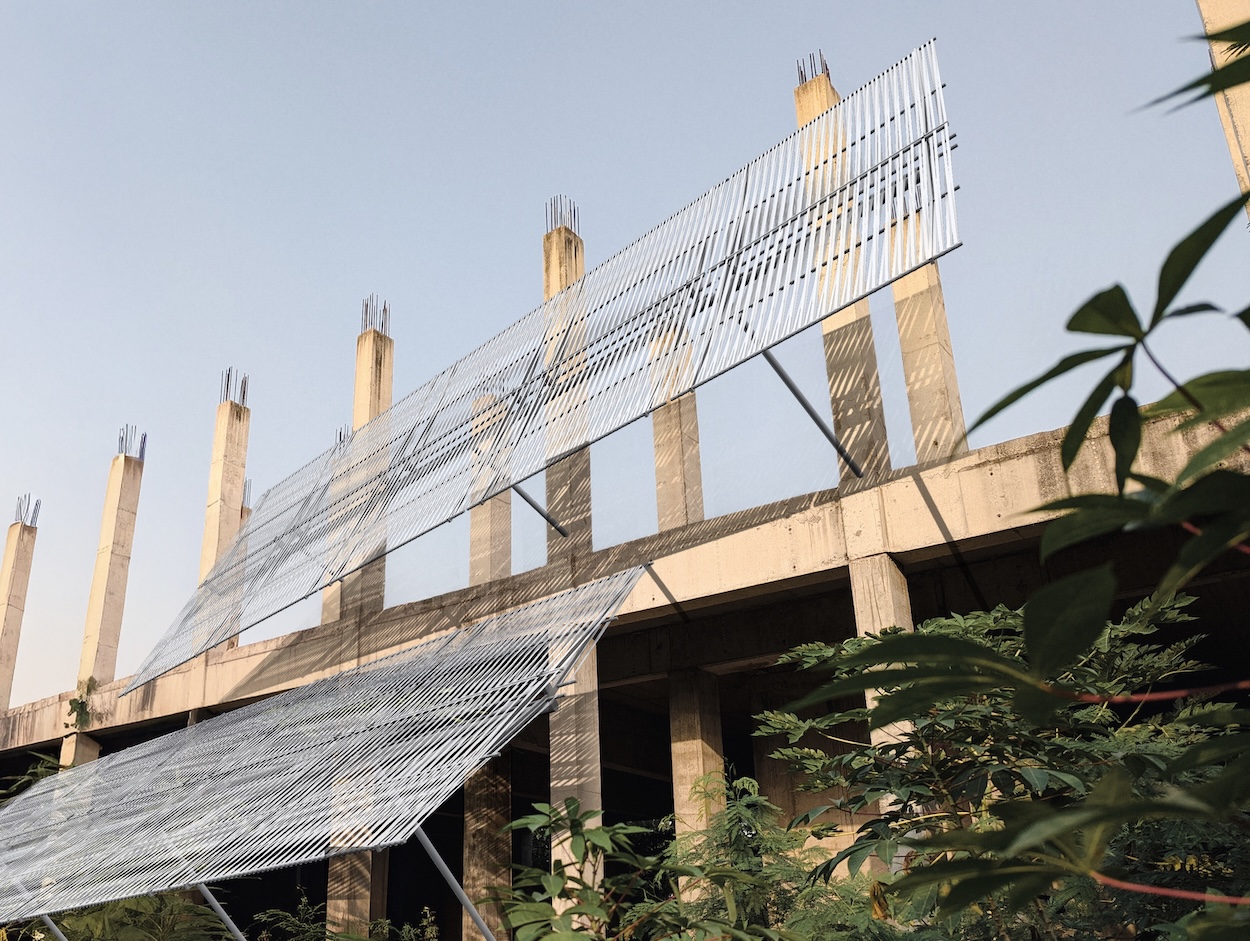
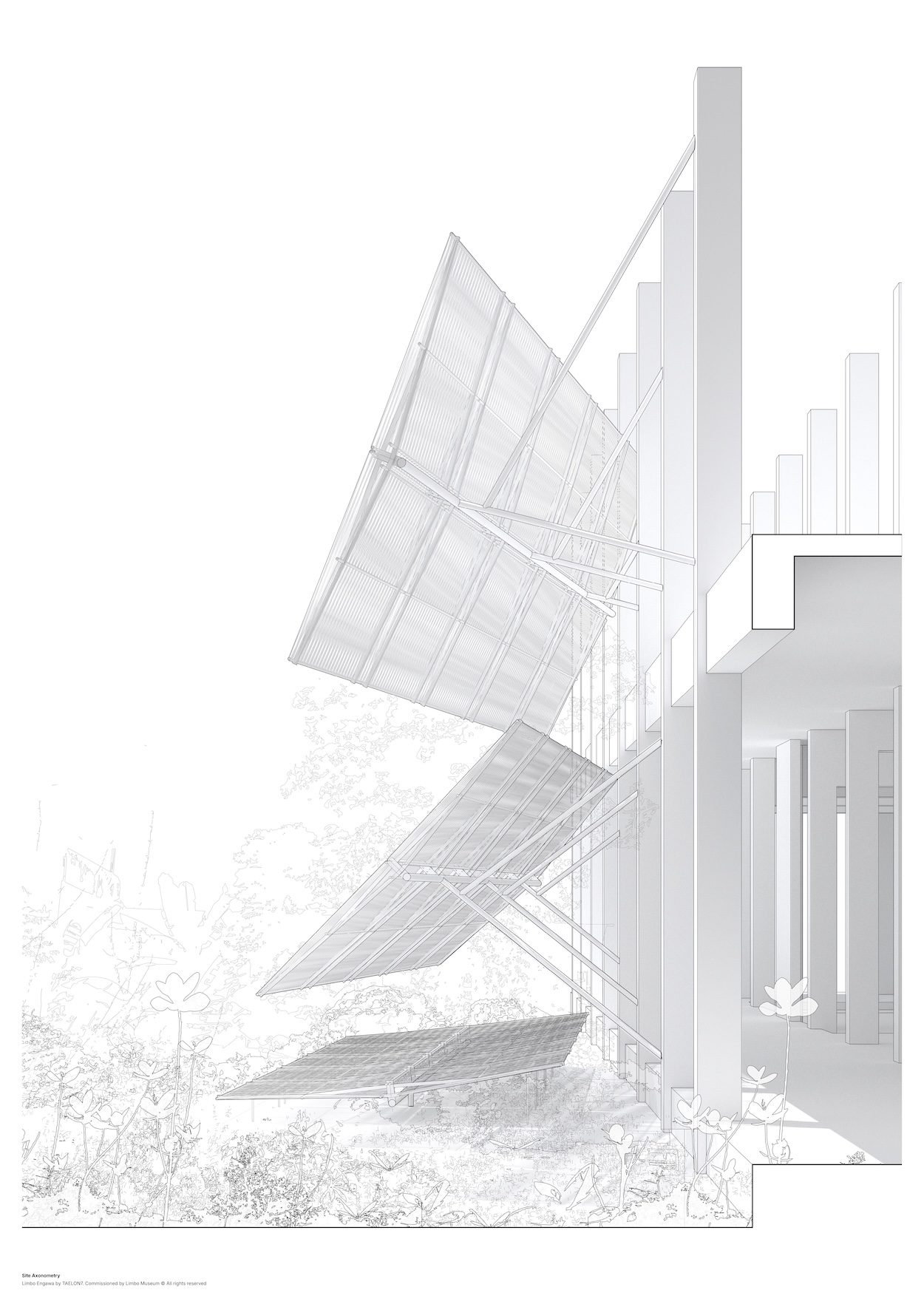
Commissioned to design a site-responsive installation for both locales, research-based architecture practice TAELON7 developed modular, lightweight structural components; layered-in structural gestures that reframe the purpose of these environments while also accentuating how they already function.
Courtesy of TAELON7…
The aptly named Limbo Engawa installation—on view at Limbo Museum from March 12 to April 12 and restaged at Art Omi this fall—comprises these oversized frames, created using strips of metal salvaged from old billboards and steel profiles. With these repurposed materials woven together into flexible screens, the designs reflect the ad-hoc day-beds common across West Africa, those used on construction sites by workers and by the custodians of unfinished buildings.
Transcending the categorization of furnishing and building element, the open-ended “mattresses” and “canopies” can be used to lay-on or envelop a newly defined space. They’re quickly assembled and anchored into place.
Courtesy of TAELON7…
“Urbanizing contexts, unfinished concrete structures are surrounded by what appears to be
leftover land—terrain vague, vegetation, or informal farmland,” studio founder Juergen Benson-Strohmayer wrote in an exhibition statement. “Yet neither these buildings nor the land around them are empty. [They’re] often inhabited or temporarily occupied.”
Limbo Museum is itself housed in an incomplete concrete structure. Co-founded in 2024 by multifaceted culturemaker Dominique Petit-Frère, the exhibition and residency platform is programmatically positioned to serve as a blank canvas for the development of new civic strategies; as a laboratory for testing out new solutions in adaptability and adaptive reuse. Here, Limbo Engawa is enclosing portions of the existing structure and turning them into more intimate gathering places. “Limbo Engawa creates a soft transition where there is usually an abrupt edge,” he added.
Courtesy of TAELON7…
At Art Omi, the installation will become a freestanding pavilion. Extracted from their previous urban setting, the components will be reconfigured within one of the sculpture park’s expansive fields. It’ll frame horizons and respond to different weather conditions. Though taking on an entirely new composition, the semi-enclosed structure will still serve as an impromptu gathering place, one that transitions between indoor and outdoor, from private to communal.