Still from Allison Janae Hamilton's 'Venus of Ossabaw'…
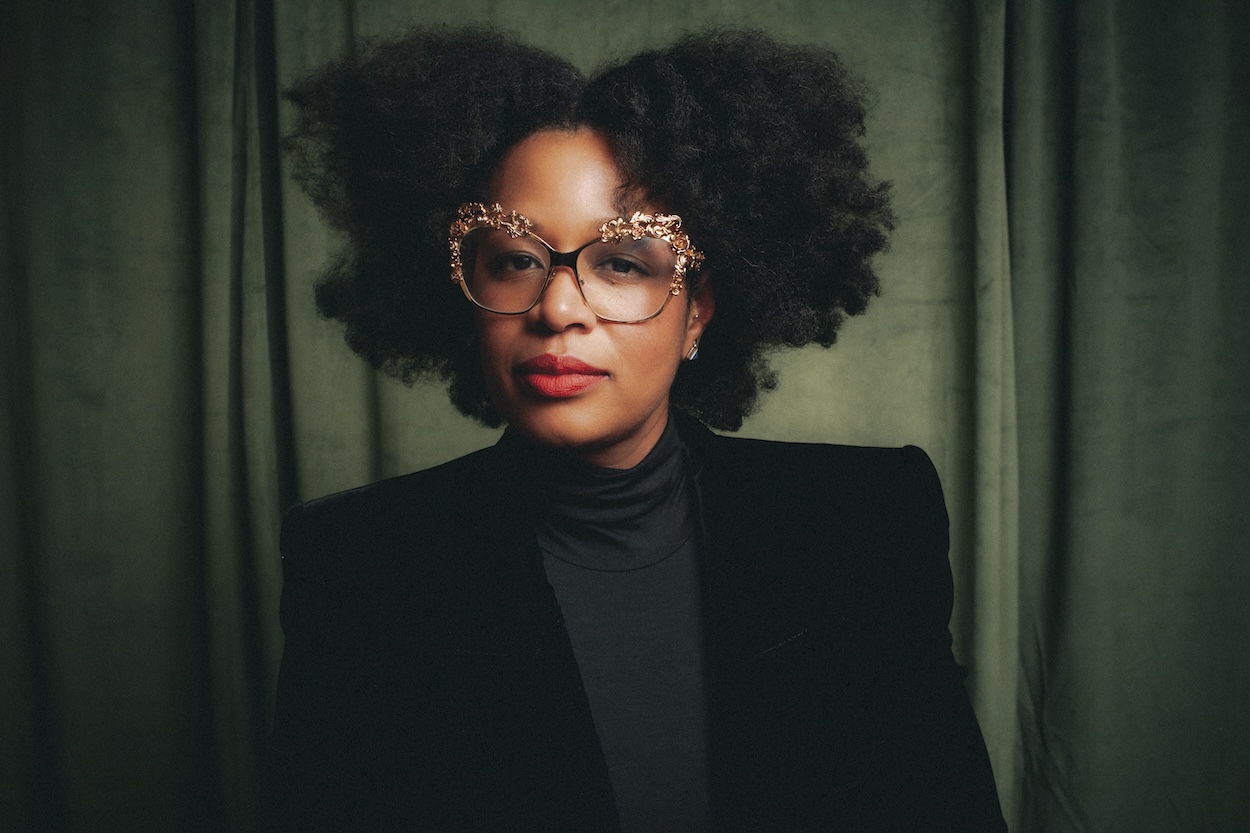
Premiering today, March 13, Allison Janae Hamilton’s atmospheric cinematic commission, Venus of Ossabaw, marks the first narrative film work for the Lexington, Kentucky–born, New York City–based artist. A powerful introduction to Telfair Museums’ “Off the Coast of Paradise: Artists and Ossabaw Island, 1961-Now” exhibition, the film’s presence—as a projection on the building’s facade—forges a mission statement for the entire curation. The Savannah, Georgia–based museum’s curator Erin Dunn, along with independent curator Beryl Gilothwest, approached Hamilton with an opportunity to produce “a new work that engaged with Ossabaw Island’s history,” Hamilton tells Surface.
“Once I developed the concept for Venus of Ossabaw, we sought additional funding from VIA Art Fund, which allowed us to produce the film at the scale and ambition the story required,” she continues. “The commission structure was ideal because it gave me the resources and institutional support to undertake serious historical research and to actually film on Ossabaw, which isn’t easily accessible.” In fact, this is the first major exhibition dedicated to the impact of the 6,000-acre barrier island. Hamilton’s work—which debuts in a special screening at the Jepson Center’s Neises Auditorium—is not only rooted in place, but melds a coming-of-age story with a tale of survival in the swamplands and marshes. To learn more about its inspiration, production, and development, we spoke with the artist in advance of the premiere.
Portrait of Allison Janae Hamilton by Rog Walker, Paper Monday…
Would you please begin by discussing the research that informed this work?
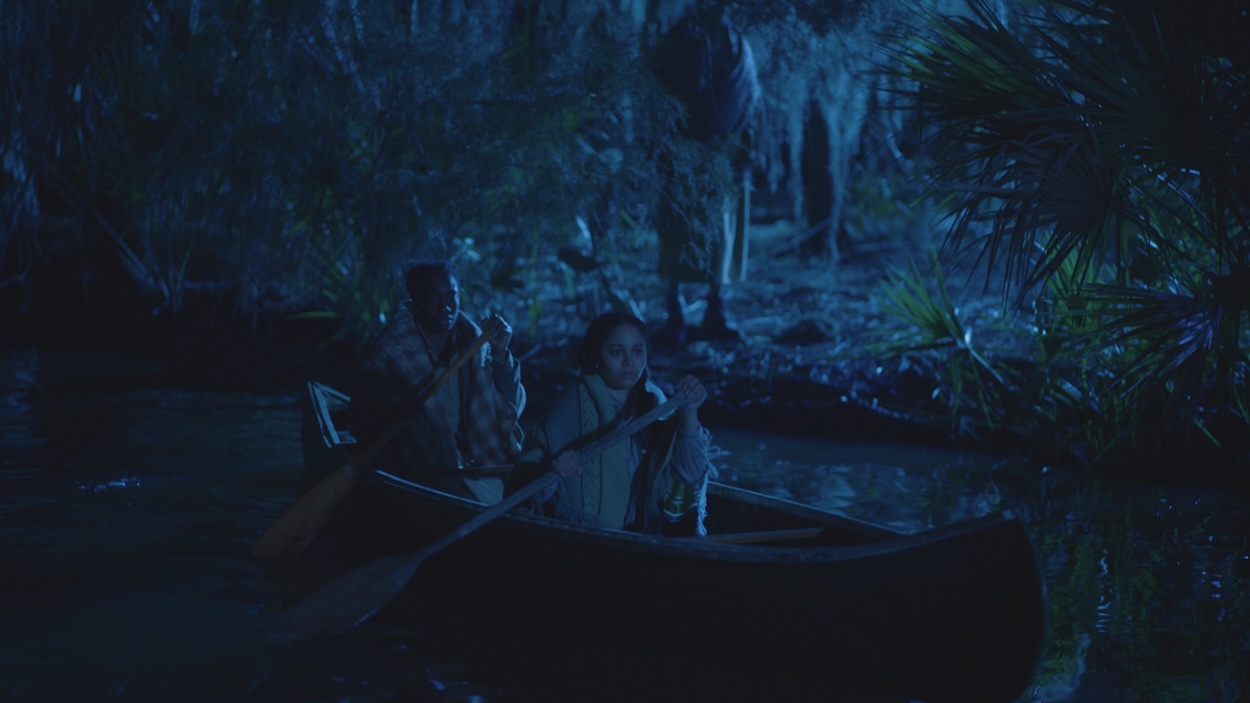
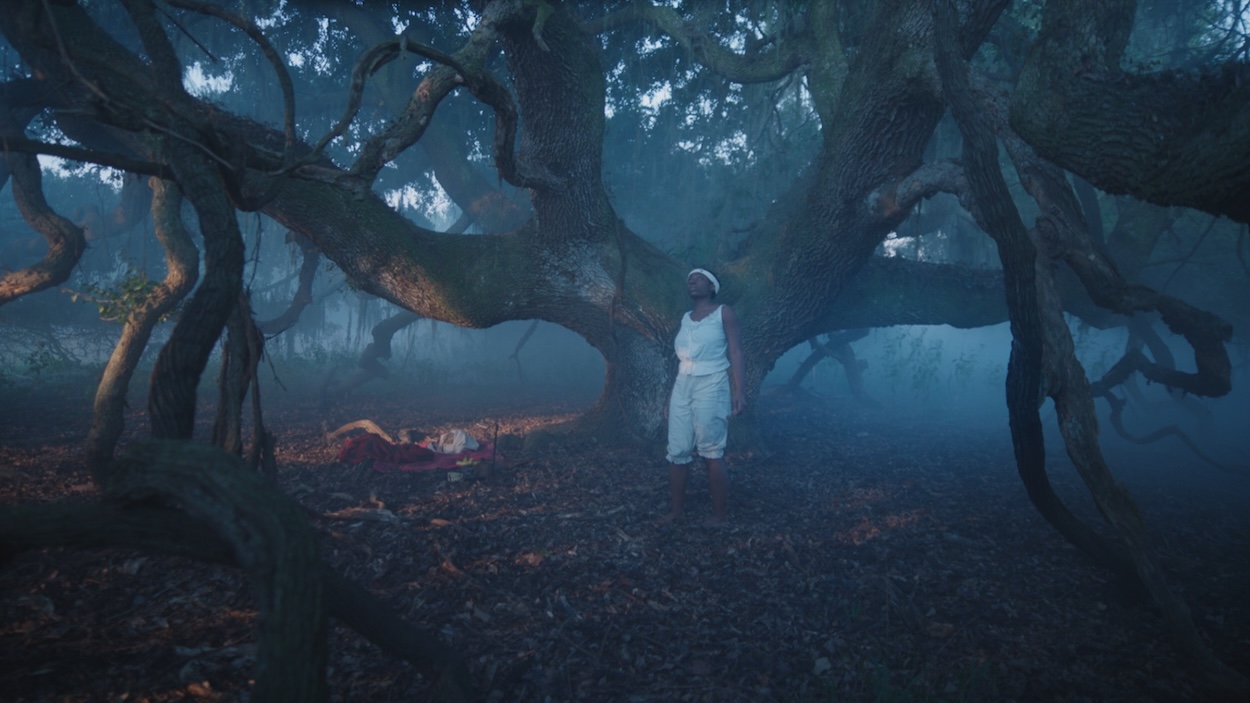
The research for Venus of Ossabaw was deeply focused on understanding the landscape itself: the wilderness Venus would have encountered on her journey. I spent considerable time studying the ecology of the Georgia Sea Islands and the landscapes of Northern Florida, where I’m from. What does the forest sound like at night? What grows along the water’s edge? How does light move through a canopy of live oaks draped in Spanish moss? These details were crucial because the film is fundamentally a wilderness narrative. It’s about one person moving through an unforgiving but also potentially sheltering natural environment.
I also drew on historical research, particularly conversations with historian Paul M. Pressly, author of “A Southern Underground Railroad: Black Georgians and the Promise of Spanish Florida and Indian Country.” The story of Titus in Pressly’s book inspired Venus’ journey southward. In addition to the historical framework, I was interested in the physical reality of that journey: what it would actually mean to navigate these islands on foot, alone, at the mercy of the landscape.
Still from Allison Janae Hamilton's 'Venus of Ossabaw'…
How do you begin to present a sense of place in your work? What do you need for it to be successful?
Place is central to everything I make. Landscape functions as a main character in my work, never as a backdrop. I think of it as a living, breathing entity that guides the narrative and shapes what’s possible within the story. For me, immersion is essential. Both I and the viewer need to feel genuinely present in the environment for the work to succeed.
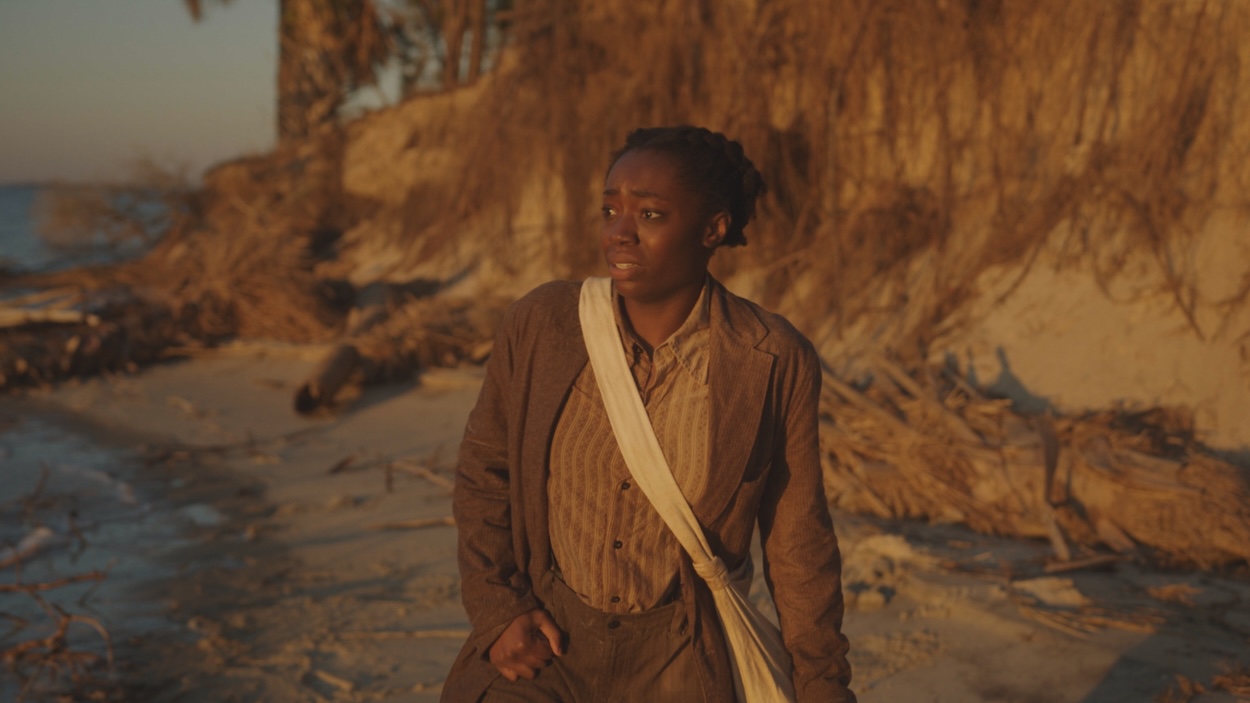
With Venus of Ossabaw, that meant we had to film on the island itself. We shot there for half our days, with the entire cast and crew staying overnight in this remote, uninhabited island landscape. There’s no substitute for that kind of direct encounter: the humidity, the density of the maritime forest, the particular quality of coastal Georgia light filtering through live oaks. Nikita Carpenter, our Director of Photography, and I talked extensively about how the landscape needed to exist as a character alongside Venus. We wanted viewers to feel her relationship to the land as both hostile territory and potential sanctuary. The remoteness of Ossabaw gave us access to genuinely untouched landscapes, which allowed the film to exist in a liminal space between documented history and speculative imagination.
Still from Allison Janae Hamilton's 'Venus of Ossabaw'…
Will you please address the palette of this work?
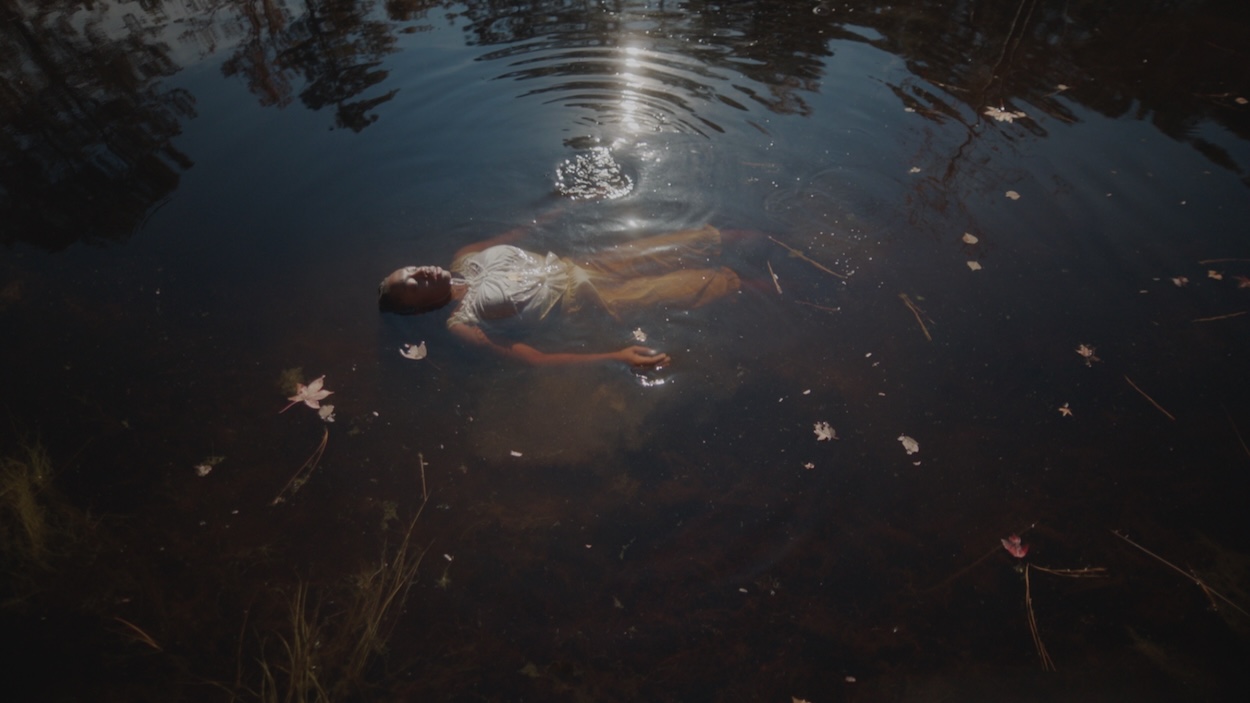
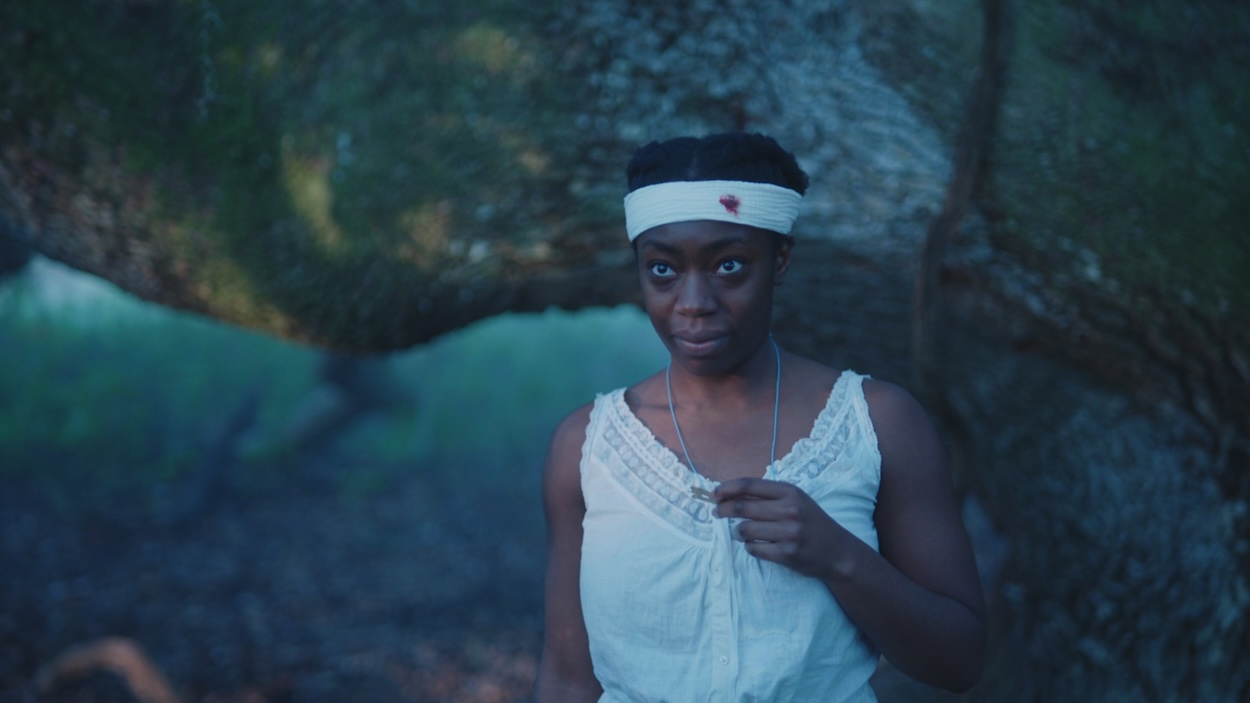
Nikita and I had extensive conversations about creating something haunting but also luminous. We looked at films like The Color of Pomegranates and Pan’s Labyrinth as touchstones for how color can function as both beauty and disquiet. The palette moves between golden amber light and deep indigo blues. You see it in the way late afternoon sun filters through coastal grasses and the way the forest takes on these rich, cool tones at twilight. Indigo runs throughout the film as both color and concept, a visual throughline that references the forced indigo laborers of Ossabaw. We wanted that particular blue to mark Venus’s origin while also transforming it into something more spectral. We weren’t interested in documentary realism. The film needed to feel atmospheric, dreamlike, like the landscape itself was remembering.
Still from Allison Janae Hamilton's 'Venus of Ossabaw'…
Can you reflect on marronage as an artistic subject, or a force within an artwork?
Marronage operates in the film both as historical fact and as aesthetic principle. The maroons in Venus of Ossabaw are present but never fully visible; they’re heard in the woods, felt as a presence, operating outside the frame of colonial documentation. Venus is shipwrecked and becomes the sole survivor of her escape party, but the maroons aid her along the way. When she finally reaches her destination, she’s faced with a choice between two different visions of freedom. I was interested in marronage as refusal, as an alternate form of freedom that doesn’t require assimilation into colonial structures. The maroons haunt the film the way they haunted the historical record, always there, always ungovernable.
Still from Allison Janae Hamilton's 'Venus of Ossabaw'…
When did you know it would be projected on the façade of the Jepson Center? What does that bring to the work?
The façade projection evolved during conversations with the Telfair team and VIA Art Fund, which came on board to help fund the project. VIA encourages large-scale public engagement with contemporary art, so the idea of activating the work beyond the gallery felt aligned with their mission. The atmospheric version projected nightly on the museum’s exterior contains primarily the landscape sequences, moments where we experience the island largely from Venus’ perspective, without her physical presence in frame. Projecting it large-scale on the building transforms the work from intimate viewing experience to public monument. It makes the landscape monumental, gives it an architectural scale. There’s something powerful about film as public art, projected into the night, the landscape becoming this living, breathing presence that anyone walking by encounters.
And would you share thoughts on some of your peers in the exhibition “Off the Coast of Paradise: Artists and Ossabaw Island, 1961-Now?”
It’s an honor to be in exhibition with artists like Sally Mann and Agnes Denes. The exhibition brings together artists across generations who’ve all responded to Ossabaw in different ways, through different lenses. What’s interesting is how the island becomes this kind of catalyst for creative experimentation across such varied practices. Everyone in the show is grappling with place in their own way, whether that’s historical, environmental, or deeply personal.