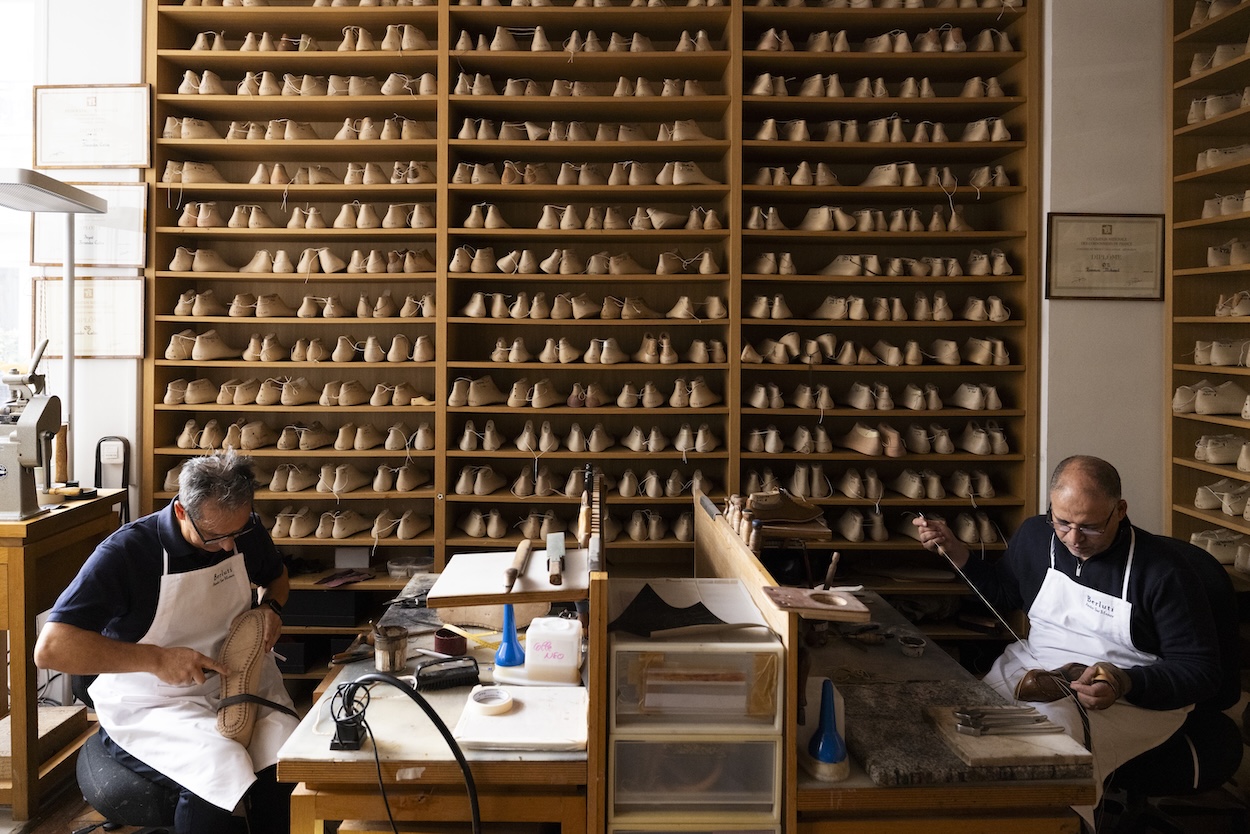
Alessandro Berluti arrived in Paris from Senigallia, Italy in 1895 with a background in carriage construction. He opened a workshop on Rue Marbeuf and began building leather shoes for a Parisian clientele. More than 130 years later, Paula Perier-Latour is working with values inherited from Berluti himself. She is the brand’s master bootmaker, a title that carries specific weight in a house where a single bespoke pair requires over 250 steps and between 50 and 60 hours of labor.
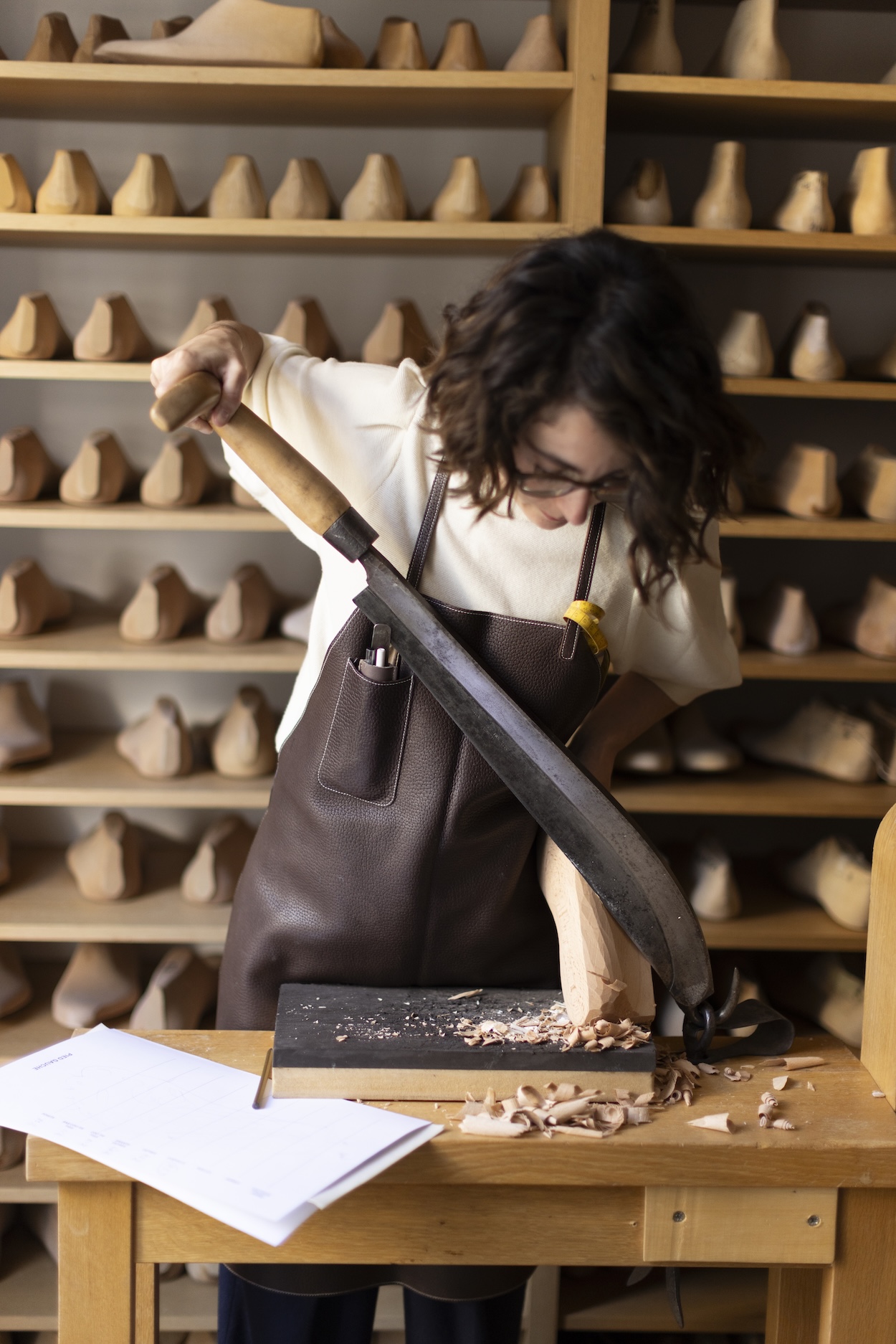
When asked whether she thinks about the foot or the silhouette first—during a demonstration of Berluti’s hand-carving process in the maison’s New York City flagship—Perier-Latour does not choose. “Both,” she tells Surface. “It is really the balance between comfort and aesthetic, and this balance is super different depending on the client.”
Image by Matteo Carassale for Berluti…
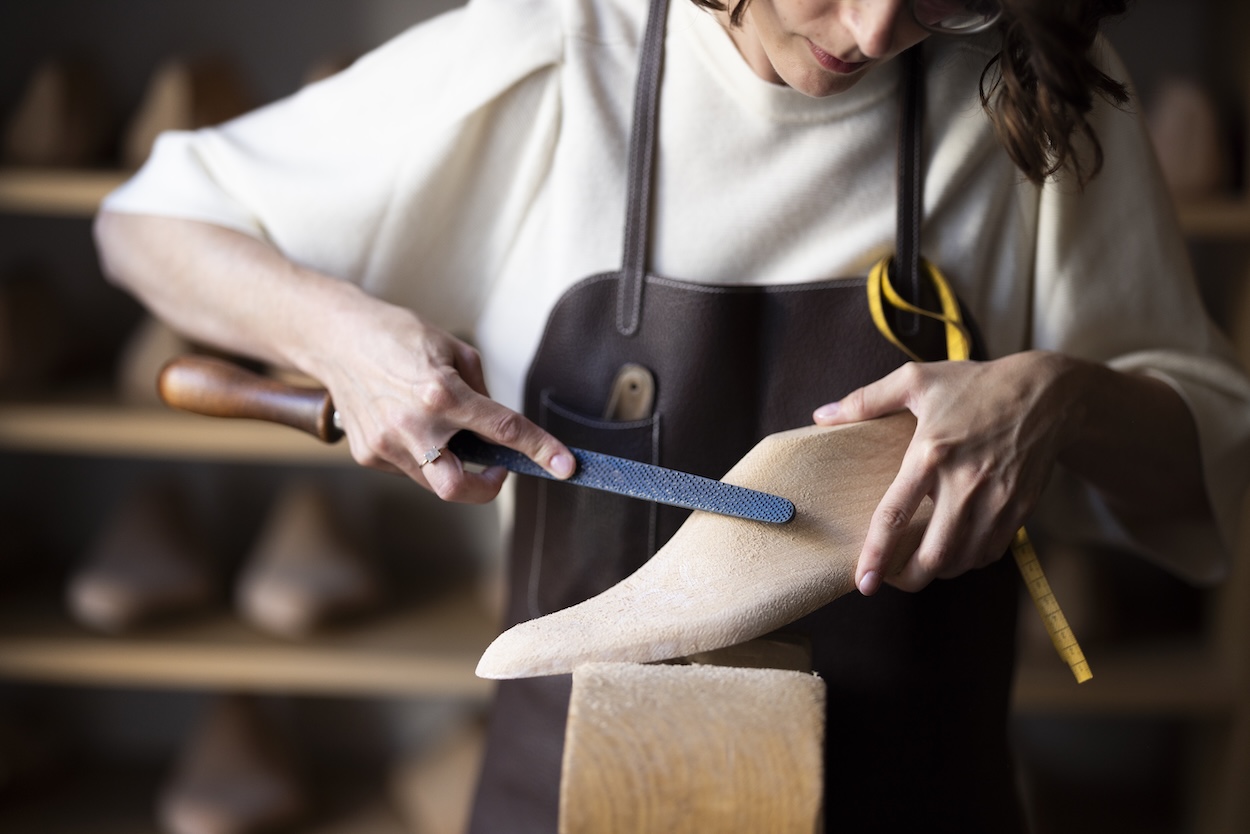
The process begins with a consultation. The shoemaker measures the foot in numerous places, observes posture and gait, and hand-carves a wooden last from hornbeam to match the client’s exact dimensions and weight distribution. A prototype is built. Adjustments are made. And then the making begins in earnest. That first appointment sets the stage for everything, Perier-Latour affirms.
Berluti services its shoes indefinitely. Perier-Latour says this doesn’t change her approach to construction. What changes is the client in front of her, whether they want immediate comfort or a sharper last, a more architectural silhouette. “The shoes will be the same,” she says. The quality of the materials and the integrity of the work stay constant. The variables are human.
Image by Matteo Carassale for Berluti…
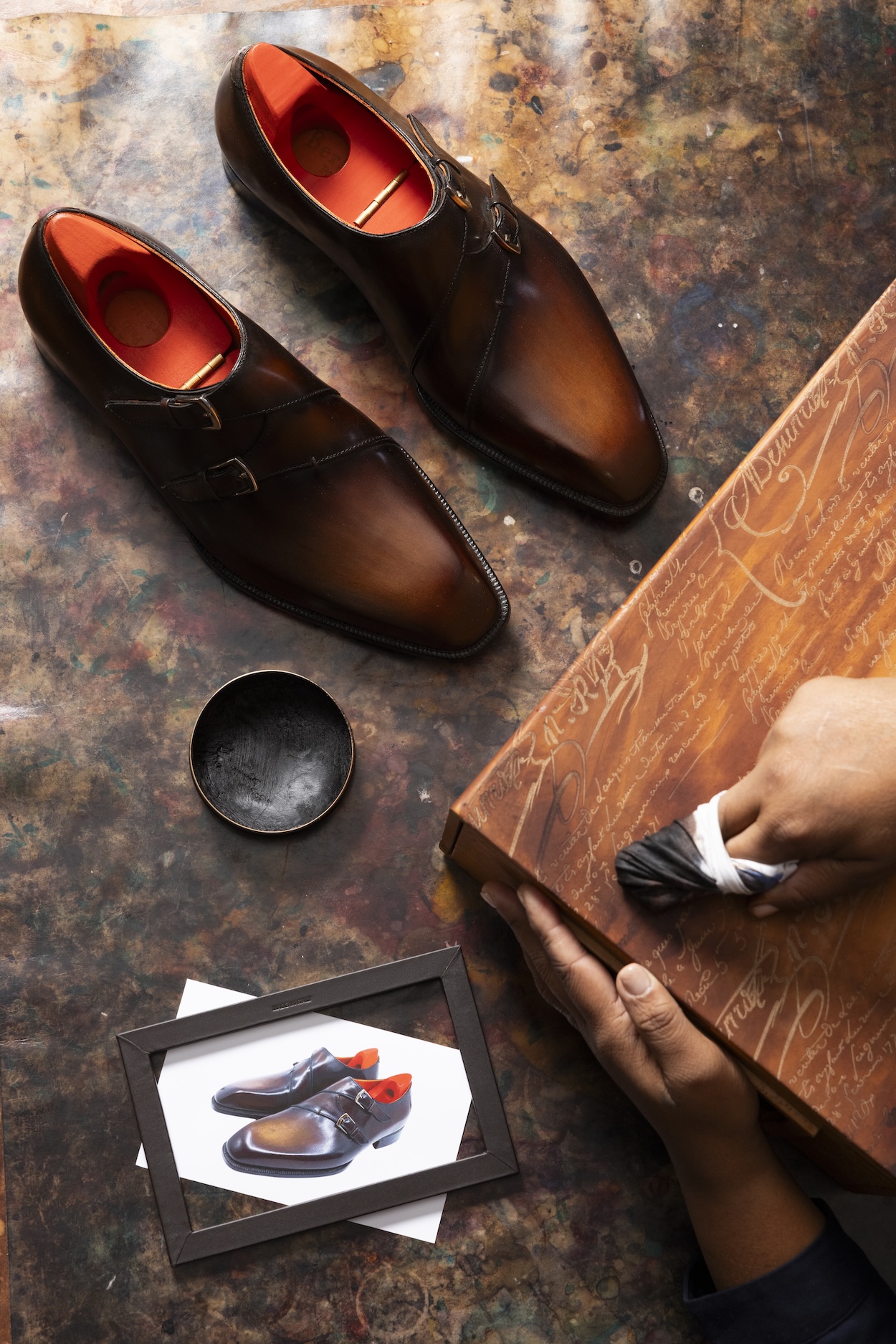
When it comes to the patina, which Berluti has made into a house signature, Perier-Latour reaches for the language of painting. The patina tradition was introduced by Olga Berluti, in the 1980s, at a time when men’s shoes predominantly came in black or brown. Olga is said to have been inspired by how moonlight affected the depigmentation of leather. She introduced a spectrum of color, from deep blues and auburn reds to tobacco shades, applied by hand using creams, natural pigments, waxes, and glazes.
Image by Matteo Carassale for Berluti…
“The patina gives life to the shoes,” Perier-Latour says. “The colorists create shading, highlights.” Sometimes the colorist works with the client’s tailor, matching the patina to the fabric of a suit. The shoe becomes part of a larger composition. There is a specific moment, Perier-Latour explains, when a Berluti shoe is finished—after the patina has been applied. The bespoke shoe box is then made. At Berluti, the box is lacquered in the same patina as the shoes themselves—and then everything is ready.