ARTIST STATEMENT

The Expressive Movement of Artist Stephanie J. Williams' Stop-Motion Experiment, 'The Expectation of the Observed'

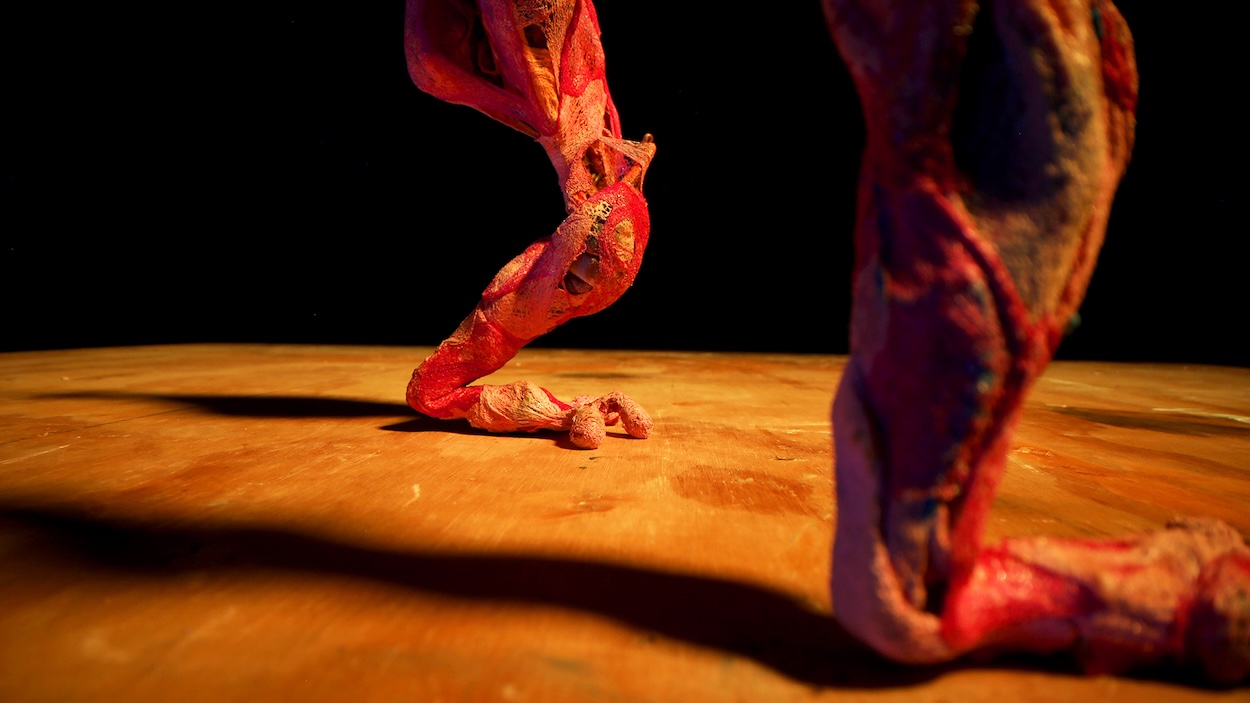
Part of "I’ll Meet You There," a mobile art exhibition mounted on a truck traversing Washington, DC, is artist Stephanie J. Williams' beguiling experimental stop-motion film, 'The Expectation of the Observed.' Within, her puppet protagonist—seven-inch-tall legs composed of latex-coated layers of sheet foam—moves step by step in an intimate dance that emphasizes the limbs' torn aesthetic.

Courtesy of Stephanie J. Williams

Bio: @steph.j.williams, 44

Where are you based: I work between cities: a space that I rent in Baltimore, part of an old cork factory in Greektown, and out of the basement of my house here in Langdon, a neighborhood in NE Washington, DC.

Title of work: The Expectation of the Observed is an experimental puppet stop motion short that I completed in 2022.

Where to see it: The exhibition “I’ll Meet You There” was formed through a collaboration by Allison Nance and Lily Siegel, curators and friends that I’ve partnered with over the last decade on a variety of projects here in Washington, DC. They approached me with an idea to bring artwork directly to the audience—a city-wide roving exhibition art site, a truck with a mounted LED screen and sound that would travel and park throughout the city.

I thought about how timely this was; we need access to art now more than ever and this would remove so many of the obstacles that artists face when trying to talk about our research. I’ve found that people can be suspicious of a gallery setting. This promotes access. The idea of the gallery is still there as a place to gather and understand the various ways that we organize ourselves through a terrain of human experiences. I usually screen this work at film festivals but I feel so lucky to finally have this work screened here in my hometown, in my own neighborhood.

They will also screen artists’ time-based work on Hamiltonian Artists’ front window, where Lily is the executive director, and showcase a photo mural of each artist’s work at The Nicholson Project, where Allison is the executive director. You’ll be able to look up in real time where the truck will be located on our website.

Three words to describe this work: Thinking of three words to describe my work is difficult. I usually depend of physical responses to the work. Perhaps first would be material. I love the storytelling capability of physical material. If I’m interested in telling a story of daily exposure to stress, a stress that really affects how our bodies feel after repeated action and little time for rest, I think about what it feels like to watch a piece of foam stretch and tear after it’s lost its buoyancy.

I also think of dancing. There’s physical destruction and rebuilding that happens in an athletic body. Training through reps with small gestures over and over again that can either make a body stronger or if rest is ignored, cause injury. Dance is also associated with performance. I think of dancers on a stage, not much setting so that we can concentrate on the work of the dancers. There is a built-in sense of watching and being watched that I think is important.

I also think about labor. There all kinds of labor that can accumulate from small samples of work and I believe that this labor can be so easy overlooked and assumed to be just a part of life. I think of the experiences of codeswitching, a dance for an expecting audience and in its repetition, the root of true injury.

Courtesy of Stephanie J. Williams

What was on your mind at the time: It was 2022 so the pandemic forced a lot of us to think more carefully about our bodies. I work at a college and with the murder of George Floyd, so many people recognized these types of labor based in survival, big and small but always in accumulation. I had also volunteered to help a small group to organize a faculty union. I did that for a little over three years talking to colleagues about the type of work that they did as teachers. Faculty of color constantly said that in addition to the everyday stresses of research and teaching, their school service involved a survival dance, navigating the intentions of their colleagues, and providing support to any and all students that felt marginalized in our community. They stressed that need to keep up, to survive.

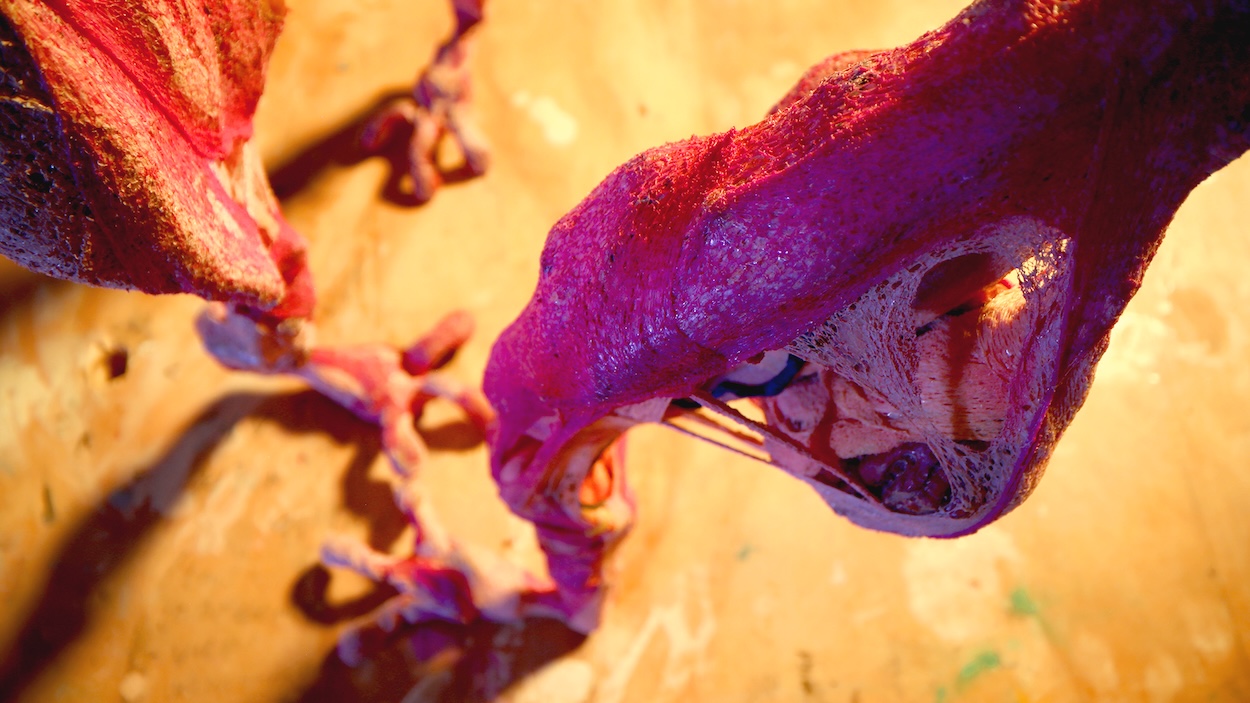
An interesting feature that’s not immediately noticeable: The scale of the puppets is something that a lot of people find surprising. The legs, my protagonists in the films, are roughly seven inches tall and made from layers of sheet foam dipped in tinted latex. The aesthetic is based on experiments tearing the material that left layers partially stuck together. Dried latex has a 24 hour tackiness that provides a temporary hold that can be broken easily with tweezers. I spent a lot of time slowly tearing the layers and walking back and forth from the camera to take pictures at a rate of 24 photographs in order to make 1 second of footage.

How the work reflects your practice as a whole: I’ve been so moved by the force that can come from an accumulation of small caring intimate gestures. Showing care through my craft is the best way for me to express my care and awareness of my surroundings and the people in it. Stop motion only exists in its accumulation of small intimate gestures. I pose the puppet with only a few millimeters of difference from its last pose. I walk to the camera and take a picture. I check it, the tilt of the movement, its arc that is to be recognized as organic, shows an ease in and out. I then track each movement arc as pivot points on the puppet, each moving at its own pace, yet contributing to the puppet’s pose as a whole. I research movement in everyday life, watching and keeping count of how things move, even rehearsing that movement myself so I can tell where the puppet needs to carry its weight and hold that pose until I can take a picture.

One song that captures the work’s essence: “A Change is Gonna Come” Sam Cooke

All Stories