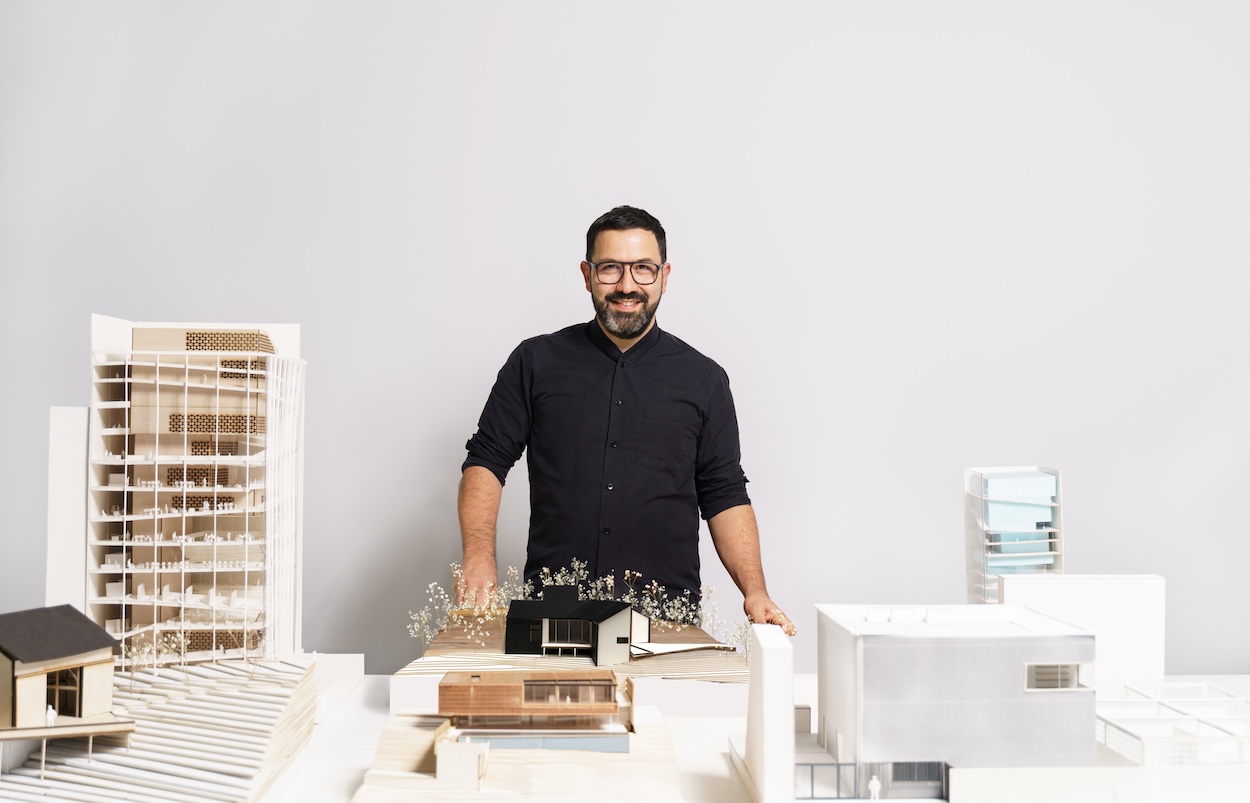
Founded in 2013 by Koray Duman, the research-driven architecture and design studio Büro Koray Duman (B-KD) recently unveiled five landmark international projects—two of which can be found within the 61st International Art Exhibition of La Biennale di Venezia, where B-KD designed the UAE National Pavilion in Arsenale and Denniston Hill’s special project in the Central Pavilion of Giardini. In Pittsburg, the studio led design for the recently opened 59th Carnegie International exhibition, which runs through January 3, 2027. While across New York, where the firm is based, B-KD not only architected the National Academy’s “Future Schools” exhibition, but also a multi-generational upstate residential project.
As an architect, Duman’s vision is rooted in inclusivity and cultural exchange—wherein architecture and design are used to further connection. His contributions to the Biennale affirm this. For Denniston Hill, the Duman constructed a large-scale, mutli-disciplinary installation, an anti-imperial living ecosystem that encourages engagement, titled Chimera. For the United Arab Emirates, the architect shaped the dynamic vessel for a series of artists who explore sound and its relationship to memory. To learn more about the myriad projects and the influence of generosity, hospitality, and community upon Duman’s work, we spoke with the architect following a preview of both inclusions in the Biennale.
Photo by Gaia Cambiagg2026. Washwasha.Taus Makhacheva. Dear R…L.. (Speakers). Image courtesy of National-Pavilion UAE – La Biennale di Venezia. Photo by Ismail Noor of Seeing Thingsi I Studio Campo. Courtesy of Denniston Hill…
Your firm often frames architecture as a social and cultural tool. At the same time, many of your current projects, including biennales, exhibitions, and institutional commissions, operate within global art infrastructures that can feel exclusive. How do you approach the creation of spaces that feel open and accessible within these contexts?
I’m lucky enough that I’ve spent my career collaborating with artists and curators who are immigrants, minorities, or “outsiders” whose lived experiences reflect exclusion from society. While collaborating with them, the ideas of openness and accessibility have always been part of my projects from the get go.
In 2021, artist Carlos Motta was invited to make a proposal for the High Line and he invited me to collaborate with him. Rather than creating a sculpture on a plinth—a straightforward and conventional idea—he wanted to build a social sculpture as a temporary AIDS memorial. For the proposal, titled “VOID,” we designed a space that defined the area for gathering around the plinth and left it empty. The idea was to use the plinth as a stage for untold stories about the AIDS pandemic that would unfold and create an opportunity to memorialize those who lost their lives.
In many of my other projects, especially when working with institutions, I always think about how space can be used in multiple ways. A successful institution needs to provide a social and cultural infrastructure for the communities it serves. In 2016 we won a competition to design a new art storage and archive building for the Noguchi Museum in Long Island, located directly across from the museum. We worked closely with the museum to design movable shelving systems to allow for talks, performances, and events that can take place while surrounded by artifacts from the collection, opening the ground floor of the storage space for visitors to directly experience.
2026. Washwasha. Curated by Bana Kattan. Image Courtesy of National Pavilion-UAE – La Biennale di Venezia.Photo by Ismail Noor of Seeing Things…
Many of your current projects sit at the intersection of architecture and temporality through exhibitions, pavilions, and installations. What draws you to this kind of temporary work—and how does it shape the way you think about architecture more broadly?
Working on temporary projects, like exhibitions, wasn’t necessarily intentional. I’ve always been drawn to working in the public realm but landing permanent institutional projects in New York is difficult—the architecture scene in the northeast is insular.
Temporary projects became a way to explore my interest in public spaces. In essence, public space is intangible where institutional architecture is both tangible and permanent. I found temporary projects to be a fruitful middle ground to fill this gap. This middle ground can allow an architect to think about cultural, social and even political issues of our times, without the time and financial commitment of larger, more permanent projects.
2026. Washwasha.Alaa Edris. Wiswas. Image courtesy of National Pavilion UAE – La-Biennale di Venezia. Photo by Ismail Noor of Seeing Things…
Across your many projects, exhibition design becomes a way of shaping the story experience. How do you work with curators and artists to establish a cohesive narrative while allowing individual voices to stand out?
Establishing trust from the beginning is very important. It allows the curators and artists to be open about their ideas, why they’re creating a show at that moment, and what’s the intention that they want to deliver to their audience. I’ve been incredibly lucky to work with artists and curators who’ve been generous with their time from the beginning; this allows us to be specific about what we’re proposing for the project.
Ultimately, our design should support and underline the exhibition concept, making it clearer and more powerful. This allows for the use of innovative materials, different forms and ideas, which, if proposed specifically for an exhibition to strengthen the concept for the show, is usually welcomed by the curatorial team.
I believe in disciplinary boundaries. Our studio becomes part of the project team and should provide a spatial concept to support a curatorial idea. We’re not here to provide feedback on curatorial statements or artistic choices, we’re here to amplify a curatorial proposition within our design.
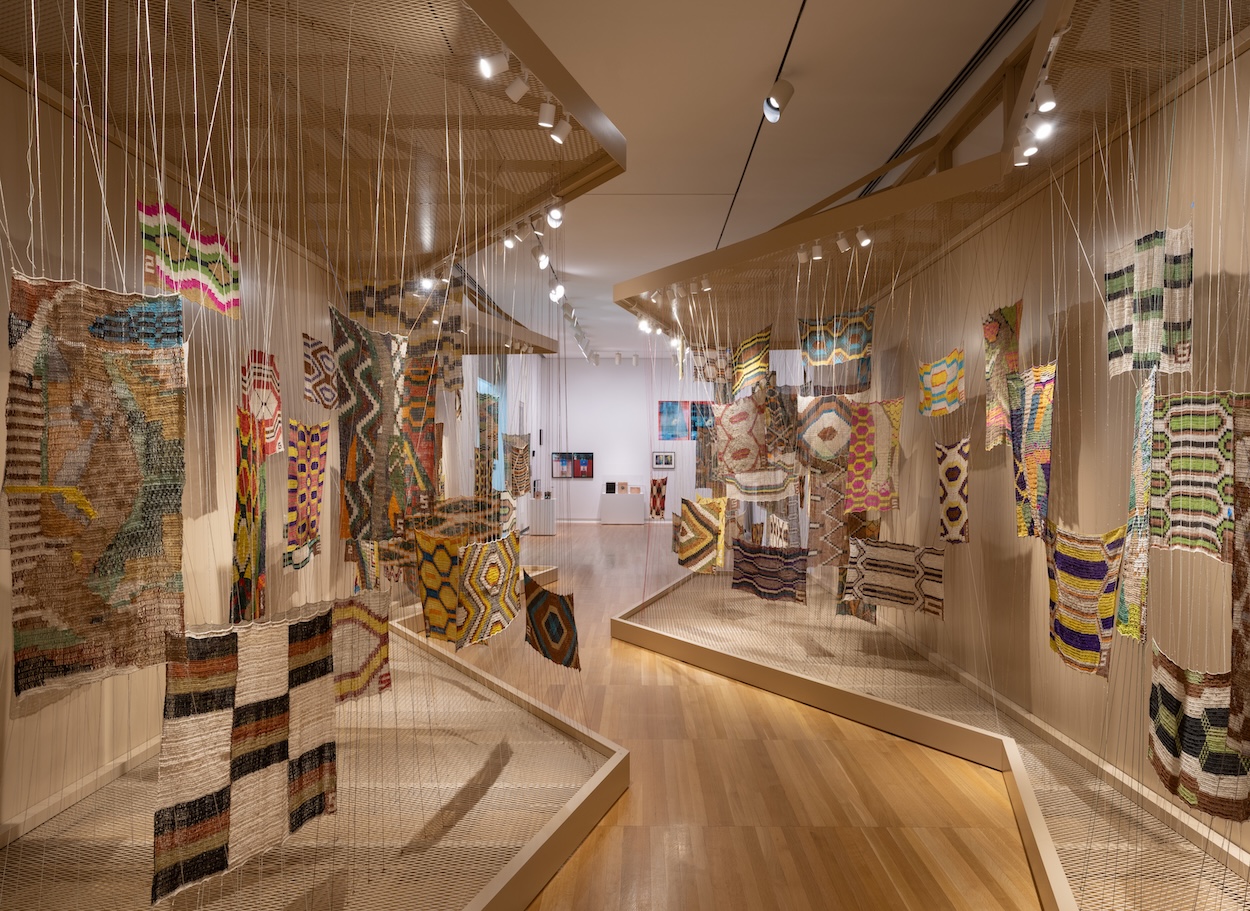
Tewok: the river we weave, image courtesy of Carnegie International…
For this year’s Carnegie International, how did you think about guiding visitors through the space while defining a sense of flow and connection?
Titled “If the word we,” the 59th Carnegie International at the Carnegie Museum of Art considers the first-person plural as an open and evolving proposition—one shaped by listening, translation, and transformation—bringing together artistic practices that engage shared experience, circulation, and worlds in transition. The exhibition approaches “we” not as a unified subject but as a complex and porous position, attentive to contradiction and change.
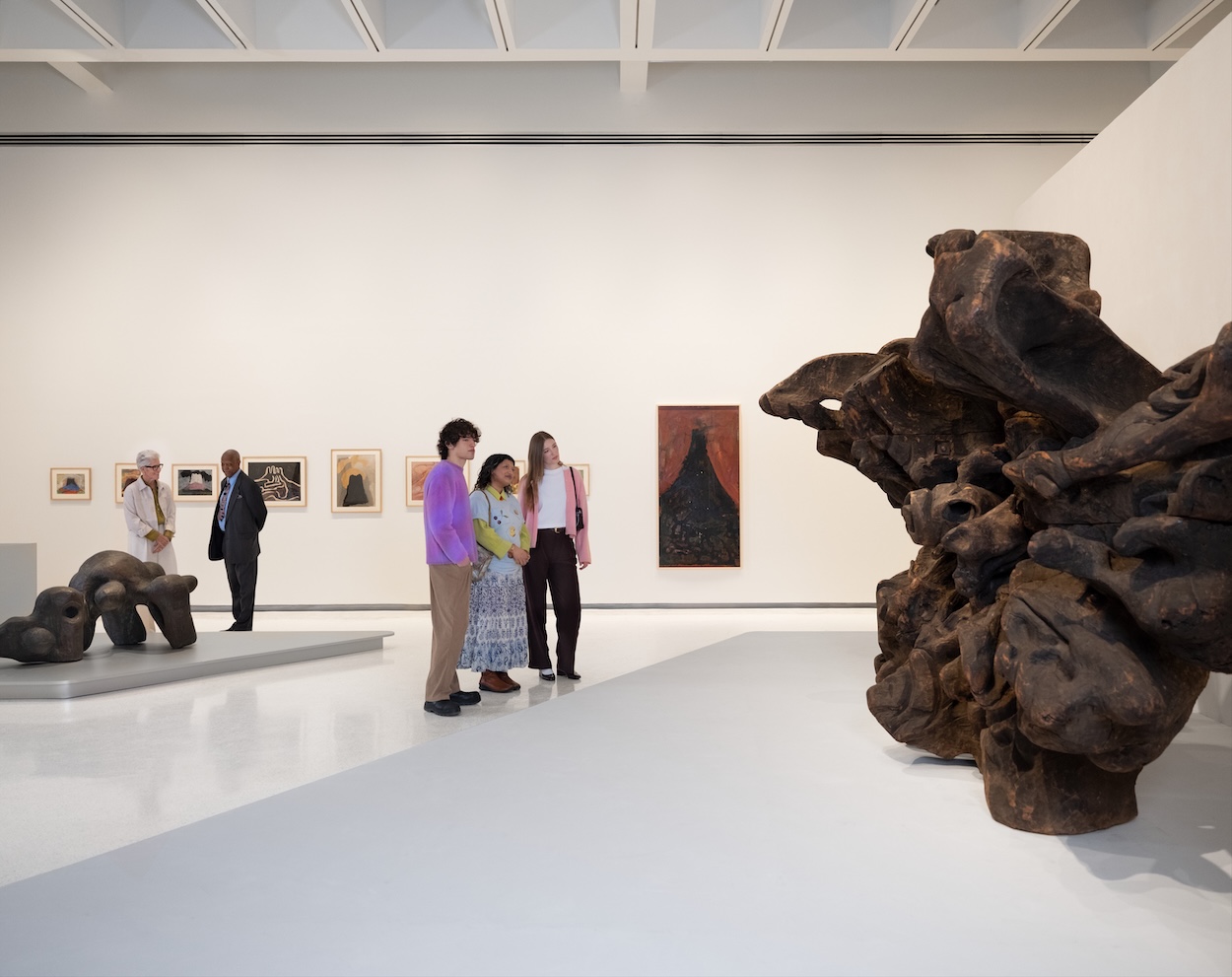
Image courtesy of Carnegie International…
Taking its clues from the curatorial statement emphasizing connections across dynamic artist communities and geographies, Büro Koray Duman approached the exhibition design as worlds in making and in transition. Throughout the 45,000-square-foot space, surfaces, volumes, and objects with different rhythms, textures, and scales run parallel to each other. Existing galleries within the museum are architecturally untouched, exposing their rhythm and scale. A series of free-standing walls and rooms runs at the center of the galleries, enlivened through a limewash texture, and a series of platforms and pedestals provides its own rhythm and scale. We also collaborated closely with several artists to design architectural interventions that present new landscapes in dialogue with their works. When existing architecture meets new interventions, rather than offering a seamless transition, the design aims to create a productive tension in which contradiction and cohabitation coexist and are celebrated.
The architectural interventions that we created carry through the museum as well, guiding visitors through the spaces.
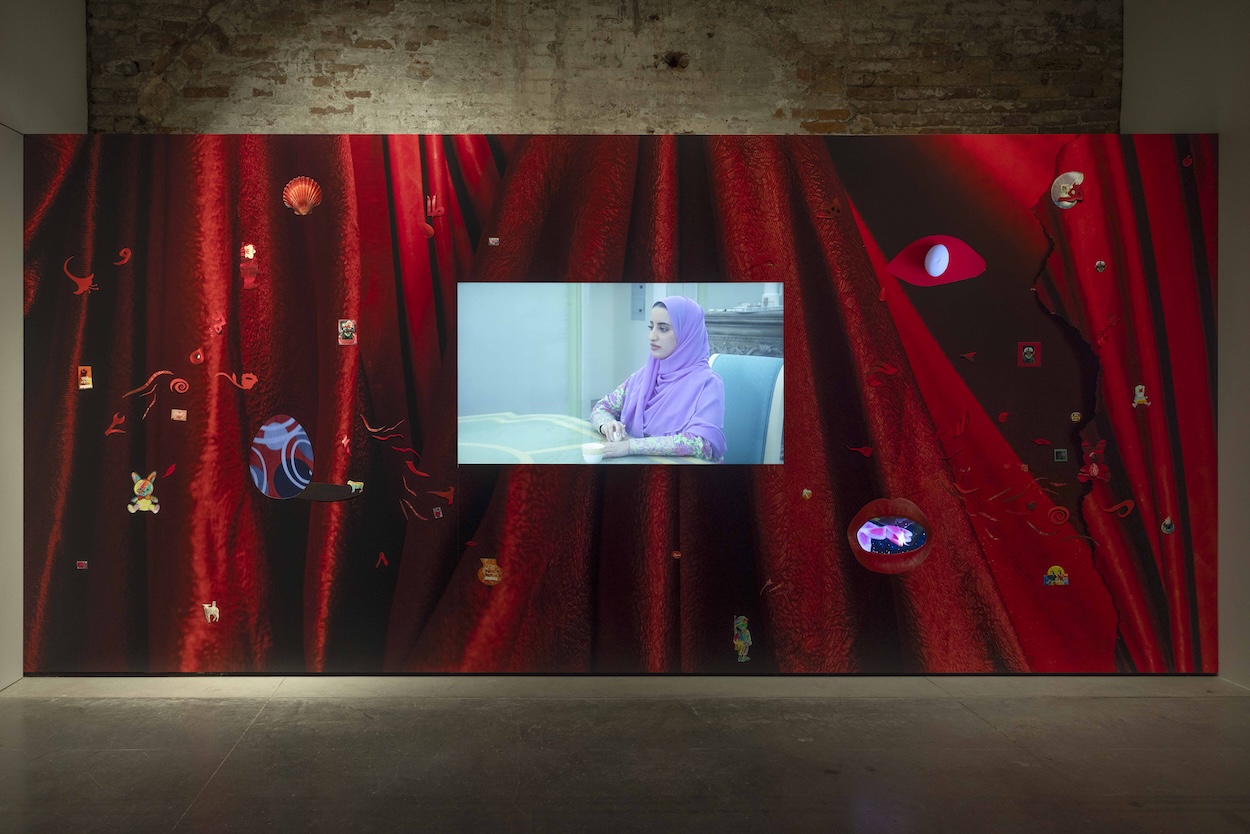
2026. Washwasha.Farah Al Qasimi. The Curse. Image courtesy of National Pavilion UAE –-La Biennale di Venezia. Photo by Ismail Noor of Seeing Things…
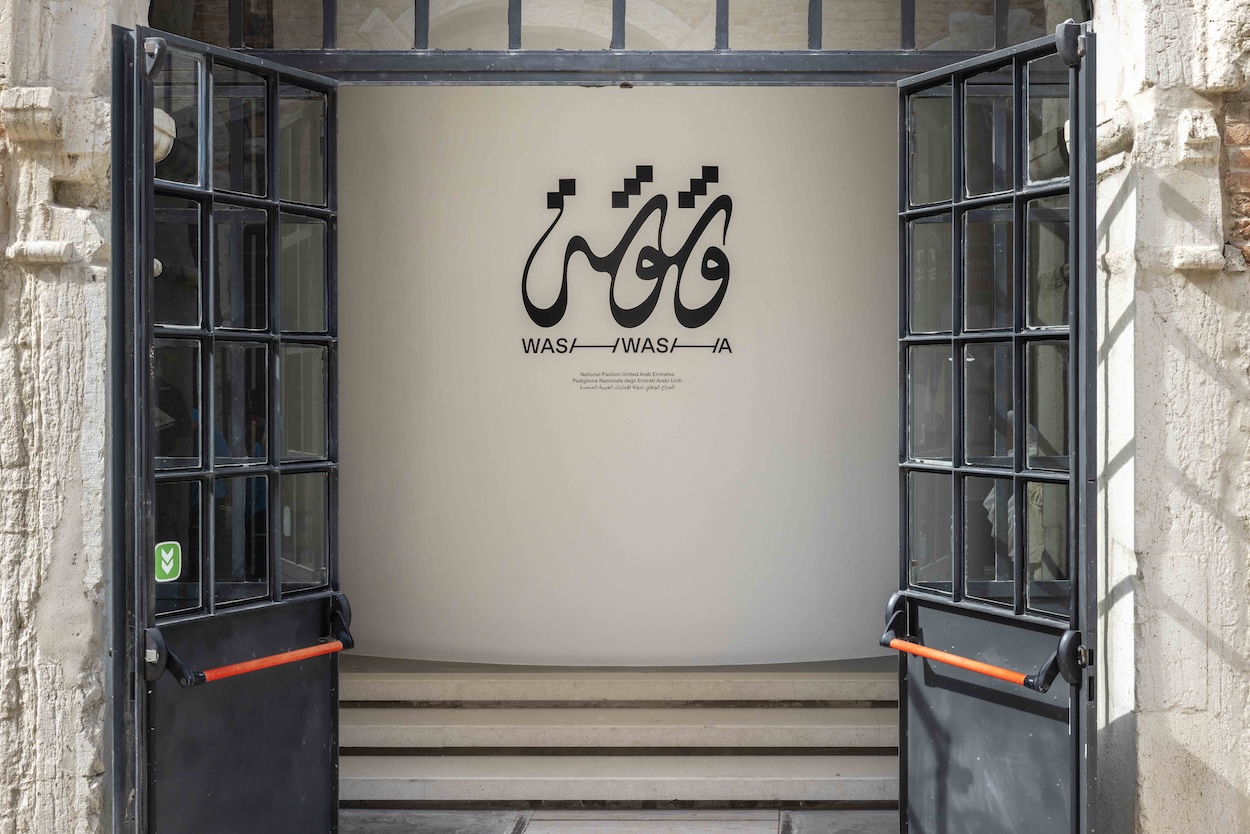
“Washwasha,” the title of the UAE National Pavilion at this year’s Venice Biennale, translates to “whispering” in Arabic and explores sound as a way of carrying memory and identity within the nation’s rapidly changing cultural landscape. How did you begin to translate something as intangible as sound into a physical spatial experience?
Our design provides a journey through the pavilion that traces the progression of sound through multiple modes—from oral histories to movement, migration, and technology.
Upon entry, visitors are greeted by a round, masonry form, an enduring presence that has long served as the container for the intangible character of sound. Behind the form is a halvet—a small private chamber traditionally located off the main steam room in a Hammam. Entering the halvet, viewers are surrounded by artwork by Jawad Al Malhi, a series of oral histories, and invited to sit on benches to experience the encapsulating nature of the sound amplified by the dome and the shadows cast by light entering through holes in the ceiling. In capturing sound, the architecture makes sound tangible and conveys its importance for communicating culture through the practice of oral history.
Upon exiting the halvet, the space opens itself up to an inner courtyard housing works by Farah Al Qasimi, Lamya Gargash, and Mays Albaik that each reflect on sound through the cultural landscape of the UAE: one as a soundscape integrated into a wall and the others situated as discrete, frozen moments set within the open space. Together the works encourage visitors to contemplate both sound as landscape and its transmission of sound through land.
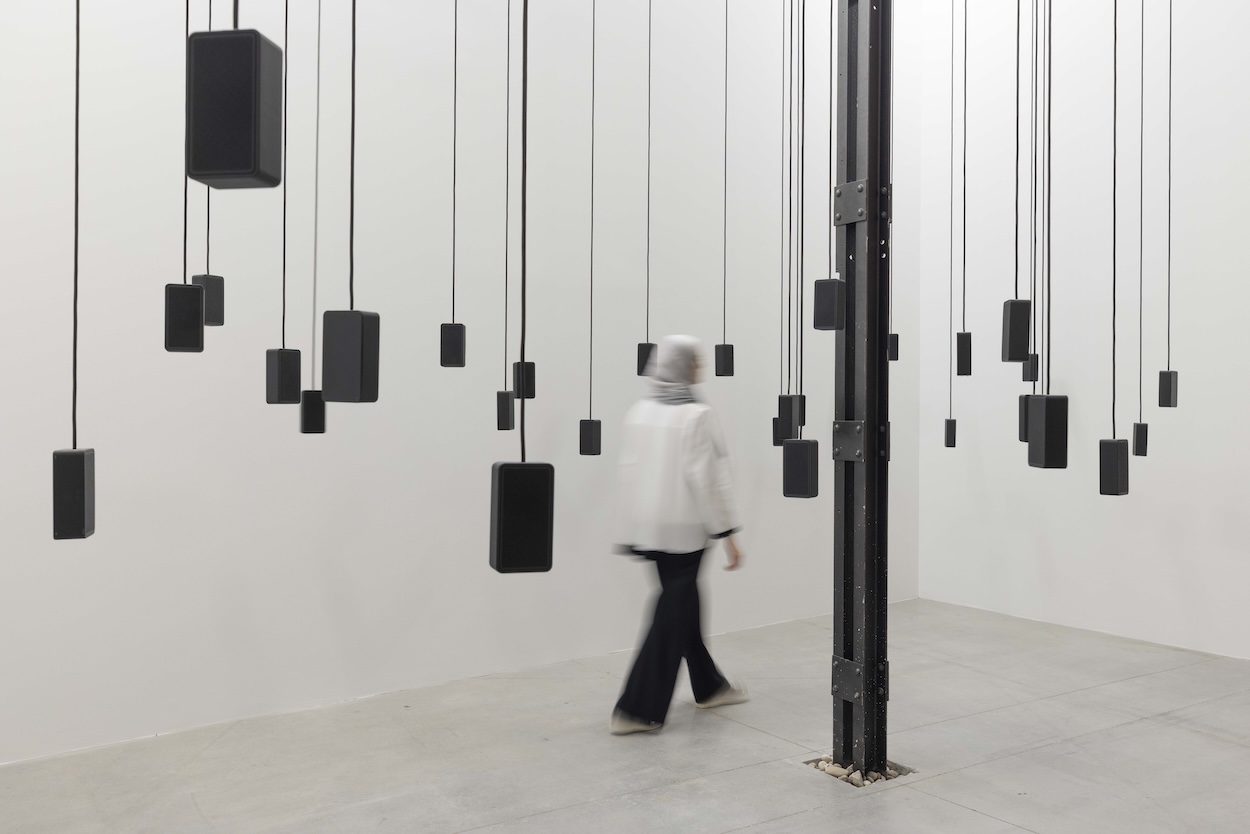
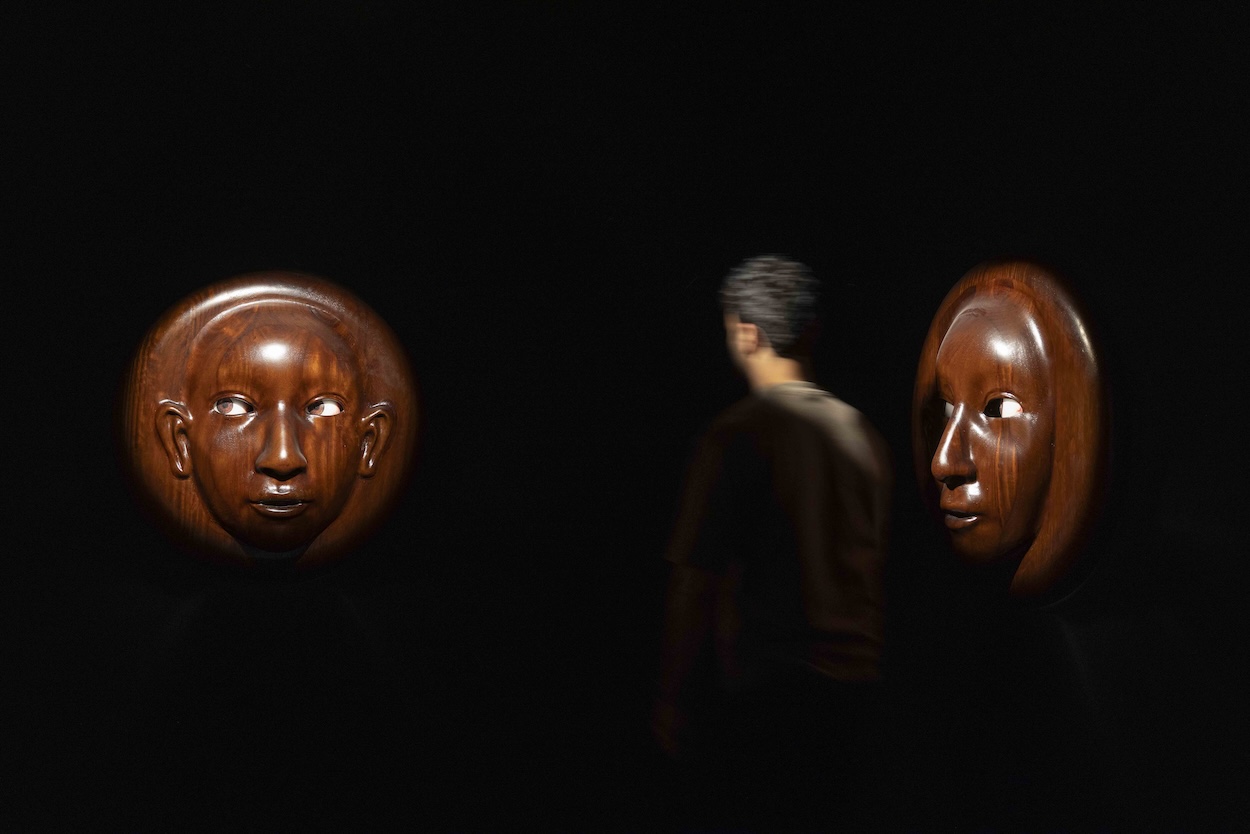
The exhibition ends with two chambers. The first, a completely dark, disorienting room with the work of Alaa Edris, encourages contemplation of what noise and sound feel like in contemporary culture. In the second, a gallery with 52 hanging speakers suspended mid-air, physical space dissolves as a nod to the constant digital noise we are exposed to via the internet and social media.
The pavilion is a journey through different historical spaces, defined by the sound that contributes to and defines the cultural moment of the period. From the enduring presence of masonry architecture to the landscape and the noises we experience in the digital world, our design helps to reveal the UAE not as a fixed cultural form, but as a space shaped by mobility, correspondence, and layered forms of listening across land and sea.
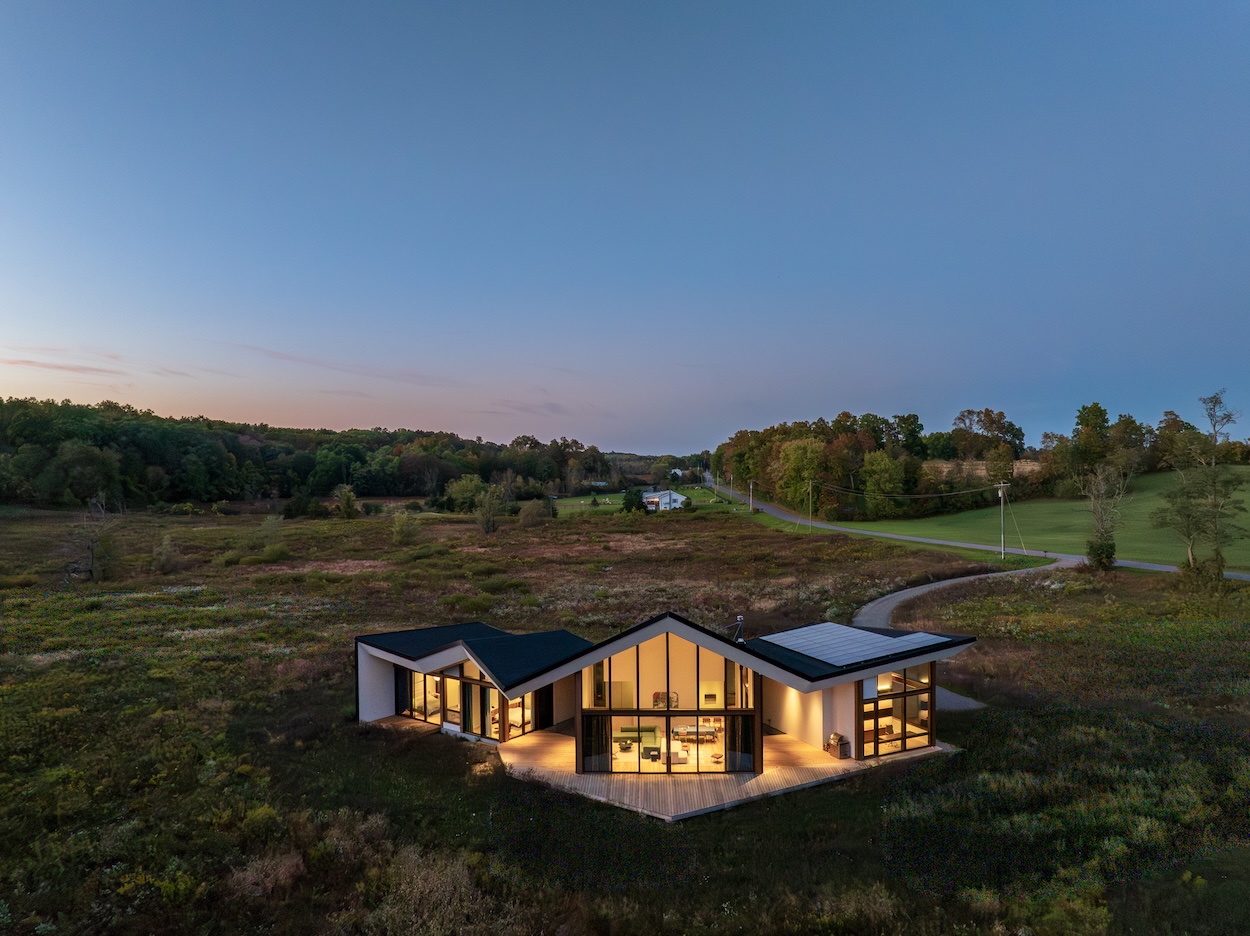
Courtesy of Alon Koppel…
Your recent residential project, Germantown House, created for artist Miranda Fengyuan Zhang, is designed as a multi-generational space that balances intimacy with shared living. It also responds to principles like feng shui and converses with the surrounding landscape. How did you strike this balance?
The house was designed for the extensive stay of the family rather than a weekend house. Comprising three barn-inspired volumes, the home supports three generations through a series of independent yet interconnected spaces that balance privacy and togetherness. With separate functions—a garage and gym, a living area, and bedrooms—the pavilions extend radially, shaping sheltered courtyards in between that integrate indoor-outdoor living. While these functions are separated by volumes through the inner courtyards, there’s a visual connection that creates different levels of privacy and community.
Rather than consolidating all functions into a single volume, the project deconstructs the home into three distinct yet connected spaces with small porches in between or in front and with views into other volumes and towards the landscape. The entire structure feels like a little commune, rather than a single family home.
While the angulating roof brings all three structures together, each volume still keeps its identity which provides a sense of domestic scale and intimacy.