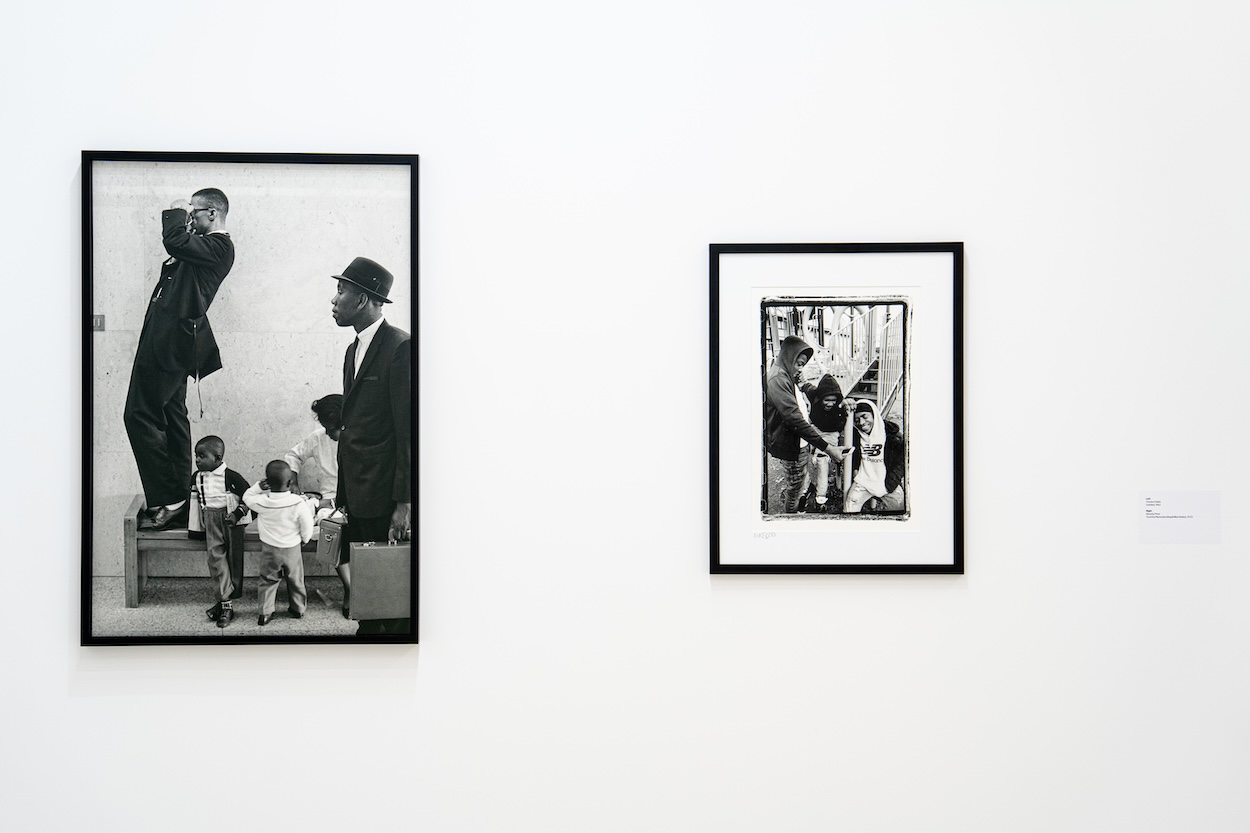
At The Center for Art and Advocacy in Brooklyn, the exhibition “A Language We Share: Beverly Price and Gordon Parks” draws visual and thematic connections between the bodies of work of two influential photographers as they documented the same neighborhoods, decades apart. Both Price and Parks have looked to everyday life for inspiration, and treated their cameras as a civic responsibility, preserving the beauty and significance of their communities and respective generations. The sense of possibility in the images by Price—a Black gay woman who grew up in Washington, D.C.—is as affirming as it is authentic.
“When you really look closely, the works are very different and very similar at the same time, and that is what makes it unique,” Price tells Surface. “It makes you truly feel, not just look, and that is the art of this conversation across time. It feels collaborative. In some ways, it feels like I am finishing a sentence that Gordon started, and like all true art, someone else will continue the sentence after me.” To learn more about Price’s practice, philosophical approach, and poetic depictions of everyday life, we spoke with her further about “A Language We Share: Beverly Price and Gordon Parks.”
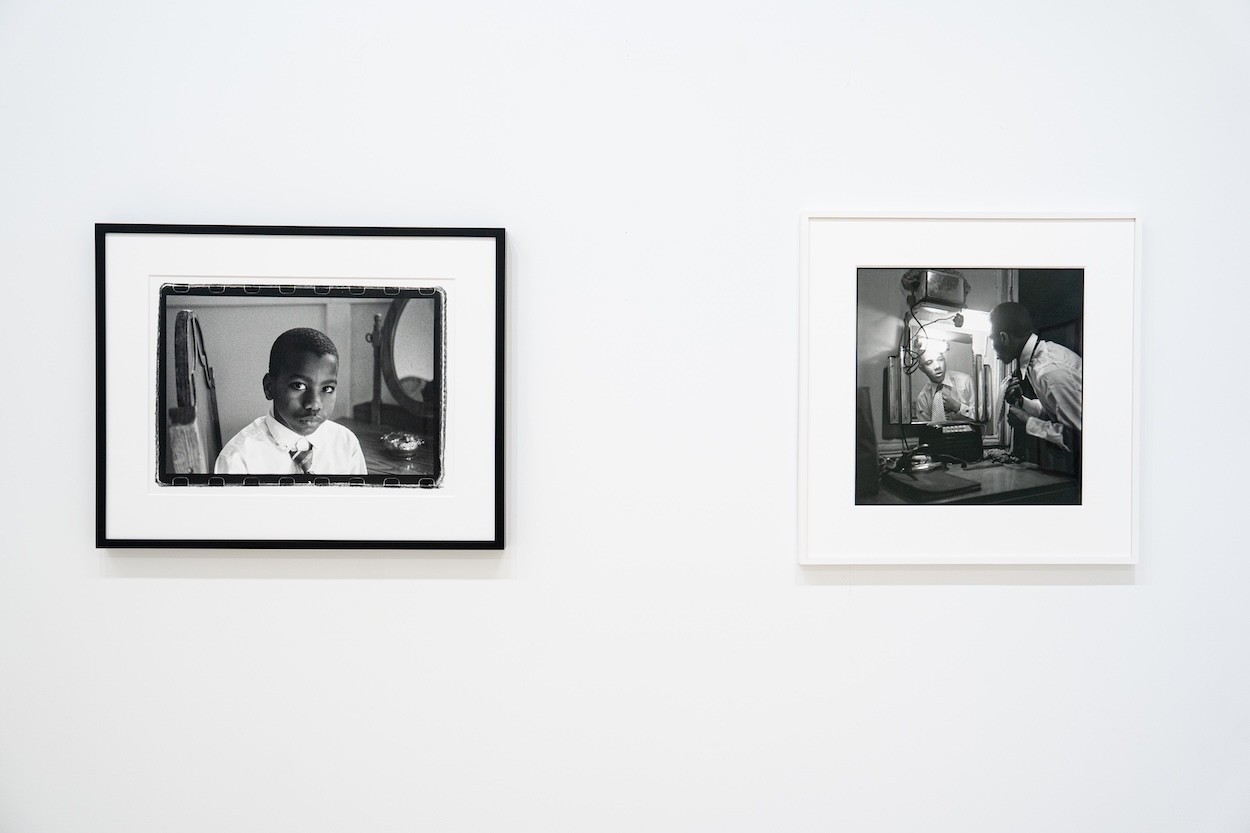
"A Language We Share: Beverly Price and Gordon Parks," installation image by Itzel Alejandara…
You’ve described photography as a way of holding onto what might otherwise disappear. What are you most trying to preserve right now?
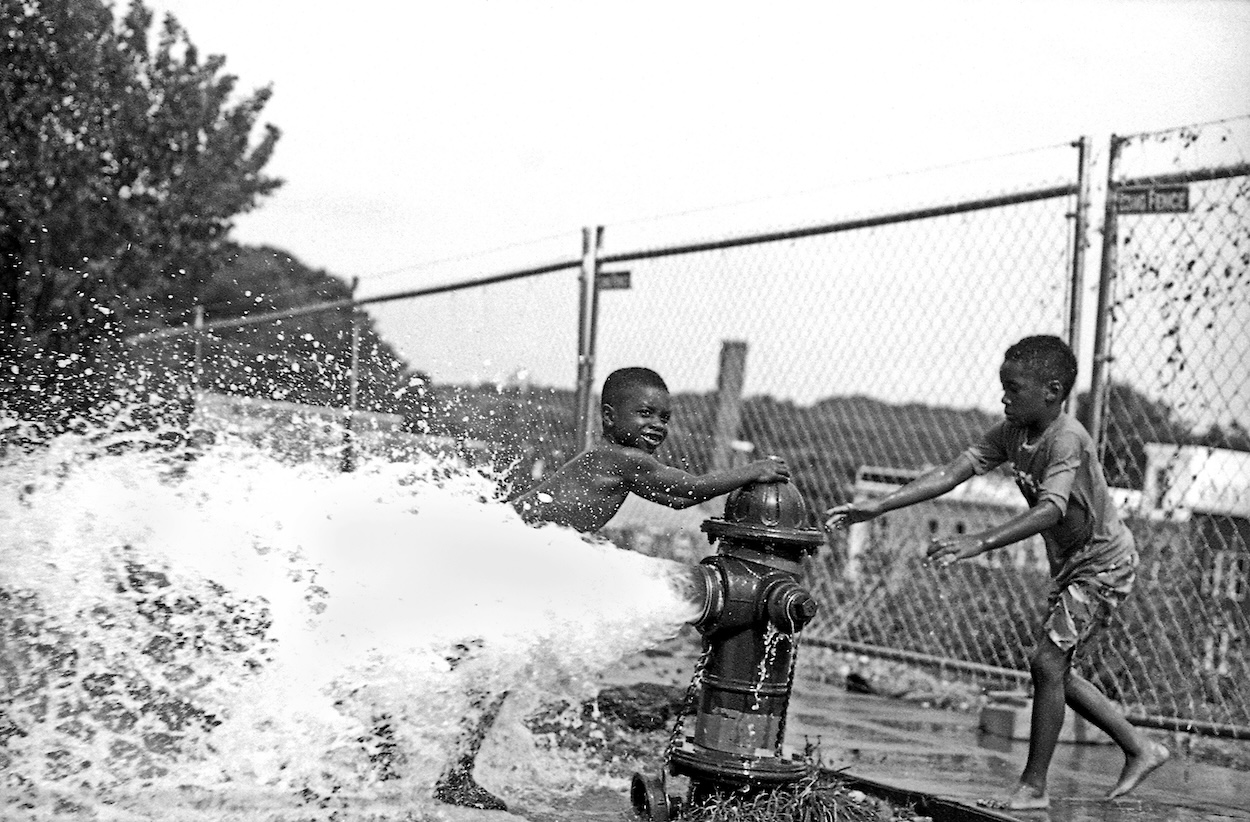
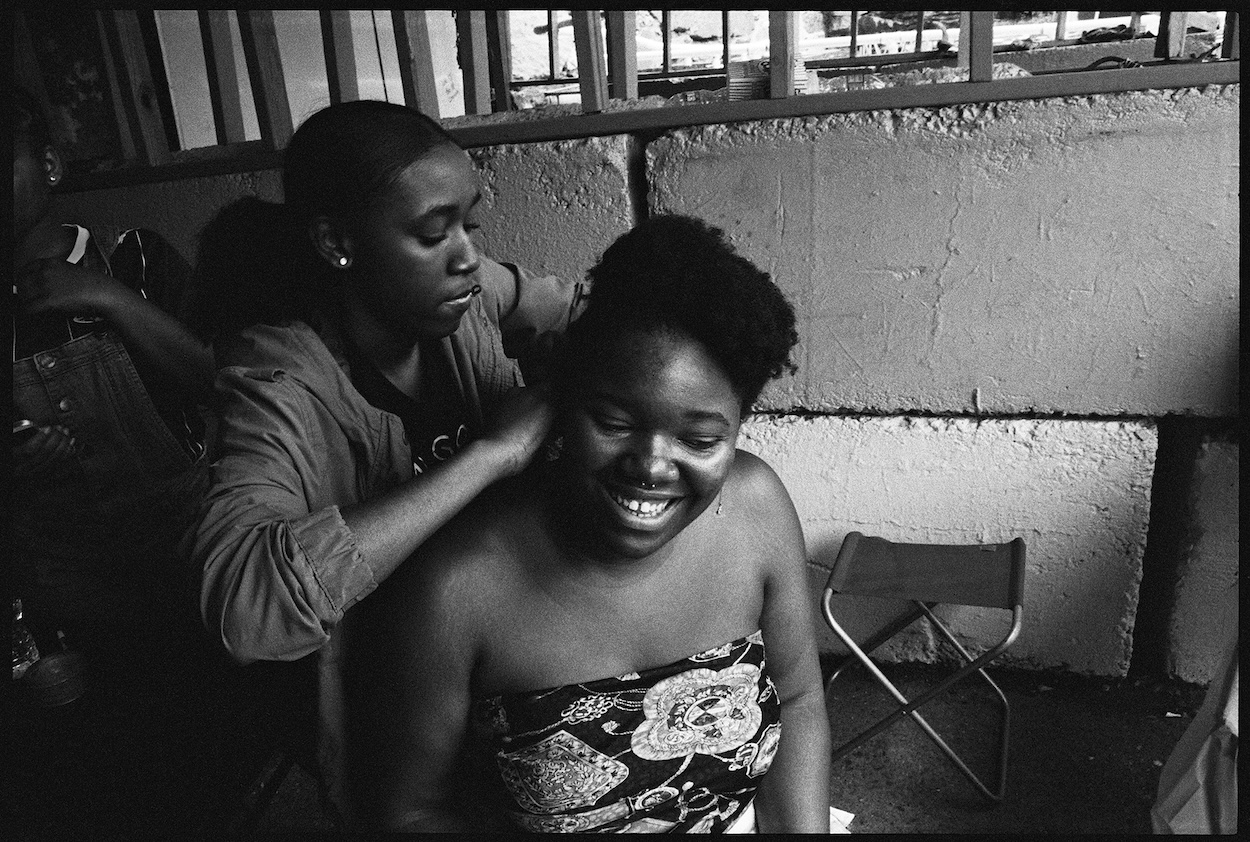
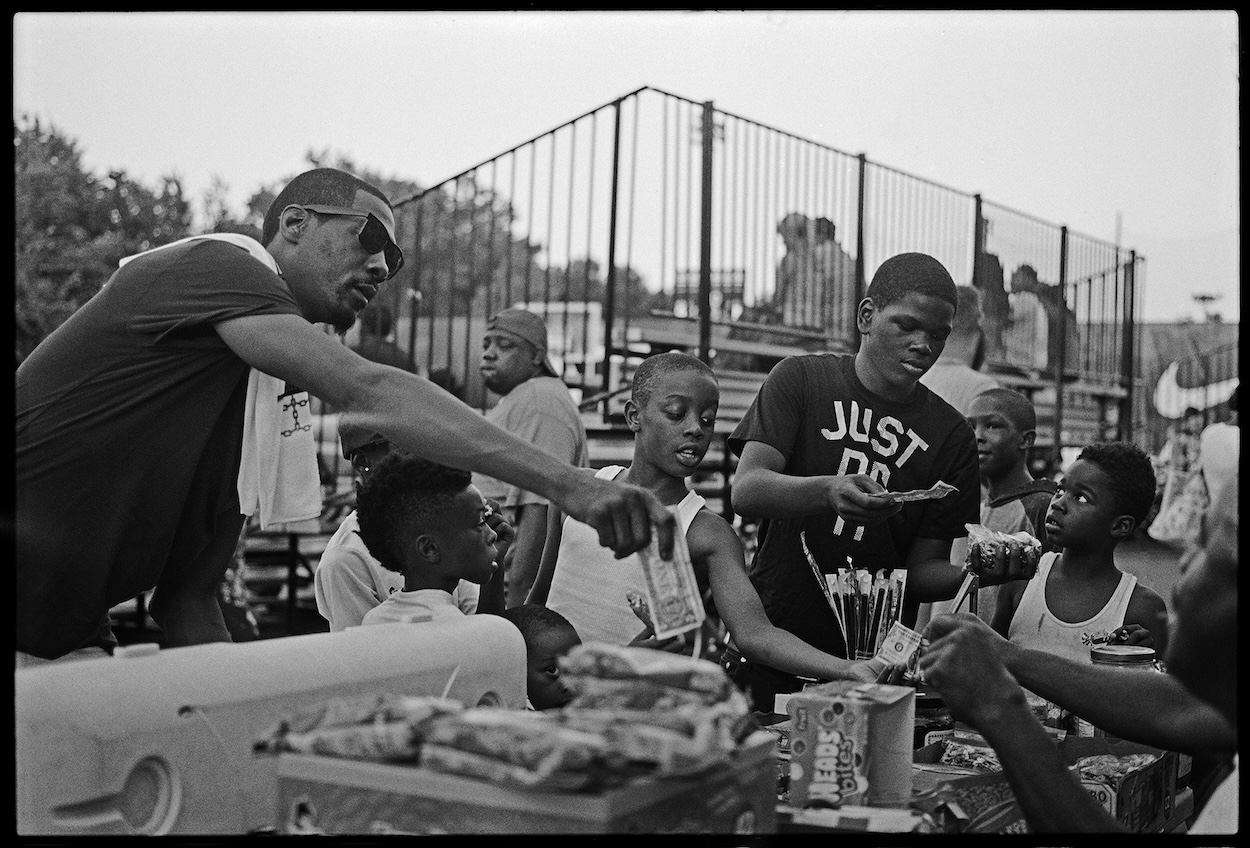
Right now, I am trying to preserve everyday life, especially the quiet moments that often go unnoticed but mean everything. Kids playing outside, people sitting on porches, friends laughing, someone walking through their neighborhood. Those small moments are what make up a life and a community.
I am also trying to preserve a sense of place, what it feels like to be from somewhere, to know the people, the light, the history, and the feeling of a neighborhood. Places change and people move on, but photographs can hold those memories.
More than anything, I am trying to preserve innocence, dignity, and memory, especially for young people, so there is a record that shows they were here, they were loved, and their lives mattered.
What draws you to photographing children, particularly in quieter, more introspective moments?
What draws me to photographing children, especially in those quieter, more introspective moments, comes from my own childhood and my mother. When I was a little girl, my mother used to sing a song she made up. She would sing, “We are little girls and we never grow up, we never grow big and we never grow old, we stay little girls forever.” At the time I didn’t fully understand why she sang that to me, but after she passed, I realized she was trying to preserve my innocence and protect my childhood in the best way she could.
I think I am drawn to photographing children because my own innocence was taken from me at a young age when I was incarcerated as a young teenager. So when I photograph young people, I feel like I am trying to protect something. I am drawn to their quiet moments, their thinking moments, their in-between moments, because that is where innocence, imagination, and vulnerability still live.
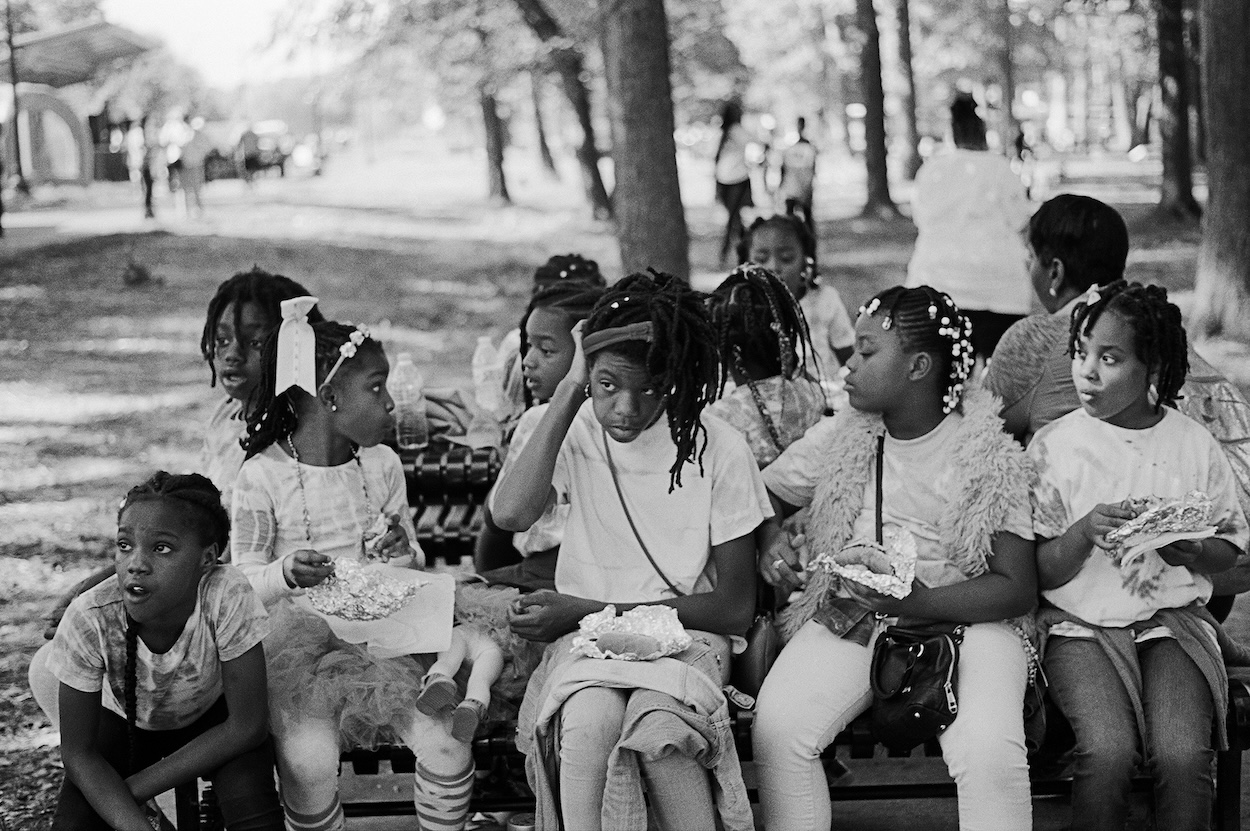
Children can tell the truth. They know when you are working from the heart, and your images will always show that. I respect the sacredness in children, and you must respect them and their parents’ wishes. You never just put a camera in a child’s face. There are levels to respecting their innocence and their ancient spirits.
I also see how childhood is changing. Technology, the world, and the pace of life are changing how children grow up, and sometimes it feels like they are losing the space to just play, think, and be. I think part of my work is trying to hold onto that.
In many ways, I feel like I am continuing what my mother was trying to do for me. She saw something in me when I was young and she was trying to protect me, and now through my photography, I think I am trying to protect that same innocence and spirit in other children.
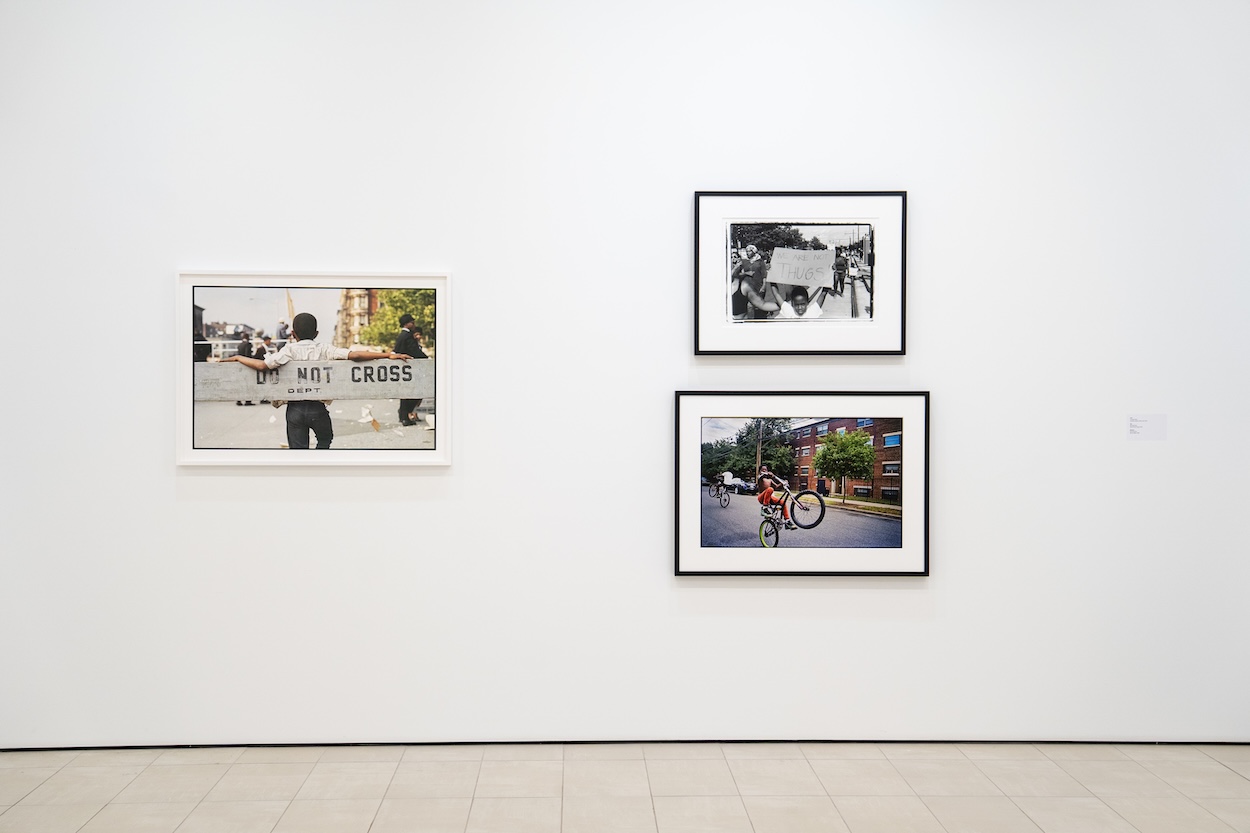
"A Language We Share: Beverly Price and Gordon Parks," installation image by Itzel Alejandara…
Can you describe what it feels like to make an image—what tells you that a moment is worth capturing?
What tells me a moment is worth capturing is my gut feeling and my intuition. Sometimes I see the moment, but a lot of times I actually feel the moment before I fully see it. Some of my best photographs are moments I didn’t completely see when I pressed the shutter. I felt them, photographed the moment, and only later, when I looked at the image, I understood what I had captured.
I do my best work when I am not overthinking, when I am feeling, when I am present, and when I am almost dreaming while I am awake. A lot of my photographs feel like they were dreamed before they happened, and then life just placed the moment in front of me.
For me, making an image is not just about seeing. It is about feeling, intuition, memory, and sometimes even dreaming. When all of that comes together, I know the moment is worth capturing.
How do you navigate representation when working with communities that are so often misrepresented or reduced in mainstream imagery?
When I photograph communities that are often misrepresented, I don’t approach them as an outsider looking in. I photograph from within, from lived experience, from relationships, and from care. That changes everything because I am not looking for what is wrong, I am looking for what is true.
I never started photographing because of an assignment or for a paid job. I have always worked from my heart, and the work later found its places. People are never just one thing. They are joy, struggle, beauty, boredom, love, humor, and pain all at the same time. I try to make images that allow people to exist fully, not just as symbols or statistics.
Trust is also very important in my work. I don’t just show up with a camera and take pictures. I spend time, I talk to people, I build relationships, and I make sure people feel seen and respected. The camera should not take from a community, it should give something back, whether that is visibility, memory, or dignity.
For me, representation is really about responsibility. I am responsible for how people are seen, how they are remembered, and how their stories are told. So now I move slowly, I listen, and I photograph with care.
"A Language We Share: Beverly Price and Gordon Parks," installation image by Itzel Alejandara…
Your work is in conversation with a lineage of photographers, including Gordon Parks. What does it mean to you to contribute to that visual history from your own perspective?
To me, contributing to that visual history means understanding that I am not starting something new, I am continuing something that was started before me. Photographers like Gordon Parks, Roy DeCarava, and many others used the camera to document Black life with dignity, honesty, and care. They showed everyday life, not just big moments, and they understood that photography could be both art and a form of social responsibility.
From my own perspective, I photograph as someone who is from the community I am documenting. I am not passing through and I am not visiting. I am photographing my own environment, my own people, and my own experiences, so my work becomes both personal and historical at the same time. I am also contributing the perspective of a Black gay woman in an industry that has often centered male perspectives or well-known photographers. My work adds another way of seeing and another voice to the visual history.
I think about visual history as a long conversation across generations. Gordon Parks photographed Black life in Washington, D.C., many years ago, and now I am photographing Black life in Washington, D.C., from my time and my experience. The neighborhoods may change, the clothes may change, and the technology may change, but many of the feelings, struggles, joys, and community structures are still there. In some ways, the photographs are speaking to each other across time.
What it means to me is responsibility and also honor. Responsibility because I know these images will outlive me and become part of how people understand this time and my community. And honor because I am part of a visual lineage of photographers who believed that everyday Black life was important, beautiful, and worth documenting with care and respect.
When you imagine someone encountering your photographs decades from now, what do you hope they understand about this moment and the people within it?
I hope they see the importance of human interaction, empathy, and care. I hope the images remind them of the human moments that keep us and this planet alive. I hope the work encourages people to protect the innocence and sacredness of children. I hope it reminds people that it takes a village and that there are good people who have made mistakes, and that it is okay to hold both joy and pain at the same time.
I want them to understand that there was change happening in cities and neighborhoods, and people were trying to hold onto home, memory, and each other while the world was moving very fast around them.
I also hope they see the dignity in the people I photograph. I want them to see that these were people who mattered, whose lives were important, and who deserved to be seen with care and respect. I want the photographs to feel human, honest, and full of spirit.
More than anything, I hope people in the future don’t just look at the photographs, I hope they feel them. I hope they can feel the quiet, the love, the tension, the beauty, and the everyday life inside the images, and understand that this was a community, a time, and a group of people who were here, who lived, and who left a mark. And I hope it makes them want to continue caring for people and documenting life with the same love and responsibility.