In many post-pandemic interiors, flexibility has become a cardinal, future-proofing rule. But for architect Ariel André, it is a radical method to skirt cultural norms. With his Paris-based studio GOLEM, André created a malleable furnishing that expands the typical limits of “multi-use” design. Amoreba is a lattice of upholstery baubles that can take any shape when laid across a structure. To André, it opens the formal possibilities for a comfortable surface far beyond the typical loveseat.
Paris-Based Architect Ariel André's Flexible, Recyclable Furnishing: Amoreba
Its unique upholstery technique can become seating or surface.
BY ELIZABETH FAZZARE March 17, 2026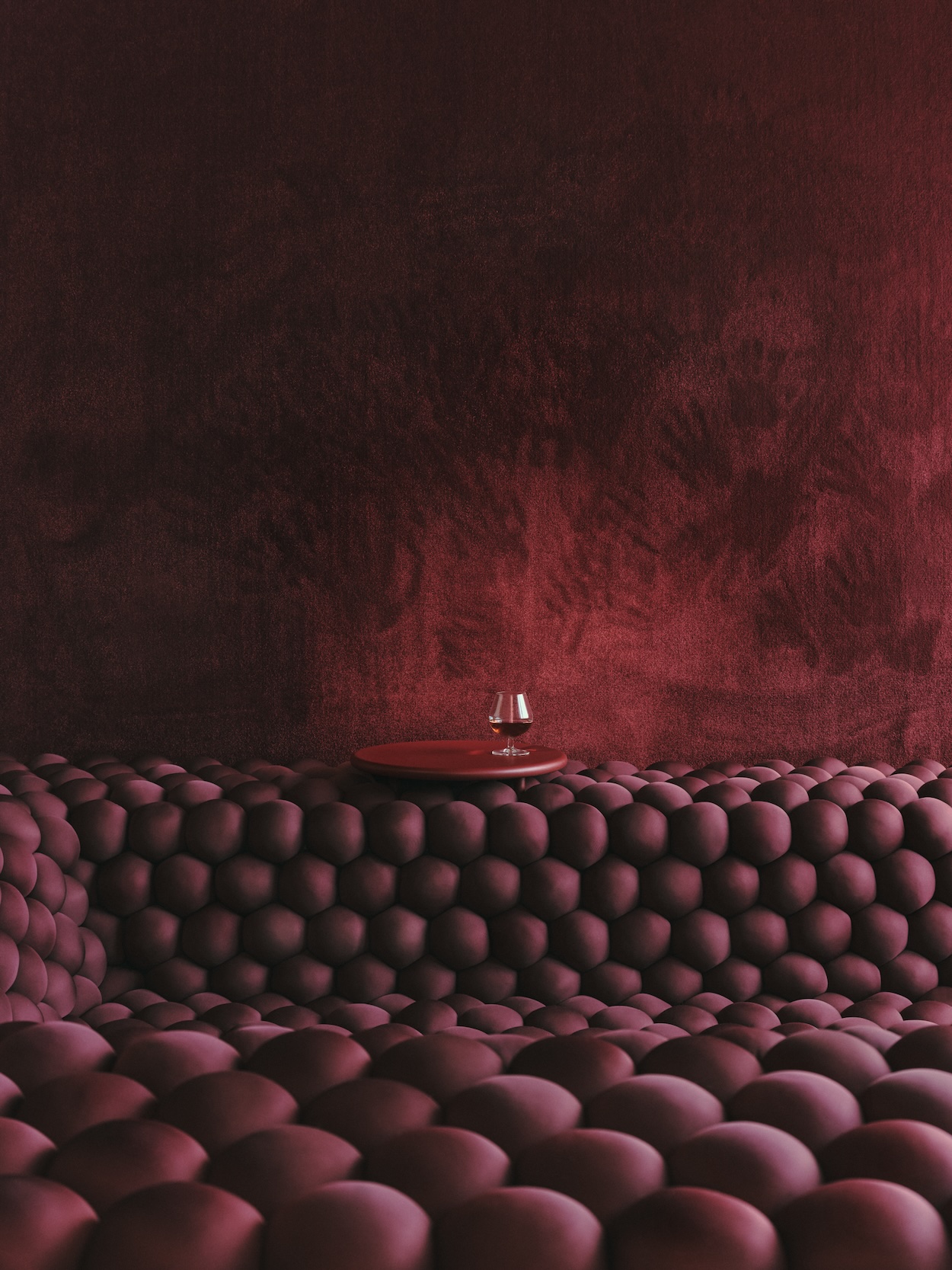
Photo by Mathile Hiley
…
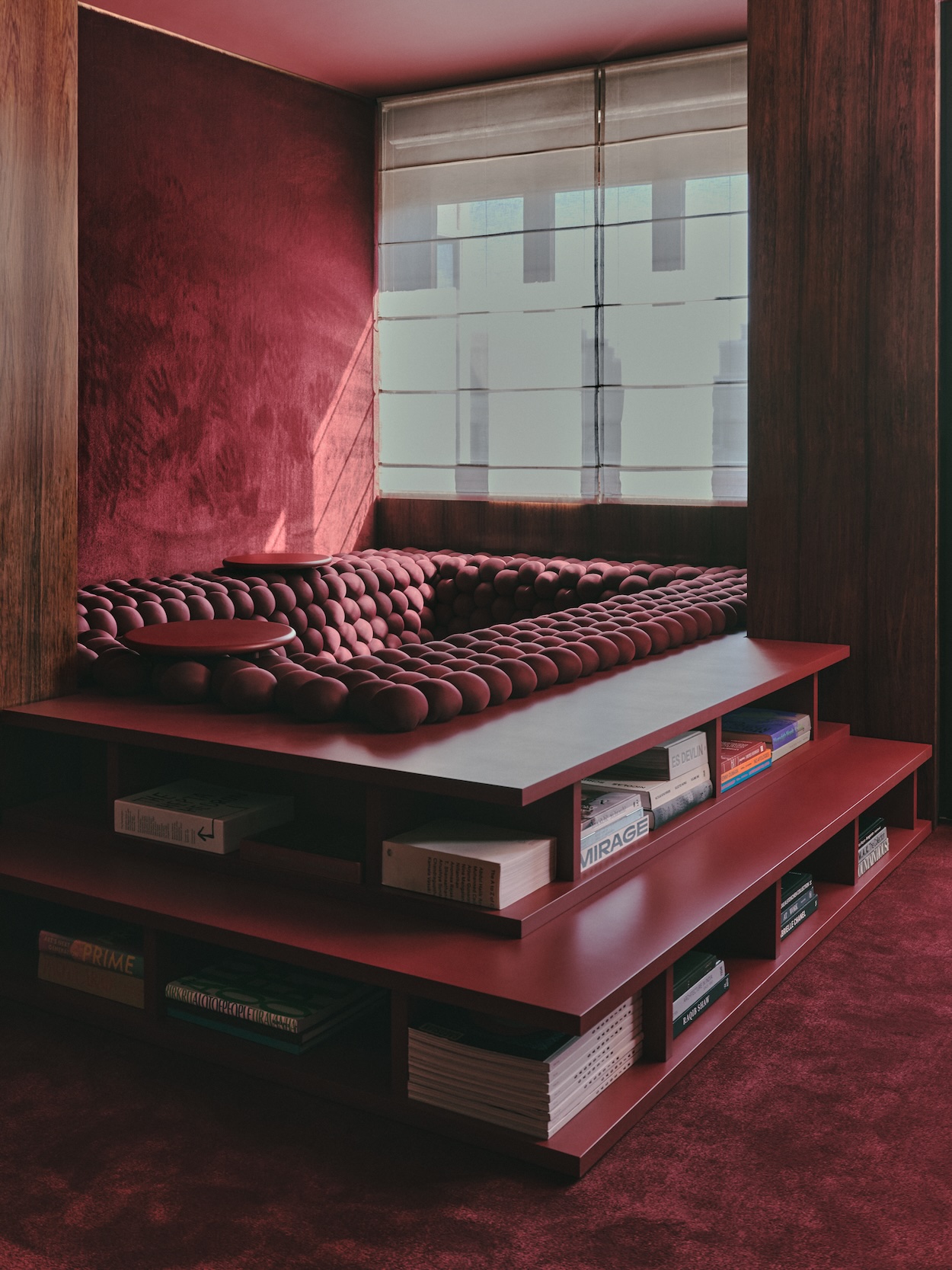
Photo by Mathile Hiley
…
“More than any other typology, seating constrains the bodies inside the household and scripts behavior
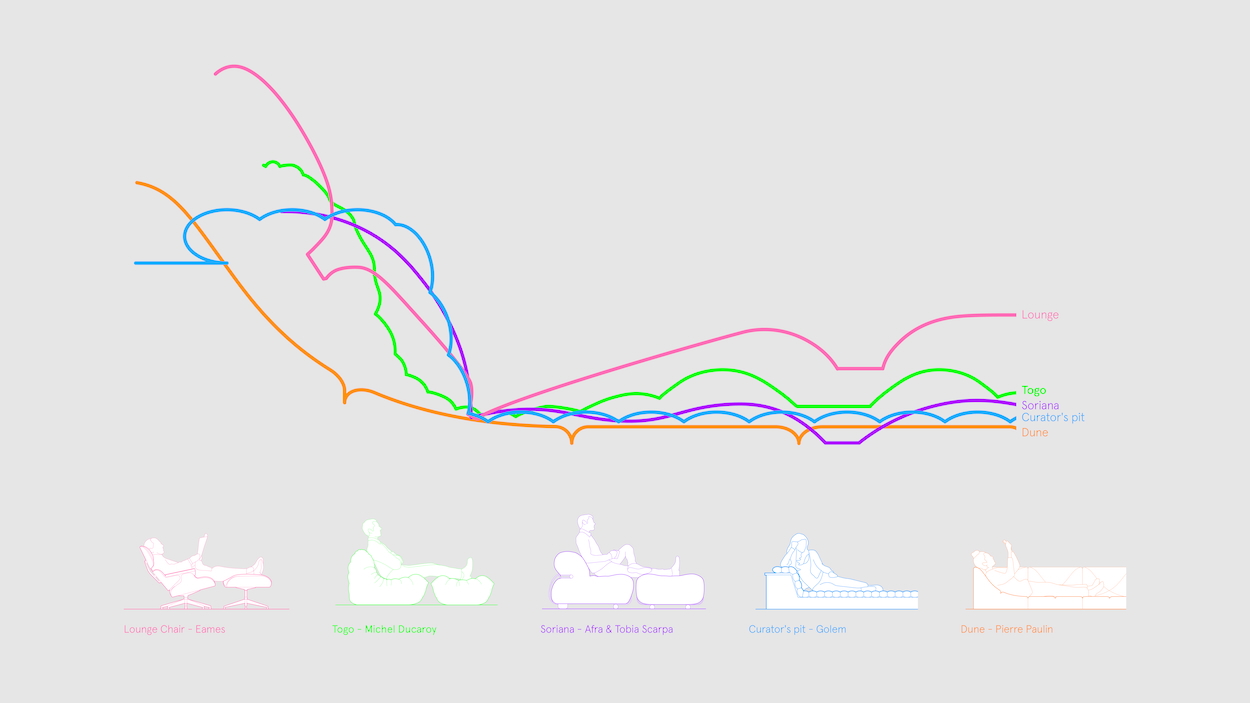
to a crystallized cultural setup,” explains the architect. The contemporary sofa is outdated, he says, “a byproduct of globalized television culture, dimensioned to place the nuclear family in a neat row before the same screen at fixed hours. In an era when there are more screens than people in the household, does this still make sense?” Developed during studio research into “softness as a spatial condition,” and influenced by André’s own psychedelic dreams, Amoreba creates an “elastic environment” within the home, allowing “nonconformists to develop their own ways of inhabiting space,” he adds.
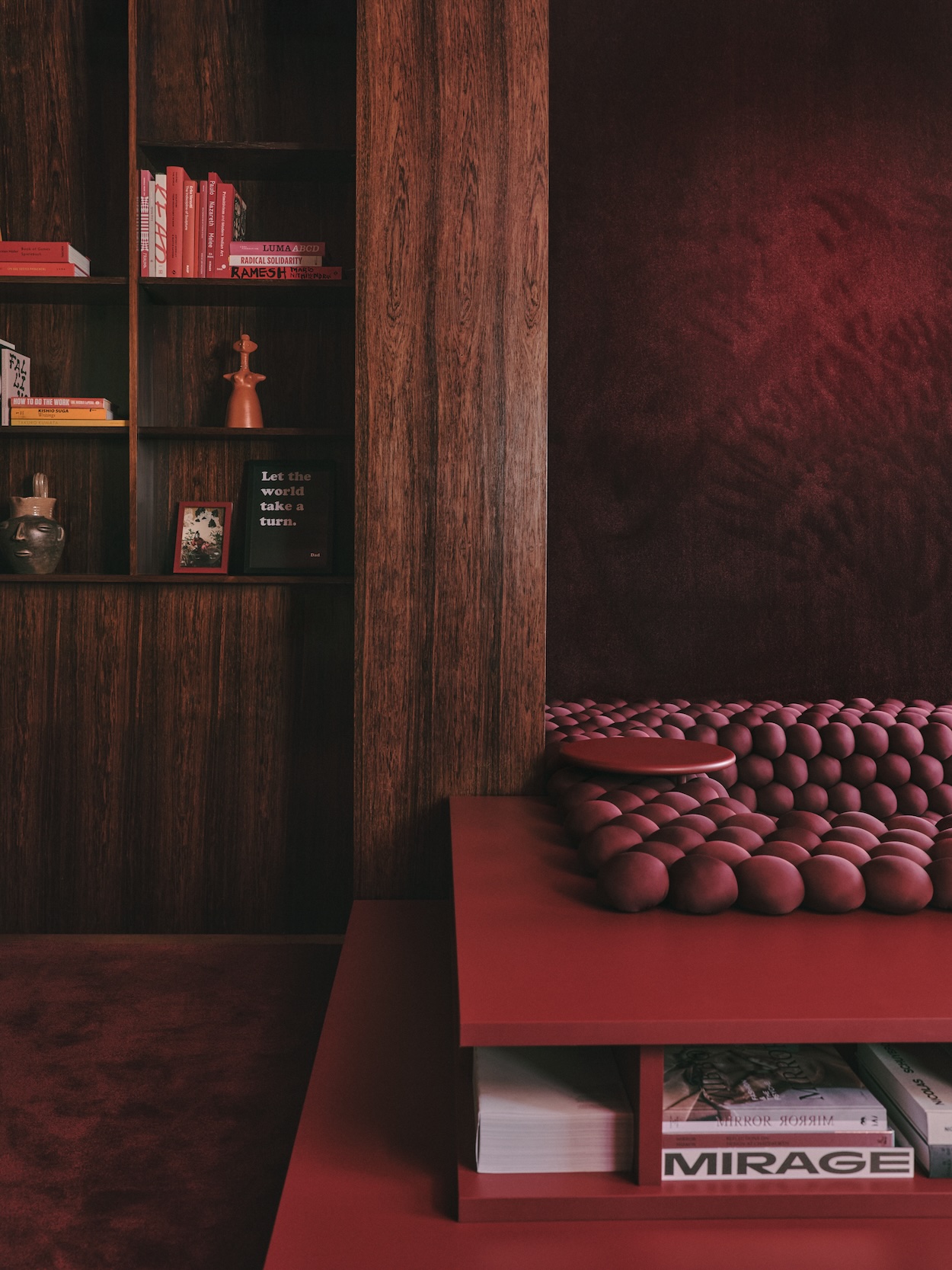
Photo by Mathile Hiley
…
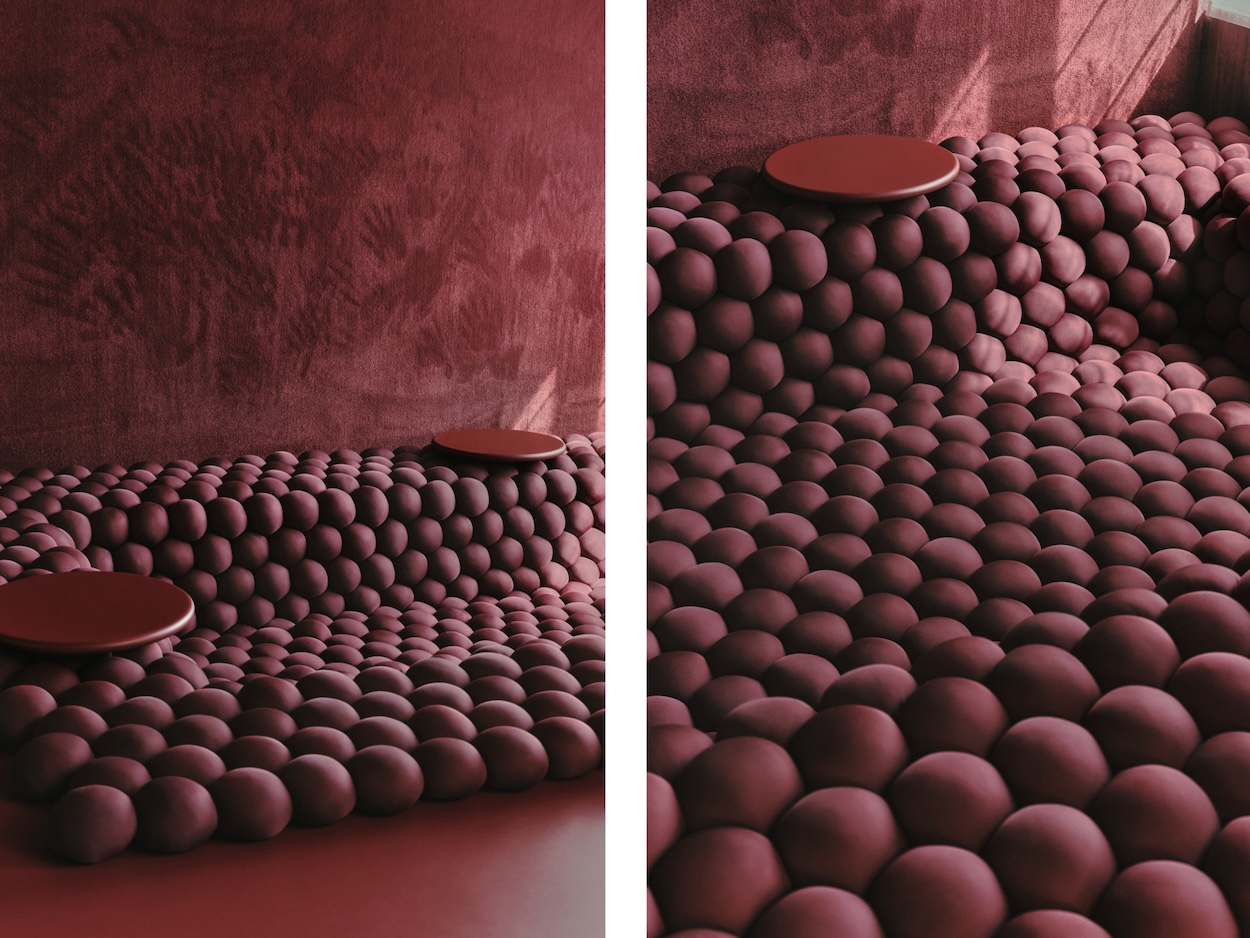
Each Amoreba ball is sized to fit the hand—and durable yet squeezable thanks to its interior of synthetic cotton and silicon fiber carefully sourced from France. Construction without the use of glue allows these components to be reused indefinitely while its parametric design offers endless customization of the size and shape of an Amoreba mat. When placed atop a structure or even the floor, Amoreba’s cushy, undulating surface offers both comfort and a cocooning effect.
Photos by Mathile Hiley
…
In a curator’s home in Brussels, GOLEM used it to line a convertible conversation pit, a space for lounging that can also be fit with a mattress as a guest bed. Set within a sunlit corner of a bedroom, the pit’s interior is reached by climbing two steps of open shelving that host a collection of oversized books. The furniture piece’s rational design and raspberry color were directly inspired by the home’s midcentury interior by late Belgian architect Jules Wabbes, but its function fills the current family’s varied needs.
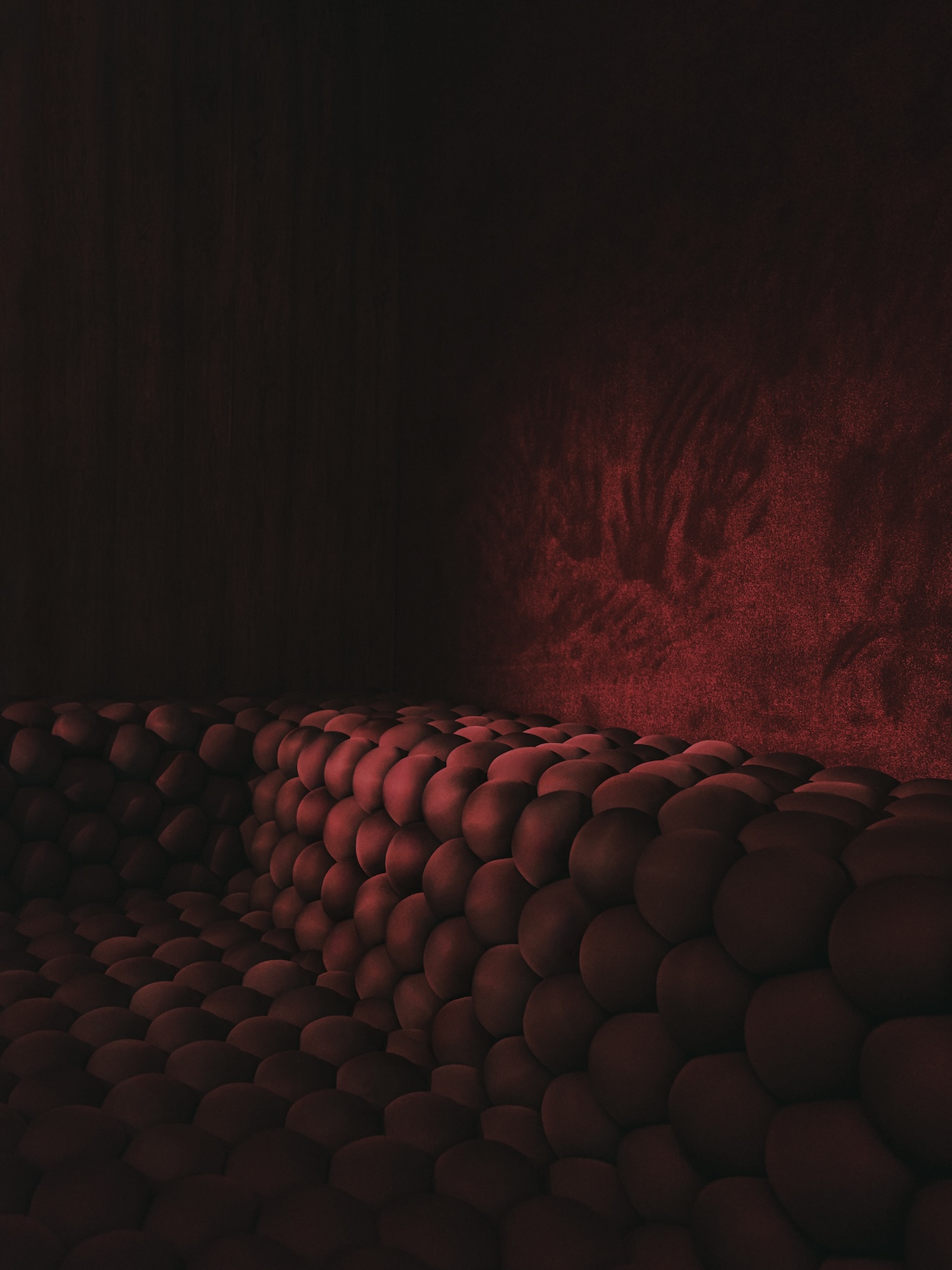
Photo by Mathile Hiley
…
This is the gap in the contemporary furniture market Amoreba addresses, André says, “a typology that allows us to live as we intend, in a space shaped around our own specificity.” It’s furniture to support our lifestyle, rather than prescribe one.
Courtesy of GOLEM
…