An estimated 135.4 million viewers tuned in to Grammy Award-winning recording artist Bad Bunny’s triumphant Super Bowl LX halftime show, which artfully platformed Puerto Rican culture, history, and community. For the historic performance, the artist—born Benito Antonio Martínez Ocasio—along with creative director Harriet Cuddeford and show designer Yellow Studio transformed Santa Clara, California’s Levi’s Stadium into an immersive stage that came to life through cinematic sequences.
Behind the Design of Bad Bunny’s Super Bowl LX Halftime Show
Julio Himede, director of Yellow Studio, on the spectacle's cinematic vignettes and surprises
BY DAVID GRAVER February 10, 2026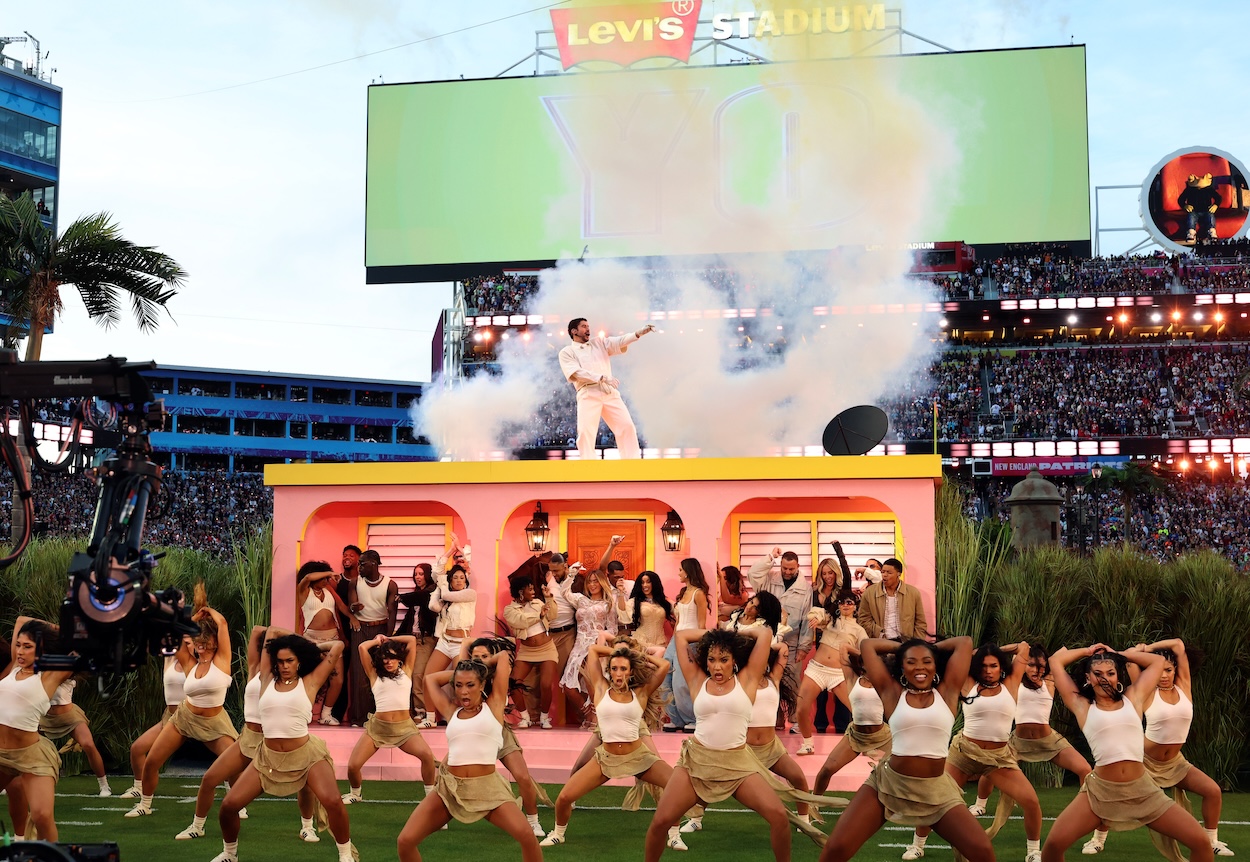
SANTA CLARA, CALIFORNIA - FEBRUARY 08: Bad Bunny performs onstage during the Apple Music Super Bowl LX Halftime Show at Levi's Stadium on February 08, 2026 in Santa Clara, California. (Photo by Kevin Mazur/Getty Images for Roc Nation)
…
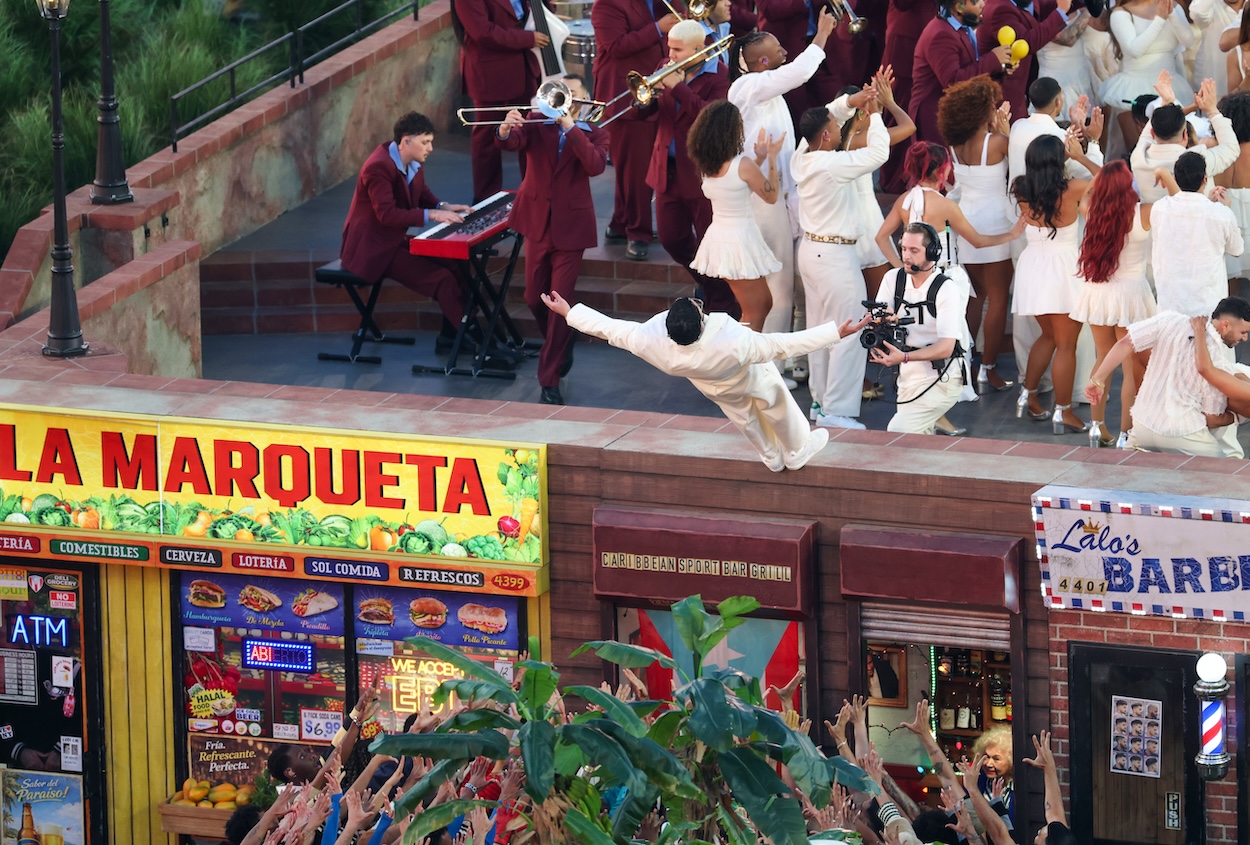
SANTA CLARA, CALIFORNIA - FEBRUARY 08: Bad Bunny performs onstage during the Apple Music Super Bowl LX Halftime Show at Levi's Stadium on February 08, 2026 in Santa Clara, California. (Photo by Ishika Samant/Getty Images)
…
According to Julio Himede, director of Yellow Studio, the 13-minute spectacle was designed as a continuous journey from one end of the field to another. “There was this big field of grass and sugar cane and plantains, as well,” he describes to Surface. “All of these fields are true to the landscape of Latin America and certainly Puerto Rico. It was an identity palette. The field of grass was a field of dreams that kept it all together. It created a sense of mystery and a sense of discovery. Surprises, as well.”
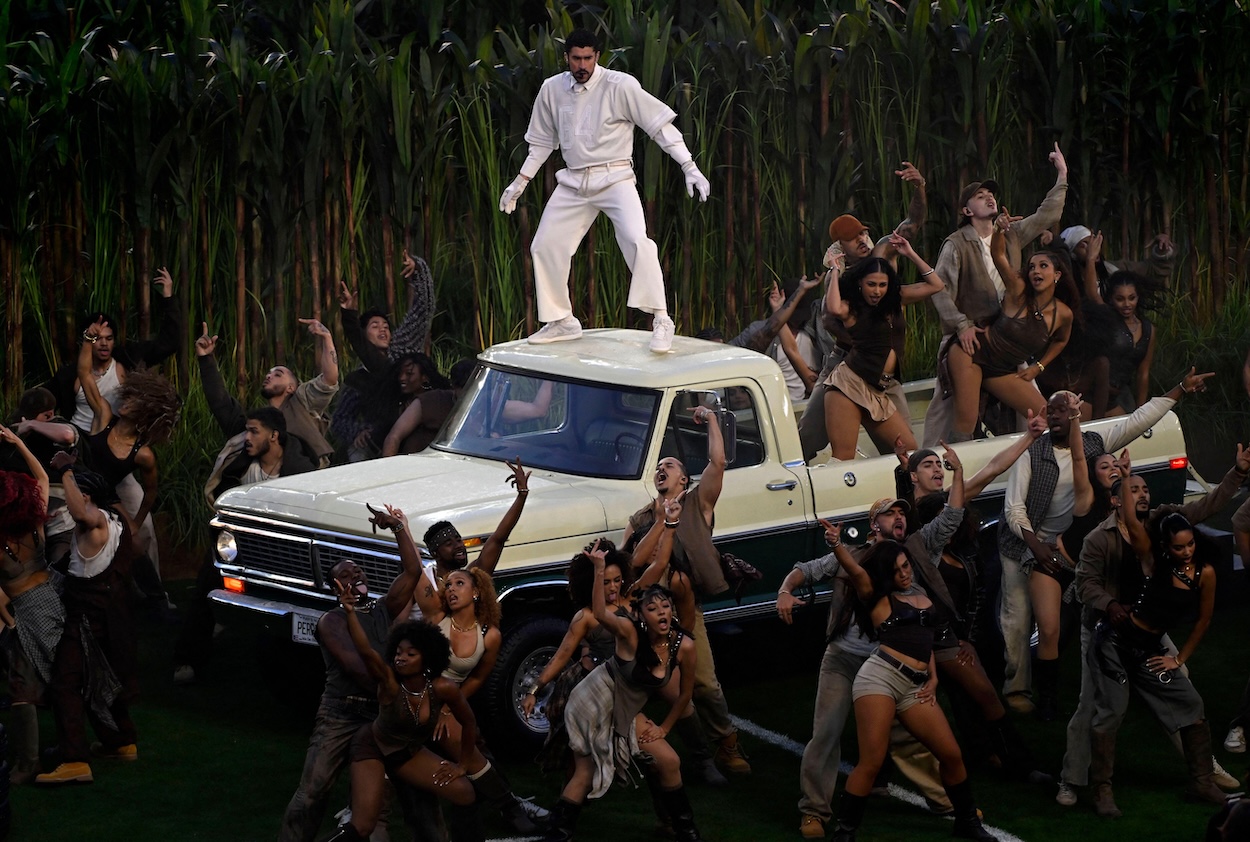
Credit Image: © Charles Baus/Cal Sport Media/Sipa USA. Credit: Sipa US/Alamy Live News
…
“In this maze,” he adds, “we found Puerto Rican and Latin life being celebrated through song. That was the thread.” Ocasio and his team guided the designers toward very real reference points. “When we went to meet Benito in Puerto Rico on a research trip, his team took us to this public plaza by the sea in San Juan,” Himede says. “We were there at sunset. There was this beautiful tree. We used all of this as a reference point for the wedding scene: the texture of the bricks, the concrete, the warm surfaces. It all reflects this plaza where people get married. If you’re from San Juan, you’ll recognize this.”
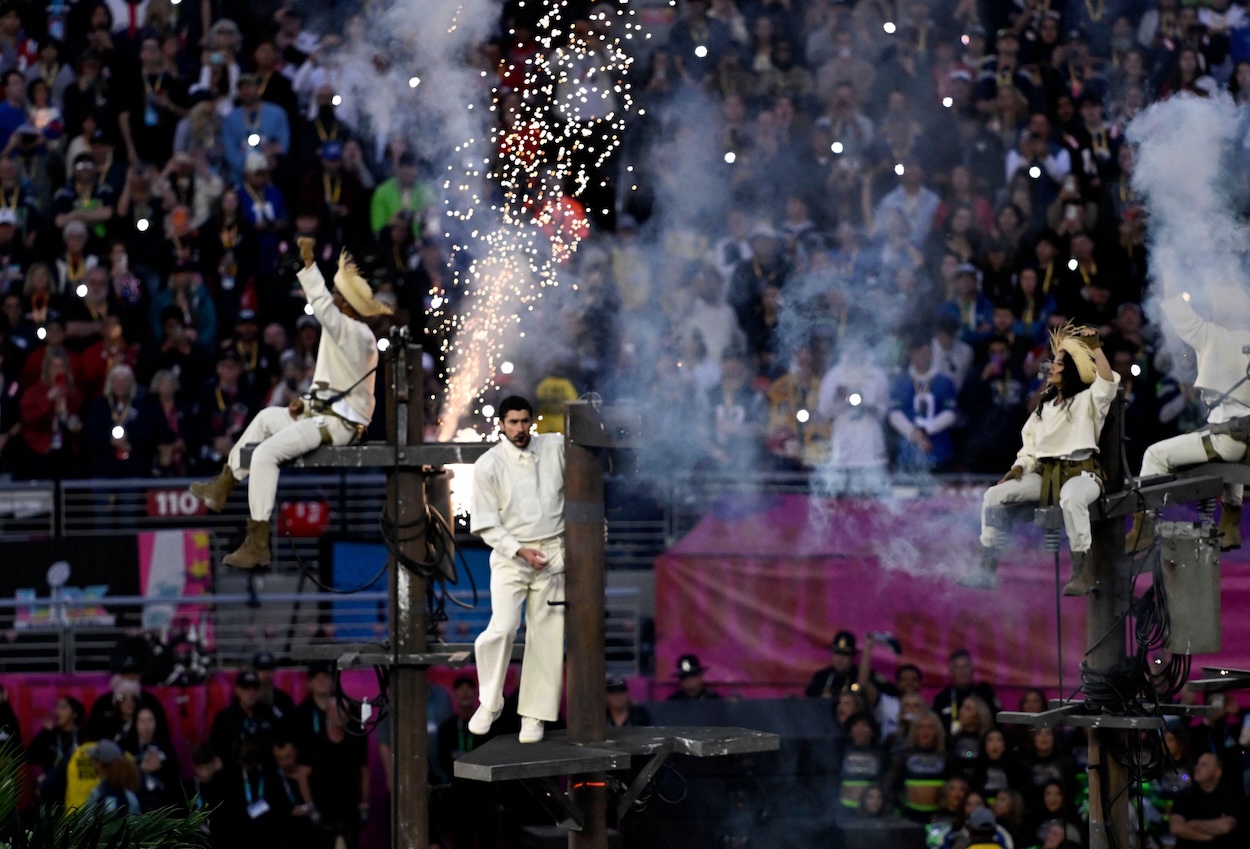
Credit: Cal Sport Media/Alamy Live News
…
Similarly, Yellow Studio reproduced a Williamsburg, Brooklyn bar called the Caribbean Social Club. “It’s run by this wonderful woman who goes by the name Toñita,” Himede says. “Benito is a big supporter of this business. He wanted to bring that culture onto the world stage, and he wanted to support Puerto Rican businesses at the same time. We, the creative designers, went to the bar and researched before recreating it on a smaller scale—down to the address, all the labels, and the Christmas lights inside. It was all very authentic. Of course, we had Toñita herself.”
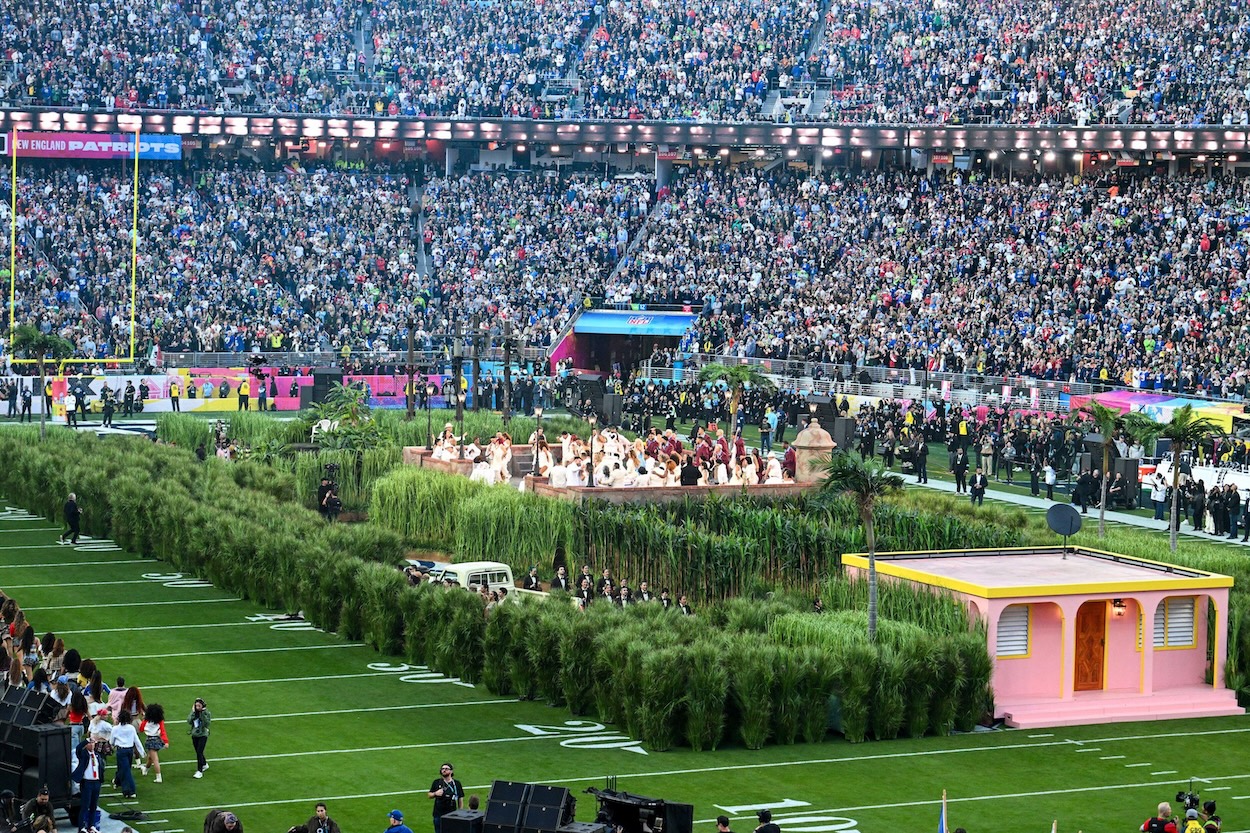
Photo by David Tulis/UPI Credit: UPI/Alamy Live News
…
The design team was challenged with planning visual cohesion for TV audiences and camera angles as well as for the more than 70,000 people in the stadium. To do so, they intercut wide camera views with intimate, almost quiet moments. “When Benito sees the child, this reflection of himself, and hands him the Grammy,” Himede says. “It’s a vision for the future for so many children. That moment of intimacy was important to us because it broke the grand scale.” IMAX screens in the stadium were able to hone in on these moments.
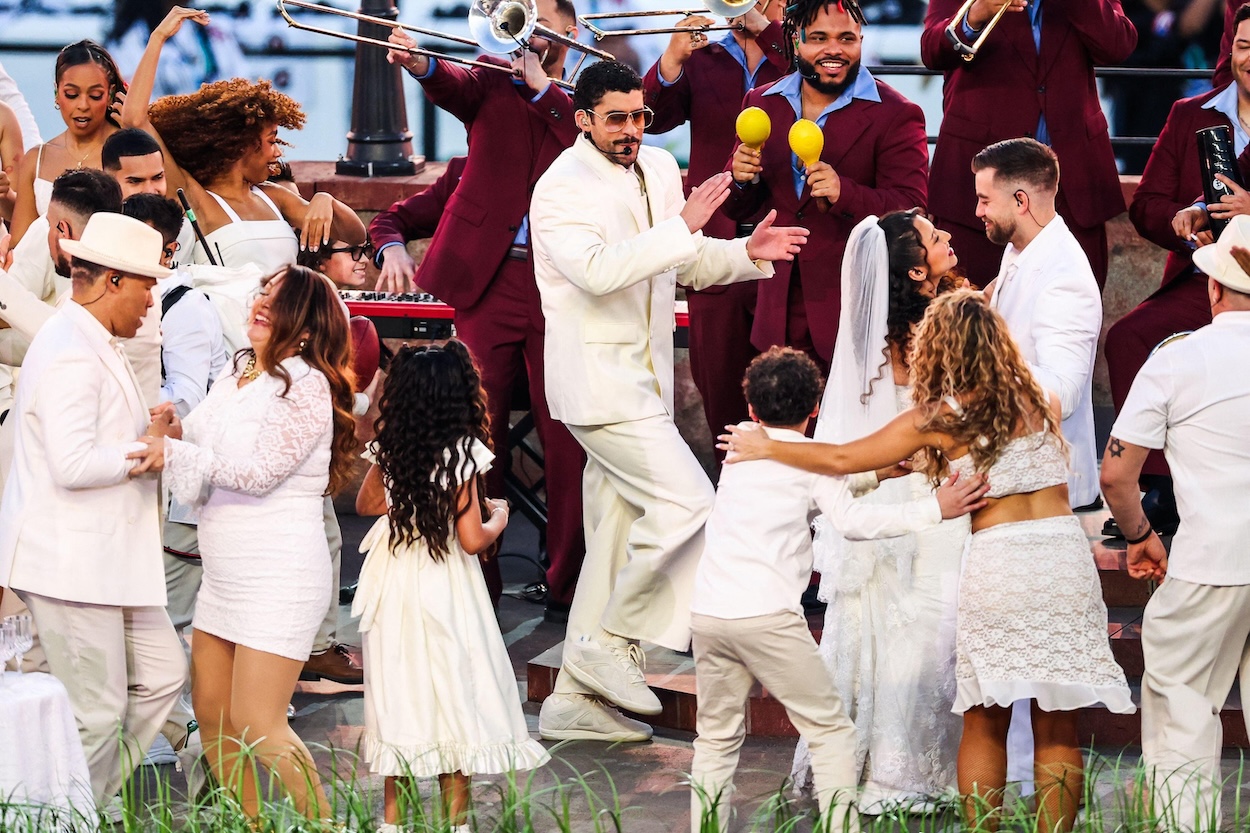
Photo by Kindell Buchanan/Sipa USA. Credit: Sipa US/Alamy Live News
…
Additionally, the team had to design everything for a six-minute load-in (and six minutes off the field, as well). “We spent a lot of time with a grand plan of the design in the stadium, changing section by section, literally a foot or two of grass to the left or the right,” Himede says. “We spent about two months within that floorplan, taking into consideration Benito, coming through this journey of vignettes, but also 400 dancers and mass choreography moments and where cameras went or were hidden, at times, for reveals of other artists.” It was a puzzle of moving pieces.
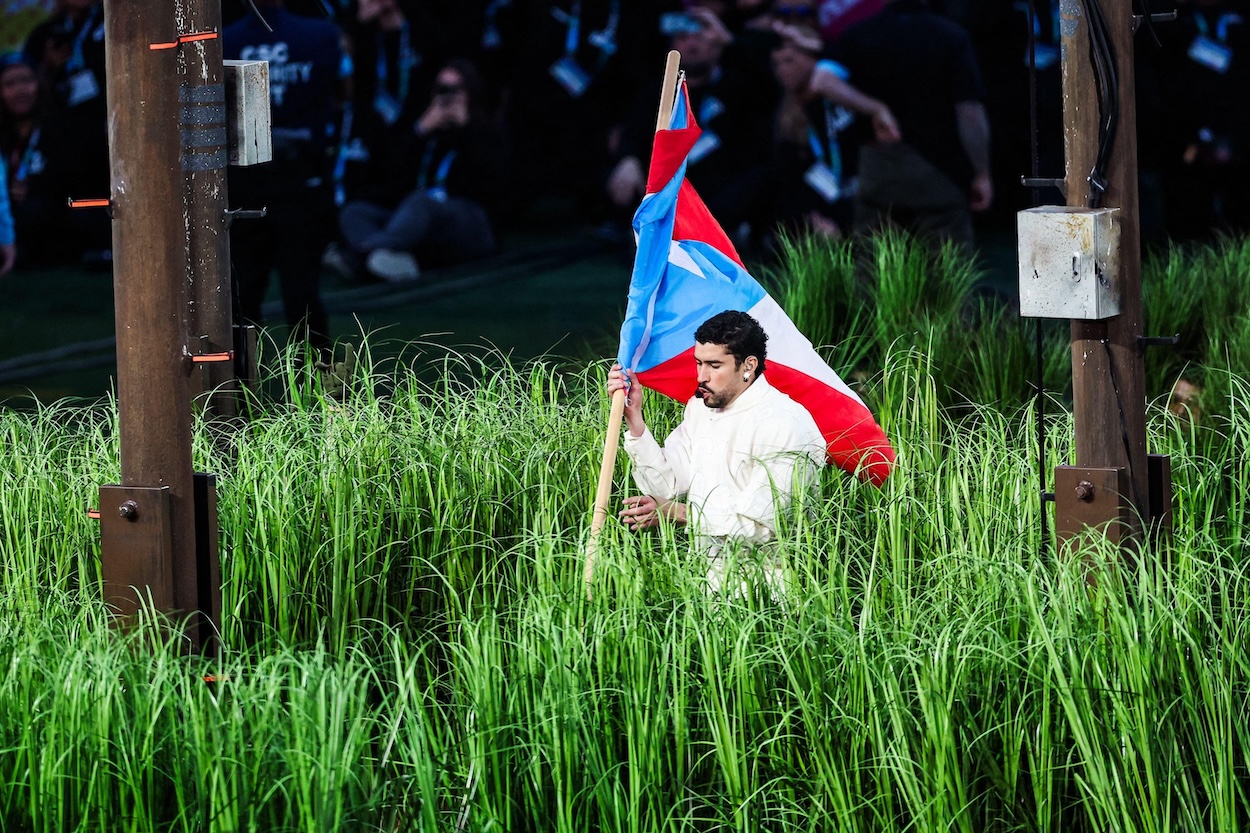
Photo by Kindell Buchanan/Sipa USA. Credit: Sipa US/Alamy Live News
…
Even with repeat viewings, it’s hard to catch every detail within. For Himede, the greater importance is the message and the magnitude. “I’m originally from El Salvador,” he says. “I grew up in Australia but I have Latin heritage. A lot of these decisions, a lot of the things we ended up with, were extremely emotional for me. I hope that is the case for the audience as well. The wedding scene, for example, was more than just a wedding. It was about communities coming together.”
As for the most powerful transition, Himede refers to the moment where Benito leaves the electrical pole (a reference to the regular blackouts in Puerto Rico) and he’s joined by all of the flags of the Americas. “That was a great moment that resonated with so many of us,” he concludes. “It represented the Americas as a whole, united together. I am proud of that moment.”