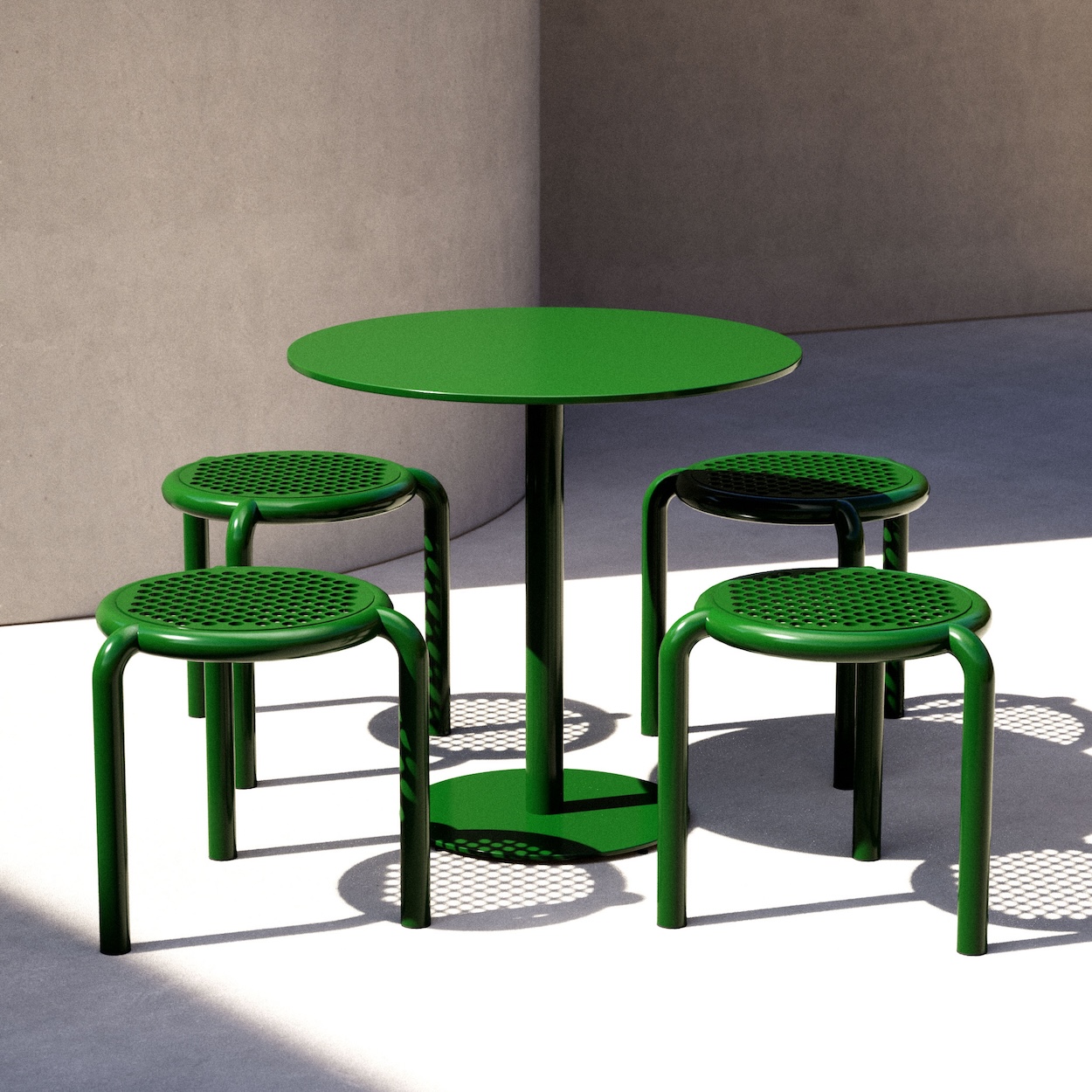
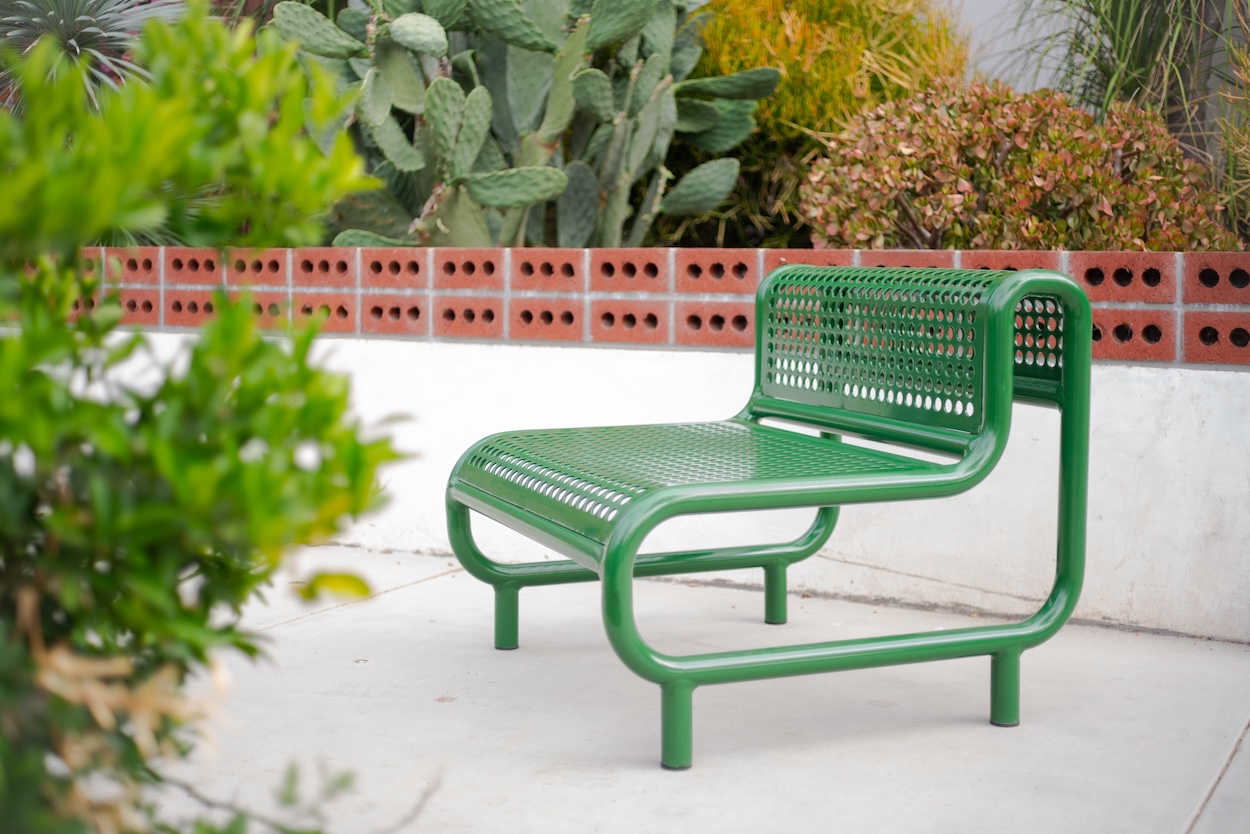
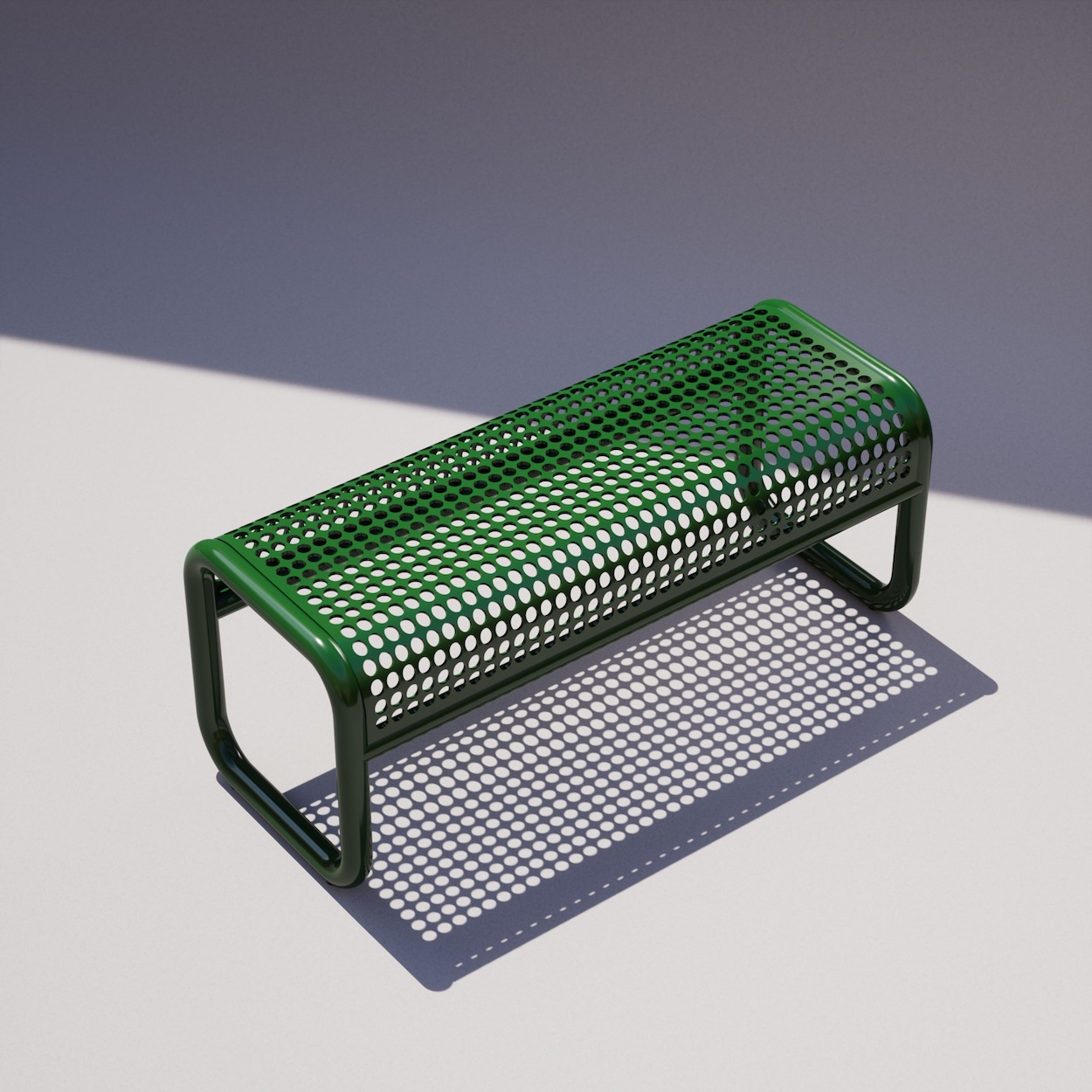
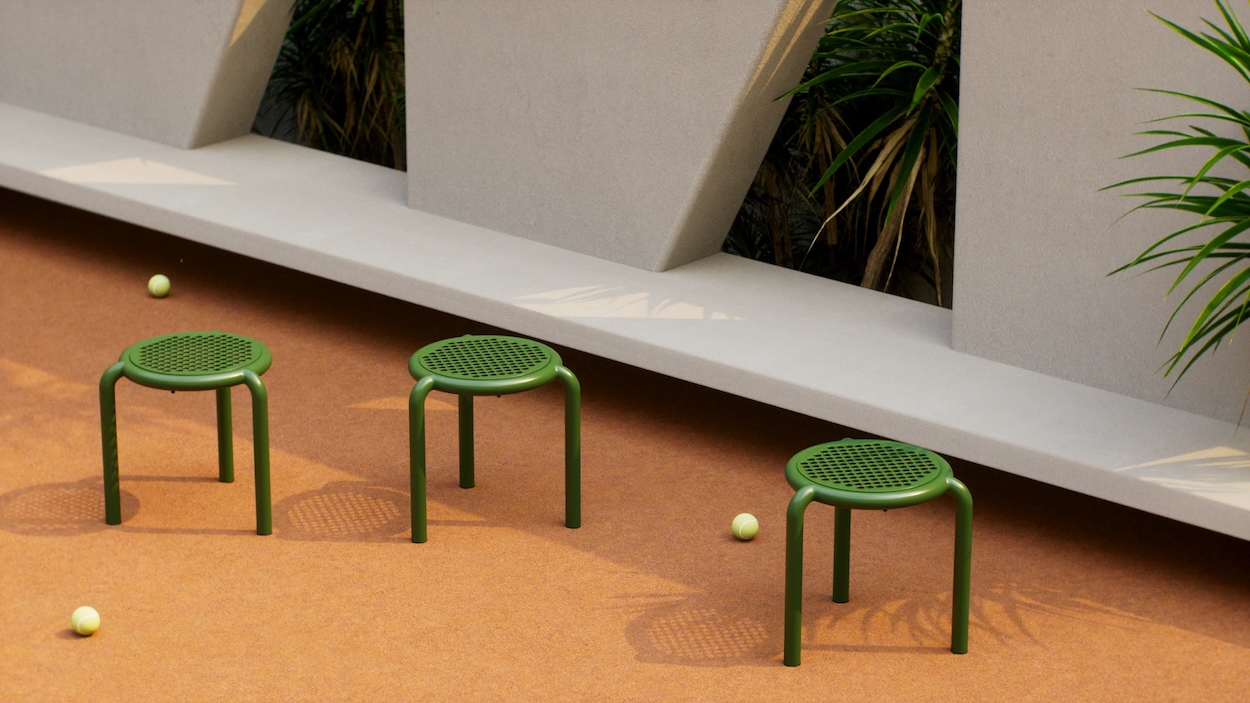
Fabricated entirely from high-quality aluminum, the Green Park collection of outdoor furniture by L.A.-based design studio Bend Goods utilizes tube construction to balance structural integrity with a sense of lightness. Precision-perforated holes lend further visual levity as do palette choices like warm terracotta, lush green, and moon dust (a gentle gray-green tone). And yet, these open, lightweight, and even meditative pieces—designed for both residential and commercial use—can endure weather conditions born from myriad climates.
Bend Goods Introduces the Green Park Collection of Outdoor Furniture
BY DAVID GRAVER February 20, 2026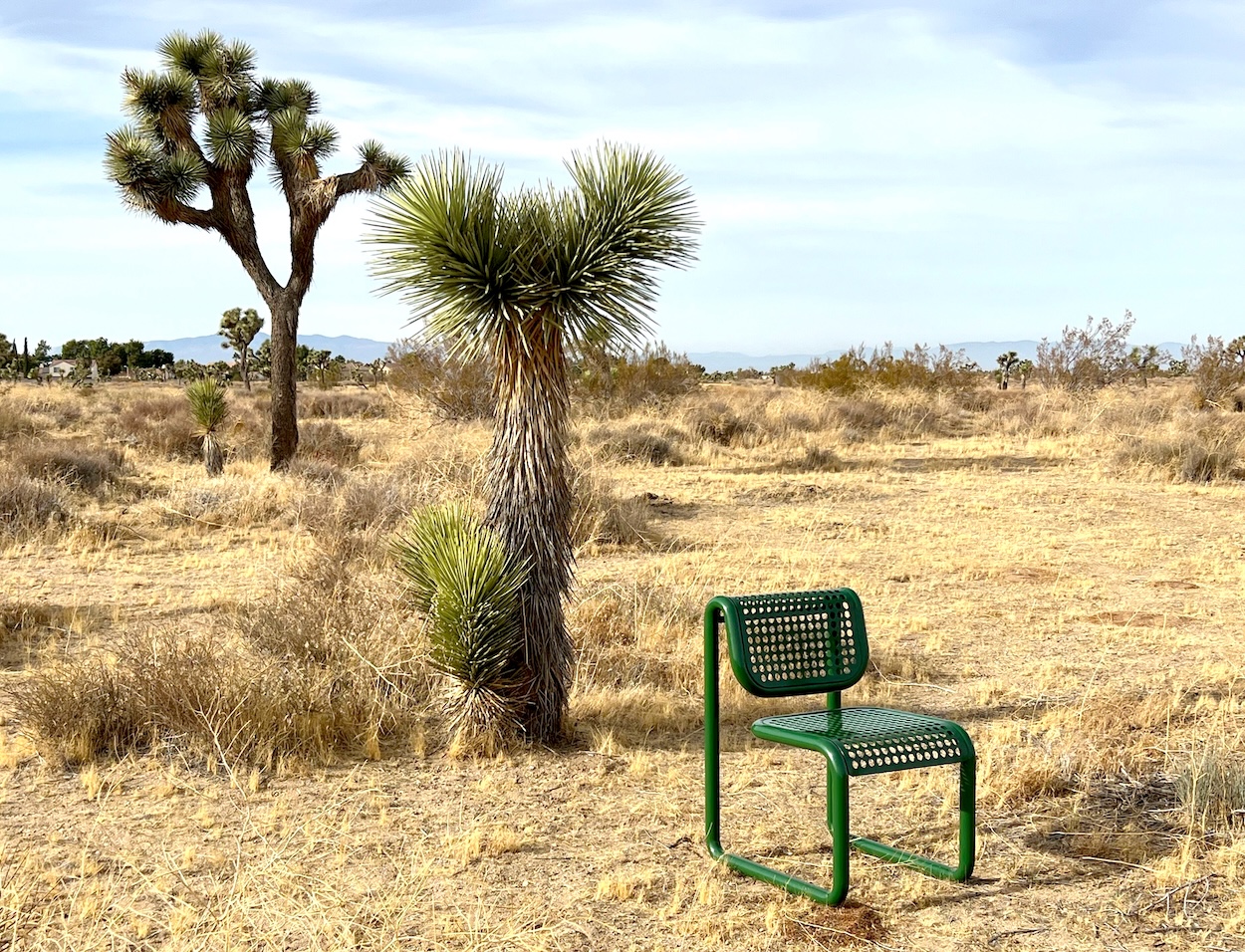
Courtesy of Bend Goods
…
Courtesy of Bend Goods
…
The inspiration for the collection came from the Green Park neighborhood of South Delhi, and its tranquil public spaces. The collection is not an aesthetic reference to Green Park, but an interpretation of the feeling the area evokes. “My connection to Green Park in South Delhi is both personal and architectural,” Gaurav Nanda, the founder of Bend Goods, tells Surface. “I grew up in the U.S., but my family is from India, and we would spend time there visiting relatives. One visit, in particular, stayed with me. My uncle, an architect based in Green Park, designed a multi-level home with open staircases, a sunken living room, verandas, and a fluid indoor-outdoor continuity.”
Courtesy of Bend Goods
…
“His studio was filled with physical models—wood and cardboard studies of projects in progress—which introduced me early on to the idea of form as something spatial rather than purely visual,” Nanda continues. “He had also designed a few chairs with a quiet presence that left an impression. The neighborhood itself was organized around a central green space—lush yet surrounded by density. That tension between openness and structure stayed with me.”
Courtesy of Bend Goods
…
Nanda notes that this collection marks a shift away from Bend Goods’ thinner wire language. “We began exploring thicker tube to create a stronger presence while maintaining visual lightness,” he says. “The form evolved around a reverse cantilever, where the seat is supported independently from the back, introducing a subtle sense of lift and suspension. For the seating surface, we tested wire, woven materials, and wood before arriving at perforated aluminum.” This provided durability and permeability.
Courtesy of Bend Goods
…
“Versatility was built into the collection from the beginning,” Nanda adds. “The Coffeehouse Chair is lightweight and stackable, suited for intimate settings as well as dynamic hospitality spaces. The Tube Outdoor Dining Chair offers greater grounding—ideal for rooftop environments where airflow and stability matter. Both move easily between private and public contexts.”
Nanda’s design approach is poetic in nature; the Green Park collection reflects this. “I’m drawn to the way perforation interacts with sunlight,” he says. “As light passes through, shifting shadows move across the ground throughout the day.” Further, tube bending provided technical complexity. “Working within those limits meant developing new tooling and refining the process through iteration, ensuring the tube could bend without flattening, buckling, or losing its clarity. Much of that work happens quietly—between sketches, prototypes, and the skilled hands that translate an idea into something physical. The intention was always to make that complexity feel effortless.”