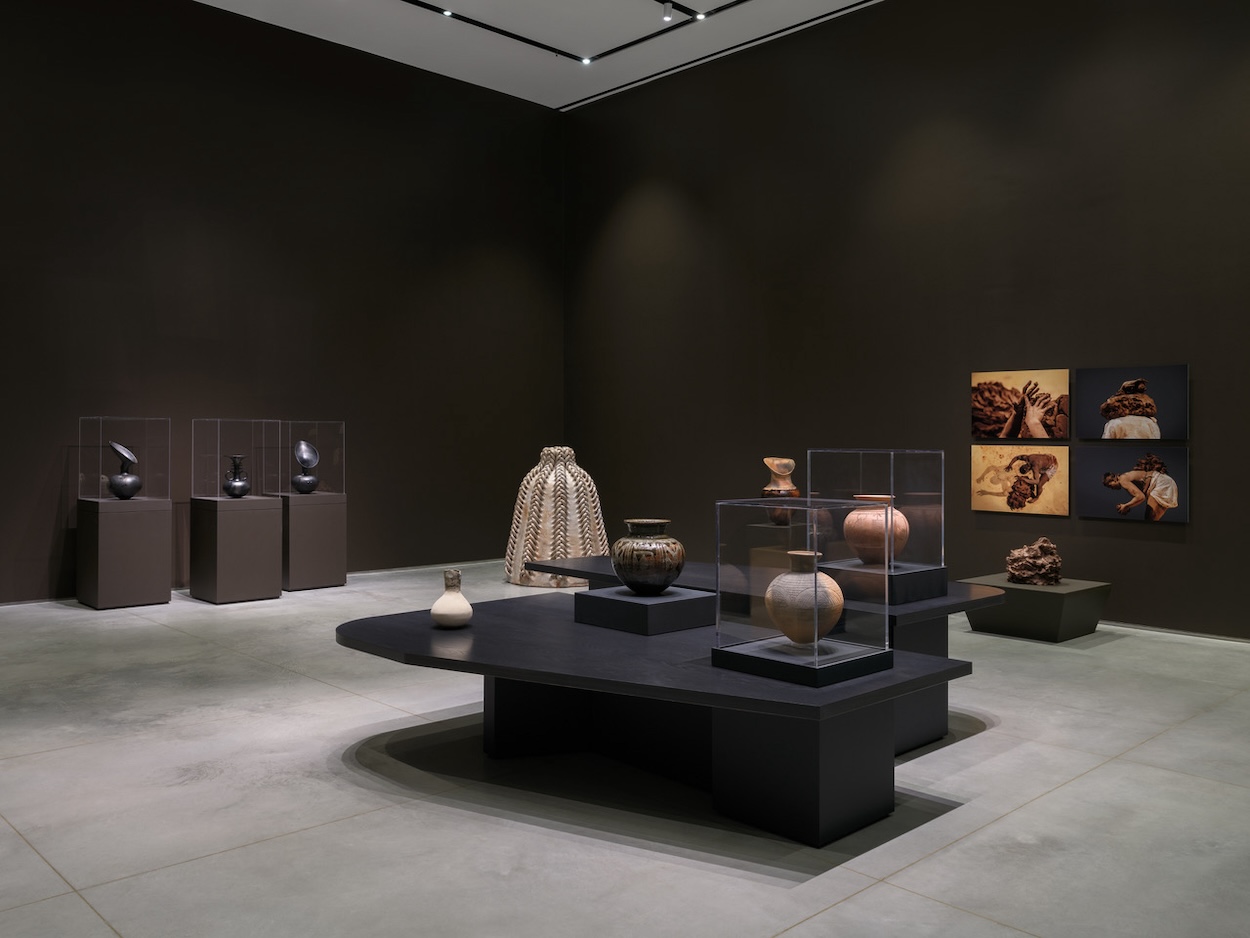
When “Body Vessel Clay: Black Women, Ceramics, and Contemporary Art” was first opened in 2022 at London’s Two Temple Place, it was hailed as “revelatory,” the works within it exemplary of clay’s status as “the medium of the moment.” Organized by Dr. Jareh Das, who holds a PhD in art and science curation, the exhibition explores what the medium owes to clay techniques rooted in the Black diaspora. Like its previous installments at Two Temple Place and North Yorkshire, England’s York Art Gallery, the Ford Foundation exhibition links the use of contemporary techniques to an inheritance of knowledge and skill, passed down through matrilineages.
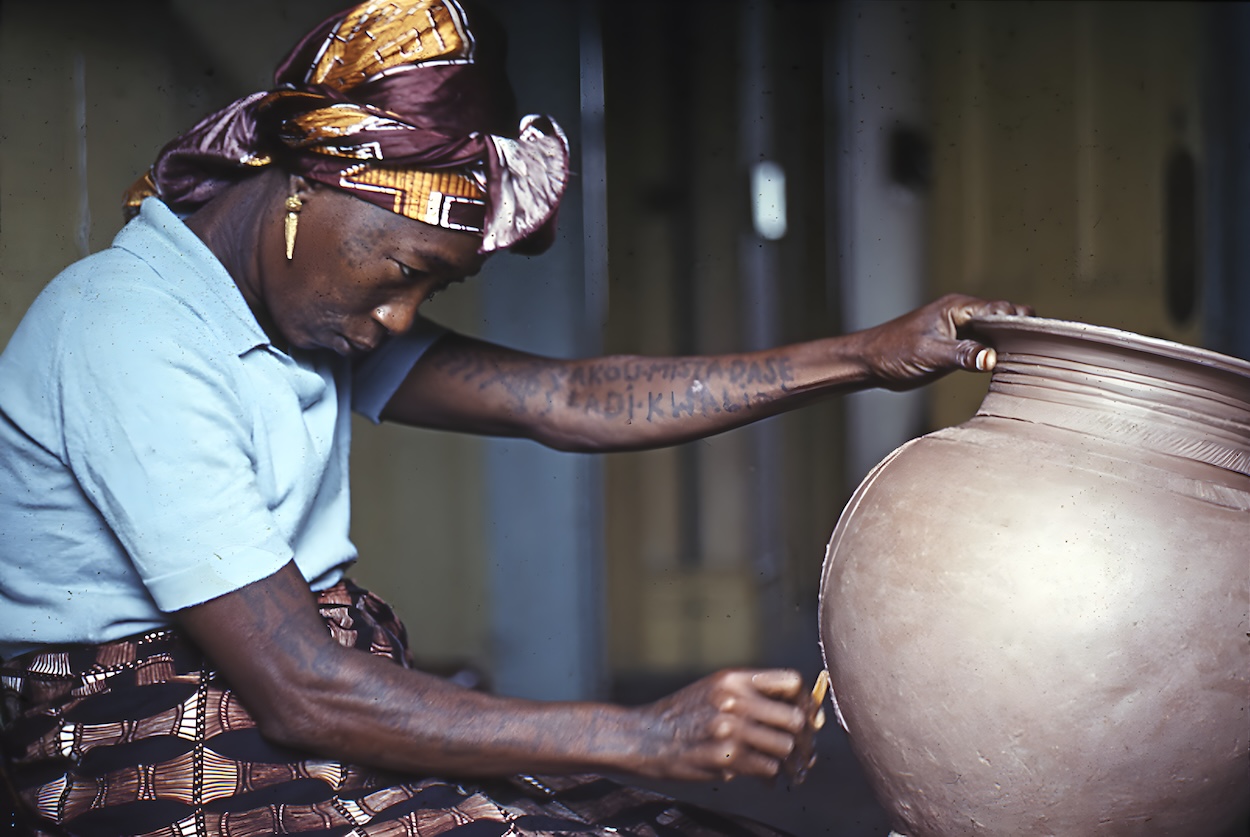
Befitting its U.S. debut, this edition of “Body Vessel Clay” sees the addition of works by three American artists: Adebunmi Gbadebo, Simone Leigh, and Anina Major. The practices of all exhibiting artists are woven to the boundary-breaking work of Nigerian potter Ladi Dosei Kwali, the first female student of the Pottery Training Centre. Kwali married diasporic traditions with studio-learned techniques of glazing and kiln firing to great acclaim. “I originally envisioned them when I began expanding my research on Ladi Kwali and matrilineal pottery legacies as they relate to Black women and wider Black histories,” Dr. Das tells Surface of Gbadebo, Leigh, and Major.
While the show spans decades, continents, and different facets of the Black diaspora, it is steadfast in its positioning of clay’s power. “For me,” she says, “the throughline is clay as rebellion and as archive. It carries memory, holds ancestral knowledge, and resists containment.”
In the following interview, Dr. Das speaks on the enduring power of matrilineal legacies, the “embodied, restless, and political” nature of clay as a medium, and the newly-expanded exhibition.
Can you tell us about how themes of Black womanhood, matrilineal legacies, and feminism frame this show through the lens of craft and technique?
The artists, artworks, and narratives in “Body Vessel Clay” extend beyond the category of craft into a wider contemporary art conversation. The exhibition considers how centuries-old techniques for moulding, shaping, and sculpting clay are reimagined by a generation of artists, ceramicists, and sculptors working today. For me, the show is less about fixed classifications of art, craft, and design, and more about creating a space that is fluid yet grounded in techniques such as hand-building, coiling, and weaving. These practices originated along matrilineal lines within families and communities and extend across the Black diaspora.
The central question becomes: how do techniques once passed through generations live on, and how are they being reimagined? We see this in many ways. For example, Bisila Noha draws on research into pottery practices across the African continent and interprets them in a hybrid way, combining historical hand-building methods with wheel-throwing to create her own sculptural language. Simone Leigh, in a different way, moves beyond the literal vessel form to pursue something more expanded, across many materials but always returning to clay. Through this, she explores race, beauty, community, and care as they relate to Black women’s bodies and intellectual labour.
Performance-based practices in the exhibition add another layer. Here, clay is not only a material but also a metaphor: earth, nature, body. Chinasa Vivian Ezugha, Julia Phillips, and Jade de Montserrat each activate clay through gesture, labor, and ritual to probe questions of memory, embodiment, and power. In Uro (2018), Ezugha physically wrestles with a mound of clay, lifting and compressing it until it exhausts her body. This sustained encounter transforms the material into a metaphor for diasporic memory, rebirth, and dislocation. Phillips, by contrast, uses fragmented ceramic sculptures and a restrained visual language to interrogate control, care, and the body. In Becoming (the Hunter, the Twerker, the Submitter) (2015), the disjointed movement of a dancing figure invites reflection on desire, submission, and autonomy. de Montserrat’s Clay (2015), made in collaboration with Webb-Ellis, stages a solitary ritual in the Yorkshire landscape. By applying wet clay to her body, she performs an act of memory-digging that connects her to the land, to ancestry, and to the violence of archival erasure. Taken together, these practices affirm that clay is never neutral. It is embodied, restless, and political.
Can you tell us about the decision to expand the scope of artists included in this exhibition for its U.S. debut?
Adebunmi Gbadebo coils and fires her vessels in African traditions but also works with clay that she makes from soil sourced from Fort Motte, South Carolina, where her enslaved ancestors are buried. By incorporating rice and donated Black hair into her works, she transforms clay into an embodied archive that speaks to memory, lineage, and survival.
Simone Leigh has consistently used materials such as clay, raffia, and bronze to explore race, beauty, community, and care. Her Village Series (2023–2024) is monumental in scale, combining architectural and bodily forms, with the recurring “skirted” figure that draws from African and African diasporic traditions as well as historical representations of Black women.
These sculptures become powerful containers of resilience and lived experience.
Anina Major works as a disruptor by taking the weaving practices she learned from her grandmother and translating them into ceramic form. For her, the act of weaving in clay recalls ocean waves, with their ability to carry and release stories across time. Her work speaks to matrilineal knowledge, tactile memory, and the politics of care. Their practices intersect across memory, material, the personal, and the political, and they root the exhibition firmly in the legacies and futures of Black women’s creativity.