Deborah Roberts, FLAG Art Foundation, photo by Steven Probert Studio…
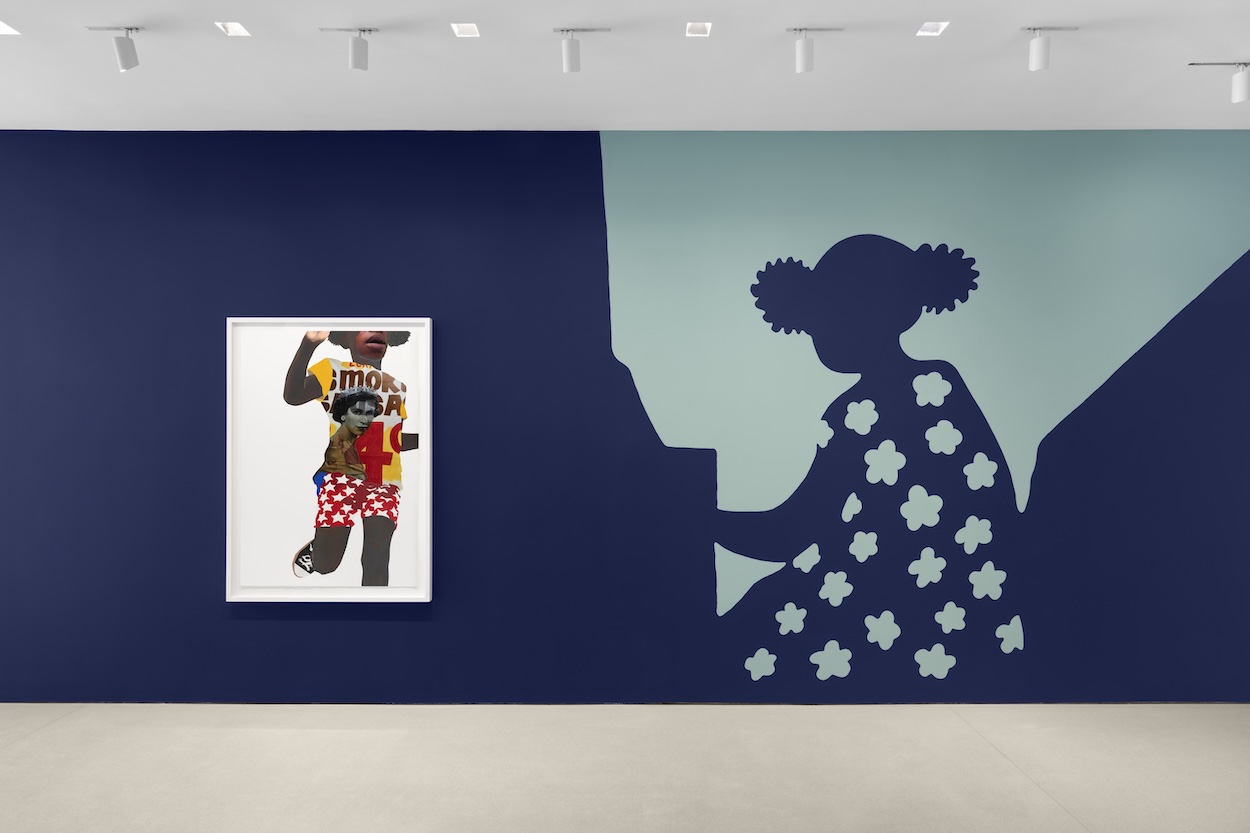
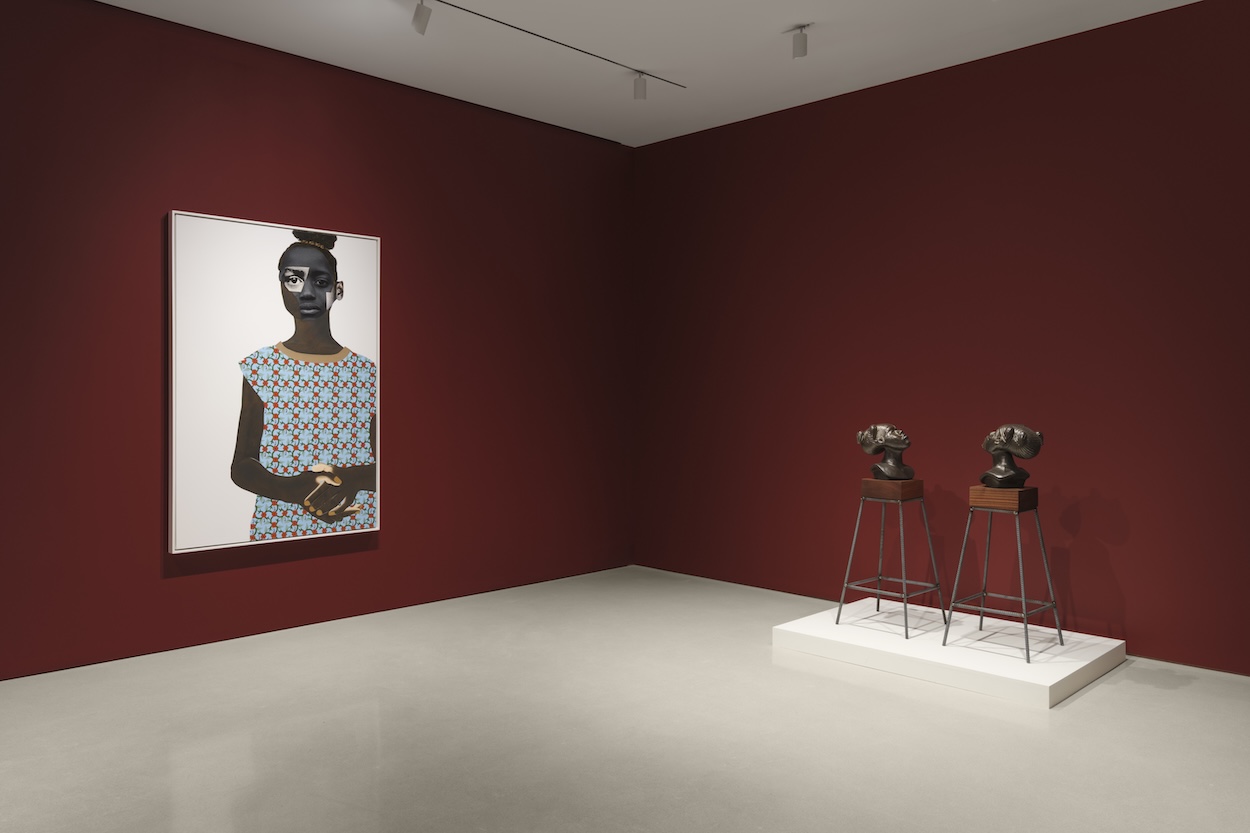
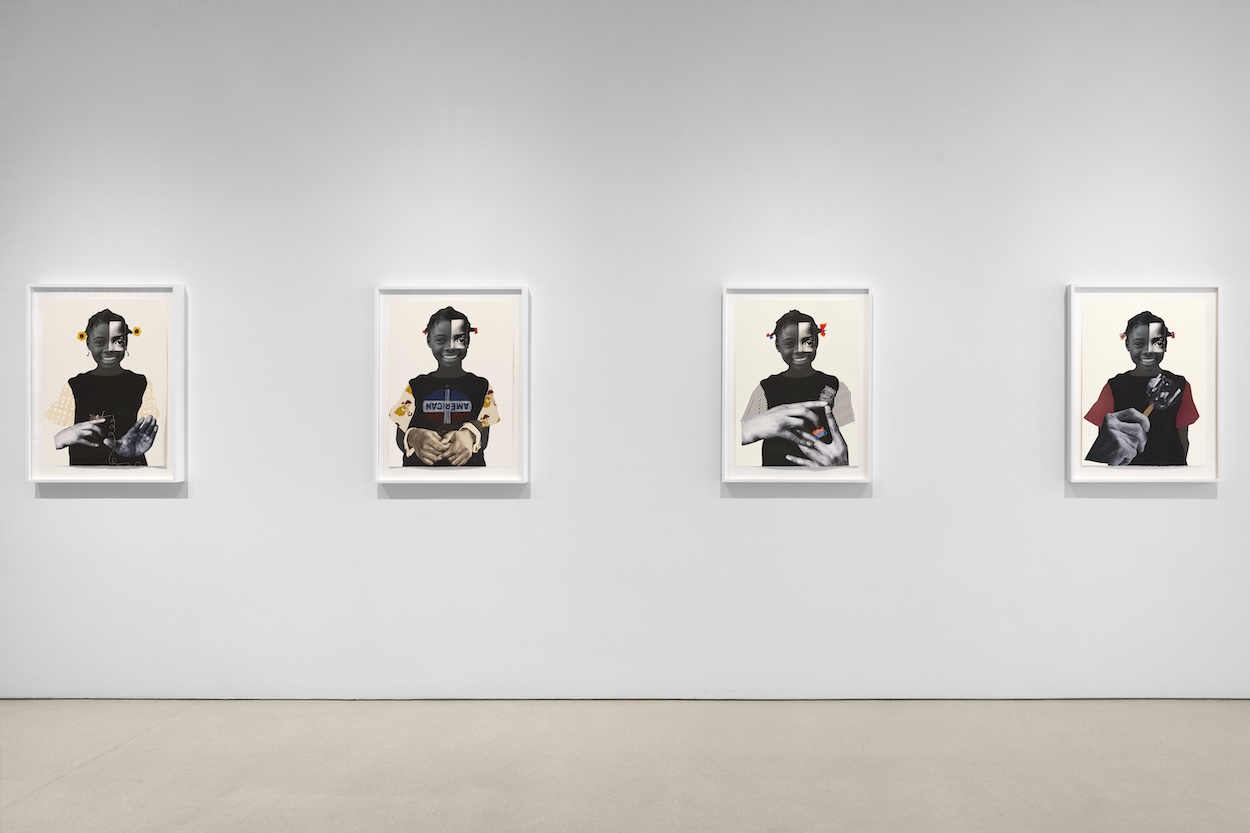
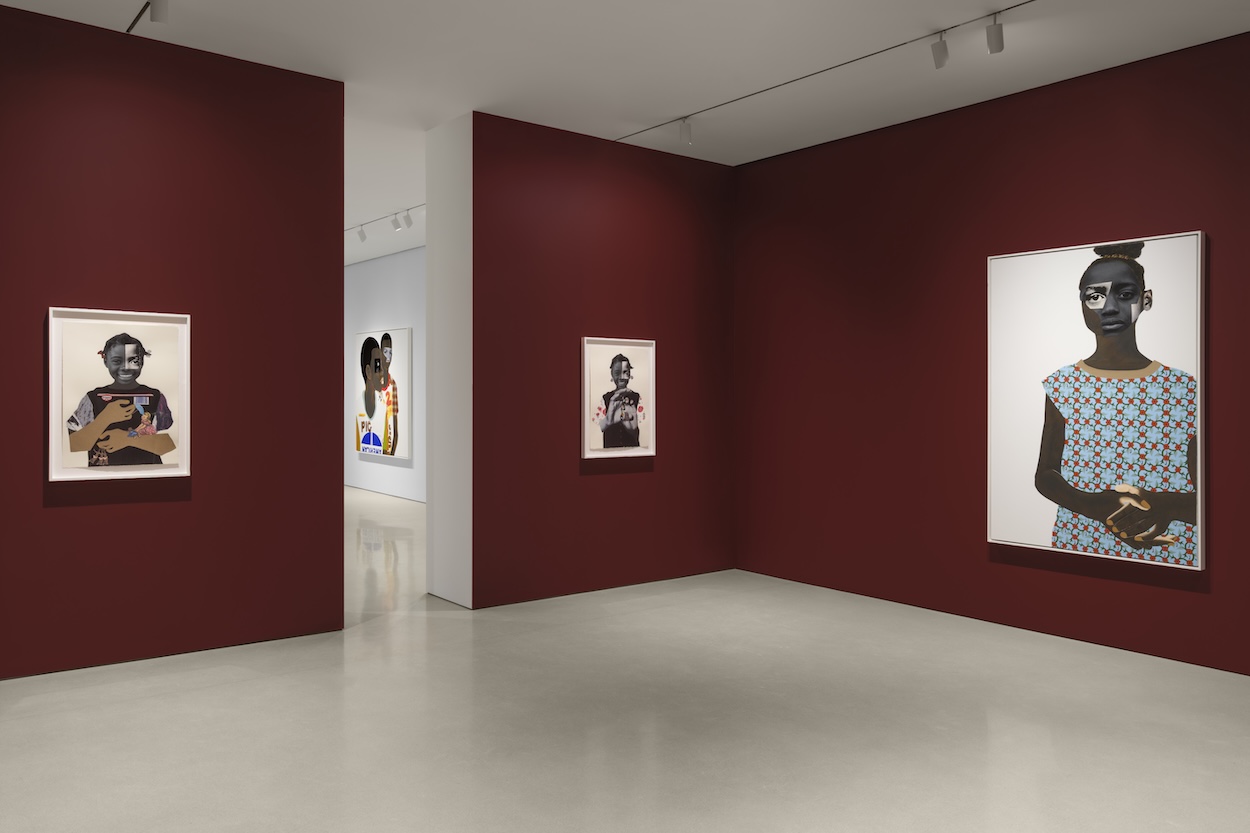
The large-format paintings and collage work of Austin-based fine artist Deborah Roberts convey both fragmentation of identity and the fracturing of the individual under societal gaze; each is pieced together with a poetic power and underscored by historic research. Within “Consequences of being,” Roberts’ current exhibition at The FLAG Art Foundation, a new series of these art pieces is joined by two ceramic busts—which mark the artist’s entry into sculpture. Together, all of the works in the exhibition explore the ways Black bodies are seen and understood.
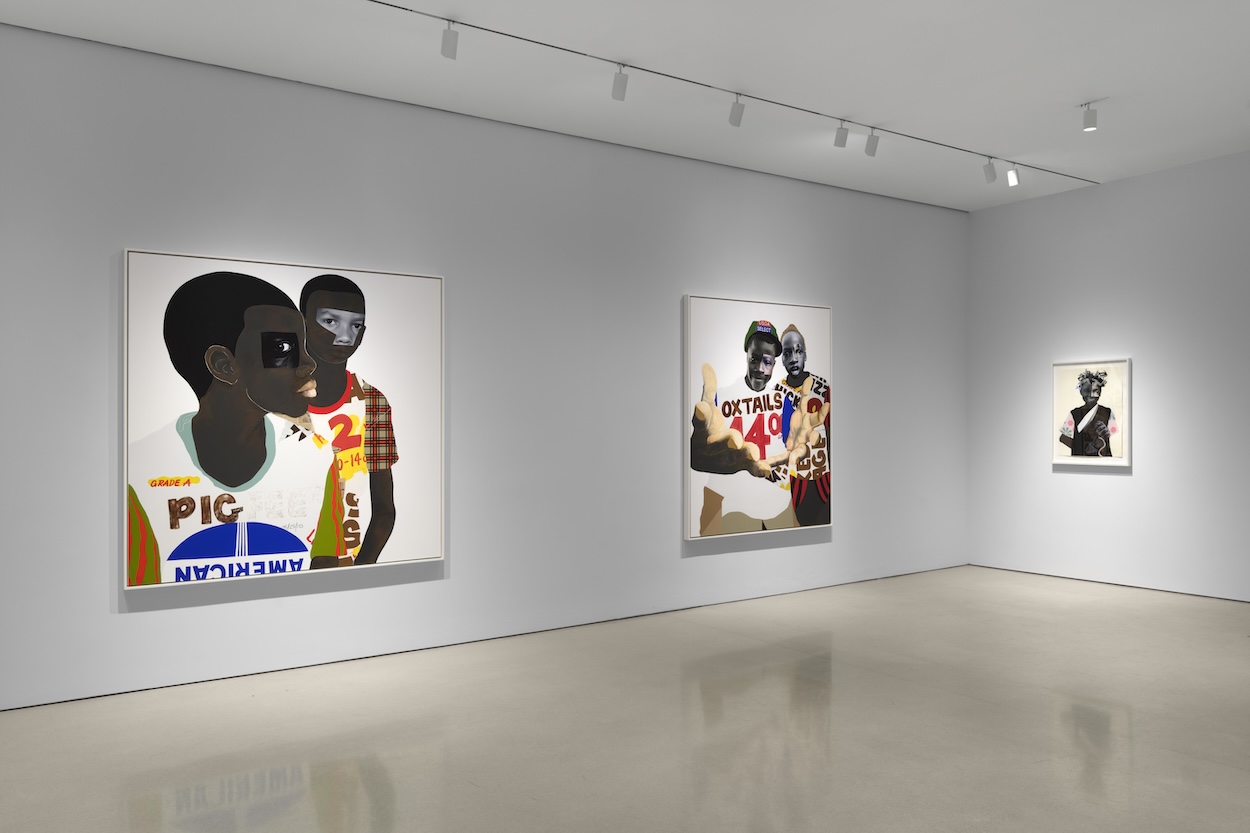
On view in the foundation’s ninth-floor gallery through April 25, the exhibition’s works require thorough inspection to uncover all the layers of intentionality and reflection. In fact, Roberts’ messages are further revealed and reinforced through some of her source material—repurposed imagery and text of grocery store signage. For additional insight into her process and practice, Surface spoke with the artist in advance of the opening.
Deborah Roberts, FLAG Art Foundation, photo by Steven Probert Studio…
Can you speak to the origins of the sculpture—and how it came to be part of this exhibition?
When I decided to do the Zuri and Miles sculpture it was out of a desire to bring the child off the wall, load it with history, humanity, agency, and rewrite the way others critique Black children. These sculptures ask the viewer to see what is too often overlooked: the inherent value, potential, and brilliance of Black children, who deserve to be uplifted, protected, and fully seen.
For body position and body language, how do you plan out and develop both in your work?
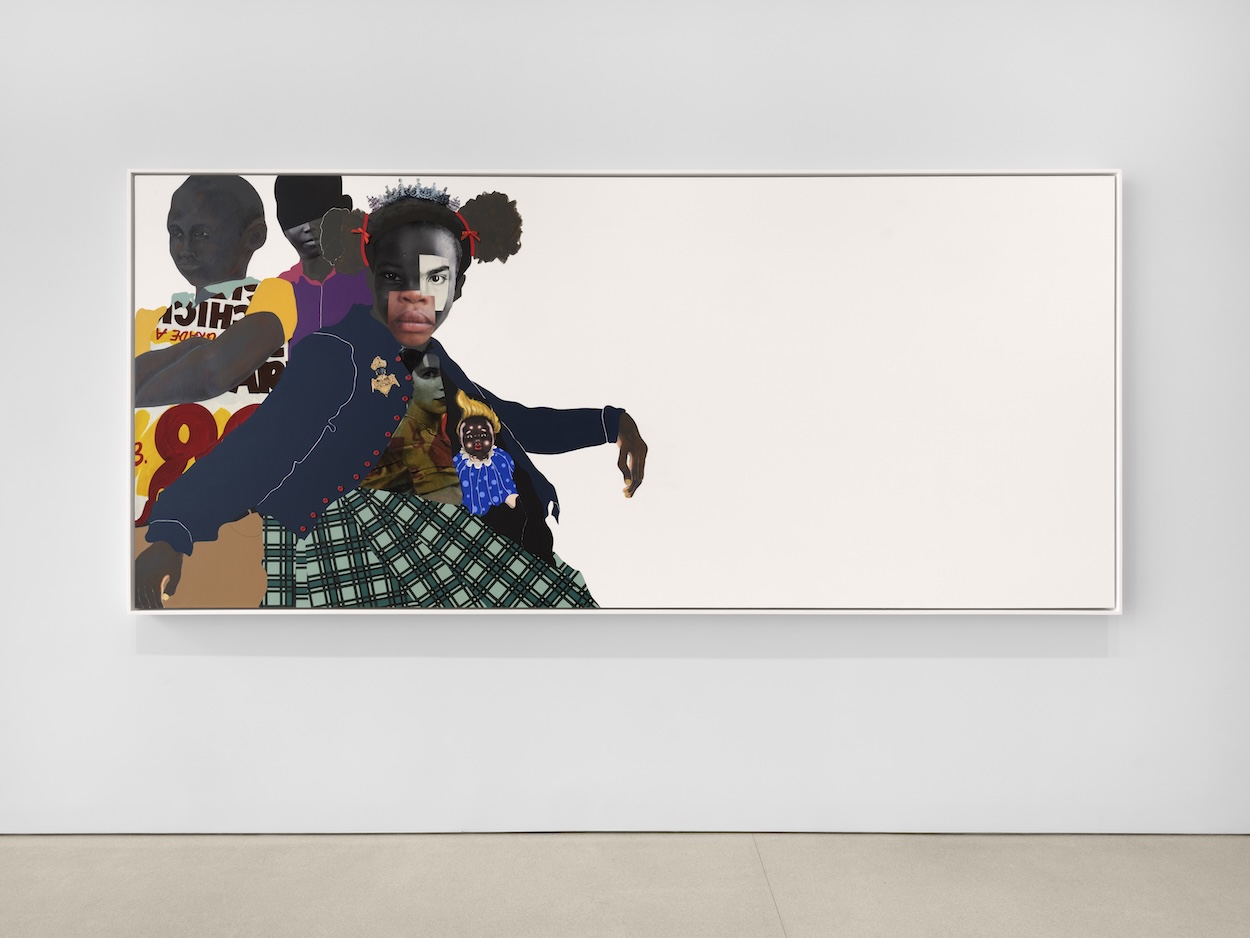
I start with the white space and try to disrupt it. I believe that Black children can’t be contained in a single story, so movement becomes key. The gestures refuse to settle into something fixed or easily labeled. This allows the image to push back against being pigeonholed and insists on complexity instead of a single narrative.
Deborah Roberts, FLAG Art Foundation, photo by Steven Probert Studio…
What is the role of collage within each figure?
Fractures are crucial to the work. It allows me to destroy and rebuild simultaneously, images are policed, slightly misaligned, not perfect. Collage allows a corrective gesture, it disables the notion to categorize, label, and fix a single identity.
How do these pieces come together?
The works come together through a deliberate process of fragmentation and reassembly. I begin by breaking apart the face, which interrupts the authority of the original image and destabilizes its fixed meaning. The body then becomes the primary site of assertion, claiming power through the act of authorship and redefining how Black bodies are seen and understood in the present.
Deborah Roberts, FLAG Art Foundation, photo by Steven Probert Studio…
Where did this begin?
It began with a small, almost ordinary moment. I was eating breakfast in Chicago and noticed a man changing the signs on a grocery store across the street. At the time, I didn’t realize what I was seeing would become the starting point of this body of work, but that moment was the beginning of this journey.
How did you transform all these ideas into pieces?
I transformed these ideas by thinking about consumption and currency, and about how Black bodies have been seen and valued throughout history. I was also thinking about food—how certain foods that were once associated with enslavement and survival have now become valuable delicacies. The store signs allow me to talk about class and race with very few images, using the language of commerce and advertising as a way to frame those histories and contradictions.
Deborah Roberts, FLAG Art Foundation, photo by Steven Probert Studio…
How does research inform your practice, and your art?
Research is central to my practice. It shapes both what I make and how I make it. I spend a lot of time looking at historical images, traveling to different countries, traditional signage, and archives, and thinking about how Black bodies have been framed, valued, and circulated around the world. That research doesn’t stay theoretical, it gets translated into material decisions in the studio: what images I fragment, what I reassemble, what I interrupt, and what I insist on making visible. The work becomes a way of testing those histories against the present and reauthoring how these bodies are seen.
Is there anything you’d like viewers to know before stepping into the exhibition or engaging with your work?
Look with love. Notice the fragmentation, and stay engaged in how the work disrupts fixed notions of otherness.
Deborah Roberts, FLAG Art Foundation, photo by Steven Probert Studio…