Linking Contemporary Print to the Research of W.E.B. Du Bois
In “Data Consciousness: Reframing Blackness in Contemporary Print” at Print Center New York, curator Tiffany E. Barber gives new meaning to the idea of an interdisciplinary exhibition, joining the author’s 20th-century research with contemporary art to widen the lens of how we comprehend big data.
As A.I.—its applications, limitations, and risks—has become a bigger topic of conversation in everyday life, so too have the subjects of surveillance and biases across big data. But immerse yourself in the group exhibition “Data Consciousness: Reframing Blackness in Contemporary Print” at Print Center New York, and see how these concepts are rooted in the 19th- and 20th-century sociological research of academician and civil rights activist W.E.B. Du Bois.
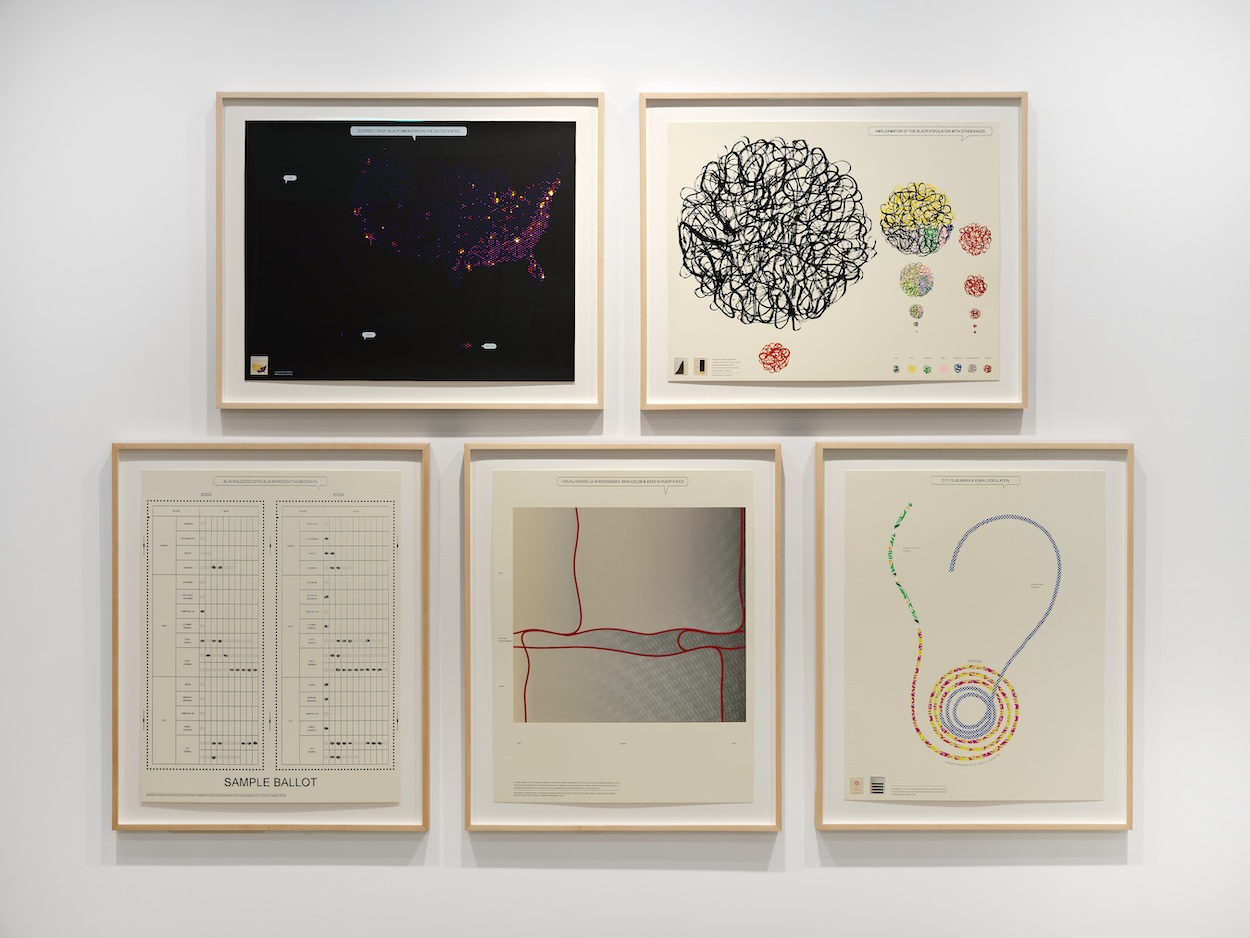
With “Data Consciousness: Reframing Blackness in Contemporary Print,” curator Tiffany E. Barber builds two seminal moments in Du Bois’ career: the advent of his concept of double consciousness, and his contributions to the 1900 Paris Exposition, showing data-informed visualizations of Black life in America following Reconstruction. The exhibition, also rooted in Printing Black America: Du Bois’s Data Portraits in the 21st Century (a body of research from artist William Villalongo and academician Shraddha Ramani), explores the power of contemporary art as a lens through which to understand how big data and present-day methods of its analysis depict and distort topics around identity.
The exhibition, which is the final in a trio that has marked the Print Center’s yearlong 25th anniversary, is ambitious. According to the institution’s chief curator, Jenn Bratovich, that’s precisely the point. “This exhibition embodies everything we strive to be as an institution: a dynamic platform for visionary artists and independent curators, and a place where audiences can encounter bold and urgent ideas in printmaking,” she says. “Printing Black America: Du Bois’s Data Portraits in the 21st Century by Villalongo and Ramani really embodies this, and the exhibition Barber built around this work is both surprising and exciting—it really stretches how we think about the boundaries of our medium by understanding data itself as something that, like a printmaking matrix, can generate works of art.”
Ahead, we take a closer look at the exhibition with Barber.
What first inspired you to center this exhibition around the works and research of W.E.B. Du Bois, as relates to his concept of double consciousness?
This exhibition is the start of a new, heterodox, multi-pronged research project for me. In the first quarter of the 20th century, Du Bois boldly turned toward art and exhibition-making as methods for charting Pan-African progress in both practice and theory. In so doing, he anticipated the paradigmatic shift from modernism to postmodernism through unprecedented innovations such as hand-drawn illustrations, curated exhibitions, and Pan-African-focused publications and artist commissions. And there are a ton of present-day artists, illustrators, designers, data scientists, and others who count him as an inspiration. So I wanted to highlight the impact of his legacy on contemporary art and print, and show how his concept of double consciousness—the awareness that comes from being structurally positioned to look at and measure oneself through the eyes of others—endures and morphs in the age of big data.
How does that body of work/research, anchored in the 20th century, inform your curation of contemporary artworks in this show?
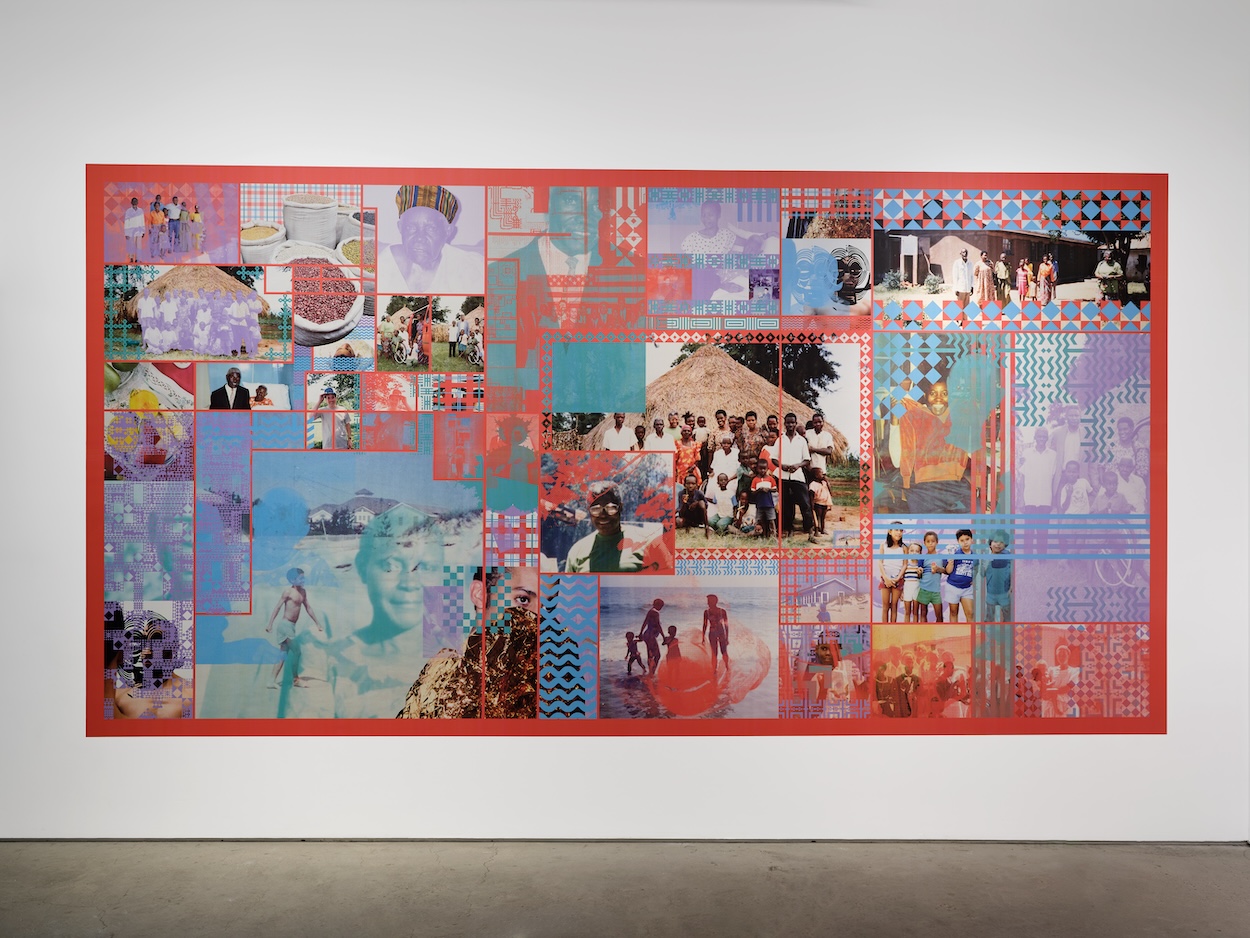
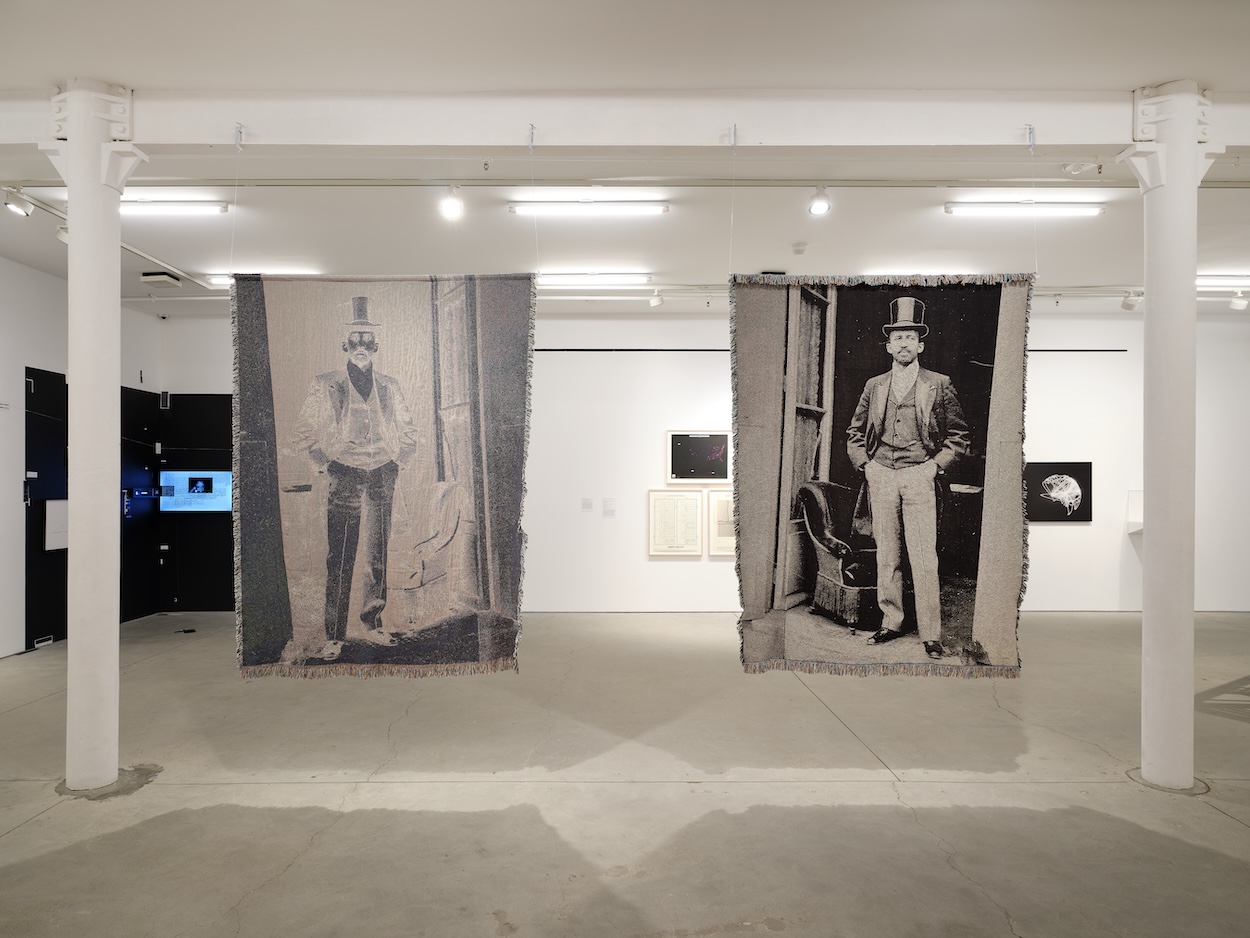
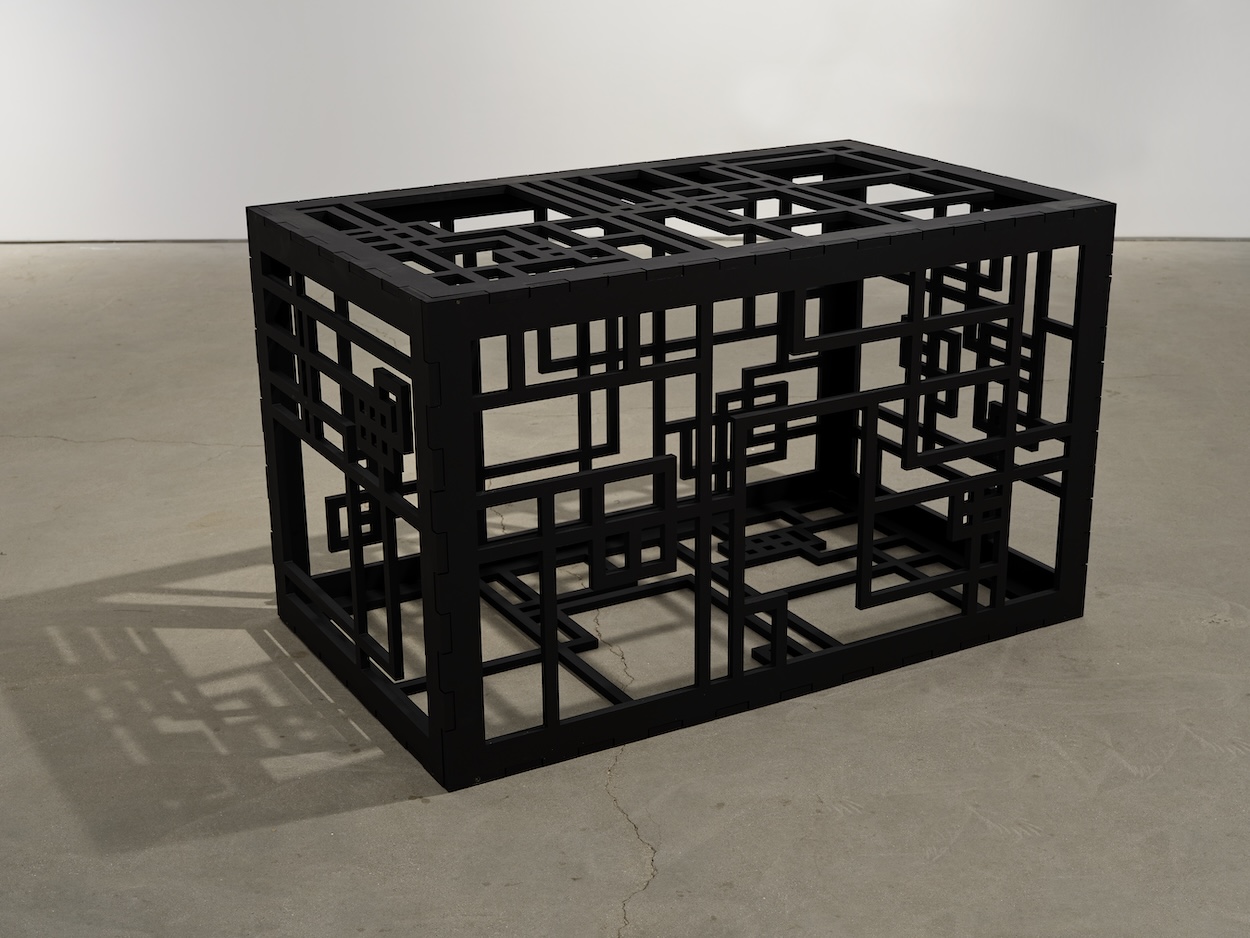
At the 1900 Paris Exposition, Du Bois presented a series of graphs, charts, maps, and photographs that visualized Black life after Reconstruction. Now considered important contributions to American design history and an early form of visual sociology and data science, his proto-modernist, hand-drawn infographics are of increasing relevance as the presence of data in daily life grows. The works on view in “Data Consciousness”—including prints, sculpture, installation, textile, and video—reframe both Du Bois and Black contemporary art as critical sites for understanding how digital infrastructures amplify and constrain identity and autonomy in the 21st century.
How did you become connected to the work of William Villalongo and Shraddha Ramani?
I first connected with Will in 2021. He knew of my work on Afrofuturism and asked me to visit his latest exhibition, “Sticks and Stones,” at Susan Inglett Gallery. From there, he invited me to write the main essay for the catalog that accompanies his recent touring solo exhibition. And when he and Shraddha started to put words and shape to the Printing Black America portfolio, he asked if I wanted to build an exhibition around it. That’s how the portfolio became the anchor for the “Data Consciousness.”
What can you tell us about the inclusion of mediums such as sculpture, installation, textile, and video in an that “champions” the medium of print?
This is something Print Center New York and I thought a lot about, because the exhibition is really looking at these mediums and how the artists are using analog and algorithmic technologies as expanded forms of printmaking. So, there are “traditional” prints and works on paper in the exhibition. But there are also multiple other mediums that bear a relationship to or could be considered print if we focus on the techniques by which they were made.
What can you tell us about the Data Consciousness symposium that accompanies this exhibition?
From the beginning of the exhibition planning, the Print Center New York team and I knew that we wanted to organize a symposium to accompany the exhibition in order to further contextualize the work in and of the show. The symposium brings together artists in the exhibition with multidisciplinary scholars to bridge past, present, and future thinking on the complex interplay of race, identity, data, and technology in the 20th and 21st centuries. Using the artworks and themes in the exhibition as a jumping off point, the symposium considers how Du Boisian legacies of art, design, literature, and sociology inflect contemporary cultural production, and explores the urgency of cultivating data consciousness in our present moment.