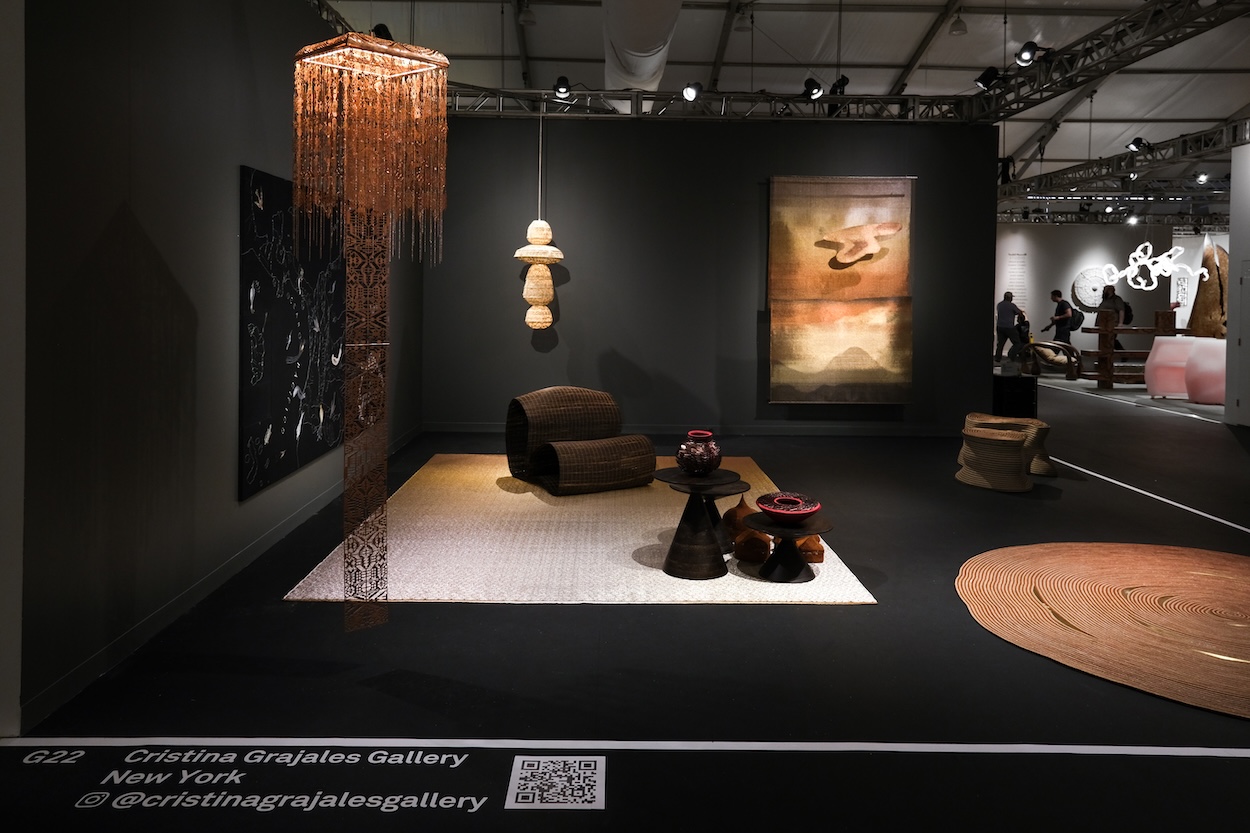
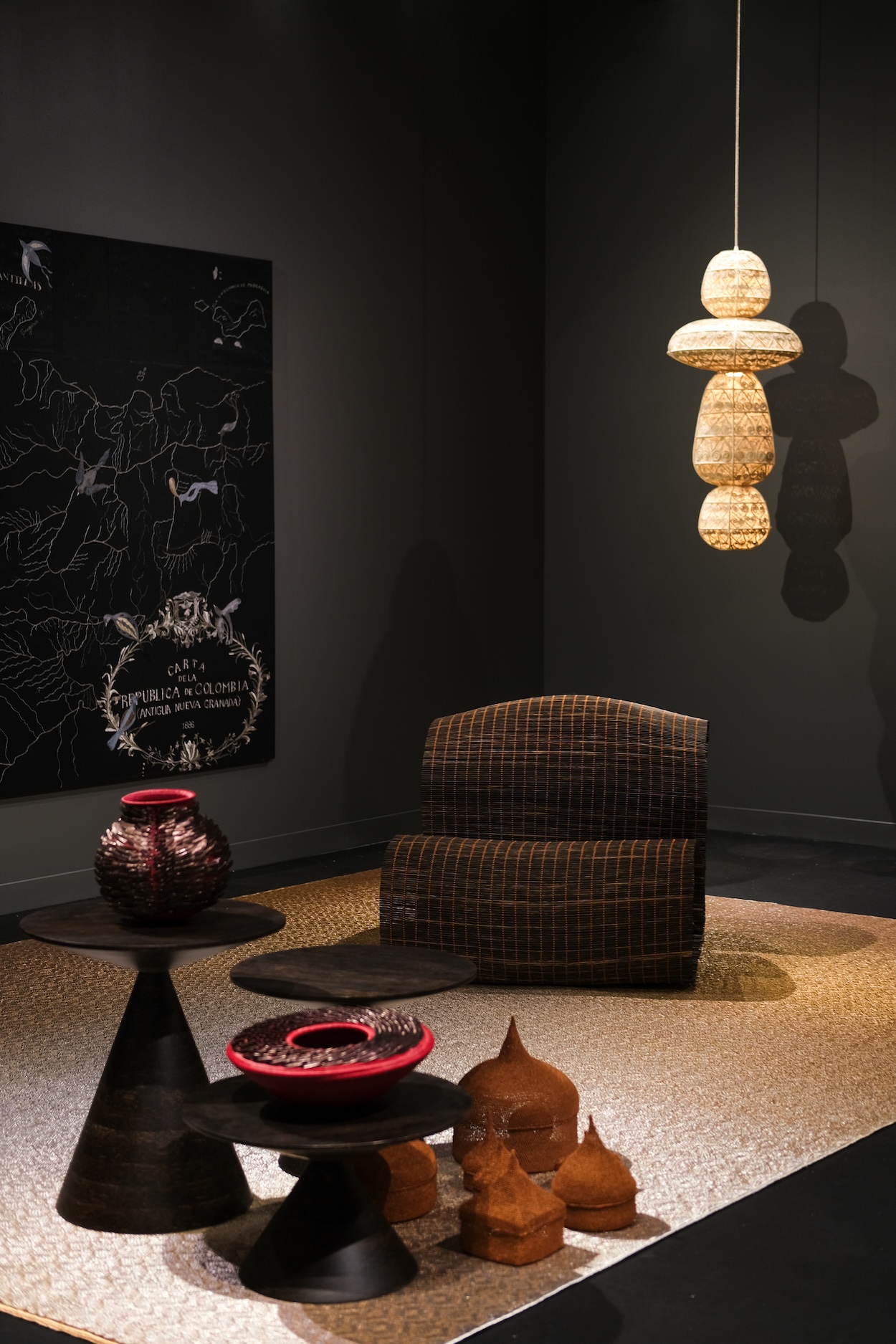
For many Miami Art Week attendees, Design Miami’s milestone 20th anniversary edition was the highlight of this year’s ambitious cultural gathering. Among the roster of esteemed exhibitors was Cristina Grajales Gallery, one of the original 15 from 2005’s inaugural fair. Grajales dedicated her booth to a solo presentation of works by Bogotá, Colombia-based weaving atelier Hechizoo Textiles. This installation—composed of swirling stools and rugs (both inspired by tree trunks), a woven Japanese sunrise tapestry, a singular wall-hung map of South American rivers, and more—won this year’s Best of Show award.
Cristina Grajales Spotlights the Majesty of Hechizoo Textiles
With the solo exhibition “Woven Textiles,” which won the Best of Show Award at Design Miami 2025, the gallery owner nods to her presentation from the fair 20 years earlier.
BY DAVID GRAVER December 10, 2025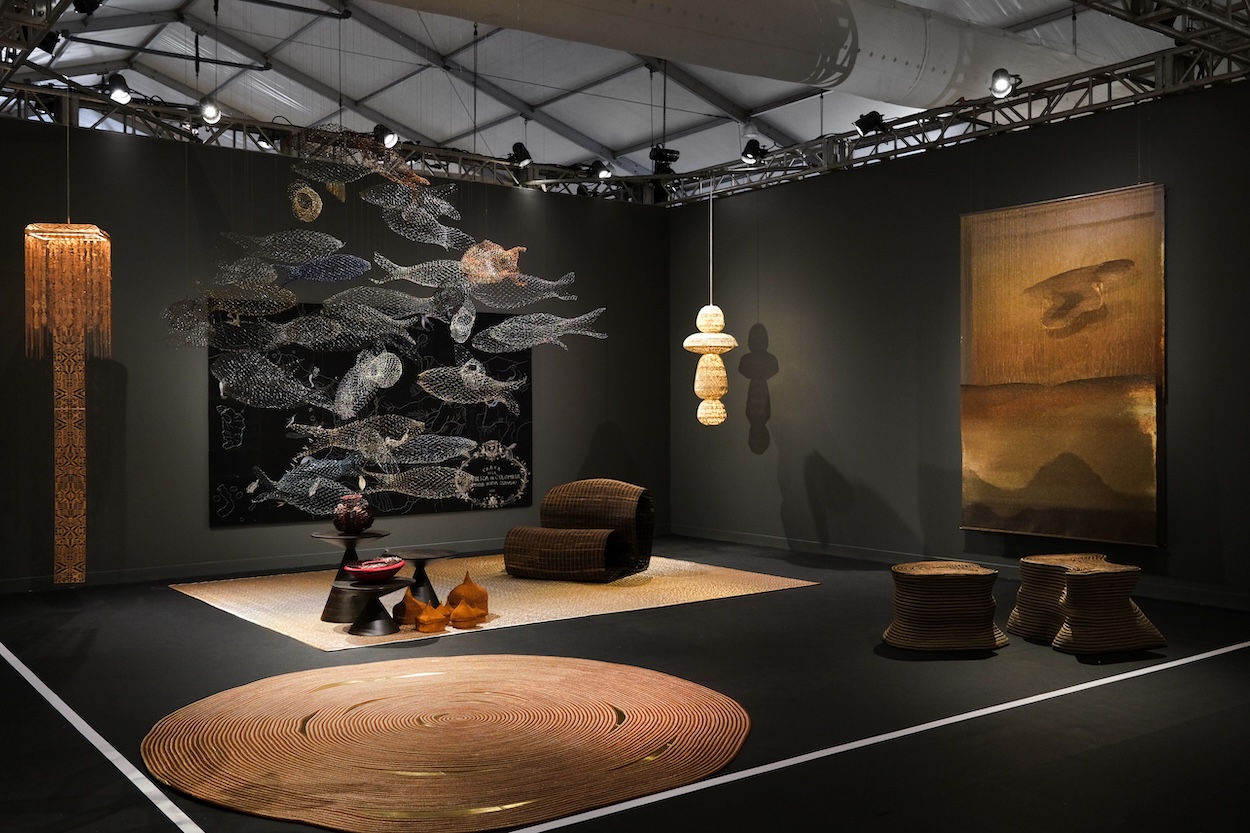
Courtesy of Cristina Grajales Gallery
…
Courtesy of Cristina Grajales Gallery
…
“I wanted to honor his work,” Grajales tells Surface of Hechizoo Textiles founder Jorge Lizarazo. “After 20 years, his evolution as an artist is very exciting. I went from showing seven panels [at the first Design Miami] to his entire universe.” At first glance, thanks to the diversity of materials and their application, it may not have been evident to attendees that all the works were by Hechizoo. Yet, “everything that you see here is ours,” Lizarazo, an architect by training, told Surface on an early walkthrough. “25 years ago, I started weaving; 23 years ago, I met Cristina; and 20 years ago, we started at a show in Design Miami.”
Courtesy of Cristina Grajales Gallery
…
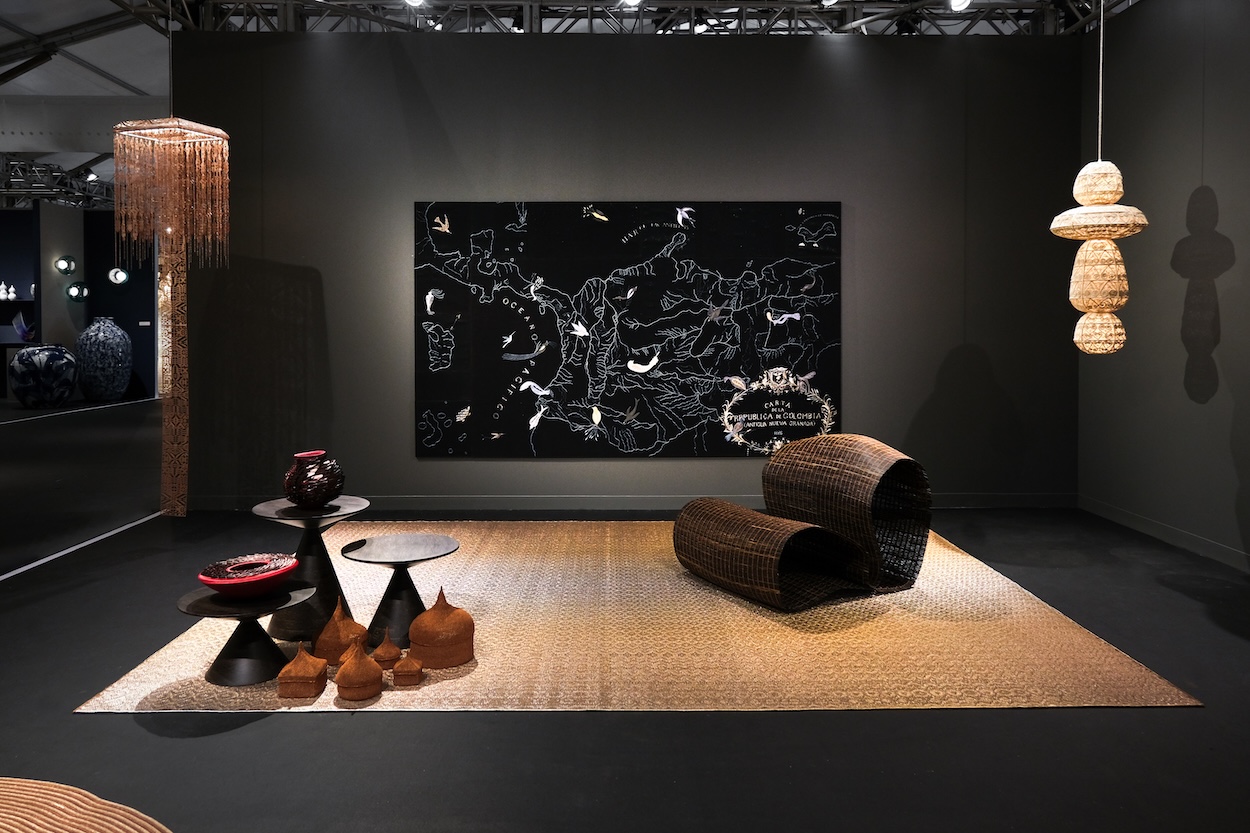
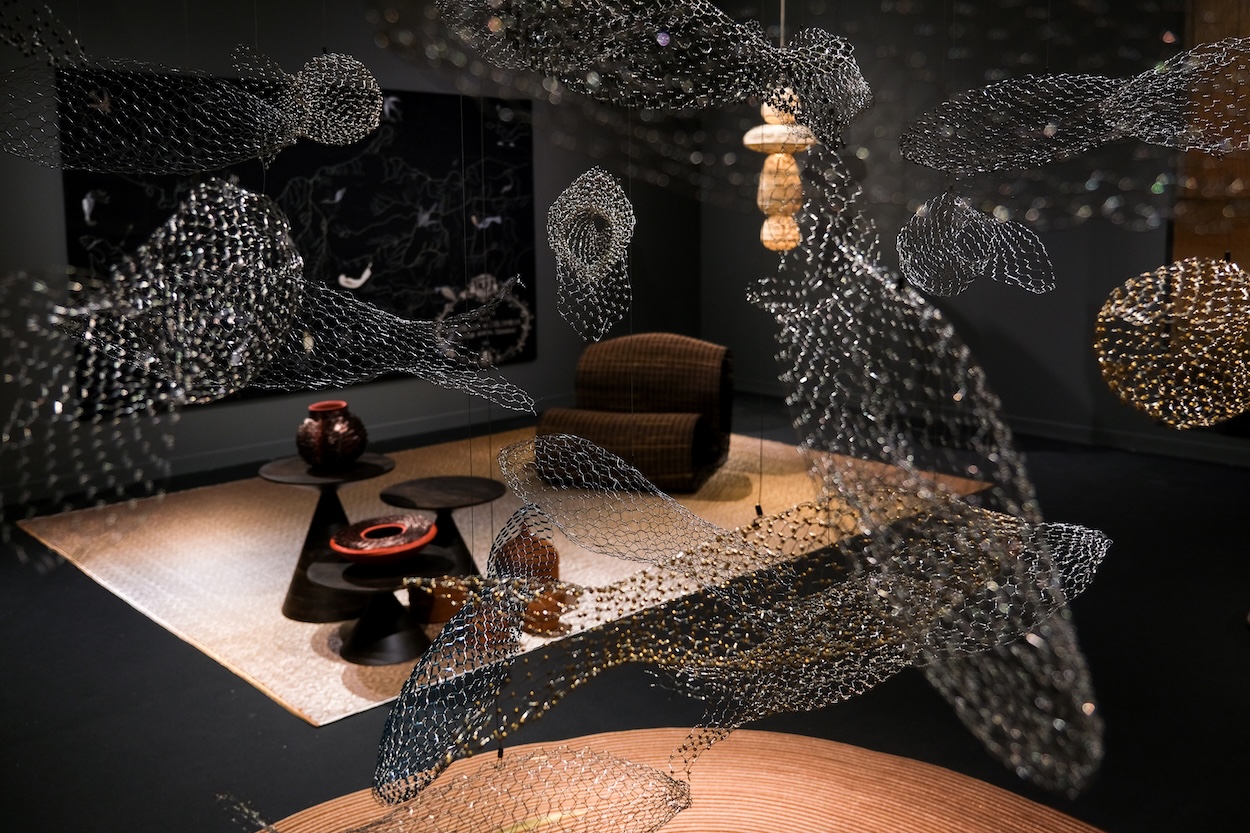
The large-scale textile map, titled Poliptic Tapestry Of The Territories, acts as an aesthetic anchor. “The map is maybe the most important piece that we have in this show,” Lizarazo continued, “because it’s Colombia. It’s the history of Colombia. It is a history of so many things that are related to me, to the history of more than 50,000,000 people. It’s not a question of nationalism. It is a question of no boundaries. The world was created with no boundaries. We, the humans, created them. My country is more connected through the rivers and through the water than through roads. All of the world has been connected through water. The water gives life to everything that happens. This world is woven through the rivers, as well.”
Courtesy of Cristina Grajales Gallery
…
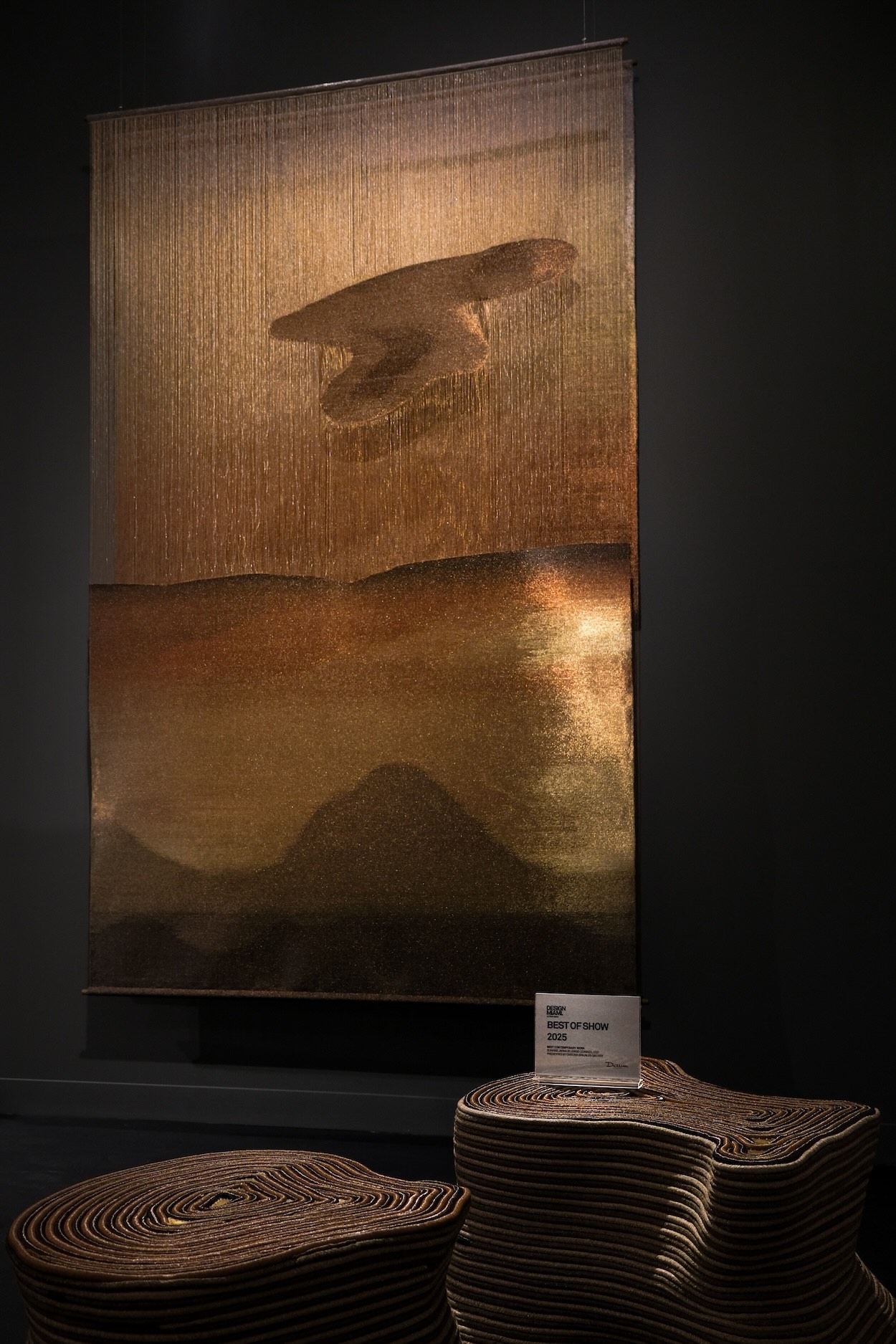
For the aptly titled Japanese Sunrise, Lizarazo woke early in the Japanese village of Beppu, known both for its hot springs and bamboo basketry weaving. “I have always been fascinated by how the sun rises in Japan,” he shared. “From 4:30 in the morning up to six in the morning, I was taking pictures every three minutes. I was seeing the process of the sun coming up, and coming up, and coming up. All the incredible chromatics were there. They are related to what we do. We weave with copper and the light was completely copperish. I knew this was a moment to be kept in my memory forever.”
Courtesy of Cristina Grajales Gallery
…
“When Cristina asked me to do this solo show, I said I would really love to get a little bit of Japan into our conversation—into the idea of having a 20th year of Design Miami solo show for Hechizoo,” Lizarazo explained. “She said, ‘please, Jorge, go ahead.’ We chose the exact moment to depict in this show. It was [a weaving of] the 5:55am image that I had taken of the Japanese sunrise.”
Courtesy of Cristina Grajales Gallery
…
Lizarazo believes the placement of one of Hechizoo’s tapestries against a wall is restrictive. “Sometimes, when I see that one against a wall, it reminds me of when I was a kid—in school, when you were punished you were put against the wall,” he said. “I feel this with our textiles, though I know it’s very practical.” Upon further reflection, he added, “the beauty of the object, and especially here, is that textiles should always be honest, and always be sincere. This is what that is.”