On September 21, The Metropolitan Opera opened its 2025-26 season with a staggering new production—an adaptation of Michael Chabon’s Pulitzer Prize-winning novel, “The Amazing Adventures of Kavalier & Clay,” composed by Mason Bates with a libretto by Gene Scheer. Perhaps unexpectedly, the sweeping source material—which stretches beyond 600 pages—comes to life in this operatic translation. This is thanks to Bates’ clever, enveloping composition, as well as the stage design by 59, a Journey studio.
Designing the Magnificence Within The Met Opera’s ‘The Amazing Adventures of Kavalier & Clay’
59, a Journey studio, composed more than 25 locations across three countries with tactile sets and artful immersive projections
BY DAVID GRAVER September 30, 2025
Andrzej Filończyk as Joe Kavalier and Miles Mykkanen as Sam Clay in Mason Bates's "The Amazing Adventures of Kavalier & Clay." Photo: Evan Zimmerman / Met Opera
…
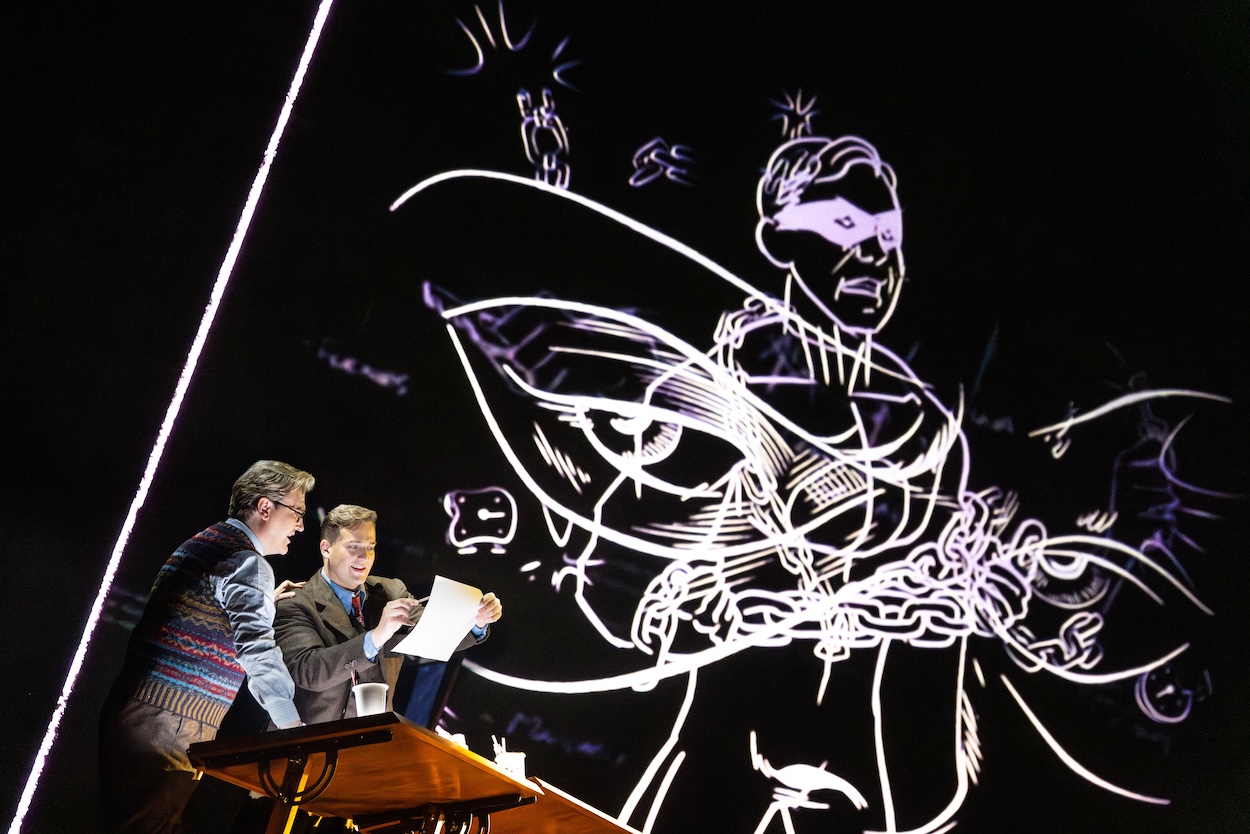
Miles Mykkanen as Sam Clay and Andrzej Filończyk as Joe Kavalier in a scene from Mason Bates's "The Amazing Adventures of Kavalier & Clay." Photo: Evan Zimmerman / Met Opera
…
For anyone who missed Kavalier & Clay as a collegiate assignment or perhaps weren’t previously compelled by its abundance of literary honors, the sprawling text centers two Jewish cousins—the artist Joe Kavalier and the writer Sam Clay—who create a superhero, release a successful comic-book series, and change the lives of many people around them. The opera version features more than 25 locations across three countries, and 59 brought them all to life through tactile sets and artful immersive projection.
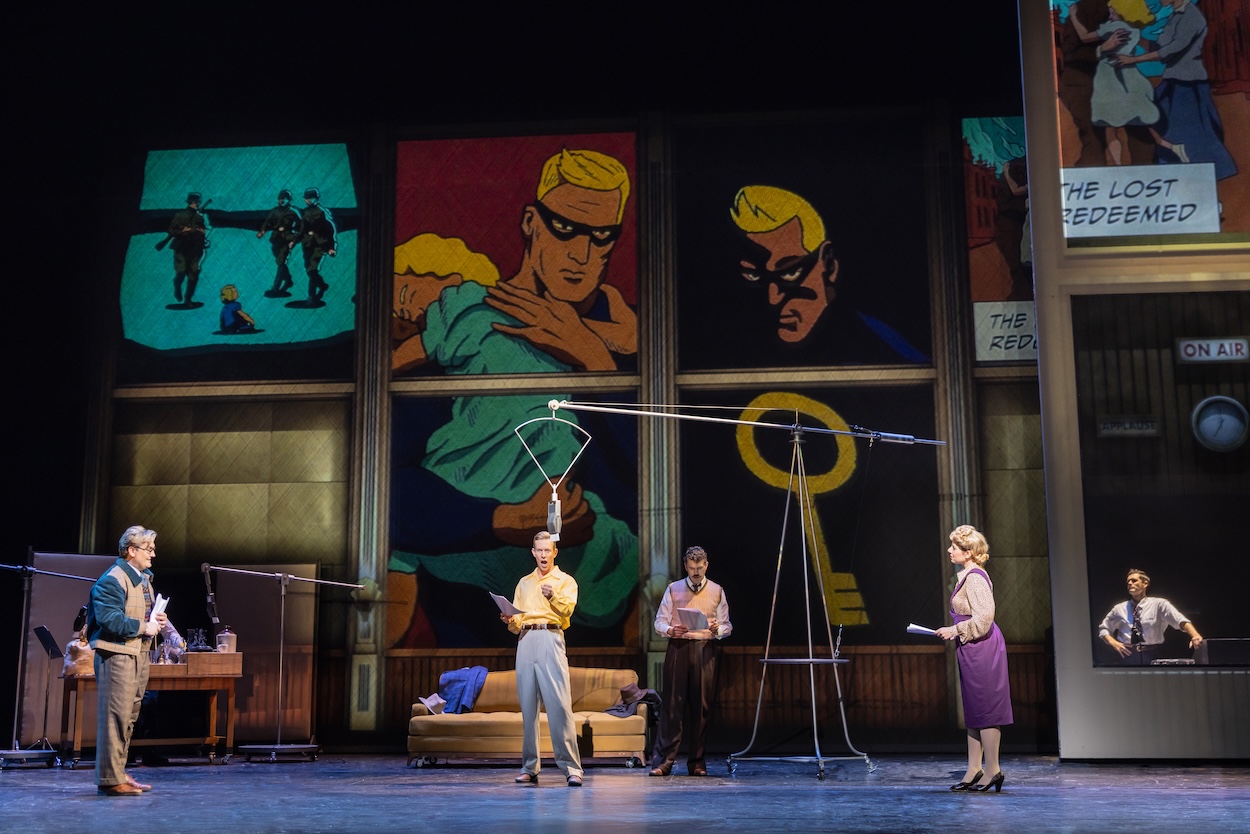
Miles Mykkanen as Sam Clay, Edward Nelson as Tracy Bacon, John Moore as Harry, and Amanda Batista as Helen in a scene from Mason Bates's "The Amazing Adventures of Kavalier & Clay." Photo: Evan Zimmerman / Met Opera
…
“In some ways, this show is a perfect encapsulation of what we try to do—bringing together physical design, animation, projection, technology, and music to create what we hope is a memorable and impactful story,” Mark Grimmer, co-founder and principal creative director, tells Surface. The scope and scale of 59’s work astonishes—more than two hours and 50 minutes of shifting scenes, large-scale sets (sometimes revolving around the stage), and cinematic visualizations.

A scene from Mason Bates's "The Amazing Adventures of Kavalier & Clay." Photo: Evan Zimmerman / Met Opera
…
“It’s the first time we’ve done set, video, and lighting in one show at The Met,” Grimmer adds. “There have been technological improvements that have meant it’s possible to do more on The Met stage now. This scale represents a real determination on behalf of The Met to compete with Broadway, in a way. I mean that in attracting different audiences, but also accepting that those new audiences, who are paying for a ticket, expect to see a show.” For them, Grimmer wanted to deliver a multidimensional, multidisciplinary experience.
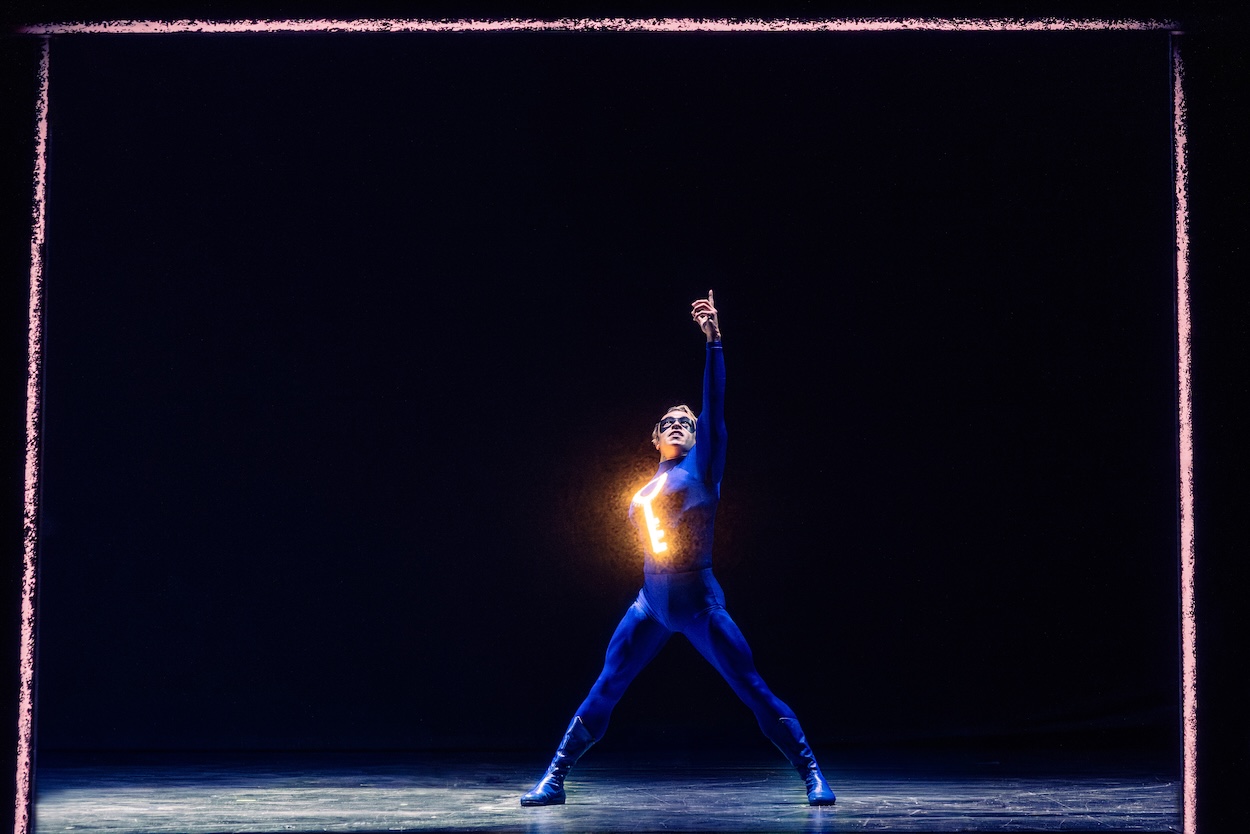
Jerimy Rivera as the Escapist in Mason Bates's "The Amazing Adventures of Kavalier & Clay." Photo: Evan Zimmerman / Met Opera
…
Jenny Melville, 59’s principal design director, says that the artistic exploration of the characters themselves acted as a starting point. “The expression of Joe and Sam as artists, that is quite an extraordinary and unique design challenge. That was, in some ways, a starting point—being able to achieve that. I suppose us trying to work out early on how to convey that informed the decisions that followed.”

Edward Nelson as Tracy Bacon and Miles Mykkanen as Sam Clay in a scene from Mason Bates's "The Amazing Adventures of Kavalier & Clay." Photo: Evan Zimmerman / Met Opera
…
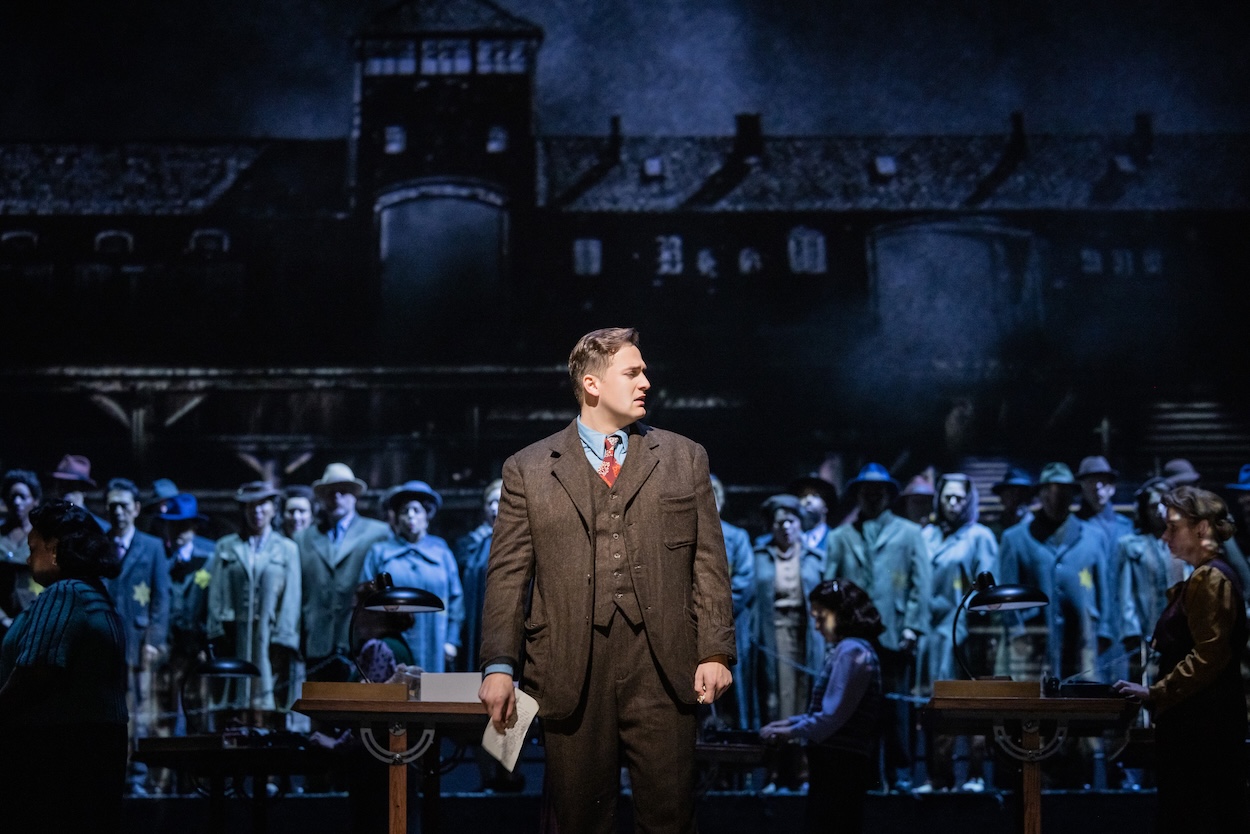
“The visual clues were in the music we received early on but also in the libretto,” Melville adds. “To start with, we had these three worlds, the descriptions, and musical samples. We just tried to understand the visual language of each world before we thought about how it would manifest—whether it was props or projection or set pieces.” Melville and Grimmer also went back to Chabon’s book to see how he described things.
Andrzej Filończyk as Joe Kavalier in Mason Bates's "The Amazing Adventures of Kavalier & Clay." Photo: Evan Zimmerman / Met Opera
…
Perhaps the most surprisingly effective attribute: a glowing line that changes the aspect ratio, draws audience focus, and mimics comic book panels across the entire stage. “We did a version of the show at Indiana University, with their students,” Melville says of the early stage of this Met commission. “We had all of the panels and the scrims and a good sense of the shape of the show. It was in that process that we added that in for transition language.” This wasn’t only used to shift locations and scale, but also to frame moments of intimacy on such a grand stage.
“This kind of multiple location, multiple world production is a particular phenomenon of new operas,” Grimmer says. “People want to write fascinating stories that reflect the contemporary world. I hope that this show brings new people to opera as an art form. It’s as good a demonstration as any that contemporary, resonant stories can be told—and the fact that design, music, and stagecraft can be a living form.”
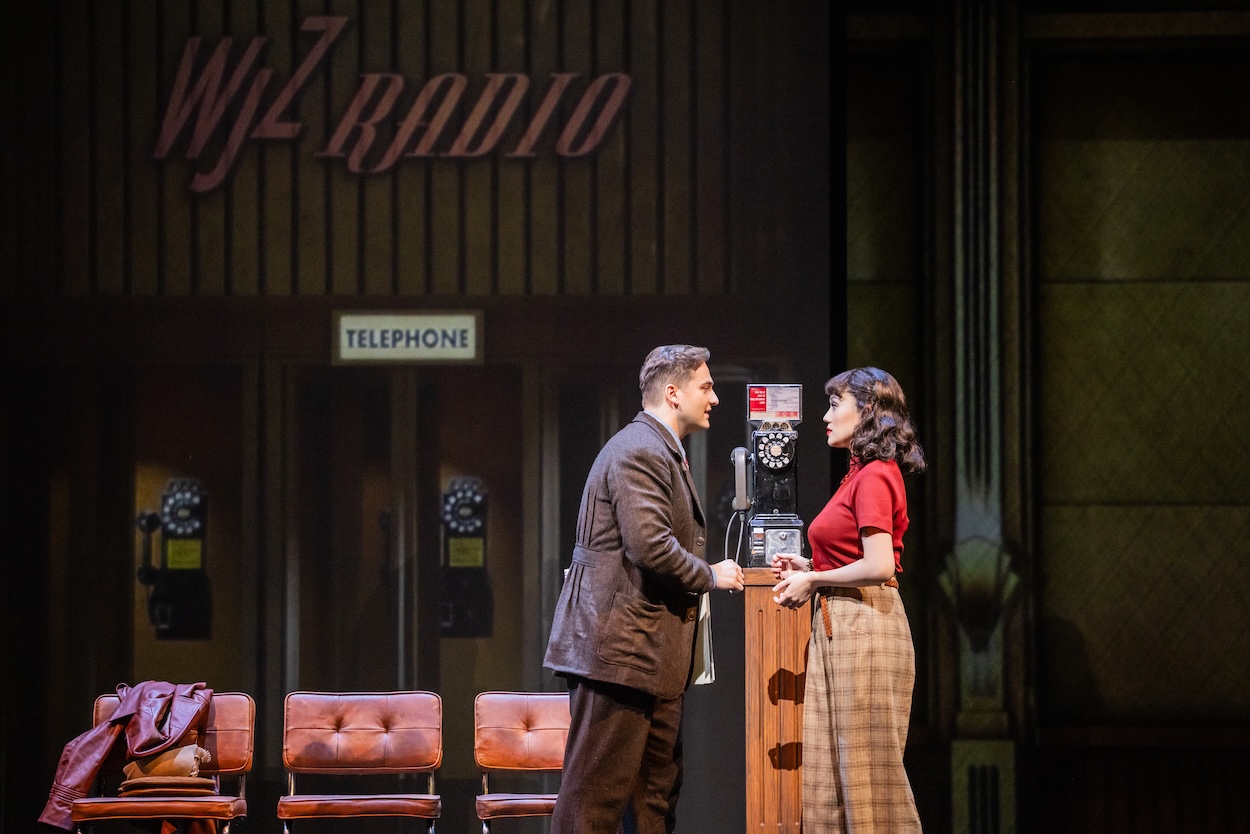
Andrzej Filończyk as Joe Kavalier and Sun-Ly Pierce as Rosa Saks in Mason Bates's "The Amazing Adventures of Kavalier & Clay." Photo: Evan Zimmerman / Met Opera
…
The 59 team acknowledges another remit: making stagecraft a tool for the director. “Bart likes to have a flexible system that he can work with,” Grimmer says. “We knew he was going to want to think about this as we went through rehearsals. We asked ourselves, ‘can we create something that feels solid and cohesive while at the same time can be malleable and agile to allow him to think on his feet in the rehearsal room?’”
Underscoring this is a seamless alignment of digital technology and works by hand. “A lot of it was hand drawn,” Grimmer says. “All of the initial concept work was done longhand. There was quite a lot of digital painting, as well. The nature of this medium is such that we were remaking stuff right up until the day of the show. We were getting notes and redrawing on a tablet in the auditorium.” Melville adds, “we did a lot of scaling up when we were in the room.”

A scene from Mason Bates's "The Amazing Adventures of Kavalier & Clay" with Jerimy Rivera as the Escapist. Photo: Evan Zimmerman / Met Opera
…
From the opening night premiere onward, the production—sponsored by Rolex—has captivated attendees with its spectacular commitment to all of the expressions of art that come together in this contemporary opera. And here, the way the words, music, performance, direction, and design support one another is evident to everyone paying attention.