In Romania’s “Little Paris,” an Unlikely Showcase of Transnational Women Artists
EVA Foundation's inaugural exhibition makes works by Judy Chicago, Alice Neel, Wangechi Mutu, Andra Ursuța, and Yayoi Kusama newly accessible to the public.
Installation View of Sirens, EVA Foundation, 2025. Photo: Vlad Patru. Courtesy of EVA Foundation.…
Known as the “Little Paris” of Eastern Europe, Bucharest, Romania is famous for its Belle Époque architecture and grand boulevards. Since the fall of communism in 1989 and the restoration of free expression, the Romanian capital has also developed a vibrant cultural landscape wherein its National Museum of Art, contemporary galleries, and art fairs spark discourse between recent and historic works.
Take, for example, the debut of EVA Foundation, which opened this past fall in Bucharest’s Piata Romana neighborhood. Founded by director Ecaterina Aguiar-Lucander, its inaugural exhibition, “Sirens,” is the first to make an international collection of contemporary feminist art accessible to the public. It also includes works by Judy Chicago, Alice Neel, Wangechi Mutu, Andra Ursuța, and Yayoi Kusama, which have never been publicly exhibited before now.
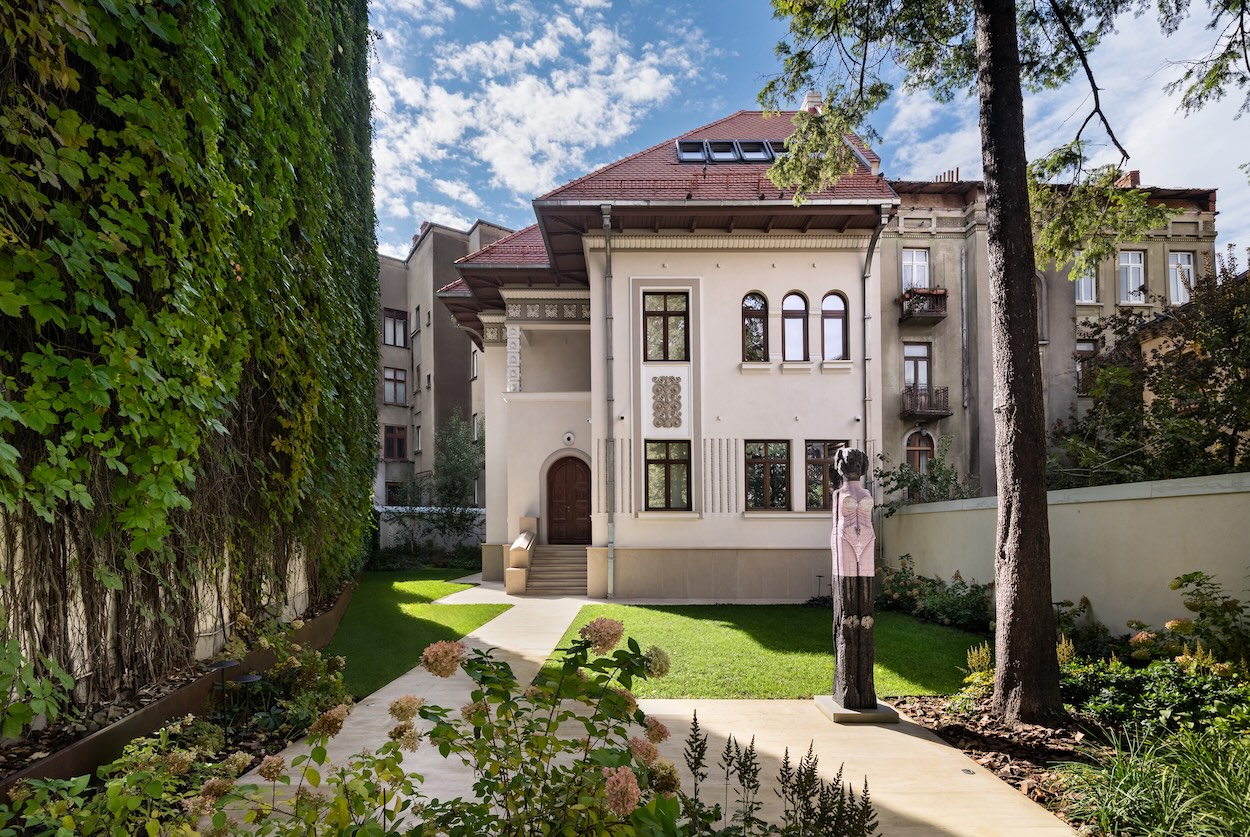
Celebrating the female artists who redefined the possibilities of their eras, the collection is presented in a magnificently restored 1930s townhouse from Romania’s pre-communist era. For Aguiar-Lucander, who was born and raised in Bucharest and maintains roots in New York, the choice of a domestic space was made intentionally to challenge the conventions of the traditional white-cube gallery, letting observers experience the works in a more intimate context.
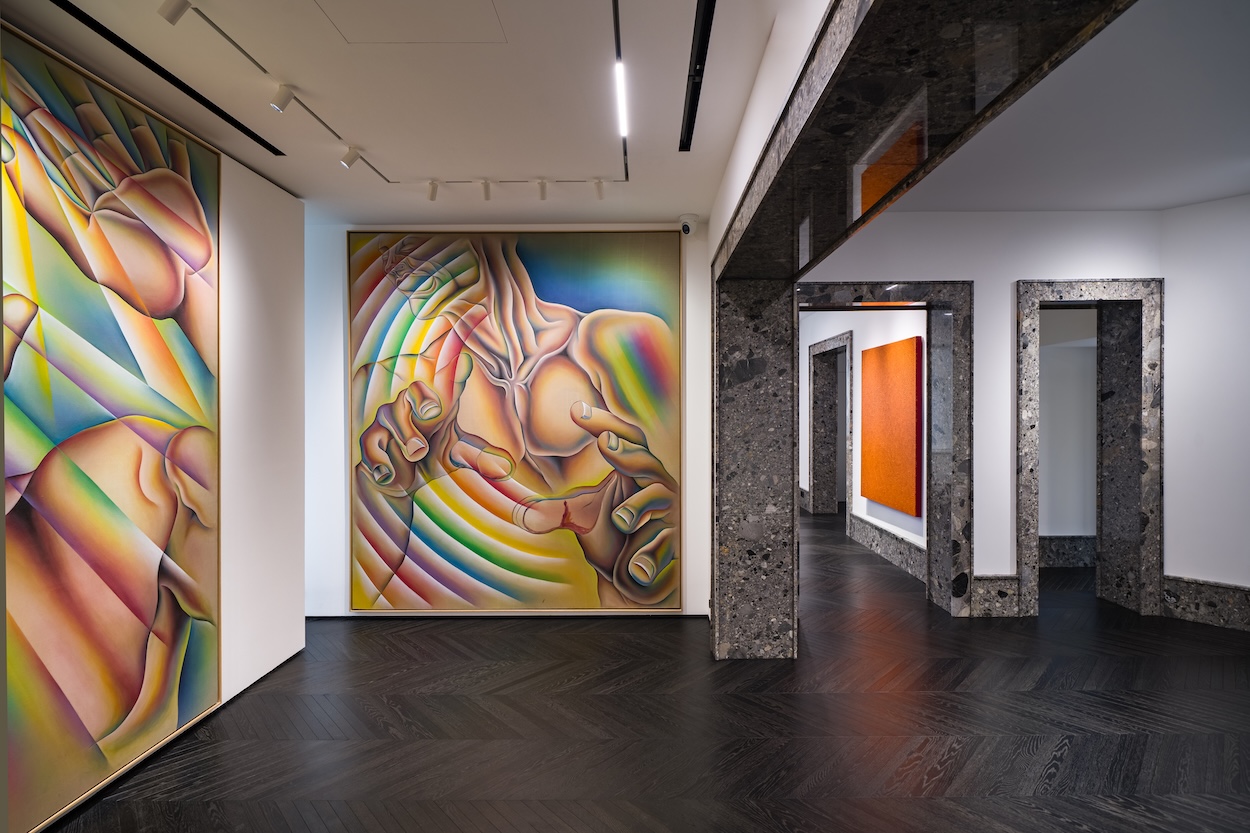
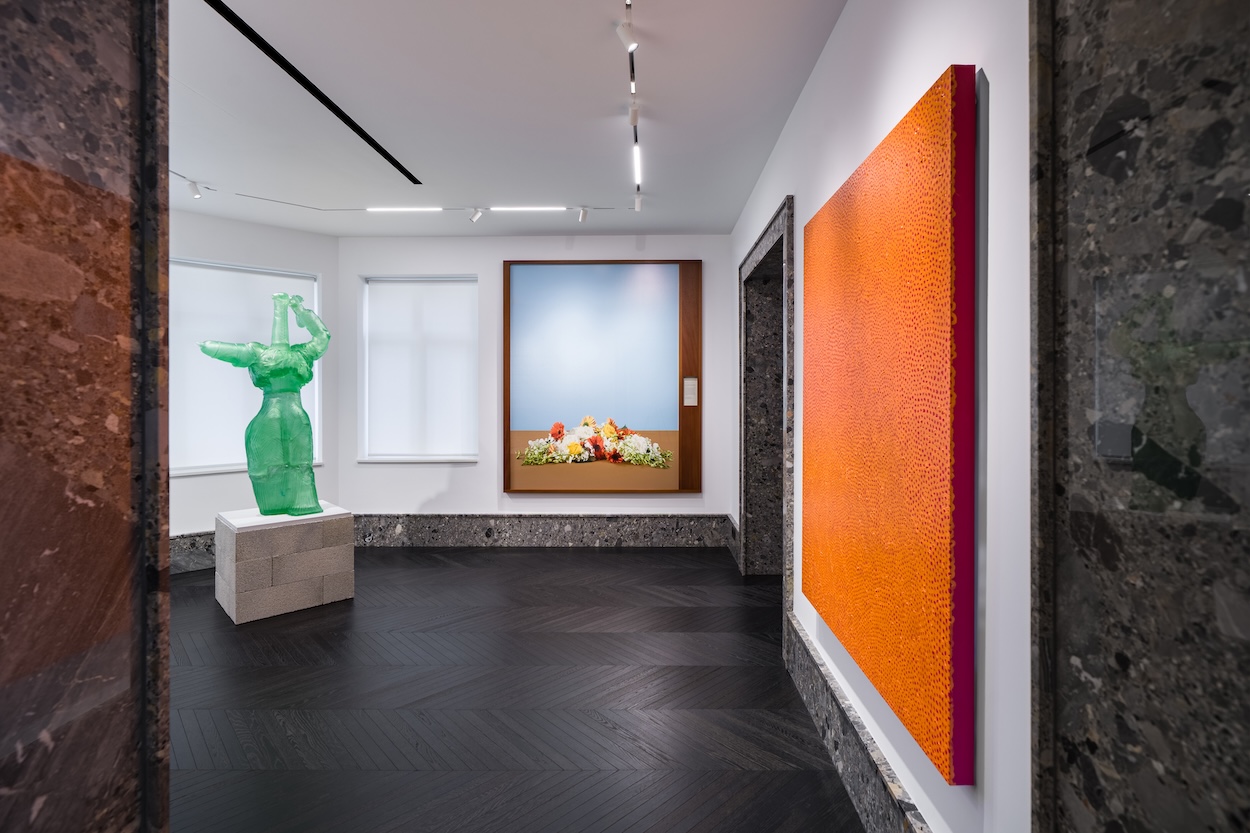
Installation View of Sirens, EVA Foundation, 2025. Photo: Catalin Georgescu. Courtesy of EVA Foundation. Featured Artworks: Judy Chicago, Rainbow Man, 1984. Yayoi Kusama, INFINITY-NETS [KSUZL], 2017.…
Among Aguiar-Lucander’s earliest acquisitions was work by Romanian expatriate painter Hedda Stern, whose story had inspired her master’s thesis while studying at NYU’s Institute of Fine Arts in 2019. Other pieces, such as Andra’s, were discovered by Aguiar-Lucander at the Venice Biennale that same year. Her involvement with institutions such as the Met’s Vanguard Council, the New Museum’s Artemis Council, and the Guggenheim’s Young Collectors Acquisition Committee would go on to open doors to artists, curators, and communities whose insights and perspectives she credits for influencing the collection on view in “Sirens.”
“The idea for EVA Foundation emerged while I was reading Peggy Guggenheim’s autobiography and her accounts of the museum’s early days in Venice,” she says. “Her palazzo functioned both as a home and an exhibition space, with visitors even being led into her bedroom to see Alexander Calder’s Silver Bed Head. I was inspired by this unconventional, intimate mode of display and by its capacity to challenge the notion that art by women belongs to the domestic sphere.” Instead, Eva Foundation reimagines the home as a site of agency and experimentation.
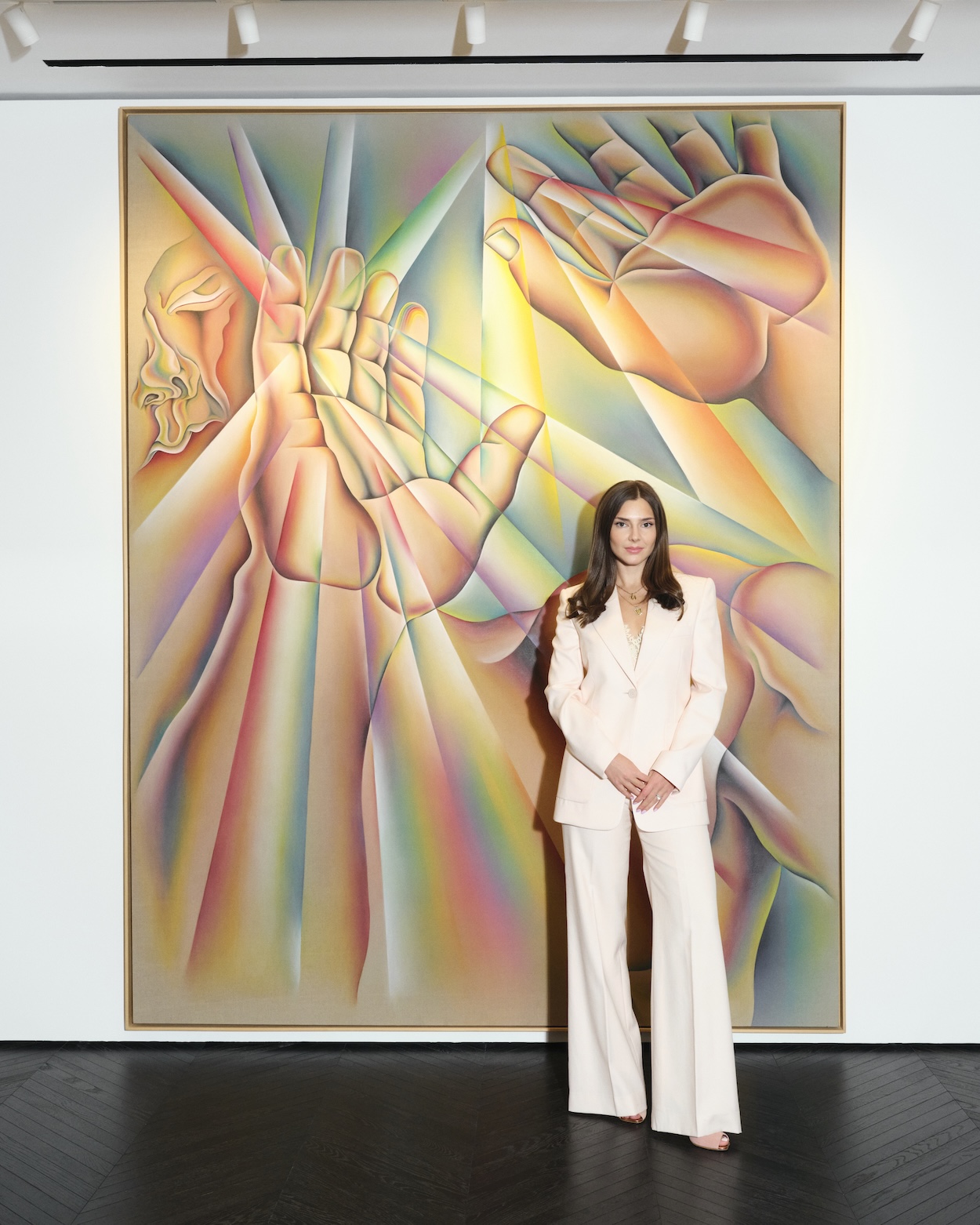
Ecaterina Aguiar-Lucander. Photo by Raluca Margescu. Courtesy of EVA Foundation.…
When the townhouse first came to market, the building had been divided into three separate apartments, a holdover of Nicolae Ceaușescu’s dictatorship when intellectual and bourgeois families were expelled from their homes and properties were partitioned. Upon the discovery, Aguiar-Lucander realized she had the chance to work with the original architectural plans and bring the building back to its original state. For such an undertaking, she chose to work with the architect Bogdan Ciocodeica, whose studio has gained a reputation for pushing the boundaries of standard formats and spaces.
“It’s a bold and unprecedented gesture,” says Ciocodeica, “A home that houses a private art collection dedicated to women artists, is open to the public, yet is neither a traditional gallery nor a private residence. It becomes an extension of the collection itself… a living, evolving space that invites dialogue and offers a new model for how art can exist.”
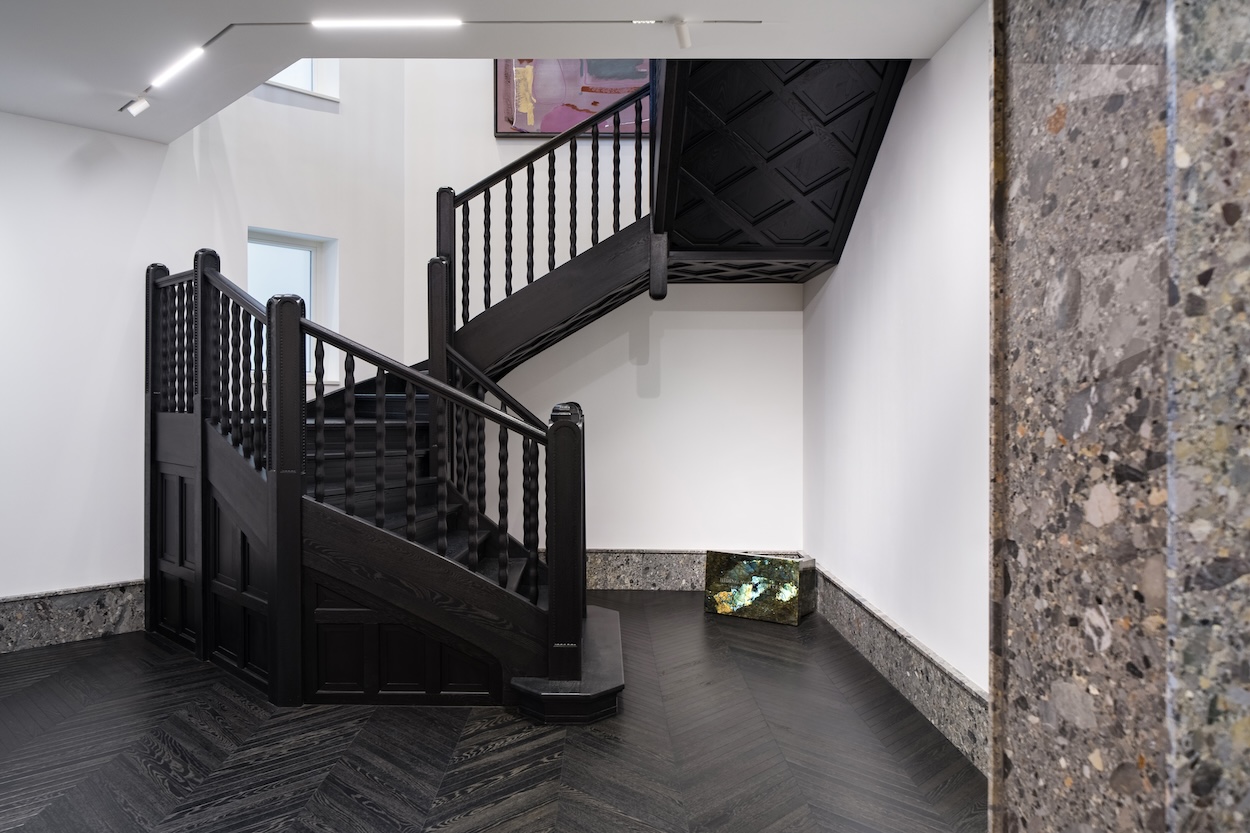
Multiple transformations during the Communist period meant most of the original architectural features had been either heavily modified or entirely lost—all but the façade and the central wooden staircase, as well as a secondary staircase built of concrete and terrazzo, which remained remarkably intact. “Rather than attempting to reconstruct a past that no longer existed, we chose to preserve the elements that remained and build a bridge between the history of the house and its new life,” says Ciocodeica.
Installation View of Sirens, EVA Foundation, 2025. Photo: Catalin Georgescu. Courtesy of EVA Foundation. Featured Artwork: Jenny Holzer, Selection from Truisms: Hiding your motives… 2015.…
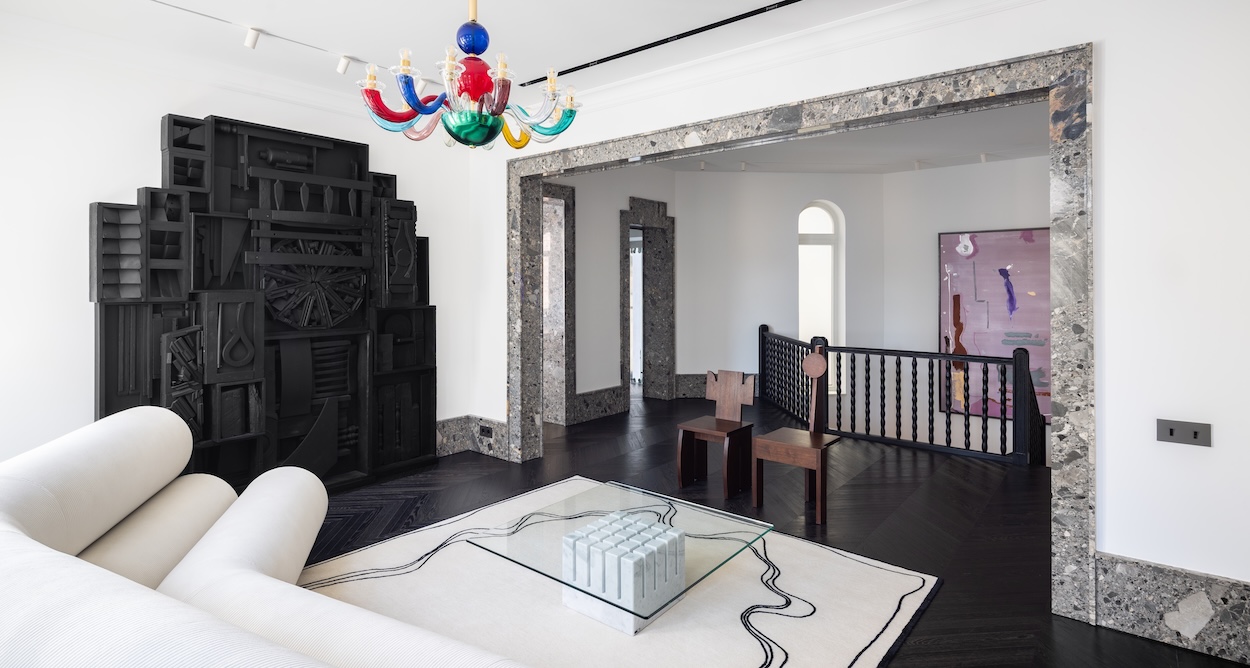
Throughout the building, white walls, soft natural light, and accents of substantial stone frame each room like portals. Black herringbone wood floors evoke a sense of sophistication and stillness, which the architect claims was inspired by the sculptor Louise Nevelson’sMoon–Star II (1960). Many of the baseboards are clad in Ceppo di Gré, a textured Italian stone chosen for its natural patterning and ability to visually ground airy, bright rooms.
On the second floor, visitors walk up onto a large, open-facing room with a rainbow-hued Gio Ponti 99.80 chandelier from Venini chosen to add “a carefully controlled dose of color and sense of levity.” In the next room, another Gio Ponti chandelier hangs at the center, illuminating works by Tracey Emin and Sara Flores on the walls, accompanied with a Casa Malaparte console acquired through Gagosian. But the most intriguing display of all might be in the bathroom, where Marguerite Humeau’s eerie bronze sculpture, titled Superior Oneness, A 70-year-old female human has ingested an alligator’s brain, sits perpendicular to the toilet.,
“I first encountered Humeau’s work at the New Museum in New York,” says Aguiar-Lucander. The sculptures from this series, she recalls, were presented in a dark, velvet-lined environment, each one dramatically isolated under its own spotlight. “A few years later, I saw the same body of work again at the Centre Pompidou, this time in natural light, and the experience was noticeably less engaging. From that moment, I knew I wanted to recreate the New Museum’s intimate, atmospheric setting for a single piece. The former shower in the Visarion St. house proved the perfect opportunity, and Bogdan was immediately enthusiastic about the idea. It also felt like a playful nod to the question collectors are so often asked: What artwork is hung in your bathroom?”
Installation View of Sirens, EVA Foundation, 2025. Photo: Catalin Georgescu. Courtesy of EVA Foundation. Featured Artworks: Andra Ursuța, Half-Drunk Mummy, 2020. Taryn Simon, Agreement Establishing the International Islamic Trade Finance Corporation. Al-Bayan Palace, Kuwait City, Kuwait, May 30, 2006. Yayoi Kusama, INFINITY-NETS [KSUZL], 2017.…
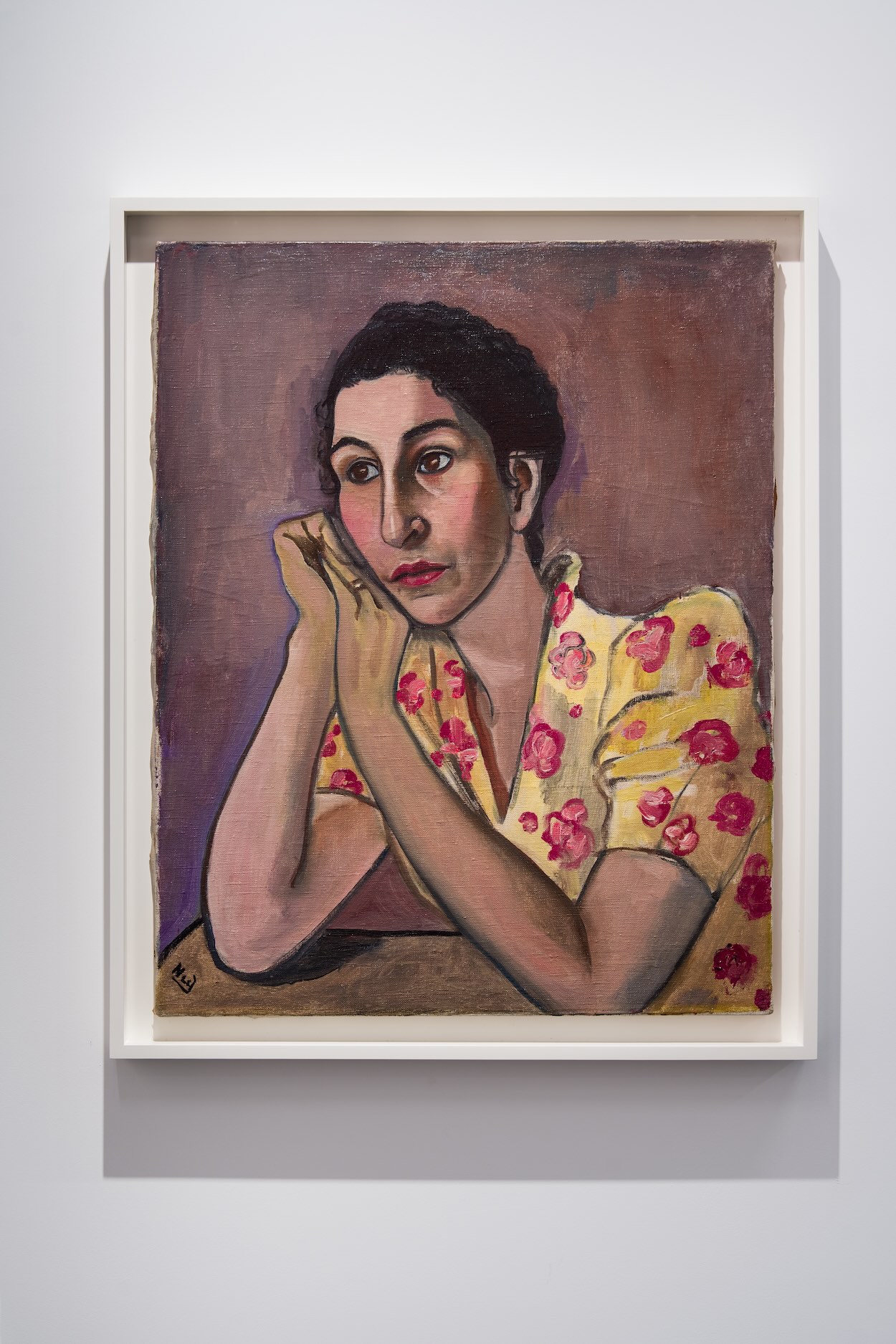
Alice Neel, Portrait of Dorothy Pullman, 1942, Installation View of Sirens, EVA Foundation, 2025. Photo: Catalin Georgescu. Courtesy of EVA Foundation.…
EVA Foundation, 2025. Photo: Catalin Georgescu. Courtesy of EVA Foundation.…