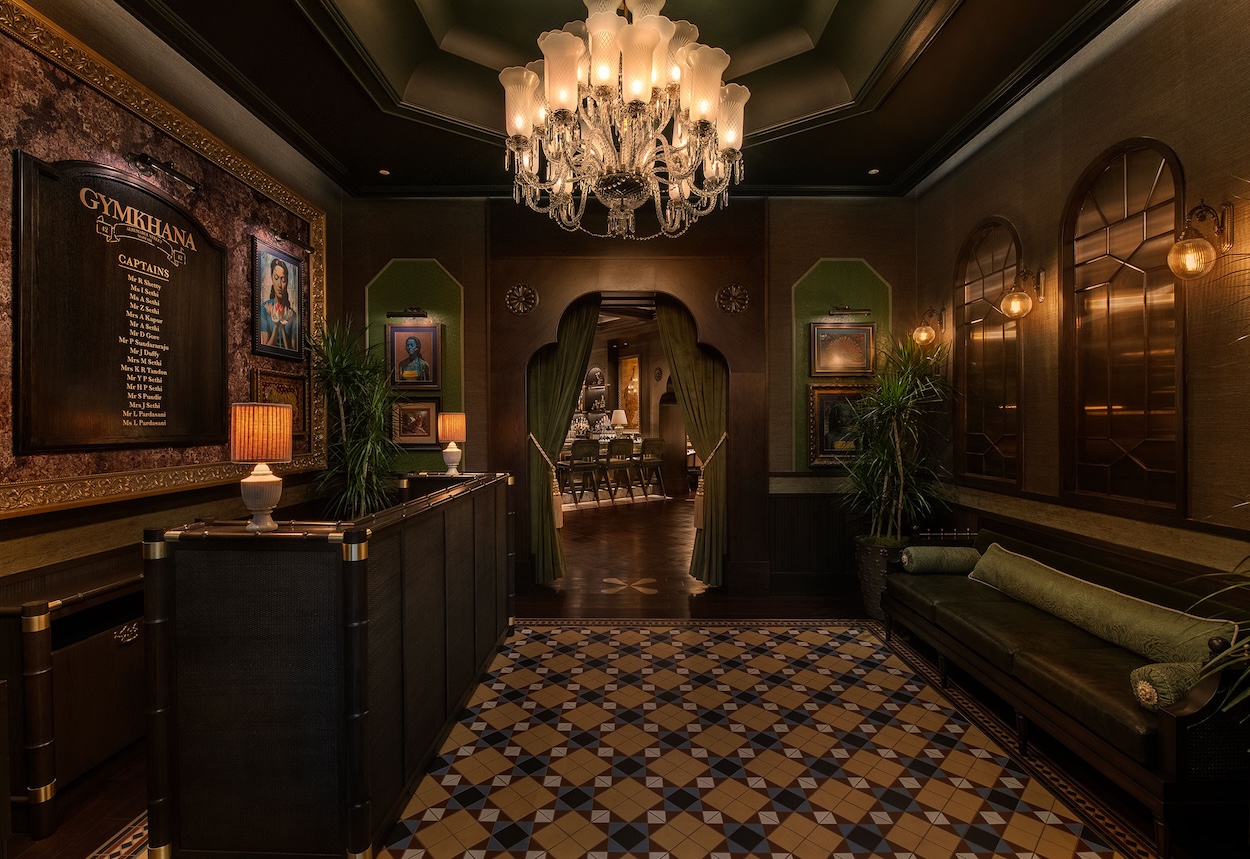
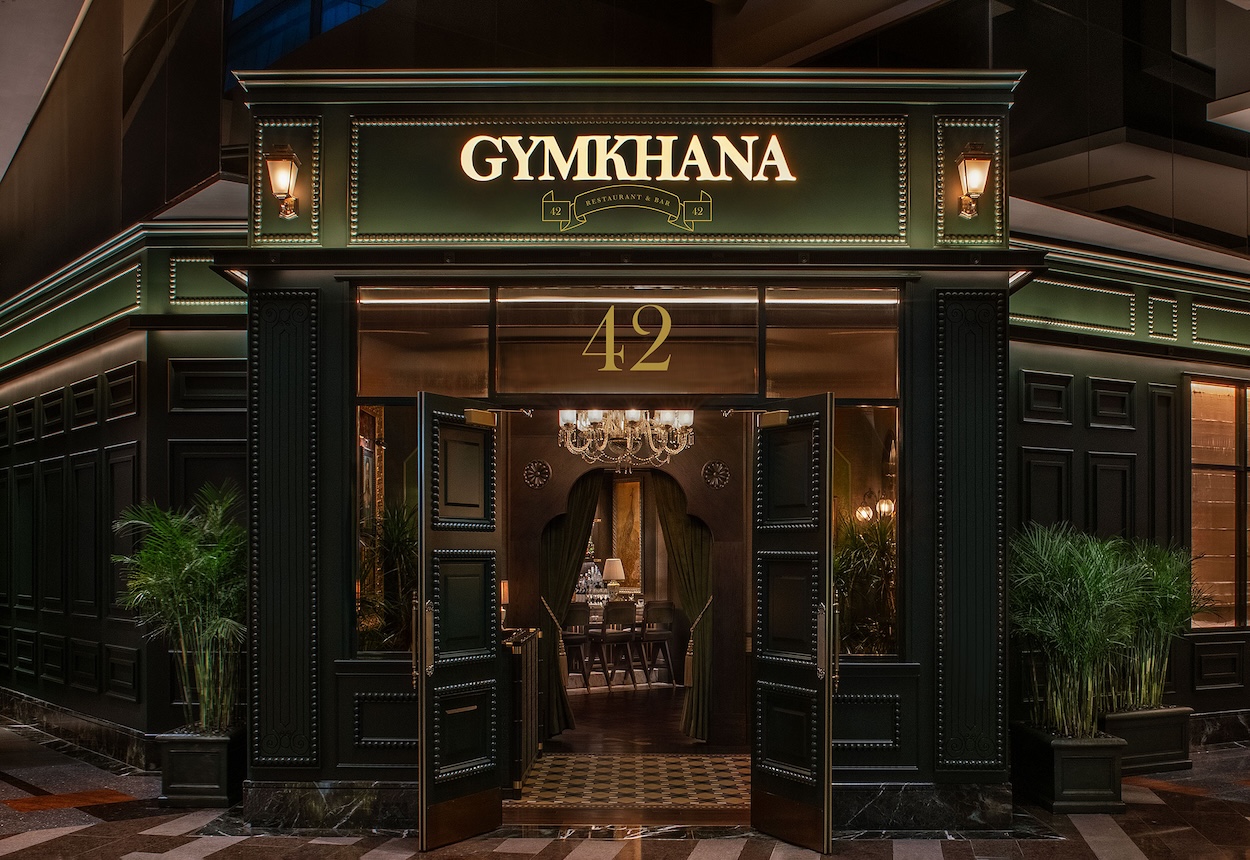
Today, doors open to Gymkhana’s first U.S. location—on the Las Vegas Strip within ARIA Resort & Casino. Established in Mayfair by siblings Jyotin, Karam, and Sunaina Sethi in 2013, the two-Michelin-starred Indian hotspot introduced a Riyadh restaurant in 2023. With gourmand interest unwavering, the Sethi family’s JKS Restaurants partnered with MGM Resorts International to establish the culinary attraction stateside. While the fine-dining menu and elevated hospitality experience are on par with London, perhaps surprisingly, so too is the design—starting with the familiar green doors.
The U.K.-based interiors studio North End, founded by Samuel Hosker, designed Gymkhana in Las Vegas. North End also helmed Gymkhana’s 2019 London renovation. “I was coming back from Australia to start up the internal design team at JKS, when there was a fire. We began by redesigning the flagship,” Hosker tells Surface. “For its first five years, Gymkhana’s design had been rooted in colonial British references, which I really wanted to move away from.”
Courtesy of AVABLU…
Hosker looked to his travels across India for inspiration, as well as old Venetian interiors and Antoni Gaudí’s Casa Vicens. He covered walls with mood imagery and hand-sketches. “Chandigarh itself is a key,” he says, referring to Le Corbusier’s masterplan for the city as well as the architect’s collaborative furniture with Pierre Jeanneret. “I was also talking with Karam about Pondicherry, in the south of India, which looks like it’s on the Mediterranean. He explained that his mother spent some time there as a child.” This too became a reference point.
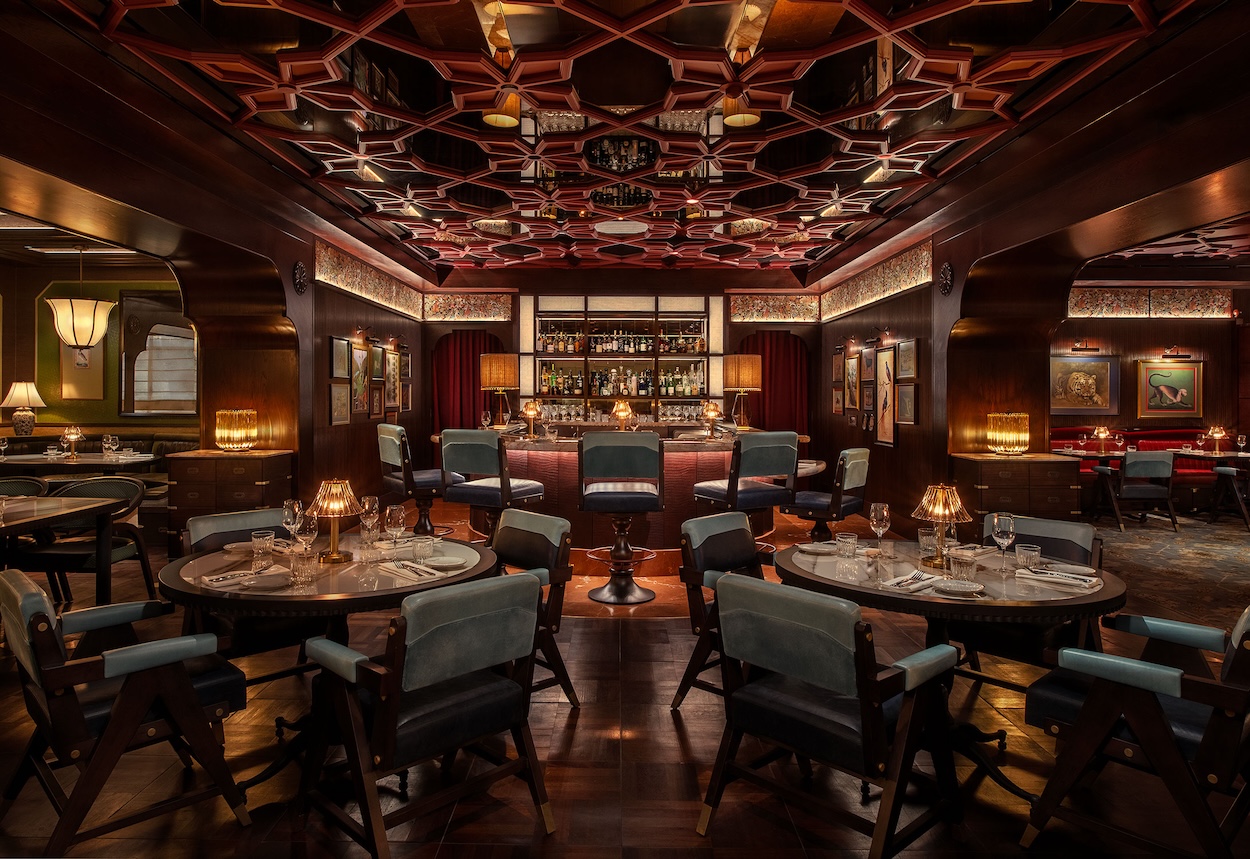
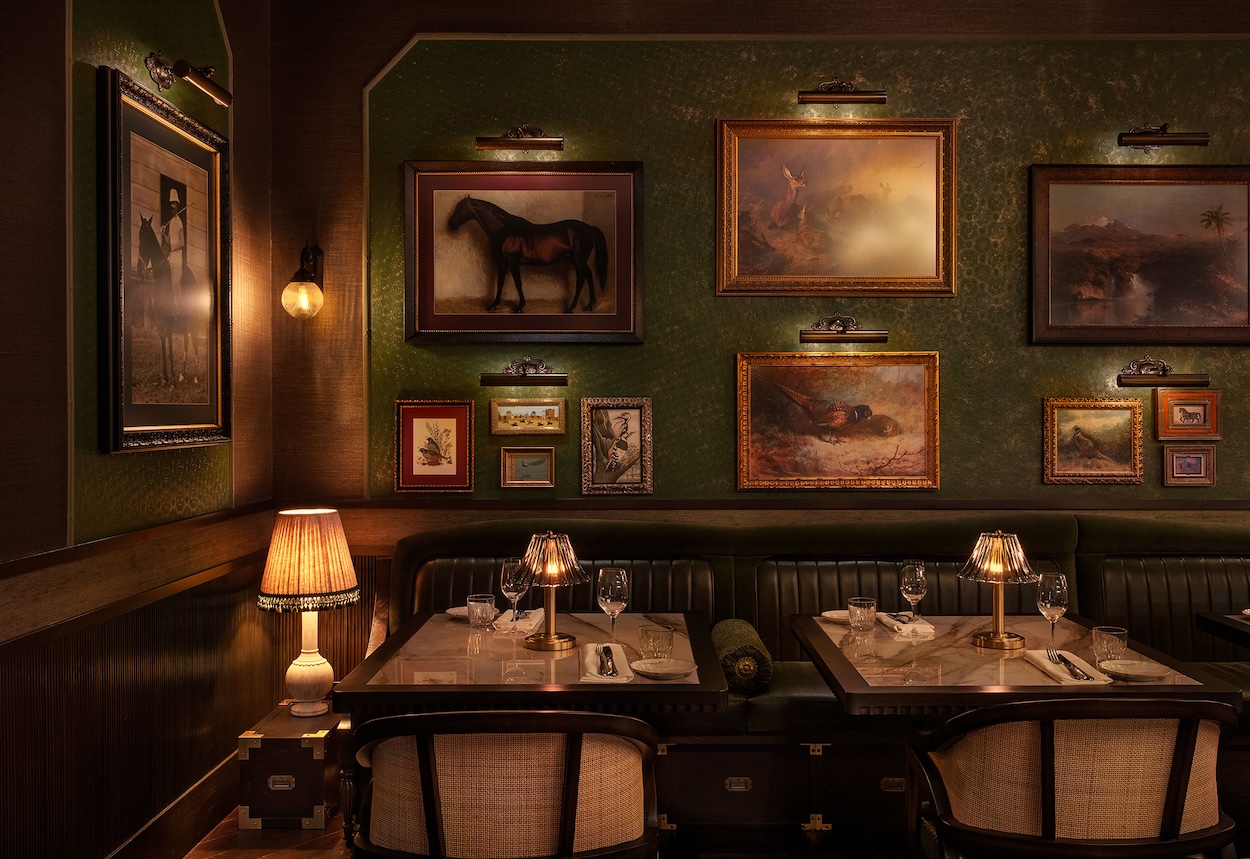
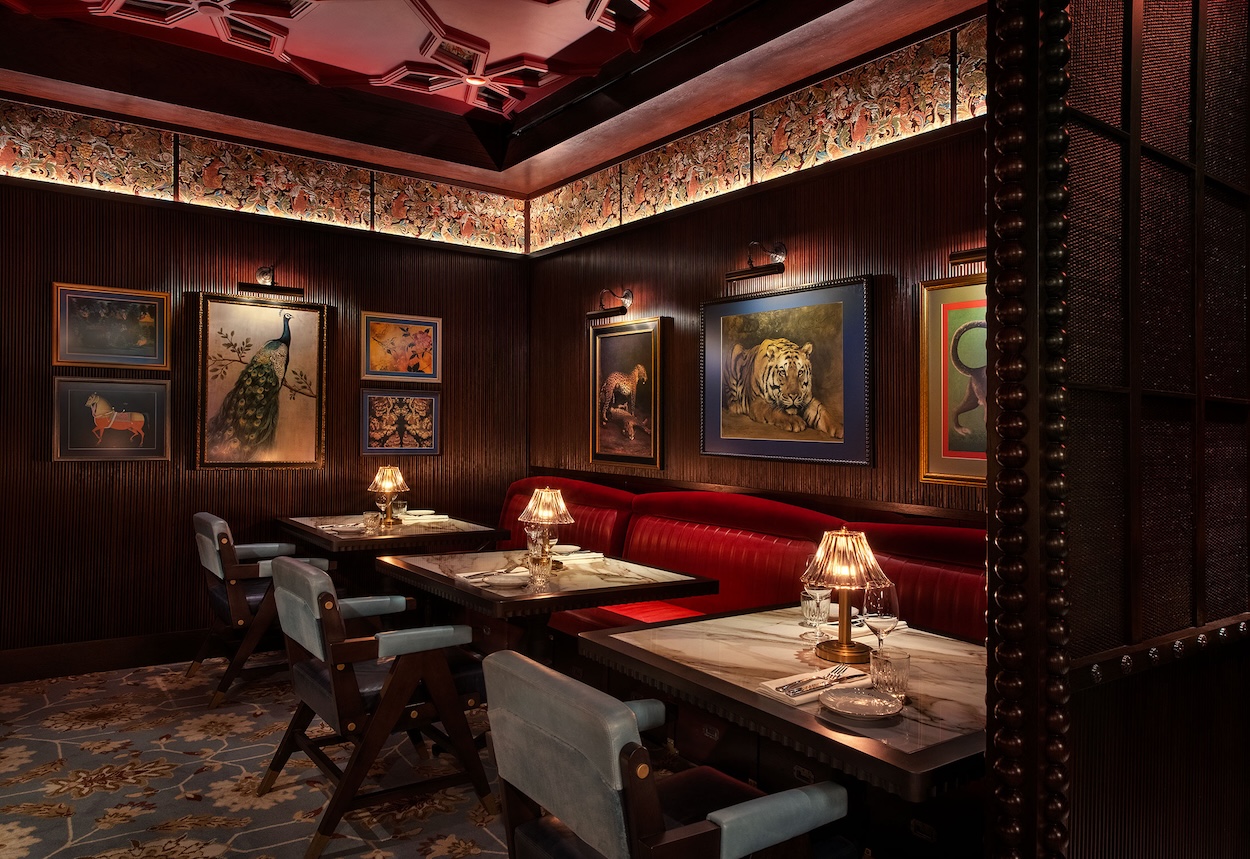
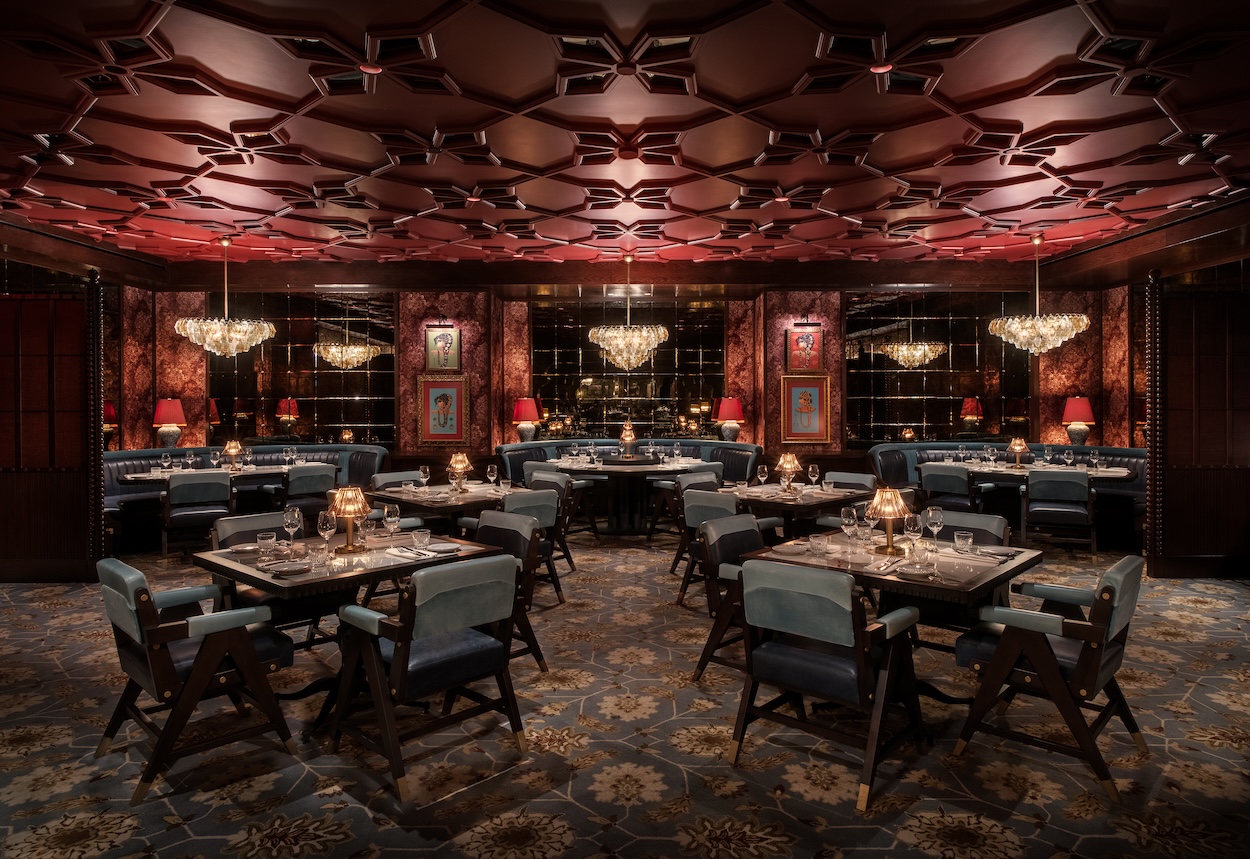
Much of the warmth North End introduced in London can be found in Las Vegas, though with amplified exuberance. From Kashmiri red chilli-colored ceilings to timber joinery, mirrored floral detailing, teal-accented paisley carpets, and Edward Wormley-inspired cane chairs, the atmosphere evokes the diverse splendors of India.
Courtesy of AVABLU…
Hosker says a lot of his responsibility became adhering to new expectations. “It was more pragmatic, with bigger group sizes,” he says. One non-negotiable, however, was maintaining Gymkhana’s sense of intimacy. “A lot of spaces in Las Vegas are large and cavernous,” he observed. “In London, people are set within the parameters of Mayfair. It’s super-tight. There are 90 covers across both floors. We really tried to push that coziness into Las Vegas.” How? They lowered the ceilings and introduced arches to break up the space.
There’s a comforting cohesion between the locations. “We didn’t want to move too far away from London because it’s a signature of the brand,” Hosker says. “I would love to reinvent each time, but I think the way that Karam wants to develop and move forward is to embellish each location more, to layer more materials, to bring more interest to the design.”
Courtesy of AVABLU…
The more lush materials also reference Indian cities. “A lot of the velvets we had chosen were based around the streetscapes that we experienced in Chandigarh and Pondicherry,” he says. “We have looked toward those colors, the sandstones of those cities’ buildings, the Paisley prints, and even the carpet design.
One particular highlight of Las Vegas is the Vault, a spiritual sibling to the basement in London. “Karam and I love the big hero booths that you can sink into and spend three or four hours with your friends,” Hosker says. “The width of the Vault allowed us to have three. We always try to work with odds, three or five, for groupings. This gives you that perfect line of symmetry to draw you through.”
Courtesy of AVABLU…
Hosker underscores how collaborative the process has been. “I would hope for appreciation of the amount of work that all the teams have to play,” he says. In addition to the amount of detail-oriented research his own studio embarked upon as a foundation, there was also the contributions of project managers, site managers, and contractors. “I think these projects can only be delivered as a team. Those project managers and site managers are kind of often unsung heroes. The collaboration that we had with those people, particularly toward the end of the project, are where the details of the design come through.”