New York City’s design galleries seem to run the global gamut, but surprisingly one region is newly represented. On February 18, House of Santal opened in an 8,000-square-foot space at Rockefeller Center, becoming the first U.S. gallery dedicated solely to contemporary South Asian design. Founder Raksha Sanikam, a designer herself, has built a roster of talent who have mostly never exhibited in the country before, with a goal to create a more robust and equitable relationship between designers and artisans in these regions.
House of Santal Brings South Asian Design to New York
By Elizabeth Fazzare February 25, 2026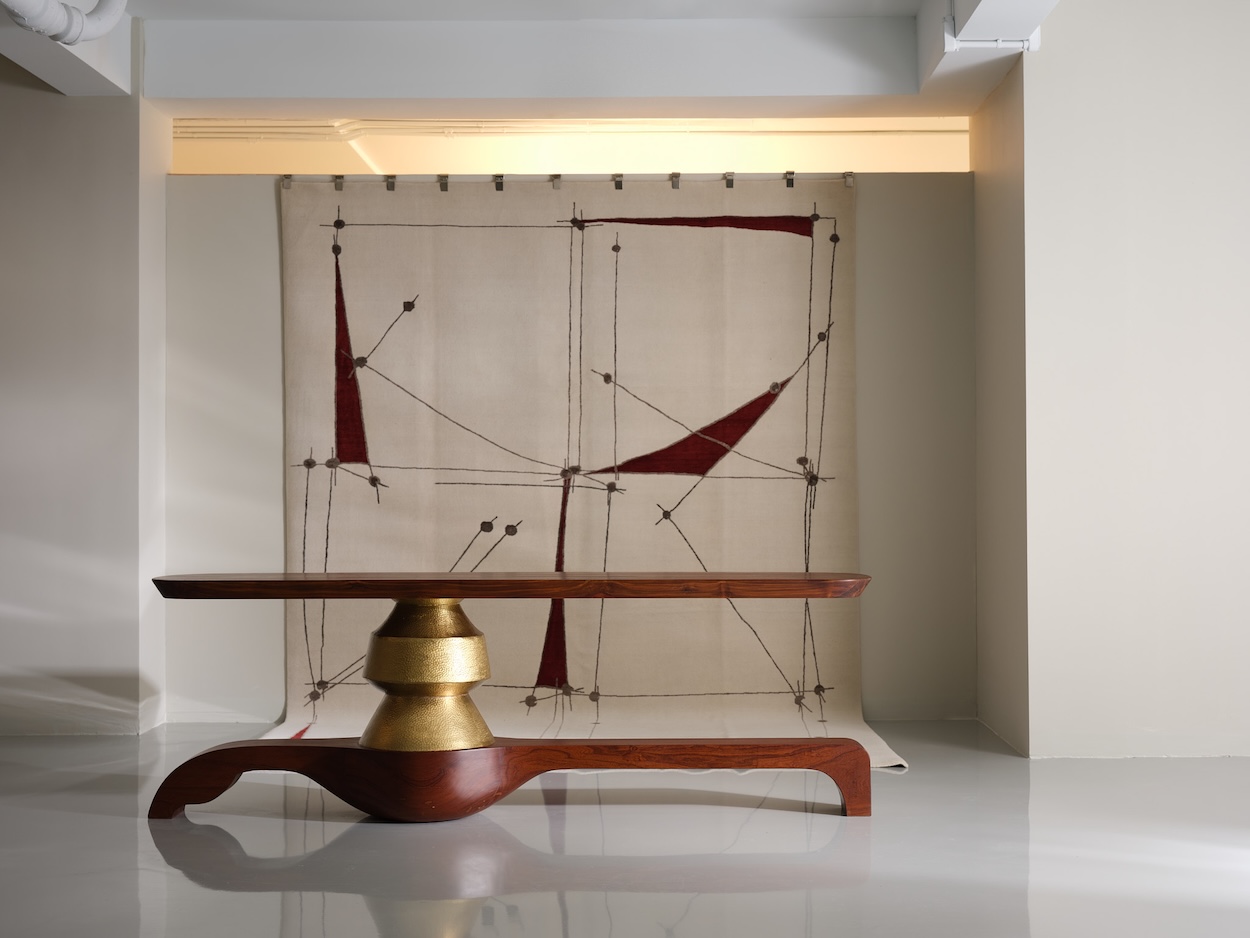
Installation view of At The Threshold of the Courtyard, House of Santal, 2026. Courtesy of the artists and House of Santal. Photo: Joe Kramm.
…
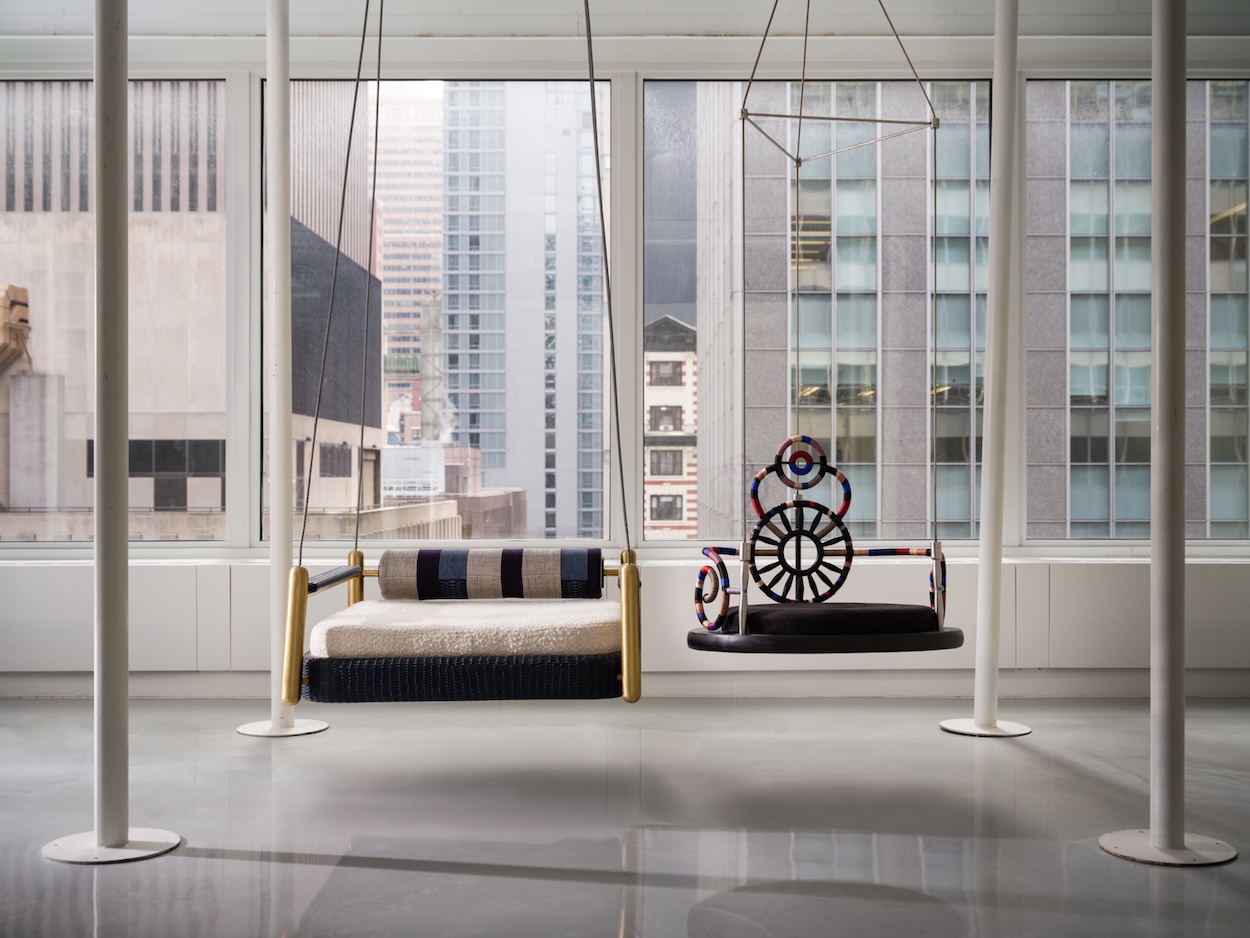
Installation view of At The Threshold of the Courtyard, House of Santal, 2026. Courtesy of the artists and House of Santal. Photo: Joe Kramm.
…
“For a long time, South Asia has been a great back-end support system for a lot of foreign designers and manufacturers: Products are white-labeled while the craftsmanship is outsourced,” explains Sanikam. Therefore, House of Santal’s inaugural exhibition, “At The Threshold of the Courtyard,” on view until May, presents work by thirteen designers from India who explore traditional crafts and credit the artisans who produce them.
“Over the last ten years, there’s been a renaissance in design in India, where legacy craftsmanship is embedded in the design process itself,” Sanikam continues. The show’s participants, AMH by Pallavi Goenka, Arisaa, Artisanal Abode, Beyond Dreams, Chacko, Design ni Dukaan, Harshita Jhamtani Designs, Karan Desai, Pieces of Desire, Rhizome, Sage Living, Studio Nyn, and The Vernacular Modern, are active in that new movement, incorporating heritage techniques like embroidery, marquetry, metalwork, and weaving into their pieces.
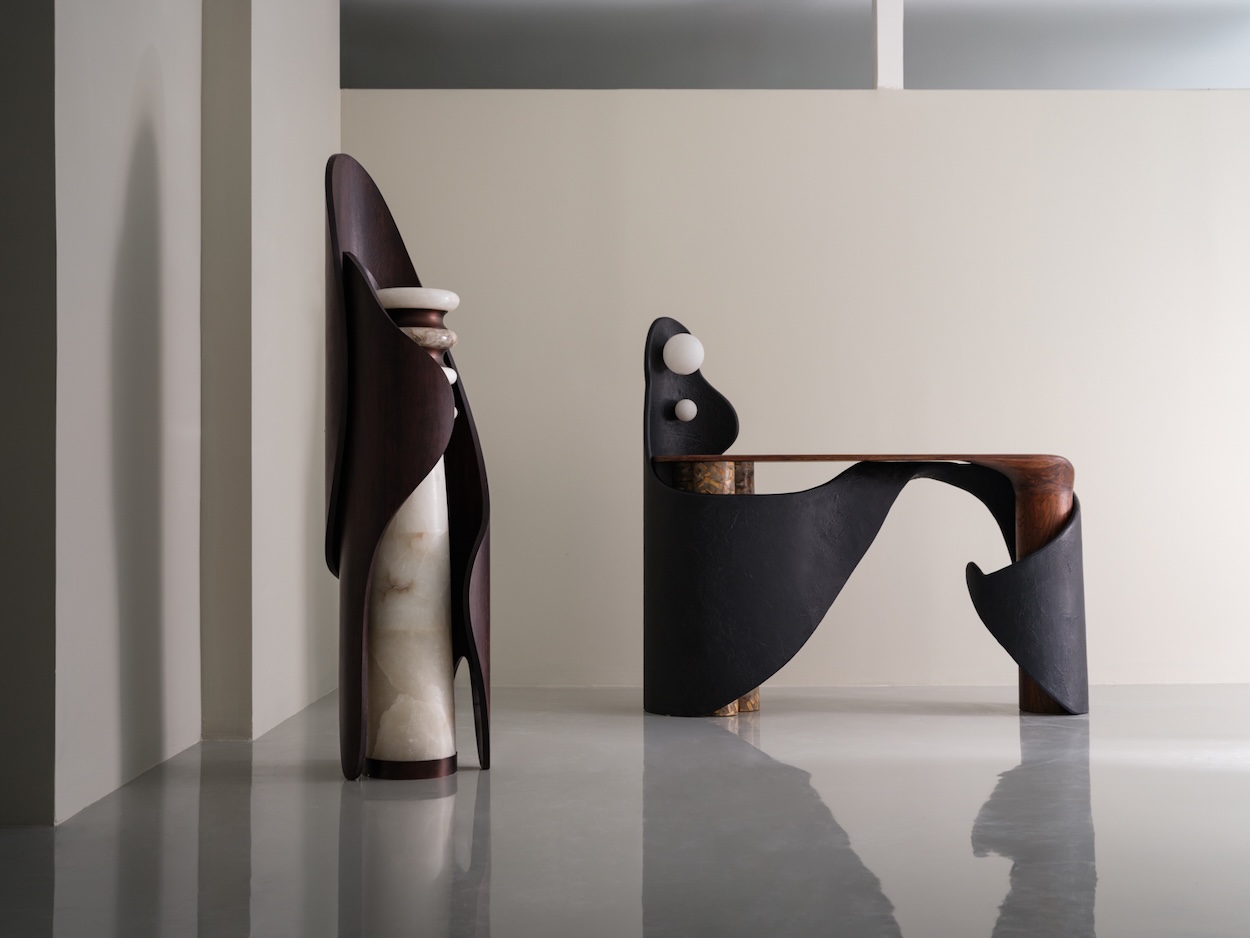
Installation view of At The Threshold of the Courtyard, House of Santal, 2026. Courtesy of the artists and House of Santal. Photo: Joe Kramm.
…
Born and raised in India, Sanikam started her career in finance, working in venture capital before she joined her family’s luxury residential construction company in Bangalore. At the latter, she began building the relationships with local furniture-makers who would eventually help her to start House of Santal, after moving to New York with her husband and matriculating from Pratt Institute’s master’s program in interior design. Embracing the business side of design “felt like a natural progression,” she says, but launching an international design gallery in a time of mercurial tariffs had its difficulties.
“We had things on the water for almost two months,” Sanikam laments. At the beginning of February, President Trump-imposed U.S. tariffs on Indian goods were lowered from 50 percent to 18 percent. “But I think we were lucky that we started at this time because we’ve factored the worst case scenario” into the business plan, she adds.
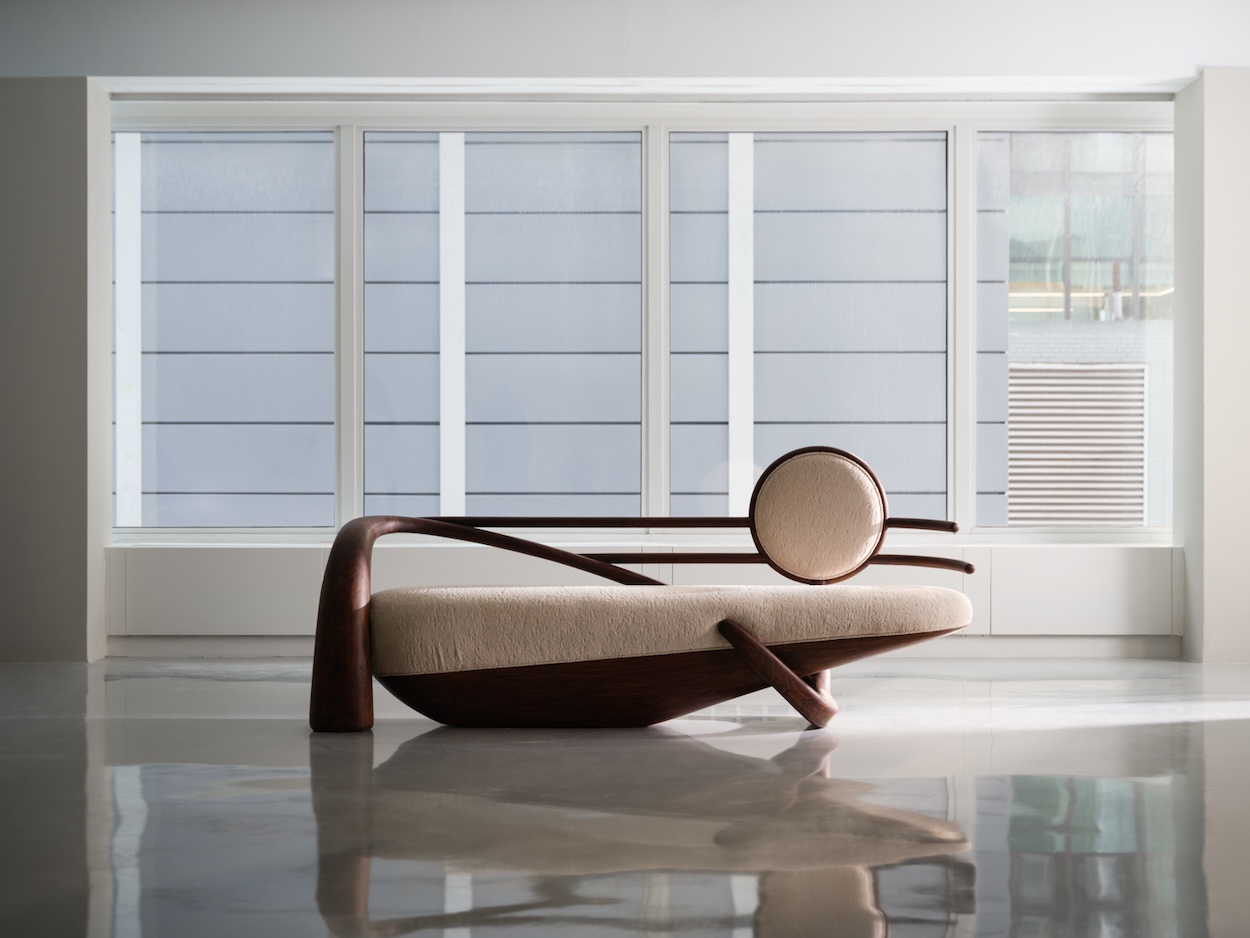
Installation view of At The Threshold of the Courtyard, House of Santal, 2026. Courtesy of the artists and House of Santal. Photo: Joe Kramm.
…
The works in the gallery’s first show will introduce the U.S. market to some of what is currently available in collectible Indian design, from a table by Sage Living made with pyrite and onyx marquetry to a swing by Design ni Dukaan made of handwoven grass mats. The next exhibition will include new, entirely bespoke works. Sanikam says that shows will typically remain on view for four to five months in the Rockefeller Center gallery, House of Santal’s home for about a year before she finds a permanent address.
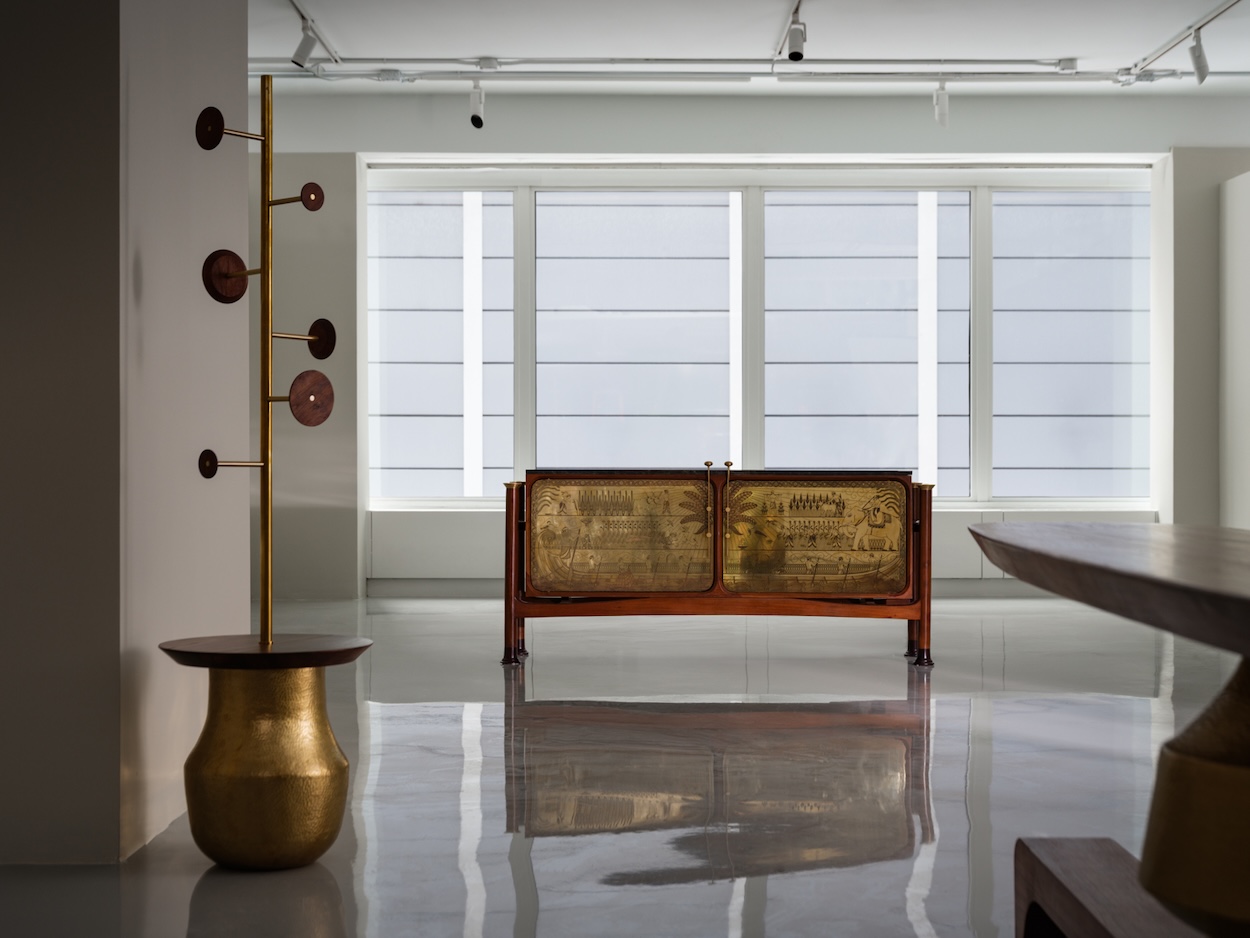
Installation view of At The Threshold of the Courtyard, House of Santal, 2026. Courtesy of the artists and House of Santal. Photo: Joe Kramm.
…
The current gallery takes its interior inspiration from traditional South Asian residential architecture, centered around a courtyard through which design vignettes can be seen. Sanikam designed the space with Smruthi Sampath, her colleague at her interiors practice, Studio Santal. Although the gallery also has an online sales platform, a brick-and-mortar space was important to Sanikam to honor the design pieces’ tactility. “In today’s world, there’s so much noise and it’s hard to discover something unless you’re intentionally looking,” she explains, noting that the physical distance between the U.S. and South Asia creates a significant barrier to in-person scouting.
“New York was just the ideal place because it’s always welcoming to new ideas,” says Sanikam. “My intention is to change the perception of Indian craft, to uplift these dying arts, and to create a dialogue between different cultures.”