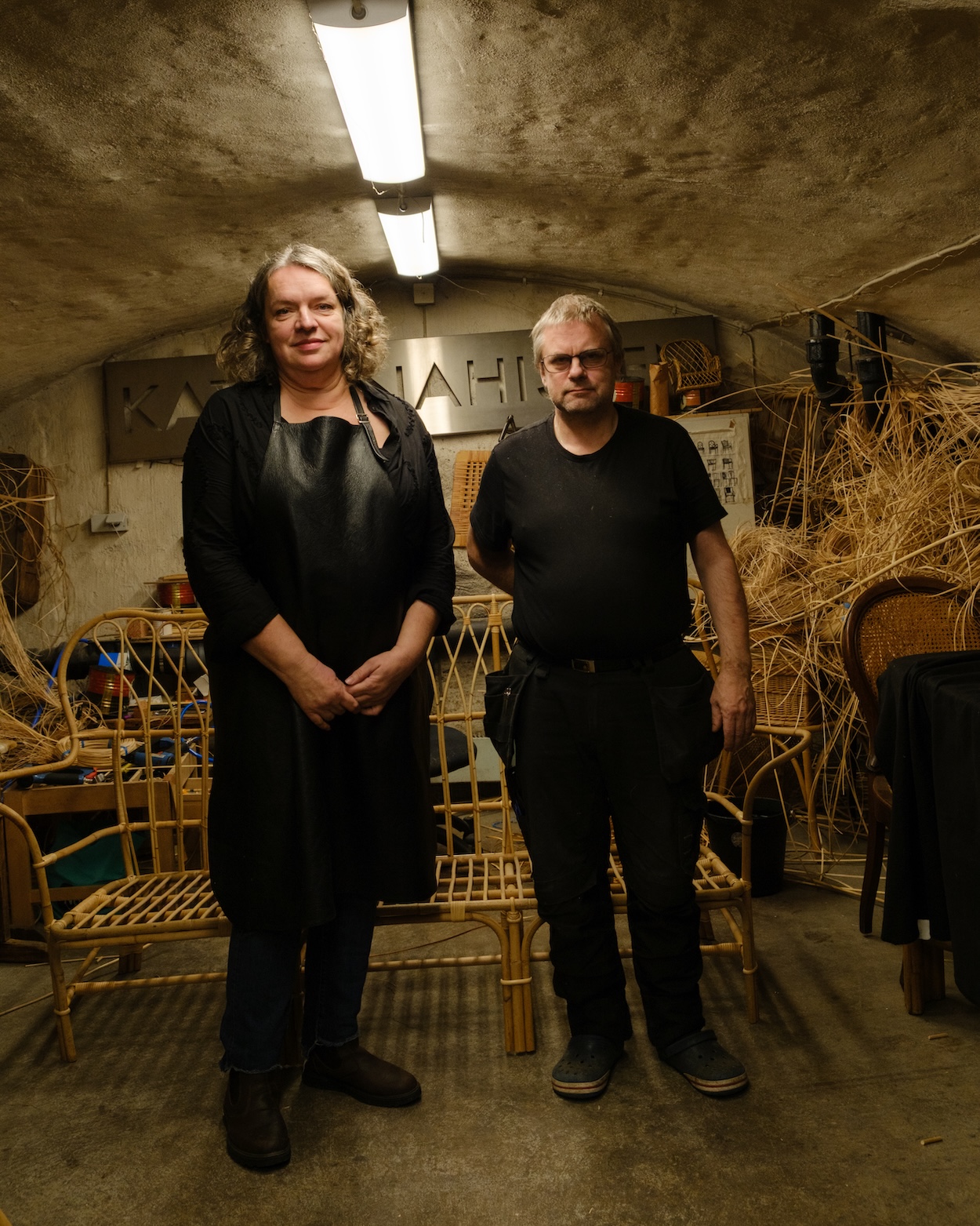
The flame that passes over the rattan is hot enough to burn blue. Hot enough to blister the cane and fill the centuries-old basement in Stockholm’s old town, Gamla Stan, with the smell of campfire. The heated rattan, cradled in a hollow metal rod, is malleable enough to bend with bare hands.
The piece will form the backbone of an elephant ear-shaped chair sold by storied Swedish interiors boutique Svenskt Tenn, a design that dates back to the 1930s. Larsson Korgmakare has manufactured its rattan and wicker furniture for over 90 years, currently in the hands of Erica Larsson and her colleague Lasse, the only remaining rattan furniture makers in Sweden. Larsson often finds herself repairing furniture made by her grandfather, using his tools and templates.
Image by Christoph Kallweit…
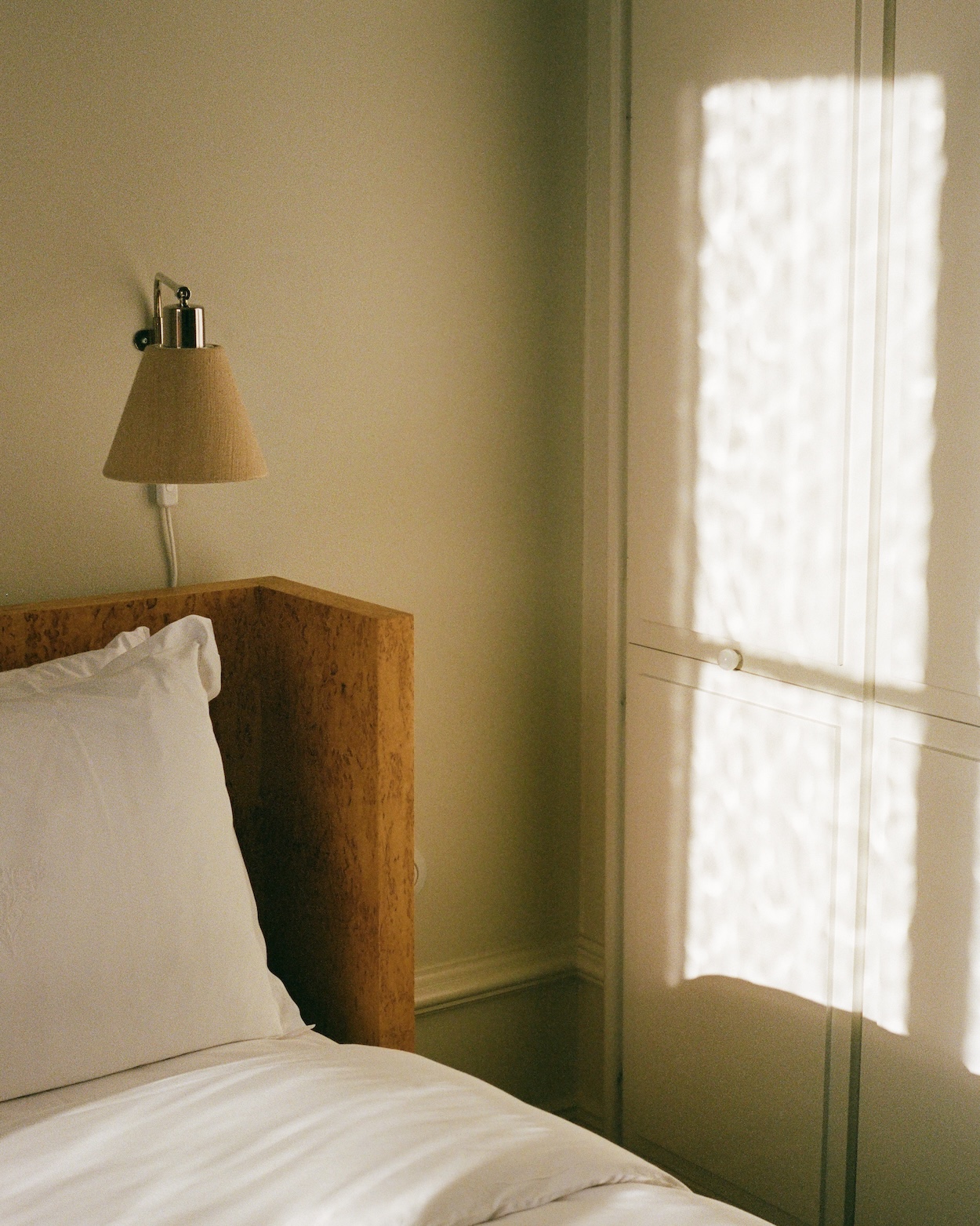
In a world ruled by the instant gratification of same-day delivery and buy-now, pay-later schemes, a certain dedication to craft prevails in Stockholm. Whether derived from virtuosity or a Nordic notion of pragmatism, the city is still home to a surplus of artisans. The devotion to the making and remaking of things isn’t relegated to basements and workshops. It pushes outward, to the spaces where people gather. One such place is the recently unveiled Stockholm Stadshotell. The 32-room hotel is brimming with heirlooms: pewter candlesticks from Svenskt Tenn; Swedish brand Tre Sekel’s custom burled birch bedframes; and traditional loom-woven napkins from legacy textile producer Insjöns Väveri, to name a few.
Even the property’s name harkens back to idyllic notions of the past. The little sister of the Victorian-era grand hotels, the concept of stadshotell (colloquially called statts) cropped up across smaller Swedish towns and cities in response to industrialization during the mid-19th century. Notably, Stockholm never had a statt of its own, until now. “It’s a gathering place,” says Fredrik Carlström, creative director and one of the hotel’s five founding partners. “Your first date, your grandmother’s 70th, your Friday night out—you celebrate at statt.”
Image by Christoph Kallweit…
This communal ethos guides Carlström and his partners, restaurateurs Johan Agrell, Dan Källström, and Jon Lacotte (owners of beloved haunts Babette, Café Nizza, and Schmaltz) and hospitality vet Ian Nicholson. Their quest: to create a living room for the city, a vestige of the 20th-century social democratic idea of Folkhemmet (“the people’s home”), a philosophy of collectivism gaining traction in the US.
“I compare it to a train station,” says Lacotte. It’s an apt analogy; locals mill about the downstairs Bistro, celebrating birthdays over berry-laden French toast, or host brand events upstairs. Though at this depot, one might catch a glimpse of Stellan Skarsgård, Lykke Li, and other A-list Swedes waiting for their train.
Image by Christoph Kallweit…
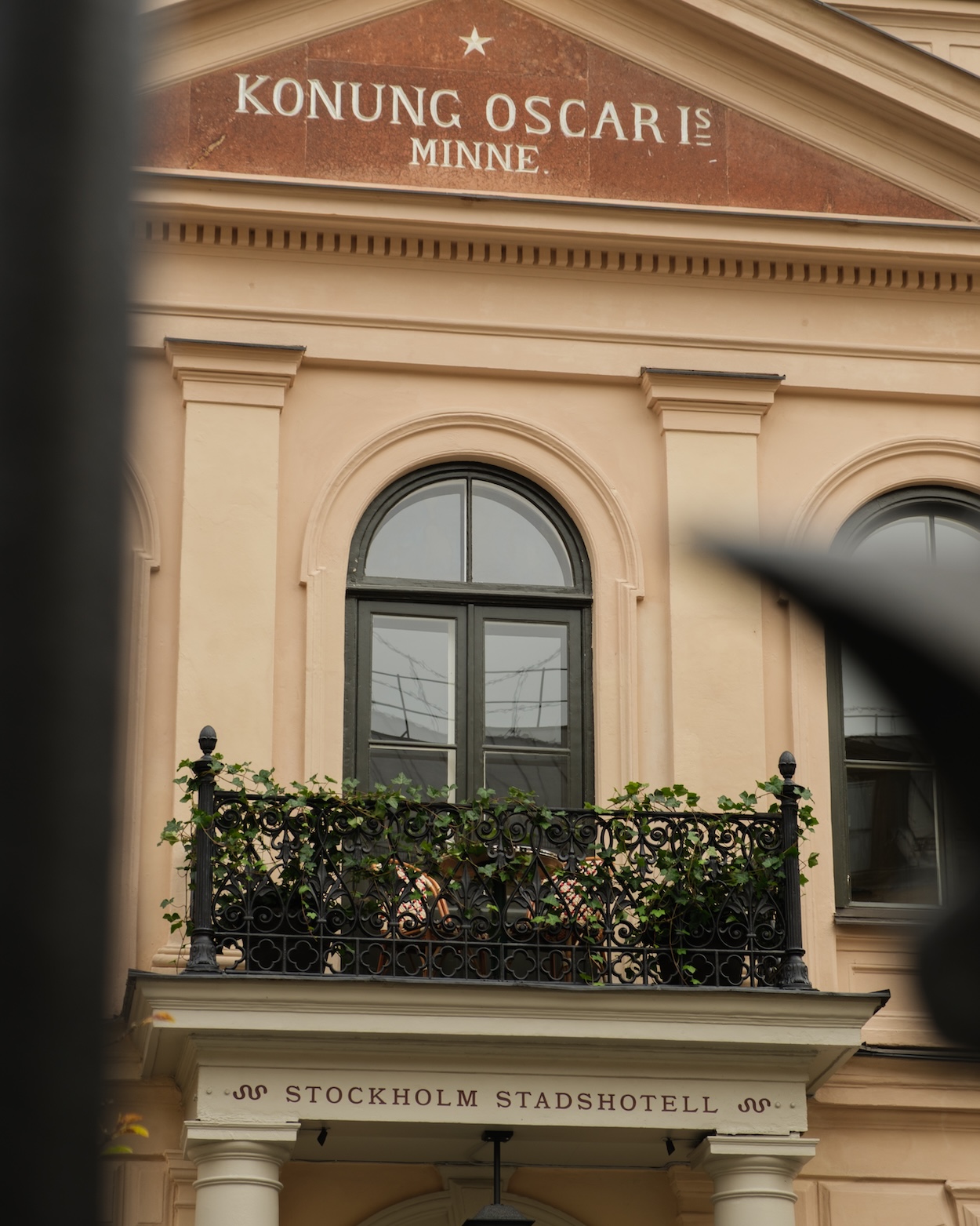
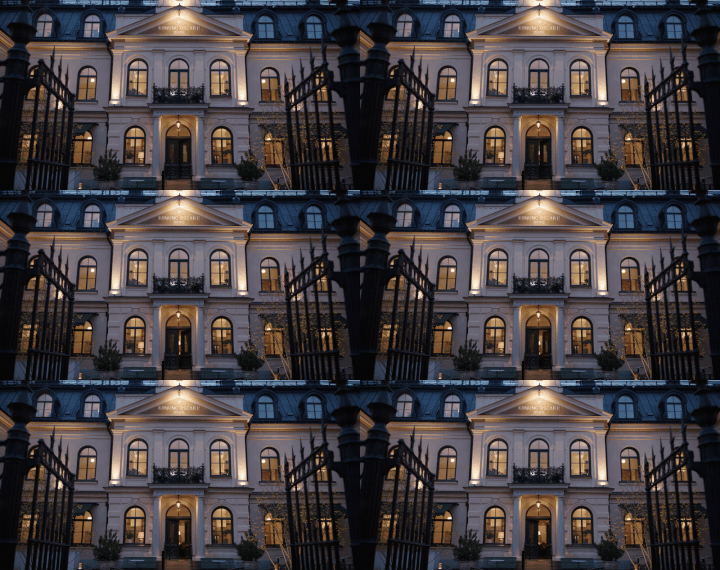
Built on the southern island of Södermalm in the 1870s by Queen Josefina, the three-story building served as a home for upper-class widows, reportedly to rebuke her late husband, King Oscar I, and his philandering ways. (The original gilded tympanum still stands, dedicated to his memory.) Next came a school for therapists, followed by a brief stint under the Department of Transportation, and then the historic structure sat vacant for 16 years.
“People from the area feel a lot of ownership over this house,” says Lacotte, a Söder local. “They’ll come in to tell us their own stories about the place.” Formerly a working-class district with a strong bohemian culture, Södermalm underwent rapid gentrification over the last 40 years. As with any post-hipster area, comparisons to Brooklyn abound, and longtime denizens of the former artist enclave retain a fierce loyalty.
Video courtesy of Martin Jenefeldt, Robin Trolin, Gustav Sandegård, and Marcus Fältmark…
The team approached the building with the same care applied to its bed linens (designed by bespoke studio Liv Casas) and hand soap (a collaboration with Stockholm-based perfumer Stora Skuggan). The hotel’s Instagram dutifully recounted the restoration, down to the individual laborers sawing and sanding the place into shape. “We’re caretakers of this institution,” Lacotte says.
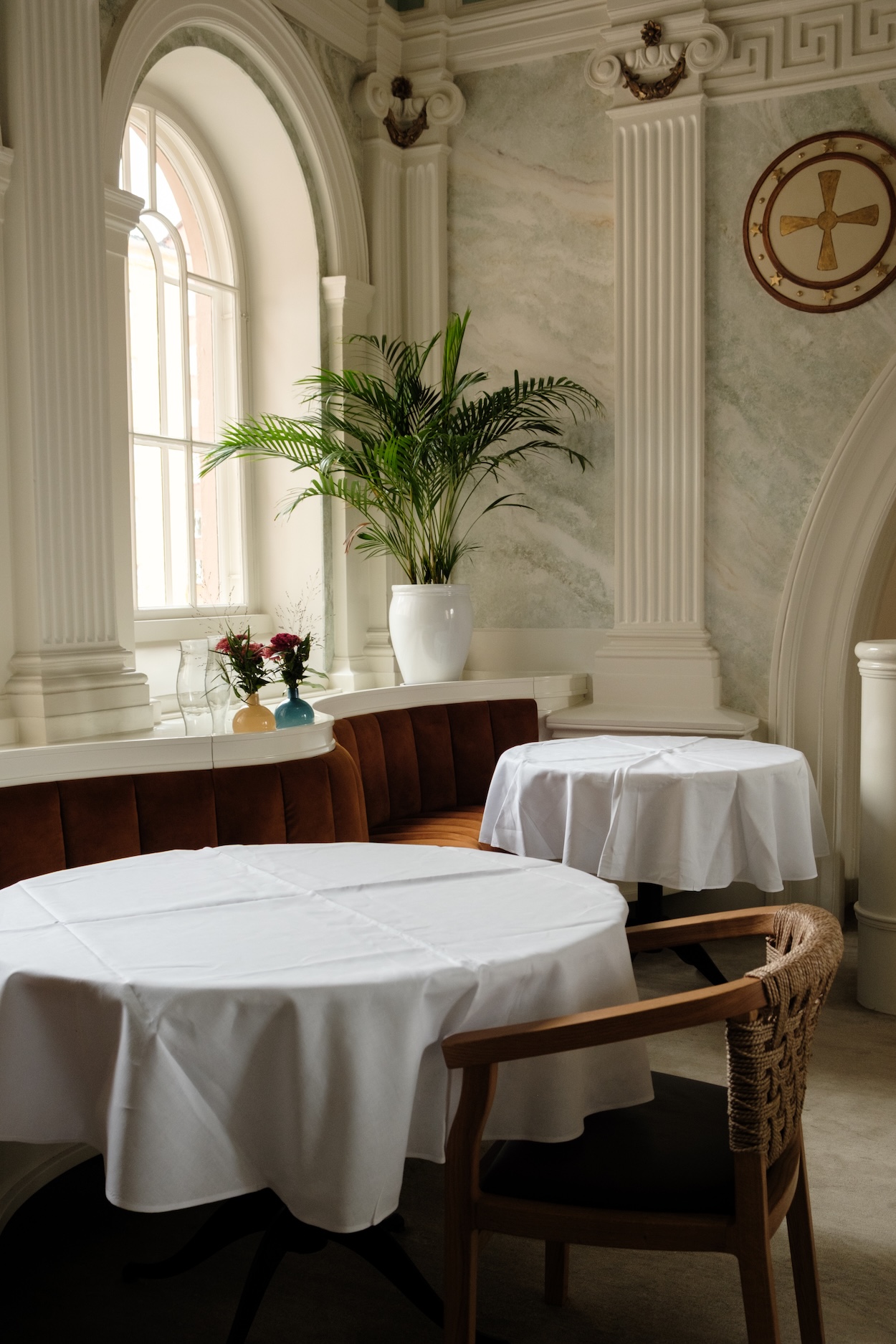
Stockholm Stadshotell doesn’t just build on the past; it recontextualizes it. Drawing heavily on the Arts & Crafts movement of the 1870s and Swedish Grace, an evolution of 1920s National Romanticism, the hotel is part monastery, part palazzo. The elevator, normally relegated to liminal space, becomes a showroom for Swedish artist Klara Knutsson’s meticulous intarsia. A pre-Roman motif, the intricate wooden inlay technique is used to depict scenes of Stockholm, from looming cranes to a cheeky depiction of Babette. A handcarved pew-like bench in the Bistro nods to Nordic designer Gunnar Asplund’s 1940 Faith Chapel, on the grounds of the UNESCO-designated Woodland Cemetery. Even the hotel signage, a finishing touch from local design agency Sthlm Signs, was done using traditional mahl sticks, a 16th-century tool to steady the hand favored by Rembrandt and Vermeer.
Image by Christoph Kallweit…
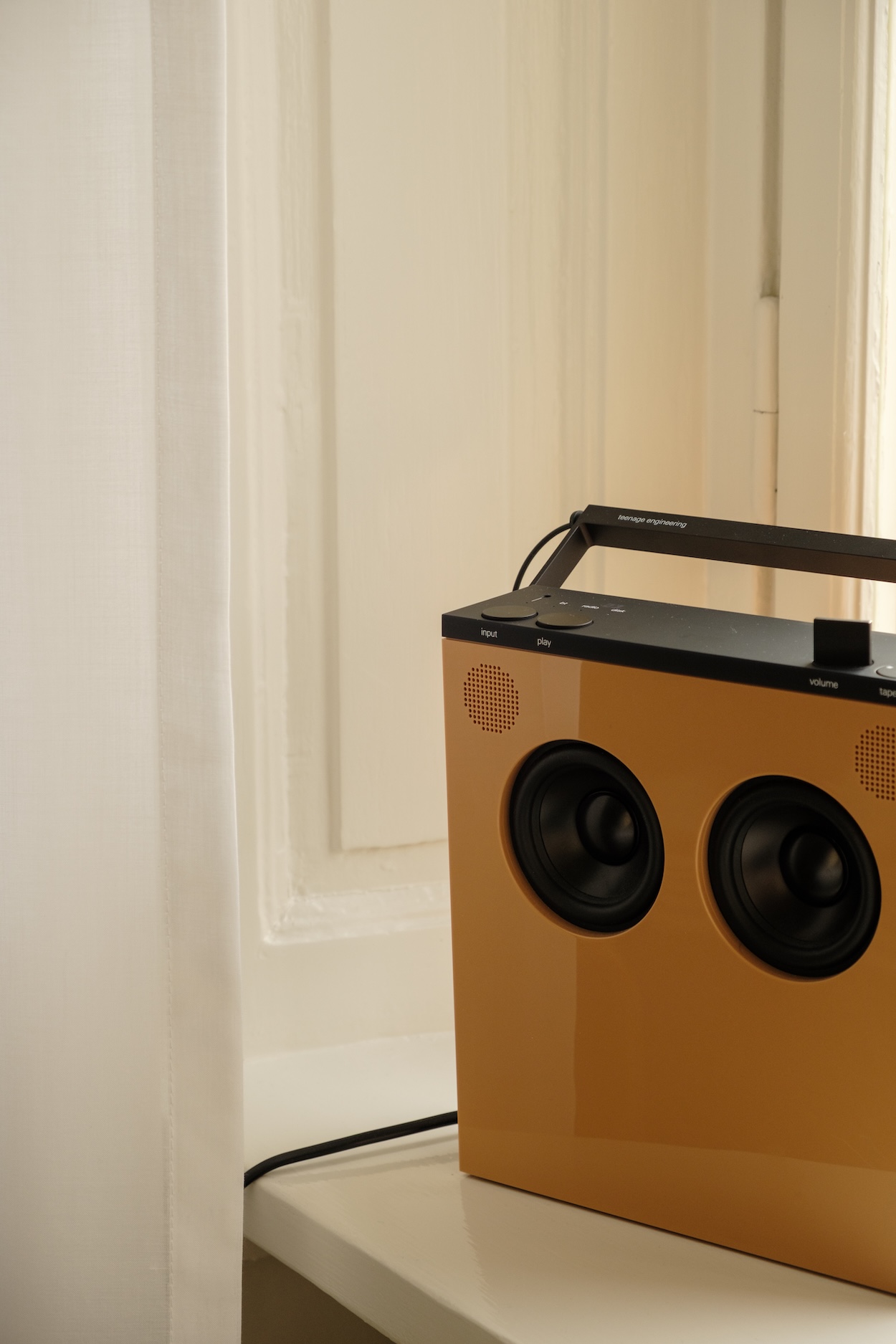
There are contemporary flourishes. A dark wood bar that sprouts from the floors, as if grown directly from the limestone. A Wes Anderson-inspired entryway, where the arched doorway to the Bistro is flanked by symmetrical hostess stands. (The team played with hiring twins to give the bit its full due, but decided against it.) Golden yellow speakers from audiophile-favorite Teenage Engineering rest on the windowsills of guest rooms. The overall effect is one of considered balance, eschewing modern minimalism as deftly as it avoids falling into pastiche.
Video courtesy of Martin Jenefeldt, Robin Trolin, Gustav Sandegård, and Marcus Fältmark…
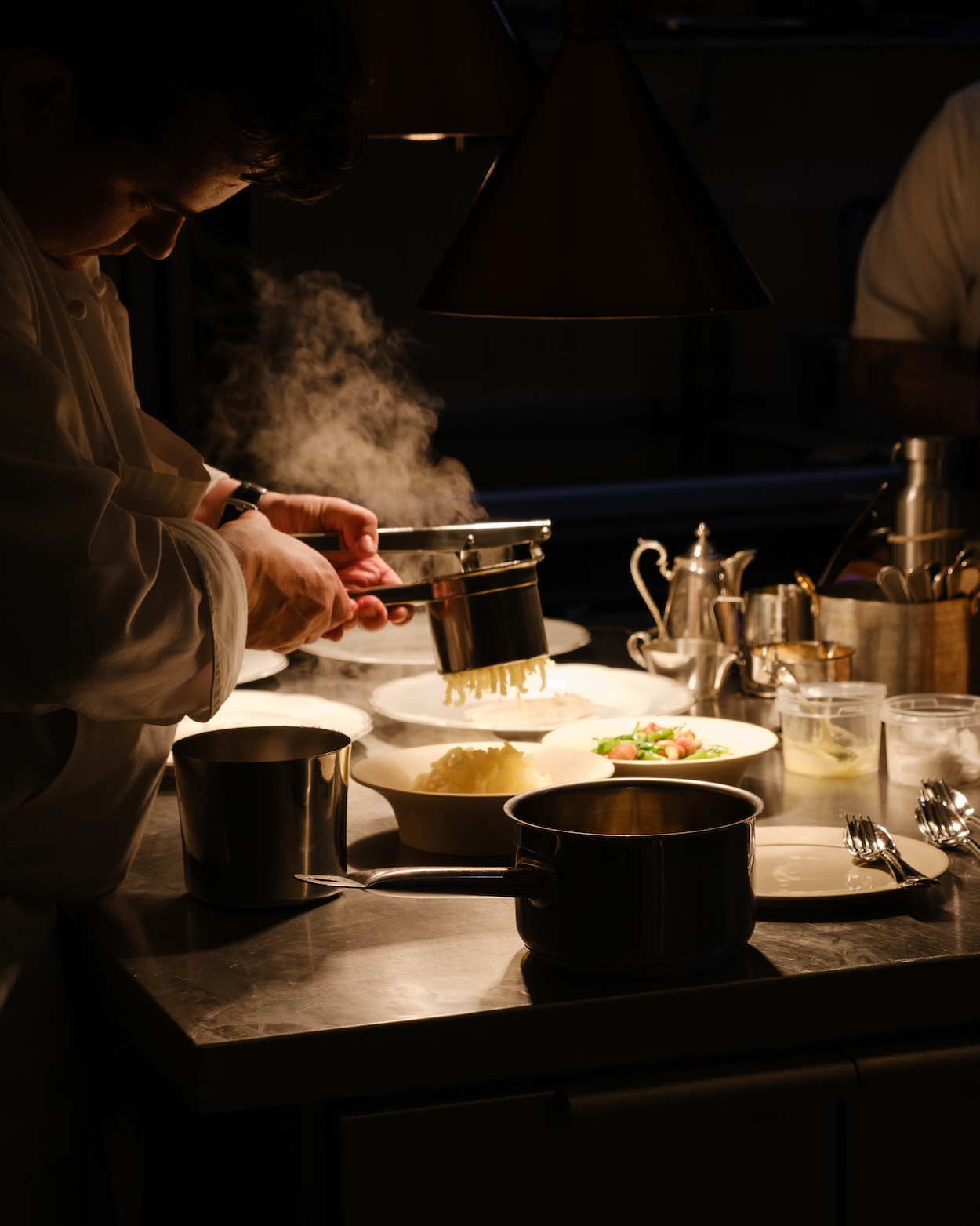
That same calibrated tension carries upstairs to Matsalen (Swedish for “dining room”), housed in a restored 150-year-old chapel. Under Executive Chef Olle Cellton (Chez Panisse, Zuni Café), the menu rebuffs the stuffiness associated with haute cuisine in favor of clarity. A voracious cookbook collector, Cellton serves as a sort of recipe call center, synthesizing meticulously-sourced ingredients into unpretentious plates with one singular goal: tasting good.
Image by Christoph Kallweit…
It’s not a novel idea, but one that often takes a back burner to generating dishes that shine on screens. Perched on one of the serpentine banquettes lining the room, guests can opt for the tight six-course tasting menu or order à la carte. “One problem with fine dining is that it’s often too much,” says Matsalen’s Head Chef Kuba Kołtowski. “So many ingredients, so many stories. You’re barely able to have a conversation. Here, you can eat the whole tasting menu, and I don’t have to say a single word. You’ll still enjoy it.”
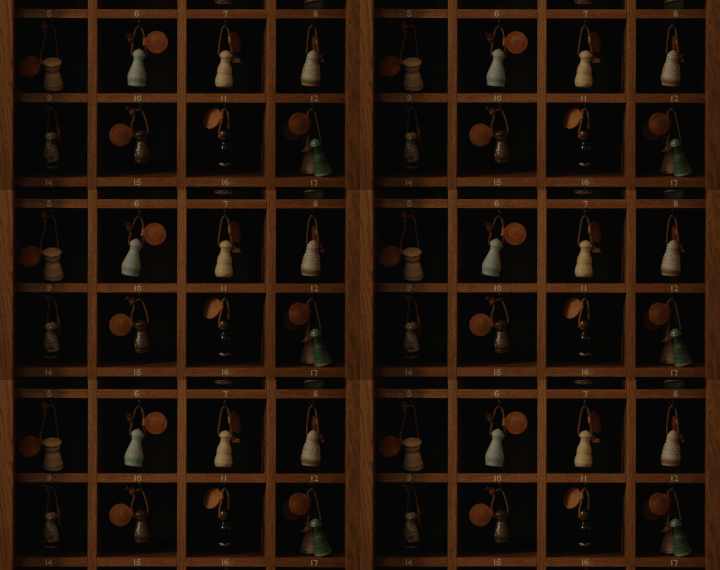
Regardless of their choice, every meal begins with a pair of savory eclairs served in a matryoshka-inspired ceramic vessel. At times, it’s grilled aubergine with pecorino glaze or black trumpet mushroom and dark chocolate. “We’re looking both forward and backward,” says Kołtowski.
Image by Christoph Kallweit…
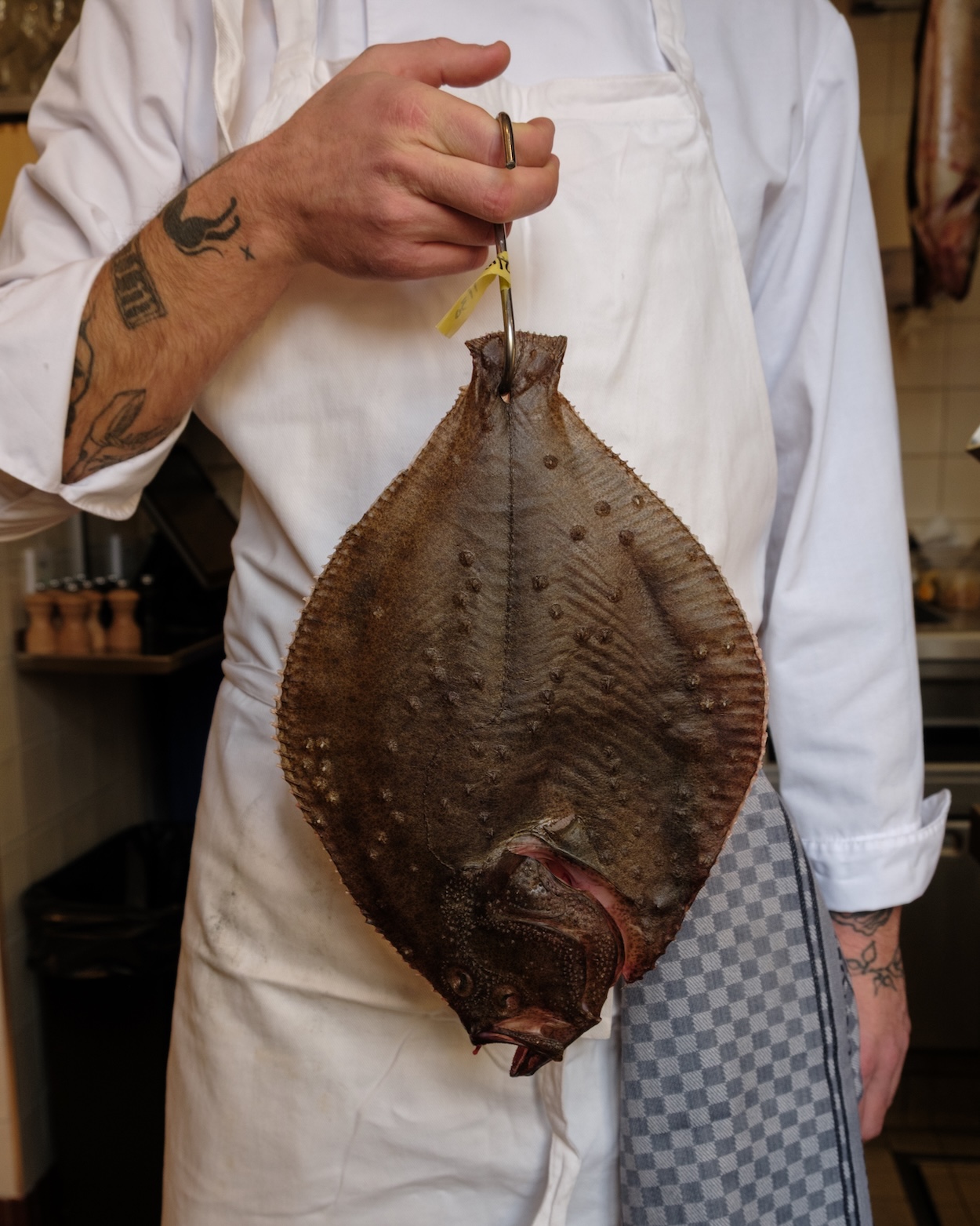
Brown crab from the Kattegat Strait, a sea lane connecting the Baltic and North seas, anchors a deconstructed 1970s crab salad, served with Spanish avocado slices and topped with slivers of puntarelle and Junkö vendace roe. The French Nouvelle movement informs Kołtowski’s saumon à l’oseille. A ‘60s-era dish of hand-dived Dundrum scallops, delicately seared on one side, resting in a glossy sorrel sauce. The seafood theme continues with a seven-day dry-aged bonito in a three-pepper sauce (green for acidity, rose for perfume, late-harvest black for sweetness). Glints of light catch the buttery contours of the sculptural pithivier, an 18th-century relic of potatoes au gratin enclosed in laminated puff pastry, itself a symbol of the kitchen’s technical wizardry and old-school charm.
The team calls forth other ghosts. Namely, the existence of friction, practically a dirty word in our present culture, hellbent on removing all forms of resistance. “I don’t believe in making things too easy for guests,” says Lacotte. “Out of friction comes innovation.” His methods include spacing bitter dishes within long tasting menus to serve as mental checkpoints or dodging straightforward language (rather than a ‘Sweet’ section, the French toast is filed under ‘Cookies’). Retrograde in its sensibility, every detail at Stadshotell speaks to a deep care for how things are made, how they feel, how guests interact with them.
Image by Christoph Kallweit…
The finer details are no exception. The founders debated barstools, with Agrell backing comfort. “Conceptually, we should have American barstools,” he says. (A phone call from Agrell also kick-started the re-release of Stolab’s Småland chair, now dubbed the Bistro Chair for its placement in the hotel.) The team wrestled with the sourcing requirements and oxidation considerations of serving fresh green juice before landing on a less demanding red juice. The housekeeping department even tested out ten varieties of toilet paper.
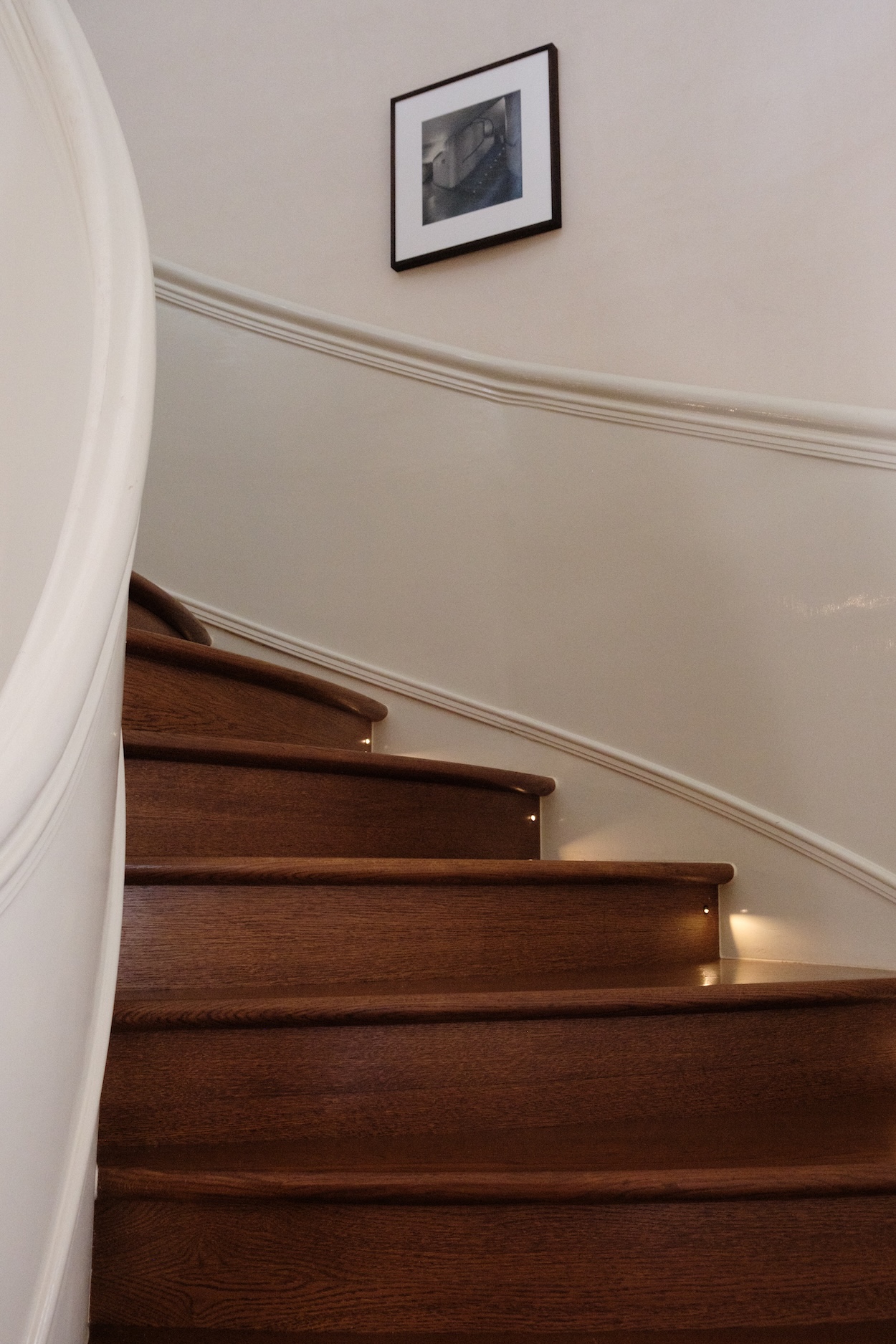
Less than a month before the doors opened, the alabaster walls of the hotel were still empty, but the team didn’t have to wander far to fill them. A meeting at nearby Gallery Steinsland Berliner with director Jeannette Steinsland led to the subterranean studio of photographer Gunnar Smoliansky. The Söder local has a reputation as a flâneur, dutifully capturing and cataloging street life in Stockholm. “Swedes are interested in doing things well,” says Steinsland. “They want things to be functional, high-quality. Otherwise, why do it at all?”
Image by Christoph Kallweit…
Carlström recalls going into a flow state, selecting 180 photographs for the property, “There’s so much humanity and humor in his photographs. It just made sense.” He took them to the framer Smoliansky used in his lifetime, and had them framed in his preferred style.
This sense of reverence echoes across Stockholm, but it is not without challenge.
Outside forces—venture capital, retail behemoths, market orientation—have come calling, and the Venice of the North finds itself in the eye of the storm. There are only two rattan furniture makers left in the country, and no apprentices to fill their shoes. No further prints of Smoliansky’s work will be made; only the boxes in his studio remain. “We’re at a fork in the road,” says Carlström, leafing through one of Smoliansky’s photo books. “Are we going to become the U.S. and privatize everything, or are we going back to our roots?” Stockholm Statshotell’s position on the matter is clear.