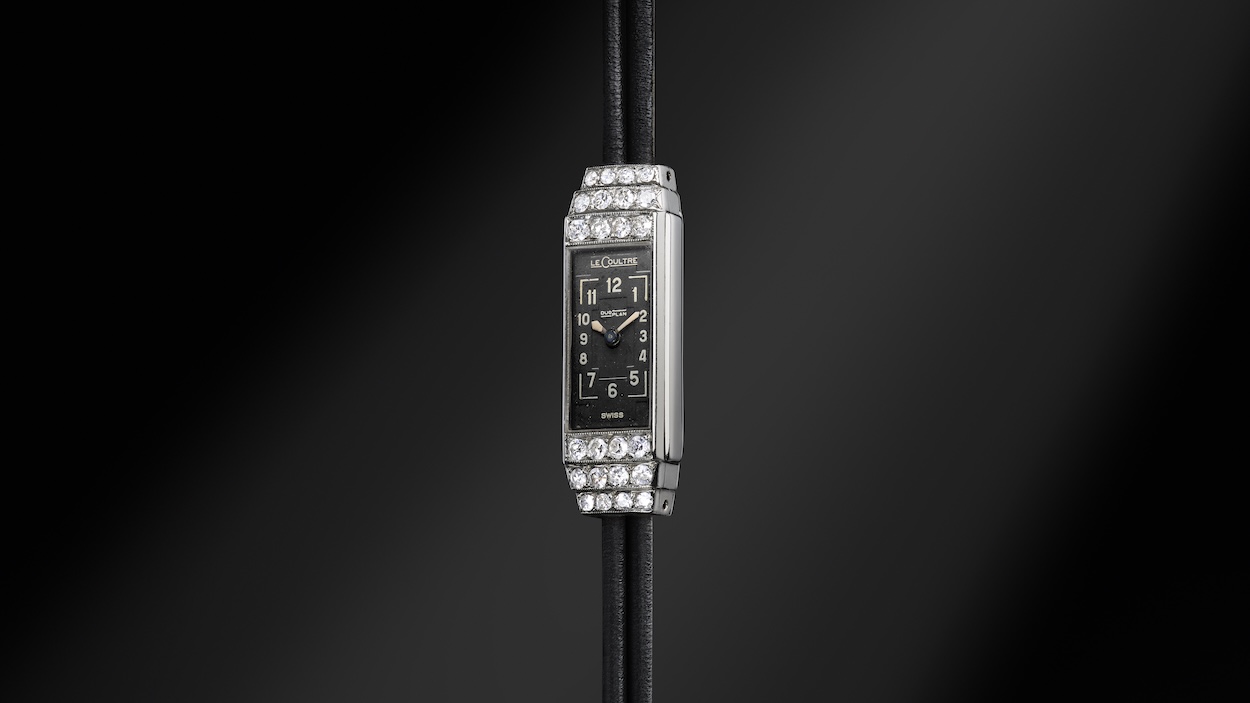
In a fitting tribute to horological ingenuity and the city that helped shape its legacy, Jaeger-LeCoultre unveiled the fourth edition of “The Collectibles” at their Place Vendôme boutique in Paris. This exhibition spotlights a capsule of ten rare timepieces created between the 1920s and 1970s, anchored by the maison’s Duoplan and Calibre 101 movements (mechanical components that power the pieces). These ten vintage pieces have been restored by Jaeger-LeCoultre—and are available for purchase. The museum-worthy ensemble showcases a revolutionary feat of miniaturized engineering that reshaped women’s watch design for generations.
First patented in 1925, the Duoplan solved a problem that had long confounded watchmakers: how to create a small-scale movement that didn’t sacrifice precision or durability. Its two-level construction allowed for larger components to be arranged vertically, resulting in slimmer, more reliable mechanisms—an architectural shift that opened new creative frontiers in case design. What followed was a masterful era of women’s watches in miniature, plus an eclectic mix of Art Deco cocktail watches and sculptural silhouettes.
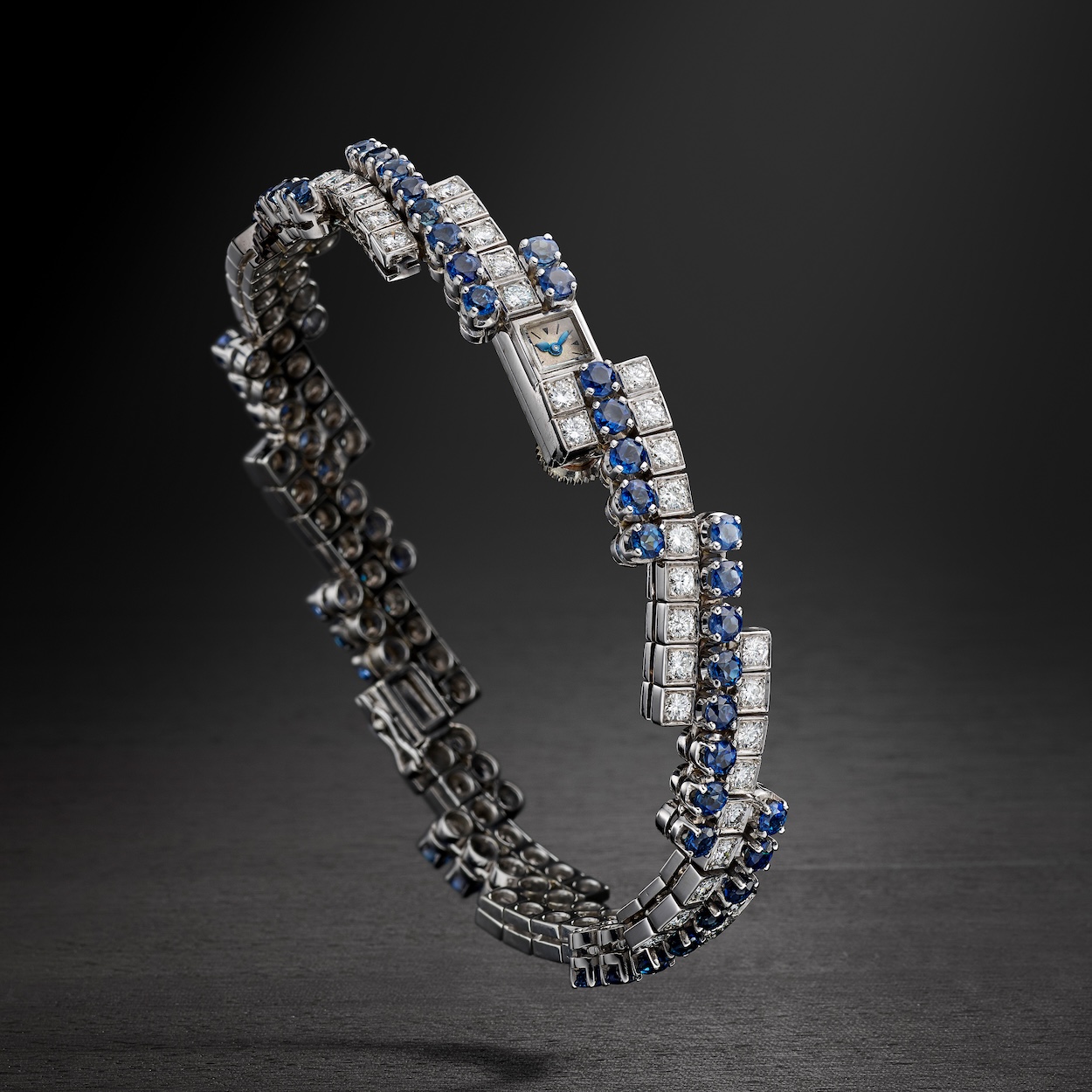
The capsule includes a rare 1950 Duoplan Tubogas watch, with a bangle defined by horizontal and vertical ribbing. In contrast, the 1941 Duoplan ‘Chaine’ features a broad, articulated bracelet, echoing the sleek utility of that era’s industrial design. In a more couture expression of Jaeger-LeCoultre’s watchmaking prowess, the striking Calibre 101 ‘Riviere’ high jewelry watch from 1960 is set into an undulating white gold cuff of diamonds and sapphires, housing the maison’s smallest mechanical movement ever made—one that is still in production today.
A duet of chunky driver watches introduces a striking contrast to the brand’s famed Reverso silhouette. The 1939 Duoplan Tuile presents a design anomaly: its rectangular case and dial are rotated 90 degrees, set horizontally across the wrist and capped with a convex crystal reminiscent of Mediterranean roof tiles. In a similarly unconventional look, the 1930s Duoplan Driver watch in steel features a black dial with white numerals and an angled face engineered for easy visibility behind the wheel, an elegant solution to the needs of early motorists.
Each timepiece is on display and can be acquired through the end of July, with a freshly matched leather strap, a copy of “The Collectibles” coffee table book, and, for select pieces, the original box and papers.