For nearly two decades, Scott Mescudi has held a place in contemporary culture as Kid Cudi, a recording artist whose work recalibrated the emotional register of hip-hop. In parallel, Mescudi has cultivated a career in film, taking on diverse acting roles while stepping behind the camera to direct his own projects. Now, in the latest evolution of his creative arc, Mescudi is introducing himself under the moniker of Scotty Ramon, a painter, in a personal revival of a childhood instinct.
Kid Cudi’s First Solo Art Exhibition Sets a New Creative Standard
In Paris, the trailblazing rapper steps into a new era as Scotty Ramon with “Echoes of the Past” at Ruttkowski;68
BY TAYLOR STODDARD February 18, 2026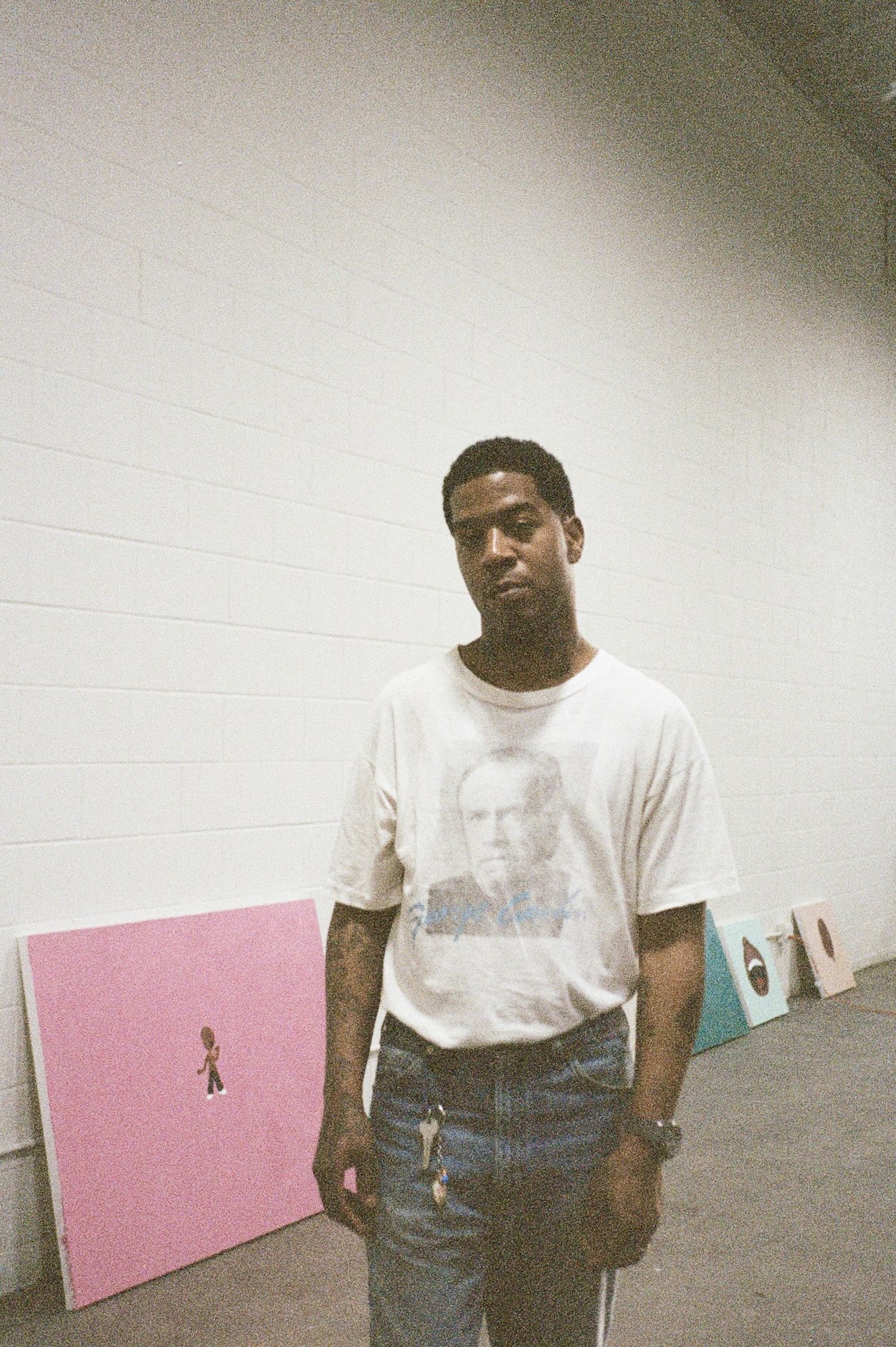
Portrait of Scotty Ramon, credit Nils Müller
…
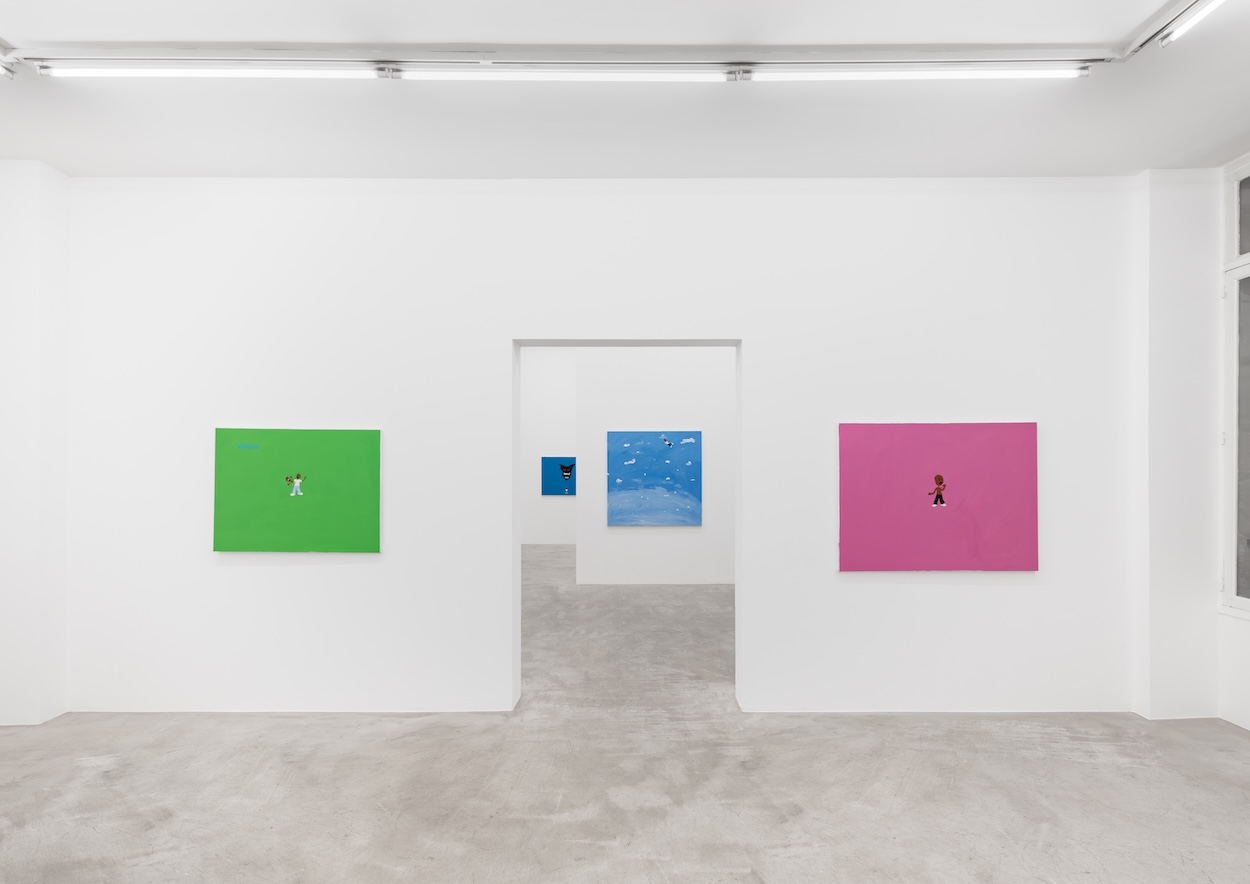
Installation exhibition image credit Thibault Jorge (Ruttkowski;68)
…
Surface recently met Scotty Ramon during Miami Art Week at an intimate screening of his documentary, Echoes of the Past: A Portrait of Scotty Ramon. Directed by Joshua Charow, the film offered an early glimpse into Mescudi’s journey toward Ramon, with the artist banking solitary hours in a vast warehouse studio. Seeing a luminary so often associated with scale and spectacle absent of stage lights or crowds reveals a new stripped-back persona that pulled viewers closer.
Installation exhibition image credit Thibault Jorge (Ruttkowski;68)
…
Following the screening—over tequila and a lingering pack of Marlboros—our conversation stretched into dinner as he spoke about the gravity of this artistic shift and the personal stakes behind stepping into a new medium. “I think my imagination was always robust,” Ramon says, tracing it back to long periods of solitude growing up as the youngest of four in Cleveland. Drawing, dreaming up fantastical worlds, and entertaining himself became a discipline. “A lot of people lose that inspiration when they become adults,” he notes. “But I’ve been able to preserve that side of my mind.”
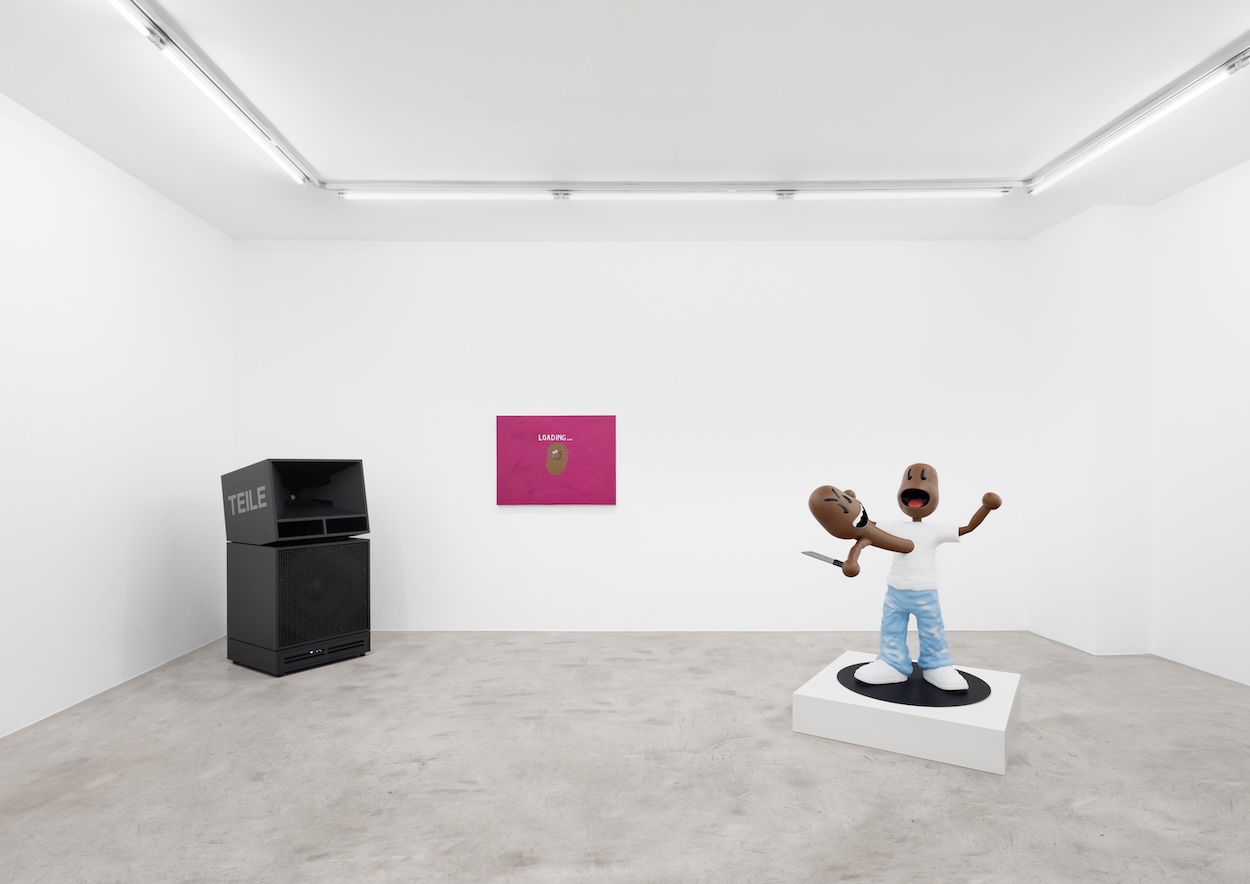
Installation exhibition image credit Thibault Jorge (Ruttkowski;68)
…
Ramon has spoken openly about wanting to be a cartoonist as a child, and in some of his earliest doodles, traces of escapism and psychological refuge are clear—little astronauts poised for lift-off, jetpacks strapped on as if ready to outpace gravity. Kid Cudi the rapper has long been associated with cosmic, dreamy, and nostalgic visuals since his debut studio album Man on the Moon. These themes come full circle when you know him as a painter. “I feel like the freedom, that’s the through line between the music and the painting,” he says. “There’s no restrictions, and when I paint, I feel like a kid again.”
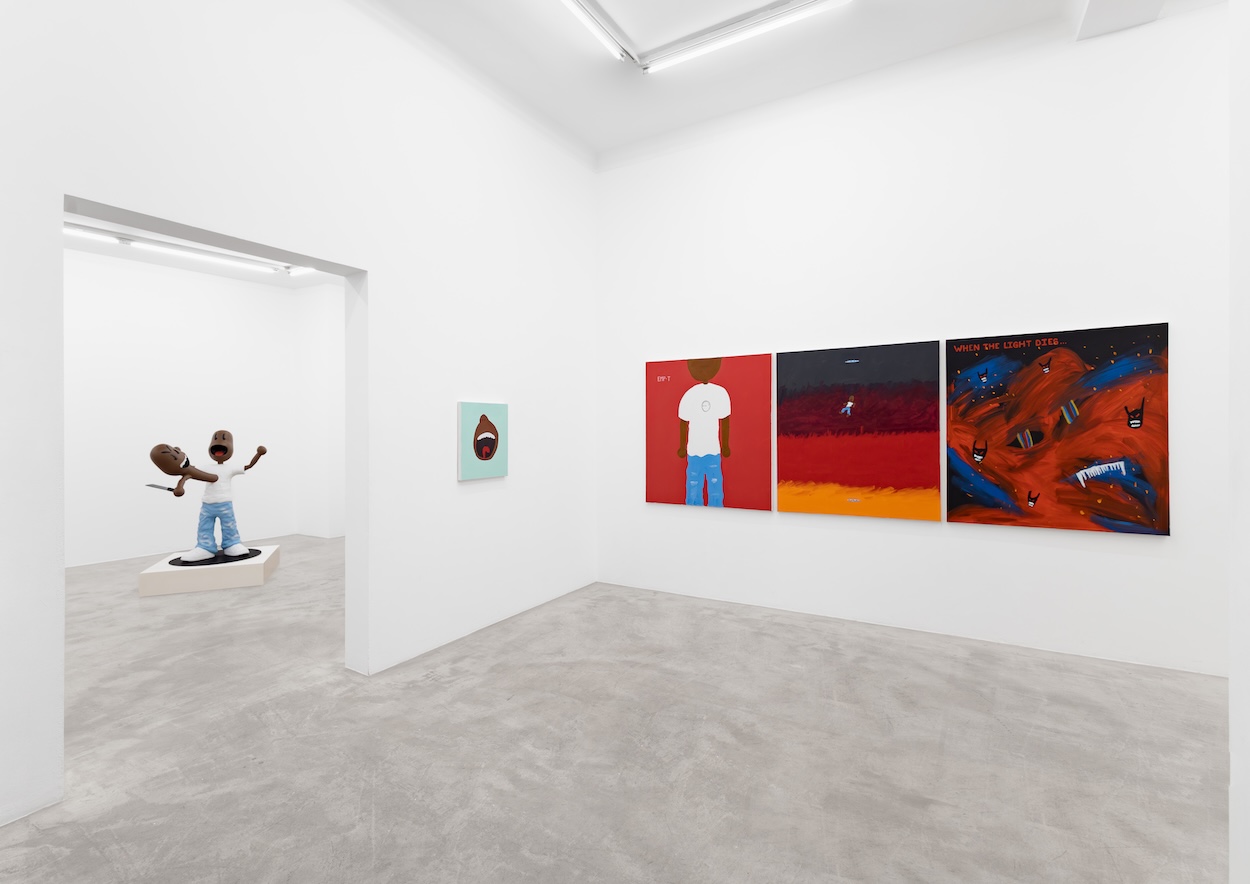
Installation exhibition image credit Thibault Jorge (Ruttkowski;68)
…
This month, Ramon’s first-ever solo exhibition debuted at Galerie Ruttkowski;68 in Paris under his documentary’s namesake, “Echoes of the Past.” The artist was present, wearing one of two T-shirts he designed with fashion label OFF-WHITE, which were sold for charity in honor of the grand opening. In the first weekend, crowds stretched along Rue Charlot in Le Marais, many carrying handwritten tributes crediting Kid Cudi’s music with helping them through their darkest moments. It’s a sentiment he doesn’t deflect because, as he’ll tell you himself, the music was never just an outlet for others but a lifeline he needed, too.
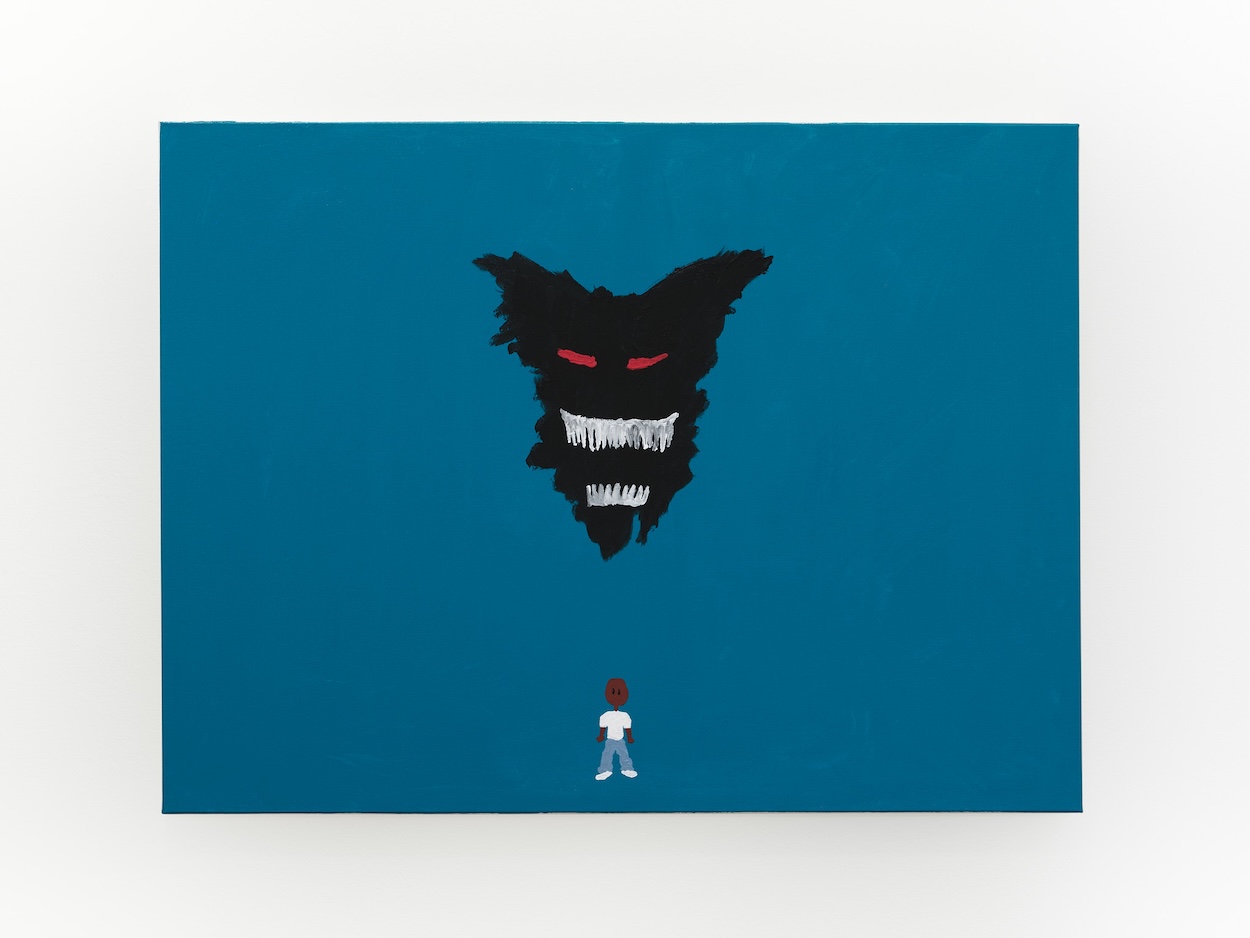
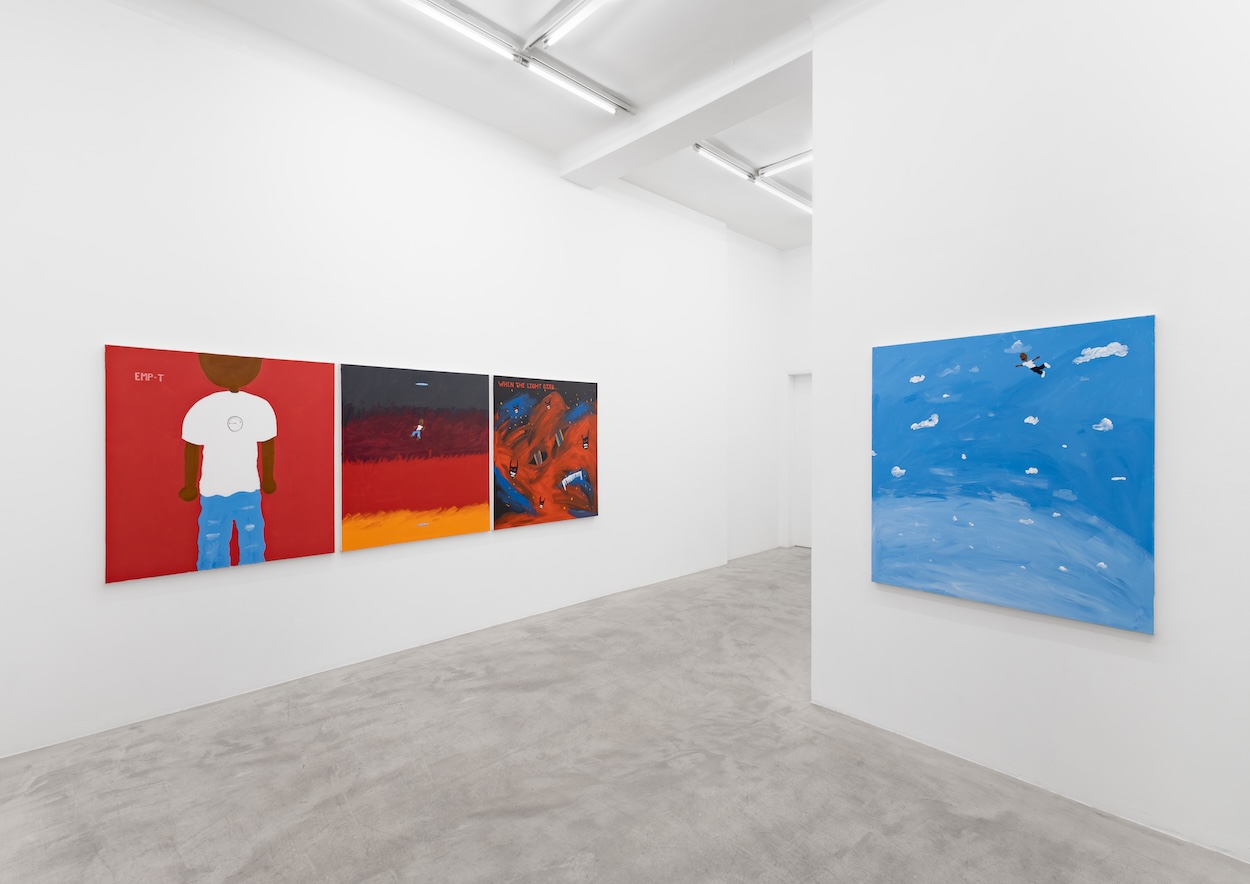
Installation exhibition image credit Thibault Jorge (Ruttkowski;68)
…
Ramon completed his first painting just over a year ago: a large pink canvas centered on a cartoonish figure named Max whose posture hints at self-sabotage. The cheery palette that bathes the canvas is meant to be ironic. And it was this first piece that became the catalyst for an intense period of reflection and production—with Ramon completing more than 50 works in the first year—in a visual lexicon that now forms Echoes of the Past. For longtime followers of Kid Cudi’s discography, the throughline is unmistakable, echoing the dark emotional terrain that has long shaped his music.
Color is a strategic device throughout. While the subject matter frequently gestures toward anxiety, danger, or confrontation, some of his palettes remain bright with sorbet hues. Ramon is explicit about the intention and admits, “I don’t want the paintings to be perceived as depressing. The color is supposed to be inviting with messages, or warnings, meant to grab your attention.” Ramon referenced the word “warning” often when describing his art in conversation, each piece reflecting a lesson he’s learned over time.
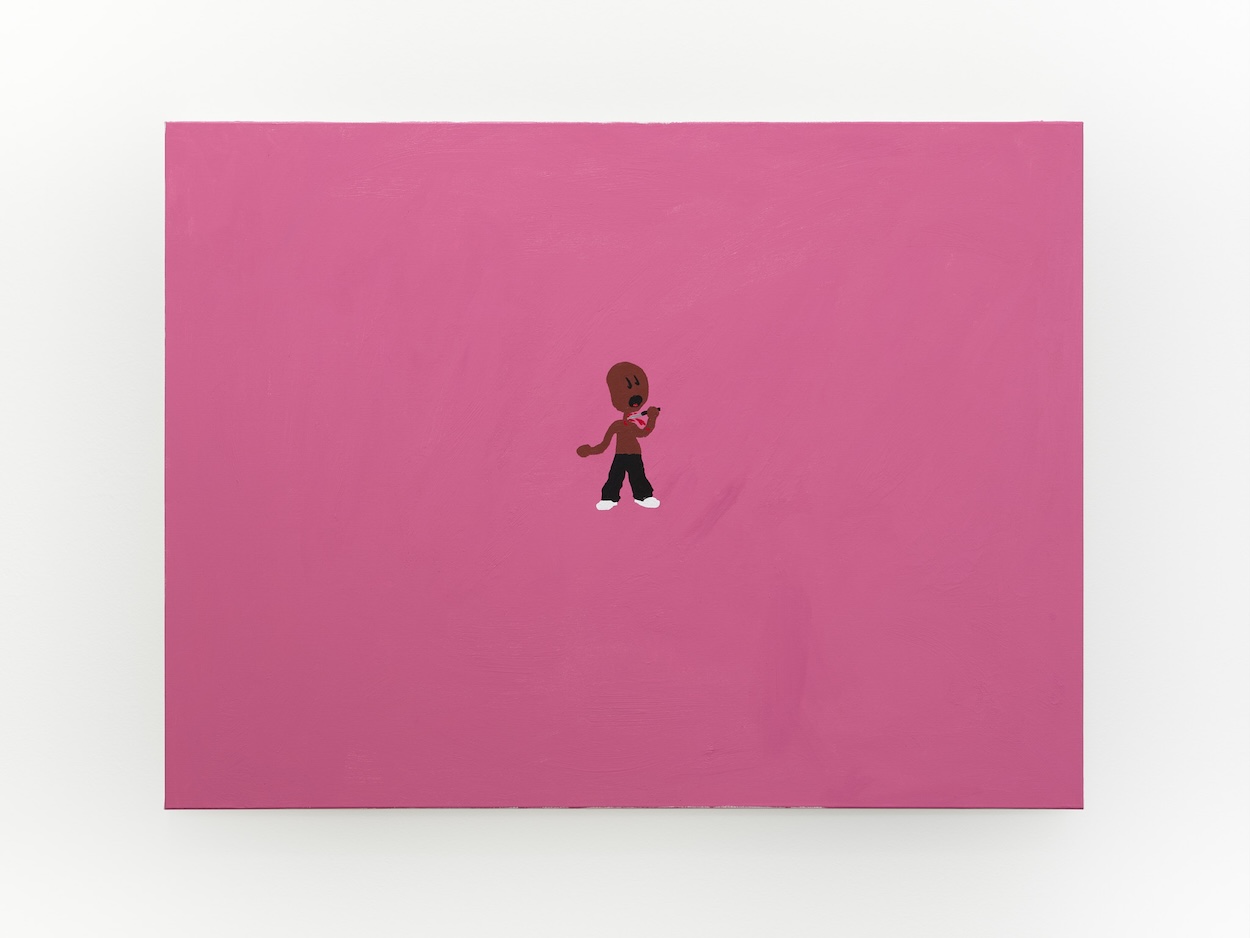
Installation exhibition image credit Thibault Jorge (Ruttkowski;68)
…
Most of the acrylic works feature “Max,” who we now understand as an avatar of Ramon’s alter ego, dressed in baggy denim and positioned within compressed, psychologically charged environments. Max’s journey is eventful—he is pursued by demons rendered with a near-cartoonish glee, floating high in the clouds in pure bliss, or being hunted down by a red-eyed shadow looming large.
Across the collection, Max appears both as a full-bodied figure or only as a head, smoothed into a single brown form and with simplified facial expressions. All are acrylic paintings on canvas except for a four-foot fiberglass sculpture called Versus which anchors the center of the exhibition. Ramon credits the KAWS Companion as a source of inspiration for wanting a physical figurine for his own signature character.
Ramon is not a departure from Kid Cudi. He is a redistribution of attention. “The joy I get from painting is like no other joy on earth for me” he says. “Which is why I’m diving in head first.”