A Nomadic Art Fair Mobilizes a Global Movement for Marseille
In the face of a wave of post-pandemic migration that has reshaped France’s second city, 74th Arts founder Becca Hoffman has put an international spotlight on its creative enclave.
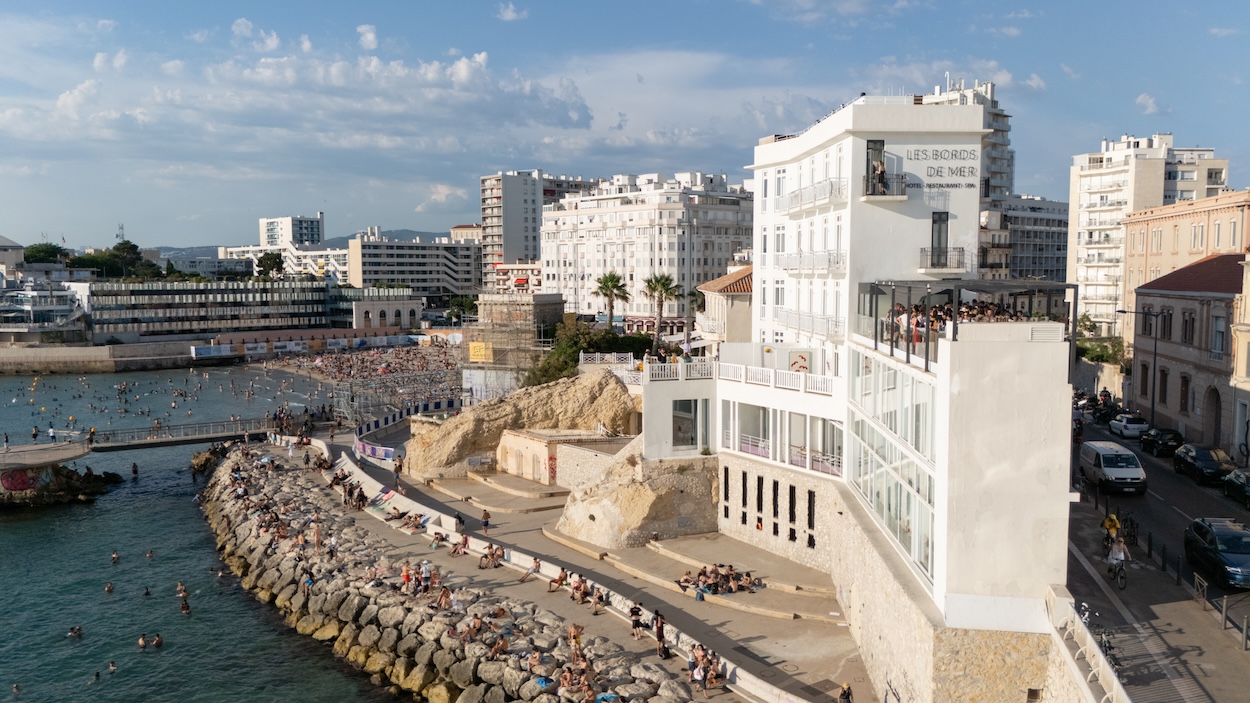
View of Marseille during 74th Arts’ “la mer” the new pop-up art fair. Photograph by Casey Kelbaugh/CKA, courtesy 74th Arts…
It wasn’t too long ago that Marseille—the ancient Mediterranean port city that is France’s second-largest metropolis—was renowned for the quality of its silence. “I came to Marseille for the first time to finish a documentary I was working on,” explains filmmaker Jean-Christophe Victor. “I arrived from Paris and it was [French filmmaker] Robert Guédiguian’s sound engineer who was hosting me. One time, we were dining in the city center, near the port. It was 9 p.m. on a September night that we were leaving the restaurant and he said to me, ‘listen to the quality of the silence.’ There wasn’t one person in the street!” Now, Victor recalls, it’s been 20 years since that street has seen silence on an early September evening—one of the city’s most enjoyably temperate times of year.
If there’s one thing the Marseillaise agree on, it’s that it’s really been within the past five years that Marseille has changed immeasurably. “When I arrived, it was a city that was in the midst of setting itself up. Today, it’s really in the midst of growth,” continues Victor, who is the founder of a documentary screenwriting residency and who, with his wife Caroline, runs the creative space Le Bunker des Calanques from within a World War II-era bunker on the cliffs of Marseille’s Parc national des Calanques. Earlier this month, the Victors, along with a network of Marseille-based creatives, collectors, and artists participated in the inaugural edition of la mer: the newest nomadic art and culture fair from 74th Arts founder Becca Hoffman.
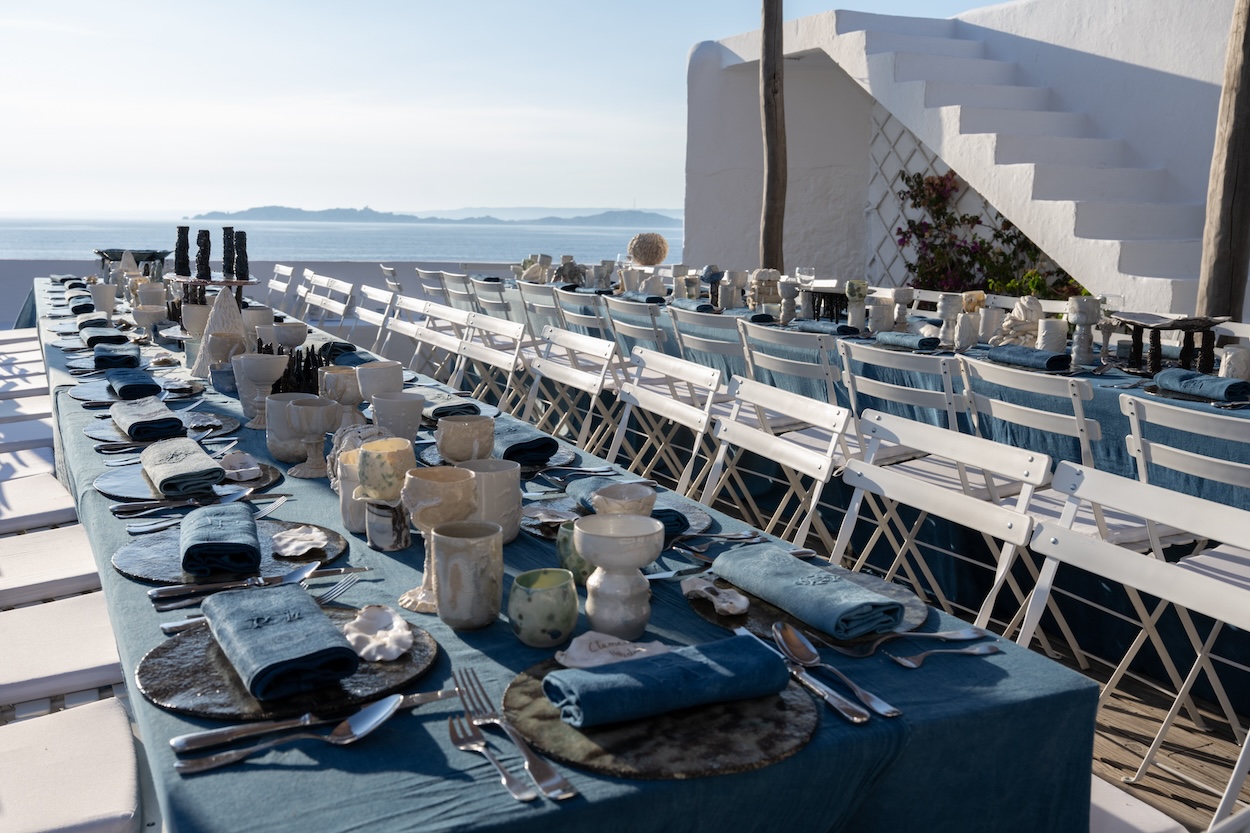
74th Arts’ Ligne d’écume dinner at Bunker des Calanques in celebration of “la mer” the new pop-up art fair. Photograph by Casey Kelbaugh/CKA, courtesy 74th Arts…
From July 1-6, la mer took over the waterfront boutique hotel Les Bords de Mer to exhibit more than 160 works by local and international artists. The theme, la mer, exists in dialogue with the role that the sea plays in the city’s history, daily life, and the creative processes of those who have come from Paris or broader horizons and made it their home. The hotel setting recalls the format of 74th Arts’ Aspen Art Fair—a recent, yet already beloved and impactful addition to the mountain city’s art landscape. But thanks to Antibes and New York-based Hoffman and Marseille-based artistic director Armelle Dakouo, la mer offered its attendees more than art.
Through satellite programming, like a welcome dinner by Congolese chef Hugues Mbenda hosted by the Victors at Le Bunker, and a walkthrough of a group exhibition by Marseille-based artists of the Muslim and African diaspora, newcomers were offered the chance to scratch the surface of the city’s enduring legacy as France’s own “melting pot,” and the way that legacy has continued to shape its contemporary culture.
“That opportunity to sort of slow down, refocus and concentrate on something that connects us all in different ways, is why we’ve really focused on the idea of la mer,” Hoffman tells Surface. “The South of France now is a little bit like the 1920s all along the coast. You see new private art foundations. You see new collectors, you see new artist residencies. You see new things opening all the time. It demands you slow down and you connect. It demands that you’re present, that you’re not always focused on your phone.”
Becca Hoffman during 74th Arts’ “la mer” the new pop-up art fair. Photograph by Casey Kelbaugh/CKA, courtesy 74th Arts…
In the following interview, Hoffman speaks on bringing a global audience into the fold of Marseille’s ongoing evolution.
There is so much talk of how Marseille has changed since the pandemic—why was this the right moment in that evolution to bring the fair here?
New artists are moving here. New restaurants are opening, new bars are opening, new hotels are opening. There’s a new form of gentrification. It feels a lot like Berlin was 15 years ago. There’s this sense of opportunity and of energy and of growth, and so in thinking about where to go in the South of France—because it’s important to me that we are able to continue a story in the south of France, from being from Antibes and New York—I thought, why not come to a place that’s really starting a new chapter for the future? It’s interesting that we chose this city, and the theme la mer. It’s the Year of the Oceans but we didn’t know that [at the time]. We didn’t know that Frieze was going to do a special on the South of France. We didn’t know the New York Times was going to. We feel very lucky that there’s a synergy. This city is both beautiful and hard, and open and closed. It’s the perfect setting to start.
How did those dichotomies work together to create an environment that felt ripe for the kinds of opportunities that are important for you and the artists you’re working with?
We believe in going into communities that have amazing local and regional creativity that we want to put on a global sphere. In coming here, in looking at how much Marseille has changed in the past five years, we notice we have the broadest mix of artists from all over the world. It’s a melting pot, and it shows you that the world is a small place, which is a tenet of what 74th Arts is.
74th Arts’ Ligne d’écume dinner at Bunker des Calanques in celebration of “la mer” the new pop-up art fair. Photograph by Casey Kelbaugh/CKA, courtesy 74th Arts…
“La mer,” of course, means “the sea,” and it really has touched every part of the fair: from the cultural programming to the nature of the works being shown and the exhibition location. Why is that?
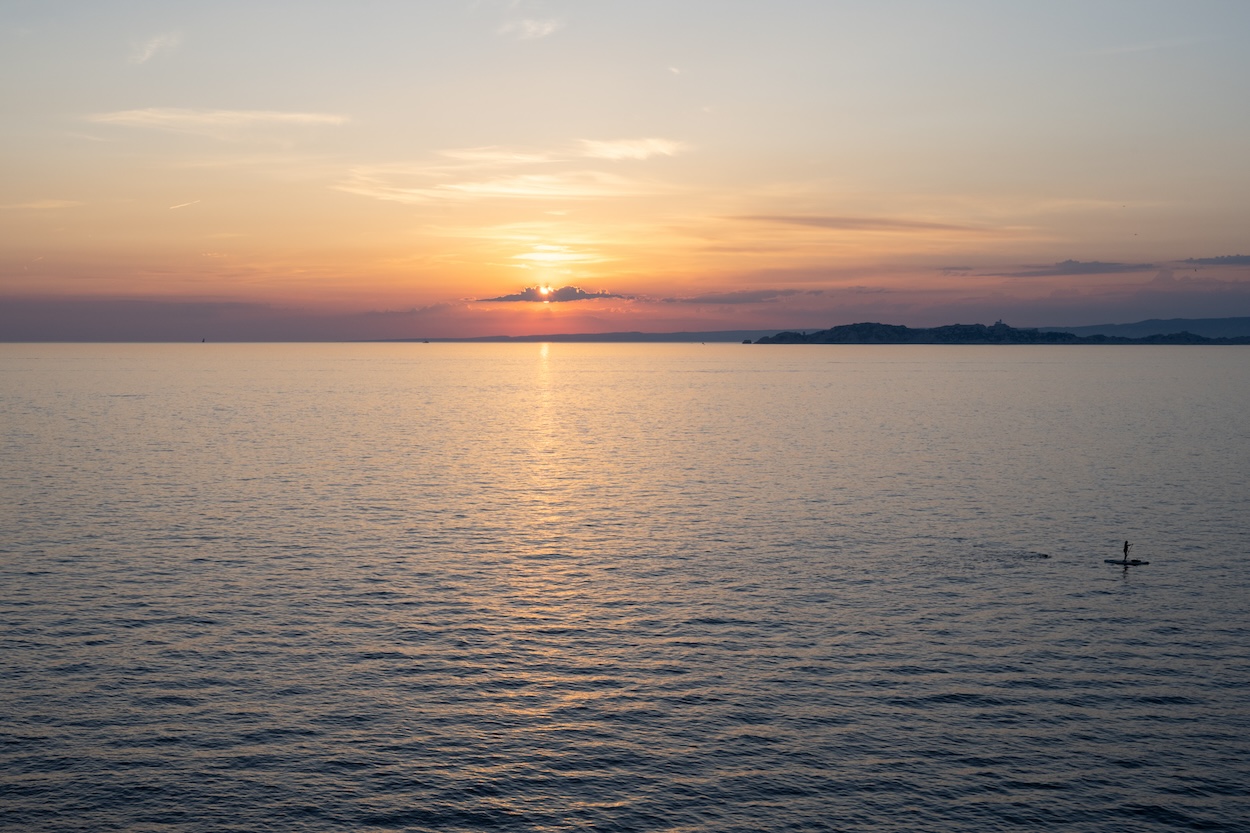
The sea is a vehicle for opportunity, for discovery, for transition, for a sense of history, for a sense of creativity, and it is a connector across the world—whether you’re talking about the sea here, the Indian Ocean, the Atlantic. There’s this connection to a bigger, broader force, and so that opportunity to embody what the sea means? It might mean one thing to you, it might mean one thing to an artist, it might mean one thing to a gallerist. It might mean something totally different to me. It’s important to have something really broad but somewhat focused, to be able to tell our story.
In terms of building connection, can you speak to how that informed your approach to the timing of programming? It preceded the fair by several days and gave visitors the opportunity to get into the national park, and onto the islands off the coast.
We want to make this into an opportunity to discover a city. We want to give you things to do. It’s more than just a fair, and so programming is an integral part of all of our events. It was maybe three months ago. I was in a car here with Armelle, and I said, Oh my God, there’s a whole area we haven’t talked about: young families with kids. So now we have an atelier for enfants on Wednesday morning. We want to make sure that there’s something for everybody: are you coming from afar? Are you coming from around the corner? Programming makes your experience, and if you don’t know the city, you get to discover it through our eyes.
Who is the person, or group of people that you see 74th Arts as being in service to—is it the artists, the collectors, art-curious?
Everyone. We want to provide a platform for the local artists. We want to provide a discovery for collectors and for curators and for people from the region. We want to provide connection, commerce, education and some fun, and that can exist in every way. And La Mer is meant to be the beginning of a long story. It supports everybody involved, whether it’s you coming and having a new experience because you’re here, whether it’s you know, Ahmed, meeting somebody and opening up a door to a new artist, whether it’s a gallery discovering a collector that they’ve known for a long time and how they get to actually speak to them in a common fashion, whether it’s a local artist getting gallery representation, it’s inclusivity and opportunity on the whole.