Opening Shot is a column that peeks inside new hotels, restaurants, bars, and shops with dreamy interiors.
Lei
Location: New York City
Designer: Rachel Vineberg Jones, Vine Projects
On Offer:
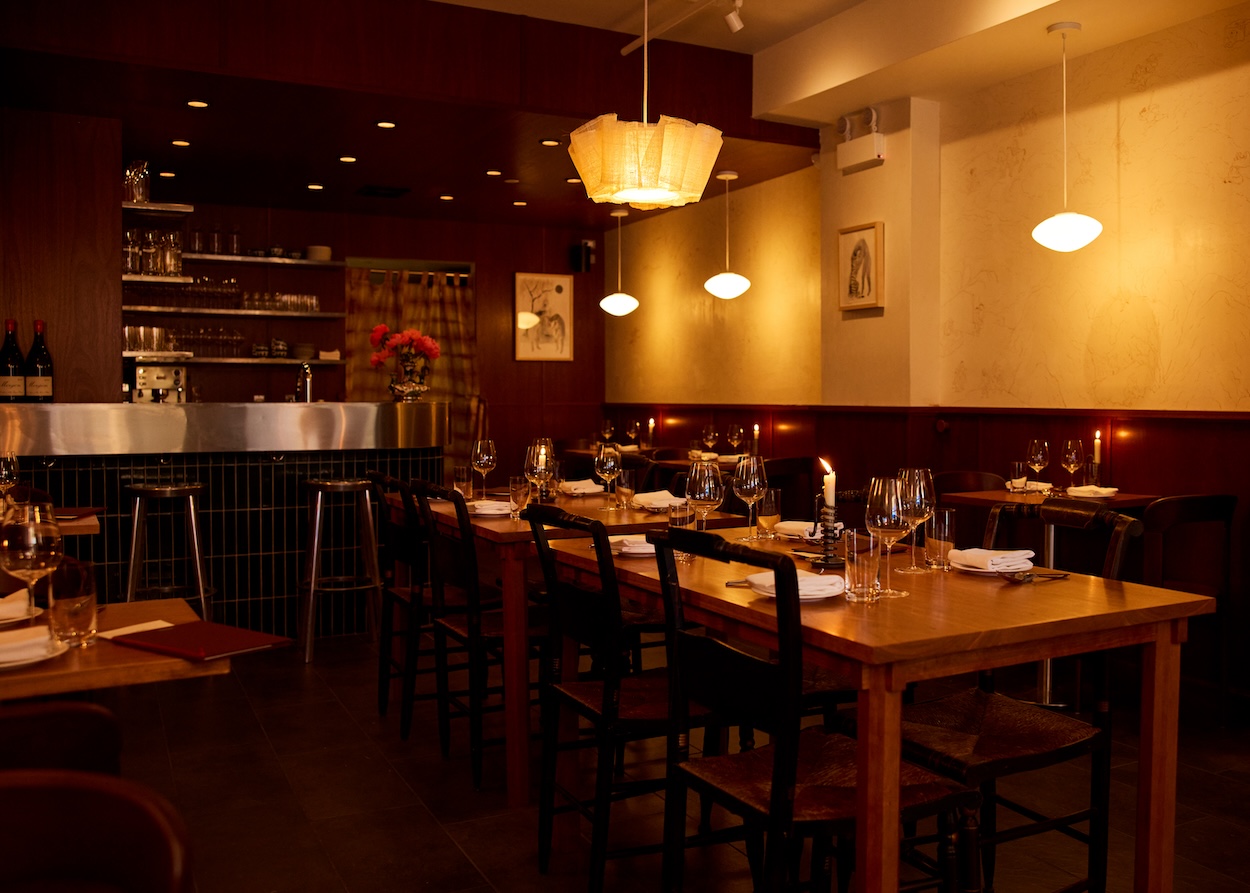
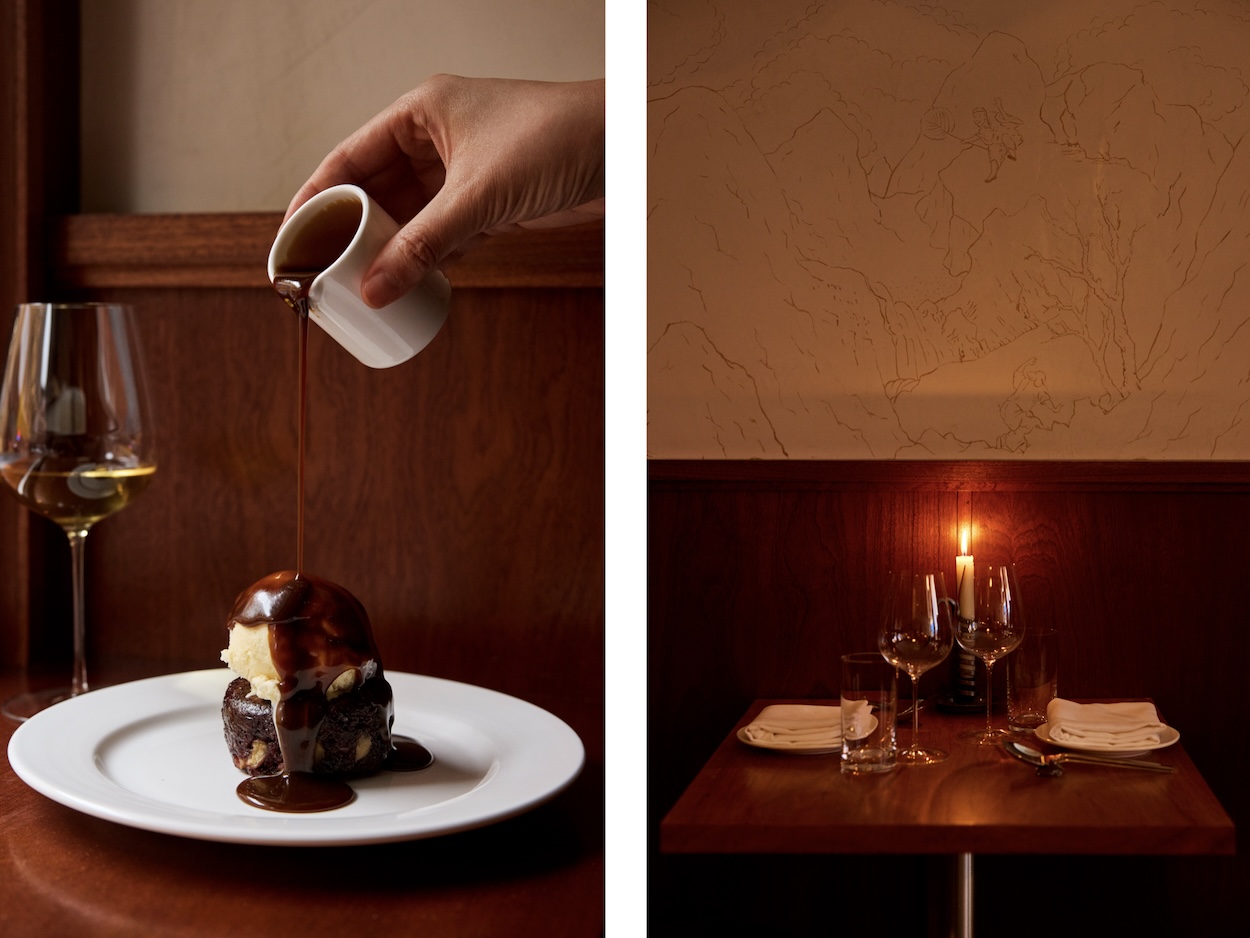
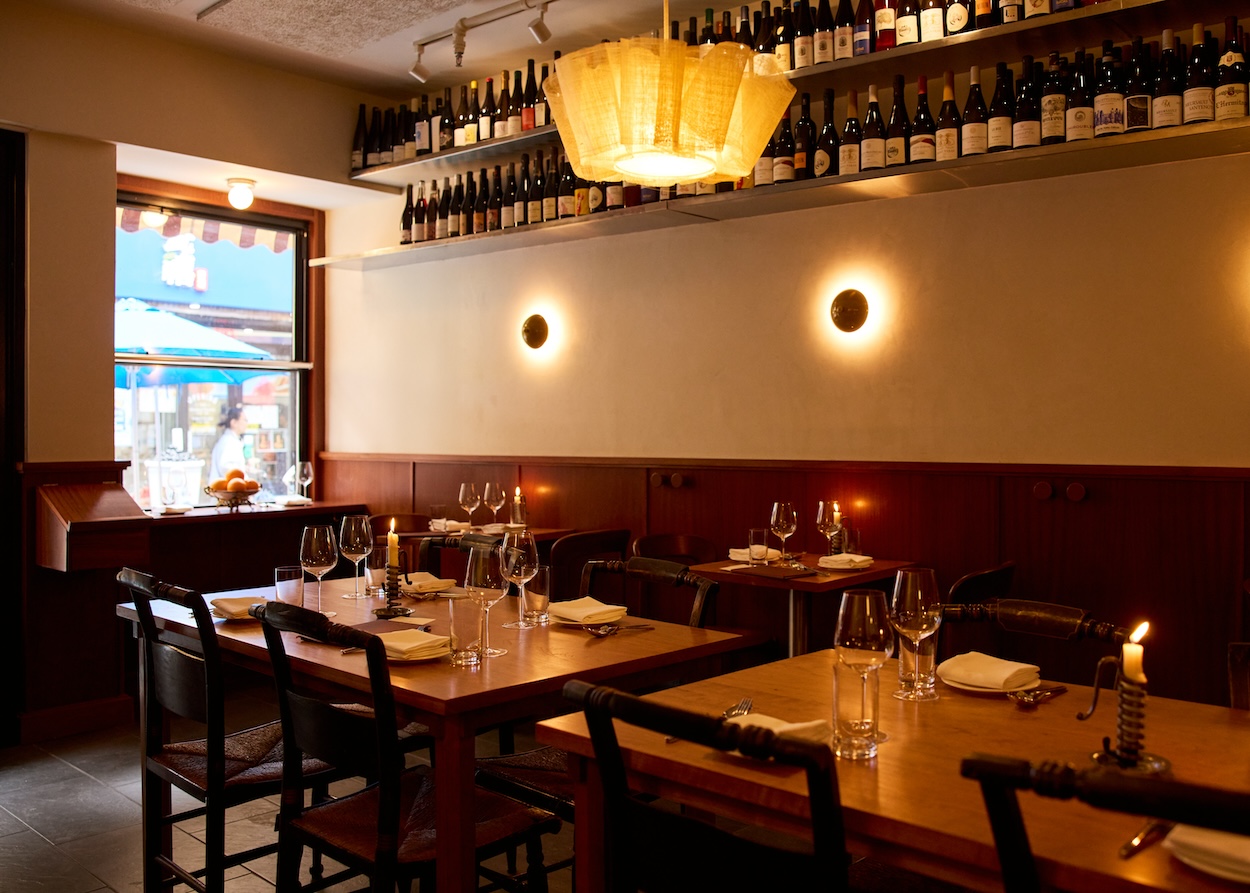
A jewel-box space equally suited to a single glass or a rare vintage bottle, Lei’s cherry-stained mahogany interiors and moody amber glow encourage guests to stay a while. A self-taught sommelier, owner-restaurateur Annie Shi helmed the beverage program and general management of Soho’s French-Italian bistro King for nearly a decade. At Lei, the culmination of her dreams to unite her love for wine and Chinese cuisine, Shi balances excellence with the absence of pretentiousness across the menu, wine list, and its wile-away-the-night ambiance.
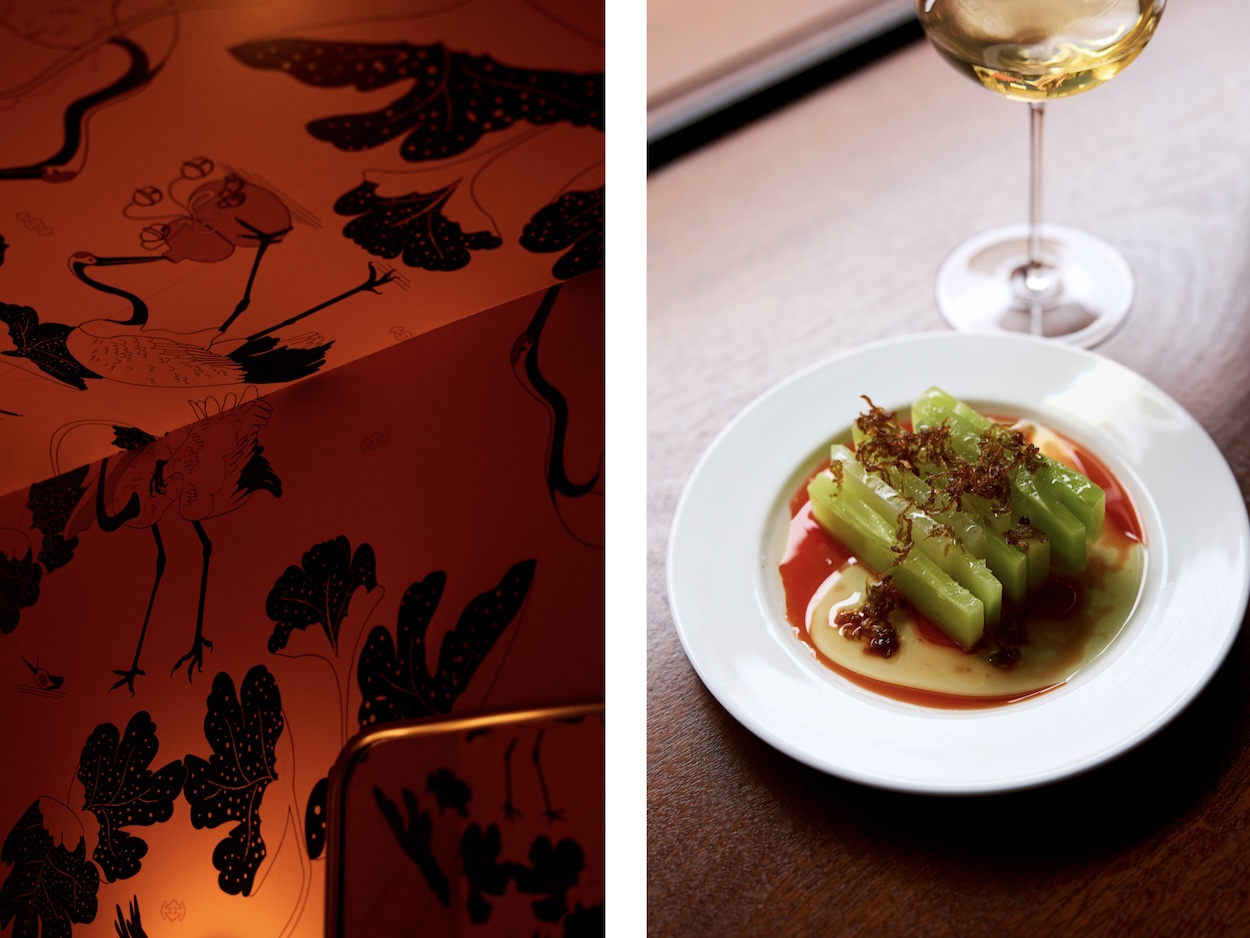
Shi credits the influences of her own Chinese-American heritage, the history of Lei’s location on Doyers Street, and the oeuvre of contemporary surrealist painter Dominique Fung for shaping her vision for the interiors—on which she collaborated with childhood best friend and Vine Projects principal, Rachel Vineberg Jones. “A painting by Dominique Fung was actually the starting point for its mood board,” the native New Yorker tells Surface—crediting To Pull Out Ancestral Memories, an eerie underwater scene of limbs, flowers, and fossilized shells emerging from limestone scholar’s rocks. If guests can look away from the wine list long enough they’ll see that painting’s saturated gold and amber tones in the wallcoverings, the warm browns in the mahogany finishes, and even touches of green in the bar tiling and sconces. Fung, who Shi now counts as a good friend, even created custom wallpaper for the wine bar’s powder room.
Standout Features:
Lei is first and foremost a wine bar. To hear Shi talk through a wine list is a lesson in history, poetry, and taste. To that end, she prides herself on having bottles in Lei’s 500-strong cellar for everyone. “We get tons of collectors and people who have these unicorn bottles in mind and they come here to drink them and that is really fun and great, but on the other hand, we also have people who have only ever ordered a glass, never a bottle, and we’re guiding them through that first experience,” she says.
Ask Shi and her team of sommeliers for “something for people who like orange wine”—the Muschofalero, a Greek orange, would be her recommendation—or “a one of a kind pet-nat”—and she might suggest a bottle of Farmentation, which undergoes its primary fermentation with Jasmine tea leaves. “What’s so fascinating about the Chinese wine-growing story is that there isn’t that history and tradition of making wine,” says Shi. “So there’s so much learning about the terroir, what grows best there, and so much experimentation that goes along with that.”
For the food, which adapts as produce passes through its micro-seasons, Shi tapped Patty Lee, an alumna of Mission Chinese. True to its spirit as a wine bar, the menu skews toward small plates with a focus on laser-precise execution. As cherry tomatoes hit their summer peak, Lee added them—handpeeled and “a real labor of love,” according to Shi—to Lei’s house pickle mix in shiso brine; the Jin Hua ham was, during August, served with yellow nectarines plucked from the orchards of Frog Hollow Farm at their brightest. And the star protein, a sweet and sour short rib, is braised for 48 hours in Lei’s tiny all-electric kitchen. “Part of what we’re really excited to do is to pair these really nostalgic traditional flavors in a new way with wine,” Shi says. “The response from some of our guests, that it’s presented in a new way, so it’s both nostalgic and fresh, has been so meaningful.”