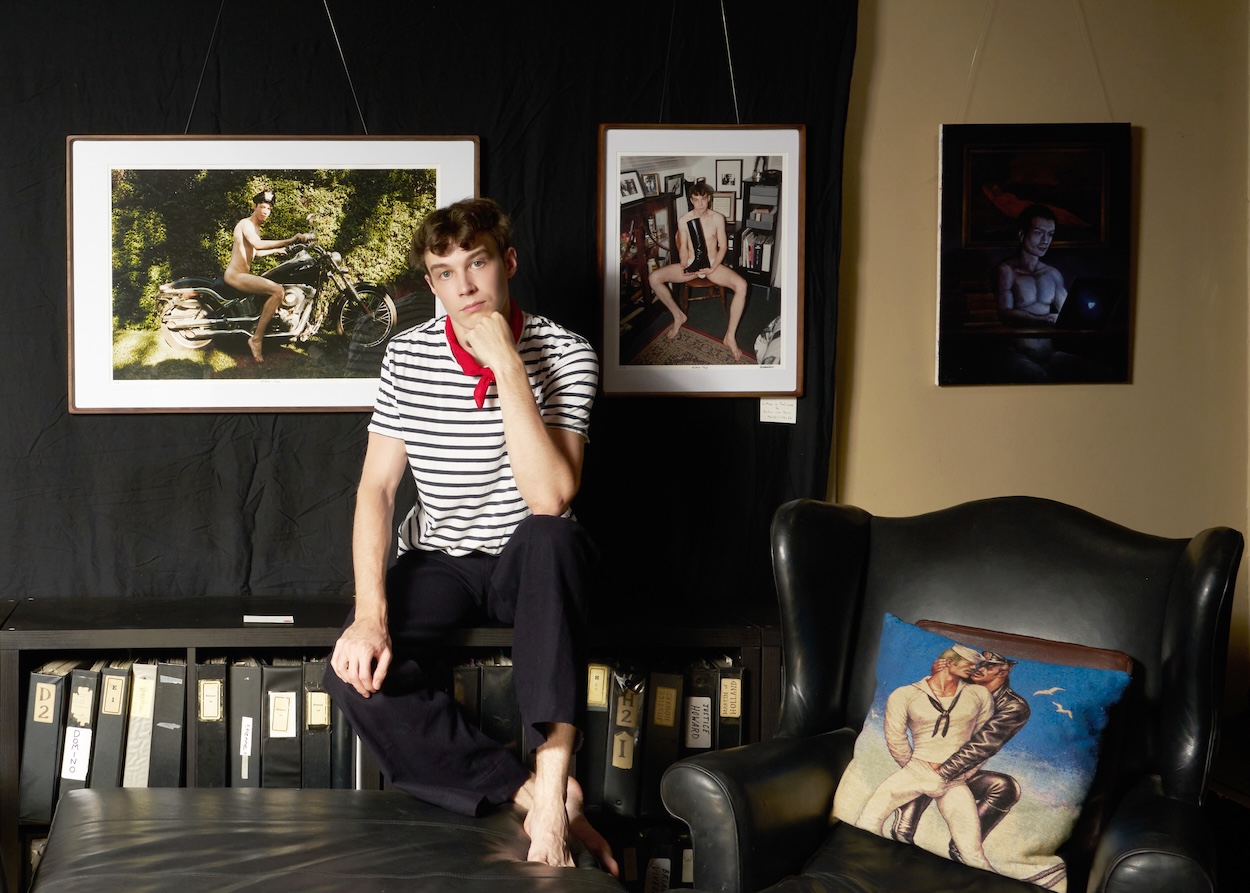
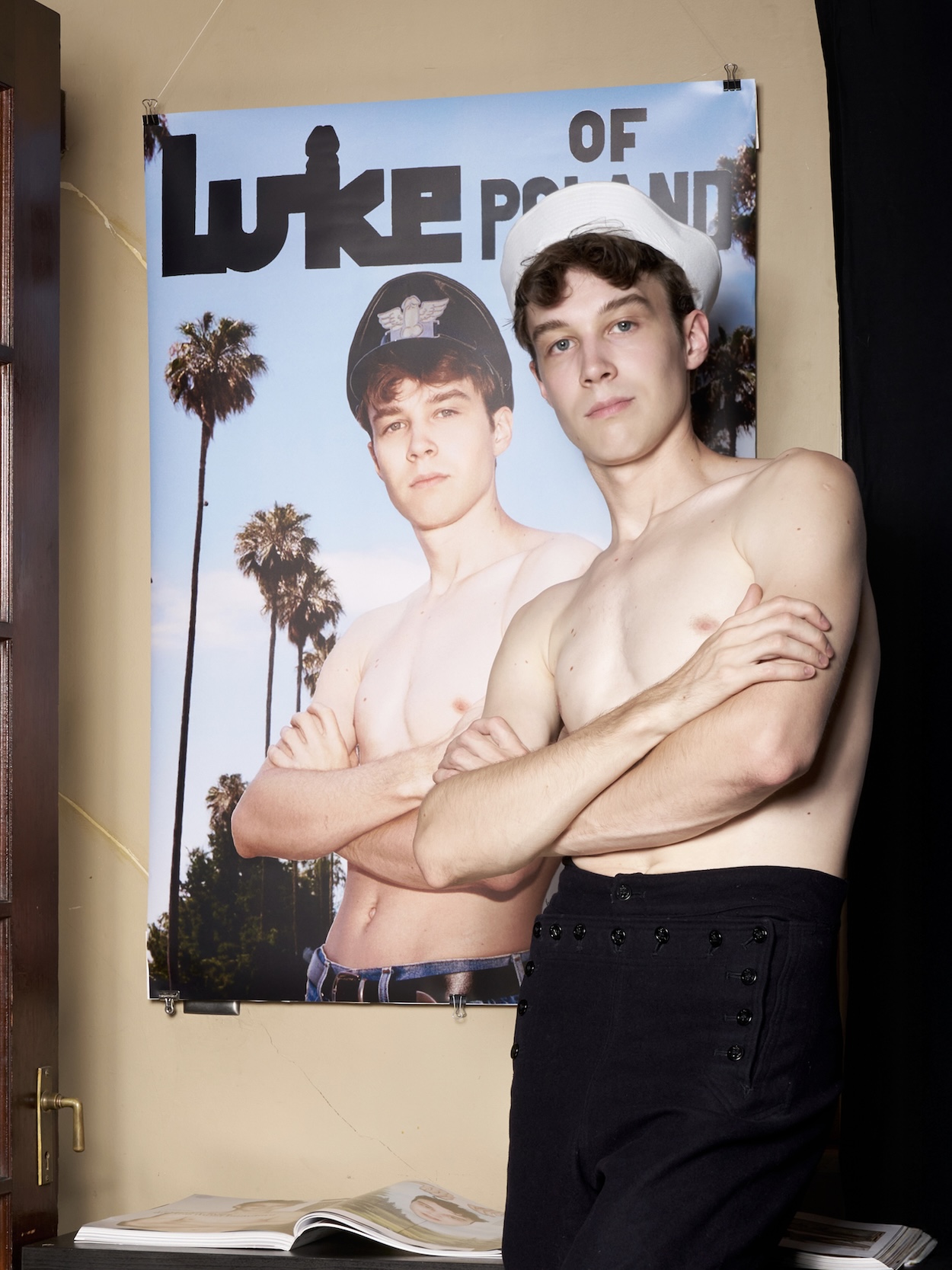
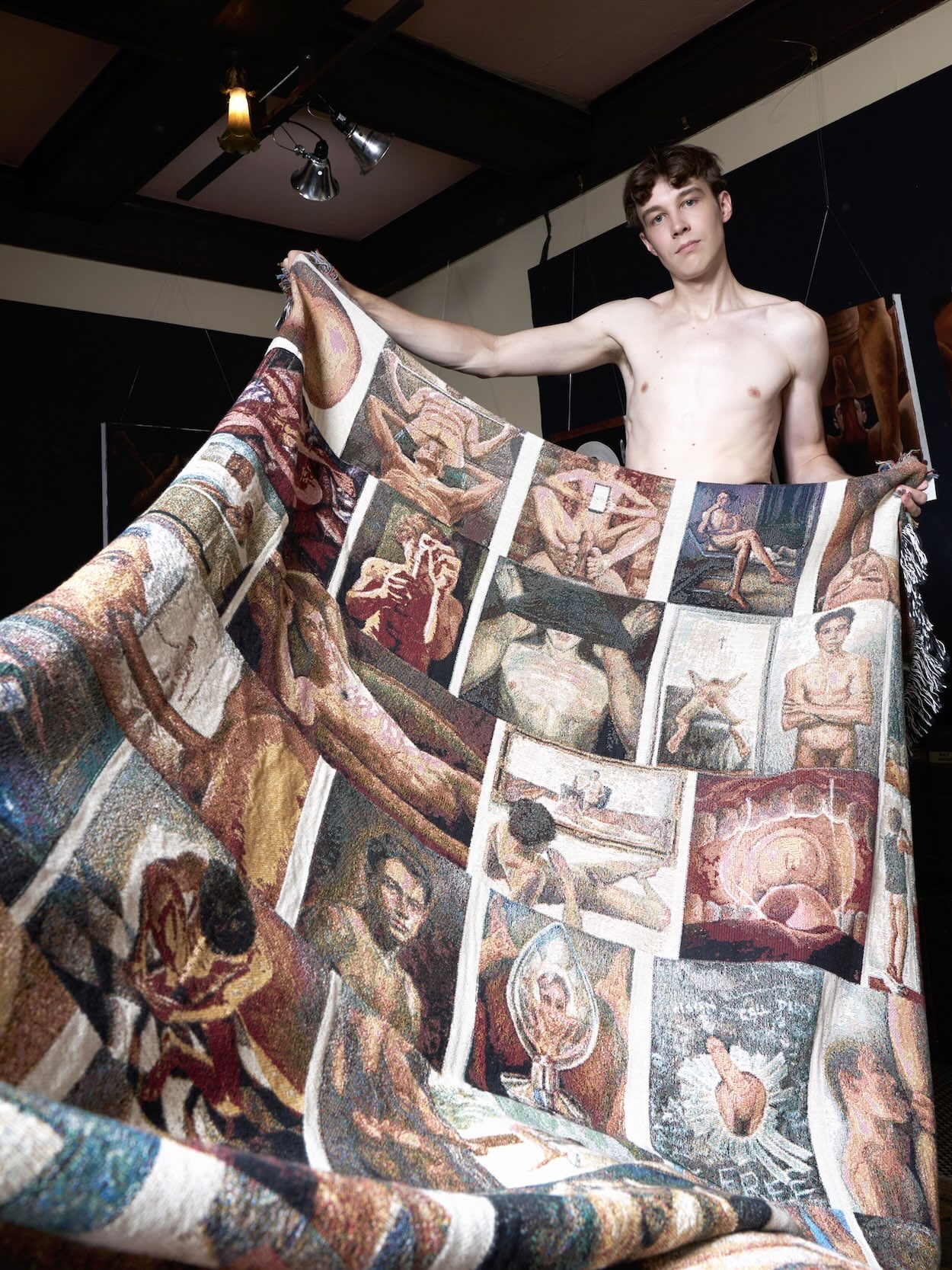
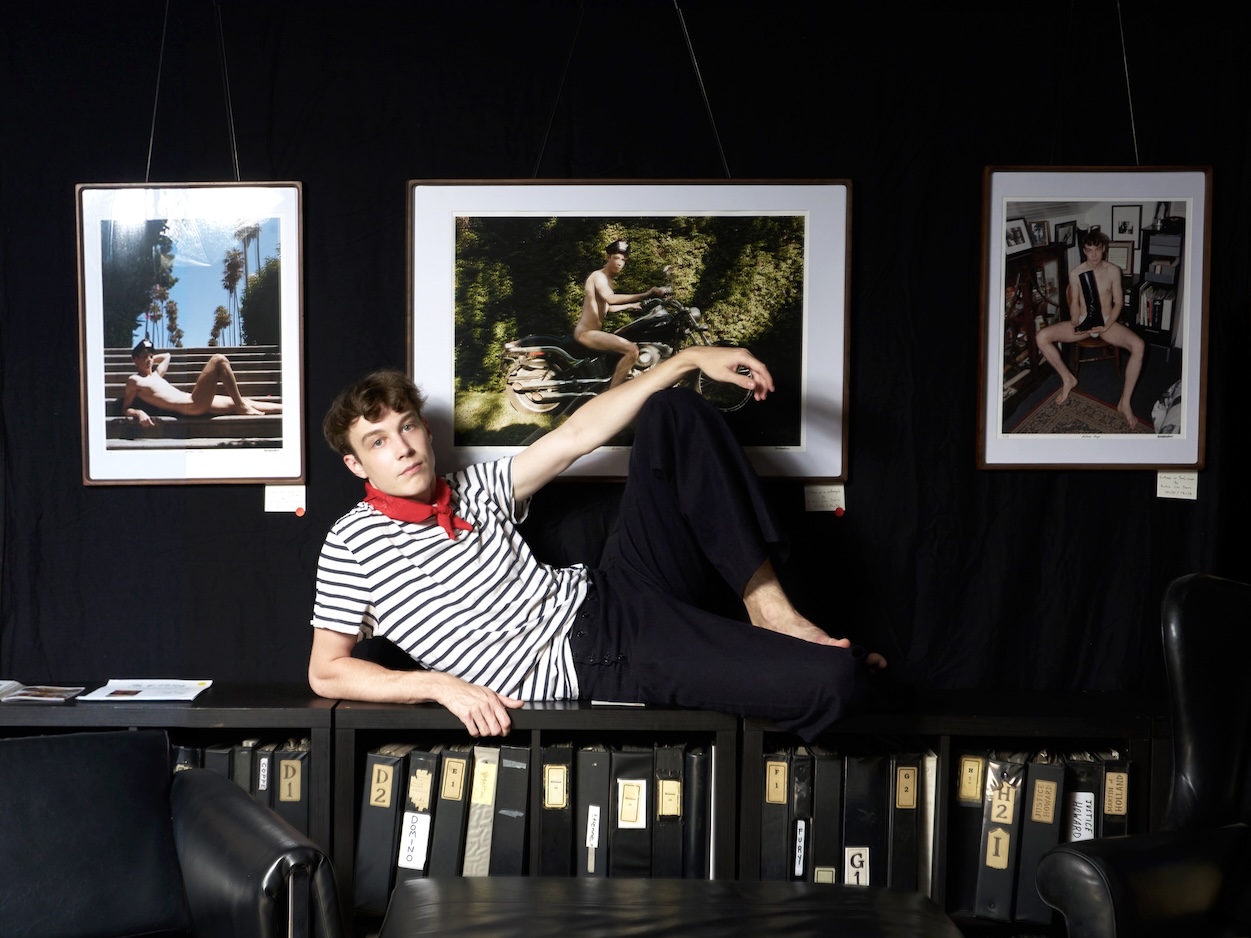
This summer, Międzyrzecz, Poland-raised, New York City-based Łukasz Leja lived in the storied walls of Echo Park’s Tom of Finland Foundation. There, over the course of a three-month residency, the fine artist produced 12 evocative, voyeuristic oil paintings, a table collage, and a woven blanket, as well as three photographic prints (the latter alongside collaborator Richie Lee Davis). These works, in addition to a 50-page zine, and larger pieces from his early repertoire, came together for “Luke of Poland,” a beguiling display of the emerging artist’s talent.
The residency followed several artistic milestones—including a large-scale piece within a group show in the legendary Berlin nightclub Berghain, and participation in a queer photography exhibition at the NYC LGBT Community Center. Within his works, Leja captures moments at once provocative and sensitive. His invitation to gaze upon such intimacy is underscored by depth and gravity. A recipient of the Richard Tweedy Merit Scholarship, Leja will continue his figurative studies at the Art Students League this September, as he prepares for 2026 solo exhibitions and group shows in Los Angeles and Paris.
By Fernando Guerrero…
Following “Luke of Poland,” Surface spoke with Leja about his connection to Tom of Finland and his path to oil painting.
Were you always a fan of Tom of Finland?
Yes. I discovered his work as a teenager in Poland while searching for “gay art,” “queer artists,” or “drawings of naked men” on the internet. Unsurprisingly, one of the top results was Tom of Finland. Tom’s illustrations, along with other artists like him, made me feel seen and less alone. After moving to the U.S., I kept encountering his work in bars, on T-shirts, tattoos, and framed in Manhattan apartments. His art became a major source of inspiration.
What led you to apply to the Tom of Finland Foundation residency?
Learning about the Foundation, which preserves and promotes Tom’s work along with that of other queer artists, I immediately yearned to be part of that community. I discovered their Emerging Artist Competition and, with a few paintings I was proud of, decided to give it a try. I won and flew to L.A. to accept the award. Seeing Tom’s House—his room, memorabilia, artworks, awards, photographs, and diaries—alongside their vast archive of over 100,000 pieces, I instantly knew I wanted to be part of it. They encouraged me to apply, but I didn’t need any encouragement. Accessing these resources, living in the historic house, having an outdoor painting studio, and being welcomed into a community of like-minded people made me fall in love with the place at first glance.
By Fernando Guerrero…
How did you arrive at the title “Luke of Poland?”
It honors the queer and queer-erotic artists who worked at a time when it was illegal—artists whose work was rarely exhibited and who often couldn’t sign it with their real names. While researching the Tom of Finland Foundation archive, I noticed a trend: pseudonyms combining a simplified first name with a place of origin—Tom of Finland, Bruce of LA, Len of London, and so on. Luke of Poland is my alter ego, used to explore my fantasies and work, but it is also a tribute to those who paved the way for 21st-century queer artists. Their efforts allow us to be celebrated today.
You also exhibited at the Fire Island Pines Biennial. Can you speak to that?
The FIPAP 20th Biennial, held over the summer, began nearly 40 years ago. The first edition included works by David Hockney, and over the years it has showcased both local artists and visiting summer creators. I’ve long been inspired by Fire Island’s history as a queer haven, and over the past few years of visiting, I fell in love with its car-free, deer-filled paradise and natural beauty, making it the perfect place to share my paintings. While the Pines today reflect a more polished, privileged atmosphere than in its early days, Fire Island remains beautiful, historic, and special.
By Fernando Guerrero…
How do you find subject matter in your own life and experiences to translate into paintings?
I see myself as a collector and archivist of ideas. My sketchbooks and phone are filled with notes, sketches, and inspirations—from experiences and fantasies to wordplay and concepts. Some ideas are painted immediately, while others marinate for years. I usually work on several paintings at once. The ideas that linger the longest are the ones I feel most compelled to bring to life, though some may never leave the page.
How do you approach painting the human body?
I’m drawn to classical representation—light falling from one side, candlelight, or daylight streaming into an apartment. Until now, I’ve mostly used myself and those close to me as references, though I’m expanding to include more people. The bodies are posed and idealized, gestures refined to fit perfect circles, squares, triangles, crosses, eights, and pentagons. I approach the human form with a designer’s eye, tweaking and shaping, emphasizing symmetry, strong centers, and closed compositions structured by architectural grids.
You also pose with your own works in photography. Is it artistry or promotion?
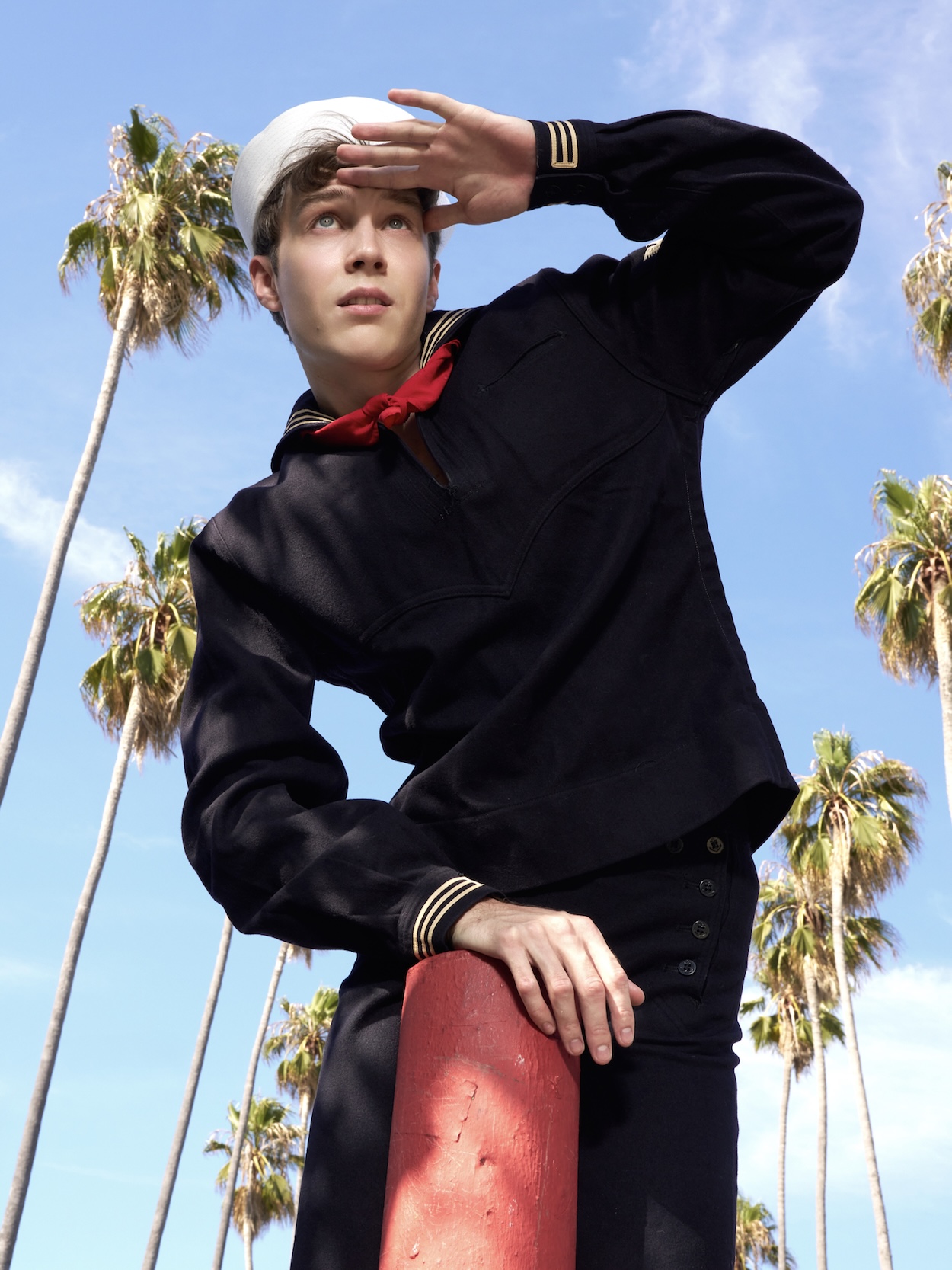
I don’t separate the two. As a photography lover, I explore self-portraiture—posing alongside paintings, recreating their gestures, or using my body as an extension of the canvas. Photography introduces new planes and perspectives, enriching my painting. It’s part of my artistry, and I’m proud of these images. If they resonate with others, that’s a bonus.
Is there anything you want people to know about the “Luke of Poland” show?
I want to emphasize the importance of community and creative expression. There aren’t many spaces protecting, preserving, and promoting queer art—places like Leslie-Lohman Museum and Project Space, Tom of Finland Foundation, FIPAP, Naruki Art Dojo, Schwules Museum, Instinct Berlin, QueerMuseum Warsaw, or Queer Britain. I hope more such spaces continue to open, allowing us to honor history while contributing new work. I’m deeply grateful for these communities and hope to keep exhibiting alongside them.
By Fernando Guerrero…
You mentioned Naruki Kukita. Can you speak to your painting education with him?
After moving to New York, I discovered Naruki’s work, which immediately resonated with me. I connected with him and started modeling for his live drawing classes, observing and absorbing his methods. Later, I reached out for guidance while developing my own project—around that time, he was establishing his painting school. We formed a creative bond. Naruki taught me classical techniques—from layering and mixing oils to all the subtle tricks I still use today. He’s incredibly talented, generous with knowledge, and committed to fostering a community.
How did you find your own voice and palette?
Since childhood, I’ve explored creativity in passive ways—through art history, films, reading, and introspection. I had an analytical mind that also drew me to geometry, perspective, and composition. When I started creating, I filled those structures with human bodies, inspired by the people I’ve known, their beauty, stories, and presence. So I think my sensibility comes from studying the lives of those before me; my palette from the old masters I studied; my style and compositional approach from architecture; and my voice—themes and subjects—from my personal life.