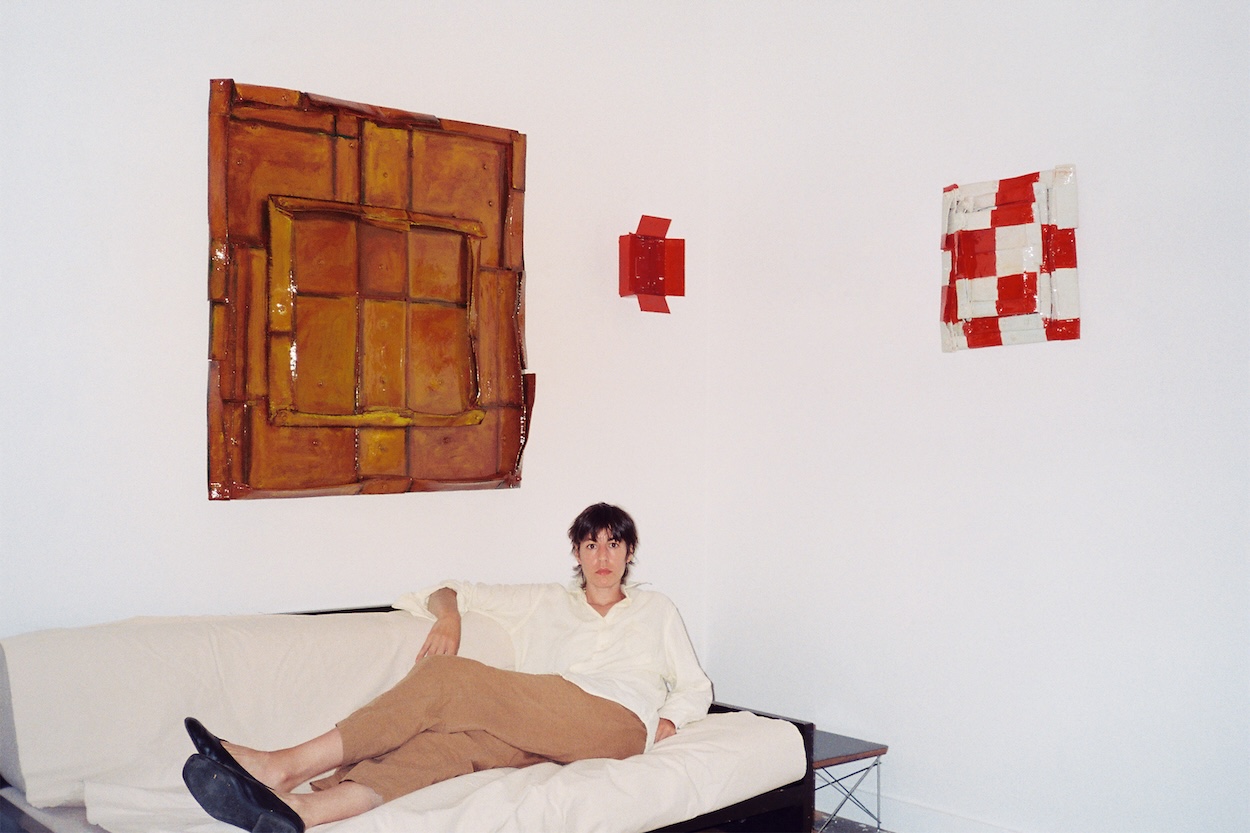
Machteld Rullens, Self-Portrait, Josef & Anni Albers Foundation.…
Machteld Rullens has made her name in cardboard: broken, reconfigured, painted, pigmented, and seemingly—but not—glazed. Her profile has risen as critics and collectors alike have come to anticipate her gridded, sculpture-like paintings. Rullens’ works feature prominently in several global collections (the Hammer Museum, Celine Collection, and Rijkscollectie RCE among them), but she’s also enjoyed considerable commercial success. When, in 2024, she made her debut at Liste Art Fair Basel with New York City’s Page gallery, the entirety of her booth sold.
Now, after a fruitful residency with the Josef and Anni Albers Foundation, Rullens has a new body of work on view in New York across both Page and Kreps galleries in Tribeca. “Lucas [Page, the gallery founder] and I both felt that for a second solo we could expand our presence in partnership with a collaborator to create a more historical context,” she tells Surface. “Andrew Kreps shows artists I admire such as Liz Magor and Corita Kent. Strong-minded female artists that in my fantasy also enjoy being alone (in a barn).”
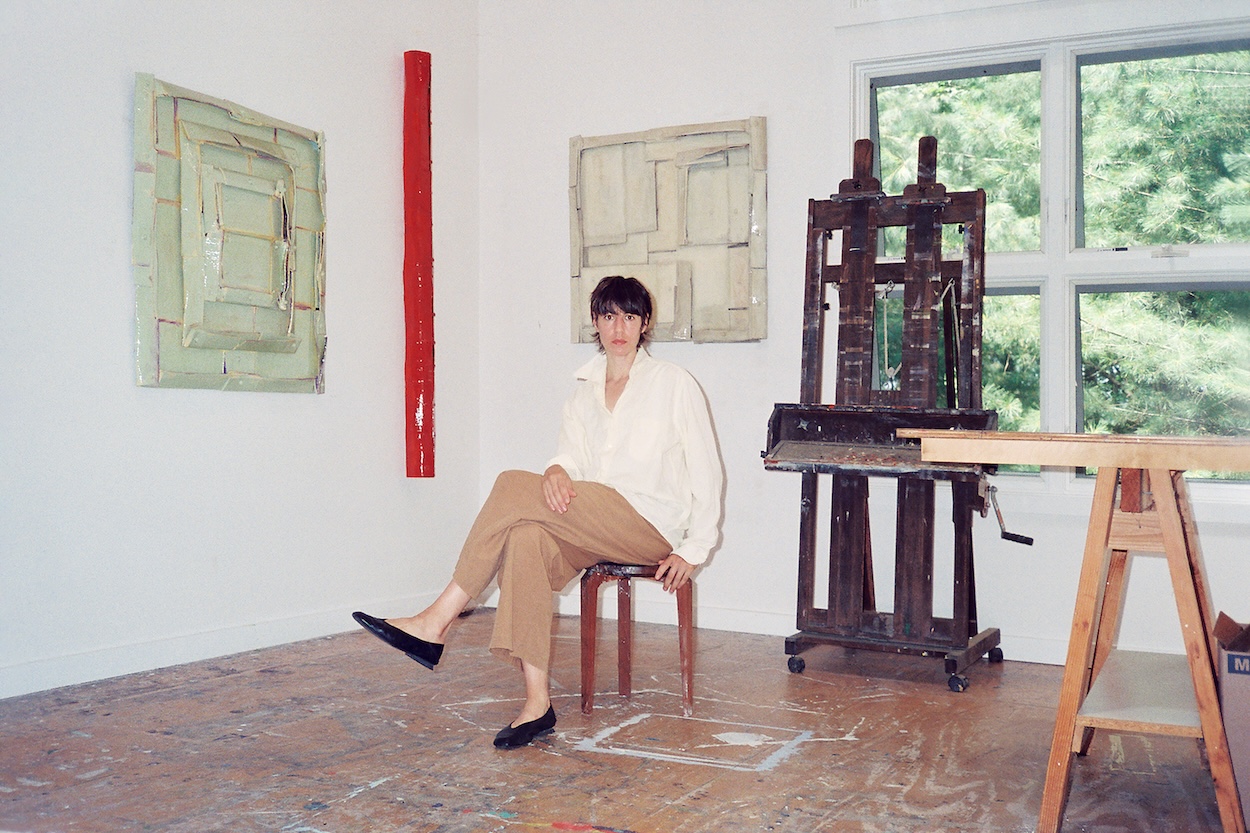
Machteld Rullens, Studio, Josef & Anni Albers Foundation.…
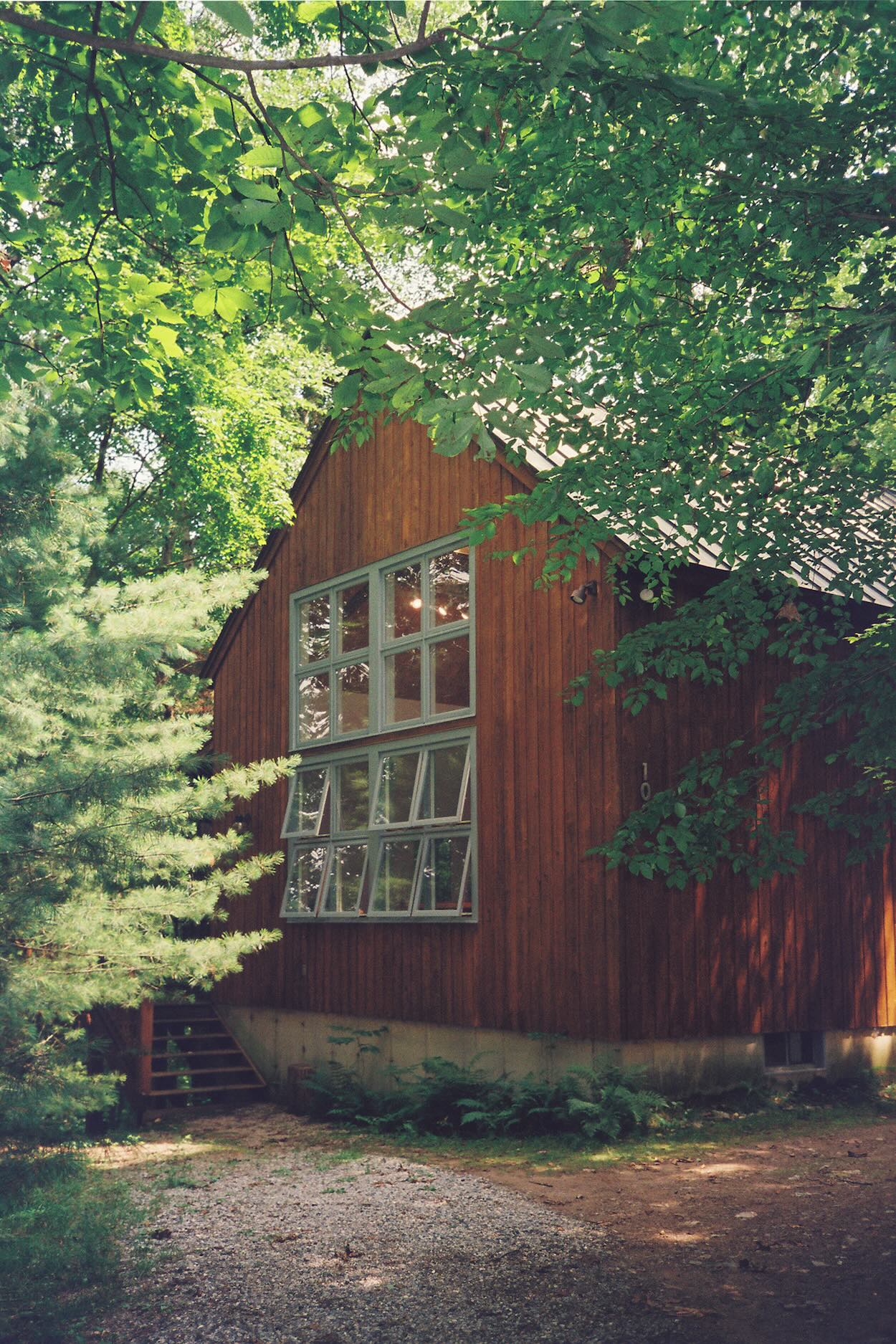
“In a barn” nods to the summer weeks she spent working from Bethany, CT, while in residence at the Foundation. There, the landscape, solitude, and a marked departure from the rhythm of daily life in The Hague, where she’s based, left a profound impact on the works she created and which are now on view across the two galleries. “On top of it all,” she says of the exhibition, entitled “Beacon Road,” “I get to work with a young and very dedicated gallerist alongside an established one with a beautiful space and great artists.”
In the following interview, Rullens speaks on the impact of Albers’ artistic legacy and the rhythm of the landscape and daily life in residence on her newest body of work.
During your residency at the Josef and Anni Albers Foundation, you were surrounded by a very different kind of visual rhythm—fields and barns instead of the dense geometry of city life in the Hague. How did that shift in environment influence the way you approached color, form, and structure in “Beacon Road”?
Machteld Rullens, Self-Portrait, Josef & Anni Albers Foundation.…
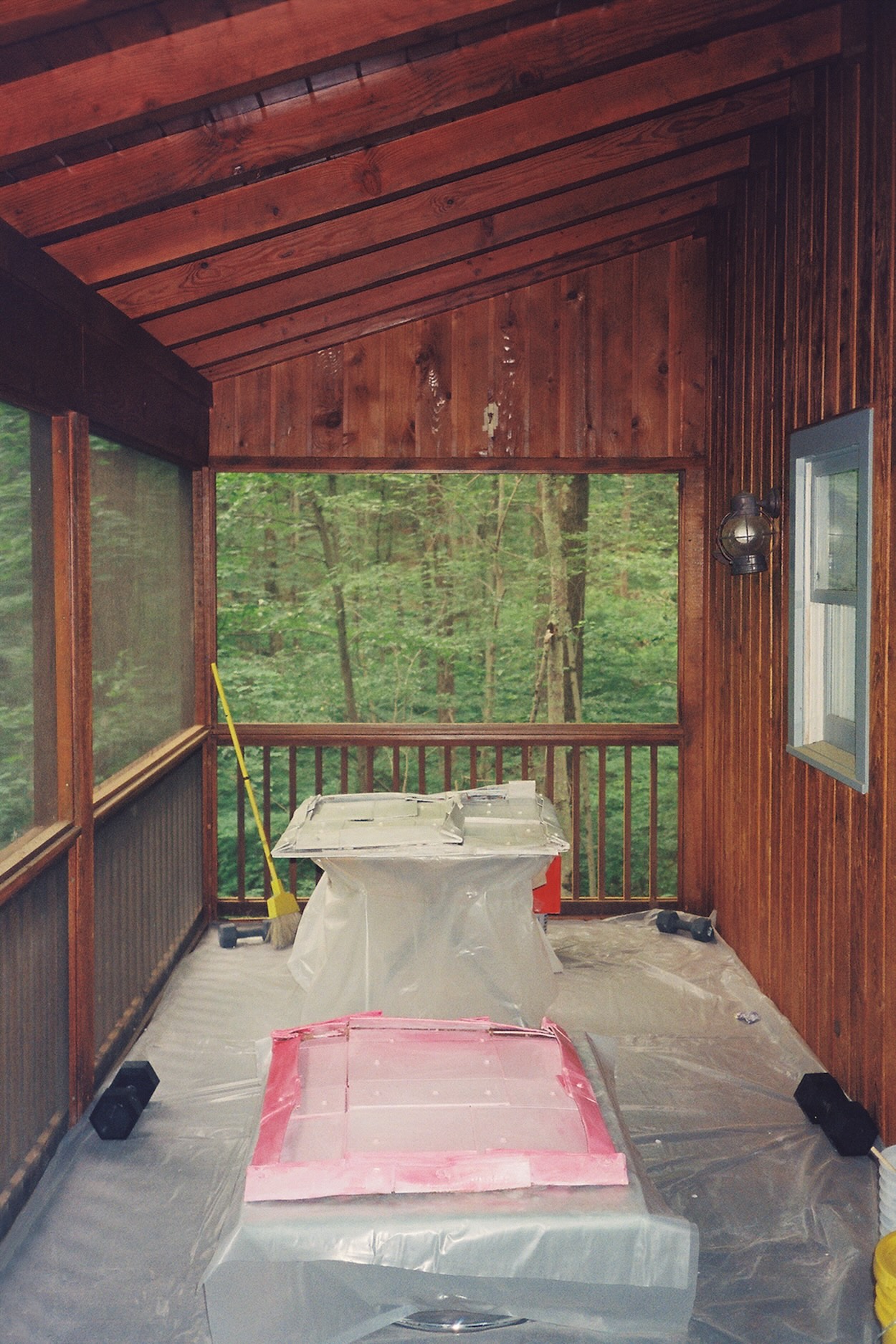
Surrounded by fields and barns, while having access to the archive of the Foundation and swimming in the lake behind the studio, is the opposite of being in a city. In Bethany, I could see my color palette becoming more gentle, softer. There was more room for introspection. Decisions, often subconscious, were made faster. I was folding cardboard into frame-like structures and bolting them down before painting—the sides became stronger and more layered. I started stacking these forms on top of each other, referencing Josef Albers’ Homage to the Square and his color studies.
Your work often balances tension between surface and depth, painting and object. In “Beacon Road,” you’ve moved toward flatter compositions while keeping the evidence of construction visible. What drew you to this paradox, wanting to collapse the object into two dimensions while still revealing its physicality?
I’m very attracted to the idea of the work being both object and painting. The cardboard, paint, bolts, and resin are the frame, the glass, and the back all at once. Finding your material on the street or, in this case in the archive’s attic, comes with its own restraints and I use that information. A painterly depth is enhanced by the use of multiple layers of color and resin. The cardboard becomes shiny and rigid due to the resin, also luring you in and creating reflections. I always wanted to be a painter, but a white canvas was too intimidating, so working with found cardboard has been liberating.
The dialogue with Albers’ Homage to the Square is apparent but also subverted—you’re literally crushing boxes instead of building grids. How did studying Albers’ pursuit of “pure form” inform or challenge your own materially grounded process?
When I was in the archive, I was able to see a video of Josef Albers in his studio, in which he talked about his Homage to the Square series. He used a stencil to lay a grid on the board—the colors are pushed straight out of the tube and applied slowly with a palette knife. I’m too impatient to work like that, but I do like his quest to place color next to each other in order to find something unexplainable as well as undeniable. And a flattened box still comes with a “free” grid, which I make use of.
Cardboard remains central to your practice, yet in these works it feels more painterly. After your time at the Albers Foundation, did your understanding of what this material can represent or hold emotionally change in any way?
I’ve now been working with cardboard boxes for seven years. My work has slowly become more painterly and I enjoy crushing and folding the box into a shape we associate with painting.