2,000 LED panels—suspended and adjoined—formed a backdrop for Khaite’s Fall 2026 runway show at the Park Avenue Armory. The atmosphere of the historic venue—known as the home of Salon Art + Design, The Winter Show, and experimental programming like Anne Imhof’s DOOM: House of Hope—was transformed as phrases passed before viewers’ eyes and the collection (of velvet, lace, leather, and tulle ribbon) revealed itself. Khaite founder and designer Catherine Holstein creative directed the artful, substantive spectacle, working with her husband, Griffin Frazen, as show designer.
Art and Architecture's Cultural Discourse with New York Fashion Week
BY DAVID GRAVER February 19, 2026
Khaite show design, photo by Hanna Tveite
…
Khaite’s monumental experience was but one of many cultural conversations this fashion week between autumn collections, art references, and architecture. Ralph Lauren hosted his Fall 2026 womenswear show amidst the marble columns of Jack Shainman Gallery’s Tribeca flagship. Vintage rugs dressed the floor, conversing with the gilded ceiling above. In between, hand-painted canvas wrapped the room in forest scenes—a transportive world wherein his collection felt right at home.
Courtesy of Ulla Johnson
…
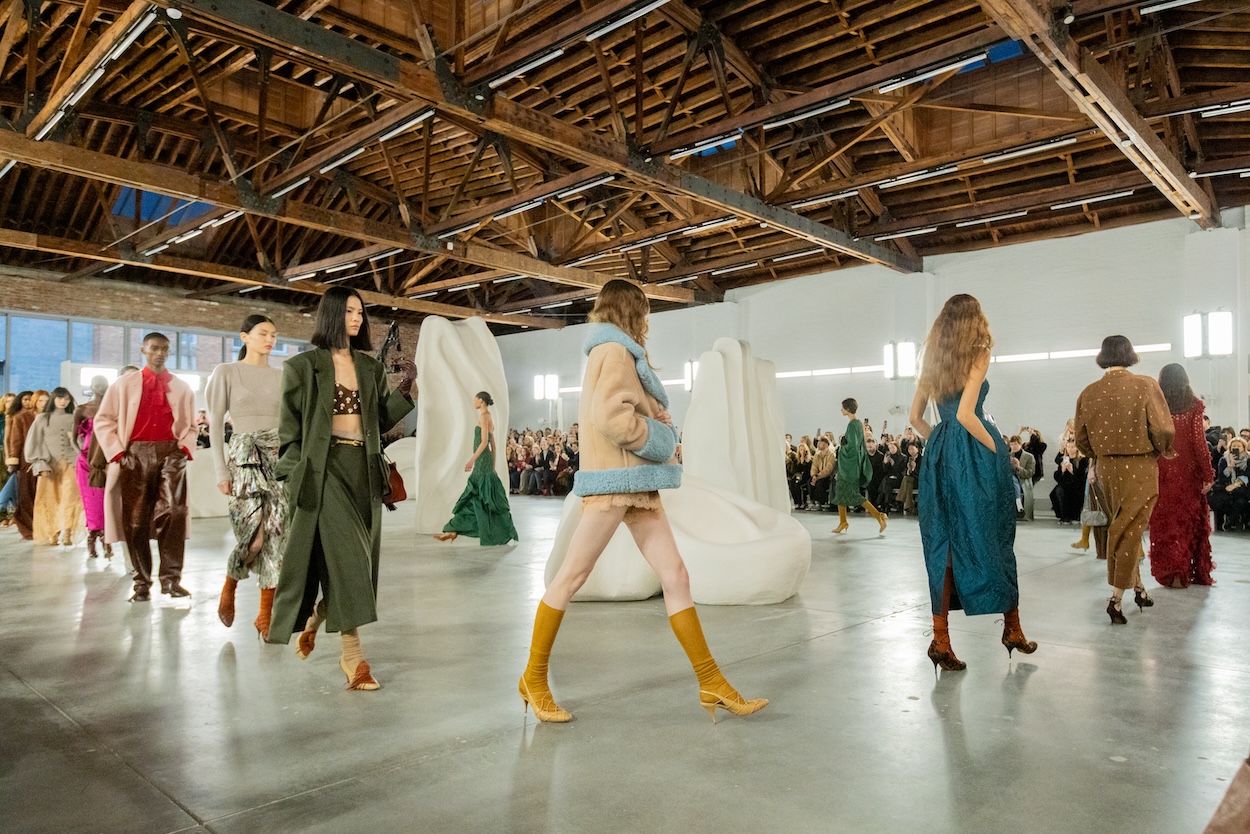
Ulla Johnson presented her Fall/Winter 2026 collection within Dia Art Foundation’s Chelsea location. The location was unsurprising for the designer, who has previously shown within Powerhouse Arts, the Brooklyn Museum, and the New York Public Library. “Each season we do try to shine a light on New York’s cultural institutions, and it’s become something we are known for,” she tells Surface. “Art has long been an inspiration and we are speaking about it more as a brand within our shows and collaborations.” Here, however, the collection harmonized with the storied art space.
Carolina Herrera Fall/Winter 2026, photo courtesy of Carolina Herrera
…
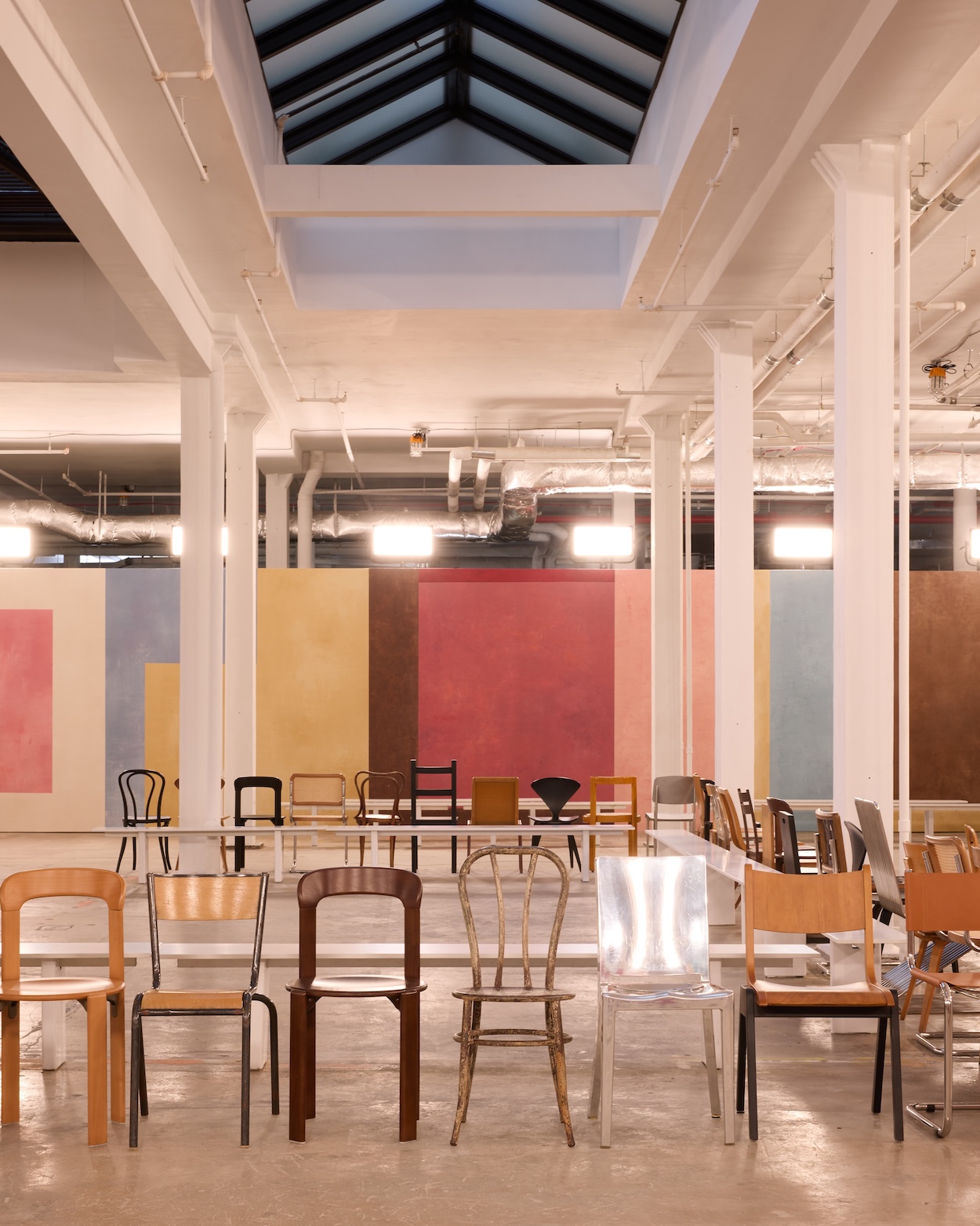
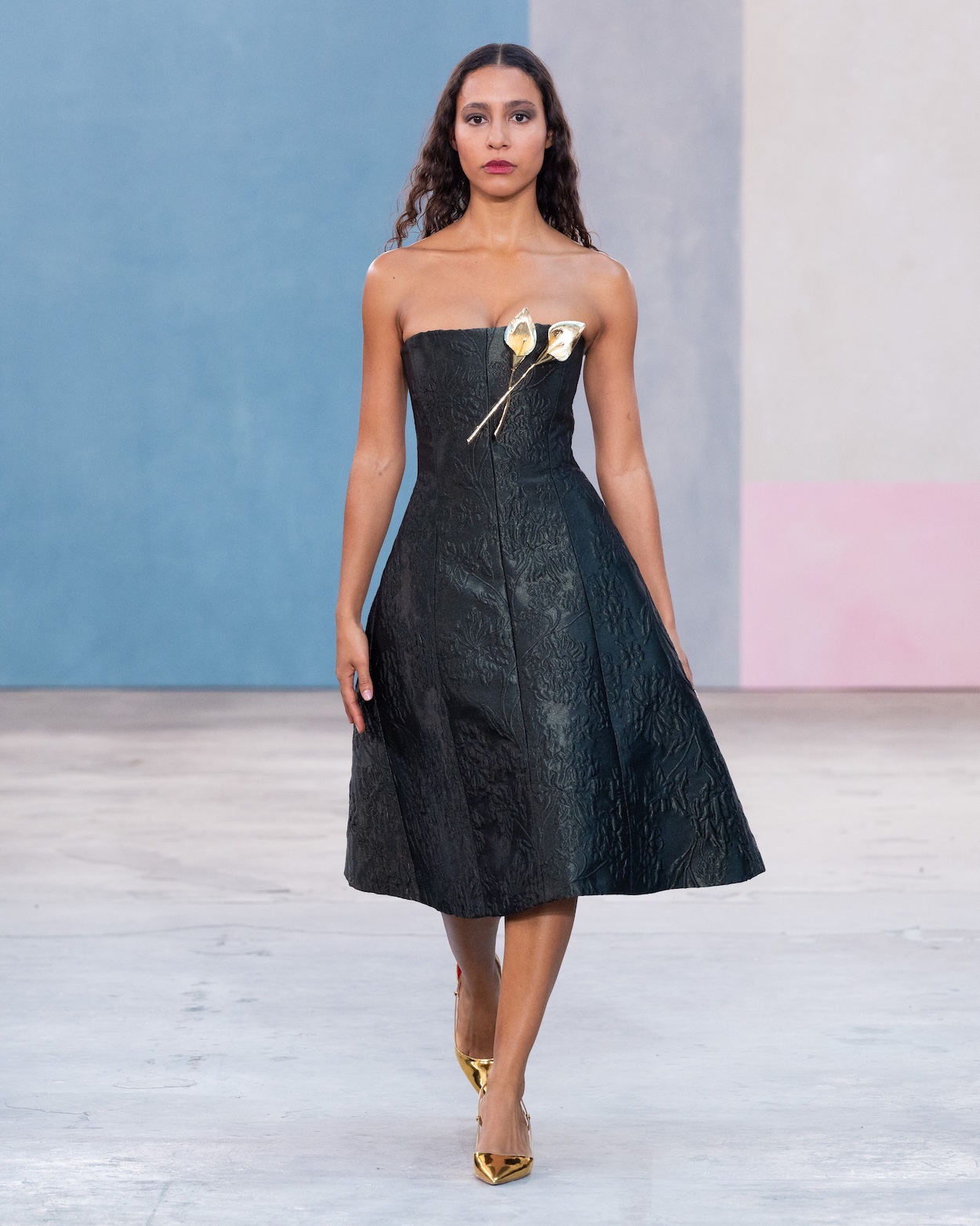
Perhaps the most comprehensive art-world integration, however, came from Carolina Herrera’s Fall/Winter 2026 collection. Creative director Wes Gordon invited influential art-world figures—including Amy Sherald, Rachel Feinstein, Ming Smith, Eliza Douglas, and Hannah Traore—to walk the runway, enveloped by artist Sarah Oliphant’s backdrops. “The design concept for the Carolina Herrera show was inspired by the color field paintings of 1940s and 1950s New York City,” the painter and set designer tells Surface. “This movement produced works that were deceptively simple—composed primarily of large blocks of color, with no subject matter, extravagant gestures, or implied movement. Just color against color. The result was clean and uncomplicated, yet emotionally powerful.”
Hannah Traore, Carolina Herrera, Fall 2026, courtesy of Carolina Herrera
…
“We created a scale rendering of the 17 drops that would surround the venue and then began dividing the surfaces into distinct shapes and colors,” she continues. “We limited our palette to hues from the collection, treating each block of color as its own unique backdrop. For three weeks, we were immersed in the magic of color and texture. It was an intensely pleasurable painting experience.” For viewers, it was not only pleasing but transportive.