On October 2, acclaimed contemporary artist Nick Cave welcomed guests to the Frederik Meijer Gardens & Sculpture Park in Grand Rapids, Michigan. There, his 26-foot-tall bronze sculpture, Amalgam (Origin), now rises from the abundant flora. Amalgam (Origin) debuted earlier this year as the centerpiece of the inaugural exhibition within the new Jack Shainman Gallery Tribeca flagship. Even then, the artist acknowledged that he hoped this piece would find a home in a place accessible to many.
Nick Cave’s ‘Amalgam (Origin)’ Now Rises Within the Frederik Meijer Gardens & Sculpture Park
A permanent acquisition, the 26-foot-tall bronze sculpture appears to hover above the flora upon approach
BY DAVID GRAVER October 03, 2025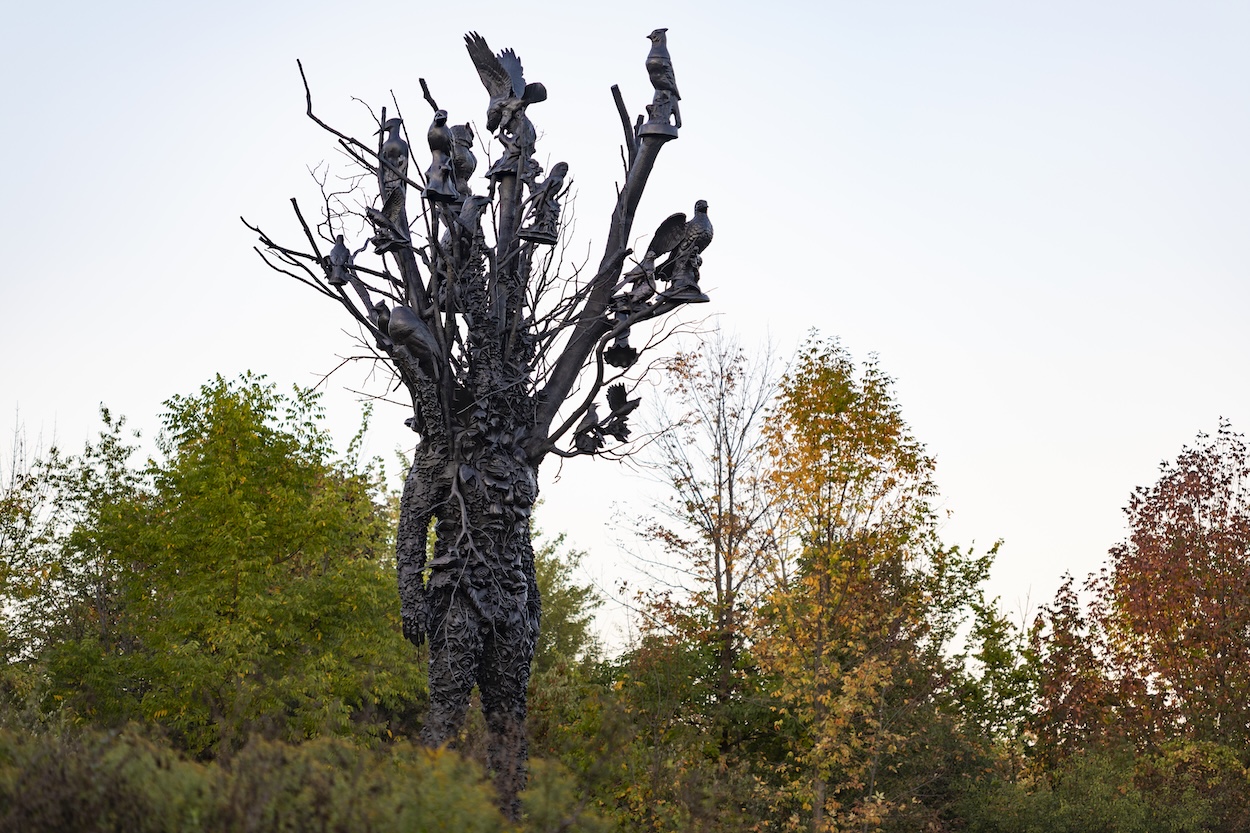
Nick Cave, Amalgam (Origin), 2024, Bronze, 309 ⅝ x 201 x 227 in., Gift of Fred and Lena Meijer © Nick Cave. Courtesy of the artist and Jack Shainman Gallery, New York. Photo: Jason Whalen, Fauna Creative
…
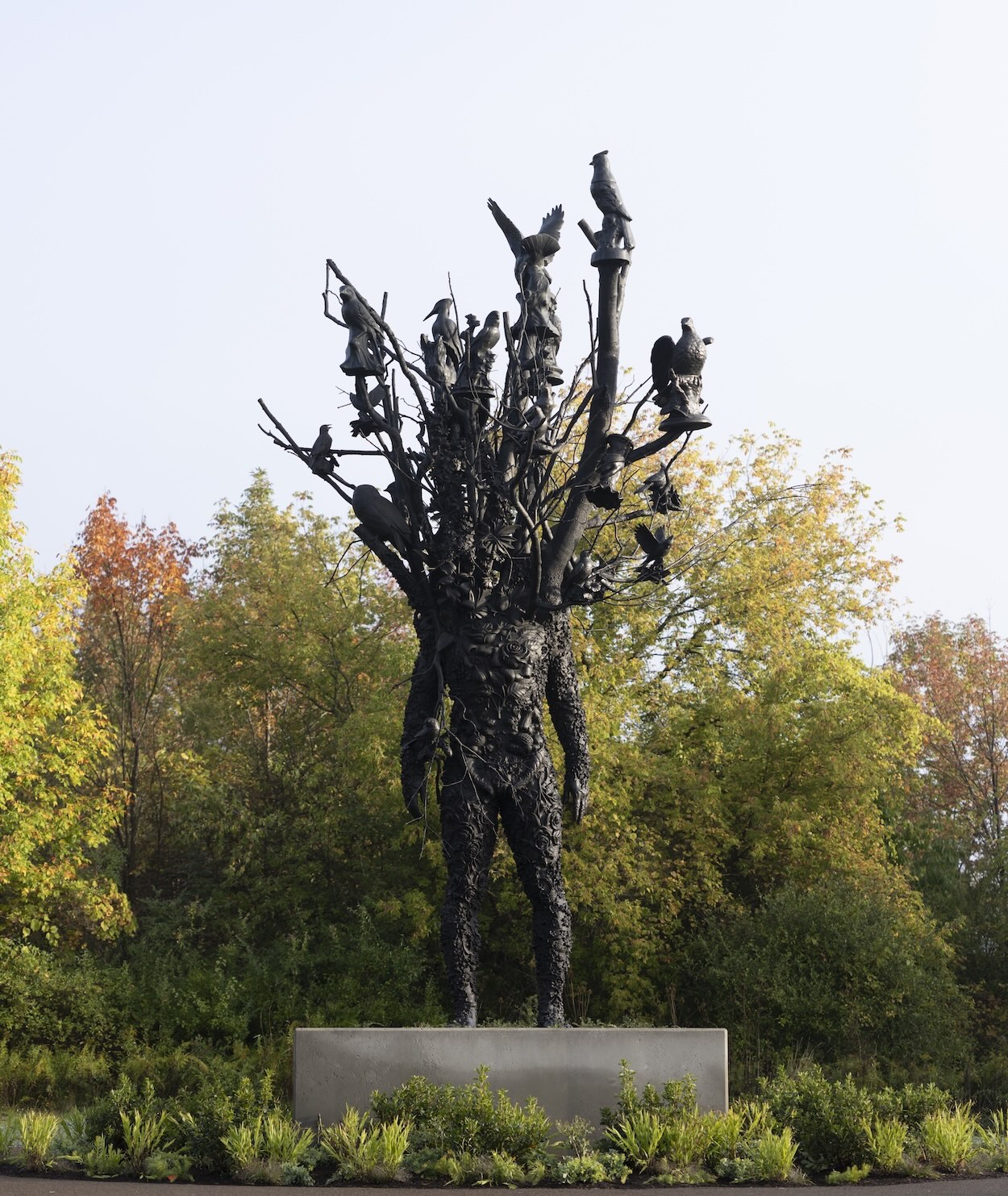
Nick Cave, Amalgam (Origin), 2024, Bronze, 309 ⅝ x 201 x 227 in., Gift of Fred and Lena Meijer © Nick Cave. Courtesy of the artist and Jack Shainman Gallery, New York. Photo: Jason Whalen, Fauna Creative
…
This permanent acquisition marks Cave’s first-ever outdoor public sculpture. Though grateful for his museum shows and gallery exhibitions, the artist tells Surface that, “I feel more resolved when I am doing performance space work or work for the community. This moment is critical because I have been trying to get the work out into public spaces—and out into the world in a different way. This is the start of that.”
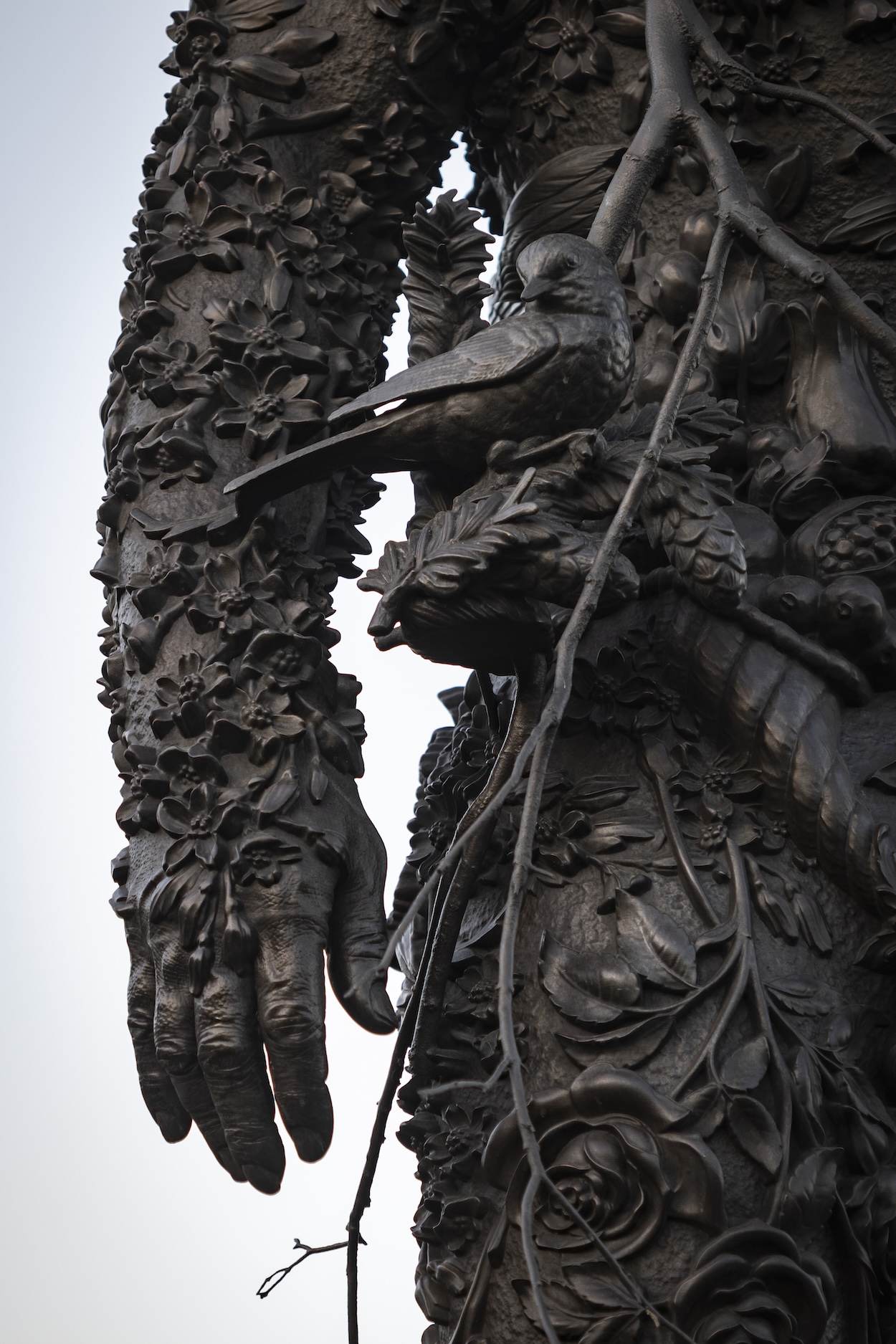
Nick Cave, Amalgam (Origin) (detail), 2024, Bronze, 309 ⅝ x 201 x 227 in., Gift of Fred and Lena Meijer © Nick Cave. Courtesy of the artist and Jack Shainman Gallery, New York. Photo: Jason Whalen, Fauna Creative
…
“I saw the piece yesterday for the first time,” Cave says of its home in the gardens. “It was interesting, when it was in the gallery, how it felt there—this majestic figure. In the garden, now, it has this aura around it. It’s really quite extraordinary.” Further, he appreciates that it’s a journey within the park to the piece—a pilgrimage even—to its position alongside the North Path near The Richard & Helen DeVos Japanese Garden and Michigan’s Farm Garden. “To be able to look up at this statue is just so extraordinary. There he stands, with his feet grounded, with this presence that pushes back against all odds. He’s standing in his truth,” Cave adds.
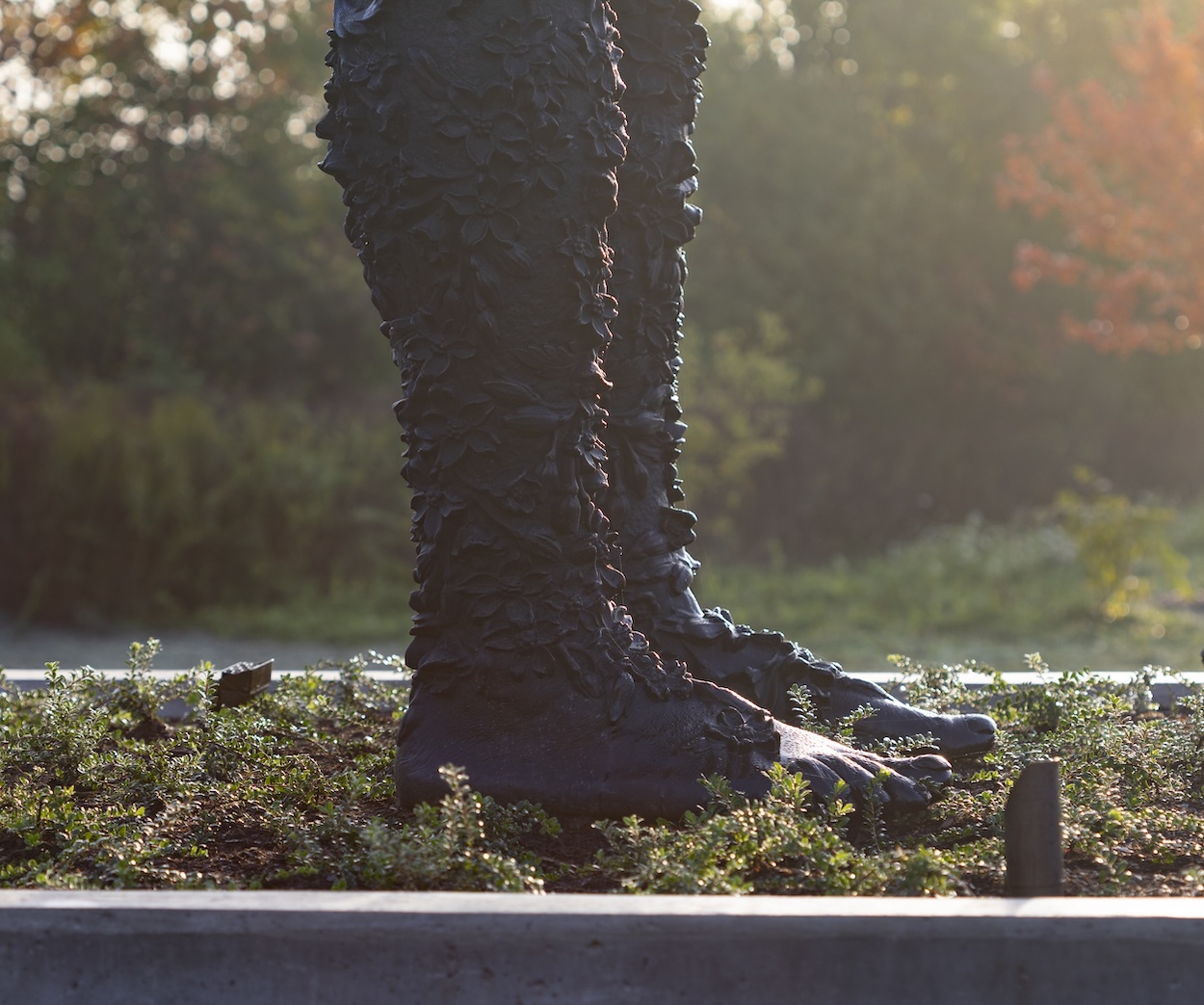
Nick Cave, Amalgam (Origin) (detail), 2024, Bronze, 309 ⅝ x 201 x 227 in., Gift of Fred and Lena Meijer © Nick Cave. Courtesy of the artist and Jack Shainman Gallery, New York. Photo: Jason Whalen, Fauna Creative
…
Amalgam (Origin) invokes the language of nature—birds and branches in bronze. These forge a dialogue with the natural surroundings. “Beyond the bronze, I had to think about landscaping,” he says. “It was interesting to work with the horticulture team here and really design the landscape as a foundation in which this piece sets upon. As you approach the piece from the distance, it appears to be hovering above the grasses. When you get up to it there are pathways cut out that lead you closer to the piece. But I was interested in this illusion of elevating above the earth so we designed it in that way.”
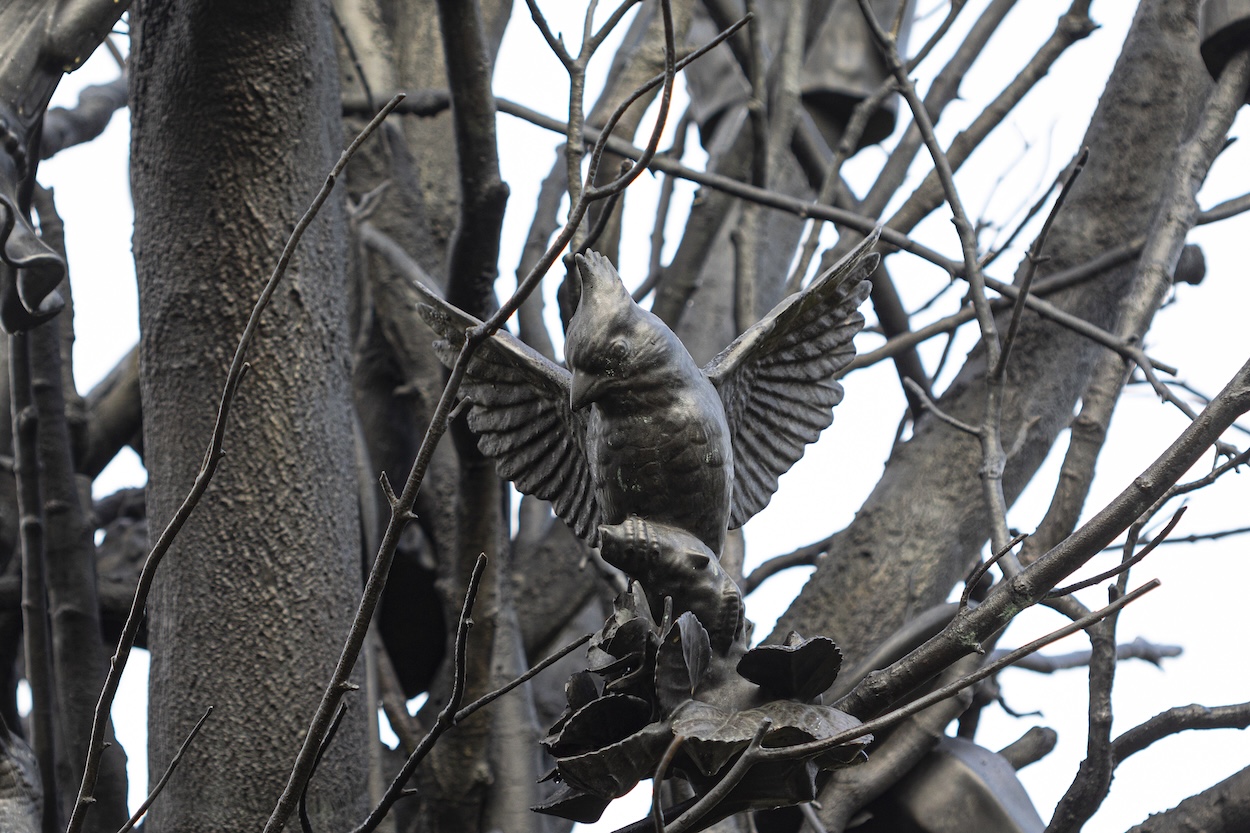
Nick Cave, Amalgam (Origin) (detail), 2024, Bronze, 309 ⅝ x 201 x 227 in., Gift of Fred and Lena Meijer © Nick Cave. Courtesy of the artist and Jack Shainman Gallery, New York. Photo: Jason Whalen, Fauna Creative
…
“I wanted it to be as natural as possible,” he continues. “Growing up the base will be vine-like foliage. Everything will disappear. The body is covered in this floral relief. I asked, ‘how do we become grounded with Mother Nature and feel this connection?’ This whole floral pattern continues from nature up the body and then morphs into this tree-like sculpture. You feel like the arms are reaching to the sky.”
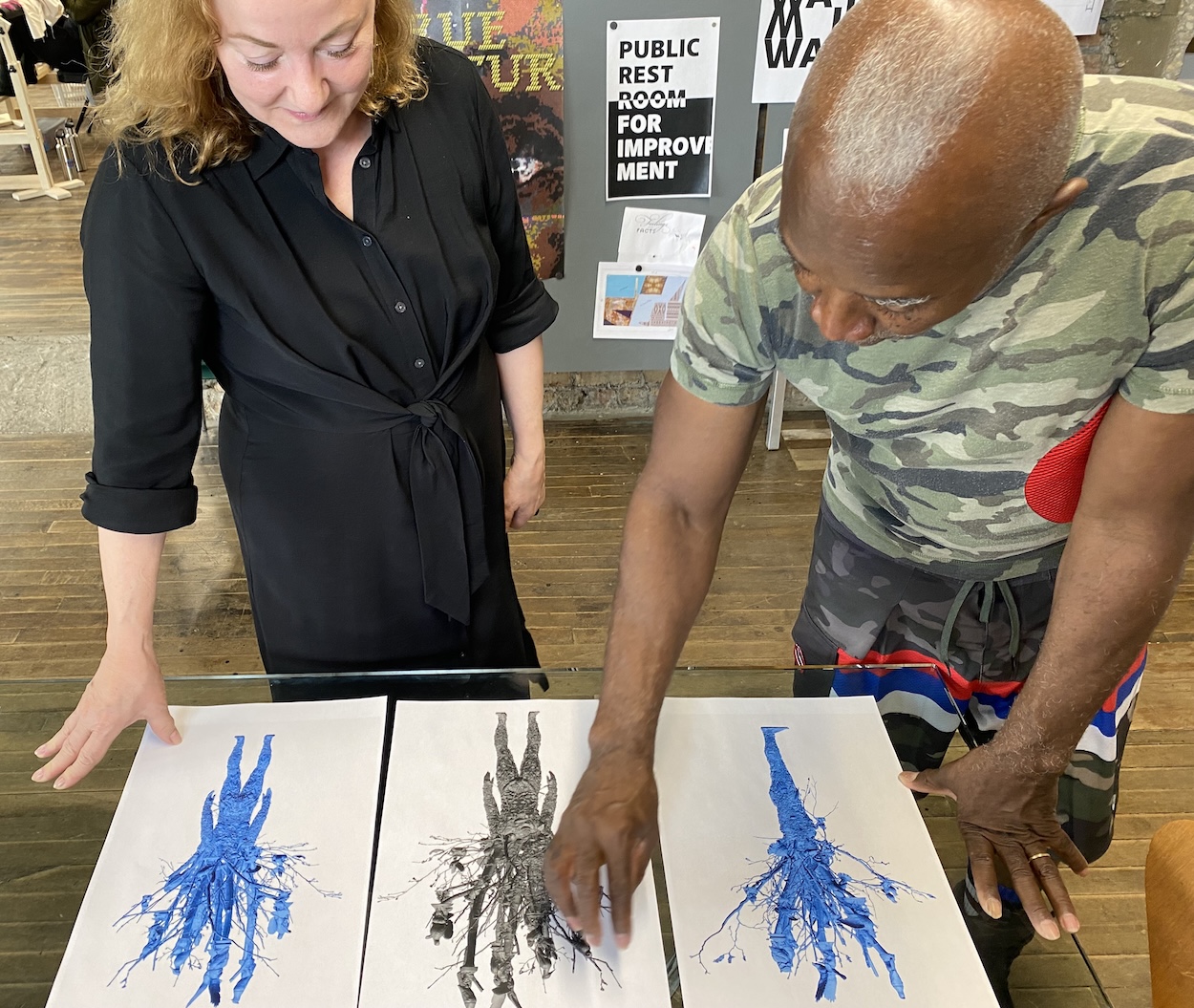
Suzanne Ramljak and Nick Cave at Nick Cave Studio, photo courtesy of Frederik Meijer Gardens & Sculpture Park
…
Cave finds his piece in dialogue with art from others throughout the 158-acre main campus. “For me to walk these grounds, the level of sculpture here is just incredible, from Henry Moore to Deborah Butterfield, Richard Hunt. For me, to be in this arena with these amazing artists is fantastic. The team,” he concludes, “knows the importance of sculpture here. They know the impact it will bring to the community.”