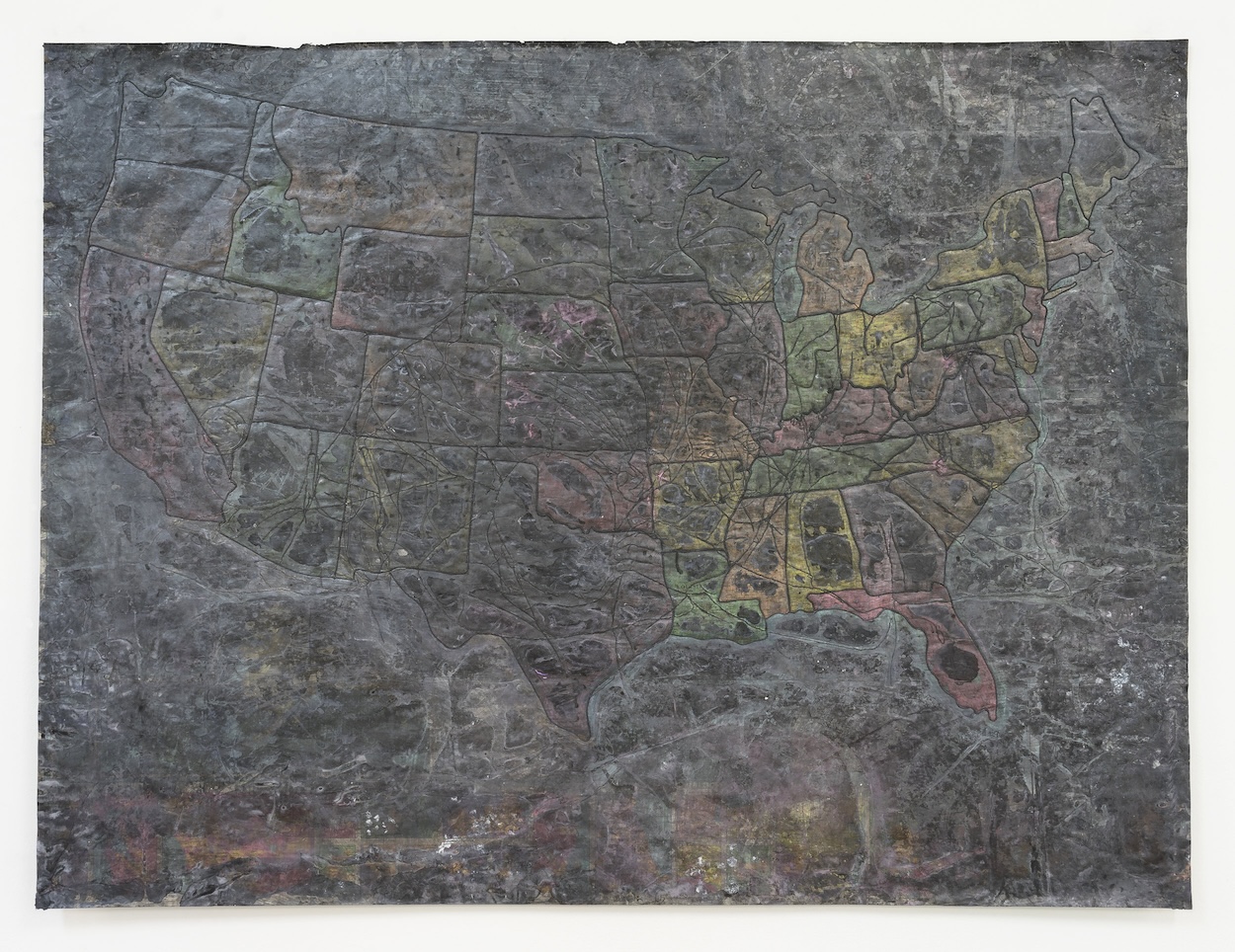
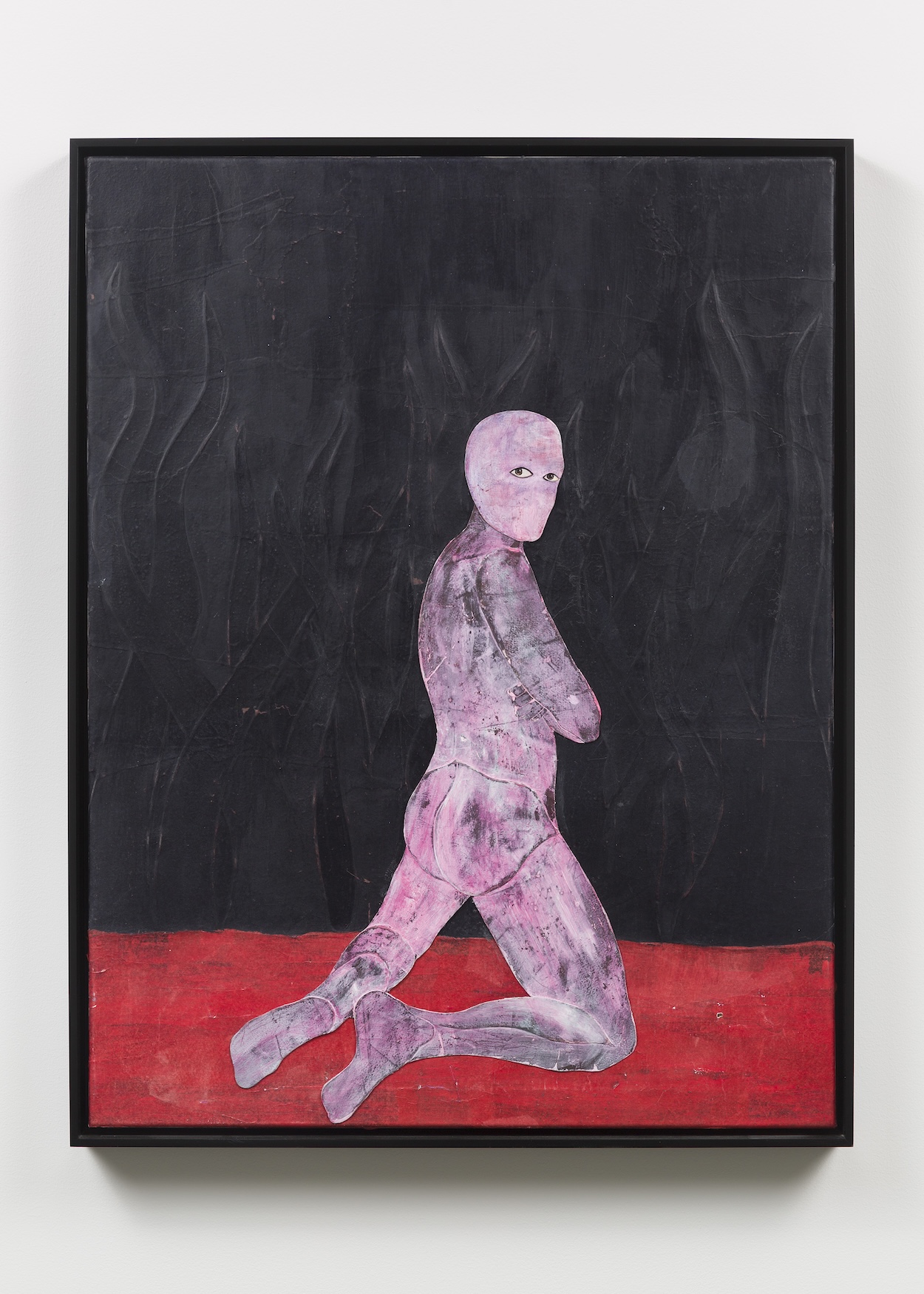
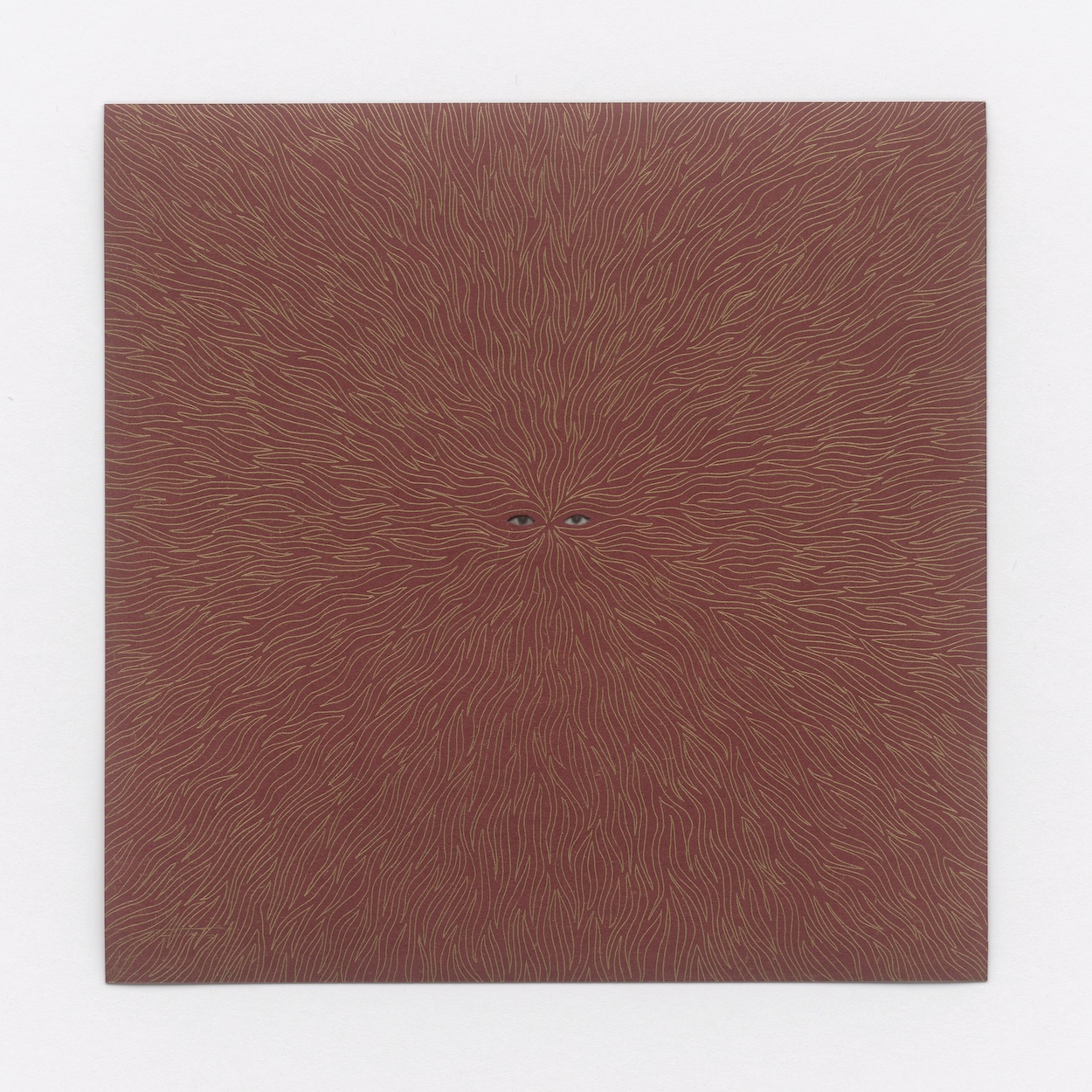
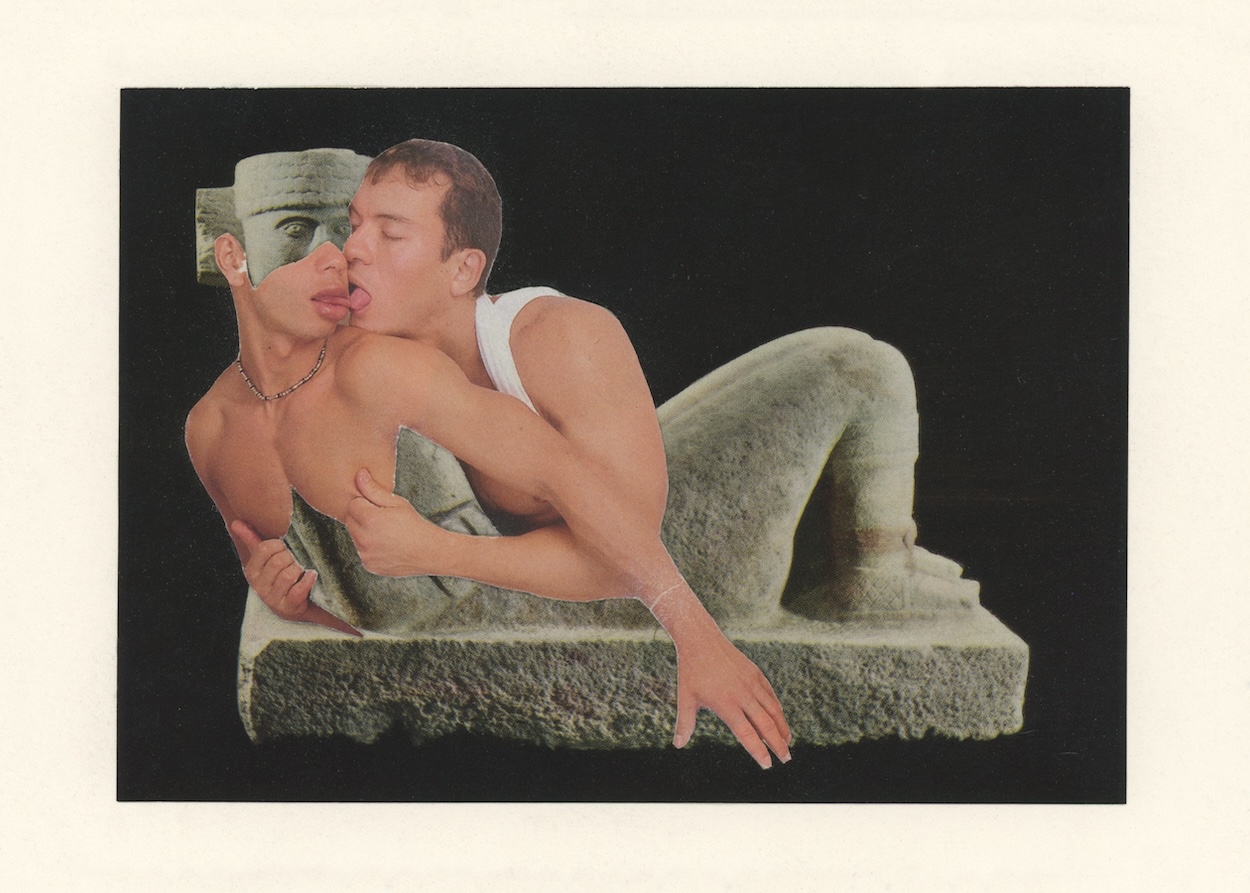
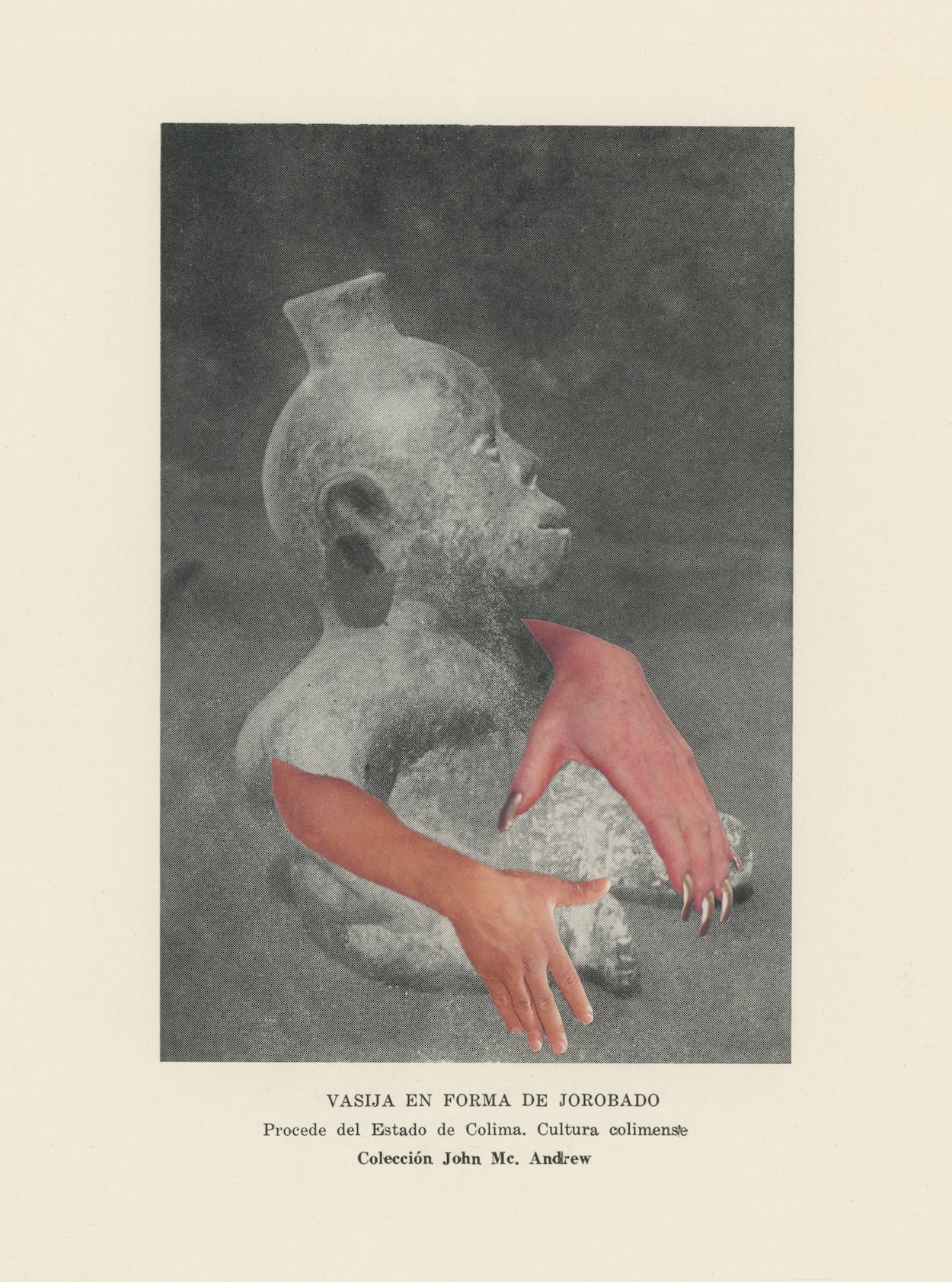
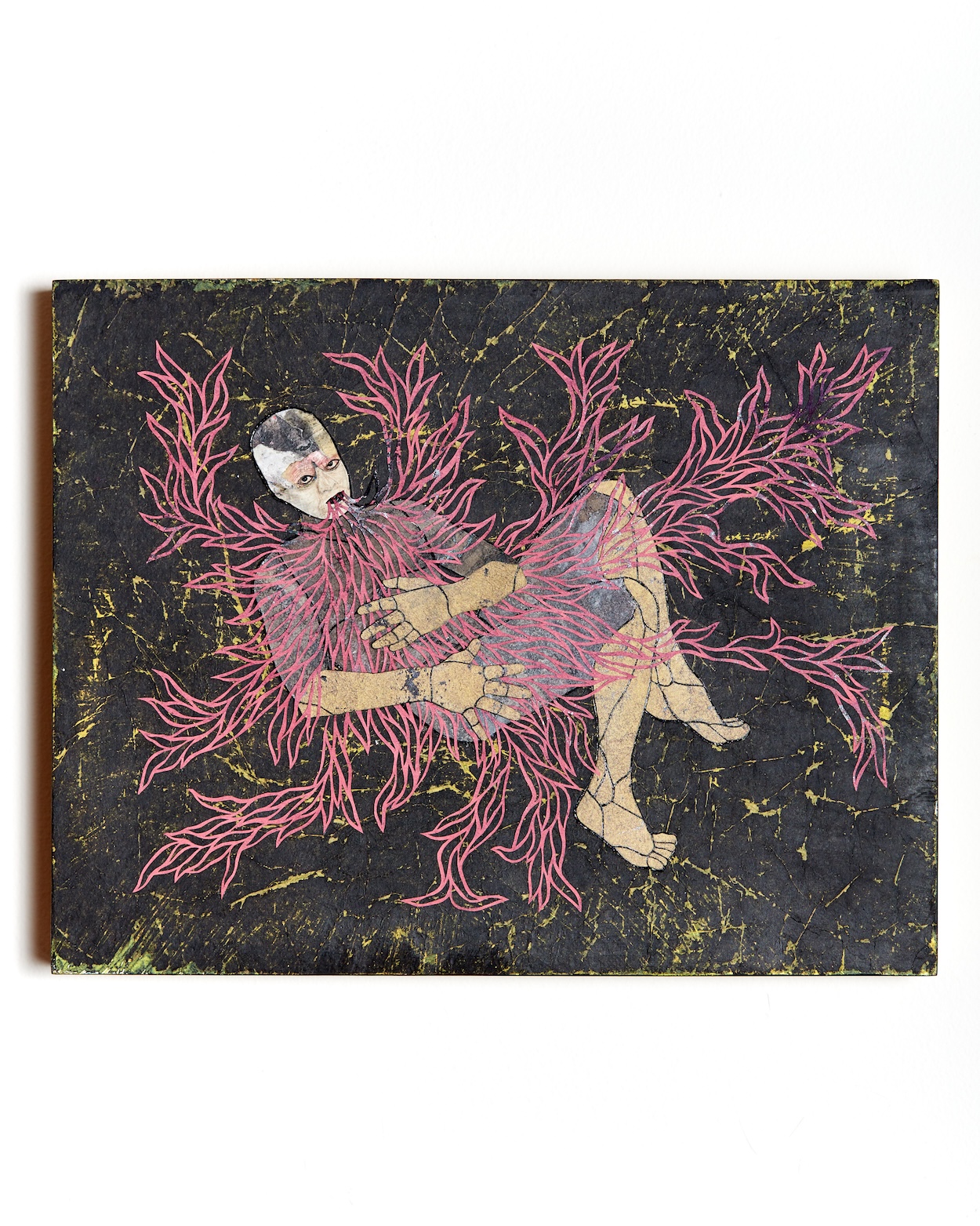
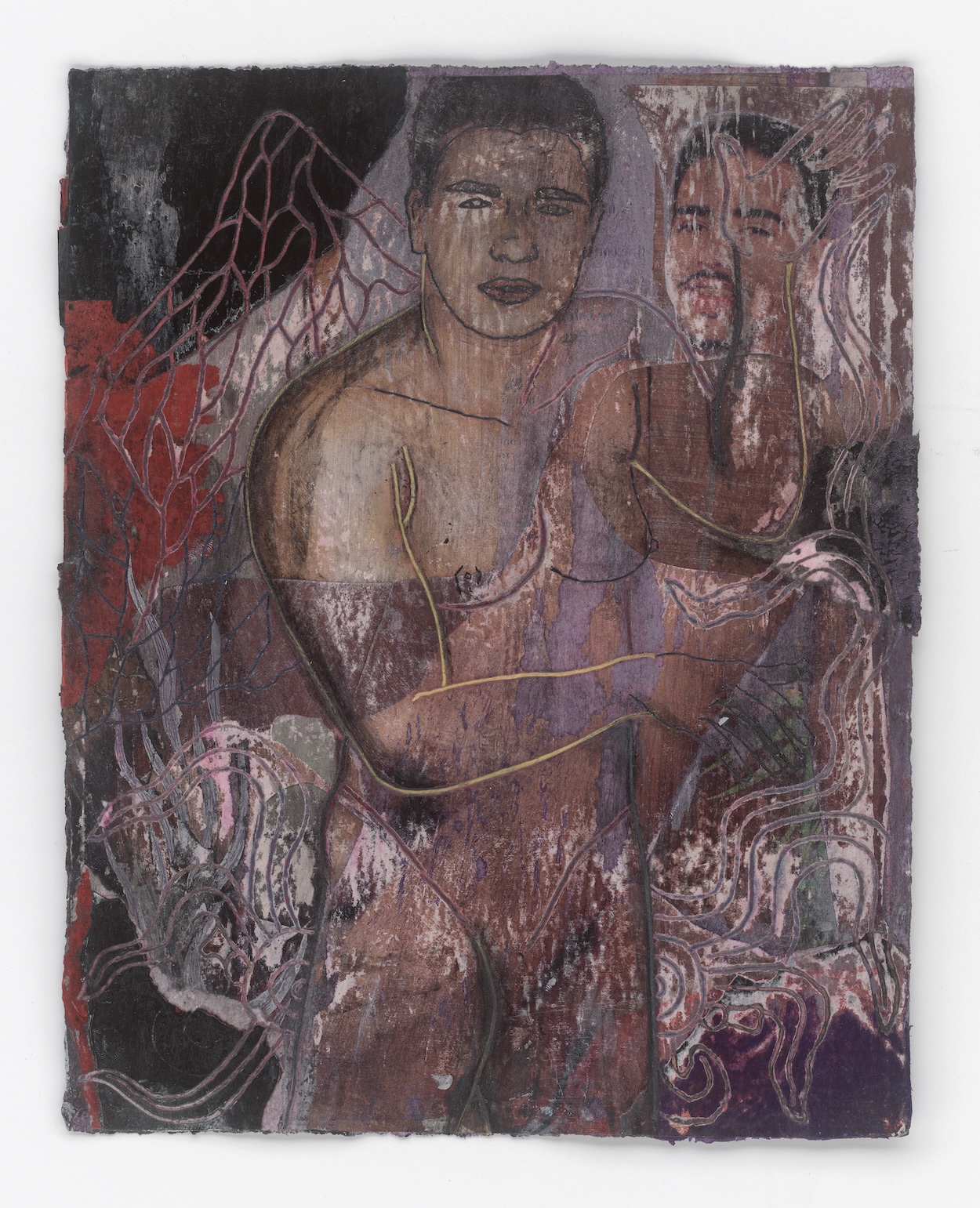
The first monographic institutional exhibition of Brooklyn–based artist Felipe Baeza in New York, “Anima” presents more than 40 thought-provoking artworks predicated on material experimentation in printmaking. Through the exhibit, Print Center New York allows visitors access to both Baeza’s practice and process. Whether it’s the artist’s multi-layered approach to figuration or his tendency to manipulate paper and canvas through collage and abrasion, the survey spans 15 years of influential work.
A swift undercurrent to every piece is the representational power of Baeza’s subject matter—including migrant and queer figures, and the occasional flamboyant implication (especially in the piece named “Flamboyance”). An emotional magnitude imbues each work, conveyed through the specificity of the palette and the presence (or lack thereof) of a character. To step further into Baeza’s comprehensive vision, we spoke with the artist following the opening of “Anima.”
Courtesy of Felipe Baeza…
Can you speak to the power of printmaking as an artistic medium? What brought you to this format? How does it sustain your desire to create?
Before undergrad, I was primarily invested in sculpture and applied to college with a sculptural portfolio. At Cooper Union, I was introduced to printmaking and quickly became immersed in the medium. To me, it felt very sculptural, whether carving onto a wooden plate or grinding a stone for lithography. What also drew me in was its relationship to pressure, transfer, and layering. In many ways, printmaking is closely related to collage. Through printmaking, an image is formed through contact. It requires friction, repetition, and time. That physicality felt honest to me, much like making sculptures did.
Over the years, I have come to understand printmaking less as a reproductive medium and more as an expanded field. Paper is no longer simply a support that holds an image. It absorbs, resists, stains, and records. It carries memory. When I sand or soak paper, or when I embed collage within it, I am thinking about it as a living surface. Printmaking sustains me because it mirrors how histories accumulate. Images are transferred, distorted, and reworked. There is always the possibility of another layer. That openness keeps me engaged.
Courtesy of Felipe Baeza…
In what ways have you found experimentation in printmaking? How have you involved other forms of artistic exploration—collage, painting, abrasion—here?
My experimentation began when I started pushing against what a print was supposed to look like and began embracing failure creatively. Instead of keeping the surface fixed and intact, I started cutting into it, sanding it down, layering sheets together, and collaging fragments between papers. I was interested in how the surface could feel activated, almost bodily. Collage became central because it allowed me to combine different times and spaces within a single image. Painting, staining, and abrasion allowed the material to shift and morph. I treat paper almost like skin. It stretches, scars, absorbs pigment, and changes over time. For me, experimentation is not about novelty. It is about asking how the material can manifest the ideas I am working through. How can fragmentation open space rather than signal damage? How can layering become a way of holding multiple histories at once? These questions continue to guide the work.
Courtesy of Felipe Baeza…
Let’s talk about the 40 works in this survey. How do you feel when you look at them and when you think about them?
Looking at the works together feels less like seeing a linear progression and more like encountering different moments of inquiry. I see continuity in concerns that have stayed with me for over a decade. Fragmentation, instability, and refusal were present early on, even if I did not yet have the language for them. Certain forms and motifs reappear in unexpected ways. There are gestures in early works that now feel prophetic. At the time, I may not have understood their significance, but revisiting them clarifies that my practice has never been about resolution. It has been about deepening a visual language that resists fixity. Seeing the works together also feels tender. They mark different emotional and intellectual states. They carry questions I was wrestling with at different points in my life. In that sense, they feel alive.
Courtesy of Felipe Baeza…
Can you speak to your artistic process? Where do you begin?
I usually begin with accumulation. Sketches, readings, fragments of text, archival images, and scraps of paper left over from previous works. My studio is full of materials in various states of becoming. Often a scrap from one piece will find its way into another, but I do tend to work on one piece at a time. That focus allows me to sit deeply with the material and let it unfold. There is a back and forth between control and surrender. I constantly question how the material can carry the idea. How can the surface manifest the conceptual concerns? Collage plays an important role because it allows me to work from a site of fracture rather than repair. Fragmentation for me is not about violence. The body is whole. It is thriving. But it is also porous and amalgamated. Incompleteness creates space for imagination. I allow the work to shape shift. It is an extremely joyful frustration.
Courtesy of Felipe Baeza…
Will you please speak to “fugitive” bodies—and the way you approach figurative depictions?
I would begin by saying that it almost defeats the purpose to speak about the fugitive directly, so I prefer to think about it in terms of refusal. These concepts entered my practice years ago through the work of Édouard Glissant and Fred Moten. They offered a way to think about bodies that move beyond containment and categorization. Over time, my language has evolved. I have also thought through unruliness, waywardness, and more recently, refusal. What connects these ideas is a resistance to fixed identity.
My figures are not portraits of specific individuals. I think of them now as amalgamated figures. They hold multiple temporalities, geographies, and references at once. They are unstable in a generative way. Figuration for me is not about rendering the body as a stable subject. It is about creating space for refusal. The body in my work refuses singular legibility. It morphs. It merges with flora, flame, and atmosphere. These figures are not escaping. They are becoming.
Is there anything you’d like to say about your relationship to your color palette?
Color in my work is often tied to atmosphere. I think about the sky at dusk or dawn, those transitional moments when the light feels moody and unsettled, moments of transformation. There is a quiet tension in that time of day that I am drawn to. My palette tends toward muted blues, purples, greys, and pinks, with occasional intensities of red. These colors hold both tenderness and unease. They create an emotional temperature. Color also functions spatially. It allows the figures to emerge and dissolve. It can suggest depth, interiority, or suspension. Like the bodies, the palette resists clarity. It sits between states.