Guillaume Goureau, courtesy of Palm Springs Art Museum…
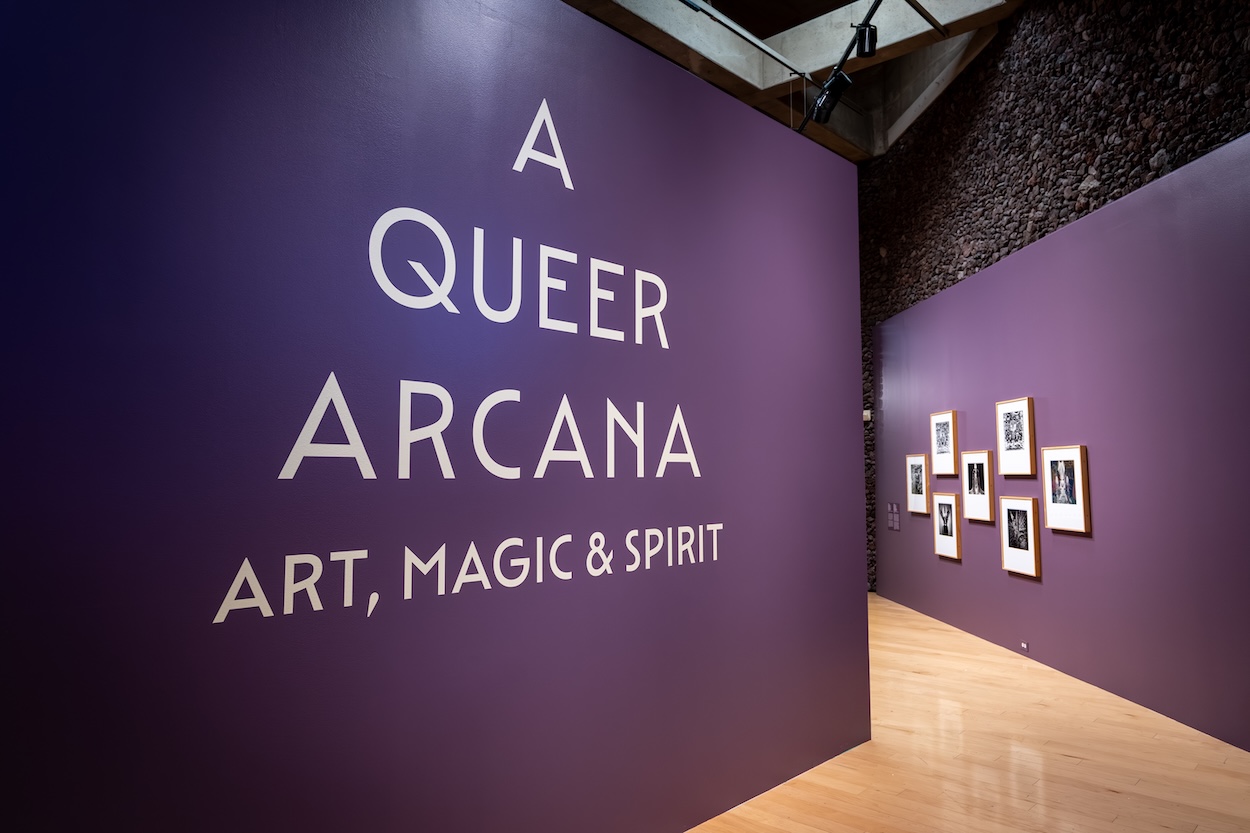
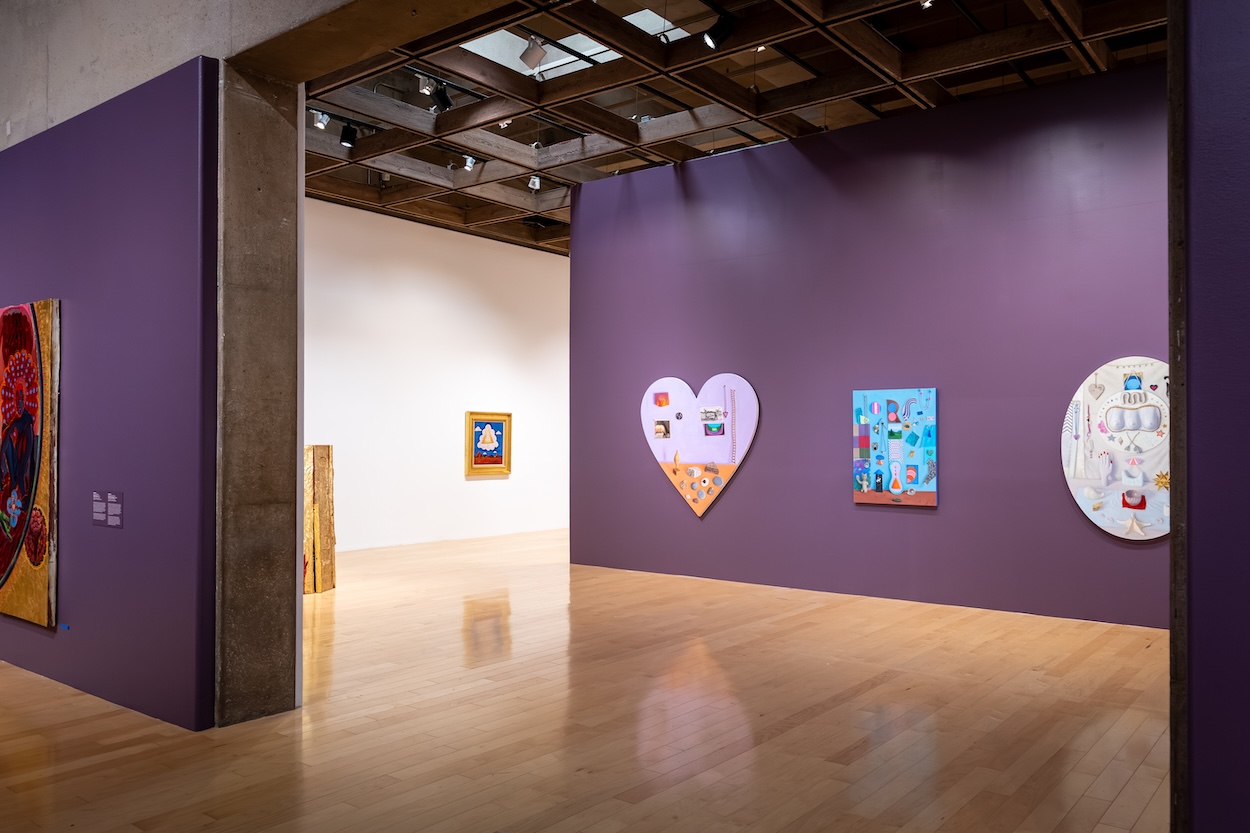
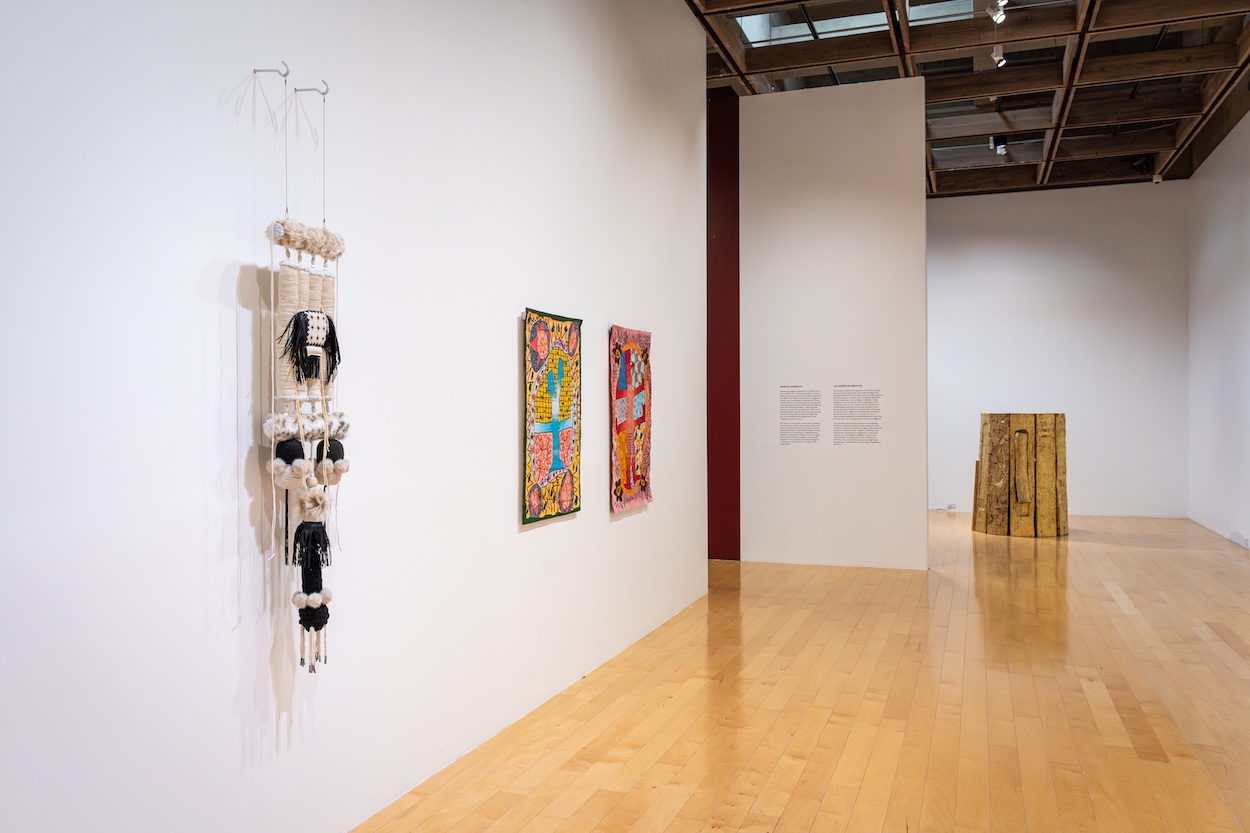
Within “A Queer Arcana,” Palm Springs Art Museum bridges magic, spirituality, and occult knowledge with LGBTQ+ culture through artistic works produced in both the 20th and 21st centuries. Drawings, paintings, sculpture, and more forge a bond between social and political movements (including gay liberation and feminism) and the way queer communities explore the esoteric and look to magical practices for inspiration and solace.
The exhibition was born from the California museum’s Q+Art initiative, which launched in 2023. “It is the only program of its kind dedicated to queer art and artists within a general art museum,” Christine Vendredi, JoAnn McGrath Executive Director, Palm Springs Art Museum, shares with Surface. “Rooted in Palm Springs’ role as a center for LGBTQ+ culture in the United States, Q+ Art advances the recognition of LGBTQ+ artists and art histories through exhibitions, programs, collection building, community engagement, and education, while expanding and challenging traditional art historical narratives.”
Guillaume Goureau, courtesy of Palm Springs Art Museum…
The pieces within “A Queer Arcana” also reflect on the influence of place. “There is a throughline of California as a special place for queer spiritual seekers—West Coast artists include Steven Arnold, Cameron, Tee Corrine, Russell FitzGerald, Mundo Meza, and Faith Wilding, among others,” David Evans Frantz, Curator-at-Large, Q+ Art, Palm Springs Art Museum, says. “But the show also includes works by artists working in other parts of the United States, as well as abroad—Mexico, the U.K., and Japan.”
“I also leaned on artists whose work is deeply connected to magic, occultism, and other spiritual practices to guide my research,” Frantz continues. “Many people were incredibly generous in sharing their knowledge and insight. The show came together in a little under two years, which is somewhat fast for a project of this scope. I could not have pulled it together without many thoughtful guides and collaborators along the way.”
Guillaume Goureau, courtesy of Palm Springs Art Museum…
Frantz divided the show into six sections: To Kiss the Spirits, The Deck Recast, Occult Knowledge, Magical Americas, Sex Magick, and Witches Heal. “The sections developed organically through research and discussions with artists,” he says. “A section on Tarot emerged early in the research, given how many queer artists have been and continue to be drawn to Tarot and have reimagined it to reflect their lived experiences, politics, and community.” A seventh area, titled “Out of Your Broom Closets,” displays archival magazines, books, and other documents that set the historical stage for the show. It aligns ideas that run throughout the exhibition.
“When I started working on this show, I quickly learned that the historical linkages between magic, alternative spiritual traditions, and queer activism and community-building are far more wide-reaching than I had ever anticipated,” he continues. “In both the pre- and post-Stonewall eras, magical knowledge was a source of inspiration and strength for many activists, artists, and other creatives, particularly in the avant-garde and the counterculture. The esoteric spiritual histories of queer culture have not often been told within narratives of LGBTQ civil rights and the mainstreaming of queer culture. The exhibition seeks to draw out these connections and point to further areas of research and reflection.”
Guillaume Goureau, courtesy of Palm Springs Art Museum…
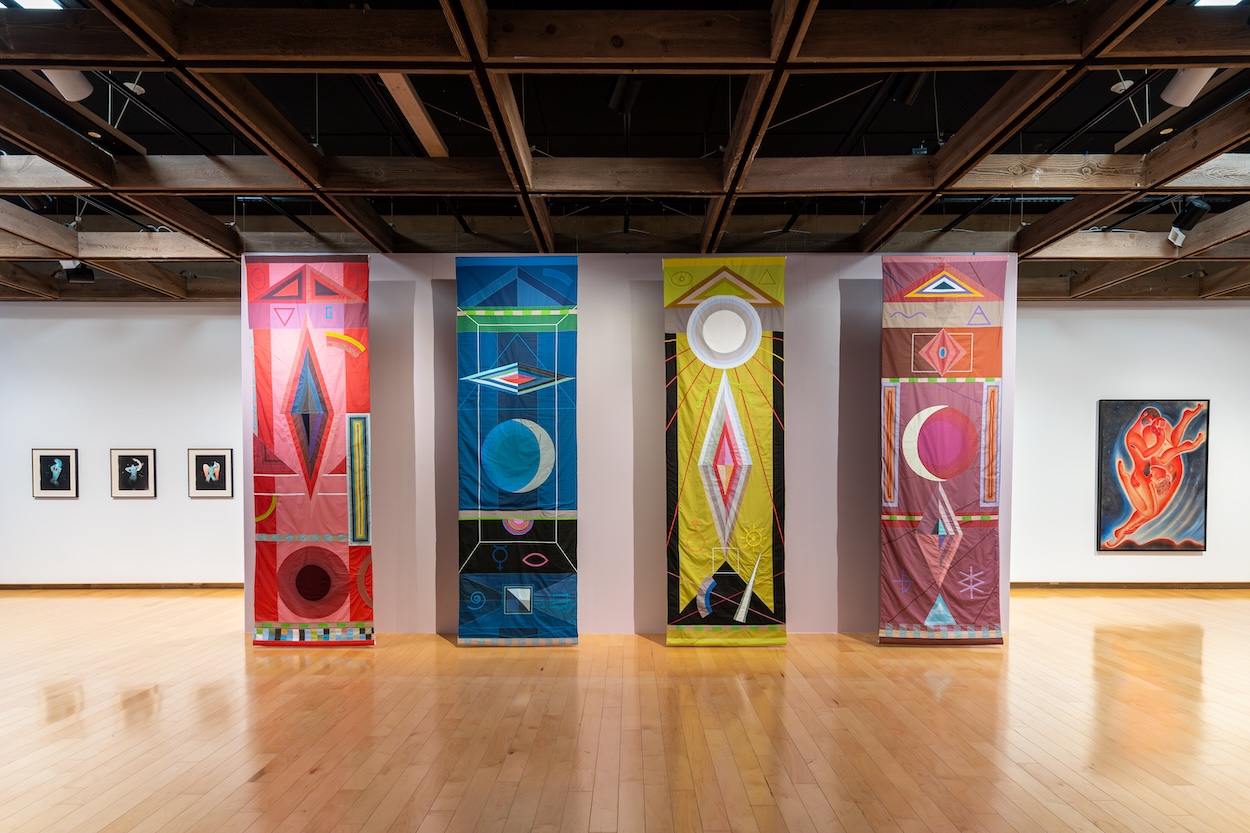
Central to “A Queer Arcana” is a four-banner commission by Hilma’s Ghost, titled Ritual Geometries of Desire (New Moon, Waxing Moon, Full Moon, Waning Moon). Furthermore, the artist collective’s Sharmistha Ray and Dannielle Tegeder were integral in the exhibition’s development. “The possibility to make new works inspired by Sex Magick came up early in our conversations,” Frantz says, “and I was excited about the inclusion of works within the section that utilize their vocabulary of hard-edge abstraction to explore the power of queer erotics and gender transgression.” The banners affirm the section—and the entire exhibition—as a sacred space.