In 2011, the “creator economy” was first given a name. This year, such digital platform-based marketing is expected to reach a value of $2 trillion. Although the approximately 50 million content creators around the globe reach about five billion people on social media, in real life, “a lot of them feel really isolated,” says Nathan Warkentin, principal of Los Angeles and New York–based design studio Warkentin Associates. With local firm Bench Architecture, Warkentin has transformed a 30,000-square-foot former pencil factory in Brooklyn’s Greenpoint neighborhood into a space where creators can meet, mingle, and make content.
Funded by creator company Whalar Group, the Lighthouse is a members-only workplace specifically for content creators and traditional creatives like photographers, graphic designers, or videographers. Having previously designed for CEO Jon Goss when he was chief marketing officer at NeueHouse, Warkentin crafted Whalar’s first outpost last year in a deaccessioned 1939 post office in Venice, California. This month, its Brooklyn branch opened in an 1872 Eberhard Faber plant-turned-office, which Kickstarter vacated in 2020.
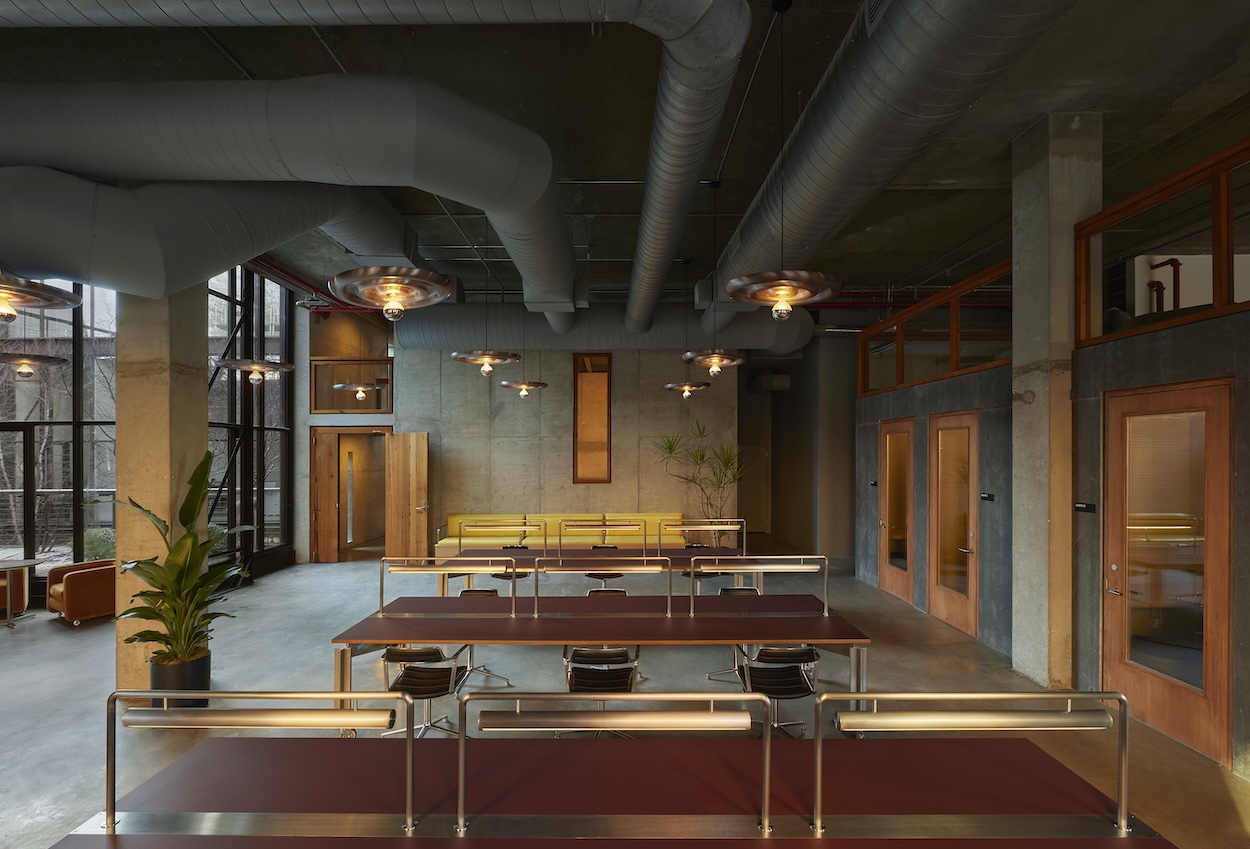
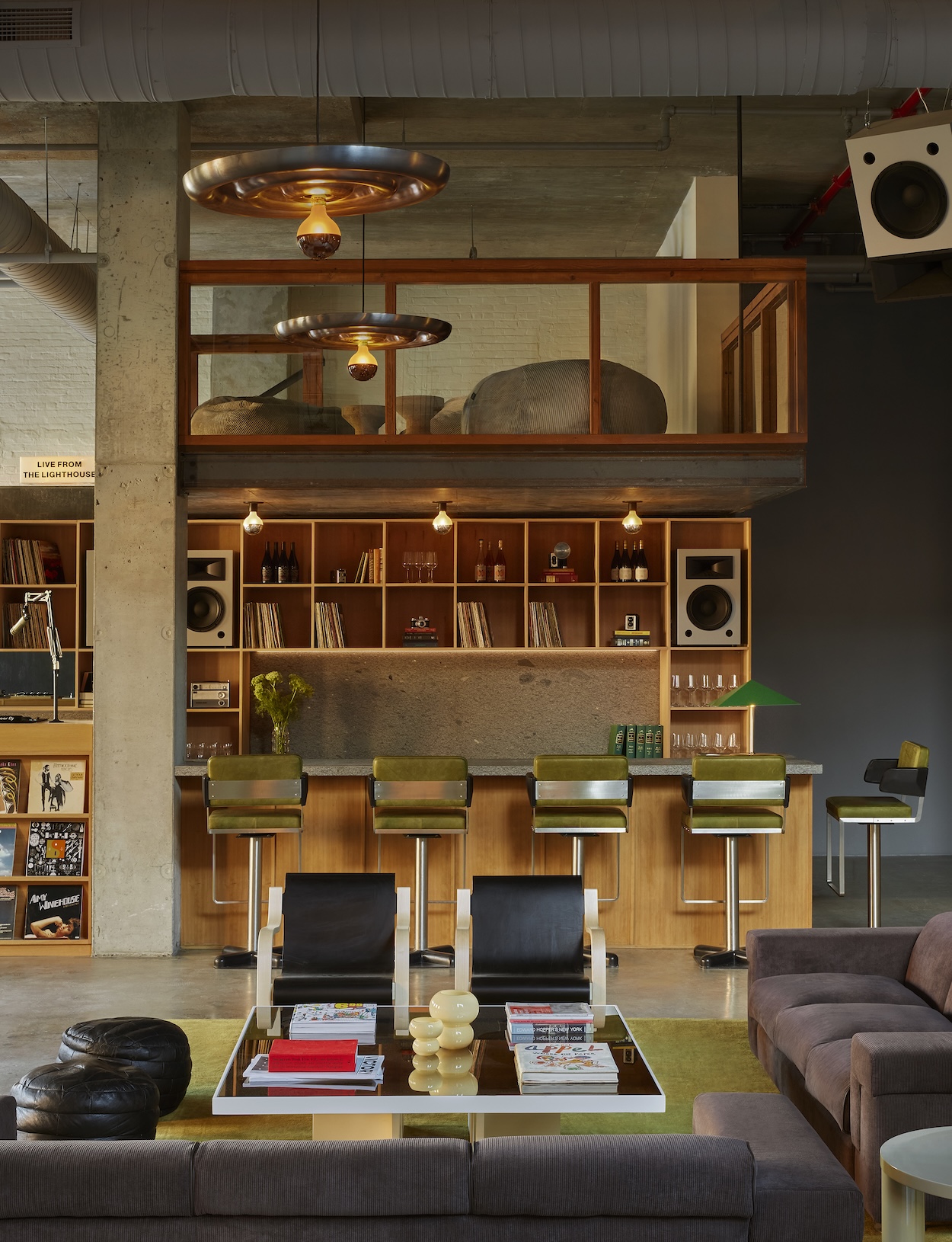
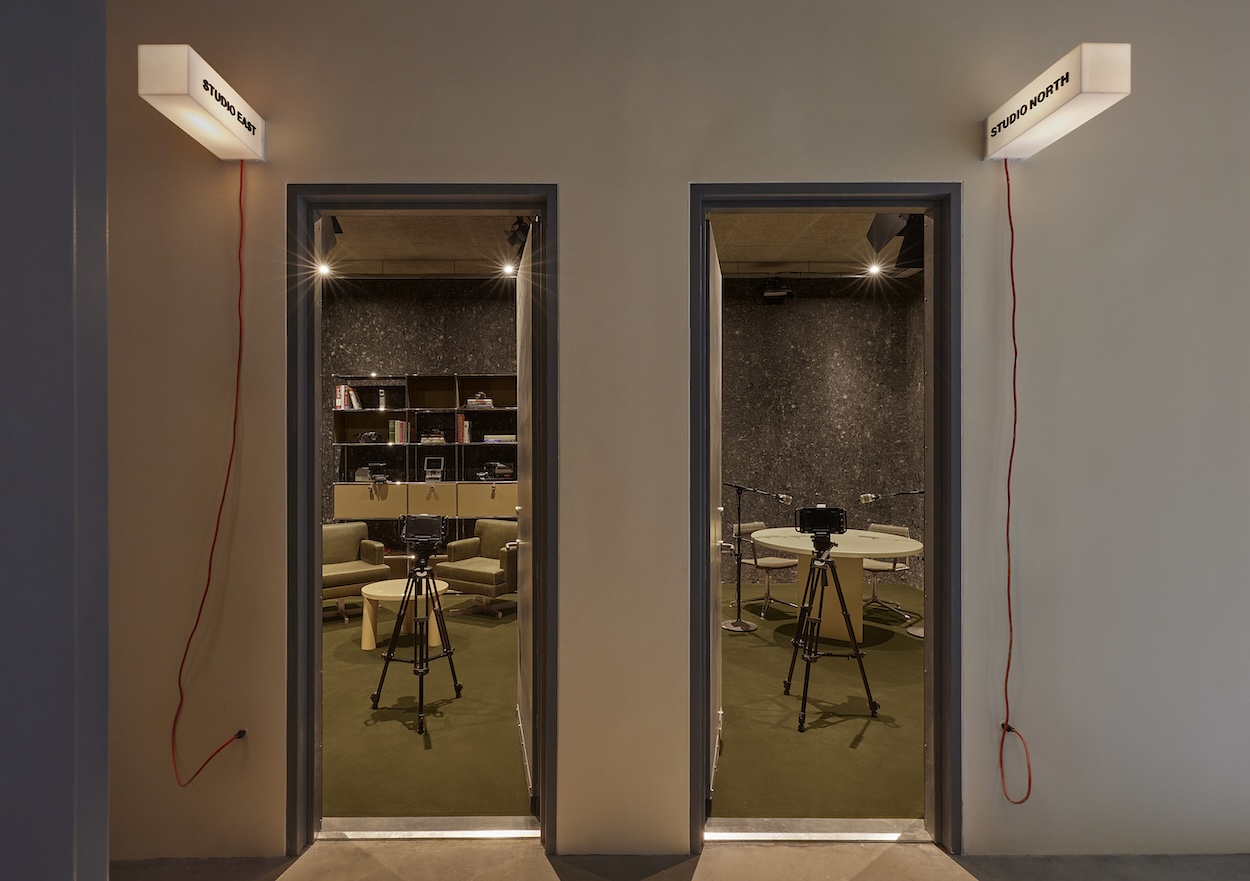
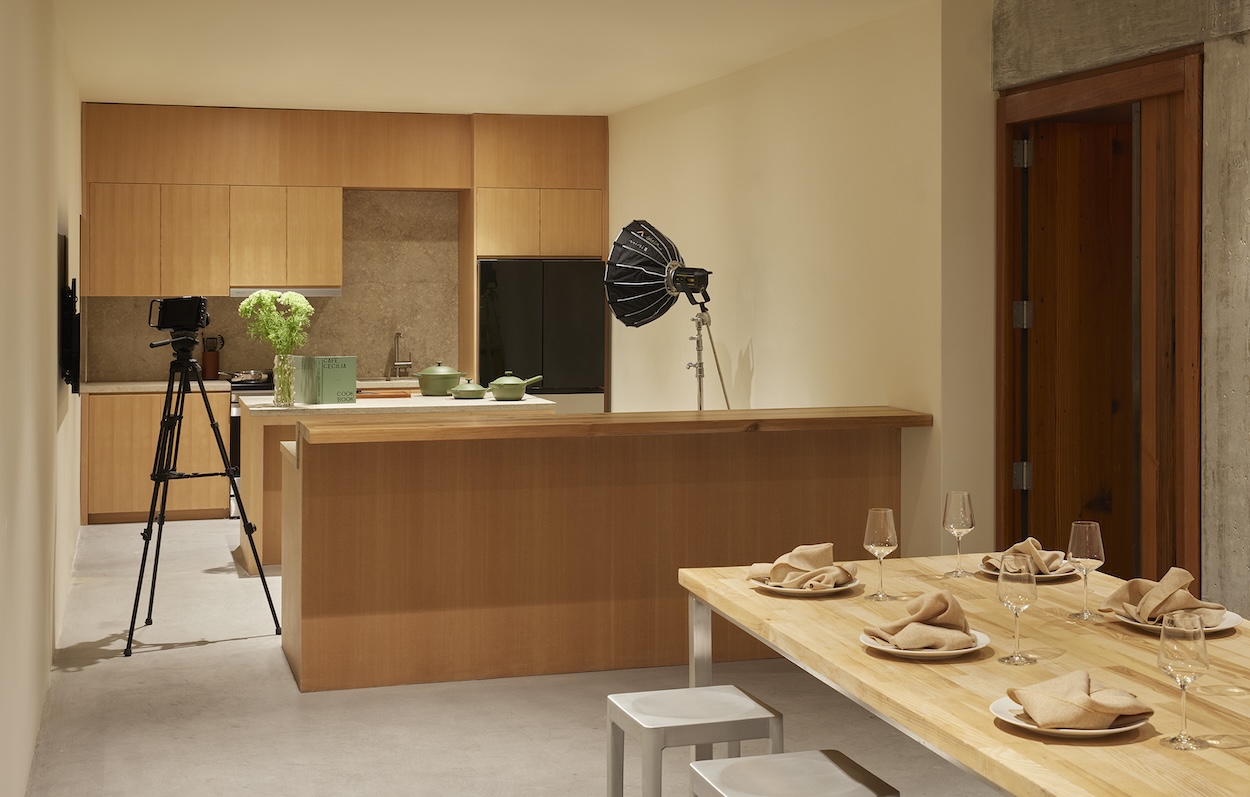
Having sat empty since, it had “haunted house vibes but was mostly just a sad waste of space,” describes architect David Bench, whose team “stripped out all the flimsy, dated surface treatments from Kickstarter and reinforced the [building’s] industrial character through the use of simple, unadorned, durable materials that function for a new purpose.” Now outfitted with offices and meeting rooms, a 2,500-square-foot library, a theater, photography and podcast studios, coffee and cocktail bars, and a test kitchen with an overhead camera to film cooking videos, the Lighthouse is designed so that every space could become a production backdrop. A podcast might be recorded on the stadium seating or a TikTok filmed in the two “living rooms” adjacent to the bar, for example.
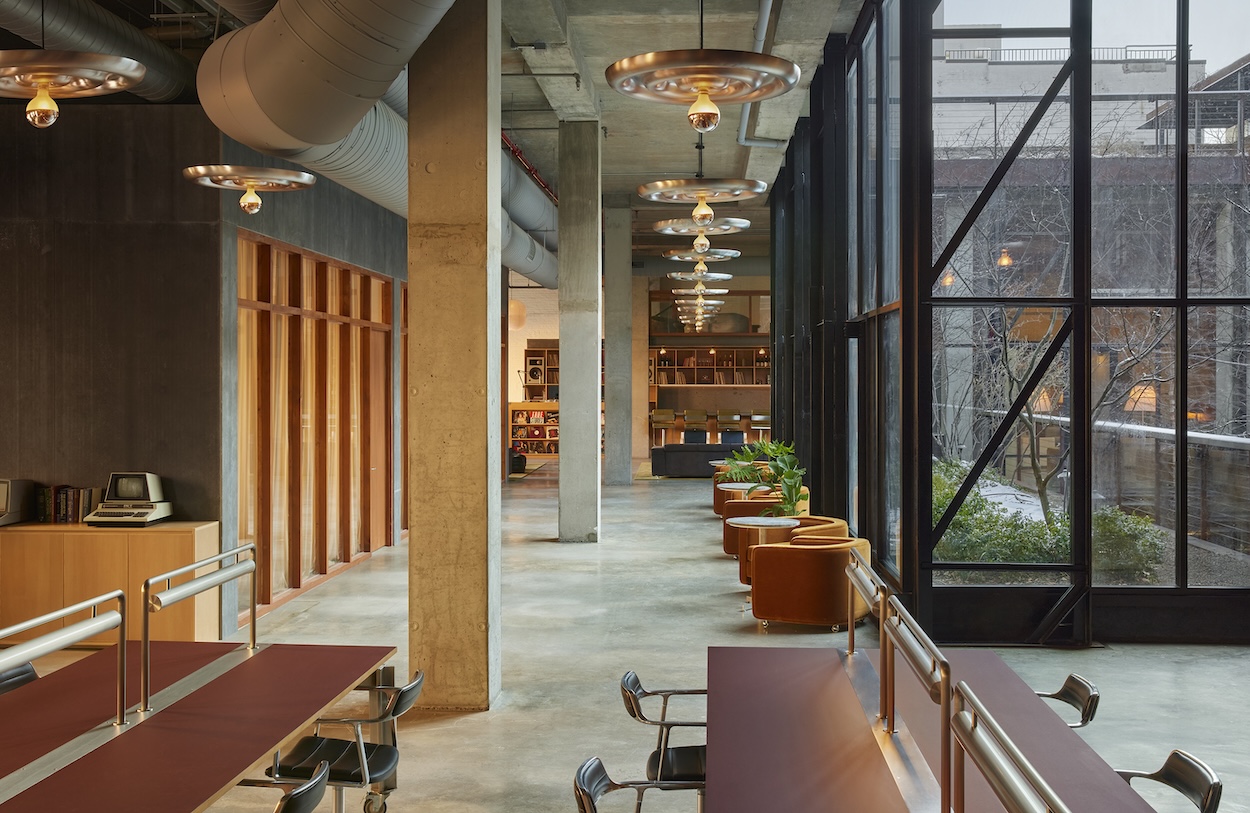
“We find that creative people want to work at coffee shops, bars, or hotel lobbies so we took cues from those types of spaces” for the interiors, says Warkentin. Where Bench’s architecture embraces the building’s factory roots—reclaimed wood trim is repurposed; concrete floors, walls, and columns are left bare, overhead HVAC systems are exposed, and ample ceiling heights are utilized to add mezzanines—Warkentin layers modernist furnishings by Alvar Aalto, Joe Colombo, and USM, as well as bespoke pieces finished in stainless steel, leather, and mohair. Sofas, armchairs, and coffee tables are plentiful, but so are true worktables (custom with integrated lighting). The hope is that, for the up to 700 members the workplace allows (200 more than the Venice Beach companion), casual spaces might inspire new multidisciplinary collaborations, all produced, filmed, and edited without leaving the building.
One advantageous holdover from Kickstarter’s previous conversion is a central lightwell, which fills the building with sightlines and sunshine, no ring light needed. Far more than a Hype House, the versatile project defines “what a physical space for creators looks like,” says Warkentin. It’s an ode to new digital media, in a place that once created its most vital analog tool.