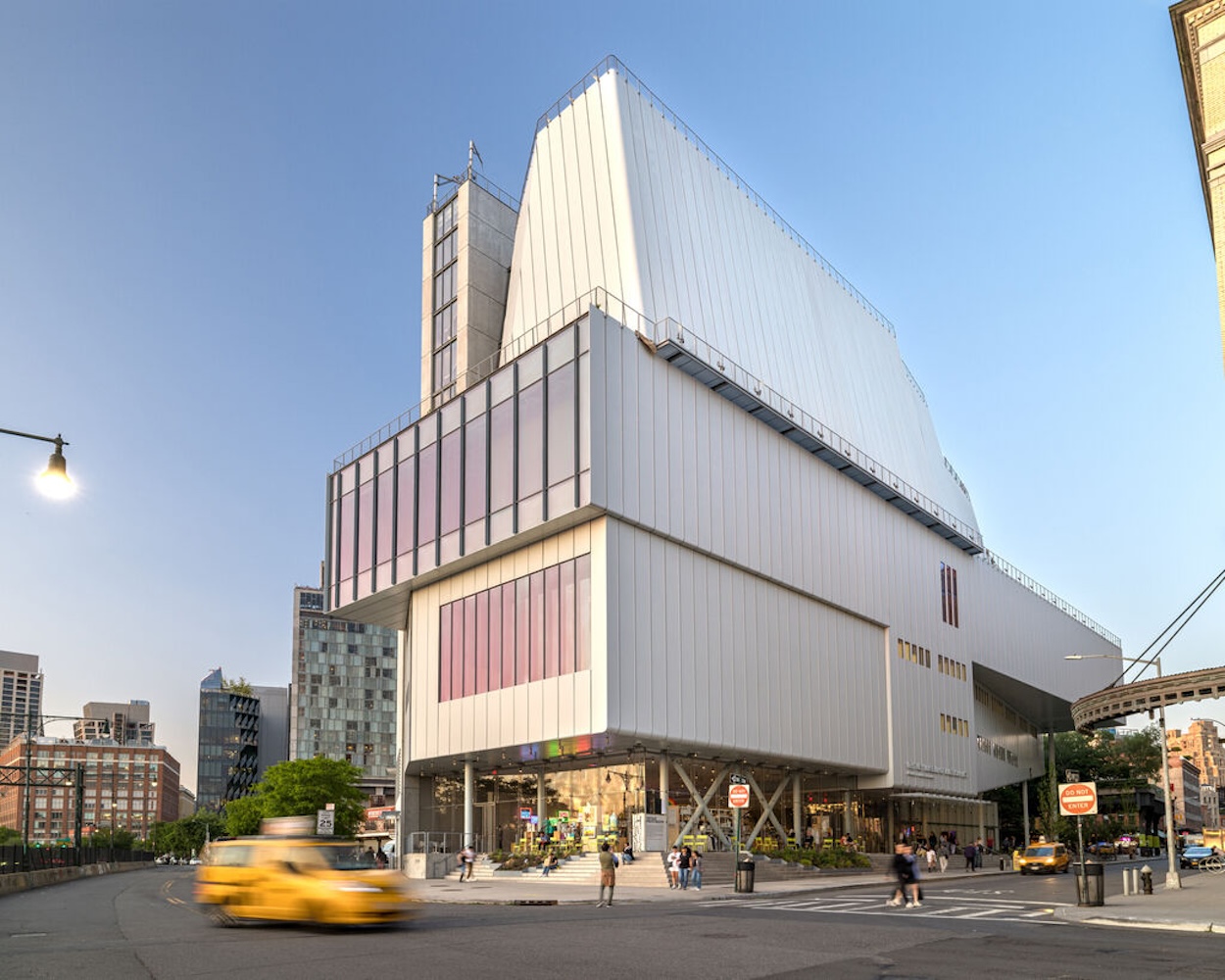
The Whitney has announced the 56 exhibiting artists of its 2026 Biennial.
The Whitney has named the 56 artists, duos, and collectives who will take part in its 2026 Biennial, opening March 8 and marking the exhibition’s 82nd edition. Co-curated by Marcela Guerrero and Drew Sawyer, the show draws from more than 300 studio visits and brings together artists working across disciplines, with participants based in 25 U.S. states and several countries shaped by American political and cultural influence. The curators center the exhibition on ideas of relationality and infrastructure, foregrounding work that addresses kinship, power, and systems that shape daily life. The Biennial will unfold across most of the museum’s galleries, alongside performances and public programs, and arrives as the first edition free to visitors 25 and under through the Whitney’s expanded admission initiatives.
The National Trust for Historic Preservation has sued to halt construction on the White House ballroom.
The National Trust for Historic Preservation has filed a lawsuit in federal court seeking to stop construction of a proposed White House ballroom, arguing that the project moved forward without required legal review. The group says the government failed to submit plans to key oversight bodies, bypassed environmental review, and began work without congressional authorization. According to the complaint, the White House’s location within a federally managed park triggers additional legal obligations that officials did not meet. The suit asks the court to pause construction until the project undergoes public review and complies with federal planning and preservation laws.
Gabrielle Chanel’s Mediterranean villa has been fully restored by Peter Marino.
Gabrielle Chanel’s Mediterranean retreat, La Pausa, in Roquebrune-Cap-Martin has undergone a full restoration led by architect Peter Marino, returning the house to its late-1920s form. Marino rebuilt architectural details from archival photographs and period sources, from window groupings that nod to Chanel No. 5 to furnishings and finishes that reflect the villa’s original restraint. A newly expanded library anchors the project, drawing from books Chanel owned alongside volumes tied to the writers, artists, and thinkers who gathered there, including Dalí, Cocteau, and Stravinsky. The result frames La Pausa not as a static monument, but as a working record of the cultural life that once unfolded inside it.
The “godfather” of modern robotics has spoken out against Silicon Valley’s fixation on humanoid robots.
Rodney Brooks, a pioneering roboticist best known for co-creating the Roomba, argues that Silicon Valley’s push toward humanlike robots rests on faulty assumptions about what machines can realistically do. He says the humanoid form overpromises capability, masking unresolved problems around balance, dexterity, safety, and manufacturing that decades of research have yet to solve. Brooks predicts that investors will pour billions into general-purpose humanoids over the next decade, only to abandon them when progress stalls. He urges the field to refocus on task-specific machines that work alongside people, rather than chasing a human replica that remains far out of reach.
An exhibition of dynastic jewels has opened in Paris, minus three pieces stolen from the Louvre.
An exhibition titled “Dynastic Jewels” has opened at Paris’ Hôtel de la Marine, bringing together roughly 60 royal and aristocratic jewels from The Al Thani Collection, the Victoria and Albert Museum, and other lenders. The show traces how gems functioned as instruments of power, from Napoléon Bonaparte’s diamond-set sword to tiaras designed for Queen Victoria by Prince Albert, before turning to 20th-century industrial wealth and royal patronage of European jewelers. The opening comes with a notable absence: three jewels meant for the exhibition were stolen in the October Louvre heist, including pieces linked to Empress Eugénie and Joséphine de Beauharnais. Authorities continue to search for the missing items, which investigators value at $103.4 million.
Today’s attractive distractions:
Jacqueline Kennedy’s election night coat sold for more than $50,000 at auction.
See the best uniforms of the Winter Olympics, ranked.
BoF takes a look at the leadership of women founders and creative directors.
Have a spare $117? You could come away from an auction with a Picasso.