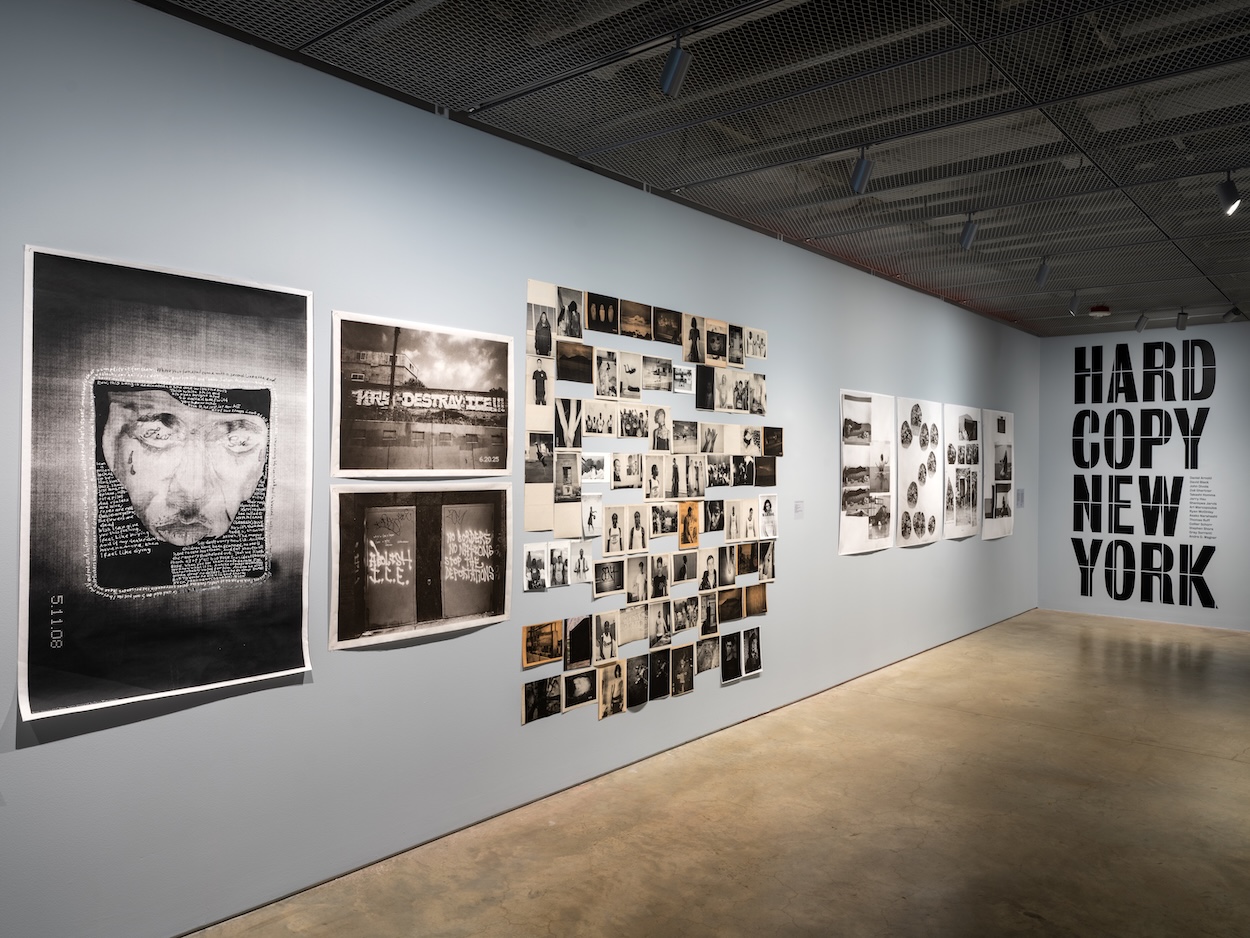
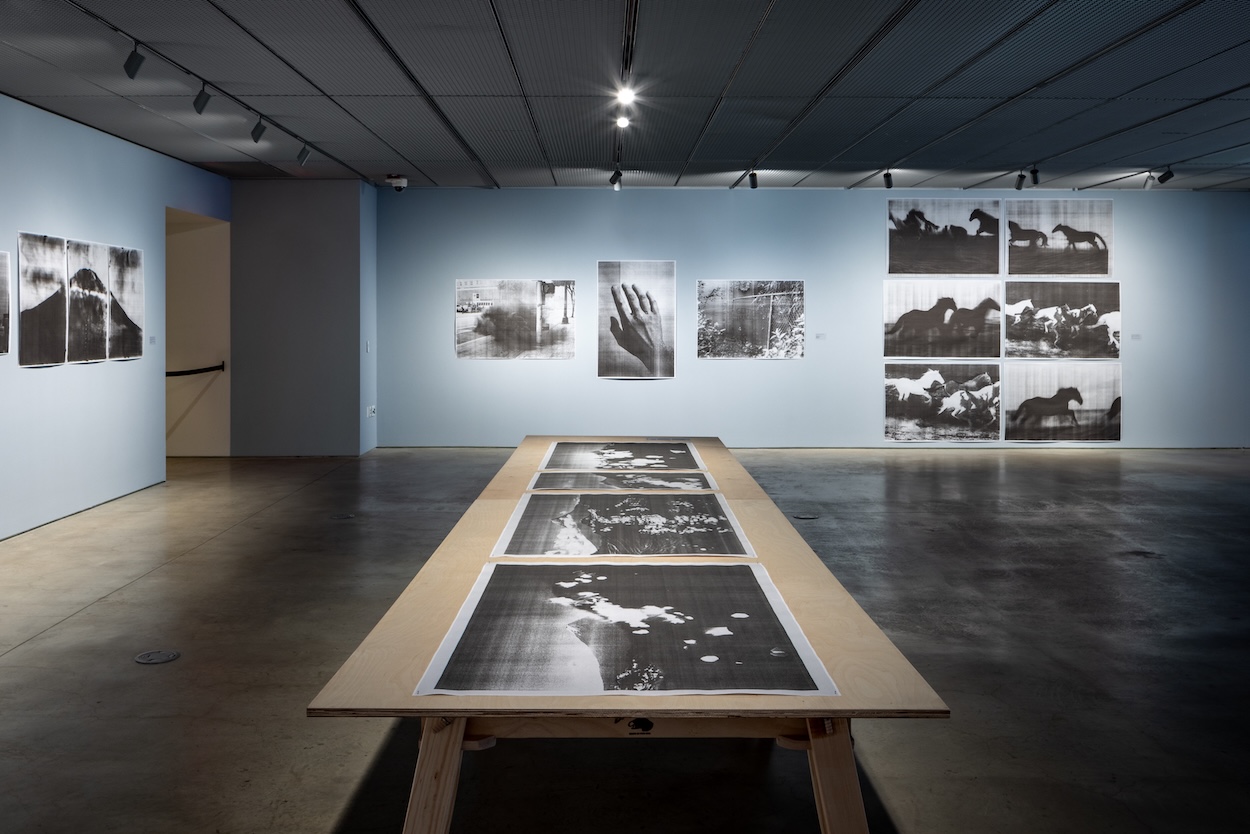
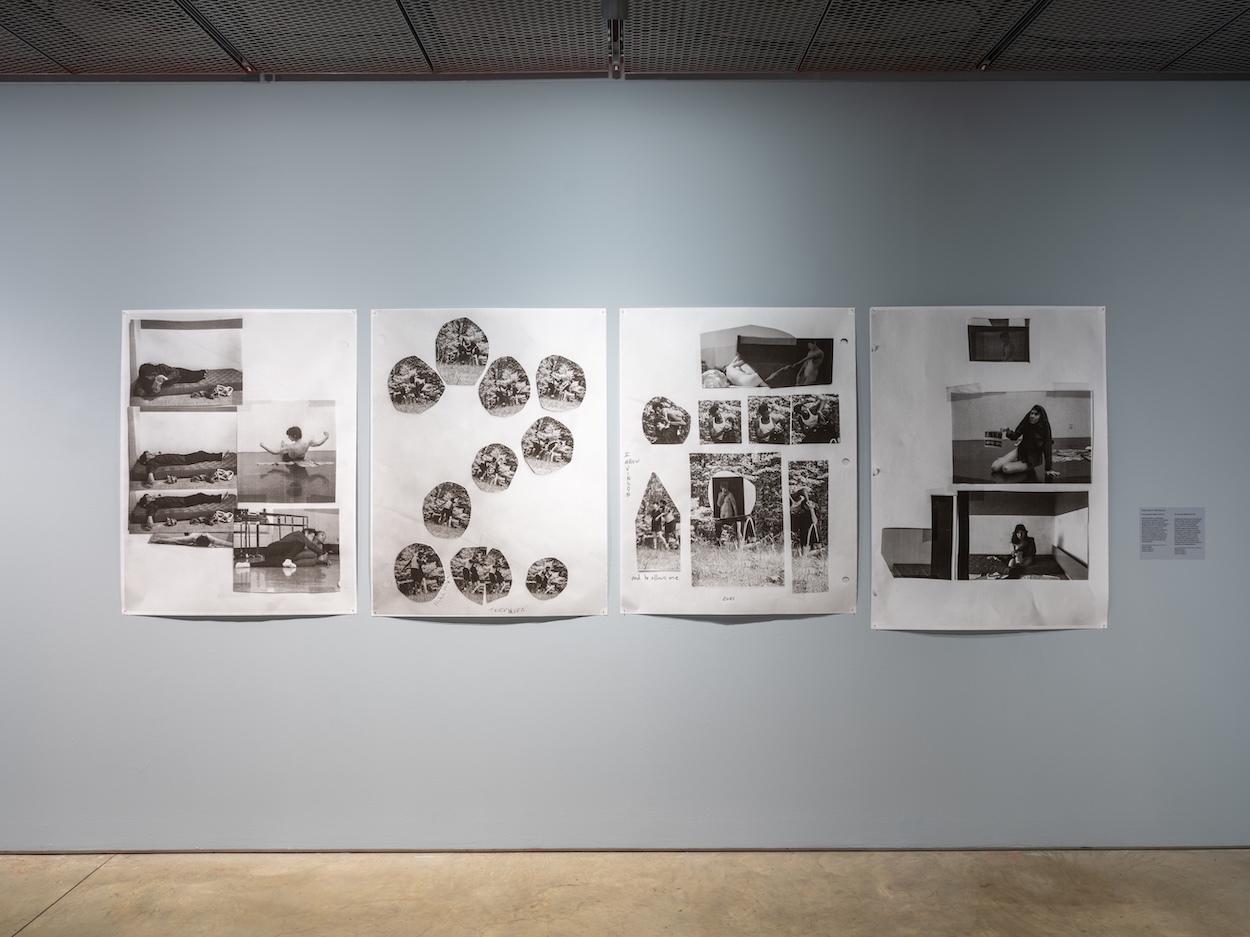
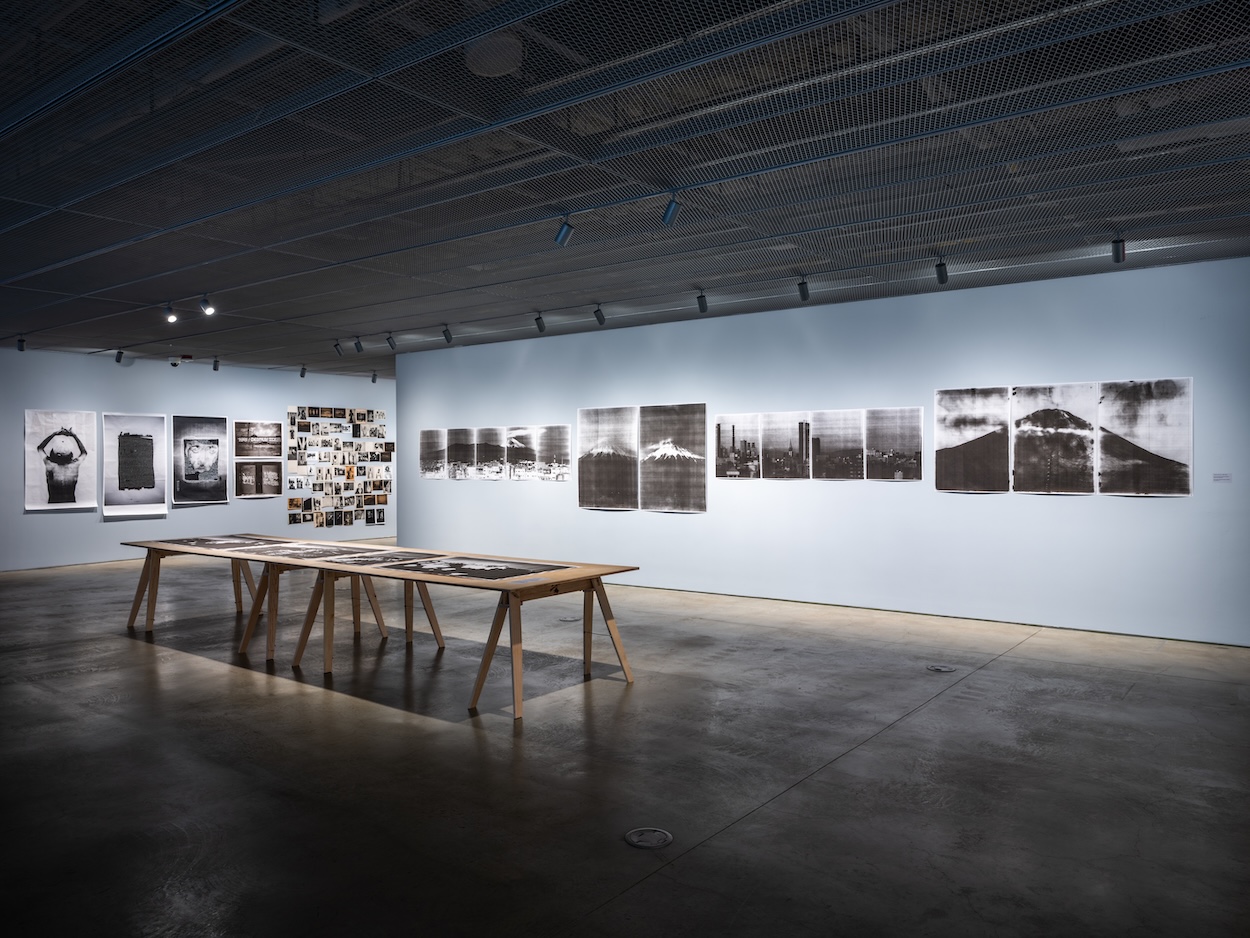
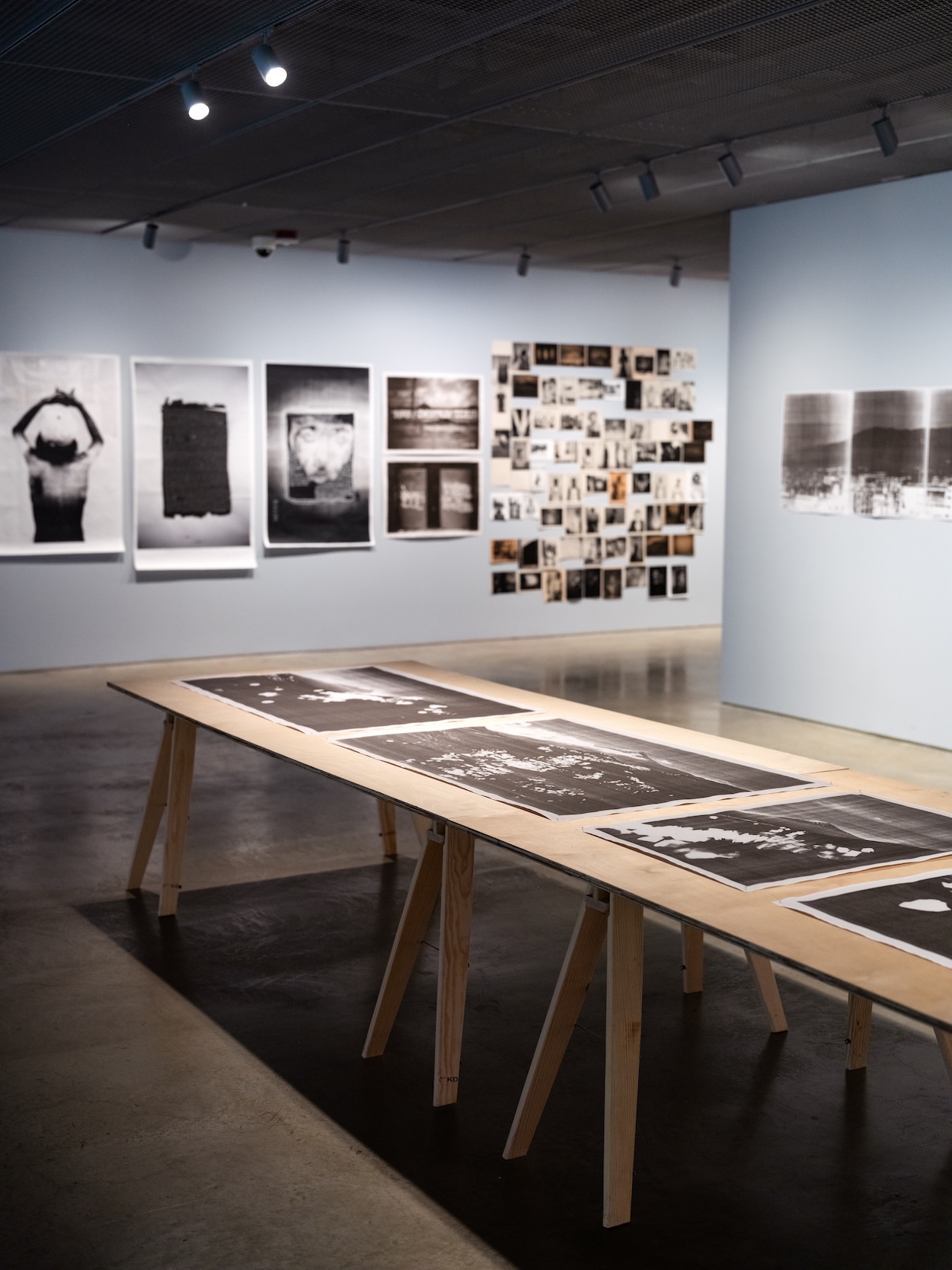
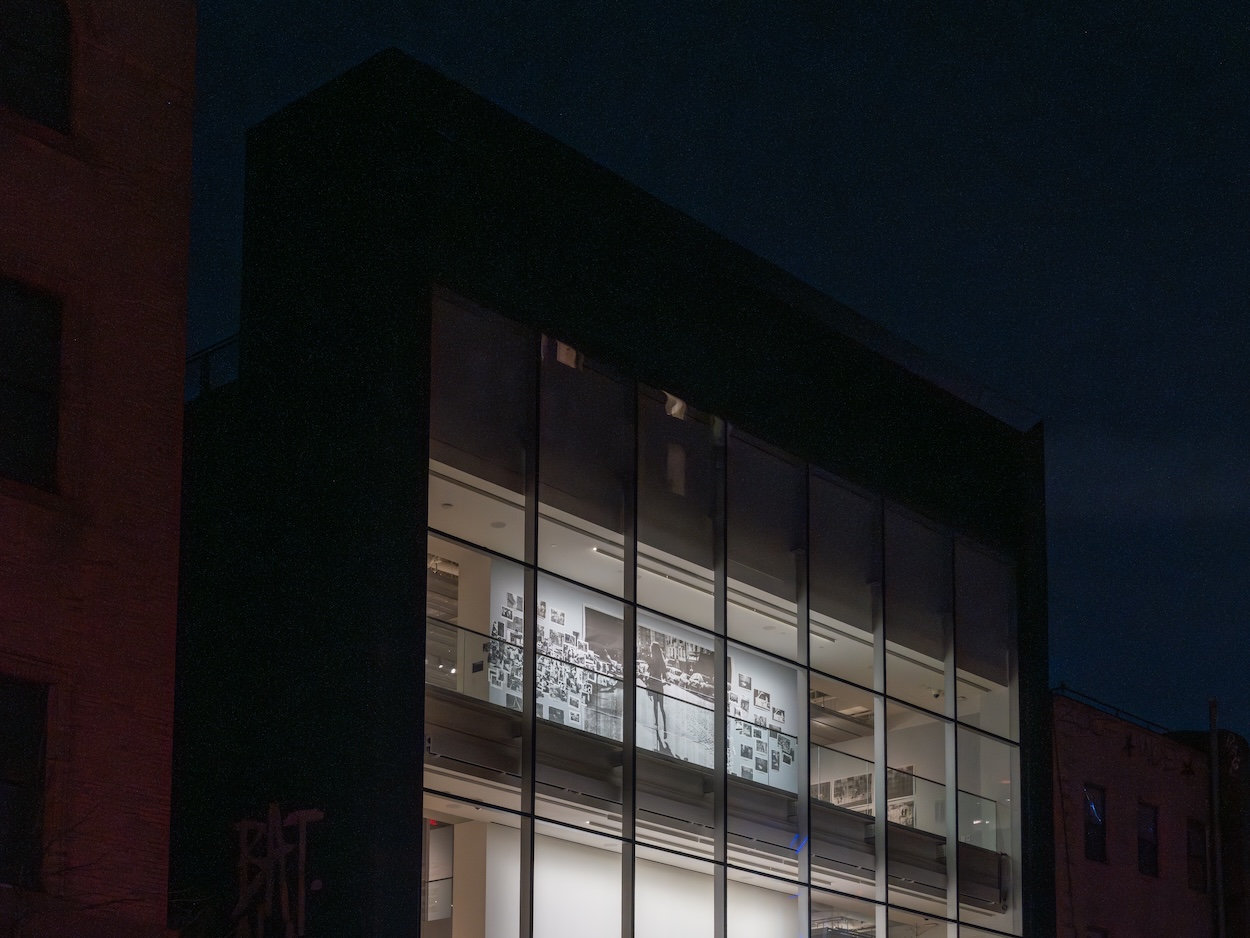
Developed by artist and author Aaron Stern, the group exhibition “Hard Copy New York” at the International Center of Photography (ICP) translates work from a diverse array of image-makers through photocopy technology. Stern curated the exhibition with David Campany, the creative director of ICP, tapping into the repertoire of talent such as Takashi Homma, Collier Schorr, Stephen Shore, and Gray Sorrenti. Each photocopy is an interpretation of the original art pieces—one that calls into question process, commercialization, ownership, and even the democratization of art.
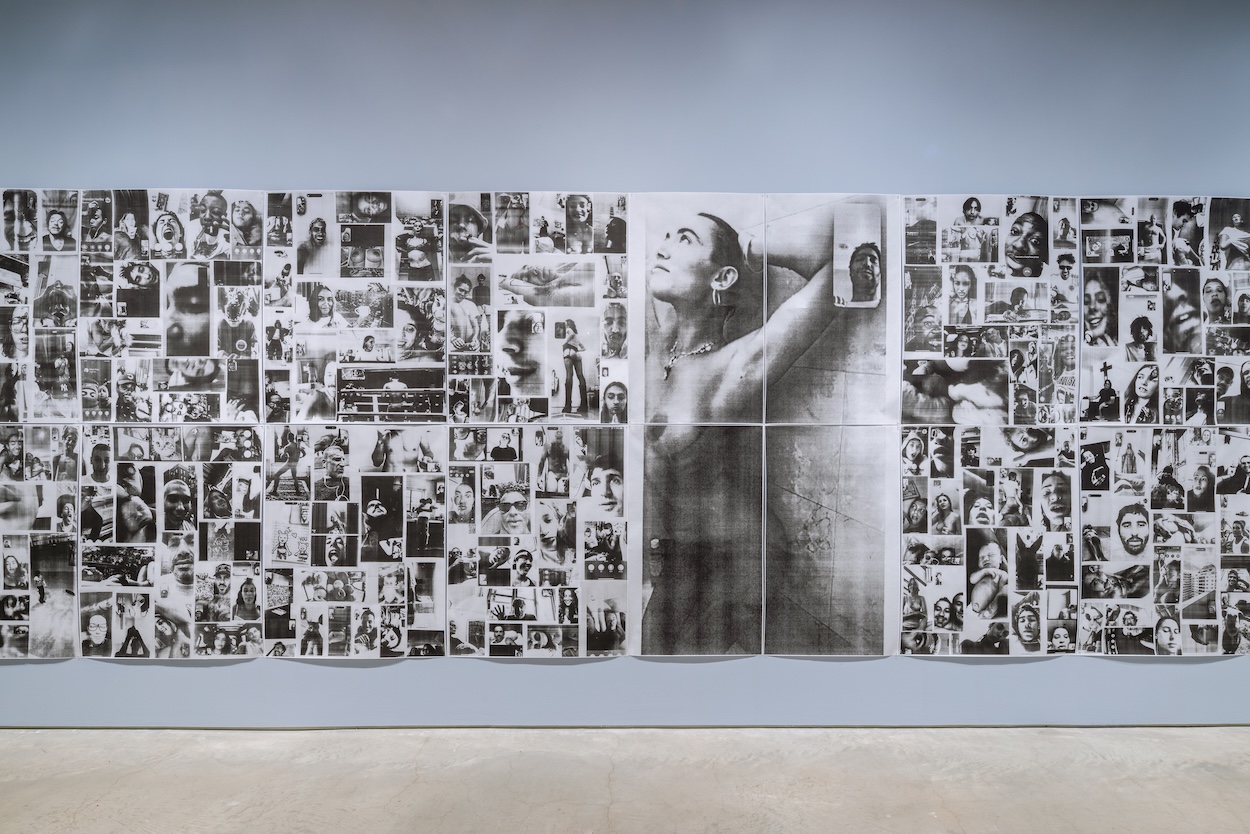
Though this is Stern’s first museum show curation, it isn’t the first time he has explored the magnetism of the degraded photocopy aesthetic. Stern has taken the “Hard Copy” concept from WSA in 2024 to Webber Gallery Los Angeles in 2025. It also exists in zine form. Though curation changes, his process remains the same—photocopying contributions from artists, then scanning the photocopy, and sometimes scaling it up digitally. To learn more about this iteration’s artistic representation, from Sorrenti’s 51-foot-long autobiographical mural to Homma’s Thirty-Six Views of Mount Fuji series, we spoke with Stern in advance of the exhibition, which is set to run through May 4.
This exhibition brings together artists whose practices span abstraction, documentary, fashion, and conceptual photography. When you were assembling the list, what determined inclusion?
It started with instinct. Some technical. Some personal. I’ve been working with alternative printing methods for over a decade. I can tell what images will render best with the Xerox machine. Shared attitude also. And there’s a way of thinking. About reproduction. Authorship, circulation. David and I kept some of the original artists. Expanded it with new ones.
In late 2023 Gray Sorrenti and I kept running into each other. I was in the early planning stages of the first “Hard Copy.” Sat next to her at Bar Pitti one night. She leaned over and said “I keep seeing you. What do you do?” Coincidentally she had a book in mind: 10 years of her intentional FaceTime portraits. Almost in unison we said, “but printed Xerox.” We started using local copy machines. But she hunted down one Tom Sachs tipped us off to. Changed everything. Having the perfect machine in my studio. To experiment endlessly.
The first artist I reached out to was Thomas Ruff. Specifically the Nudes series. Ruff took jpegs off porn websites in the ‘90s. Repurposed them. Reappropriated them. Finally making large C-prints for the end result. Me xeroxing them couldn’t be a more perfect thing that fits into what I’m trying to accomplish. A closing of a circle. Another layer of repurposing. Other artists like Ari Marcopoulos and Collier Schorr have worked with photocopy for years. So that felt organic. Daniel Arnold and Jerry Hsu’s pictures are visceral, immediate. Easily lend themselves to the punk nature of what Xerox does to an image. I wanted to make something tactile, alive, maybe a little unstable.
What does the photocopy allow you to do—curatorially or conceptually—that a traditional print or digital presentation does not? Has your relationship to the process changed since the first version of the show?
It makes it all feel a bit less precious. Yea there is a degradation of the picture. But I think the images David and I chose—there’s more of a resurrection. A lot of pictures look better to me as a photocopy. It’s funny the process of copying something that already existed feels truer to how we engage with pictures now. Fast, disposable, scrolling. Maybe in a room, printed on a wall you gotta confront that disposability in a different way.
Curatorially, the photocopy gives me license to show work in a way that’s more physical, immediate. I like that it allows for mistakes. I can print it super-large for very little money comparatively. A little off-register. Breaks down hierarchies between genres. Emerging and established artists. Between what is maybe seen as important and what just hits you. And the freedom of inexpensive repetition. You can’t get that with an expensive C-print.
The process hasn’t changed. The process is what keeps me engaged in it though. Not just the physical aspects. Print, photocopy, scan, print large. But the outreach to the artists. Conceptualizing the installation. Sharing the experimentations together.
“Hard Copy” has now lived in different contexts. What did New York—and ICP specifically—make possible that wasn’t available in earlier versions of the exhibition?
ICP helped elevate the exhibition. The process was much more streamlined. I have a team behind me. A star co-curator in David Campany. Who has endless, invaluable experience that calms my nerves. The last two iterations I was a one man show. In curation, production, installation, promotion. The presentation for this exhibition is more refined, thought out.
ICP made legacy possible. It’s New York. My hometown. The most important art city. In my opinion. I hope this iteration feels more expansive and precise. Maybe in previous versions I had to explain the use of the photocopy printing method for a show. I don’t feel that way this time around.
You’ve mentioned that this show is the first museum exhibition you’ve curated. Did that site-specific context inform your approach to scale, permanence, or responsibility when it came to “Hard Copy New York?”
Absolutely. It’s one thing to put on a show in a gallery like Webber or raw exhibition space like WSA. Embrace the rawness of it. Which felt fitting for “Hard Copy.” ICP brings a bit of gravity. A permanence because it’s an institution. Even if the show is temporary. I thought about the details more. But mostly it got me thinking about what it could lead to next. Which is always what my most prominent thought is. What I care about most. I want this show to travel again. But I hope that other institutions and galleries will be curious about what other ideas I have for exhibitions as well.
You move between making images and organizing them—often in commercial, editorial, and institutional contexts. When you’re photocopying another artist’s work for “Hard Copy,” where do you feel most present: as an author, a technician, or a collaborator?
Collaborator. I like talking to artists everyday. Before I was curating it was with the artists in my life. But now it’s a deeper, more expansive conversation. And on a daily basis. With artists I’ve looked up to throughout my career. And curators like David Campany. That is the best part for me. I’m conscious of it. Because I feel grateful for it. And I feel it in the moment.
You came up in fashion and editorial contexts, where images are made to move, multiply, and be consumed quickly. How did that background influence your sensitivity to reproduction and degradation in “Hard Copy?”
I came up taking pictures of my life, friends, bands, New York, Los Angeles. Mid 2000s. I had a photo diary that was anonymous. Made a few books. Had a few shows. Led to commercial work. Mostly portraiture. Taught me that while images are consumed quickly the process of making them was still important. Vogue specifically. The people I worked with there deeply cared. They were buttoned up, deliberate, and extremely nice throughout. There was a lot of pride in the work. No matter what kind of picture you’re making I think that is a good attitude to have.