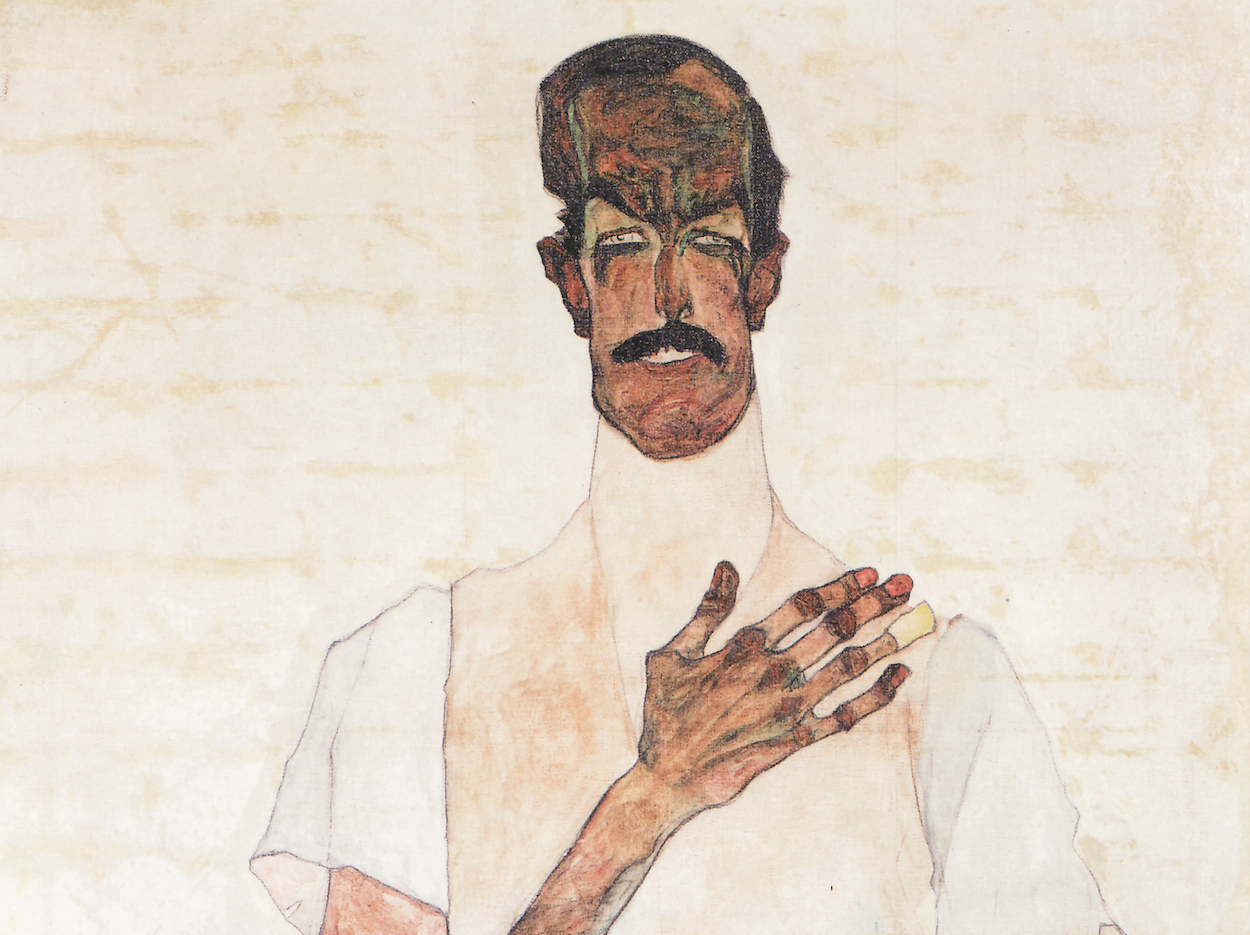
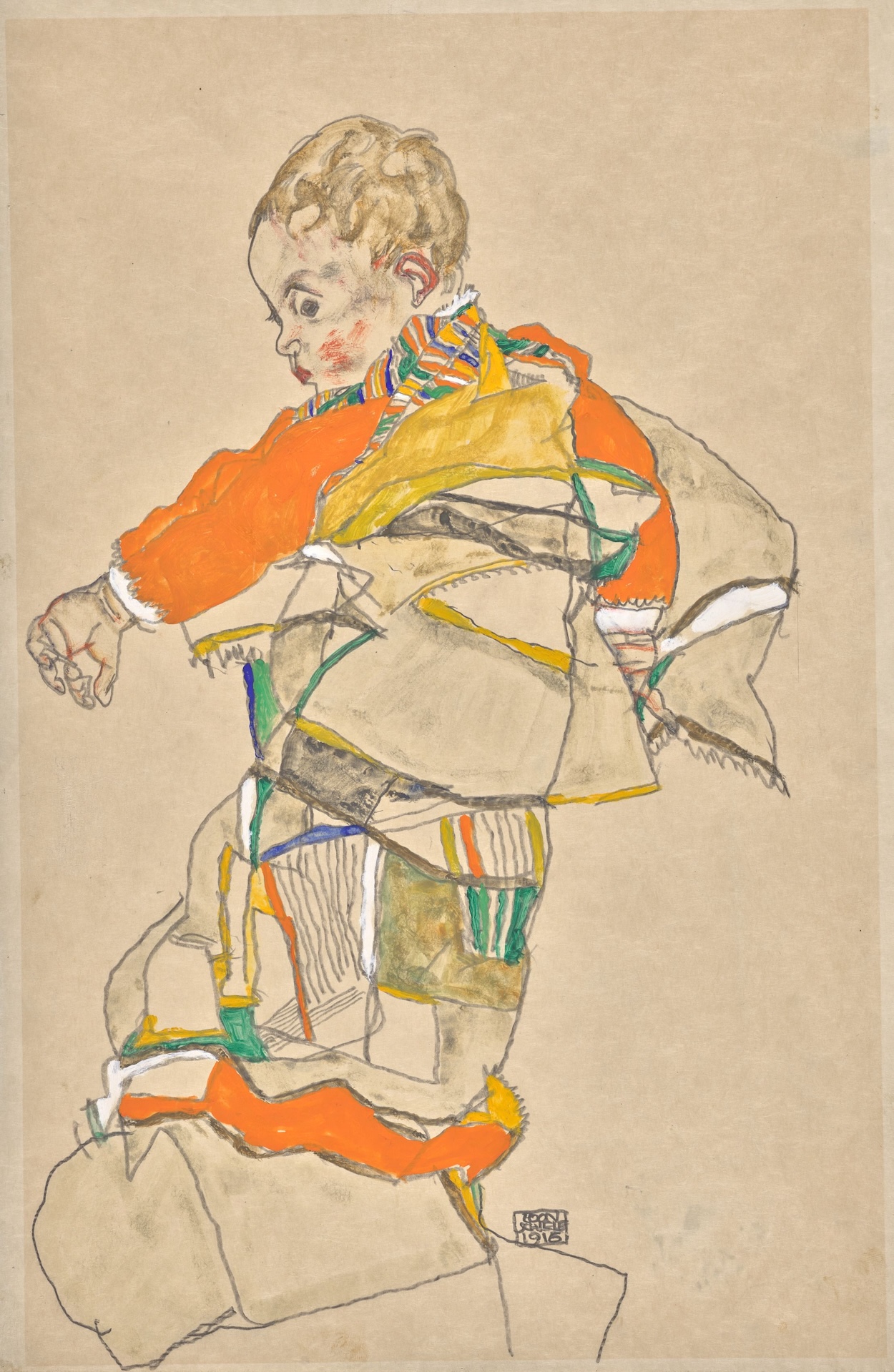
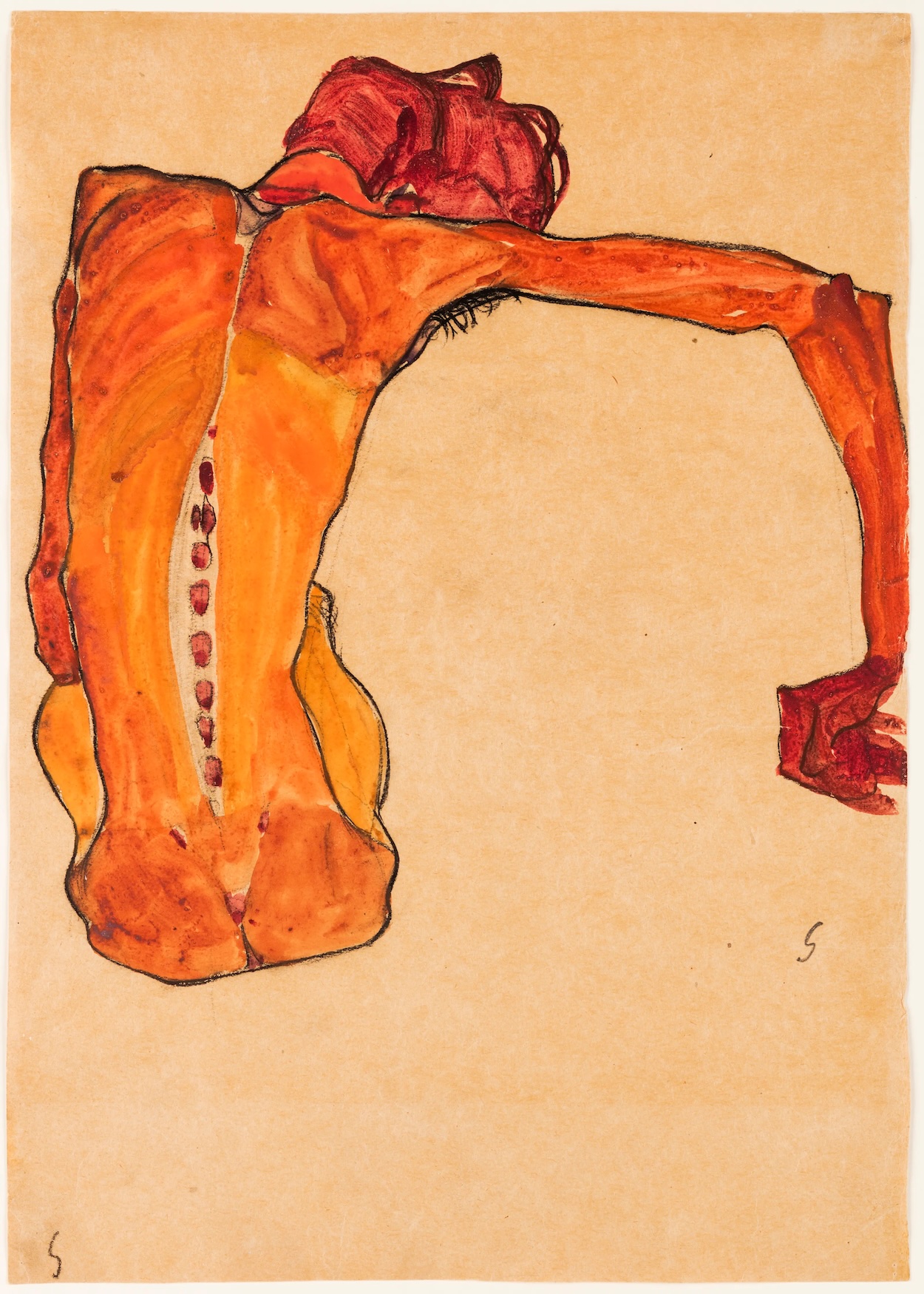
This February, the Neue Galerie in New York City opened “Egon Schiele: Portrait of Dr. Erwin von Graff,” an exhibition focused on the relationship between the Austrian artist and the Vienna-based physician who became one of his closest acquaintances and patrons. Centered on Schiele’s 1910 portrait of Dr. Erwin von Graff, the presentation brings together approximately 40 works from 1910 to 1918, including (often grotesque) drawings and watercolors of such subjects as pregnant women, naked men, and newborns.
Installed in a second-floor antechamber behind the main galleries, just beyond the wall that holds Gustav Klimt’s Portrait of Adele Bloch-Bauer I, the exhibition is organized around the half-length oil portrait of von Graff, shown alongside two surviving preparatory sketches. Surrounding these works are related studies and paintings that situate the portrait within Schiele’s broader production of the period.
Schiele met von Graff in 1910, when the doctor assisted with the birth of a child by Liliana Amon, an acquaintance of the artist. As an expression of gratitude, he painted von Graff’s portrait, which marked the beginning of a close friendship that lasted until Schiele’s death.
At the time of their meeting, von Graff had trained in pathological anatomy and surgery and was working at Vienna’s Second University Women’s Hospital, where he later became a gynecologist. Through him, Schiele gained access to hospital patients and private medical settings, allowing him to observe pregnant women, postpartum mothers, and newborns in clinical environments. This access allowed Schiele to expand his knowledge of the human body—and, by extension, the human experience—and ultimately impacted his portrayals of his subjects.
Many of these figures are placed against sparse or minimally detailed backgrounds, keeping attention on posture, skin, and anatomical detail. Schiele’s use of red, in particular, emphasized specific areas of the body, including a woman’s vulva and the exposed skin of infants, showing the raw and vulnerable parts of the human body in shocking detail.
In addition to the paintings and drawings, the exhibition incorporates archival material drawn from von Graff’s personal records. The accompanying catalogue, authored by Elisabeth Dutz, draws on the doctor’s diary, photographs, and related documents to outline the scope of his relationship with Schiele and the circumstances surrounding their collaboration.
Seen together, the paintings, drawings, preparatory studies, and archival material of this exhibit show the influence that von Graff had on Schiele’s work, which in turn has produced, as the Neue Galerie itself has called it, one of the “most expressive and psychologically charged bodies of work in modern art.”