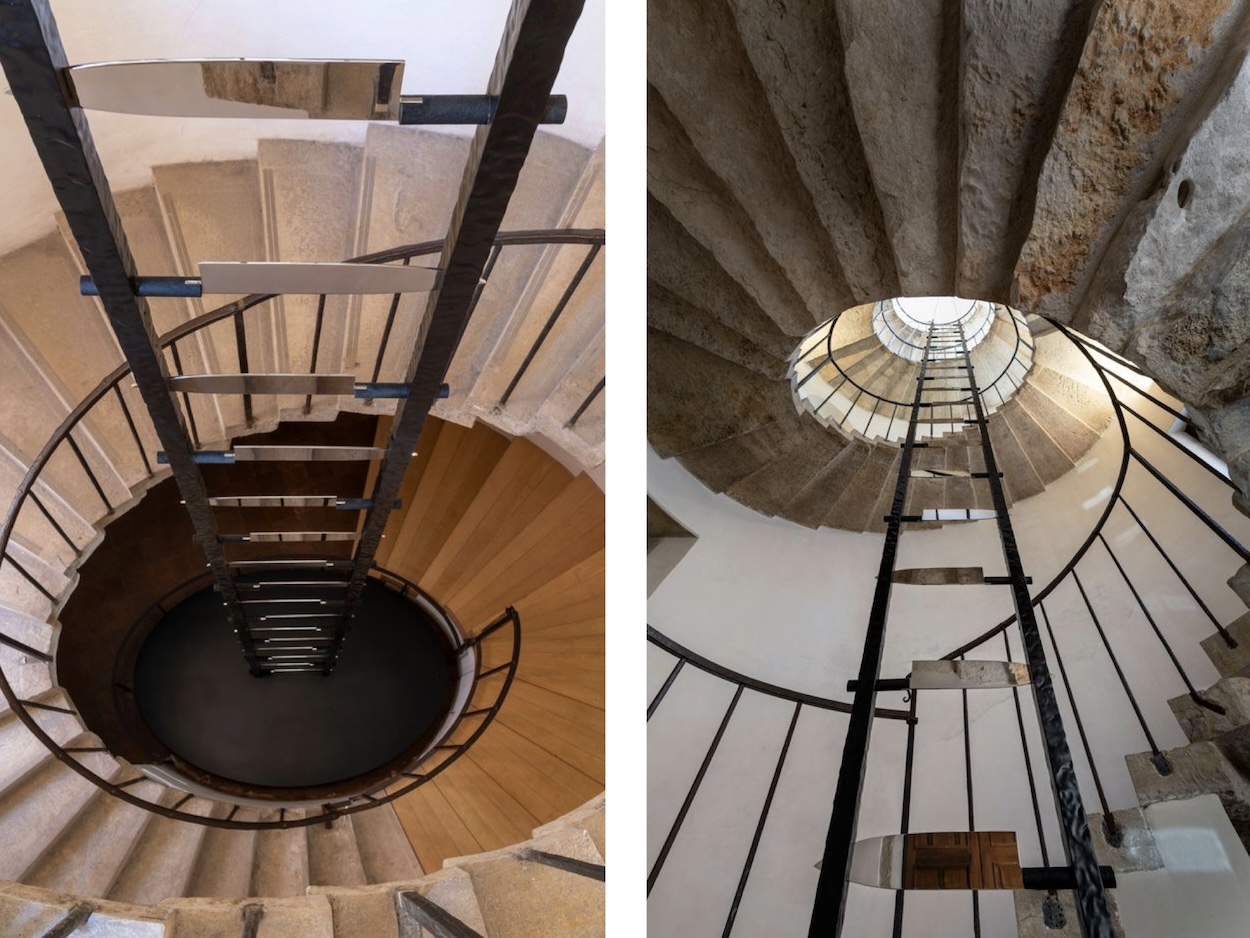
Marina Abramović vividly remembers traveling by train from her hometown of Belgrade to attend her first Venice Biennale at the age of 14. Abramović recalls that the sight of the “floating city” in northeastern Italy brought her to tears. “It was completely different from anything I knew. The city itself felt like a vision, something impossible,” Abramović reflects. “Venice gave me the sense that art was larger than an object. It could be atmosphere, ritual, and time. I was so in love with the city I returned again and again for the Biennale. To return now, after so many decades of relationship with the city, with this exhibition, feels like closing a circle.”
Over 60 years after her inaugural visit, Abramović has returned to Venice to make history as the first living woman to be honored with a dedicated exhibition at the Gallerie dell’Accademia di Venezia. It’s a fitting birthday gift for the artist referred to as the “grandmother of performance art.” Her exhibition not only highlights a career that has spanned over five decades, it also marks her 80th birthday.
Courtesy of Matteo de Fina…
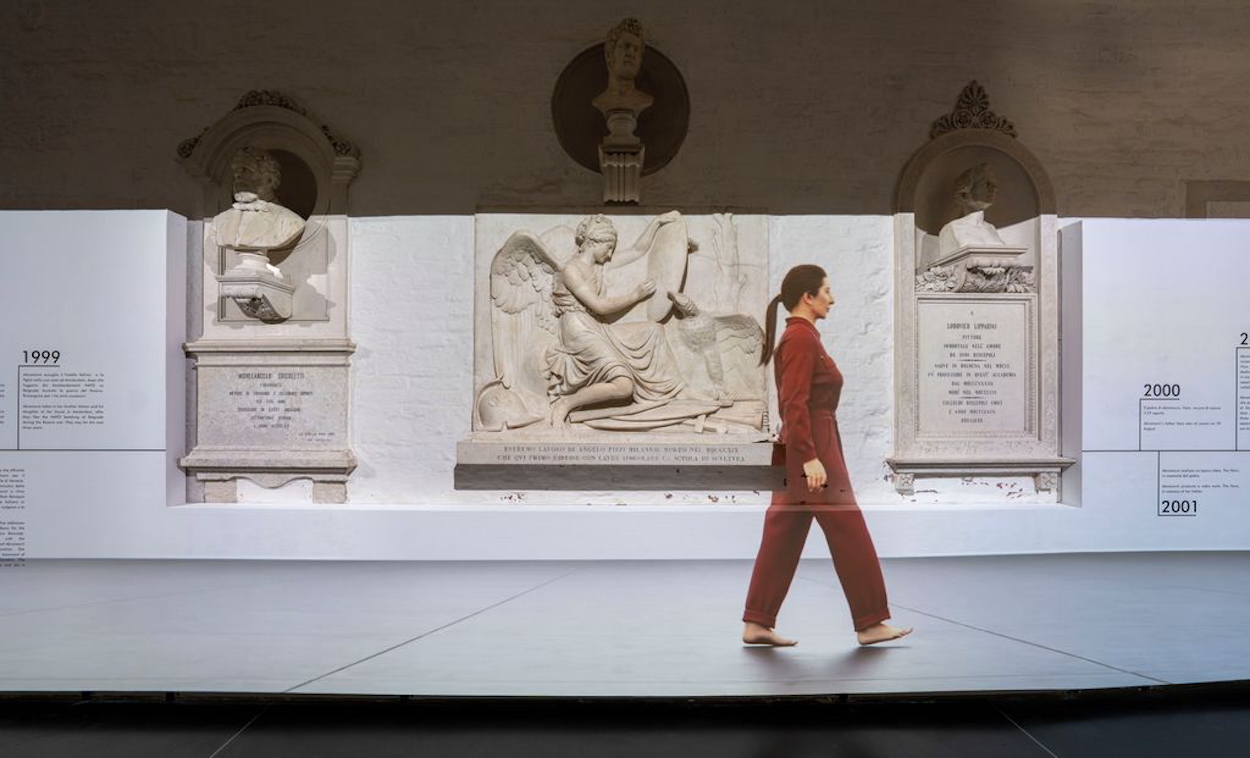
“Marina Abramović: Transforming Energy” establishes “a profound dialogue between her pioneering performance art and the Renaissance masterpieces that have shaped the cultural identity of Venice.” It is this dialogue which allows the exhibition to seamlessly unfold across both the museum’s permanent collection galleries and its temporary exhibition spaces–essentially enabling Abramović’s practice to move in tandem with the heartbeat of Venetian patrimony.
Abramović worked closely with Shai Baitel—the exhibition’s curator and Artistic Director of the Modern Art Museum (MAM) Shanghai—to ensure the exhibition struck a fine balance between showcasing Abramović’s works and honoring the museum’s permanent collection galleries and temporary exhibition spaces. The pair carefully selected works which “felt relevant to Venice and to the context of the Gallerie dell’Accademia, rather than creating a broad survey of Marina’s career,” Baitel explains. “The exhibition is grounded in the body as Marina’s primary artistic material, and in the long history of the body within Venetian art. Certain works became essential because they allowed these contexts to intersect in meaningful ways,” Baitel continues.
Courtesy of Matteo de Fina…
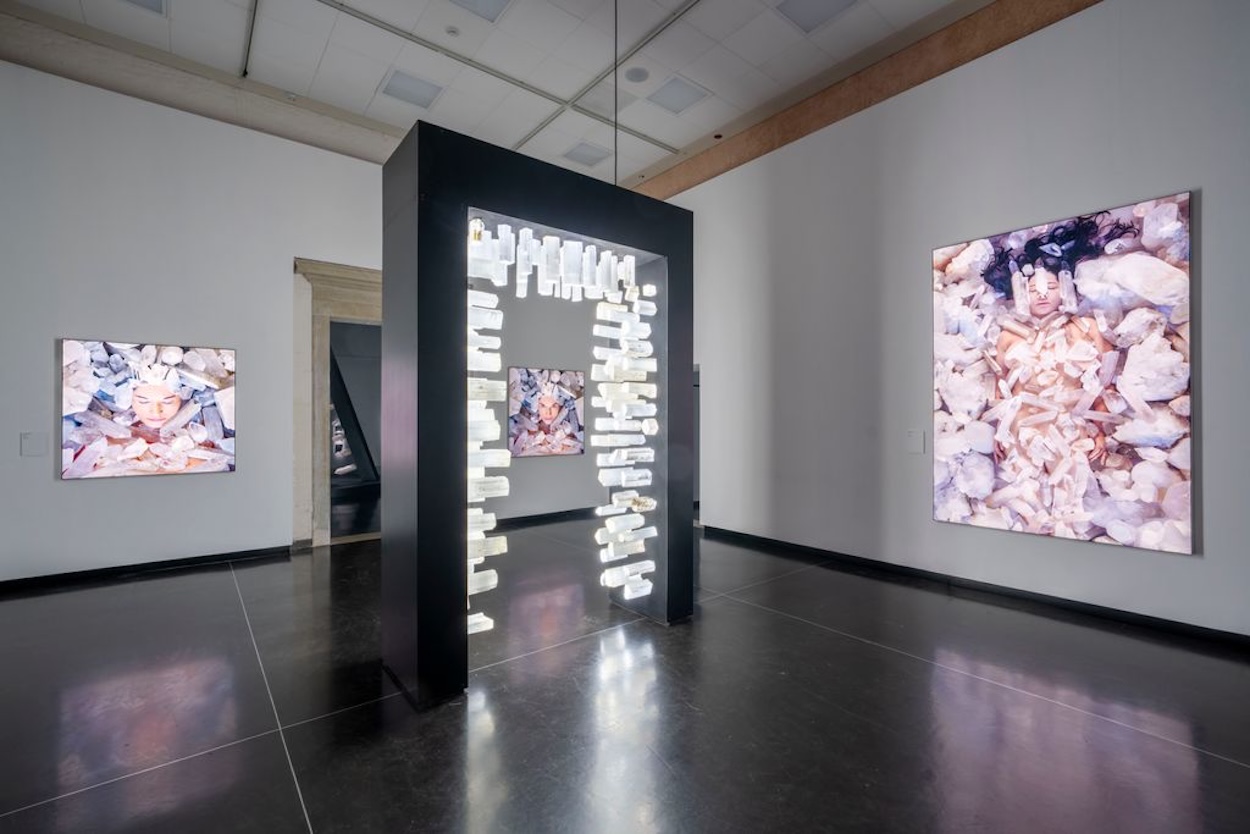
“The Lovers,Great Wall Walk connects Marina’s body to landscape, endurance, and transformation, but it is also crucial because her experience walking through China opened the path toward her later research into crystals, energy, and the relationship between the body and the earth that would eventually lead to the Transitory Objects. Balkan Baroque brings the political and historical body into the center of the work and carries particular resonance in Venice, where Marina received the Golden Lion for the piece at the 1997 Venice Biennale. Pietà (Anima Mundi) creates a direct dialogue with the Accademia’s own visual tradition through its relationship to Titian’s unfinished Pietà, allowing Marina’s use of the body to enter into conversation with one of the defining works of Venetian Renaissance painting.”
As Baitel points out, these selections of Abramović’s work and the Renaissance masterpieces that shaped Venice’s cultural identity are intertwined. “Venetian Renaissance artists closely observed the body as a site of suffering, devotion, ecstasy, and transformation. Marina Abramović extends these questions into the present, but through a different approach. Rather than simply representing the body, she utilizes it, making it not the subject of the work, but its central object and material. The exhibition brings these histories together through a shared understanding of the body as a vessel through which meaning, belief, endurance, and transformation are experienced across centuries,” Baitel highlights.
Courtesy of Matteo de Fina…
Abramović echoes similar sentiments when discussing the exhibition’s inclusion of these bodies of works. “Speaking broadly, and in relation to this exhibition, The Lovers, Great Wall Walk, (1988), was as much an important beginning for me as it was the end of an important collaboration. It transformed my life and opened the way toward my later research into energy, crystals, and the body. The Transitory Objects came out of my time in China, inspired by the traditional medicine I learned about and make up the majority of works in this show. Balkan Baroque has a very important place in my career and in this exhibition because the work was first performed here in Venice for the Biennale in 1997.”
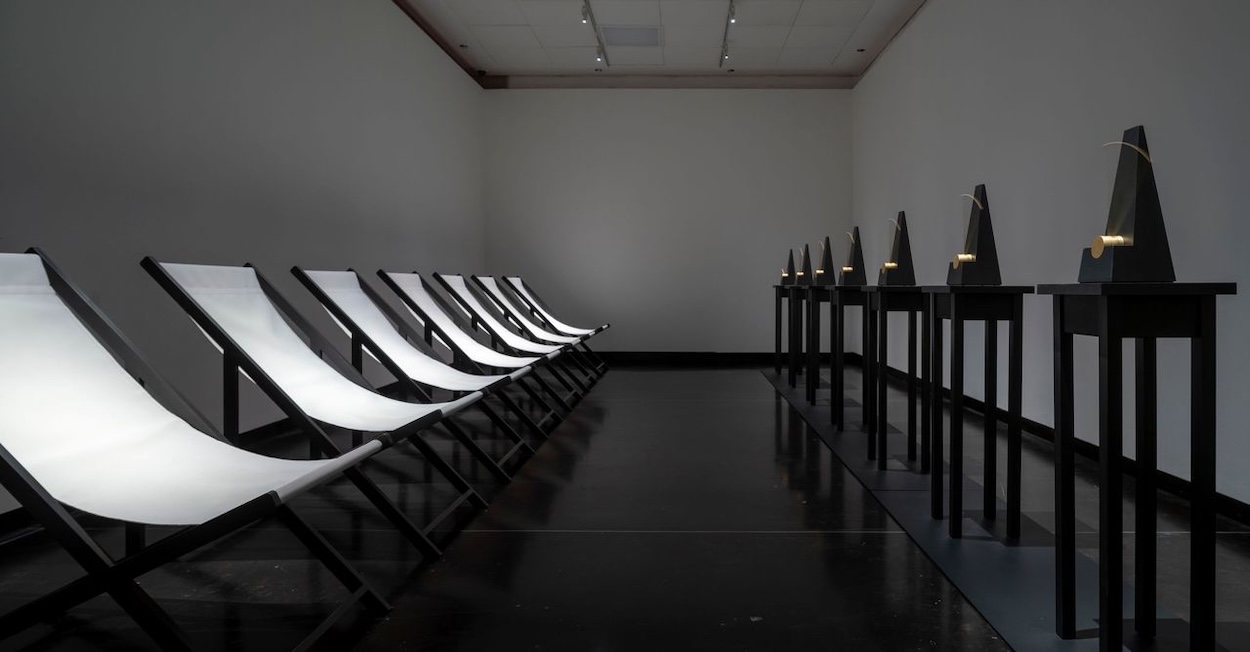
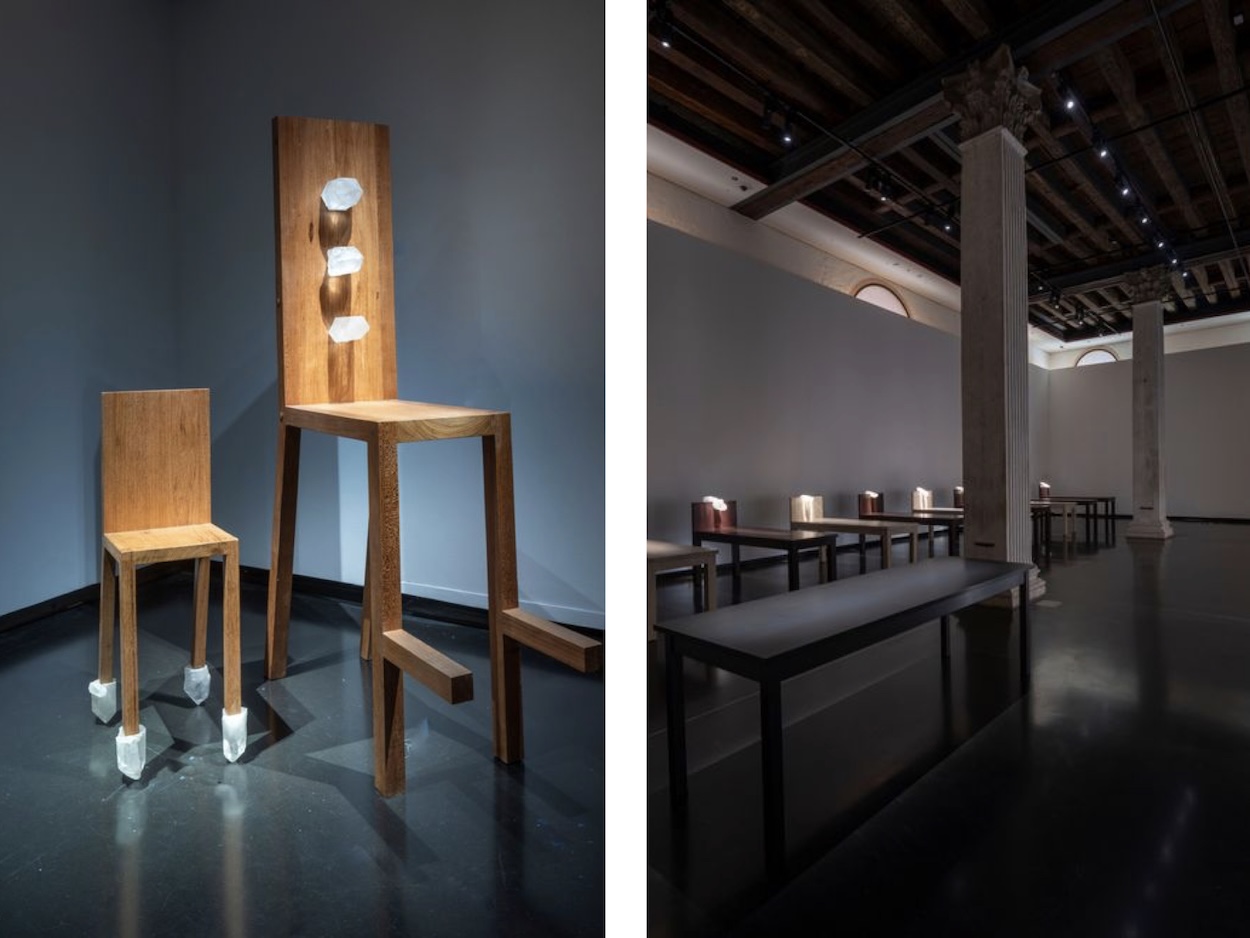
The Transitory Objects provide a tangible experience for visitors as “they require participation, stillness, and a different kind of attention,” Baitel outlines. “A person may stand, sit, or lie down in relation to crystals, stone, metal, and other materials. The work is completed through the visitor’s body. This is where the exhibition’s larger themes become physical. The stones and crystals belong to geological time, a time far older than human history. Yet their meaning in Marina’s work depends on immediate human contact. Past and present meet in that exchange. Material and immaterial also meet there. In this sense, the Transitory Objects introduce visitors to the central proposition of the exhibition: transformation can occur through silence and presence.”
Courtesy of Matteo de Fina…
While these bodies of work rightfully stand at the forefront of this exhibition, the historical nature of this presentation must not fade into the background. As the first living woman to be honored with a dedicated exhibition at the Gallerie dell’Accademia di Venezia, Abramović has witnessed the struggles of female artists—and their triumphs. “When I worked with Ulay, people saw the couple before they saw the individual artists. After we separated, some people thought I would disappear. There was an assumption that the male artist carried the authority and seriousness. I had to build my own language again in public. As a woman, especially in performance, the body is always judged differently. But the body was my material. I used that judgment, that vulnerability, that exposure. I made it part of the work.”
Since Abramović’s first pilgrimage to the Venice Biennale as a young girl, she has “witnessed a steady increase in the presence of women artists. This is very important. When I began, the art world was still largely defined by men: male artists, male curators, male critics, male collectors. Women were there, but they were often pushed to the side or treated as exceptions. Today, this has changed. Women artists are much more visible, and the Biennale has played an important role in that change. But it never feels like enough. There should always be more. More women artists, more women curators, more women in museum collections, more women in the history books.” Abramović is adamant that real change will come “when women are no longer included as a category, but understood as central to the story of art.”