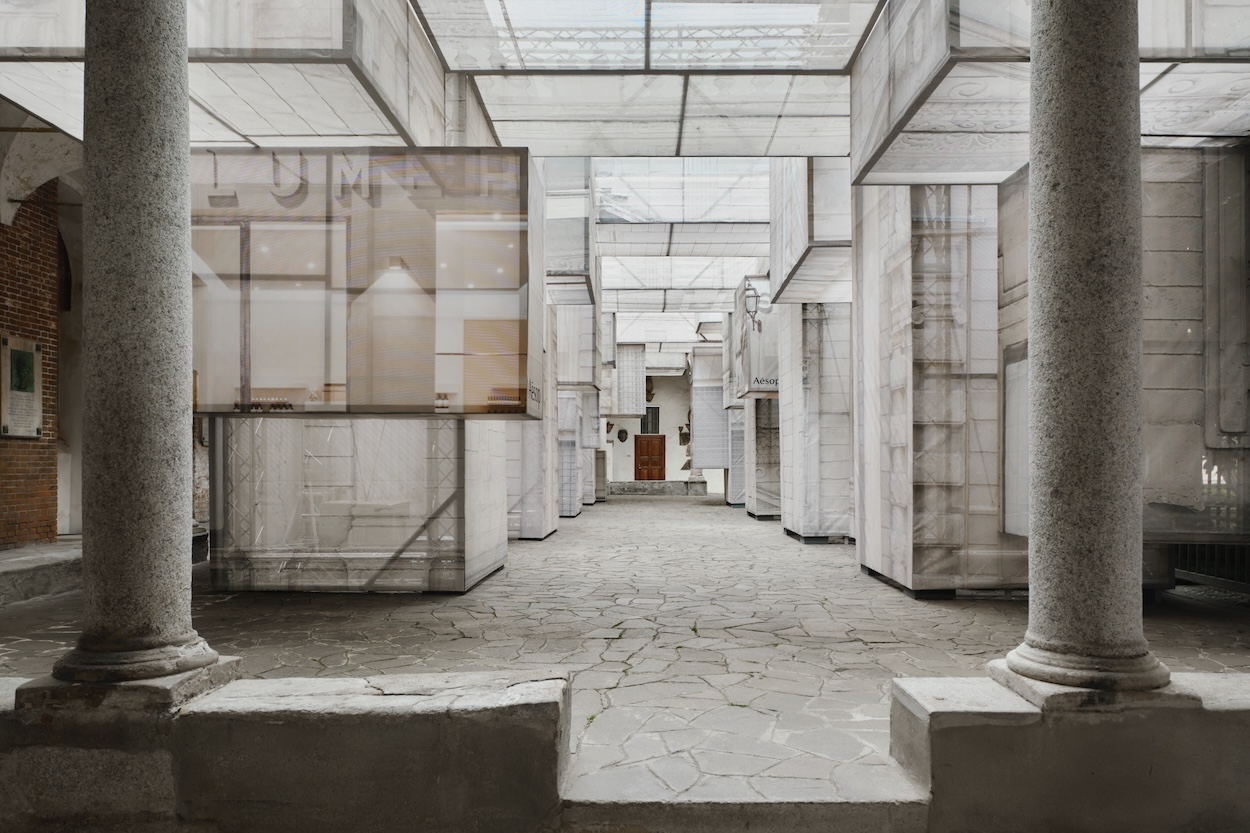
More than 10,826 repurposed fragrance bottles composed the foundation of the final act of Aesop’s “The Factory of Light” installation for Milan Design Week. Though the ritualistic first two acts are integral to the experience—a hand-washing basin just beyond entry to Brera’s Chiesa del Carmine and a translucent architectural journey with stations dedicated to molten brass and blown glass—it’s in this third artistic dimension that the Australian skincare brand introduces something unexpected: a trio of lights designed by its in-house architects.
Upon an Undulating Installation in a Milanese Sacristy, Aesop Introduces a Trio of Lights
David Graver April 21, 2026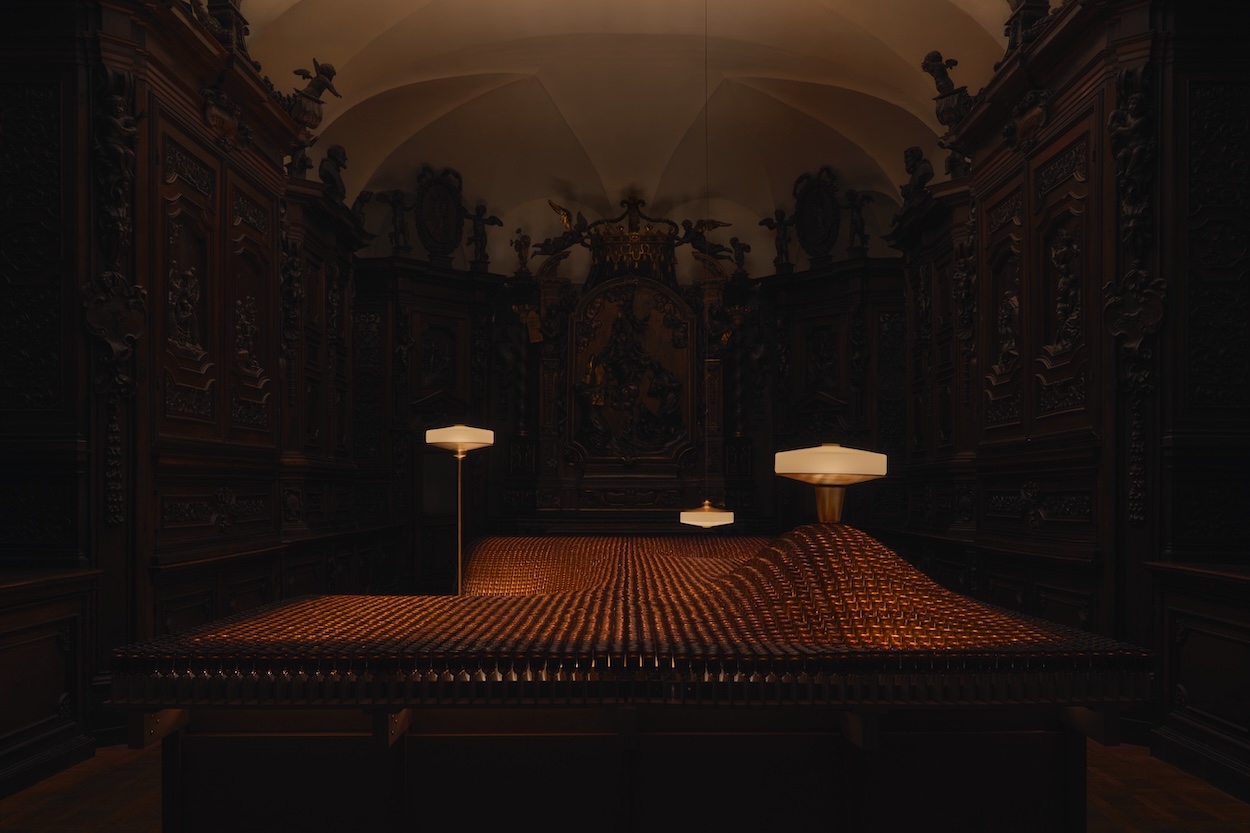
Courtesy of Aesop
…
Courtesy of Aesop
…
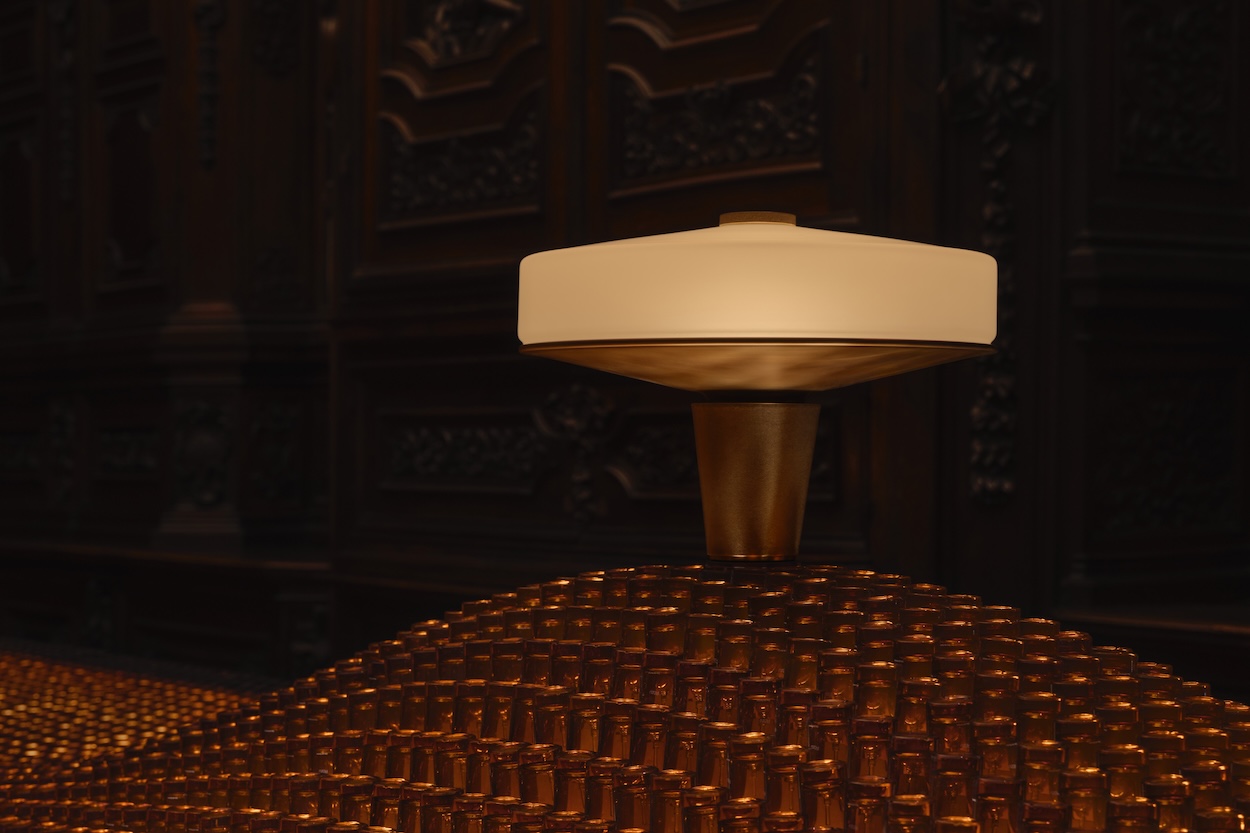
Titled Aposē, the rounded, radiant fixtures (one style of which, the table lamp, is now available for purchase) pair a brass plinth (cast by hand in a family-run German foundry) with a glass crown (crafted near Murano). It’s the multisensory environment ensconcing Aposē, however, that demonstrates the extent of its majesty. In the sacristy of Santa Maria del Carmine, the wave-like platform assembled from the salvaged amber bottles frames the pieces. A sense of reverence—born from the scent of Above Us, Steorra Eau de Parfum, fog, a choral soundtrack, and soft, warm light—envelops the sculptural structure.
Courtesy of Aesop
…
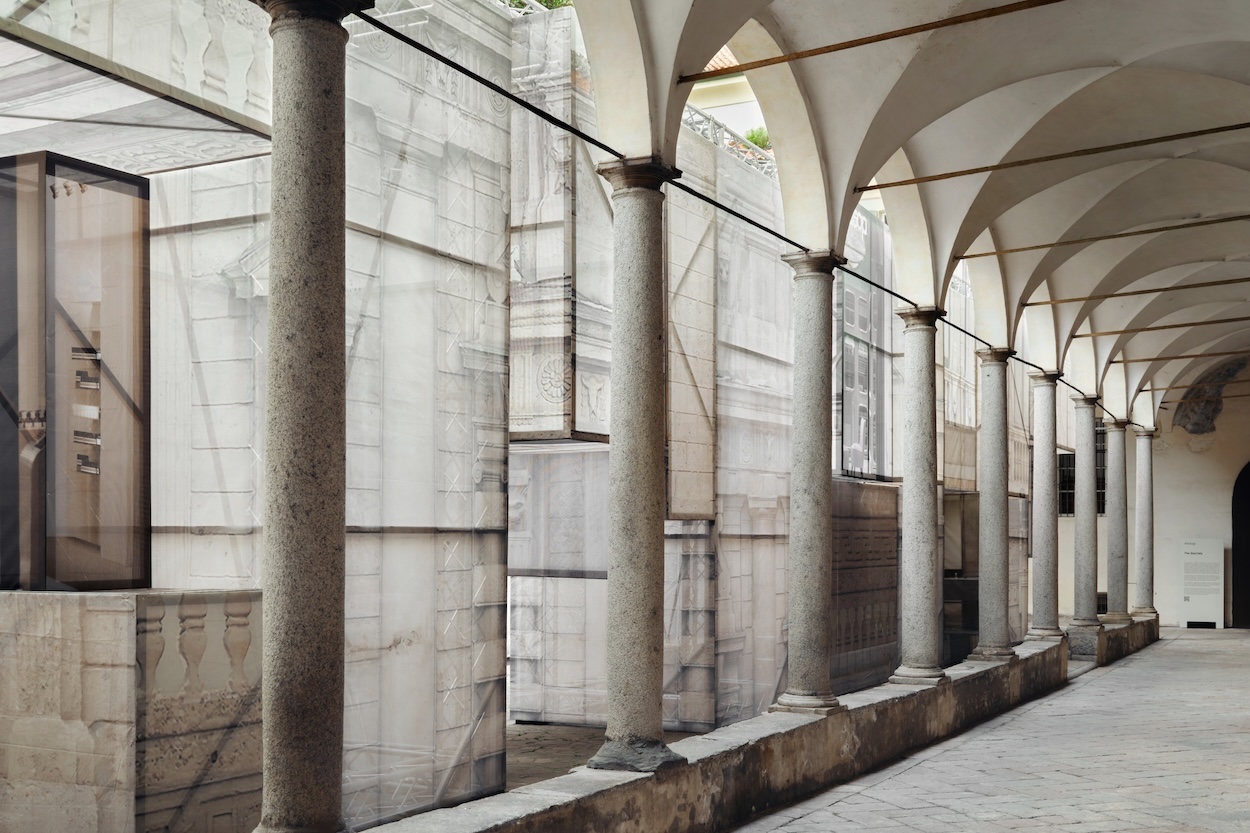
The founder of March Studio, the architect Rodney Eggleston, who has designed more than 23 Aesop projects (including many stores), imagined the installation within the 15th-century church. His brief included two elements: it needed to be centered around light, and it had to be able to be repurposed. For the installation’s architectural journey, Eggleston developed a recreation of the city of Milan composed of scaffolds and fabric. He embedded four screens within, each offering access to one element of the fabrication process behind the lamps.
Courtesy of Aesop
…
“We believe that light can improve life in a way,” Aesop’s director of global retail design, Marianne Lardilleux, tells Surface. “This is what we wanted to speak about at Salone, the importance of light.” The idea originated a year ago, and the Aesop team began to wonder: what if they created a lamp for their customers? It needed to allow consumers to bring the brand’s philosophical approach to light home. The design of the lamps began as a transformation of Aesop’s aluminum hand balm tube. Now, it’s both a limited-edition product that people can order, and a glowing participant in an ephemeral dialogue with the carved-wood panelling of a Milanese sacristy.