In advance of the 2026 Venice Biennale, Fondazione Dries Van Noten opened its inaugural exhibition, “The Only True Protest Is Beauty,” within Palazzo Pisani Moretta, a 15th-century palace on the Grand Canal. Acquired by Dries Van Noten and Patrick Vangheluwe in 2025, the palazzo is, itself, integral to the dialogue that unfolds within—as opulent original frescoes and a historic glassware collection converse with rare pieces of fashion, contemporary art, collectible design, and photography, all curated by the renowned Belgian fashion designer. More than 200 works coalesce into vignettes that allude to Van Noten’s perspective on beauty and craftsmanship.
Inside Fondazione Dries Van Noten’s Inaugural Exhibition, “The Only True Protest Is Beauty”
Venice’s Palazzo Pisani Moretta now hosts a contemplative conversation between rare pieces of fashion, art, collectible design, and photography—curated by the renowned Belgian fashion designer
BY DAVID GRAVER April 29, 2026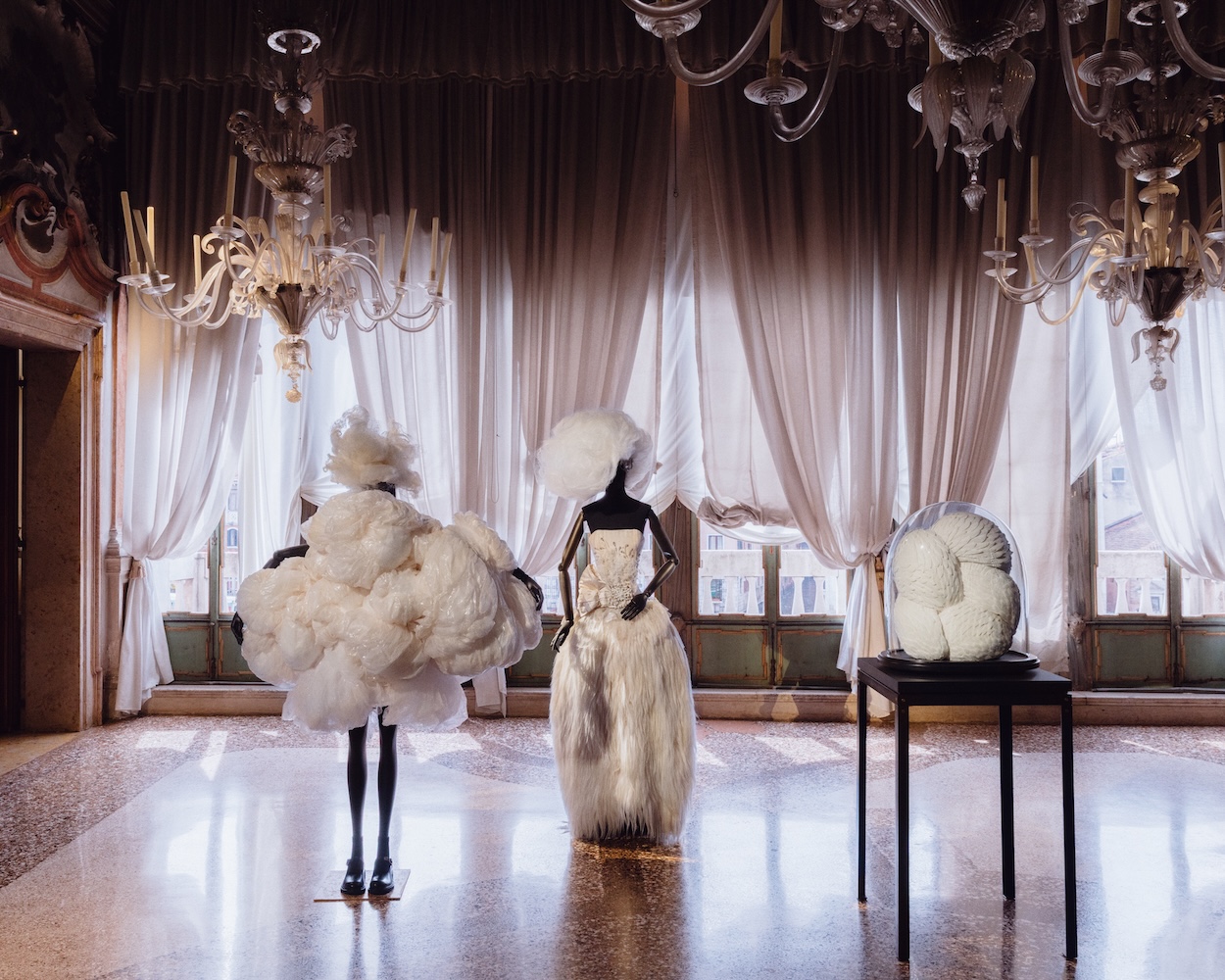
Comme des Garçons Collection Spring/Summer 2025 Headpiece by Julien d'Ys Courtesy of Comme des Garçons. Christian Lacroix Haute Couture Fall/Winter 2004 Look 37 Wig by Fabio Petri Courtesy of Christian Lacroix, STL group. Kate MccGwire STIFLE, 2008 Mixed media with white dove feathers in antique glass dome with black wood base Private collector. Courtesy of Matteo de Mayda
…
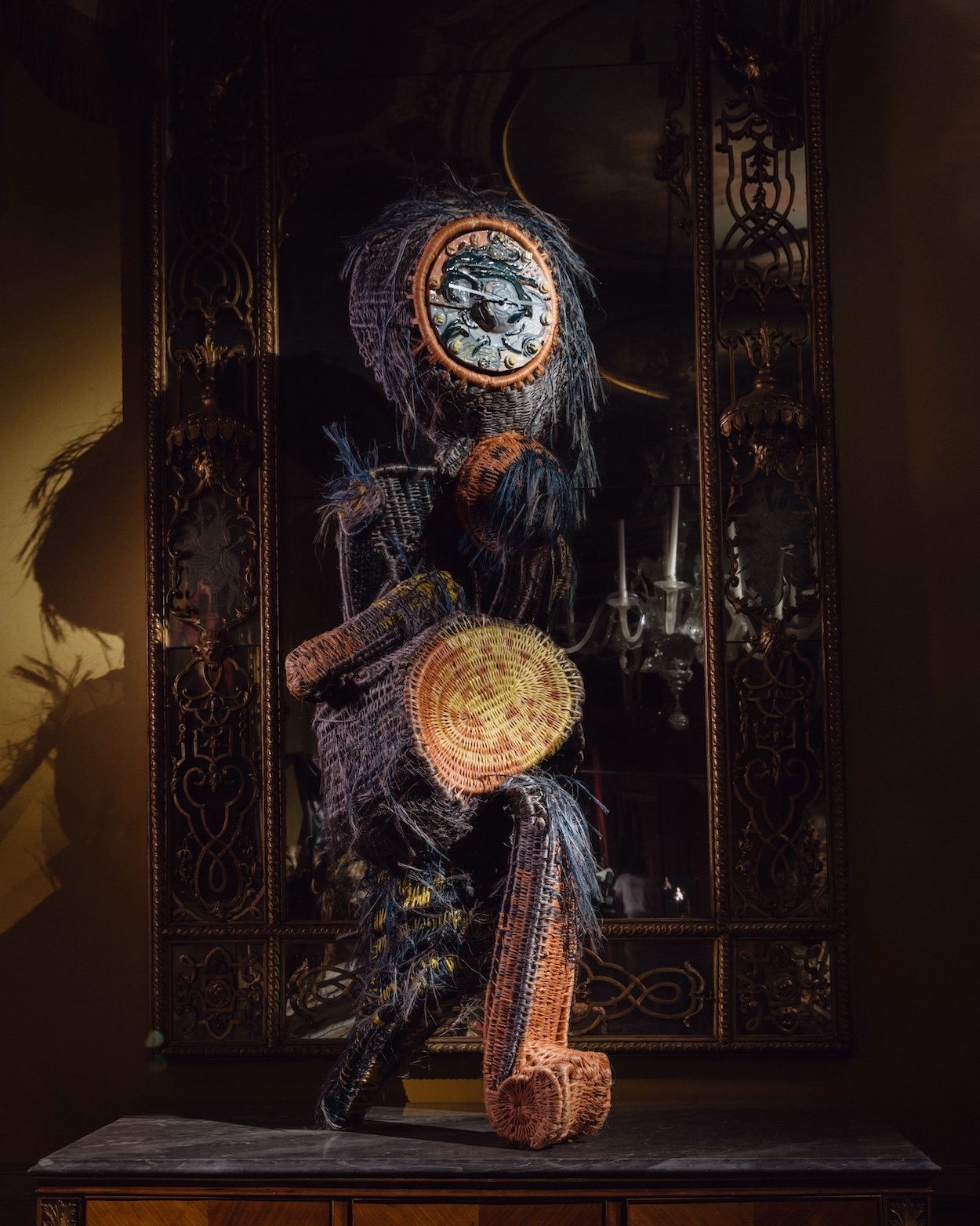
Misha Kahn Dusk's Raveled Whisps, 2023 Hand-woven fiber, ceramic Courtesy of Misha Kahn and Friedman Benda. Courtesy of Matteo de Mayda
…
Arriving by motoscafo (a Venetian water taxi), Surface toured the three-floor exhibition—which takes its name from the Phil Ochs’ lyric, “In such ugly times, the only true protest is beauty”—in advance of its April 24 opening. With Van Noten as a guide, sometimes lending personal thoughts, the experience unfolded, room by room, as guests began to interpret the collision of masterworks by artists and designers, both established and emerging, in the context of the palazzo.
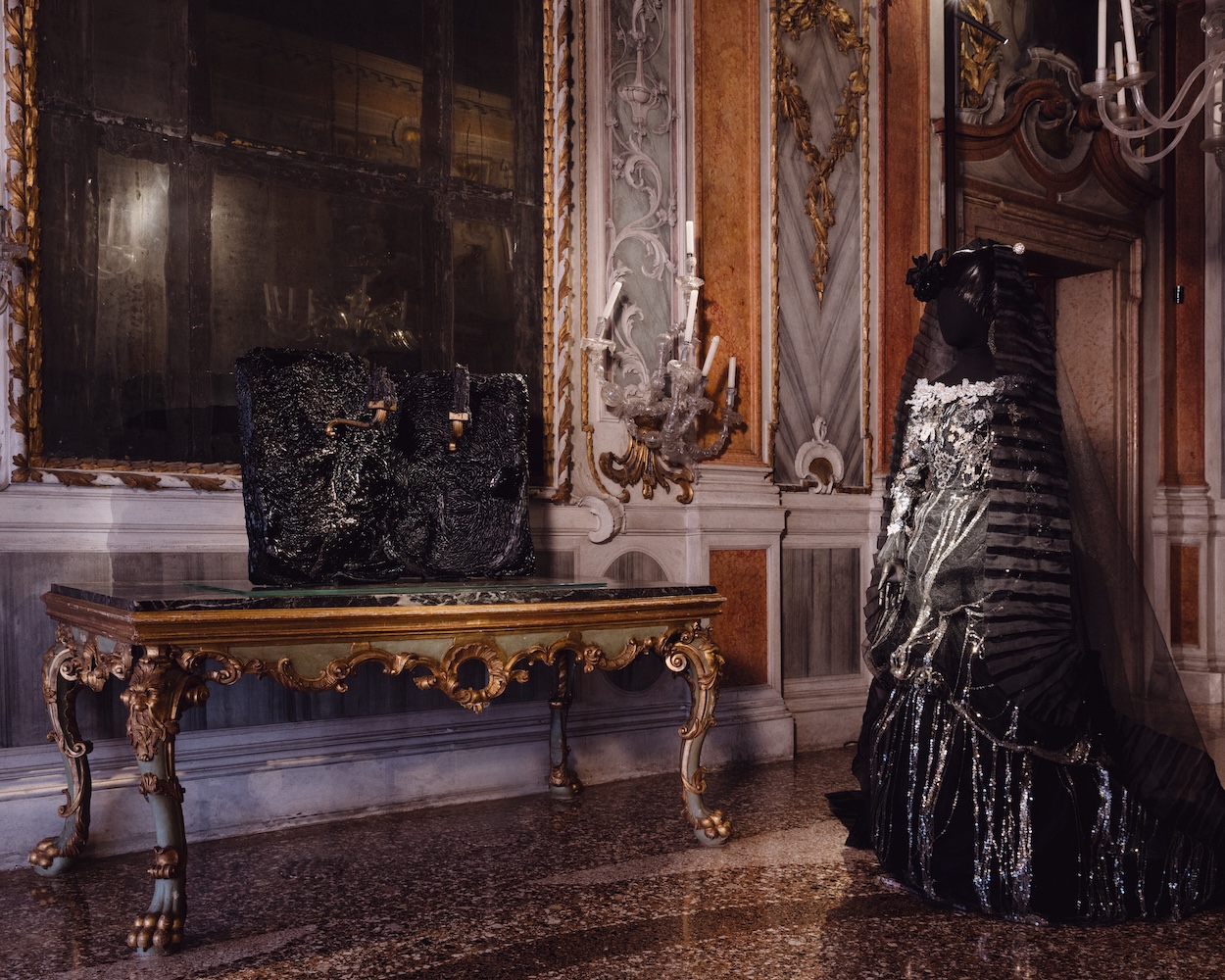
Christian Lacroix Haute Couture Fall/Winter 1997 Look 59 Wig and headdress arrangement by Fabio Petri Courtesy of Christian Lacroix, STL group. Lionel Jadot Black Moon Chandeliers, 2025 Molten plastic with old brass fixture holding a candle Courtesy of Objects With Narratives. Courtesy of Matteo de Mayda
…
Perhaps unsurprisingly, fashion plays an influential role in “The Only True Protest Is Beauty.” As Van Noten shares, “I really wanted to show fashion because this, for me, is kind of a transition from [my time as a] fashion designer into my new life and my new role as curator of the fondazione. Fashion had to play an important part.” In honor of his collaborative collection with Christian Lacroix, Van Noten places many of the theatrical French designer’s works on display.
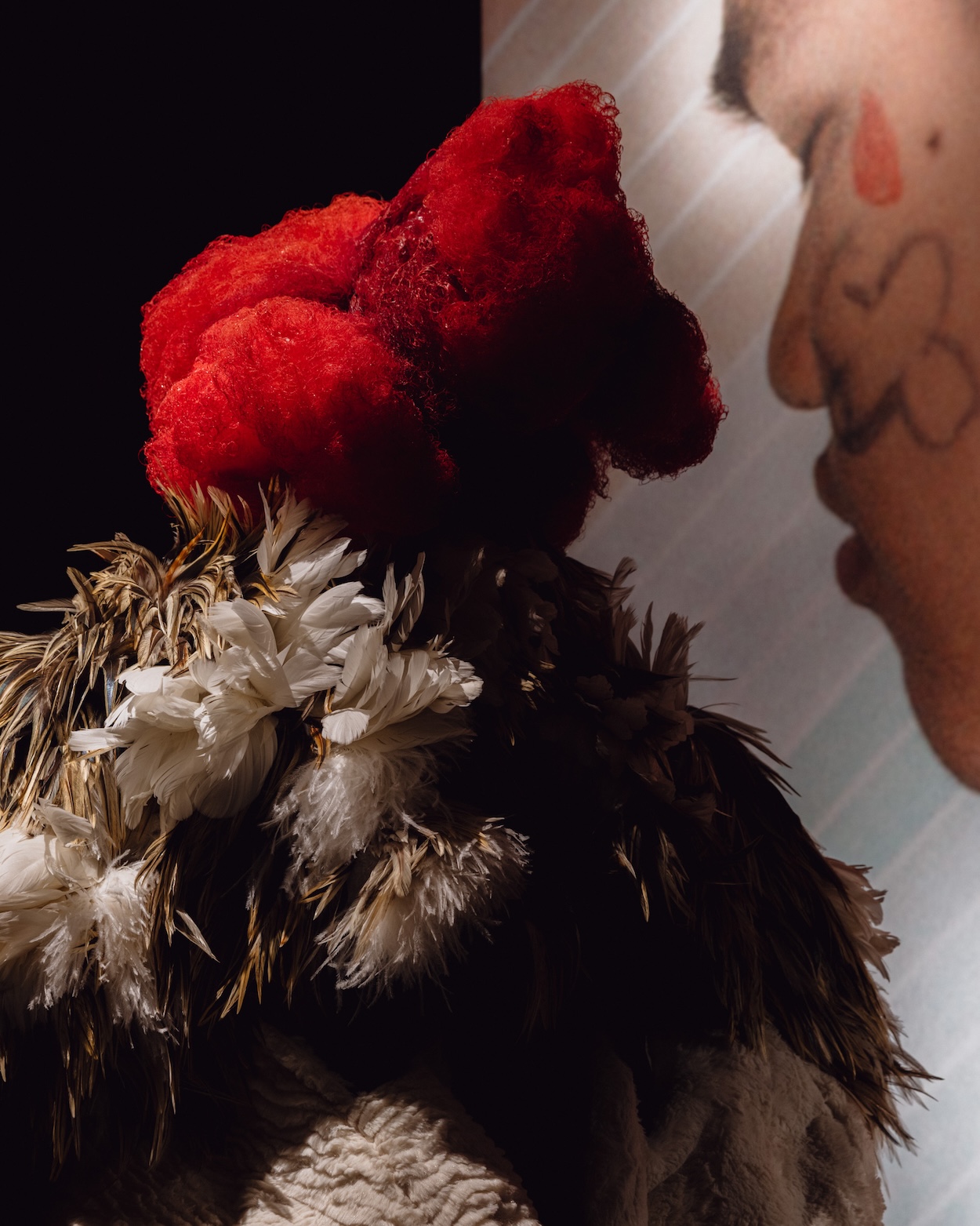
Comme des Garçons Collection Spring/Summer 2016 Headpiece by Julien d'Ys Courtesy of Comme des Garçons. Steven Shearer ORK, 2025 UV print on linen Courtesy the artist, Galerie Eva Presenhuber and David Zwirner. Courtesy of Matteo de Mayda
…
“This project, it’s about craftsmanship,” Van Noten continues, “but there is not one better craftsman in couture than Christian, so the choice to include him was quickly made. Then, I thought, who could you put in a contrast? I thought about Rei Kawakubo, and Comme des Garçons, who in 2015 decided she did not want to make fashion for the catwalk any more; she wanted to make sculptural objects, with a more theoretical approach to fashion.” Together, garments from Kawakubo and Lacroix punctuate the exhibition to astonishing effect.
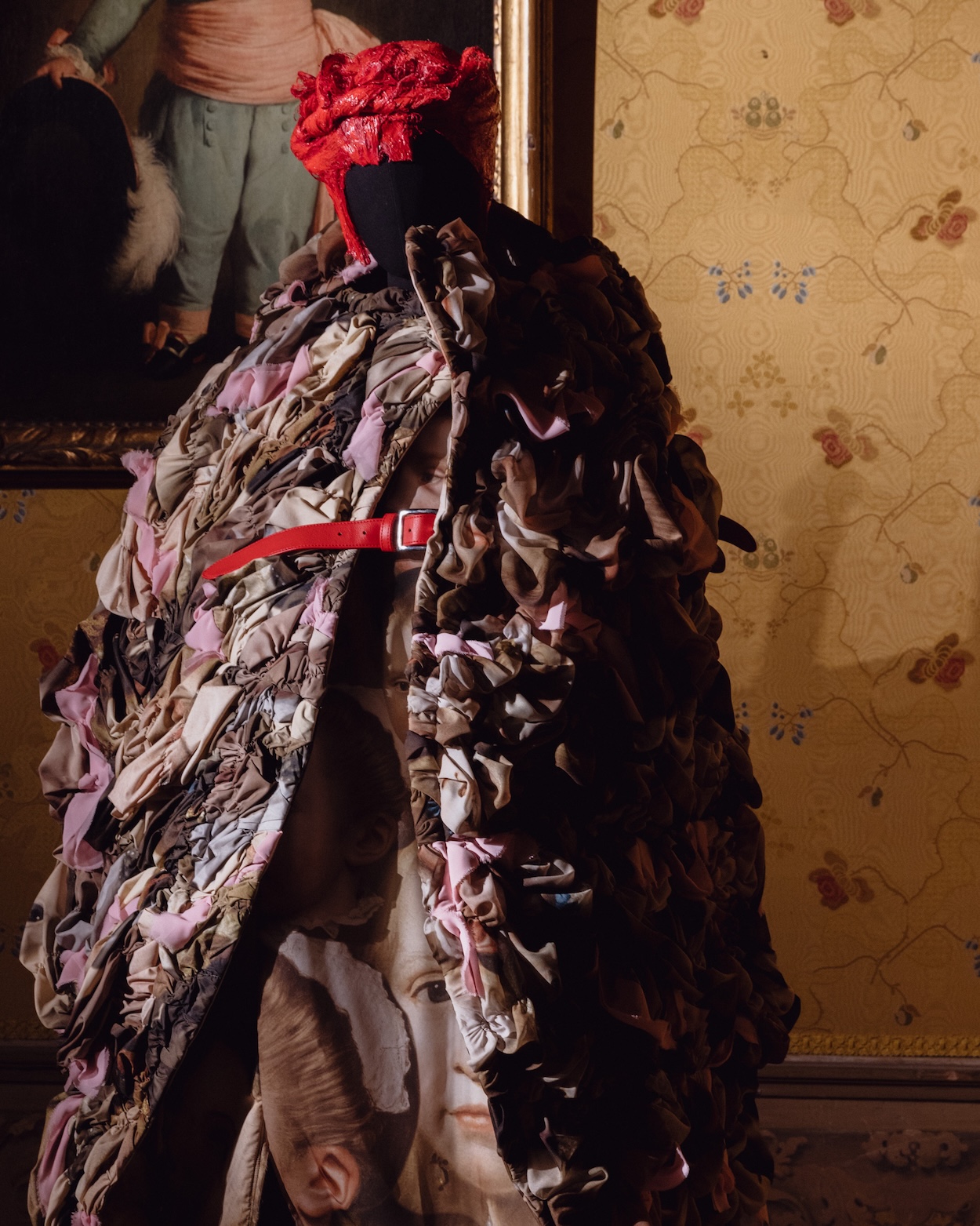
Comme des Garçons Collection Spring/Summer 2024 Headpiece by Julien d'Ys Courtesy of Comme des Garçons. Courtesy of Matteo de Mayda
…
Into the dialogue, Van Noten wove pieces by Palestinian fashion designer Ayham Hassan—including one article bridging past, present, and future. For this, “I was referencing the Gaza Majdalawi dress, which is one of the most iconic dresses in the region of The Levant,” Hassan shares. “It has this beautiful magenta weaving, called Majdalawi weaving, with these talismanic motifs of protection. It’s kind of a second layer of protection.”
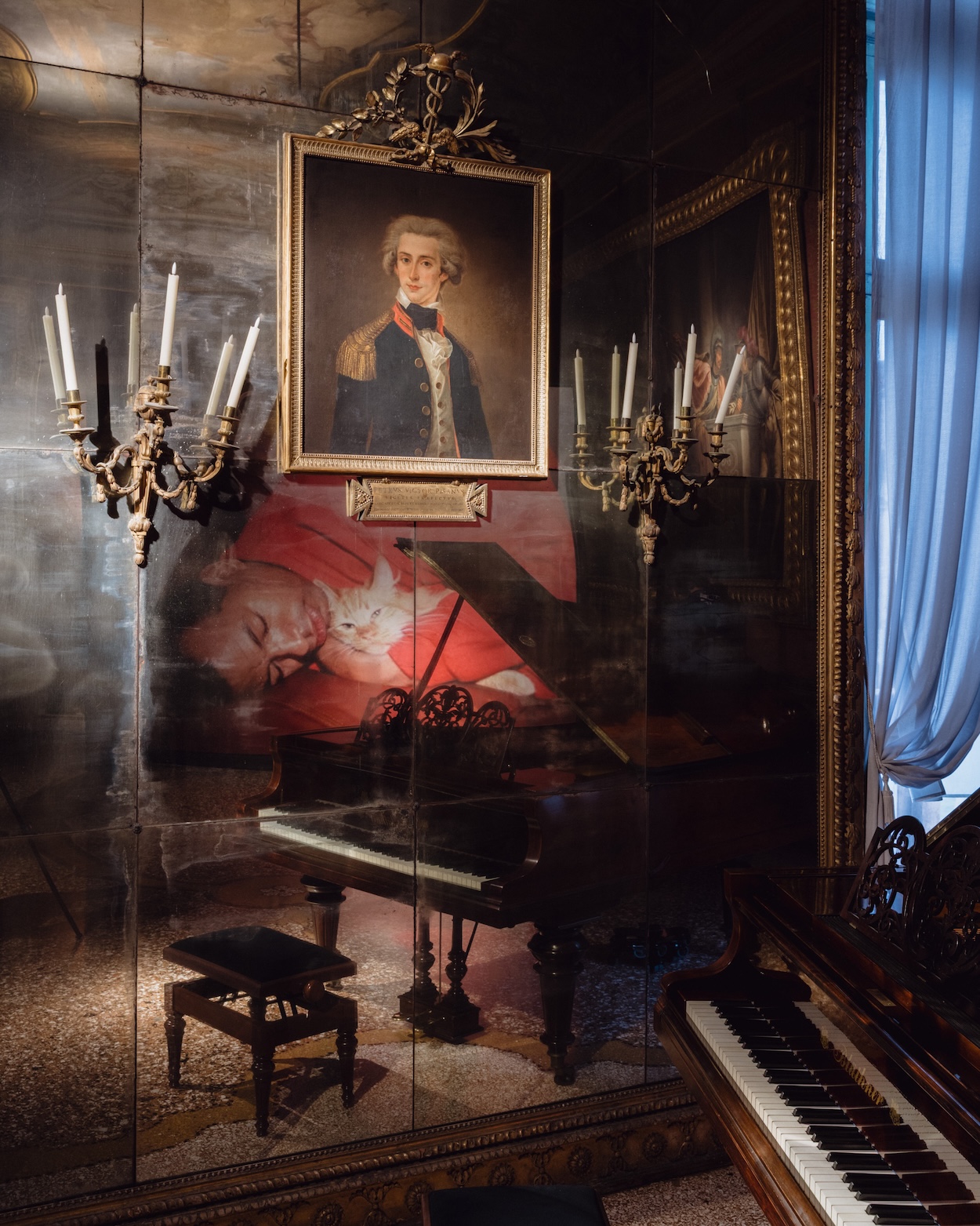
Steven Shearer Whiskered Sentinel, 2024 UV print on canvas Courtesy the artist, Galerie Eva Presenhuber and David Zwirner. Courtesy of Matteo de Mayda
…
From a monumental sculpture by Peter Buggenhout to large-scale photographic works of sleeping subjects by Steven Shearer, self-portraits in wood by Richard Štipl, elephant tusks composed of forks by Ann Carrington, and hand-woven fiber works by Misha Kahn, the curation sets experimental and collectible creations side by side. Material exploration is sometimes hidden, as is the case with Isaac Monté’s contribution.
“What you see here is a vase made out of natural crystal,” he says. “A lot of people think that I source them from nature and I glue them together, but actually I grow the pieces. It’s a technique I developed, where I dissolve minerals and oxides in water in large tanks. Then I play with the temperature of the solution. First, I heat it up to just below the boiling point, then when the solution cools down the minerals transform into crystals.” As it cools, Monté suspends objects in the tanks—and they become overgrown with his crystalline material. The designer repeats the process to build layer upon layer; each layer takes 48 hours.
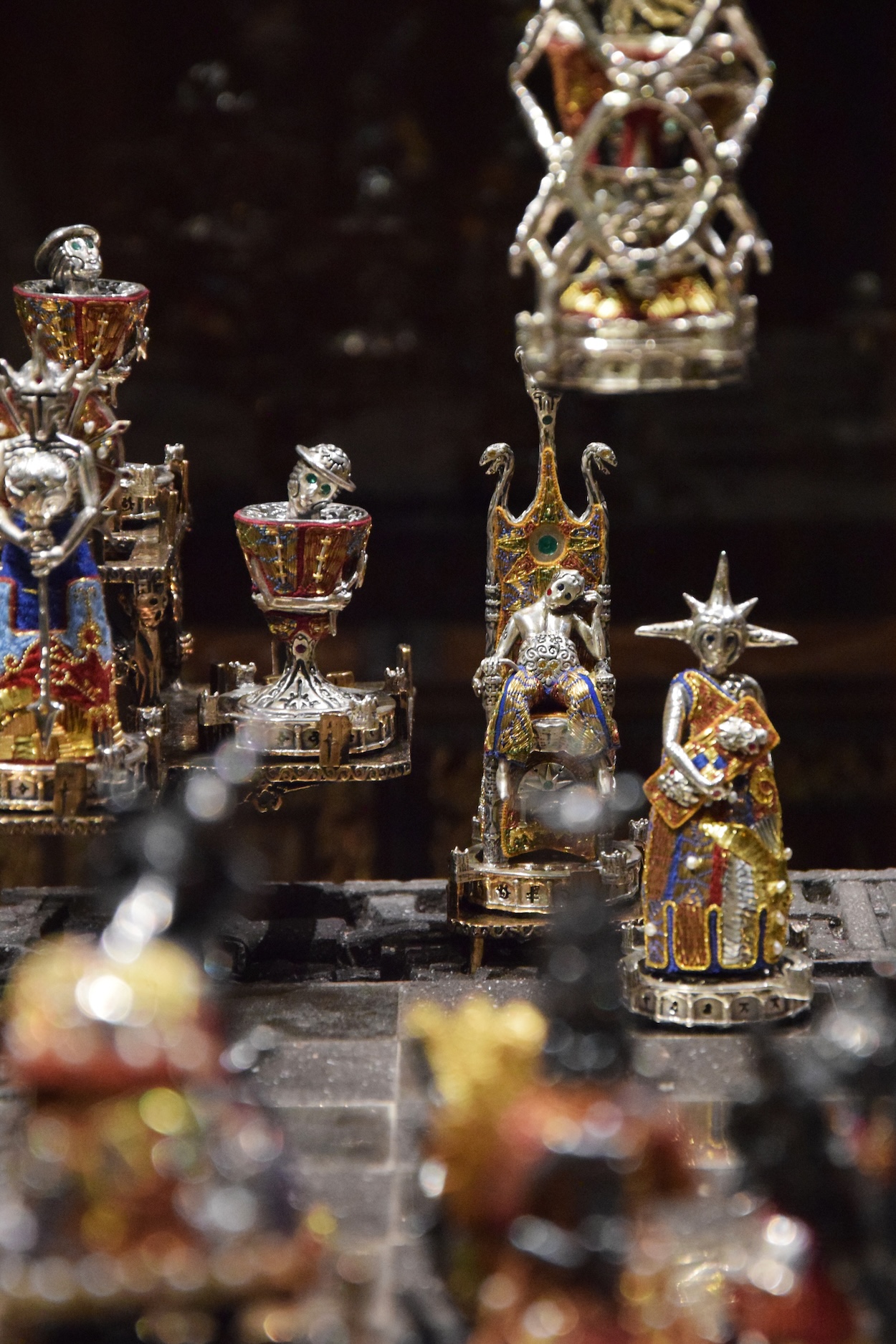
Joseph Arzoumanov L'Échiquier des Songes, 2026 Chess set: Yellow gold, sterling silver, colorful sapphires, emeralds, rubies, topaz, citrine, tourmaline, white and black diamonds, Murano glass, mother of pearl, gold and silk haberdashery, Armenian volcanic stone, bronze, steel, robotic components. Table: colorful sapphires, rubies, emeralds, tourmalines, bronze, marquetry of birch, padauk, smoked eucalyptus, walnut, tamo, burl elm, mahogany, blue-stained sycamore woods. Parchment: calfskin parchment, iron oak gall ink, vermillion red ink, the pinkest pink, natural pigments : lapis lazuli, lazurite, azurite, indigo, malachite, lead tin yellow, yellow ochre, minium, vermilion, carmine naccarat, venetian red, reddish earth, lamp black, lead white. Made with the support of Fondazione Dries Van Noten, the Albertine Foundation, and Antoine Camus. With deep gratitude to the twenty-three artisans who contributed with their craft. Photo: Courtesy Fondazione Dries Van Noten.
…
The pièce de résistance, Joseph Arzoumanov’s allegorical chessboard, was more than three years in the making. “It’s an ode to the love story of my grandparents, who met in Leningrad, now Saint Petersburg,” the artist shares. “I wanted to represent this intense love that I’d heard about. My grandfather is the white king. My grandmother is the black queen.” Arzoumanov uses an A.I. algorithm to drive a robotic arm that plays with the chess pieces, bringing the story to life.
“I love creating confusion between different techniques and skills,” he adds. “Here, it is a mix of emerging technologies and traditional crafts like carving on mother of pearl, Murano glass, goldsmithing, silversmithing, bronzesmithing, orthodox miniatures, gold embroidery, silk embroidery, and wood marquetry. There are a lot of secret details hidden everywhere.” Arzoumanov says the work itself questions the nature of destiny. In many ways, the sculpture acts as a microcosm of the entire exhibition—brimming with ideas, posing questions, demonstrating the magnitude of artistic vision and evidence of the hand of its maker.