“I wanted to create a work that positions the past and present from the perspective of a far-off future, the year 5300,” says French artist, scenographer, and choreographer Emmanuelle Luciani. “Taking a fresh look at Baccarat’s prolific history, I envisioned a sci-fi movie in which the hyper-skilled know-how of its master artisans had been lost to time.”
Baccarat Returns to Milan Design Week With a Futuristic “Crystal Crypt” by Artist Emmanuelle Luciani
The "factory temple" immersive display—physical installation, choreographed ballet, and film—presents a different perspective of the storied French crystal producer’s seminal history
BY ADRIAN MADLENER April 23, 2026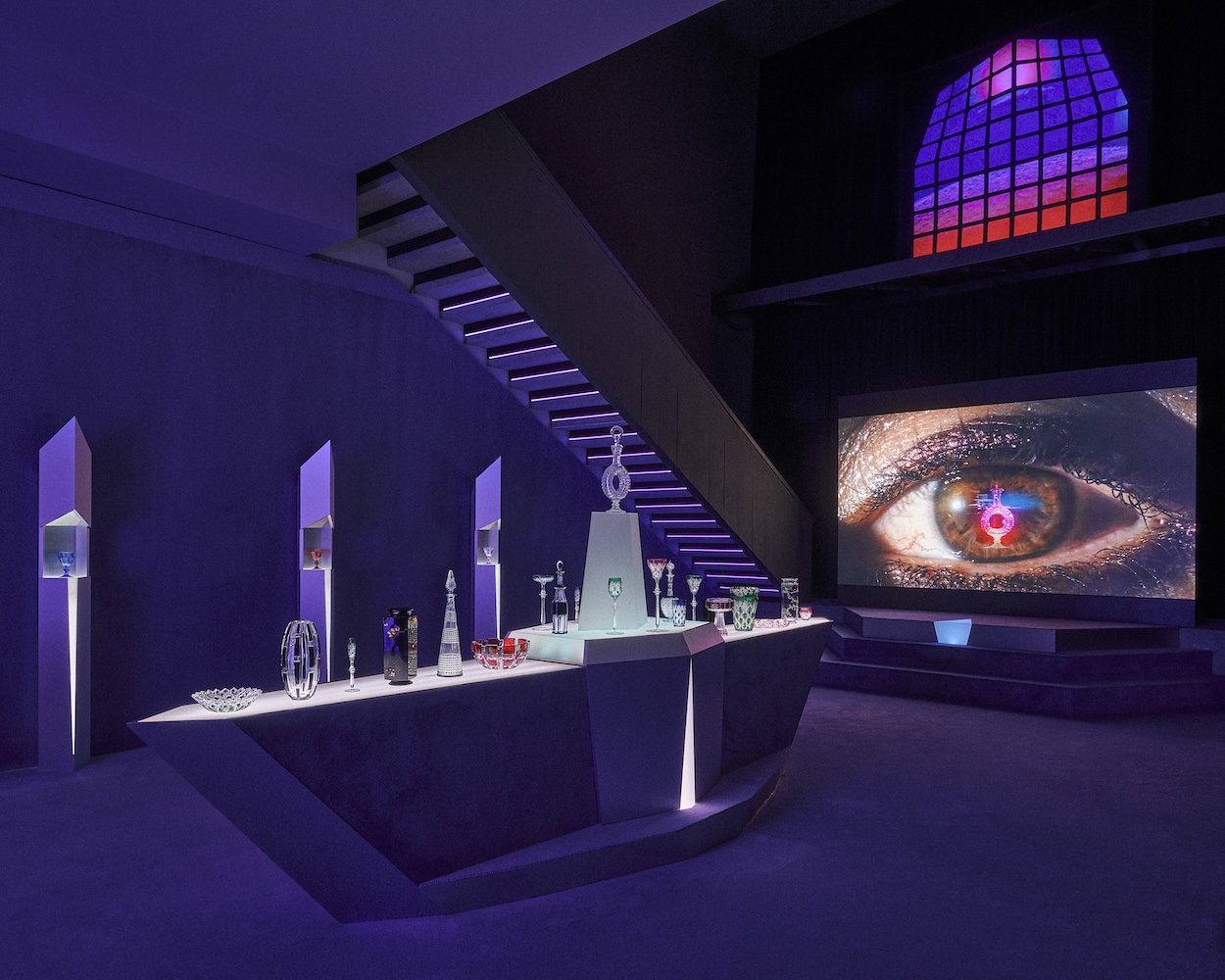
Courtesy of Philippe Garcia for Baccarat
…
Courtesy of Philippe Garcia for Baccarat
…
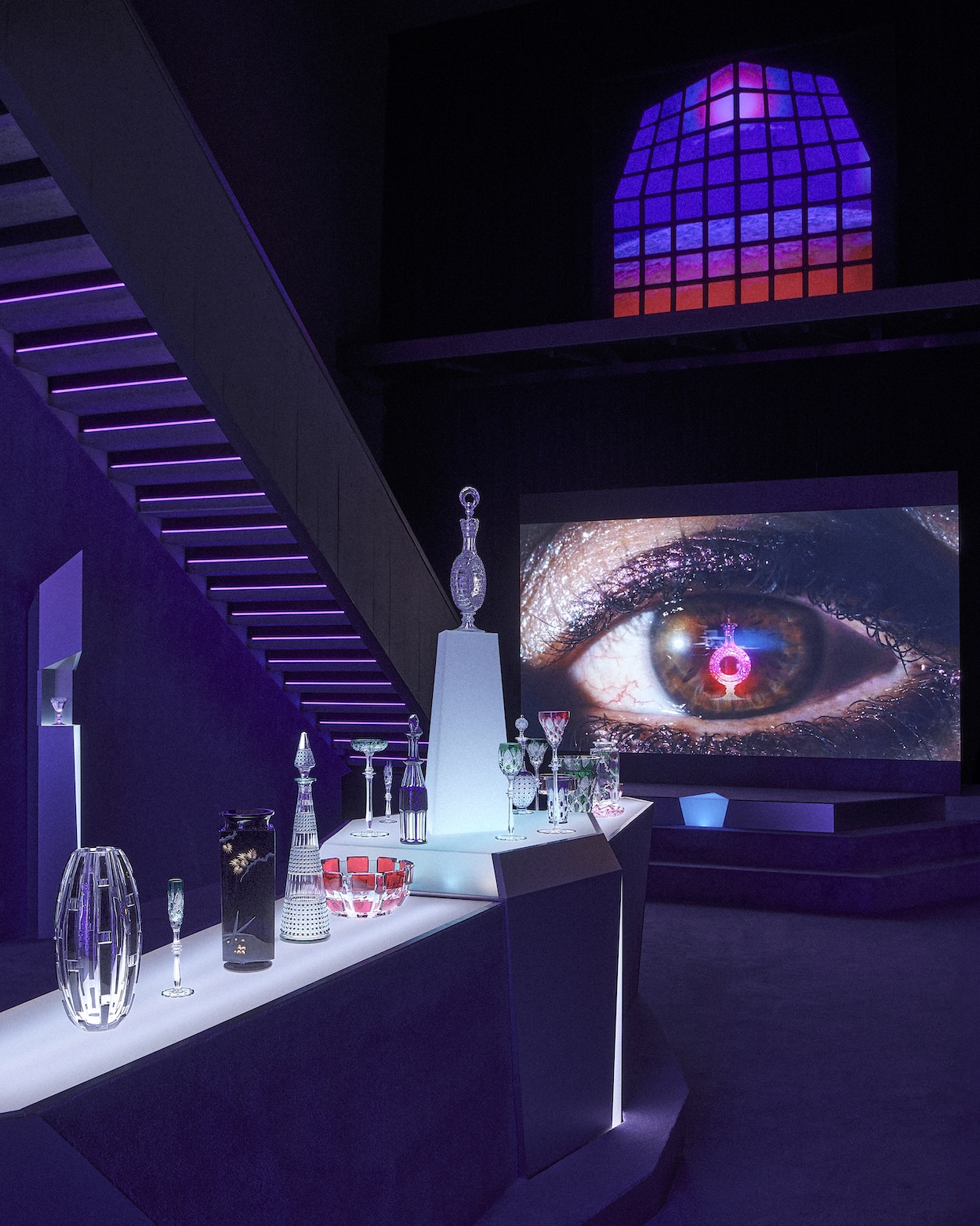
Baccarat’s proprietary crystal glass savoir-faire is incredibly precise and hard to learn. The boutique manufacturer has perfected and preserved especially accurate coloring and cutting techniques over the past four centuries. In the film, future explorers rediscover this lost art through physical gestures: cupping their hands and twisting their wrists the way a glassblower does when holding their blowpipe. For Luciani, a classically trained dancer, the process is a sort of ballet.
Courtesy of Philippe Garcia for Baccarat
…
The protagonist “performers” move through what is Baccarat’s archive, portrayed as a “Crystal Crypt”—the installation’s title—beneath a cathedral. The activation marks the brand’s return to the citywide event after four years. In Baccarat, France—the luxury brand’s rural France seat—the main Eglise Saint Remy church is an early example of Brutalist Modernism. And yet, its stained-glass windows were, naturally, produced by Baccarat.
Courtesy of Philippe Garcia for Baccarat
…
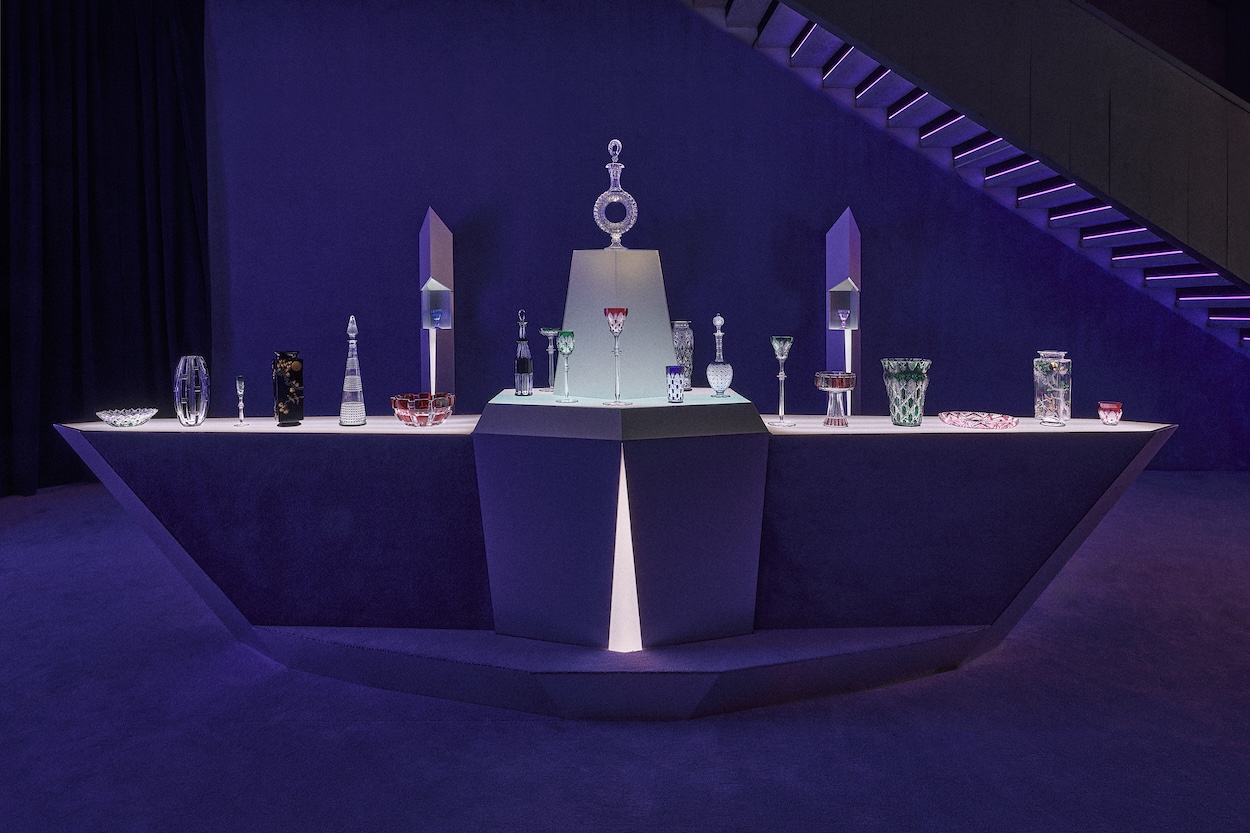
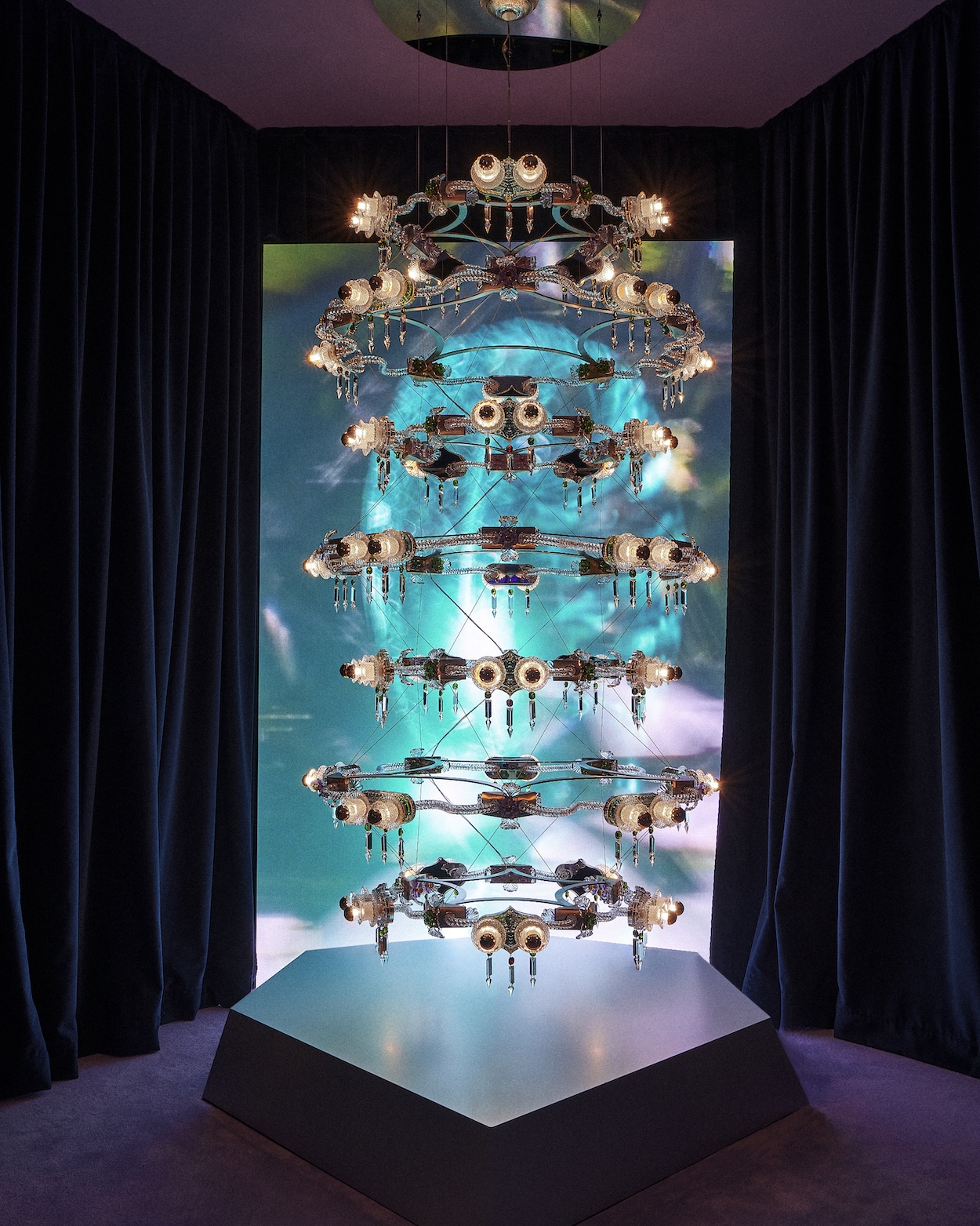
Luciani chose to evoke its sharp lines through the outfit of the exhibition space. Staged at Milan’s Chiesa di San Carpoforo—itself a deconsecrated 9th century church—during this year’s Milan Design Week, the installation is defined by matte gray surfaces cut in acute angles. Above a large screen—displaying the movie originally scored with the sounds one normally hears in a glassworks—is a reconstituted stained-glass window. A central mirror-topped podium features key designs from Baccarat’s range: the neoclassical, especially tall Tzar waterglass first created for Tzar Nicholas II and more geometric Art Deco vessels. “I wanted to present these iconic pieces as relics and in a sort of anachronistic fashion,” Luciani adds.
Courtesy of Philippe Garcia for Baccarat
…
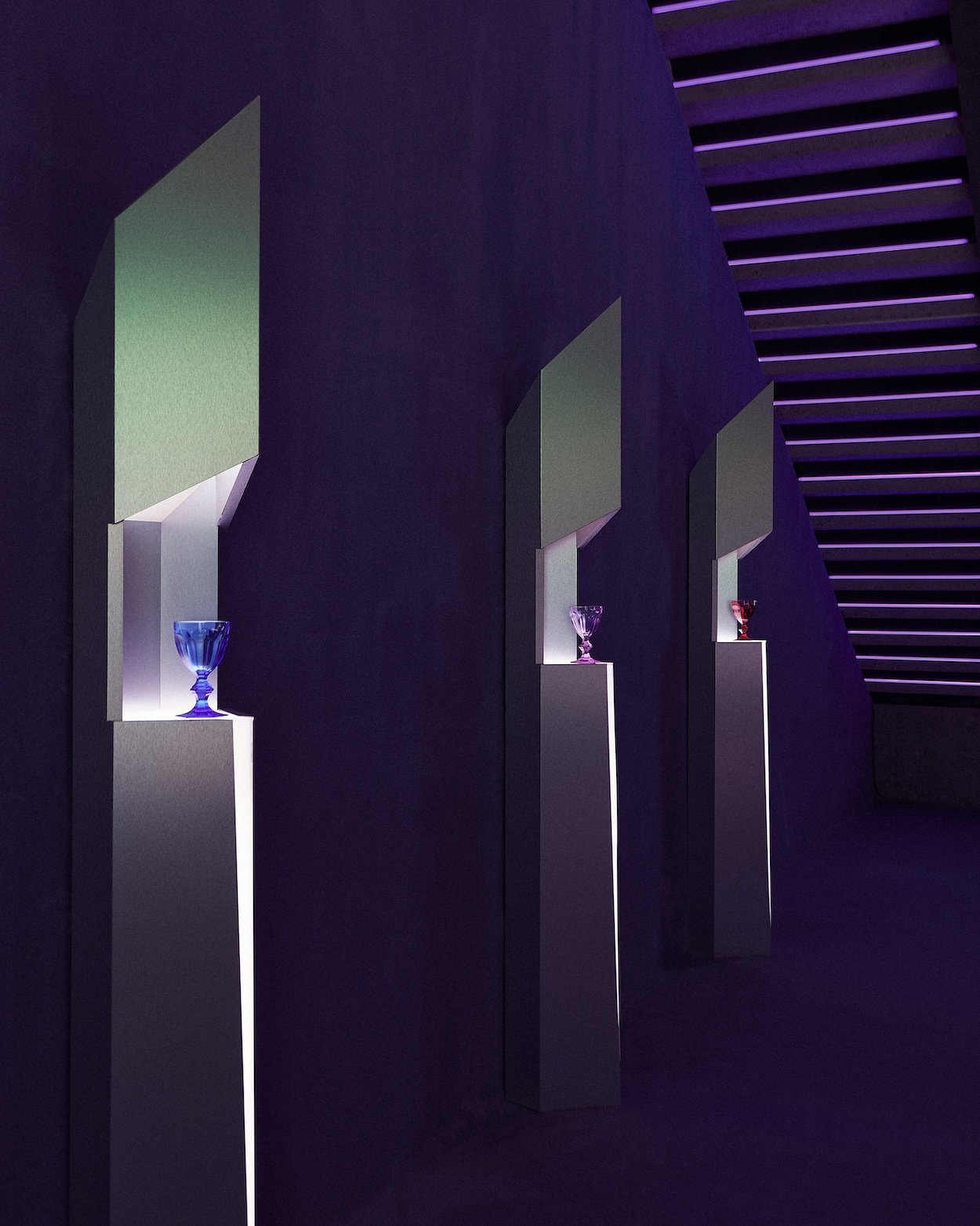
The overall display takes on an otherworldly, space-age cosmodrome quality. In its sacred space dimension, it’s a kind of “factory temple,” uncovered like an ancient monument. For Luciani, British designer Bethan Laura Wood’s modular Zénith chandelier—taking pride of place toward the rear of the space, is a kind of spaceship, a mash up of different styles and techniques; at once Venetian and industrial. Also on display, on separate illuminated display modules, are new editions of Baccarat’s legendary scallop-form Harcourt 1841 glass, first produced for Emperor Napoleon III and Empress Eugénie.