Frieze London and Frieze Masters announce this October’s programming.
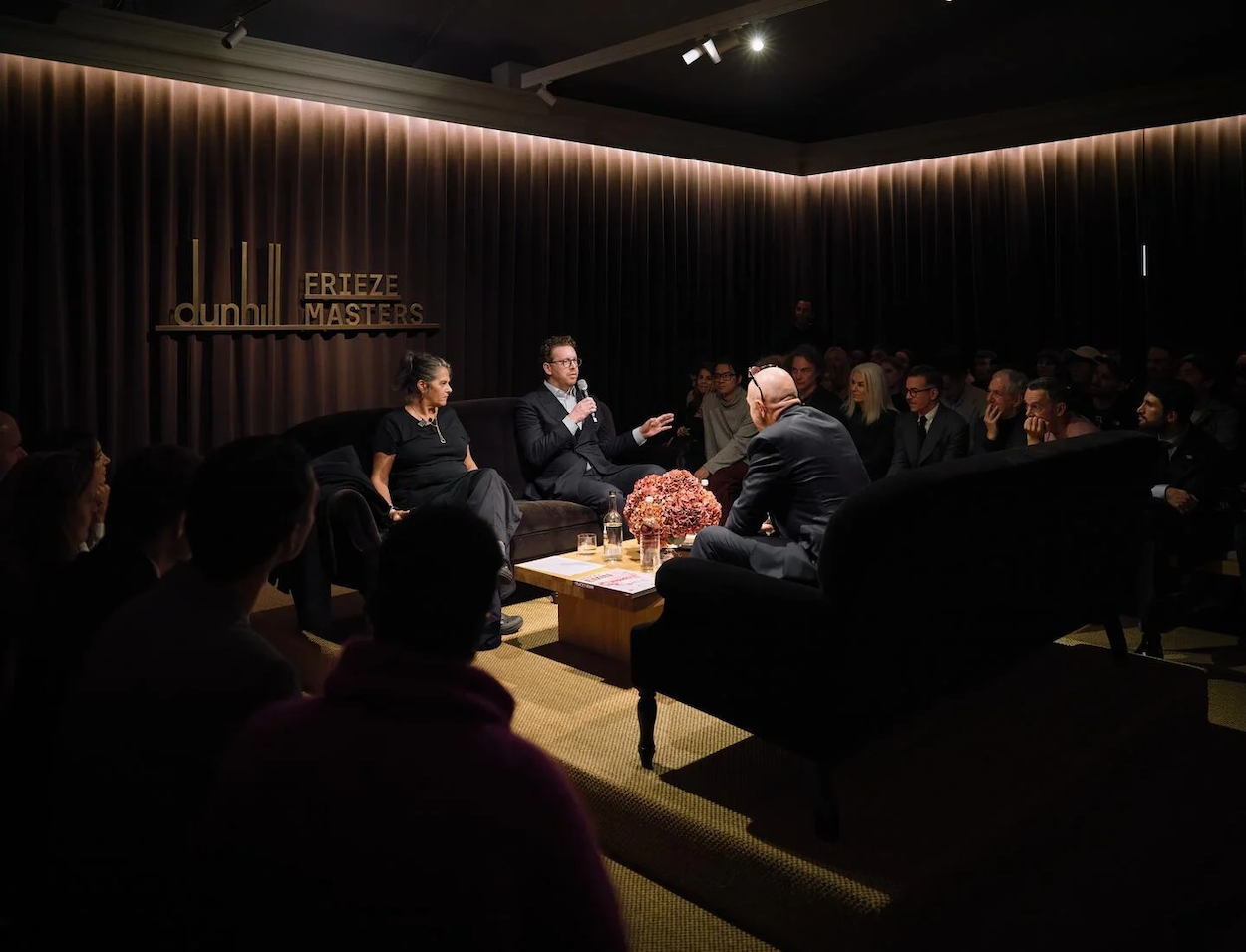
Frieze London and Frieze Masters return to Regent’s Park October 14–18, with programming spanning artist commissions, talks, film, and non-profit partnerships. Director of Frieze EMEA Eva Langret framed the lineup around London’s broader art ecosystem, noting the slate is designed to have an impact well beyond just the fair. The Frieze Masters Talks series, produced with Dunhill and curated by Arturo Galansino for a second year, returns under the theme “Breaking the Mould,” examining how historical art forms are reinterpreted today. Speakers include Grayson Perry, Es Devlin, Tim Marlow, Luke Syson, Danh Vō, and Lina Ghotmeh, with conversations released as a podcast on Frieze and Dunhill’s websites, Spotify, and Apple Podcasts. At Frieze London, artist Gray Wielebinski debuts Production (2026), a site-specific commission by Dean’s Bottom that transforms the fair’s public toilets into a scent-based installation using urinal cakes and toilet-rim blocks encased in sculptural cages, exploring risk and desire in public space. Additional programming includes a Frieze x ICA artists’ film showcase spotlighting early-career talent, and a Reading Room hosting four non-profits.
Nearly 100 works from the Museum Berggruen collection are headed to Miami.
Pérez Art Museum Miami (PAMM) will open “Picasso–Klee–Matisse: Masterpieces from the Museum Berggruen” on October 29. The exhibition brings nearly 100 works from the Museum Berggruen and the Berggruen family collection to South Florida, marking PAMM’s first exhibition devoted exclusively to European Modern masterpieces and its first use of the museum’s largest galleries for a single show. Organized thematically—still life, portraiture, interiors, landscape, and Cubism—rather than by artist or chronology, the show pairs these European masterworks with pieces from PAMM’s own collection of Latin American Modernists, including Diego Rivera, Joaquín Torres-García, and Wifredo Lam, drawing out shared themes of exile and migration. Highlights include Picasso’s La Lecture (1953) and his Blue Period Portrait de Jaume Sabartés (1904), Klee’s Landschaft in Blau (1917), Matisse’s Éléments végétaux (1947), and Cézanne’s Portrait de Madame Cézanne (c. 1885).
Made debuts a furniture range modeled on the Barbican’s sculptural forms.
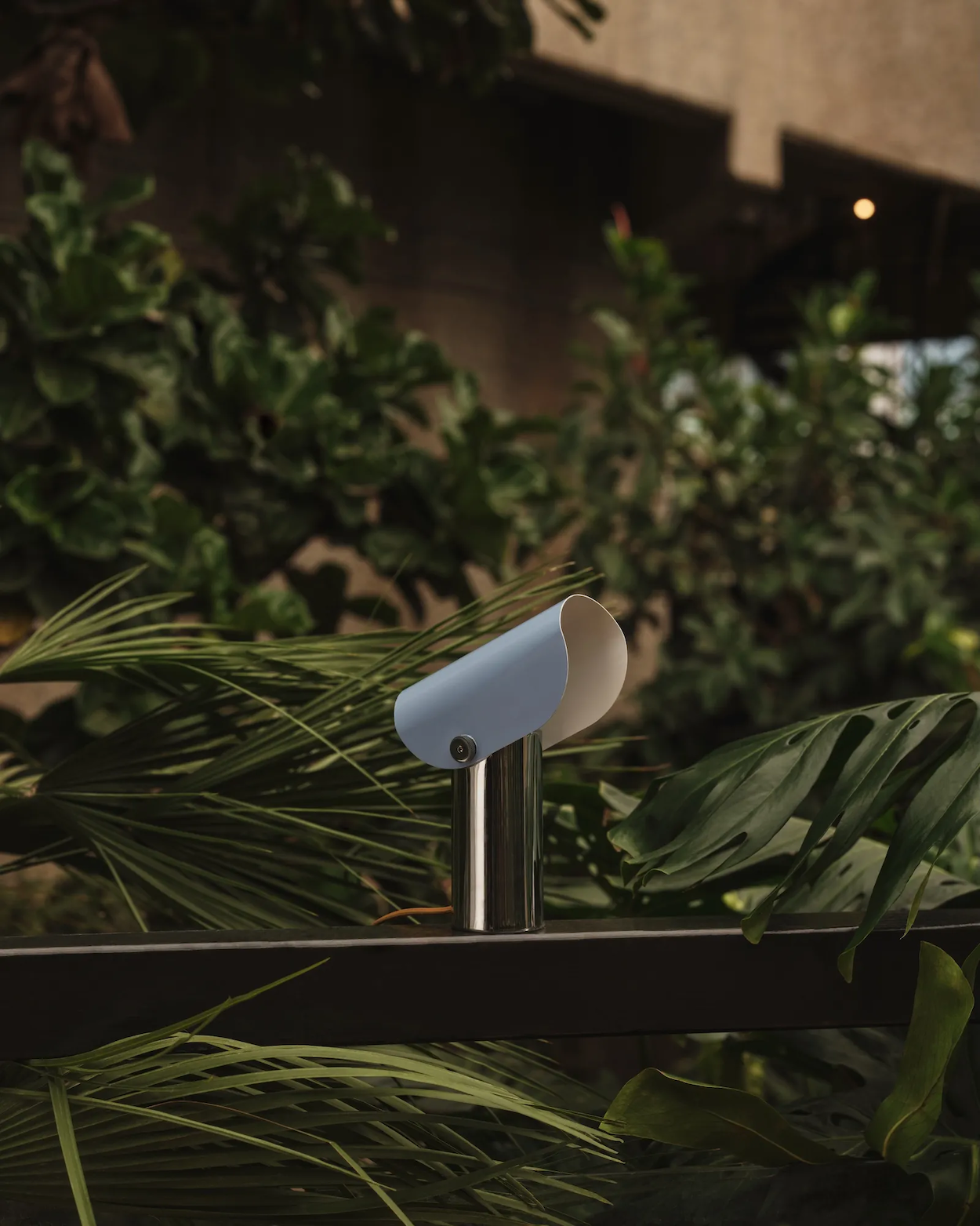
Made has partnered with London’s Barbican to launch a 23-piece collection of furniture, lighting, textiles, and accessories inspired by the landmark’s brutalist architecture. Completed in 1982 on what was the largest World War II bomb site in the City of London, the estate was designed by Chamberlin, Powell and Bon as a combined cultural and residential complex. The new range draws from both sides of that identity: public spaces like the concert hall and raised walkways, as well as the estate’s original apartments. Made’s design team researched the Barbican’s archives and studied designer Miriam Howitt, originally commissioned to create five show homes for the development in the late 1960s. Her influences, shaped by travel through Scandinavia as well as bold Dutch interiors, carry through into pieces built around the estate’s sculptural forms, modular layouts, and curved silhouettes. A recurring semi-circle motif, seen in the podium windows, penthouse rooflines, fountains, and stair towers, anchors the collection: Dual-accent chairs echo the concrete pillars, the Plinth coffee table nods to lakeside seating pods, and the Curve lamp series references the Concert Hall’s acoustic panels.
Antonello da Messina paintings stolen in an overnight heist.
Thieves stole four Renaissance-era artworks attributed to Antonello da Messina from the MuMe museum in Messina, Sicily, while crowds gathered nearby for Ferragosto celebrations. The stolen pieces include three panels from the 1473 San Gregorio Polyptych and a double-sided depiction of the Virgin Mary and the Pietà, taken from an armored case. Two additional polyptych panels were removed but abandoned behind a wall as the thieves fled. Despite functioning alarms and guards on site, the theft went undetected until nearly 10 p.m. Art expert Alberto Fiz values the missing works at €70–80 million. Museum director Marisa Mercurio called the loss devastating to the region’s cultural identity, while Messina’s culture chief, Enzo Caruso, described the city as stripped of its defining Renaissance legacy. Art-crime analyst Lynda Albertson noted the works’ fame makes them nearly impossible to sell through legitimate channels, often leaving them to circulate as criminal collateral instead. The theft follows last week’s recovery of stolen Renoir, Cézanne, and Matisse paintings in Parma.
42 artists bring contemporary ceramics into Rhodes’ Medieval City.
The second Biennale of Contemporary Keramics (BCK) has brought 42 artists from 18 countries into the Medieval City of Rhodes, staging ceramic works inside archaeological and historic sites across the UNESCO World Heritage city. Curated by Stamatia Dimitrakopoulou, Loukia Thomopoulou, and Anissa Touati, the exhibition, titled “Where the Day Starts,” runs through October 31, spanning five venues: the Archaeological Museum of Rhodes, the Armoury de Milly, the Decorative Arts Collection of Rhodes, Our Lady of the Castle, and Kleovoulou Square.
The title references Rhodes’ position as the easternmost point of Greece, framing the island as a place where the day begins. The Sun serves as the 2026 edition’s conceptual anchor, tying together works addressing memory, identity, migration, and transformation. The edition also recognized standout practitioners: Tülay Kulbay received First Prize, with Honorary Mentions going to Elysia Athanatos and Lynn Kodeih.
Attractive Distractions:
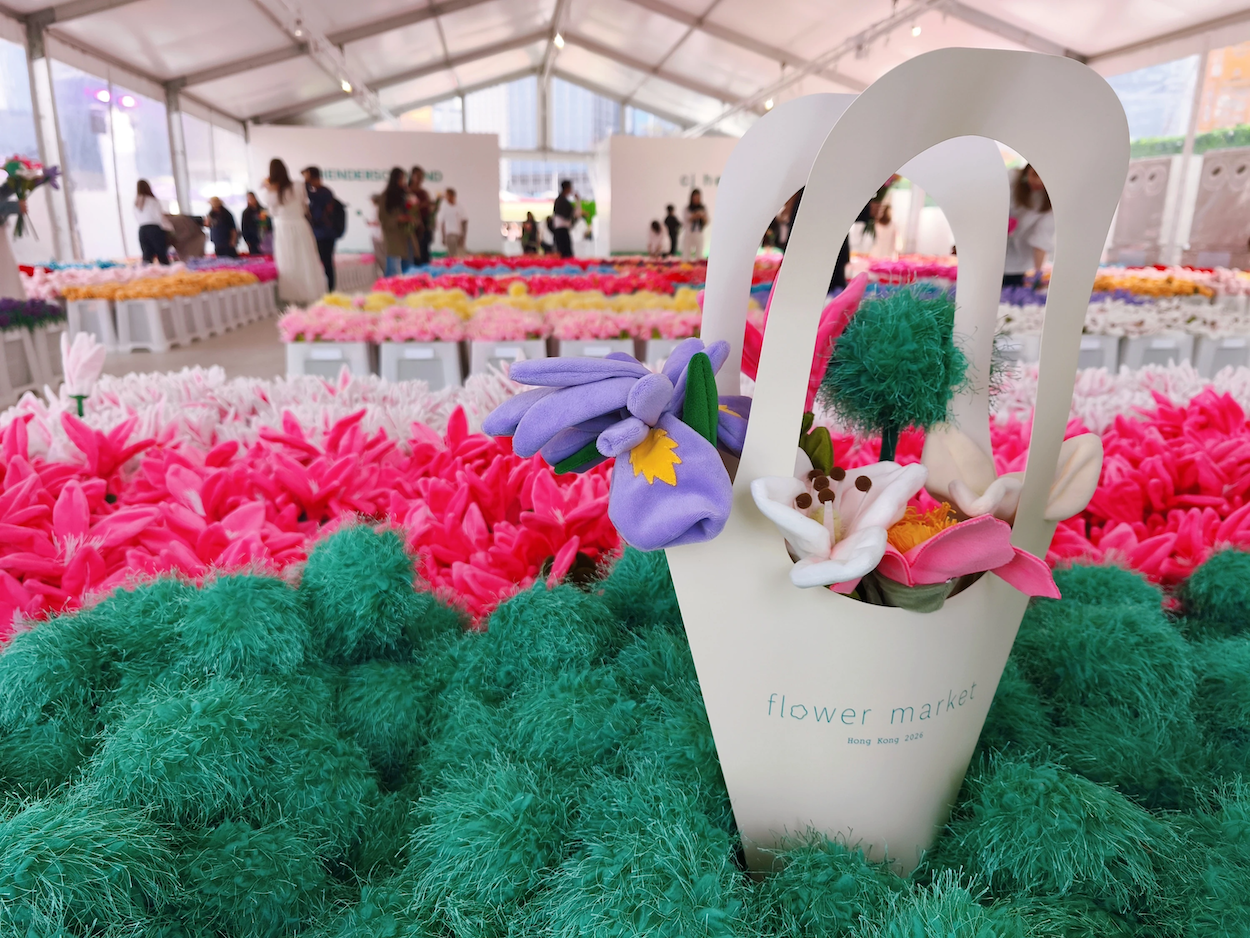
Cj Hendry opens a permanent flower shop in Hong Kong.
Adam Nathaniel Furman and Kate Mazade’s “Chromatic Architecture” positions color as a fundamental aspect of human pleasure.
Montblanc’s “Minerva The Unveiled Crownless” timepiece is an elite dress watch unlike any other.
Dot COMME is auctioning off 265 Rei Kawakubo pieces.