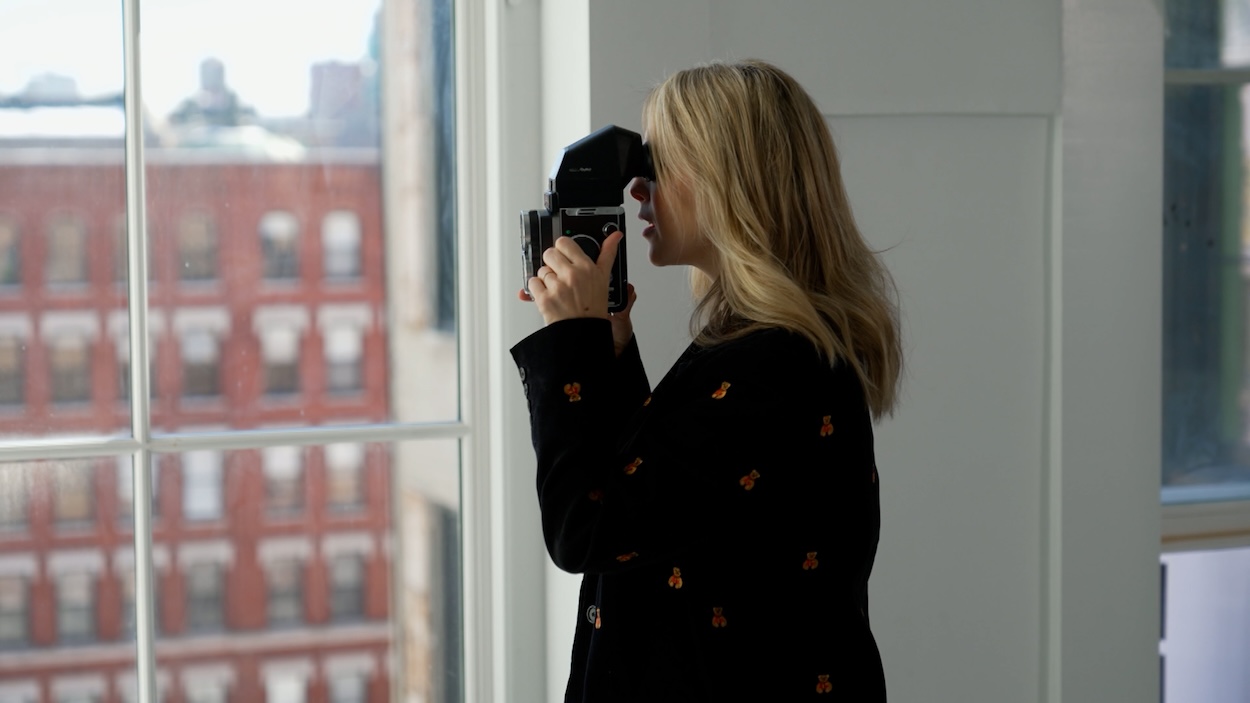
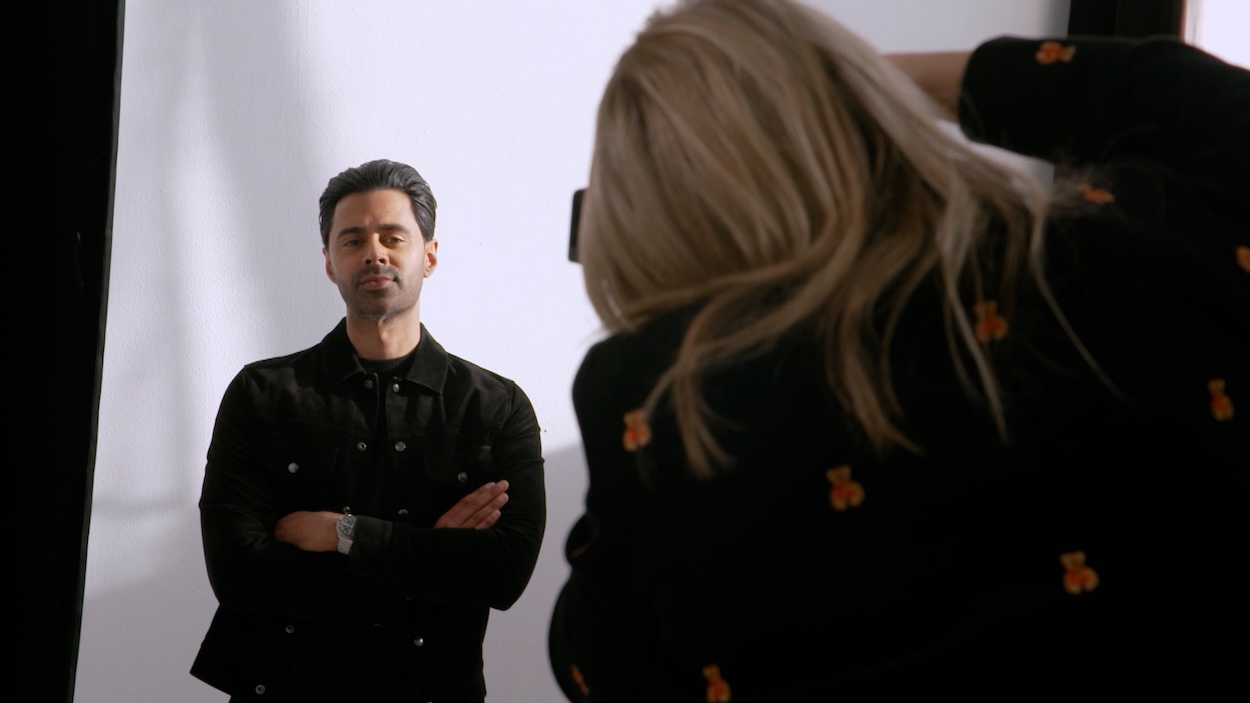
Growing up, Sophie Elgort wanted to be a professional ski racer. After training for over a decade, competing at the Junior Olympics, and then representing the sport at Brown University, she found her way back home to New York City, and started taking her camera everywhere. Photography, which had always been part of her life through her father, fashion photographer Arthur Elgort, became the career she fell into simply by doing it. Now, she is behind the camera and in front of it. In Portrait Mode, the WNET series she hosts and executive produces, Elgort photographs artists while talking with them about their lives and work, letting viewers watch a portrait take shape in real time. The recently debuted second season features comedian Hasan Minhaj, ballet dancer India Bradley, model and actress Hari Nef, and more—a range Elgort chose to show that there is no single definition of what it means to be an artist.
Sophie Elgort Steps in Front of the Camera for Season Two of "Portrait Mode"
The photographer, director, producer, and host talks about her transition from ski racing to photography, the advice from Anna Wintour that changed her creative approach, and what people reveal when a portrait becomes a conversation.
Sofia Quintero October 07, 2026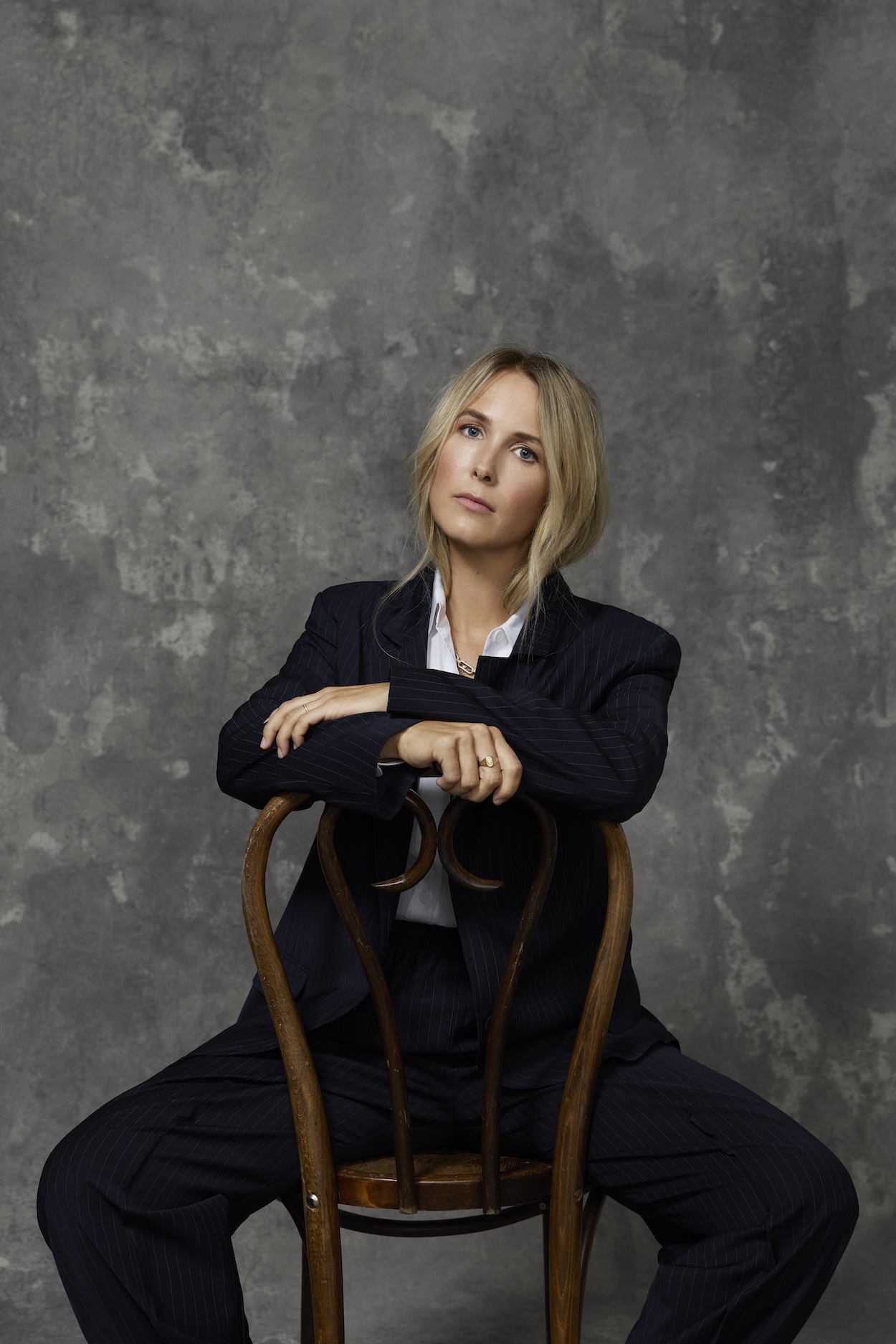
Was there a specific moment or project that made you realize that photography was the path for you?
Photography had always been part of my life because of my dad, but I didn’t initially think of it as a career. After college, I answered a Craigslist ad to work at a nightclub in New York. I started bringing my camera everywhere, meeting people, shooting constantly, and saying yes to opportunities. Photography became something I fell in love with while doing it. What’s interesting now is that I’m not only behind the camera anymore. With Portrait Mode, for the second season in a row, I’ve stepped in front of it as the host while still approaching the show with a photographer’s eye. I’m thinking about how to create the conditions for someone to open up and noticing when to capture and elaborate on a moment, but now I’m doing that through conversation as well as photography. I think that evolution is pretty representative of my career. I’ve never had a perfectly straight path, and a lot of the most meaningful parts of my life and career have come from being willing to step into something new when the opportunity presents itself.
Was there a mentor outside your family who shaped your eye or your approach to working with subjects?
Anna Wintour actually gave me a piece of advice very early in my career that completely changed the way I thought about my work. She looked through my work at the time and pointed out things she felt weren’t working—the makeup, the styling. I remember thinking, but I’m the photographer, those things aren’t my job. And she basically told me: You’re the director. You’re responsible for all of it. That really stayed with me. I realized that being a director isn’t about being the person with all the answers or doing everything yourself, it’s about taking responsibility for the whole outcome. Until then, I had been so focused on my one role as the photographer. She taught me to see the bigger picture: to bring the right people together, give them a shared vision, and create the conditions for everyone to do their best work.
Who did you turn to for advice when you decided to pitch and produce your own series?
Portrait Mode actually came about a little differently. I had originally pitched another series to Diane Masciale at WNET, and they turned it down. But Diane and I stayed in touch over the next few years, and eventually we came up with the idea for Portrait Mode together. She became a real mentor to me throughout that process. I’ve also been very lucky to have incredible series producers, including Anna Campbell, who has been with the show from the beginning. I’m the host and an executive producer, but I’m not the series producer. Anna and the production team do so much of the work of actually bringing the series to life, and I’ve learned an enormous amount from working alongside them.
Beyond that, I’ve tried to seek out people who are really good at different parts of the job and ask for their advice. Dana Mathews at GQ, for example, gave me advice on casting, which was incredibly helpful because I bring on all of the talent for the series. I’ve also had friends and publicists I’ve worked with for years as a photographer who have been incredibly generous with their advice and their relationships. One of the things I’ve learned through making the show is that you don’t have to know how to do every part of it yourself. It’s about knowing who to learn from, who to bring into the process and how to build the right team around an idea.
Portrait Mode is all about process. What do you find people reveal in that space that they might not in a traditional interview?
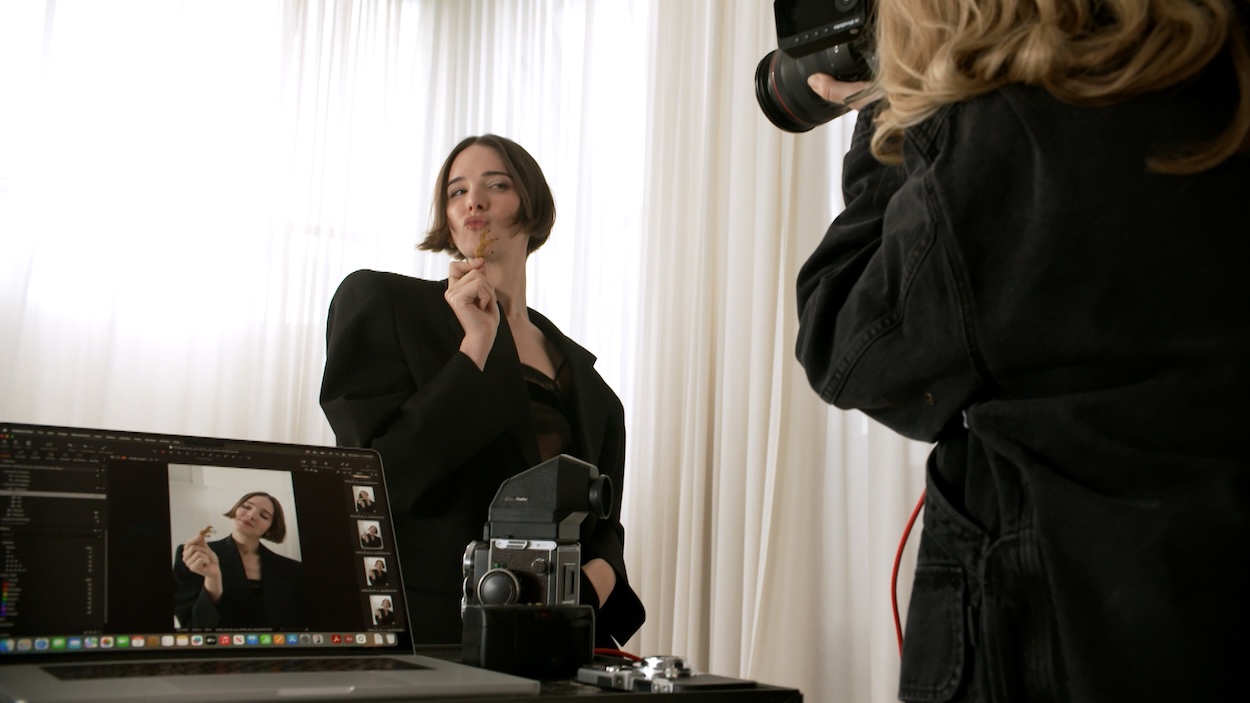
I think there’s something different that happens when you’re making something together rather than sitting across from each other for a traditional interview. A portrait is really a collaboration between the photographer and the person being photographed. We’re talking, moving, trying things, and over the course of the shoot, people tend to relax and different sides of them start to come through. For me, getting to know someone is part of the process of making a great portrait. Portrait Mode lets the viewer into that process. You’re hearing these artists talk about their lives and their work, but you’re also seeing them in action and watching the portrait take shape through that collaboration. I think that’s where some of the most interesting moments come from. It’s not just what someone tells you about themselves, it’s what you get to observe about them along the way.
This season spans comedy, ballet, jazz, and film/modeling. What draws you to building a season across such different disciplines?
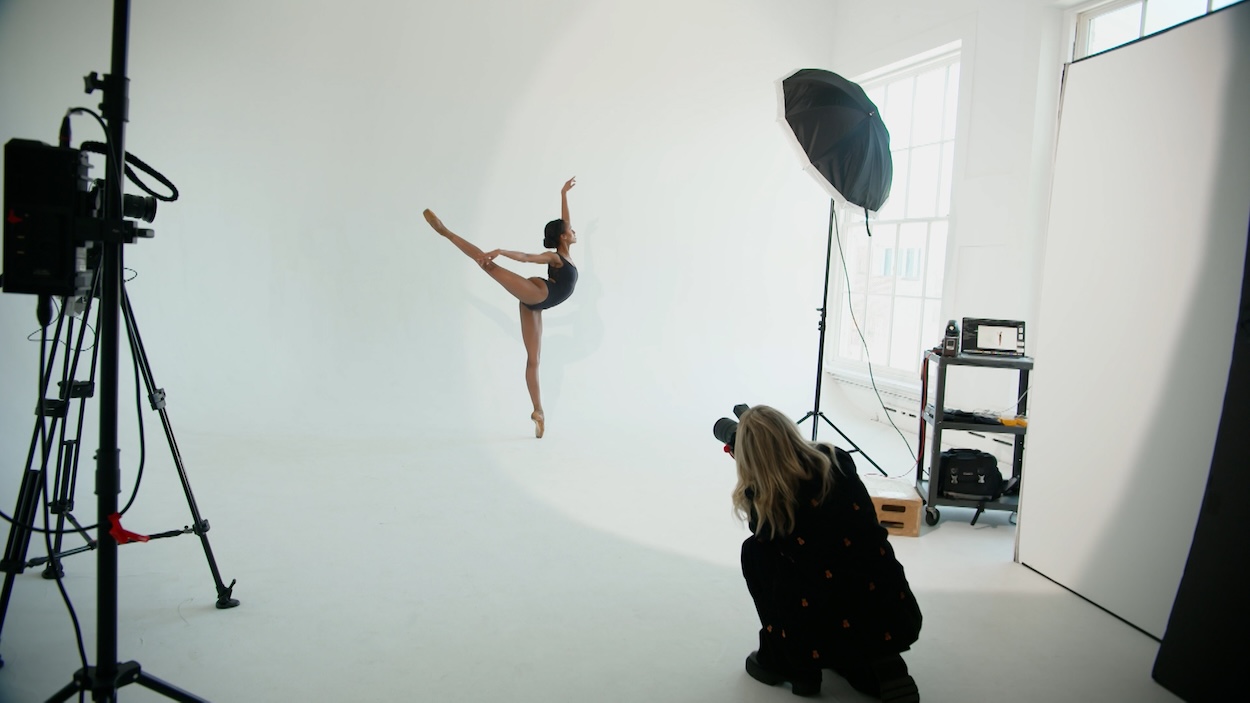
I really wanted the season to show that art can take so many different forms. It can be comedy, dance, music, acting, fashion. There isn’t one definition of what it means to be an artist or to have a creative practice. What’s interesting to me is getting to know the person behind the work and understanding how they got there, what drives them, and how they approach their craft. Putting artists from such different disciplines alongside one another also lets you see the common threads between them, even when what they create looks completely different.
Photographing a ballet dancer versus a comedian requires different energies. How do you adjust your approach depending on the guest’s medium?
That’s actually what I love about what I do. Every day is different and every person in front of my camera is different. I always come in prepared, but then I pay attention to the person in front of me and adjust. A ballet dancer moves and expresses herself differently than a comedian does, and part of my job is figuring out what makes each person interesting and how to bring that out. Sometimes that means giving a lot of direction, and sometimes it means stepping back and letting something unfold. That unpredictability is one of my favorite parts of photography. You can have a plan, but ultimately you have to respond to what’s actually happening in front of you.
Has doing this show changed how you think about your own photography process outside of the series?
Absolutely. Portrait Mode has made me much more conscious of the balance between preparation and being present. I’ve always believed in coming into a shoot with a plan, but some of the best moments happen when something unexpected takes you somewhere else. With the show, I’m having a conversation while also making a portrait, so I have to be incredibly present. I’m listening, watching, adjusting, and recognizing when something interesting is happening, even if it isn’t what I had planned. That has definitely carried into my photography outside the series. I think more now about creating the right conditions, being willing to adapt when something changes, and then recognizing the moment when it presents itself. You can prepare as much as possible, but ultimately you have to be ready to take the shot when you see something good you might not have planned for.