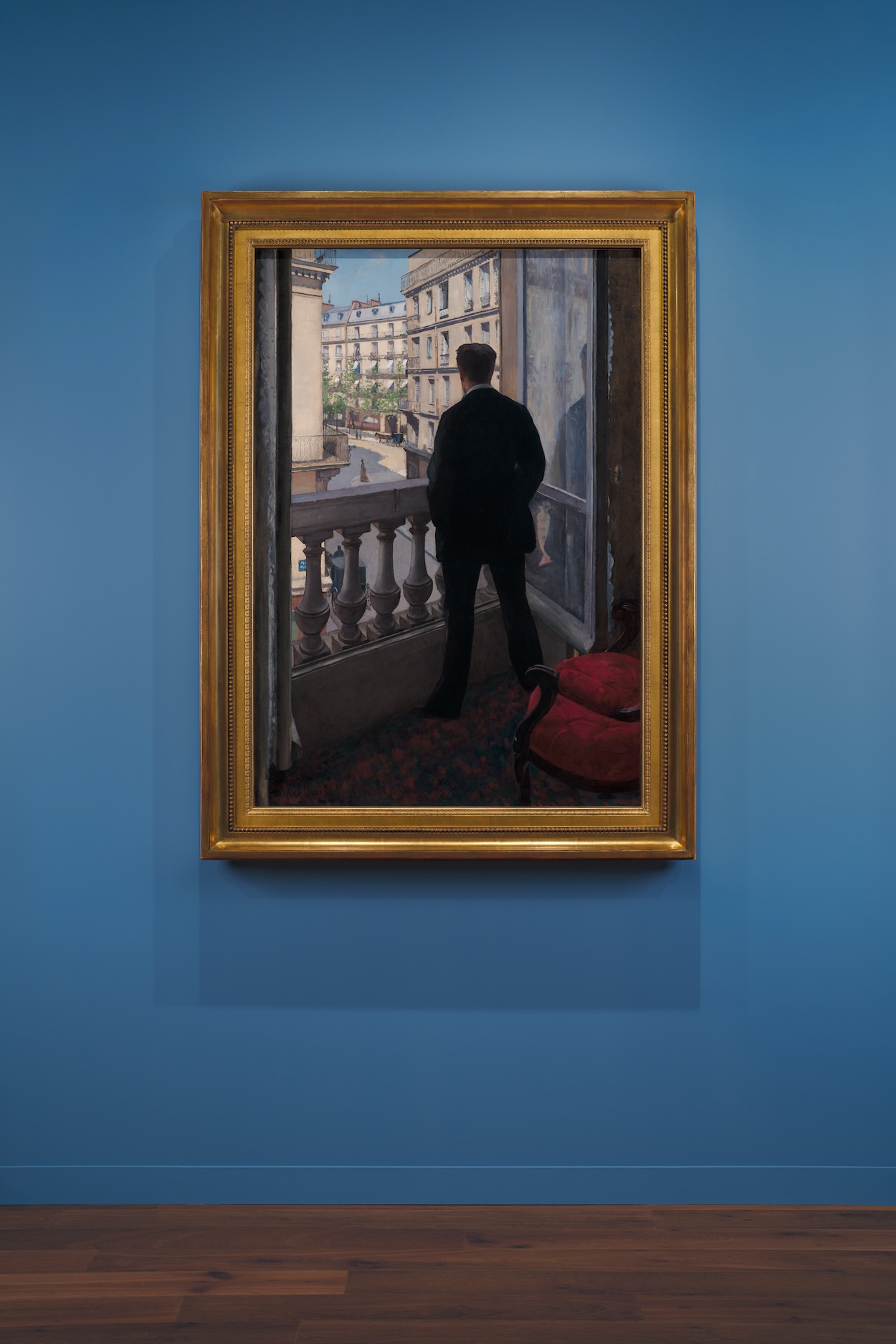
Every facet of “Gustave Caillebotte: Young Man at His Window/Boating Party,” on view through Nov. 16, thwarts expectation. Staged within Espace Louis Vuitton’s ephemeral gallery located on the fifth floor of Louis Vuitton’s 57th Street flagship in New York City, the show shines an unexpected light on Impressionist art, featuring only two paintings from an artist generally little-known outside of circles fluent in both fine art and French.
At its core, the exhibition offers a concentrated study of Caillebotte’s exploration of masculinity through the lens of bourgeois life in Paris. Unlike his more widely known contemporaries, Caillebotte largely depicted men: at home, work, and leisure, and in the throes of navigating the desire for each. It’s for this reason, according to Paul Perrin, chief curator and director of conservation and collections at the Musée d’Orsay, that Caillebotte’s oeuvre has proven to be more relatable than that of his better-known peers. “He’s really a painter of all the ambiguities of modern life,” Perrin told Surface, “and how we feel as urban people…how we crave nature, and to be outside, and to be reunited with open air. He embodies something very modern.”
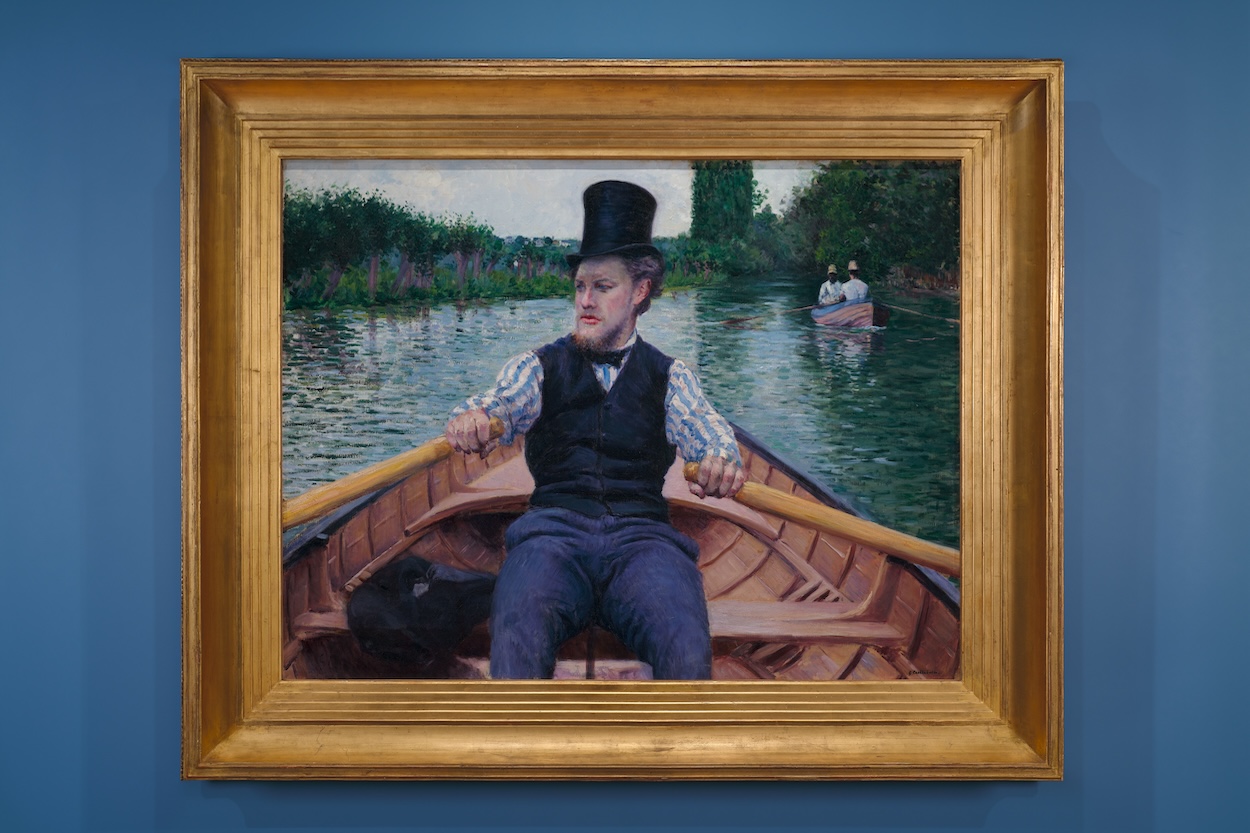
The two paintings on view are emblematic of Perrin’s assertion. The Boating Party, which is classified in France as a national treasure and was acquired by the Musée d’Orsay with the support of LVMH, positions the viewer opposite a dandy-like figure rowing leisurely upon a river as the current and competitive rowers pass him by. As the subject focuses his attention on the landscape, his companion, the viewer, is afforded the opportunity to study his features and surroundings without the burden of confrontation.