Gerhard Richter’s permanent pavilion opens in Doha.
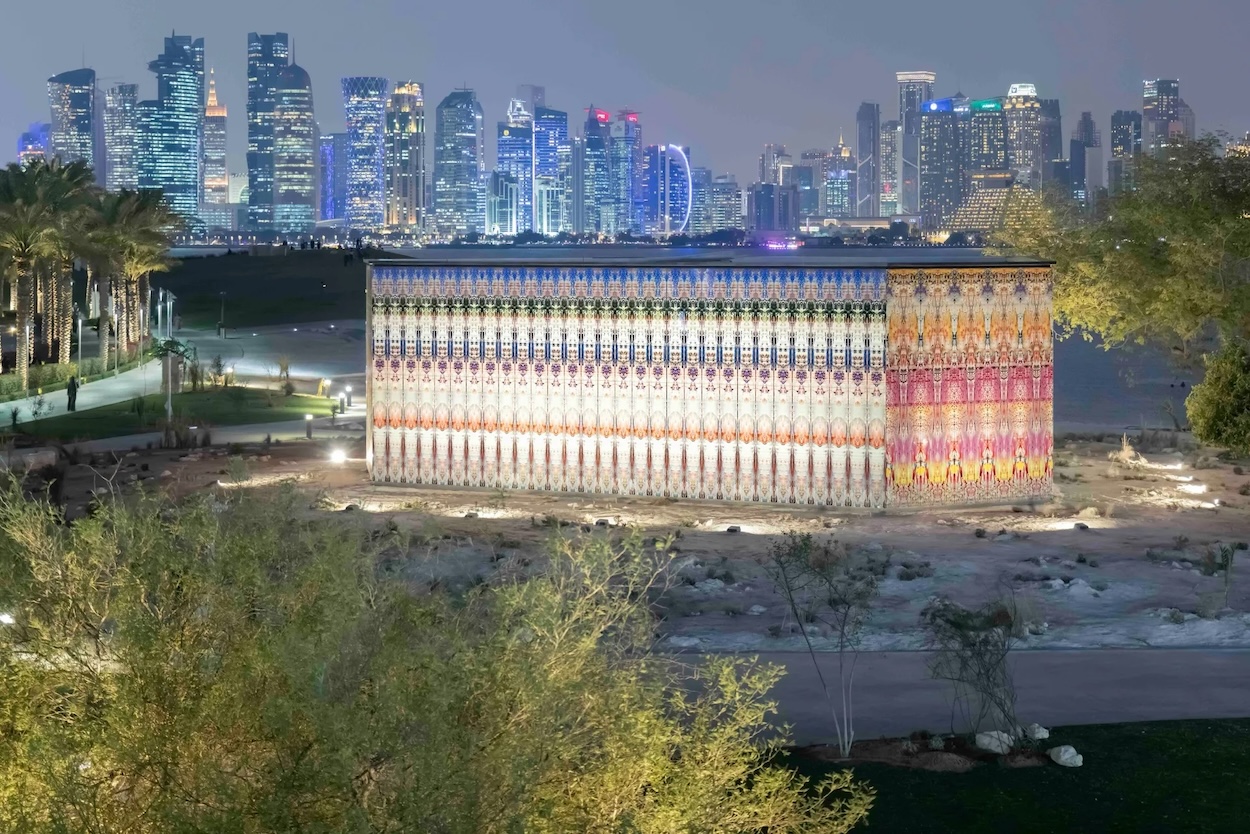
Gerhard Richter’s permanent pavilion in Doha has opened in MIA Park, outside the Museum of Islamic Art. Designed in collaboration with Selldorf Architects, Doha Pavilion: Gerhard Richter is conceived as a freestanding work of both art and architecture, housing paintings and sculptures by the German artist, including works made specifically for the site. The hexagonal building translates Richter’s long exploration of abstraction, repetition, and perception into a spatial experience, with mirrored interiors and a sculptural tower among its features. Its six exterior walls carry patterns derived from Richter’s Abstract Painting (724-4) (1990). Beginning in 2010, the artist used a mathematical process to digitally divide the painting into ever-narrower vertical strips, eventually reaching 8,192 sections. Each strip was then mirrored and repeated to create symmetrical horizontal patterns, which now wrap the pavilion’s facade. The resulting designs echo the repeating geometries and interlaced arabesques of Islamic art, linking Richter’s experimental approach with the visual traditions of the region. The location outside the Museum of Islamic Art reinforces that dialogue between contemporary abstraction and historic design.
Abask’s Giobagnara Embassy Collection draws from historic Italian floors in Rome and Venice.
London-based online craft platform Abask has launched the Giobagnara Embassy Collection, a line of handcrafted leather accessories inspired by the Embassy of Italy in London. The collection was designed by Nick Vinson, who previously redesigned the embassy’s offices in a five-story listed building near Buckingham Palace that once served as a police station during Queen Victoria’s reign. For that project, Vinson drew on Italy’s creative heritage and worked with Giobagnara, a Genoa-based maker of high-end leather homeware, to produce pieces ranging from custom lecterns to valet trays for staff. The new collection features two geometric patterns based on historic Italian floors created about 1,800 years apart. One references the ancient mosaic floors of the Baths of Caracalla in Rome, while the other is drawn from the mosaic floor Carlo Scarpa designed for the Olivetti showroom in Venice’s Piazza San Marco. The patterns were first used in custom pieces for the ambassador’s offices. Their popularity led founder Giorgio Bagnara and Vinson to develop a full collection in Italian leather, in shades of red, yellow, orange, olive green, and dove gray. The range includes desk sets, trays, organizers, placemats, baskets, games, tissue boxes, waste bins, and ice buckets.
Frieze Abu Dhabi debuts with sales led by West Asian and North African galleries.
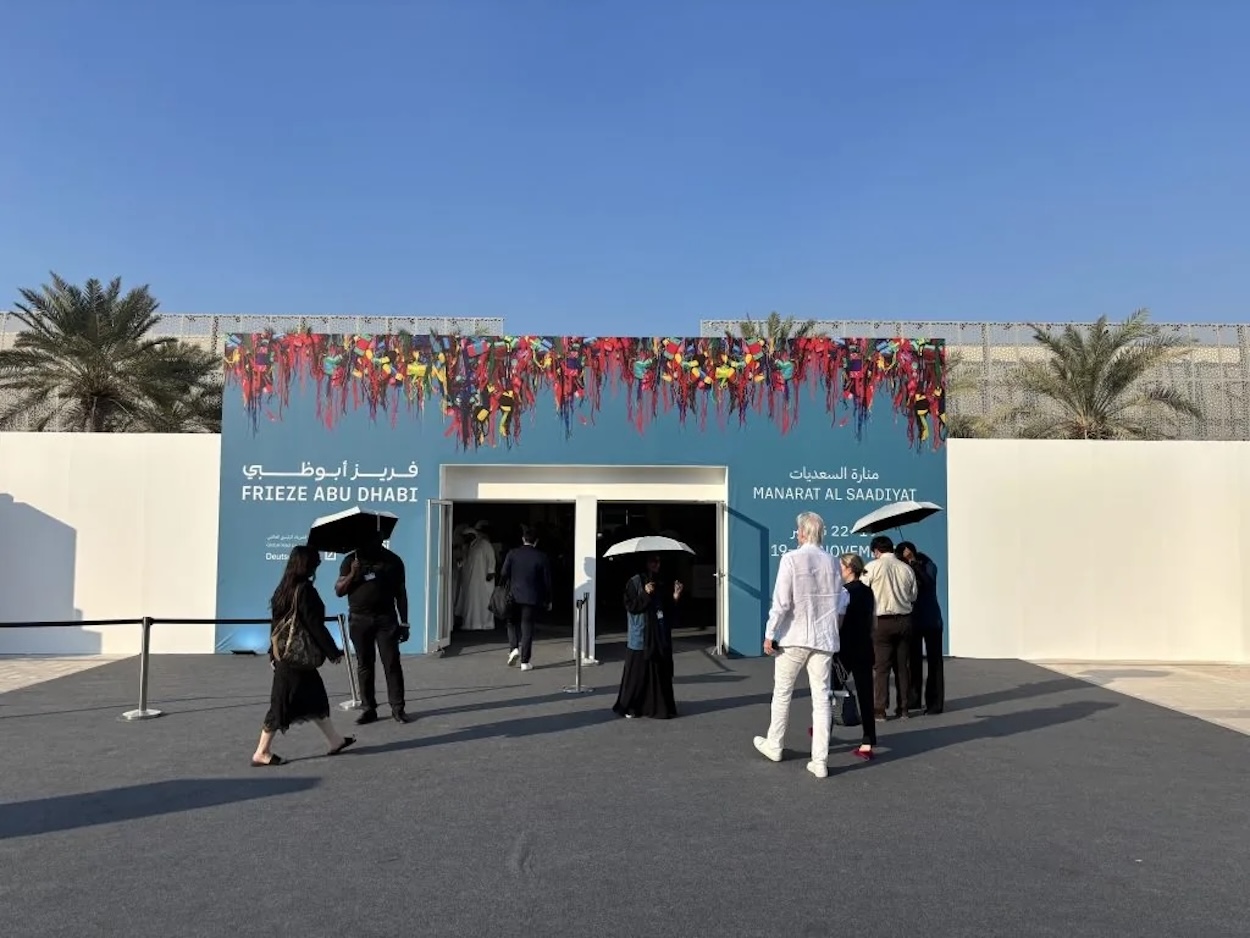
The inaugural Frieze Abu Dhabi closed November 22 with strong sales reported across many booths, particularly among galleries from the region. The fair, held at Manarat Al Saadiyat, succeeds the long-running Abu Dhabi Art and is co-organized by Frieze and the city’s Department of Culture and Tourism. Dubai galleries posted some of the strongest results. Lawrie Shabibi sold out its marble inlay works by Hamra Abbas at $50,000 each, while Zawyeh Gallery and Tabari Artspace each sold about half their booths. Taymour Grahne’s gallery had sold most of its mosaics by Ala Younis by opening day. Prices generally ranged from the tens of thousands to the mid-hundreds of thousands of dollars. Results were more mixed among Western galleries. Pace’s large-scale paintings by Emily Kame Kngwarreye, priced from $80,000 to $750,000, appeared to sell slowly, while David Aaron sold an ancient alabaster funerary stele for a reported seven figures. Many dealers reported sales to new collectors, including recent Abu Dhabi residents. Attendance was likely affected by regional instability, and the fair’s timing so close to Art Mumbai and next month’s Guggenheim Abu Dhabi opening also drew some visitors’ attention elsewhere.
Fotografiska expands in China with a Shenzhen location.
Fotografiska has opened a new museum in Shenzhen, its second location in China after Shanghai. Developed in partnership with Shenzhen Bay MIXC, the roughly 5,300-square-meter space marks the photography institution’s continued expansion into the Guangdong–Hong Kong–Macao Greater Bay Area. The museum sits within an emerging cultural district in Shenzhen Bay that includes Shenzhen Bay Cultural Plaza and Tencent’s Rong Museum of Art. It will present a year-round program of rotating exhibitions focused on photography, visual art, and contemporary image culture. Like other Fotografiska locations, the Shenzhen museum combines exhibitions, public programming, food and beverage, and retail in a single visitor experience. Chairman Yoram Roth called China one of the world’s most important and fastest-changing cultural landscapes, adding that the company had long hoped to open more than one location there. He said lessons from three years in Shanghai, from engaging local audiences to working with brand partners, are now shaping the Shenzhen launch.
Miami artist collective calls for a boycott of Art Basel Miami Beach.
Ahead of Art Basel Miami Beach’s December opening, the collective Artists 4 Artists Miami has launched a campaign urging local artists, curators, gallerists, collectors, and residents to boycott the fair and consider long-term, noncommercial alternatives. The group first announced its plans at a protest outside the Miami Beach Convention Center at the close of last year’s edition. Organizers question how much of the fair’s economic activity benefits local artists and residents rather than visitors, especially as Miami grows more expensive. They have also raised concerns about political and corporate ties among some of the fair’s partners and investors. Signatories can pledge not to attend the fair, not to exhibit at it or during Miami Art Week, or to withhold their labor, with the option to choose alternatives that suit their circumstances. Local officials say the fair generated nearly $60 million for Miami Beach and $570 million for Miami-Dade County in 2025. Supporters of the boycott argue the city needs stronger year-round support for its cultural community. Founder Misael Soto said refusing to participate in something as influential as Art Basel requires building an alternative.
Attractive Distractions:
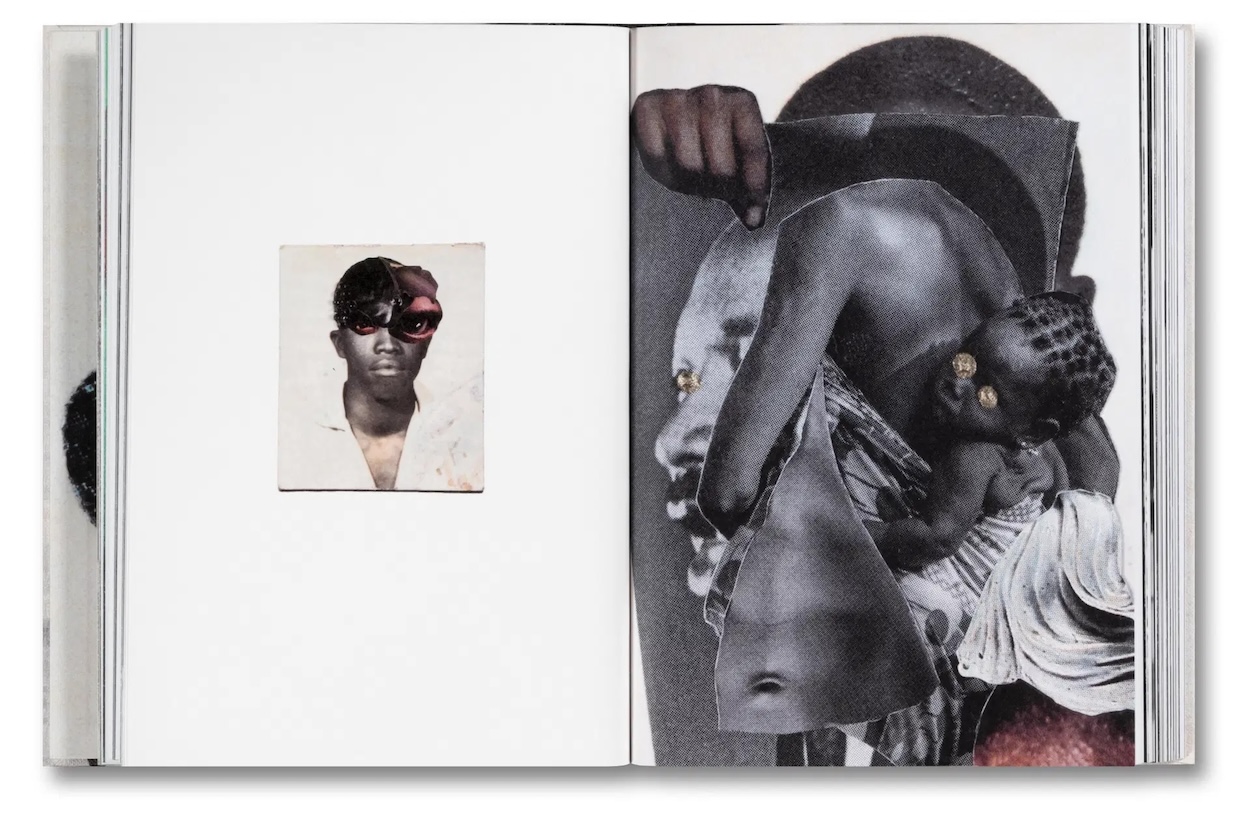
Paris Photo underscores the role of independent publishers in photography.
Friedrich Kunath blends German Romanticism and American pop culture in a new ICA Miami show.
Deborah Nevins shapes some of the most meticulous gardens around.
Norwegian jewelry design takes the spotlight at Oslo’s National Museum.