Gilberto Rivera’s Solo Debut at the Center for Art and Advocacy is a Homecoming
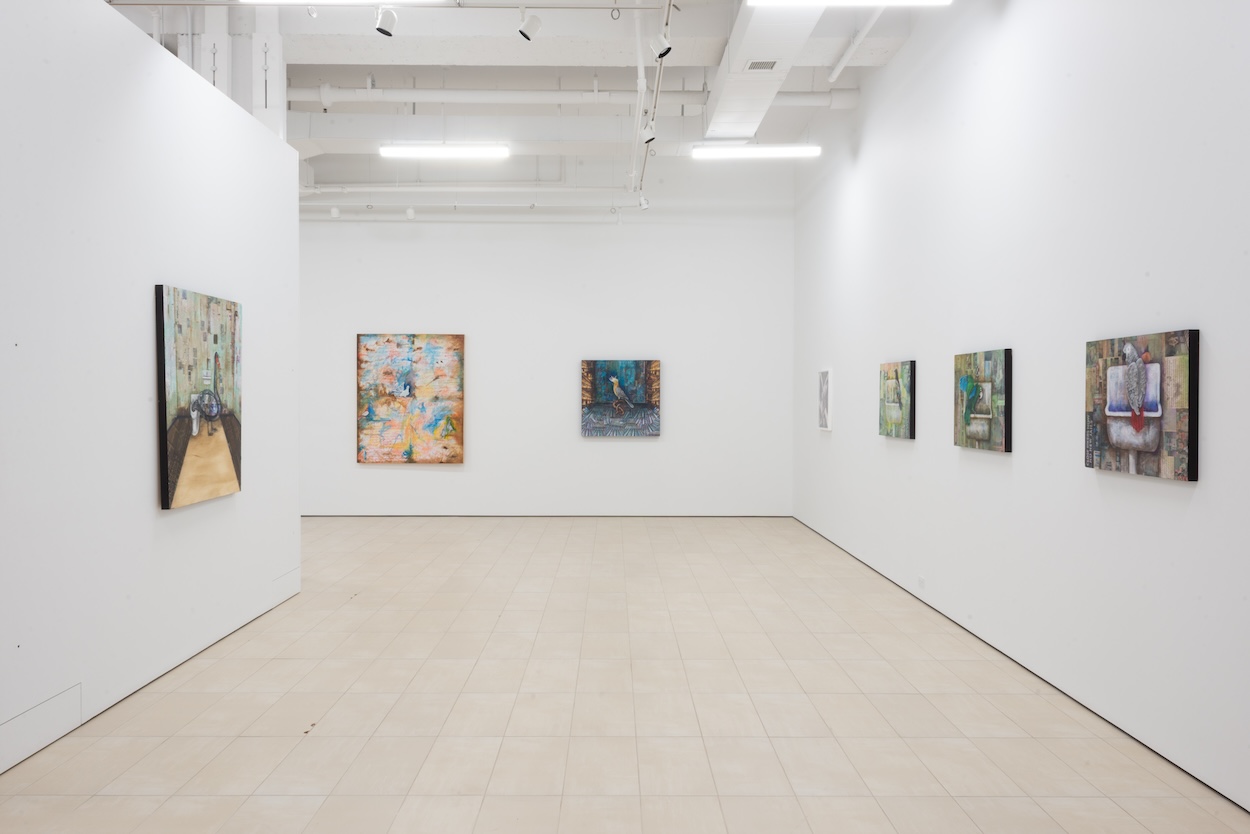
Gilberto Rivera’s first solo exhibition at the Center for Art and Advocacy has opened, marking a full-circle moment for an artist whose work has always navigated the space between personal memory and collective history
Credit: Grae Bowen/CKA. Courtesy of the Center for Art and Advocacy…
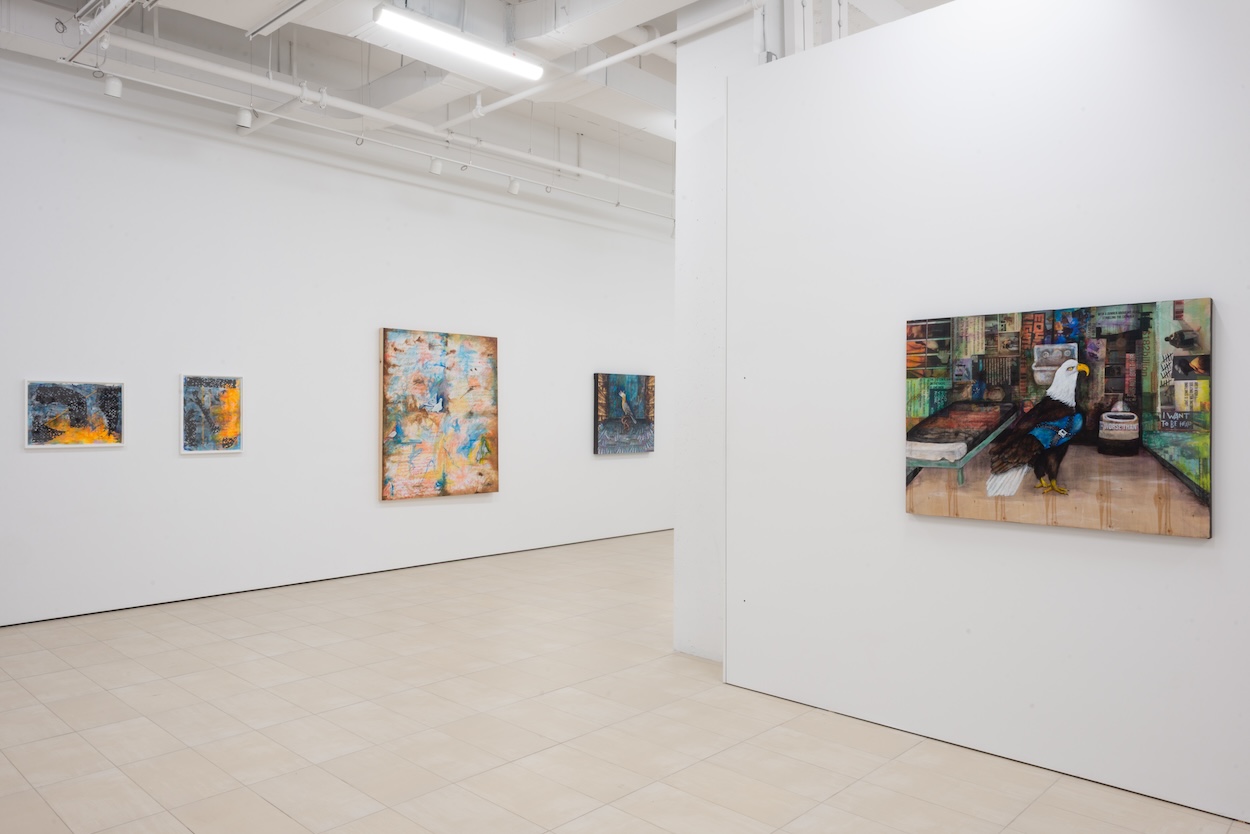
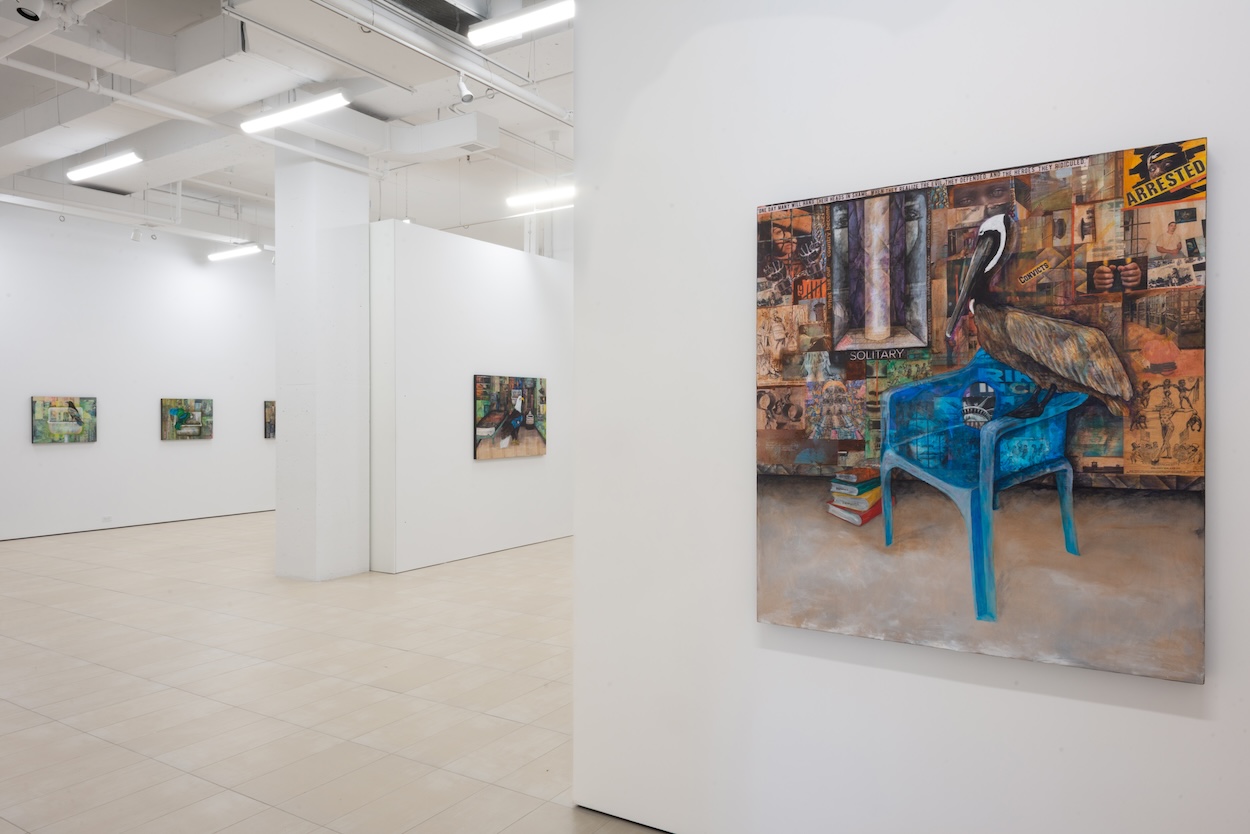
Gilberto Rivera’s first solo exhibition at the Center for Art and Advocacy has opened, marking a full-circle moment for an artist whose work has always navigated the space between personal memory and collective history. Raised in East New York, Rivera has been propelled to create from a point of view shaped by experiences that span incarceration, community, and his Puerto Rican heritage. The avian collages of “Jailbirds” unite his use of vibrant color, architectural precision, and found imagery to construct worlds where birds trace cycles of movement, migration, and recidivism. Rivera, a 2022 fellowship recipient of the Center for Art and Advocacy, met founder Jesse Krimes when they were both experiencing incarceration, and went on to form an art collective with him during that time.
“Community has always been everything to me,” he said in an interview with Surface, in which he touched upon the layers of relationships, imagery, and cultural and historic touchpoints, that have gone on to inform his practice.
Also on view in the exhibition are a series of Rivera’s abstract works on paper. In these compositions, Rivera foregrounds resilience, memory, and connection, reminding viewers that art can both document lived experience and forge new spaces of imagination and agency.
Credit: Grae Bowen/CKA. Courtesy of the Center for Art and Advocacy…
Tell us about the evolution your practice has undergone since your 2022 fellowship with the Center.
The Fellowship definitely pushed me into a more activist space. The people I met, the conversations I had—they opened my eyes in a bigger way. I realized that as powerful as my own experience was, it’s part of something much larger. Meeting folks doing advocacy work around mass incarceration, like those connected to the Art for Justice Fund, helped me see different perspectives—both from people inside and those working on the outside. It made me more comfortable documenting these issues through my work, and understanding it as part of a broader movement for change.
Can you elaborate on the figurative expression of the show’s title theme, “Jailbirds,” through the representation of various birds in this body of work? How does that contrast with your exploration of abstraction through the paper works that are also on view in this show?
The whole idea of the “jailbirds” really started when I was doing research for some paintings I made during COVID, around 2020, for the exhibition “Marking Time: Art in the Age of Mass Incarceration” at MoMA PS1. While I was digging into that time, I came across images from the early 1900s—people wearing masks during another pandemic—and it hit me that I’d never really heard much about that before. It made me think about how quickly things can be forgotten, even major events that shape people’s lives.
So I started wondering if the same thing could happen with mass incarceration. Like, a hundred years from now, will people remember what’s happening right now? Will they remember the shutdown of Rikers Island, or how so many lives were impacted? That’s when I realized part of what I’m doing through my paintings is documenting the present—trying to leave a record of what’s happening in real time.
Credit: Grae Bowen/CKA. Courtesy of the Center for Art and Advocacy…
The birds came into it from my own experience growing up. In my neighborhood, people used the term “jailbird” to talk about someone who kept going back to jail. Once you got that label, it was like you were written off—you stopped being seen as a full person, just that word. So I started including birds in my work as a way of unpacking that language, reclaiming it, and giving those stories some kind of visibility and dignity.
The abstract pieces are different—they’re like a way for me to breathe between the figurative works. When I make the abstracts, there are no rules, no boundaries. It’s totally intuitive, just me responding to how I feel in the moment. So where the “jailbirds” paintings are about remembering and confronting things that are often overlooked, the abstracts are more about freedom—about letting go. The two balance each other out.
Can you tell us more about the role that your use of vibrant colors plays in these works? Especially given the dark thematic subject you’re exploring: the wrongs of the carceral system, the effects of solitary confinement, etc.
I’m Puerto Rican. How can we not have vibrant colors?
The vibrancy and joyfulness in the work really happens in the moment. I never start a painting thinking, I’m going to use these colors or I’m going to paint this specific thing. It’s all intuitive. I usually begin by laying down a few colors, maybe a rough idea, and then I let the painting guide me. In these particular pieces, the birds themselves dictated the palette and the tone—the colors grew out of their presence and the space around them, like the cells.
Another layer to it is how the imagery covers the walls in the paintings. That comes from what people actually do inside prison—using magazines, photographs, and postcards from home to decorate their cells. They’d use toothpaste as glue to stick images of loved ones or pieces of magazines on their lockers or walls. That act of posting and covering became a kind of language, a quiet form of expression.
So when you see those visual elements in my work, that’s where it comes from. It’s referencing that same instinct—to create beauty, to make meaning, even in confinement. Someone who’s lived that life might look at it and immediately recognize that gesture. It’s a small detail, but it carries a lot of memory.
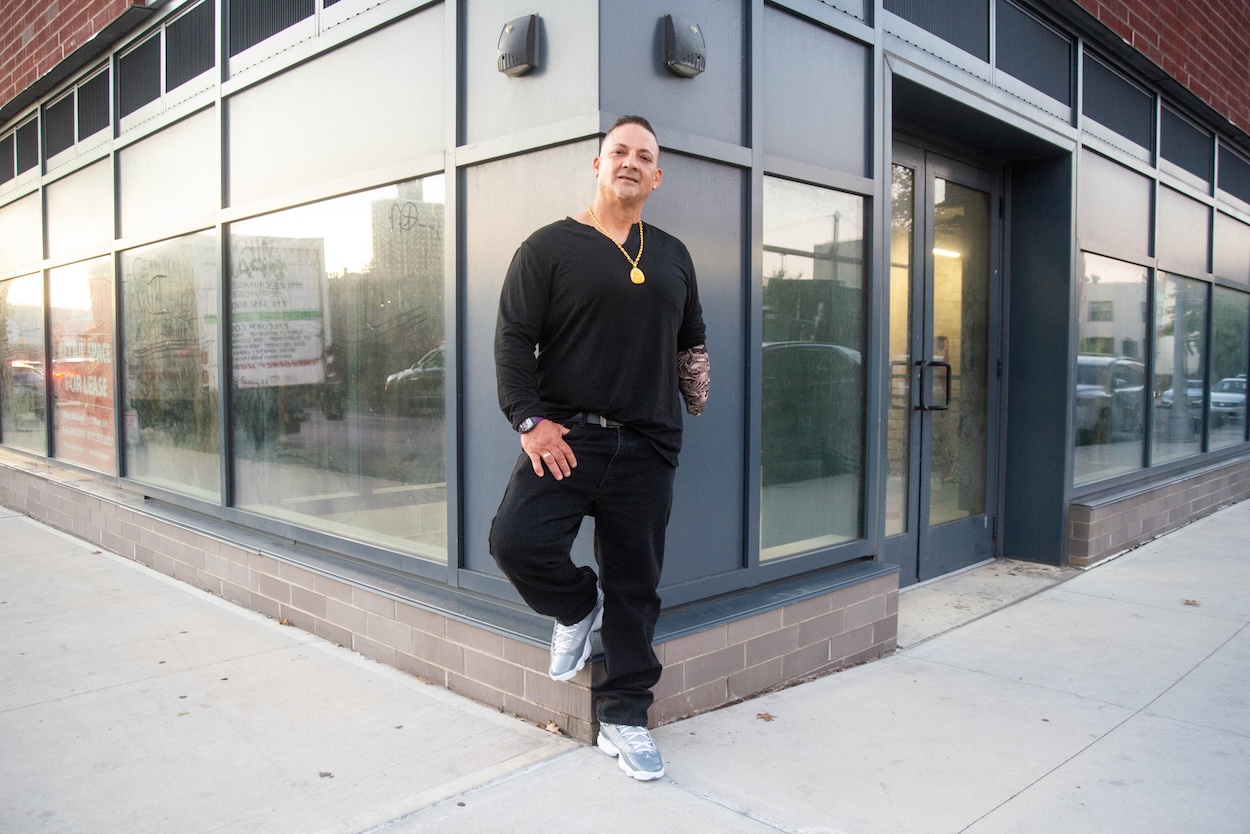
Gilberto Rivera. Credit: Ruvan Wijesooriya…
I’ve spent time working in graffiti—it was a way to make walls my own, to take ownership of space. It’s funny, because someone once told me, “You’ve lived a lot of lives,” and I think that’s true. All those experiences find their way into the work, not always intentionally, but intuitively.
When I create, it’s really about feeling—being present in that moment. That’s what drives the work. Whether a piece turns out great or not isn’t something I overthink—it’s about being honest to how I feel when I’m making it. If someone connects with it, that’s beautiful. But even if they don’t, the act of creating still means something, because I’ve expressed whatever I was carrying at that moment.
You met Jesse during your incarceration, and you went on to form an art collective with him there, and then of course became a fellow at the Center and now you’re exhibiting at its newly-opened space. Tell us about the throughline of community and art, and how that’s shaped the evolution of your practice.
Community has always been everything to me. I grew up in a place where it really did take a village to raise a child. There was no such thing as Child Services—if someone in the family was struggling, another relative stepped in. That’s how I was raised, and that sense of responsibility to each other still runs deep in my family.
But in America, I think that fiber of community is breaking down. People are more isolated; parents are overworked, kids are being raised by screens, and everyone says, that’s not my problem—until it ends up at their door. That loss of connection is part of why we’re losing so many young people. I try to stay involved, to reach out to kids, because they’re inheriting this world, and they shouldn’t have to pay for our mistakes.
I’m also really proud of Jesse and the Center. This was his vision from the start, and it’s incredible to see it come to life. I’m just grateful to be part of it and to support him however I can. It’s beautiful to see something that began as a shared idea inside now become a space for community, creativity, and change. And for me, showing here feels like coming full circle—I grew up not far from here, in East New York—so it feels like coming home in more ways than one.